

“`html
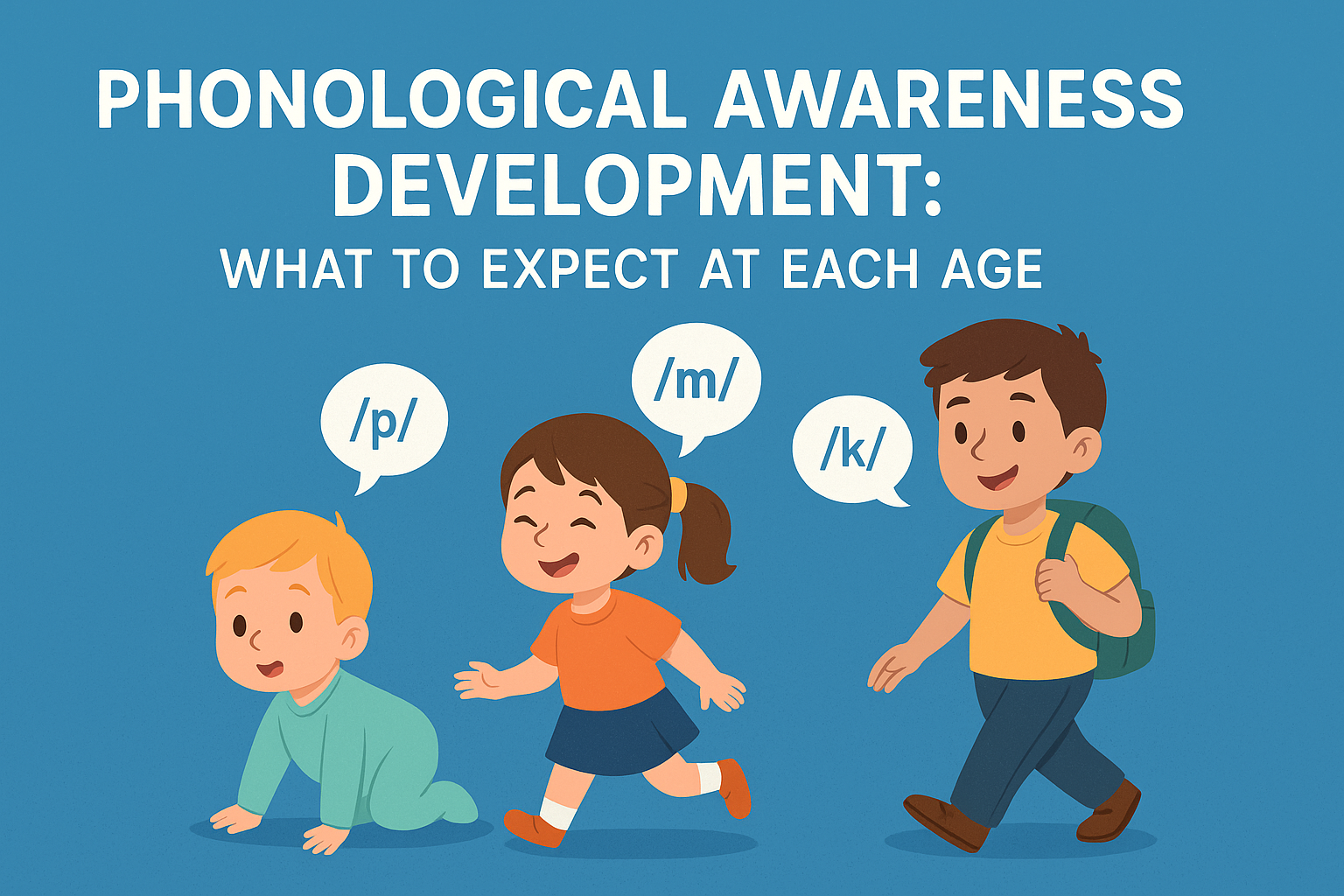
Understanding the stages of phonological awareness development is crucial for parents, educators, and caregivers who are tasked with fostering early literacy skills in children. From recognizing sounds to manipulating phonemes, these skills form the foundation for reading and writing. In this article, we’ll explore what to expect at various ages and provide practical insights to support children’s growth in this essential area.
The Foundation: What is Phonological Awareness?
At its core, phonological awareness refers to the ability to recognize and manipulate the sounds in spoken language. This skill encompasses several sub-skills, including the awareness of syllables, onsets and rimes, and phonemes. It is distinct from phonics, which involves the relationship between sounds and their corresponding letters. While phonological awareness is primarily auditory and does not require written language, it is a critical precursor to effective reading and writing.
Phonological awareness development begins well before formal schooling. Research indicates that children who develop strong phonological awareness skills are more likely to become proficient readers. According to the National Reading Panel, phonological awareness is one of the five critical components of effective reading instruction, which also includes phonics, vocabulary, fluency, and comprehension.
Birth to Age 1: Early Sound Recognition
In the first year of life, infants start to develop phonological awareness through exposure to language. Even before they can speak, babies are attuned to the sounds of their environment. Newborns can differentiate between various speech sounds, a skill that lays the groundwork for later phonemic awareness. By six months, many babies begin to recognize the rhythm and intonation patterns of their native language.
Parents can nurture this early stage of phonological awareness development by talking and reading to their babies often. Simple activities such as singing lullabies or engaging in playful sounds can enhance sound discrimination. Research suggests that exposure to a rich linguistic environment aids in cognitive development, providing a foundation for future literacy skills.
Ages 1 to 3: Syllable Awareness and Rhyming Games
As children reach toddlerhood, they begin to demonstrate more active engagement with sounds. Around the age of one, children start to babble and imitate sounds, signaling their evolving phonological awareness. By 18 months, many children can recognize some familiar words, especially when paired with visual cues.
Between ages two and three, children become increasingly interested in rhymes and rhythmic patterns in language. They might enjoy listening to nursery rhymes and can even begin to produce simple rhyming words. Activities that encourage rhyme recognition, such as reading rhyming books or singing songs, are particularly effective during this stage.
Ages 3 to 4: Segmenting Sounds and Playing with Words
At ages three to four, children’s phonological awareness development becomes more sophisticated. They start to segment words into syllables and can often clap out the syllables in their names or favorite toys. This is a pivotal skill as it helps them understand the internal structure of words. (See: development of reading skills.)
Children may also begin to show an awareness of initial sounds in words, which is vital for later phonemic awareness. Parents and educators can support this development by engaging in activities that involve segmenting syllables and sounds. For example, clapping out syllables in familiar words or using games that challenge children to identify the first sound in a series of words can be highly beneficial.
Ages 4 to 5: Phoneme Awareness and Manipulation
By the age of four, many children can recognize and generate rhymes, segment words into syllables, and identify the first sounds in words. As they approach five, their phonological awareness development deepens as they begin to focus on individual phonemes—the smallest units of sound in a word. This is a critical time for literacy development as children become more prepared for formal reading instruction.
Parents and teachers can help facilitate this stage by introducing activities that involve phoneme manipulation. For instance, asking children to change the first sound in a word to make a new word (e.g., changing /m/ in ‘mat’ to /h/ to make ‘hat’) encourages deeper engagement with sounds. Such activities not only enhance phonemic awareness but also promote critical thinking and problem-solving skills.
Ages 5 to 6: Transitioning to Reading
As children reach kindergarten age, their skills in phonological awareness are put to the test as they begin to learn to read. By this stage, most children can recognize rhymes, segment words into syllables and phonemes, and blend sounds to form words. These skills are essential for decoding, which is the ability to read words by translating letters into sounds.
Effective instruction during this period should include both phonics and activities aimed at solidifying phonological awareness. Research indicates that children who receive systematic phonological training perform better in reading tasks. Activities might include interactive games that require blending sounds, identifying rhymes, or playing with sounds through word games.
The Role of Educators and Parents in Phonological Awareness Development
The role of educators and parents is paramount in fostering phonological awareness development. Early intervention can significantly impact a child’s literacy trajectory. Teachers should be equipped with resources and strategies to support phonological awareness in the classroom. Regular assessments can help identify children who may need additional support.
In addition, parents can reinforce learning at home. Reading together, playing sound-based games, and encouraging conversations are excellent ways to create a language-rich environment. Tools like phonemic awareness workbooks or apps designed for phonological skills practice can also be beneficial. Engaging children in discussions about sounds, words, and letters helps solidify their understanding and application of these concepts.
Challenges and Solutions in Phonological Awareness Development
While most children develop phonological awareness skills at their own pace, some may experience difficulties. Factors such as limited exposure to language, hearing impairments, or learning disabilities can hinder progress. It’s essential for parents and educators to recognize signs of struggle and seek appropriate interventions.
For children facing challenges, targeted interventions that focus on phonological awareness can be incredibly effective. Programs that provide direct instruction in phonemic awareness, paired with engaging activities, have shown promising results. Speech-language pathologists or specialized educators can offer tailored strategies to meet individual needs, ensuring that every child has the opportunity to develop the necessary skills for successful literacy.
Current Trends and Future Directions in Phonological Awareness Development
As research continues to evolve, new trends in phonological awareness development are emerging. Technology plays a significant role, with various apps and online programs designed to enhance phonological skills through interactive games. These tools can be particularly appealing to children and can complement traditional learning methods. (See: language development in children.)
In the educational sphere, there’s a growing emphasis on integrating phonological awareness training into broader literacy curricula. Schools are increasingly recognizing that phonological skills are not just a precursor to reading, but rather integral components of a comprehensive literacy education. As a result, professional development for educators is focusing on equipping them with the knowledge and tools to teach these foundational skills effectively.
Furthermore, ongoing research underscores the importance of cultural and linguistic diversity when considering phonological awareness development. It is vital for educators to adapt their strategies to accommodate diverse linguistic backgrounds, ensuring that all children feel included and are able to thrive.
The Importance of Phonological Awareness in Academic Success
A strong foundation in phonological awareness is linked not only to reading success but also to overall academic achievement. Studies have shown that children who struggle with phonological awareness often face challenges in other areas of learning, including math and writing. This connection highlights the importance of addressing phonological skills early on.
According to a report from the National Assessment of Educational Progress (NAEP), children who exhibit strong phonological skills in kindergarten are more likely to perform at or above the proficient level in reading by fourth grade. This correlation emphasizes the need for early detection and intervention, allowing children to build the necessary skills for academic success.
Strategies for Parents and Educators
To effectively support phonological awareness development, both parents and educators can implement various strategies:
- Read Aloud Regularly: Sharing books with children not only develops vocabulary but also introduces the rhythm and sounds of language.
- Play Sound Games: Engage in games that involve rhyming, alliteration, or sound manipulation to make learning fun.
- Use Everyday Opportunities: Encourage children to identify sounds around them, such as animal noises or environmental sounds, to cultivate awareness.
- Incorporate Music and Movement: Singing songs and moving to rhythms can enhance sound recognition and make learning more engaging.
FAQs About Phonological Awareness Development
What is the difference between phonological awareness and phonemic awareness?
Phonological awareness is a broad skill that includes recognizing sounds at the level of words, syllables, and phonemes. Phonemic awareness, however, is a more specific subset that focuses solely on the ability to hear, identify, and manipulate individual phonemes in words. Both are important for reading success, but phonemic awareness is typically considered more critical for learning to read.
At what age should phonological awareness skills start to develop?
Phonological awareness skills begin to emerge in infancy, with infants showing sensitivity to sounds and rhythm. By age three, more specific skills such as syllable segmentation and rhyme recognition become evident, and these skills continue to develop and refine through age six and beyond.
How can I tell if my child is struggling with phonological awareness?
Signs of difficulty may include challenges with rhyming, trouble breaking words into syllables, and difficulty recognizing initial sounds in words. If you notice these challenges persisting past the typical developmental milestones, it may be beneficial to consult with a specialist for further assessment.
Are there specific activities that can help improve phonological awareness?
Yes! Activities such as singing nursery rhymes, playing rhyming games, using sound-based apps, and practicing sound blending and segmenting through fun games can all help improve phonological awareness. Consistency and making activities enjoyable are key.
Common Misconceptions About Phonological Awareness
Despite its importance, there are several misconceptions surrounding phonological awareness development. One common myth is that children can’t develop these skills until they are older or in formal schooling. In reality, phonological awareness begins in infancy and evolves through playful interactions with sounds and language. Parents should feel empowered to start nurturing these skills early on through simple activities.
Can phonological awareness be taught in a systematic way?
Absolutely! There are structured programs designed specifically to teach phonological awareness. These typically include activities that focus on various levels of sound manipulation, from rhyming and syllable counting to phoneme segmentation and blending. Teachers and parents can utilize these programs or create their own activities to systematically develop these skills in children.
How can I support my multilingual child’s phonological awareness?
Supporting a multilingual child involves recognizing that phonological awareness can transfer across languages. Engaging them in activities that explore sounds in each language can enhance their phonological awareness. For example, you can sing songs in different languages, play similar sound games, or read books that highlight the phonetic structures of both languages. This not only supports their literacy in multiple languages but also reinforces their understanding of phonological concepts.
Conclusion
In summary, phonological awareness development is a crucial component of early literacy that evolves from birth through the early school years. Understanding the milestones at each age can empower parents and educators to create supportive environments that encourage sound recognition, manipulation, and eventual reading proficiency. By fostering these essential skills early on, we can pave the way for successful literacy experiences that last a lifetime.
“`
Trending Now
Frequently Asked Questions
What is phonological awareness?
Phonological awareness is the ability to recognize and manipulate sounds in spoken language. It includes skills such as awareness of syllables, onsets, rimes, and phonemes, and is essential for developing reading and writing skills.
How does phonological awareness develop in infants?
In the first year of life, infants begin to develop phonological awareness through exposure to language. They can differentiate speech sounds and recognize rhythm and intonation, laying the groundwork for later phonemic awareness.
Why is phonological awareness important for reading?
Phonological awareness is crucial because it serves as a foundation for effective reading and writing. Research shows that children with strong phonological skills are more likely to become proficient readers.
At what age should phonological awareness be developed?
Phonological awareness development starts before formal schooling, with significant progress occurring from birth to age 5. Early exposure to language and sound recognition can greatly enhance a child's literacy skills.
What activities can help develop phonological awareness in children?
Parents can support phonological awareness by engaging in activities such as reading aloud, singing songs, and playing sound-based games. These activities help children recognize and manipulate sounds in a fun and interactive way.
Have you experienced this yourself? We’d love to hear your story in the comments.



