

“`html
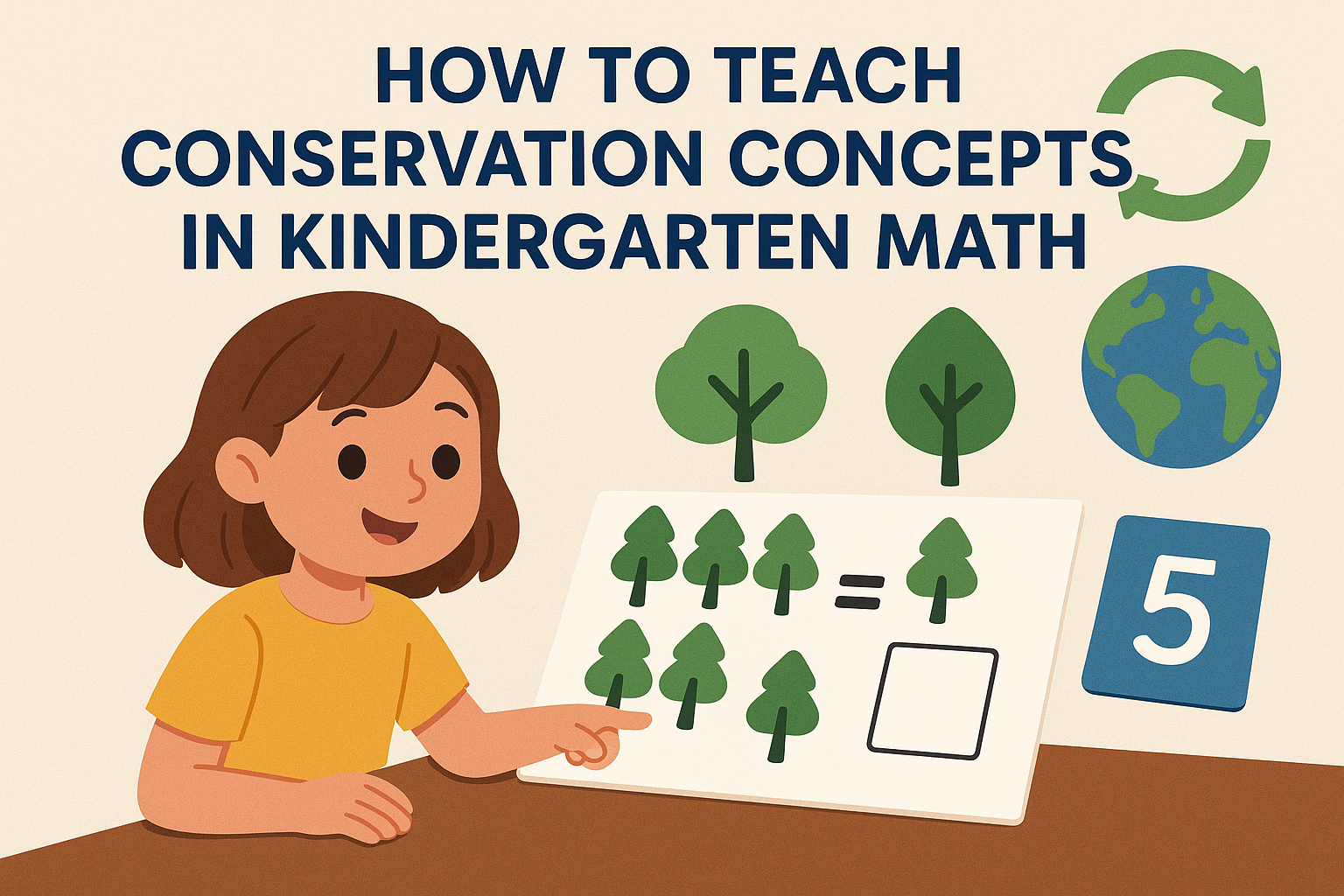
Teaching young children about conservation concepts in kindergarten math is essential for building a solid foundation in mathematics. As children begin to explore numbers, shapes, and quantities, understanding conservation becomes a crucial part of their cognitive development. Conservation refers to the idea that certain properties of objects, like quantity or volume, remain the same despite changes in their form or arrangement. Here’s how educators can effectively introduce these concepts in a kindergarten setting.
1. Understanding Conservation in Early Childhood
Conservation is a brain development milestone typically achieved around the age of seven, as theorized by developmental psychologist Jean Piaget. Piaget outlined several stages of cognitive development, emphasizing how children gradually learn to understand that quantities remain constant even when their appearance changes. For kindergarteners, introducing conservation concepts early can stimulate their mathematical thinking and reasoning.
In the kindergarten classroom, conservation concepts can be broadly categorized into several types, including number conservation, length conservation, area conservation, and volume conservation. By engaging students in hands-on activities that reinforce these ideas, educators can help them grasp the underlying principles effectively.
2. Importance of Conservation Concepts in Math
Why should conservation concepts in kindergarten math be prioritized? Understanding conservation lays the groundwork for more complex mathematical operations. When children recognize that a set of objects remains the same regardless of how they are arranged, they start to develop critical thinking and problem-solving skills.
Furthermore, these concepts are not only vital in mathematics but also in everyday life. Grasping conservation helps children make sense of their surroundings, which enhances their ability to navigate social situations and physical environments. Moreover, it prepares them for advanced math concepts like addition, subtraction, and measurement in later grades.
3. Interactive Activities to Teach Conservation
Creating engaging, interactive activities is key to teaching conservation concepts in kindergarten math. Simple tasks can turn abstract ideas into tangible learning experiences. Here are a few effective activities:
- Water Play: Use different containers to demonstrate volume conservation. Fill a short, wide container with water and pour it into a tall, narrow one. Ask children if the amount of water has changed. This hands-on experience solidifies their understanding of volume conservation.
- Counting Objects: Use blocks or counters to illustrate number conservation. Ask children to count out five blocks. Then, rearrange the blocks into a line or a pile and ask if the quantity has changed. This reinforces the idea that the number remains the same, regardless of arrangement.
- Shape Sorting: Provide various shapes and ask children to sort them. Discuss how the total number of shapes remains constant, even as they sort them into different categories. This activity promotes geometric understanding while reinforcing conservation.
4. Using Everyday Materials
You don’t need fancy materials to teach conservation concepts. Everyday items can be just as effective. For instance, using common kitchen items such as measuring cups, spoons, or even snacks like fruit can engage children while teaching these concepts.
For example, measure out different quantities of rice or pasta, and then pour them into various containers. Children can visually see that the amount stays the same despite the shape or size of the container. Activities like this not only reinforce math skills but also encourage exploration and inquiry.
5. Incorporating Technology
In today’s digital age, technology can enhance the learning experience for kindergarteners. Educational apps and digital games focused on math can help reinforce conservation concepts through interactive play. Programs that feature virtual manipulatives can provide children with a deeper understanding of conservation by allowing them to visualize changes in quantity and form. (See: Conservation in psychology.)
For example, applications like ‘Number Blocks’ or ‘Endless Numbers’ allow children to manipulate numbers and observe conservation concepts in real-time. Integrating technology into math lessons can cater to various learning styles, making the process more enjoyable and effective.
6. Creating a Supportive Learning Environment
To teach conservation concepts successfully, it’s essential to foster a supportive learning environment. Encourage children to share their thoughts and reasoning, promoting a culture of inquiry. This approach not only builds their confidence but also enhances their understanding as they articulate their thought processes.
Incorporating cooperative learning opportunities, such as group projects or partner work, can further enhance the learning experience. When children work together, they can learn from each other, discussing their observations and reasoning, which solidifies their understanding of conservation concepts.
7. Assessment and Observation
Assessing understanding of conservation concepts doesn’t have to be formal. Observation is key in a kindergarten setting. Teachers can monitor children during activities to gauge their grasp of conservation without needing standardized tests. Note how they explain their reasoning as they engage with objects and concepts.
Additionally, using anecdotal records or checklists can help track each child’s progress over time. Documenting observations provides insight into individual learning patterns, allowing teachers to tailor instruction to meet diverse needs.
8. Parent Involvement
Engaging parents in their child’s learning process can significantly enhance the teaching of conservation concepts. When parents understand these principles, they can reinforce them at home. Share simple activities and games that parents can do with their children, such as sorting toys, measuring ingredients for recipes, or counting items during grocery shopping.
Consider hosting workshops or sending home newsletters that provide tips on how to incorporate math into everyday life. This collaboration can create a consistent learning experience and further solidify children’s understanding of conservation.
9. Challenges in Teaching Conservation Concepts
While teaching conservation concepts in kindergarten math is essential, it can come with challenges. One of the primary hurdles is the diverse range of developmental stages within a classroom. Each child may grasp these concepts at different rates, making it crucial for educators to differentiate their instruction.
Additionally, some children may struggle with abstract thinking or have difficulty applying conservation concepts to new situations. Teachers should be prepared to provide additional support and alternative strategies for these learners, potentially using more concrete materials or visual aids to facilitate understanding. (See: NIH on cognitive development.)
10. Current Trends and Future Directions
As education continues to evolve, so do the methods used to teach conservation concepts in kindergarten math. There is a growing emphasis on STEM education, which integrates science and technology into learning. This trend encourages hands-on, inquiry-based learning that aligns well with teaching conservation concepts.
Looking ahead, educators will likely continue to embrace innovative teaching strategies, including project-based learning and the incorporation of real-world math applications. By staying updated with the latest trends, teachers can create dynamic and effective math experiences that resonate with young learners.
11. Real-World Applications of Conservation Concepts
Understanding conservation concepts doesn’t just prepare children for math in school; it also equips them with skills they’ll use in real life. For example, when children fill a container with sand or water, they learn about volume conservation, which is an essential concept in cooking, construction, and even gardening. These experiences can spark curiosity and lead to questions like, “If I pour this sand into a taller container, does it still weigh the same?” such questions deepen their understanding and create connections beyond the classroom.
Statistics show that children who learn these foundational concepts early on are better prepared for complex mathematical reasoning later. According to a study by the National Council of Teachers of Mathematics, students with a strong grasp of early math concepts, including conservation, tend to outperform their peers in standardized tests as they progress through school.
12. Expert Perspectives on Teaching Conservation
Experts in early childhood education emphasize the importance of patience and creativity in teaching conservation concepts. Dr. Angela K. Caron, an early childhood educator, notes, “Children learn best through play and exploration, not rote memorization. By creating fun, engaging activities, we allow them to discover these concepts naturally.” This perspective encourages teachers to consider individual learning styles and adapt their methods accordingly, creating a more inclusive classroom environment.
Additionally, Dr. Peter H. Davis, a child psychologist, emphasizes the role of emotional engagement in learning. He states, “When children are emotionally invested in an activity, they are more likely to remember the lesson. Thus, involving their interests — whether it’s animals, space, or anything they love — can be a game-changer.” This highlights the need for teachers to connect conservation concepts with children’s interests to foster a deeper understanding.
13. Frequently Asked Questions (FAQ)
What are conservation concepts in kindergarten math?
Conservation concepts in kindergarten math are foundational ideas that help children understand that certain properties, like quantity or volume, remain unchanged despite changes in their form or arrangement. This understanding is crucial for developing mathematical reasoning.
How can I teach conservation concepts at home?
Parents can teach conservation concepts at home through simple activities like sorting toys, measuring ingredients for cooking, or using everyday objects to compare sizes and quantities. Engaging in these tasks reinforces children’s understanding in a fun and interactive way.
Why is it important for children to understand conservation concepts?
Understanding conservation is vital because it forms the basis for more complex mathematical concepts, such as addition and subtraction. It helps children develop critical thinking and problem-solving skills that are essential for their academic and everyday lives.
What should I do if my child struggles with these concepts?
If a child struggles with conservation concepts, it’s important to provide additional support through hands-on activities and concrete materials. Using visual aids or real-world examples can help facilitate their understanding. Patience and encouragement are key, as each child learns at their own pace.
Are there any recommended resources for teaching conservation concepts?
Yes! There are many resources, including educational apps like ‘Number Blocks’ and ‘Endless Numbers’, as well as websites that offer printable activities and lesson plans. Local libraries may also have books focused on math concepts for young children that can provide additional support.
What age should children begin learning about conservation concepts?
While conservation concepts typically become fully understood around age seven, introducing these ideas in kindergarten is beneficial. Engaging with these concepts through play and exploration lays a strong foundation for future understanding.
Can conservation concepts be taught through art?
Absolutely! Art can be a powerful tool for teaching conservation concepts. For instance, children can create collages using cut-out shapes and then compare the total number of pieces before and after rearranging them. This reinforces both conservation and creative expression.
14. Conclusion
In summary, teaching conservation concepts in kindergarten math is a vital part of early education. By utilizing interactive activities, everyday materials, and technology, educators can create a rich learning environment that fosters curiosity and understanding. With proper support and engagement, children will develop the foundational skills necessary for future mathematical success.
“`
Trending Now
Frequently Asked Questions
What are conservation concepts in early childhood education?
Conservation concepts refer to the understanding that certain properties of objects, such as quantity or volume, remain constant despite changes in their form or arrangement. This cognitive development milestone is crucial for young children as it lays the foundation for mathematical thinking and reasoning.
Why is teaching conservation important in kindergarten math?
Teaching conservation in kindergarten math is essential because it helps children develop critical thinking and problem-solving skills. Recognizing that quantities remain the same regardless of their arrangement prepares them for more complex mathematical operations and enhances their understanding of the world.
How can educators introduce conservation concepts to kindergarteners?
Educators can introduce conservation concepts through hands-on activities that engage students in exploring numbers, shapes, and quantities. Activities that involve manipulating objects and discussing their properties can effectively reinforce the understanding of conservation in a fun and interactive manner. Related reading: Fun math games for kids.
What are the different types of conservation concepts?
Conservation concepts can be categorized into several types, including number conservation, length conservation, area conservation, and volume conservation. Each type helps children understand that certain properties remain unchanged despite alterations in appearance or arrangement.
At what age do children typically understand conservation concepts?
Children typically achieve an understanding of conservation concepts around the age of seven, according to developmental psychologist Jean Piaget. However, introducing these concepts in kindergarten can stimulate cognitive development and enhance mathematical thinking at an earlier age.
What did we miss? Let us know in the comments and join the conversation.



