
“`html
When you picture Albania, what comes to mind? Perhaps its rugged mountains, pristine coastlines, or ancient history. Now, imagine a swathe of that natural beauty transformed into a lavish playground for the ultra-rich – a $1.4 billion luxury resort, no less. This isn’t just a hypothetical scenario; it’s the very real, very contentious plan currently unfolding, driven by Jared Kushner’s investment firm, Affinity Partners. The proposed developments on Sazan Island and near the stunning Vjosa-Narta landscape have ignited what activists are calling the ‘Flamingo Revolution,’ raising critical questions about the true cost of luxury development in Albania.
This isn’t merely a local skirmish; it’s a global flashpoint, drawing international attention and even warnings from the European Commission. On one side, you have the promise of economic prosperity, jobs, and a boost to Albania’s tourism profile. On the other, a passionate movement fighting to protect irreplaceable natural habitats, including a vital flamingo sanctuary, and to safeguard national sovereignty against what they see as unchecked foreign influence. For investors and travelers alike, understanding this complex dynamic is crucial. What are the real financial and environmental stakes? Let’s take a deep dive into the forces shaping this dramatic saga.
1. The Vision for Sazan Island and Vjosa-Narta: A New Riviera?
The core of the controversy lies in two distinct, yet interconnected, development proposals. The first targets Sazan Island, a former military base with a rich, if somewhat eerie, history. Imagine a secluded island, once off-limits, now reimagined as an exclusive, high-end tourist destination. The plans reportedly include hotels, villas, and all the accoutrements of a luxury resort, promising a haven for those seeking ultimate privacy and indulgence. It’s a vision designed to attract a specific, affluent clientele, putting Albania firmly on the map for elite tourism.
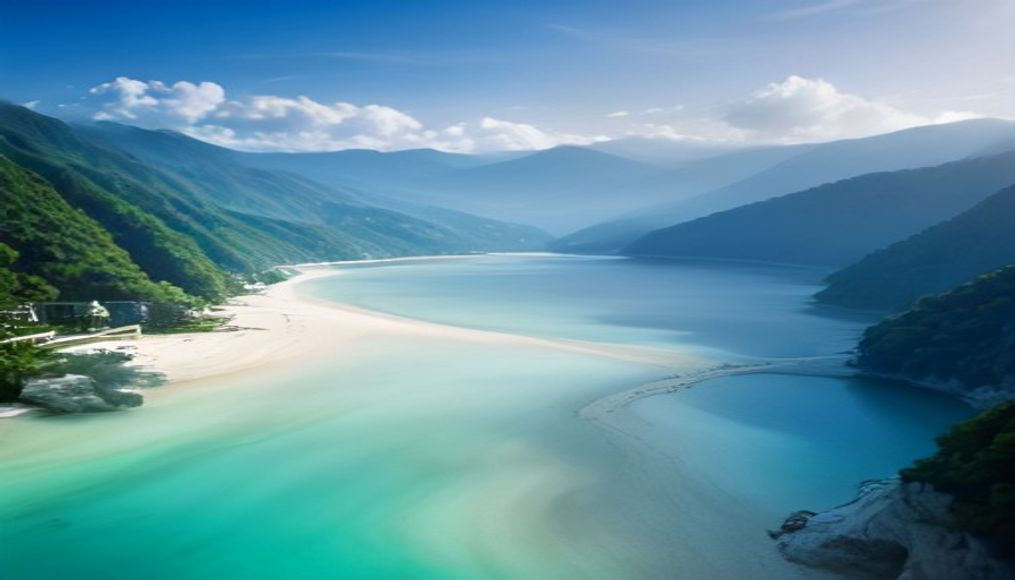
The second, equally ambitious project, is slated for the mainland near the Vjosa-Narta Protected Landscape. This area is a biodiversity hotspot, famous for its wetlands and, crucially, its resident flamingos. This mainland development would complement the island resort, offering perhaps a different flavor of luxury, but still within the high-end spectrum. The sheer scale of the proposed investment – a reported $1.4 billion across both sites – speaks volumes about the ambition behind these projects. Proponents argue this infusion of capital will be a game-changer for the Albanian economy, creating jobs and stimulating growth in related sectors like hospitality, construction, and local services. They envision a future where Albania is not just a hidden gem, but a shining star in the Mediterranean luxury market.
2. The Flamingo Revolution: Protecting Nature’s Treasures
While developers see blueprints and profit margins, activists see an ecological catastrophe waiting to happen. The ‘Flamingo Revolution’ isn’t just a catchy name; it symbolizes the fierce determination to protect the Vjosa-Narta Protected Landscape, home to thousands of migratory birds, including a significant population of flamingos. This area isn’t just pretty scenery; it’s a designated protected area, recognized for its critical role in regional biodiversity. The idea of constructing luxury resorts in or near such a sensitive ecosystem sends shivers down the spines of environmentalists.
The protests aren’t just confined to Albania; they’ve gained significant traction within the Italian-Albanian community, many of whom have deep ties to their ancestral homeland and its natural heritage. They’re organizing a symbolic flotilla, a ‘sail-back’ from Italy to Albania on August 20, 2026, to amplify their message and join local demonstrations. This isn’t just about saving flamingos; it’s about a broader fight for environmental justice, ensuring that economic development doesn’t come at the irreparable expense of natural heritage. Their argument is simple: some things are too precious to be commodified, and the long-term environmental cost of luxury development in Albania could far outweigh any short-term economic gains. (See: Learn more about Albania's geography and history.)
3. The Economic Promise vs. Environmental Cost: A Difficult Balance
Let’s be clear: the potential economic benefits touted by the project’s supporters are not insignificant. A $1.4 billion investment could create thousands of direct and indirect jobs, from construction workers to hotel staff, chefs, and tour guides. It could attract a new class of high-spending tourists, injecting much-needed foreign currency into the local economy and bolstering Albania’s international image as a desirable destination. For a country like Albania, which is still developing its tourism infrastructure, such a large-scale project could be a powerful catalyst for growth, potentially lifting local communities out of poverty and providing new opportunities.
However, critics argue that these benefits come with an unacceptably high environmental price tag. The degradation of protected wetlands, the disruption of migratory bird patterns, and the potential for increased pollution from luxury facilities could have cascading negative effects. What happens to the local fishing industry if the marine ecosystem is damaged? What about the long-term impact on water resources in a region already facing climate challenges? The argument is that once these natural assets are lost, they’re gone forever, and no amount of luxury tourism can bring them back. The true cost of luxury development in Albania, in this view, extends far beyond financial ledgers.
4. International Scrutiny and EU Accession: A Geopolitical Angle
This isn’t just an internal Albanian issue; it has significant international ramifications. The involvement of Jared Kushner’s firm immediately elevated the project’s profile, drawing scrutiny from global media and political observers. But even more critically, the European Commission has weighed in, issuing a stark warning: proceeding with developments that threaten protected environmental areas could jeopardize Albania’s commitments to EU accession. This is a huge deal for Albania, which has been working for years towards joining the European Union.
EU membership isn’t just a political goal; it promises economic integration, stability, and adherence to higher environmental and governance standards. If the project is seen as a violation of these standards, particularly those related to environmental protection and land management, it could significantly delay or even derail Albania’s path to the EU. This adds a powerful geopolitical layer to the debate, suggesting that the cost of luxury development in Albania might not just be environmental or financial, but also diplomatic and strategic. The government is caught between the allure of foreign investment and its long-term European aspirations.
5. Land Privatization and Foreign Influence: A Question of Sovereignty
Beyond environmental concerns, a significant part of the ‘Flamingo Revolution’ centers on issues of land privatization and foreign influence. Activists express deep worries about prime coastal and island territories, often publicly owned or historically accessible, being privatized and handed over to foreign entities for exclusive luxury developments. This raises fundamental questions about national sovereignty, equitable access to natural resources, and the long-term implications for local communities who might find themselves priced out or displaced from their traditional lands.
The fear is that such developments could create ‘enclave tourism,’ where foreign investors and wealthy tourists benefit, while the broader Albanian population sees little long-term gain beyond low-wage service jobs. There’s a strong sentiment that Albania’s natural heritage should remain for its people, not become the exclusive domain of international investors. This isn’t just about economics; it’s about identity, ownership, and who truly benefits from the country’s development. The cost of luxury development in Albania, in this context, touches upon national pride and control over one’s own destiny.
6. Ethical Investing and Sustainable Tourism: Alternatives and Responsibilities
The controversy in Albania serves as a powerful case study for the broader discussions around ethical investing and sustainable tourism. For investors, it highlights the importance of due diligence that extends beyond financial projections to include environmental and social impact assessments. Is a project truly ‘sustainable’ if it destroys a critical habitat, even if it promises high returns? There’s a growing demand for investments that align with ESG (Environmental, Social and Governance) principles, and projects like the Albanian luxury resorts are testing the boundaries of what’s considered acceptable. (See: Impact of urban development on health.)
For travelers, especially those seeking luxury experiences, this situation prompts a critical look at the choices they make. Do they want to support developments that might be contributing to environmental degradation or social inequality? The rise of responsible tourism suggests a growing consumer preference for experiences that are genuinely sustainable, respectful of local cultures, and beneficial to local communities. There’s a massive opportunity for Albania to develop its tourism sector in a way that celebrates its natural beauty and cultural richness without sacrificing its core values. Perhaps smaller, eco-friendly boutique resorts, integrated with local communities and focused on preserving natural assets, could offer a more sustainable path than large-scale, exclusive enclaves. The conversation around the cost of luxury development in Albania is, ultimately, a global one about how we define progress.
7. The Road Ahead: A Looming Showdown
As the August 20, 2026, flotilla date approaches, the tension is palpable. The ‘Flamingo Revolution’ is gaining momentum, fueled by passionate activists and supported by international observers. The Albanian government, caught between the economic promise of foreign investment and the stern warnings from the EU, faces a difficult decision. Will they push forward with the controversial developments, risking environmental damage and a potential setback in their EU accession journey? Or will they heed the calls for conservation and explore alternative, more sustainable paths to economic growth?
This isn’t just a local dispute over a piece of land; it’s a microcosm of a global challenge: how do we balance economic aspirations with environmental responsibility? The eyes of the world are on Albania, watching how this drama unfolds. The true cost of luxury development in Albania is being weighed not just in dollars, but in flamingos, in EU aspirations, and in the very soul of a nation. It’s a story that will undoubtedly continue to generate headlines and spark debate, reminding us that paradise, when bought at too high a price, can quickly turn into a wasteland.
8. Historical Context of Albanian Tourism Development: Lessons from the Past
To truly grasp the current debate, it helps to look at Albania’s history with tourism. For decades under communism, Albania was largely isolated, with tourism almost nonexistent. After the fall of the regime in the early 1990s, the country opened up, but development was often haphazard and unregulated. Many coastal areas saw rapid, unplanned construction, sometimes at the expense of natural beauty and without proper infrastructure. This legacy of quick, sometimes unsustainable, growth casts a long shadow over new proposals.
There’s a strong argument to be made that Albania has a chance to learn from its past mistakes and from the experiences of other Mediterranean countries that sacrificed long-term environmental health for short-term gains. Countries like Spain and parts of Italy now grapple with the environmental consequences of overdevelopment. The ‘Flamingo Revolution’ isn’t just about stopping one project; it’s about advocating for a paradigm shift in how Albania approaches its precious natural assets, ensuring that any development aligns with a sustainable vision for the future, rather than repeating the errors of the past. The cost of luxury development in Albania, in this historical light, becomes a test of foresight and responsible planning. (See: Recent developments in Albania's tourism sector.)
9. The Role of Local Communities: Beyond Jobs and Revenue
While discussions often focus on national economies and international relations, it’s vital not to overlook the direct impact on local communities. The Vjosa-Narta region, for example, isn’t just a bird sanctuary; it’s home to fishing villages, agricultural lands, and communities with deep historical ties to the landscape. The promise of jobs, while attractive, often comes with unspoken trade-offs.
What happens to traditional livelihoods like small-scale fishing or artisanal crafts if the environment is altered? Will locals be able to afford to live in an area that becomes a high-end tourist hub? There’s a concern that luxury developments often lead to gentrification, pricing out original inhabitants and eroding local culture in favor of a homogenized, tourist-friendly facade. Empowering local voices and ensuring their meaningful participation in development planning is crucial for truly sustainable projects. Without their buy-in and genuine benefit, the perceived economic gains are often shallow and inequitable, making the cost of luxury development in Albania a deeply human one.
10. Expert Perspectives: What Do Scientists and Economists Say?
The debate surrounding these projects also benefits from insights from various experts. Ornithologists and conservation biologists consistently highlight the irreplaceable value of the Vjosa-Narta wetlands, not just for flamingos but for a vast array of migratory species. They point to international conventions, like the Ramsar Convention on Wetlands, which Albania is a signatory to, underscoring the legal and ethical obligations to protect such sites. Their research often quantifies the ecosystem services provided by healthy wetlands – natural flood control, water purification, and biodiversity support – services that are lost when these areas are developed.
Economists, too, offer nuanced perspectives. While some champion large foreign investments, others emphasize the concept of “true cost accounting,” which factors in environmental degradation and social displacement into the overall economic assessment. They might argue for models that prioritize high-value, low-impact tourism, focusing on niche markets like ecotourism or cultural heritage tourism, which often yield better long-term returns and greater local benefits without destroying natural capital. The consensus among many independent experts is that a careful, evidence-based approach is needed to truly understand the comprehensive cost of luxury development in Albania.
Frequently Asked Questions about Luxury Development in Albania
- What is the ‘Flamingo Revolution’?
- It’s a movement of environmental activists and concerned citizens, both in Albania and abroad, protesting proposed luxury developments near the Vjosa-Narta Protected Landscape. The name symbolizes their fight to protect the area’s rich biodiversity, particularly its iconic flamingo population, from environmental harm.
- Who is behind the proposed luxury developments?
- Jared Kushner’s investment firm, Affinity Partners, is reportedly driving the proposed $1.4 billion luxury resort projects on Sazan Island and near the Vjosa-Narta Protected Landscape.
- Why is the Vjosa-Narta area so important?
- Vjosa-Narta is a critical wetland ecosystem, designated as a protected area due to its international importance for biodiversity. It serves as a vital stopover and breeding ground for thousands of migratory birds, including significant numbers of flamingos and other rare species.
- How could these developments affect Albania’s bid for EU membership?
- The European Commission has warned that proceeding with developments that threaten protected environmental areas could jeopardize Albania’s commitments to EU accession. Adherence to EU environmental and governance standards is a key requirement for joining the Union.
- What are the main arguments against the projects?
- Opponents argue that the projects will lead to irreversible environmental damage to protected habitats, disrupt migratory bird patterns, increase pollution, and contribute to land privatization and foreign influence over national resources. They also question the long-term benefits for local communities.
- What are the potential economic benefits cited by proponents?
- Supporters believe the $1.4 billion investment will create thousands of jobs, attract high-spending tourists, inject foreign currency into the economy, and elevate Albania’s profile as a luxury tourism destination.
- Are there alternative approaches to tourism development for Albania?
- Many activists and experts advocate for more sustainable, eco-friendly tourism models. These could include smaller-scale, boutique resorts, community-based tourism, and developments focused on preserving and showcasing Albania’s natural and cultural heritage, rather than large-scale, exclusive enclaves.
“`
Trending Now
Frequently Asked Questions
What is the controversy surrounding Albania's $1.4 billion resort?
The controversy centers on a luxury resort development in Albania, spearheaded by Jared Kushner's firm, which has sparked protests known as the 'Flamingo Revolution.' Activists are concerned about the environmental impact on natural habitats, including a vital flamingo sanctuary, and the implications of foreign investment on national sovereignty.
How will the luxury resort in Albania impact the local economy?
Proponents argue that the $1.4 billion resort will boost Albania's economy by creating jobs and enhancing tourism. However, critics worry that it may prioritize foreign profits over local needs and could harm the environment, potentially undermining long-term economic sustainability.
What are the proposed developments on Sazan Island?
The plans for Sazan Island include transforming it from a former military base into an exclusive luxury resort featuring hotels and villas. This development aims to attract wealthy tourists and position Albania as a premier destination for elite tourism.
What is the 'Flamingo Revolution' in Albania?
The 'Flamingo Revolution' refers to a grassroots movement in Albania opposing the luxury resort developments threatening local ecosystems. Activists are fighting to protect vital natural habitats, particularly those of the flamingo sanctuary, from the potential negative impacts of foreign investment.
What are the environmental concerns related to the Albania resort project?
Environmental concerns include the potential destruction of irreplaceable natural habitats and the impact on local wildlife, particularly the flamingo sanctuary. Activists argue that the resort's construction could lead to significant ecological damage, threatening biodiversity in the region.
What did we miss? Let us know in the comments and join the conversation.