Pedagogue Blog

Pass or Fail: The Indirect Cost of Social Promotion and Retention May Surprise You 

In this multi-part series, I provide a dissection of the phenomenon of retention and social promotion. Also, I describe the many different methods that would improve student instruction in classrooms and eliminate the need for retention and social promotion if combined effectively.

While reading this series, periodically ask yourself this question: Why are educators, parents and the American public complicit in a practice that does demonstrable harm to children and the competitive future of the country?

Students who experience social promotion or retention aren’t the only individuals impacted. Put yourself in the shoes of the students who actually passed and the teachers. If you were one of these people, how would you view the student being socially promoted or retained? How is the education system as a whole altered by social promotion and retention?

Passing Students

Students directly affected by retention and social promotion are not the only ones impacted in America’s public schools. Passing students also pay a price for the implementation of social promotion and retention policies. The potential for retention or social promotion is certainly a cause of anxiety. Beyond this cost, however, there are several clearly identified and well-documented costs for “passing” students that relate to the quality of teaching provided when there is a need to support retained or socially promoted students.

Strained relationships between retained students and their non-retained peers are common. Passing and retained students experience significant struggles when trying to socialize together. Although this is not entirely conclusive or indicative of the underlying causes for social withdrawal from retained students, we can infer that there is a risk associated with having a retained student in a classroom. The situation can confuse social experiences for non-retained students and go largely unaddressed by school support systems including counselors, teachers, and administrators.

Teachers

Another obvious cost of retention is to educators. Some teachers feel the concentration on standardized testing of students can serve as a means of “testing” teachers. This places pressure on teachers to instruct in a particular way, to teach to tests, and the like.

The effect standardized testing and graded approaches have on teachers is significant. This method doesn’t target state education agency or middle-level managers in the state bureaucracy, rather standardized testing affects only the educators. Education reform that brought about the pass-or-fail focus included systems of “testing teachers” and evaluating classroom performance. However, assessment was only possible by also prescribing the curriculum and emphasizing the testing of students.

The cost of all this is the quality of education overall and the scope that teachers have to manifest the elements of that quality. When they are impacted by retention and social promotion, teachers are essentially forced to undermine their skills, trivializing and reducing the value of the curriculum content and encouraging the distancing of children from the very purpose of schooling

The Education System

Regardless of the point at which retention occurs, there are direct financial costs associated with retaining a student in the same grade. The average cost of a typical developing and progressing student was approximately $10,700 in 2009–2010. The direct cost to retain approximately 2.3 percent is more than $12 billion per year for the number of students retained. Note that this estimate excludes the costs of any remedial services provided to the students repeating a grade, such as any learning support or specialized services, as well as earnings foregone by retained students due to their delayed entry into the labor market.

Social promotion costs are, of course, much more difficult to track. Having students of varying abilities within a single classroom undermines the ability of teachers to address the needs of all students equally unless they have other specific supports in the classroom. Both retention and social promotion policies cost our education system in terms of efficiency and effectiveness. The quality of education received by children in the United States will remain low so long as the policies of retention and social promotion remain consistent for states and school districts.

A retained child is expected to only make small advances in their educational progress. They are not likely to be that much better off academically, and may fall behind in their general education and overall academic development. Many of these issues can be traced to a loss of confidence in the entire education system as a whole.

Socially promoted students face similar problems, although from a different perspective: they already struggle academically, their schools promote them nevertheless. They not only have to apply skills and knowledge they may not have mastered from the previous year; they’re also expected to follow through and pick up a series of new skills and new knowledge sets at a more advanced level.

Social promotion and retention practices undermine the experiences of all students, teachers and negatively impact the education system overall. With this in mind, how can anyone continue to support these policies?

 

Personalizing the Extended School Year Experience

In this district, ELL and special education students aren’t just maintaining their literacy skills over the summer—they’re improving them.

By Katie Gutowski

Perched on the threshold of summer, most K-12 classes are coming to a close as we begin preparing for the extended school year (ESY) and summer school programs to begin. ESYs are commonly used to address the needs of students with learning disabilities, to prevent the notorious “summer slide,” and to preserve the academic skills students have acquired over the school year. At Colonial School District in Delaware, we’ve utilized an ESY for several years, but it was only recently that we decided to give our program a personalized upgrade.

As the current English Language Arts (ELA) and English language learner (ELL) specialist for Colonial, it’s my responsibility to oversee our curriculum in Colonial. Literacy is my top priority. It’s also frequently the primary focus for ESY programs: to ensure that our students don’t lose their reading skills over the summer and continue to work toward their IEP goals. So, when I was promoted from a building literacy coach to a district literary coach positions, I was included on the ESY plans we had in place and thought, “How can we increase the academic achievement of ESY?”

I started in education 14 years ago as a first-grade teacher, and fell in love with literacy. Teaching kids to read, unlocking the mysteries of English—I loved the whole process. From the start of my career at Colonial I have been a reading specialist, working with some of our most challenging students in kindergarten through fifth grade. These were the same kids who would later become the focus for our ESY programs: students who struggle to meet grade-level standards in reading and language arts, non-native speakers, and children who required individualized education plans (IEPs).

These children all shared the same need for continued assistance with literacy over the summer, but came from such different backgrounds and had such different reasons for needing this assistance that it became very clear that we weren’t giving our students the individualized instruction they required. Our district was experiencing a complete shift in our approach to how we classify and instruct our students, and the Colonial Extended School Year was a wonderful place to implement these new, personalized practices.

Teaching at School and at Home

When serving our non-readers and special education students who were struggling the most with their reading, we looked first at their IEPs and tried to best match them with groups of kids who shared their level of required instructional assistance. Then we used an online reading instruction and intervention program from Reading Horizons to help them continue their practice and application at home.

A lot of our kids experience that summer slide, especially those with special needs, so combining our group work in class with independent efforts at home within the ESY approach allows us to support our students with the most engaging instruction we can.

Changing How We Categorize Our Students

We also needed to give our students the unique guidance their circumstances required without confining them to strict homogeneous groups. By grouping all our children together under one approach to instruction, we were limiting the possibilities for helping each child learn and improve. The mistake of this initial method was believing that an equal approach would produce equal results. When implementing our ESY, we wanted that level of equality when it came to our student’s literacy success, but realized that in order to get our students there, we needed to provide them with personalized paths.

Now we take a more holistic view. We look at reading skills, level of English proficiency, speech issues, etc., and consider that student as a whole. Then we ask, “What type of instruction will best meet the needs of this child?” When it comes to our special education and ELL students, for example we use Reading Horizon’s Discovery® software to introduce them to the decoding rules and provide them with the tools and support they need to learn quickly and effectively. Providing the right approach through a variety of resources works just as well for our other groups of students.

Reclassifying ELLs

One of the priorities for Colonial’s re-categorizing efforts is reducing the amount of time that students remain classified as ELL. We want to make sure that our students are receiving appropriate instruction in speaking, listening, reading, and writing so they reach proficiency. Because of ESSA, the cut score is changing, so it’s more difficult to reclassify students than it was before. We’re working hard to understand the new system with the goal of achieving the same levels of progress we initially conceived.

In order to assist our teachers in fully understanding the needs of ELL students and what their instructional needs are, we’re providing additional training. It can be very challenging for a classroom teacher who doesn’t have the tools to best support their ELL students, so we want to ensure that they recognize these needs and have the tools to address them. When ELL programs aren’t effective, students tend to remain for longer periods and are less likely to be successful.

Overall Shift Toward Personalized Learning

We continue to focus on making sure our students are reading so we build in enough time within their reading block during the school year and also in our ESY. We train our teachers on effective instructional methods, options for independent practice, and application. We’re always adapting our approach to personalized learning and ESY—this year we were better than we were last year and we hope to improve even more this summer. As we learn what works for certain individuals and groups, we will further refine our practice to ensure that our students benefit from the additional instruction and support that is available during the summer months.

Katie Gutowski is an ELA and ELL Specialist at Colonial School District in New Castle, Delaware. She received her Masters in Reading at Wilmington College and her B.A in Elementary Education at King’s College.

What is Digital Literacy?

Every educator is familiar with the concept of literacy—the ability to read and write. A person who is illiterate, who cannot read or write, will inevitably struggle to get along in society. It’s impossible to go on to higher education or get a high-paying job without the ability to read and write. Even daily tasks, like reading a newspaper or filling out job applications, are difficult for an illiterate person.

In today’s world, literacy goes beyond just the basic ability to comprehend text. Today’s students will also need to master a new skill—digital literacy. Cornell University defines digital literacy as “the ability to find, evaluate, utilize, share, and create content using information technologies and the Internet.”

Digital literacy, by this definition, encompasses a wide range of skills, all of which are necessary to succeed in an increasingly digital world. As print mediums begin to die out, the ability to comprehend information found online becomes more and more important. Students who lack digital literacy skills may soon find themselves at just as much of a disadvantage as those who cannot read or write.

Because digital literacy is so important, educators are increasingly required to teach students digital literacy in the classroom. In many ways, this is similar to what educators have always done in teaching students to read and write. In other ways, however, digital literacy is a brand new skill.

Most students already use digital technology, such as tablets, smartphones, and computers, at home. Many students already know how to navigate the web, share images on social media, and do a Google search to find information. However, true digital literacy goes beyond these basic skills.

One of the most important components of digital literacy is the ability to not just find, but also to evaluate, information. This means finding the answer to a question or a bit of needed information and then judging whether the source is reliable. Educators can, and should, teach students how to tell whether information on the internet is true. The ability to weed out false information and find reliable sources is a key part of digital literacy and a crucial life skill in the 21st century.

Educators can start by teaching students how to find author information, dates of publication, and other information that can reveal whether an online source is reliable. Students should also learn to tell the difference between different types of websites. For example, a .com site may be less reliable than a .edu site. Understanding these differences is one example of digital literacy.

Learning how to locate information is just one part of digital literacy. Knowing how to share information is another. Students today are constantly warned about the dangers of posting inappropriate images or text online, but it’s still important for teachers to discuss. The ability to create and share online is considered a part of digital literacy and should be taught in schools.

Students should know how digital writing differs from traditional writing—for example, how to include images and links in writing. They should also have an understanding of what kind of audience they’re sharing with online. Just like a personal narrative essay differs from a research paper, a post on Facebook is different from an article for a website or blog.

As technology becomes a part of daily life, it’s more important than ever for educators to teach digital literacy. Whether they plan on going to college or not, students will need digital literacy to be successful in their personal and professional lives.

How can educators help their students navigate the digital world? Let us know what you think about digital literacy and education!


Why global education rankings don’t reveal the whole picture

Daniel Caro, University of Oxford and Jenny Lenkeit, University of Oxford

Country rankings in international education tests – such as PISA and TIMSS – are often used to compare and contrast education systems across a range of countries. But it isn’t always an even playing field.

This is because countries with very different social and economic realities participate, so countries such as Norway, Russia, Chile, Lebanon and Thailand are all being compared against each other. And this is without the difference in socio-economic backgrounds of these different countries being taken into account.

If the latest world education rankings are anything to go by, Turkey and Thailand perform poorly when it comes to their students’ achievement in science. But our analysis shows that if you look at the rankings differently (from an even starting point), both Thailand and Turkey may in fact be just as good as some of the high performing Asian countries.

Our analysis is a much fairer comparison, as it allows for the differences in wealth and social development in which students learn and teachers teach. It builds upon our previous work, where we produced and analysed an indicator of “effectiveness”. The effectiveness indicator ranks performance of countries as if they all had similar socio-economic conditions – thus levelling the playing field.

This makes it easier to see which countries are actually the most effective at educating their students, with social economic factors like wealth taken into account.

New style rankings

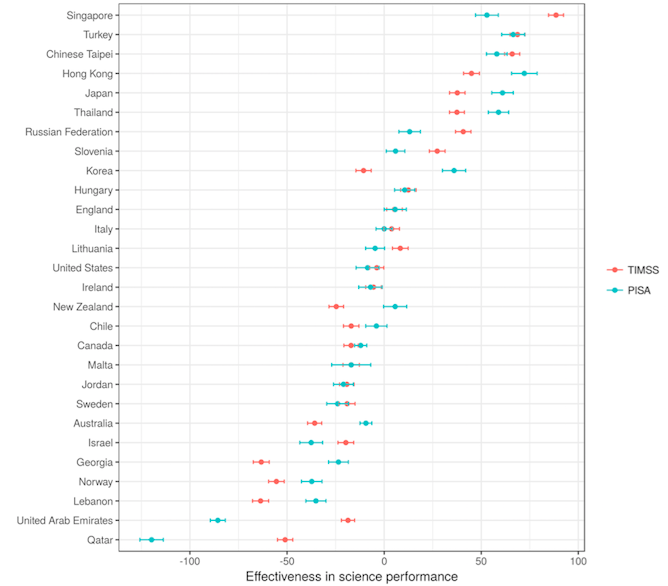
The graph below shows how countries are ranked in their effectiveness. At the top of the effectiveness ranking, we find education systems such as Singapore and Japan, which are also generally high performing in PISA and TIMSS.

TIMSS-PISA 2015. Values higher than zero (towards the right-hand side) indicate that students in those education systems perform above expectations, meaning the education system is effective. Those values below zero, to the left, indicate ineffective education systems.
Author provided

But our analysis also revealed that countries such as Turkey and Thailand are actually highly effective and perform above expectations in terms of education. This is despite both countries having an overall lower performance score in the global education rankings.

As the graph shows, the performance of education systems in Turkey and Thailand is underestimated if guided by country rankings alone. This is because although these countries perform below average and rather poorly in PISA, they are as effective as high performing Asian countries.

This means that Turkey and Thailand would be ranked among the highest performing countries in the world – if there was no socio-economic differences between countries.

TIMSS-PISA 2015. Effectiveness vs performance according to rankings. The horizontal line at 0 separates effective from ineffective systems and the vertical line at 500 indicates average performance for TIMSS and OECD education systems.
Author provided

Our analysis also shows education systems in Norway are ineffective, and the same was found to be true of Australia. So while these countries are ranked highest in human development in the world, they are not among the highest performing in these international tests when we level the playing field.

On the lower end of the effectiveness ranking, we find Qatar and the United Arab Emirates. These countries are also among the lowest performing in PISA rankings and could be doing much better for their high income per capita levels.

Fair comparison

It is clear then that overall performance rankings alone do not make a fair comparison when it comes to judging the quality of education in different countries. And our analysis shows how the socioeconomic conditions of a country are vitally important when comparing global performance in education rankings.

The ConversationUsing our data, there would certainly be a case for countries like Chile, Malta, Georgia, the United Arab Emirates and Qatar to look to Turkey and Thailand to work out how to improve their education systems. And as our analysis shows, global education rankings are probably not the best measure of educational performance after all.

Daniel Caro, Research Fellow, Oxford University Centre for Educational Assessment, University of Oxford and Jenny Lenkeit, Research Fellow, Oxford University Centre for Educational Assessment, University of Oxford

This article was originally published on The Conversation. Read the original article.

Does it pay to get a double major in college?

Christos Makridis, Stanford University

Students are bombarded with an array of competing opportunities during college, all with the promise that each will lead to a better job or higher earnings upon entering the “real world.”

One such option is the double major, in which a student earns two bachelor degrees at once, sometimes in entirely different disciplines. But will doing so lead to a higher-paying job? Is it worth the “lost” time that could have been spent in other activities such as internships or student government?

In college, I earned several degrees, which led to a broader education that I believe enriched the quality and creativity of my thinking and improved my career prospects. As an economist-in-training, however, I wanted hard data to back up my anecdotal experience.

To do this, I crunched some numbers from the Census Bureau on over two million full-time workers and analyzed them to see if there’s a connection between earning multiple degrees and financial gain in the years following graduation.

Double-majoring on the decline?

While double majors have been a popular way to balance a deep study of the humanities with traditional degrees in the sciences, basic tabulations suggest that the percent of workers with a double major has been roughly constant, or even decreasing, over the past six years depending on how one restricts the sample.

For example, looking at all individuals between ages 20 and 29, only 12.5 percent of the population had a double major in 2015, which is down from 14.2 percent in 2009, according to my calculations from the American Community Survey (ACS) Census data. At the same time, the percent of workers within the same age range with any kind of college degree grew from roughly 23 to 36 percent.

On the one hand, double-majoring can help students avoid becoming overly specialized, exposing them to new ways of thinking and communicating with others outside their primary area. On the other, it creates a trade-off with other educational opportunities.

In 2013, the National Commission on Higher Education Attainment went so far as to urge universities to “narrow student choice” to promote degree completion – perhaps by restricting or even banning the completion of double majors.

While the number of college graduates in the workforce is growing, the number of double majors is shrinking.
Francesco Corticchia/Shutterstock

What existing research says

Previous research on whether a double major pays off has shown mixed results.

A 2011 paper found that a double major, on average, yields a 3.2 percent earnings premium over a peer with only one degree. The paper noted that the premium ranged from nothing at liberal arts colleges to almost 4 percent at “research and comprehensive” universities.

A more recent study, published in 2016, concluded that liberal arts students who tacked on a second degree in either business or a science, technology, engineering or math (STEM) field earned somewhat more than their single-major peers. But the authors noted that there was no premium when compared with a single STEM or business degree.

Both of these papers, however, are based on relatively small cross-sections of individuals, which makes them less representative and limits their statistical power. In addition, they focus on single years – 2003 and 2010, respectively – which means the results may be affected by any transient economic conditions that occurred that year.

What my research showed

In my own analysis, I examined data on over two million full-time workers aged 20 to 65 over a six-year period (2009-2015) using Census Bureau data. The bureau provides the largest source of publicly available information on individuals and households, helping to ensure that the analysis is both representative and detailed. The data set included information on each individual’s earnings, occupation, undergraduate degrees and a wide range of other demographic data.

My results showed that liberal arts students who take on a second degree in a STEM field earned, on average, 9.5 percent more than their liberal arts peers with only one major, after controlling for individual demographic factors, such as age, years of schooling, marital status, gender, family size and race. Students who combined a liberal arts degree with a business major earned 7.9 percent more.

You might be thinking that this isn’t really a surprise. Of course STEM majors will earn more than their liberal arts counterparts. While my analysis already controls for the fact that STEM and business majors generally earn more than their counterparts, I wanted to dig a little deeper. So I restricted the sample to compare STEM-liberal arts double majors with those with a single STEM degree. Although the premium shrinks, engineers and scientists who take on an extra liberal arts degree earned 3.6 percent more, on average.

I also wanted to see if the premium exists when comparing people in similar occupations. For example, consider two journalism school grads, one with a single degree, the other with a second in engineering. Naturally the one who becomes a working journalist, which generally pays poorly, will earn less than his classmate who decided journalism wasn’t for her and got a job at Google.

So, controlling for occupation, I found that the returns to double-majoring in liberal arts and STEM were 5.2 percent, and 3.4 percent with a business degree. In other words, even when we look within narrow occupational categories, those who double-majored across fields tended to earn more than those with a single degree.

So should I double major?

So for those of you about to head to college, should you go for a double major? Or should you advise it to your kids?

As with anything, it depends. I tried to make my analysis as robust as possible, but it’s still not entirely clear whether the connection between the double degrees and higher earnings is causal. However, my results do suggest it’s more than mere correlation.

Furthermore, an association with higher earnings doesn’t mean the double major is right for everyone, particularly since the premium varies based on an individual’s own career path and preferences. Every college student needs to weigh the pros and cons of every potential opportunity, from picking up a second degree to joining student government.

The ConversationMy research suggests, however, that students who are eager to expose themselves to more frames of thinking and disciplinary knowledge may well be investing in the very foundation that prepares them for a successful and innovative career.
Christos Makridis, Ph.D. Candidate in Labor and Public Economics, Stanford University

This article was originally published on The Conversation. Read the original article.

The Myth of the College Dropout

Jonathan Wai, Duke University and Heiner Rindermann, Chemnitz University of Technology

When Facebook founder Mark Zuckerberg was asked to give this year’s commencement address at Harvard, he asked for advice from Bill Gates.

Zuckerberg said, “They know we didn’t actually graduate, right?”

To which Gates replied, “Oh, that is the best part! They actually give you a degree!”

This recent exchange between two famous Harvard dropouts might lead you to think college doesn’t matter. Numerous media stories and even famous billionaires are glamorizing dropouts or encouraging kids to skip college entirely.

While it’s true there are successful college dropouts, statistically speaking, they are not the norm. As researchers in education and talent, we found that the vast majority of the country’s success stories are college graduates, such as Sheryl Sandberg (Harvard), Jeff Bezos (Princeton) and Marissa Mayer (Stanford).

The myth of the mega-successful college dropout

In a recent study, we investigated how many of the wealthiest and most influential people graduated college. We studied 11,745 U.S. leaders, including CEOs, federal judges, politicians, multi-millionaires and billionaires, business leaders and the most globally powerful men and women.

We also examined how many people graduated from an “elite school.” (Our definition included the eight Ivy League schools, plus many of the top national universities and liberal arts colleges consistently high in the U.S. News rankings for both undergraduate and graduate education.)

We found about 94 percent of these U.S. leaders attended college, and about 50 percent attended an elite school. Though almost everyone went to college, elite school attendance varied widely. For instance, only 20.6 percent of House members and 33.8 percent of 30-millionaires attended an elite school, but over 80 percent of Forbes’ most powerful people did. For whatever reason, about twice as many senators – 41 percent – as House members went to elite schools.

For comparison, based on census and college data, we estimate that only about 2 to 5 percent of all U.S. undergraduates went to one of the elite schools in our study. The people from our study attended elite schools at rates well above typical expectations.

Do elite schools matter?

This year, elite schools saw an increase in applications and selectivity. Research suggests there is no difference in adult income between students who attended highly selective schools and students with similar SAT scores who attended less selective schools. At least for long-term earnings, where you go may not be critical, as long as you attend and graduate.

Yet, our data show that for students with talent and motivation to make it to the top of U.S. society, an elite college might just help you get there – whether it’s the networks you acquire or the brand on your resume.

While looking at over 11,000 successful leaders, we rarely encountered people who came from extremely poor or disadvantaged backgrounds. Helping disadvantaged talented students enter elite schools could promote diversity among future leaders.

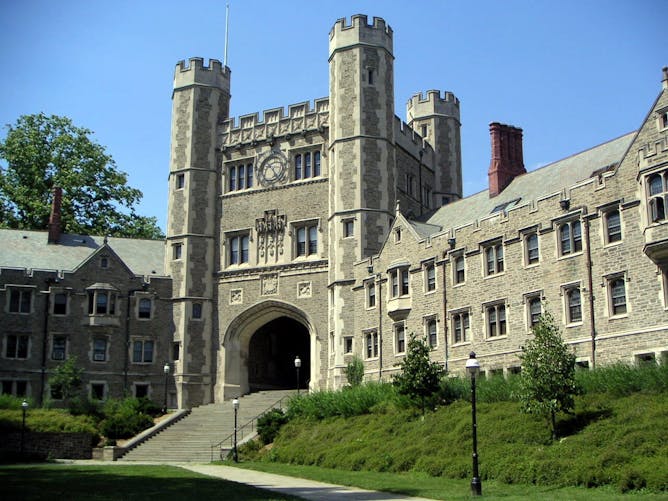
Princeton University had a record-setting number of applicants for its class of 2021.
Sindy Lee / flickr, CC BY-NC-ND

College matters

Admittedly, the educational path of the cream of the crop may not apply to most people. So, going to college may not be the right or even the best path for everyone. However, if you’re a student thinking about not going to college or considering dropping out, remember that even Gates and Zuckerberg got into college. Even if you’re not aiming for mega success, doing the work to get into and graduate from college today may open important doors.

The ConversationPerhaps in the future, college may not be as important to employers. But for now, college dropouts who rule the world are rare exceptions – not the rule.

Jonathan Wai, Research Scientist, Duke University and Heiner Rindermann, Professor of Educational and Developmental Psychology, Chemnitz University of Technology

This article was originally published on The Conversation. Read the original article.

Pass or Fail: Retention Has Long-Term Effects on Students

In this multi-part series, I provide a dissection of the phenomenon of retention and social promotion. Also, I describe the many different methods that would improve student instruction in classrooms and eliminate the need for retention and social promotion if combined effectively.

While reading this series, periodically ask yourself this question: Why are educators, parents and the American public complicit in a practice that does demonstrable harm to children and the competitive future of the country?

It has been said that one single choice or event can alter the course of a person’s entire life. How would you feel if this decision was made for you based on completely misguided principles?

The long-term impact of retention has been studied extensively. Students overwhelming state that they consider retention to be a life-changing experience. Students often indicate that they experience a dramatic increase in stress and an even more pronounced dislike of school. Supporting an overwhelming amount of research, this signifies that the education system sometimes uses student retention as an intervention strategy for identification of a learning disability.

An assessment was made to identify low self-esteem signals for students in a research study conducted by Jessica Fanguy and Richard D. Mathis. Five of eight student participants and five of the eight parents commented that low self-esteem was an issue following the retention. One student’s father specifically indicated that they felt their child had low self-esteem and another parent indicated that their child clearly “felt bad about herself,” largely as a result of their retention experience. Two parents also reported that their children were giving up too easily and not believing in themselves, especially at school, in academic areas. One of the parents described how their child had called herself “stupid,” and one of the students indicated that they were aware that they did not set goals too high because they felt they could not achieve them. The student did not believe there was any point in setting challenging goals.

The researchers came to the conclusion that the students might well have had fewer self-esteem issues (and a greater inclination to set challenging goals) if they had not experienced retention and if it had not proved such a negative experience. Other students stated that the teachers had mistreated them, adding to the feelings of failure, but also making the students angry. They expressed their frustration at having to repeat a year. One student described dropping out of school to escape the resentment and sense of failure, as well as the victimization by teachers. According to Fanguy and Mathis, only two of the students interviewed demonstrated any signs of positive self-concepts; describing themselves in a positive light and feeling optimistic about their abilities.

Indicative of other studies that have assessed retention among students, Fanguy and Mathis clearly demonstrated that retention is destructive to a student’s development on many fronts. Although not all retained students are likely to experience such debilitating self-esteem issues, anger at retention, or oppression as the students in the study, the findings suggest that a range of problems apply, and often leave students with a sense of failure.

Socially promoted students experienced similar problems, including poor self-esteem, poor sense of self-worth, issues with peers, anger, and resentment toward teachers and school administrators, and general apathy toward school. In fact, some studies suggest that peer isolation or bullying is sometimes even more extreme for socially promoted students than for those who are retained. Without reasonable self-esteem, adolescents can prove unable to resolve the crisis of the identity during development. Thus, any experience debilitating to self-esteem is likely to leave students at a serious disadvantage.

In a relevant study, it was concluded that academic ability was one of the many factors used by adolescents to evaluate themselves. Failure at school can certainly compromise self-esteem and many students identify failure to pass a grade, the experience of retention, or even social promotion, as distinct evidence of academic failure.

Issues in the home can also factor into retention and social promotion problems, too, and several of the students featured in the study by Fanguy and Mathis cited lack of parental support as problematic. Two students even went so far as to say that they might have done better in school and potentially avoided retention completely, had they received more help from parents. The perceptions belong to students; whose own identity and conception of schoolwork undoubtedly play some role in the outcome of their academic efforts. There was, at least, a perceived need for students to have better, more extensive supports. The students believed their failing grades were at least partly due to inadequate support in school or at home. The discrepancy of perceived versus actual need is worth further investigation, particularly with regard to students’ lack of accomplishment.

Fanguy and Mathis also conclude that many of the students in the study lacked the skills to advocate for themselves. This potentially identifies another non-academic cost of retention, that affected students may already be reluctant to ask for help from school representatives or family when they need it.

If the decision to retain a student has been made, how much do you personally feel this choice will impact them both in the short and long term?

Tax credits, school choice and ‘neovouchers’: What you need to know

Kevin Welner, University of Colorado

As Republican lawmakers craft a tax reform bill, there’s speculation on the import taxes, value-added taxes and tax cuts it may usher in. Meanwhile, it’s likely that the bill will also include a major education policy initiative from the Trump administration: a tax credit designed to fund private school vouchers.

A decade ago I started researching this new kind of voucher – funded through a somewhat convoluted tax credit mechanism – that appears to have particular appeal to President Trump and other Republicans.

These new vouchers (or “neovouchers”) are similar to conventional vouchers in many ways, but there are some important differences. It’s those differences that neovoucher advocates most care about and that everyone should understand.

President Donald Trump and Education Secretary Betsy DeVos tour Saint Andrew Catholic School in Orlando, Florida.
AP Photo/Alex Brandon

Conventional vouchers

What exactly is a school voucher? Typically, a voucher is direct financial support that helps families pay for the cost of private K-12 schooling. Proponents see vouchers as a way to help children attend nonpublic schools. Detractors see vouchers as undermining funding and support needed by public education.

All vouchers subsidize tuition with tax dollars. This can be accomplished in many ways, and the nuances matter.

Conventional voucher policies use the relatively straightforward method of allocating state money to give vouchers directly to eligible parents. The parents, in turn, give the vouchers to a private school of their choice. These schools are sometimes secular, but are usually religious.

The private schools then redeem these vouchers to obtain money from the state. In the 16 states where conventional voucher policies exist, they produce about 175,000 vouchers annually. This amounts to 3.3 percent of the nation’s private school population.

Yet, these direct vouchering programs present four major problems for school choice advocates.

First, they’re typically available only to lower-income families; wealthier families are usually not eligible.

Second, when governments directly provide voucher money, participating schools are generally required to comply with a variety of guidelines, such as accreditation requirements, anti-discrimination regulation, minimum teacher qualifications, financial reporting and/or the administration of a standardized test to students receiving the voucher.

Third, vouchers are simply not politically popular – which is why the more palatable term “opportunity scholarships” (courtesy of messaging guru Frank Luntz) has become increasingly popular.

Finally – and importantly – state constitutions often prohibit the channeling of state money to religious institutions. In many states, this means that conventional voucher programs cannot exist if the program includes religious schools. Although the Supreme Court has ruled that vouchers don’t violate federal law, state constitutions can create legal obstacles that are more formidable than those under the U.S. Constitution.

St. Joseph Academy, a Catholic school in Cleveland, is one of the top three schools to benefit from Ohio voucher dollars. Ohio’s conventional vouchers can be applied to secular and nonsecular schools alike, but 97 percent go to religious schools.
Oarbogast / Wikimedia Commons, CC BY-SA

Vouchers on steroids

To sidestep these issues, many state lawmakers have embraced a new kind of voucher policy that gets essentially the same result but changes the state’s role from paying for vouchers to issuing tax credits.

This approach was first adopted in Arizona, in 1997, where the legislature passed a law setting up a system in which any taxpayer could “donate” money to a special, private nonprofit corporation. That corporation then issues vouchers to parents, who use them to pay for private school tuition. The taxpayers then get the money back from the state in the form of a tax credit.

Arizona’s constitution – typical of language in state constitutions – requires that “No public money or property shall be appropriated for or applied to any religious worship, exercise, or instruction, or to the support of any religious establishment.” But Arizona’s elaborate mechanism keeps the specific dollars out of state coffers. Consequently, state funding only indirectly supports religious institutions. The Arizona Supreme Court found this distinction sufficient, ruling that the tax credits did not violate the state’s constitutional prohibition against spending public money for religious support.

Beyond this legal advantage, advocates favor this sort of tax-credit-voucher method because it appears less likely to be regulated. It’s also likely to be open to a wider range of parents – not just lower-income or special needs families. And the complexity of the neovoucher approach obscures the fact that it’s really a voucher program, making it less of a political lightning rod.

Some wealthy taxpayers can even receive tax benefits exceeding the value of their donations. This baffling outcome is because of a loophole tied to the Alternative Minimum Tax (AMT), an extra tax imposed on some wealthier taxpayers to ensure that they pay their fair share. The AMT limits certain tax breaks, such as the ability to deduct state tax payments from federal taxes. However – and here’s the twist – these AMT taxpayers can deduct charitable contributions. And so, these wealthier taxpayers can shift their state tax payment into a “charitable” contribution and instantly transform the payment into a federal deduction. In the six states that give a full tax credit for voucher donations, those taxpayers can get back the full value of their voucher plus a deduction for the donation.

A decade ago when I wrote a book explaining these tax credit policies and labeling them “neovouchers,” they existed in only six states and generated about 100,000 vouchers. Today, 17 states have tax-credit policies similar to Arizona’s on their books, generating a quarter-million vouchers and growing every year.

Students at The King’s Academy in West Palm Beach, Florida. Florida is one of the states that issues tax-credit-style vouchers.
Randal Martin / Wikipedia, CC BY

These new vouchers aren’t likely to help kids

Do these vouchers improve student achievement? The research suggests that we shouldn’t expect children’s learning to be affected.

An evaluation of Florida’s neovoucher law – which the Trump administration appears to be using as its model – found that students receiving these neovouchers had a nonsignificant (-0.7 percentile points) loss in math and nonsignificant (+0.1 percentile points) gain in reading on standardized test scores.

Similarly, research focused on conventional vouchers has tended to reach this same conclusion, finding no significant change in student test scores. More recent studies, looking at conventional vouchers in Louisiana, Ohio and Indiana actually find that test scores have declined – in some cases, by surprisingly large margins.

What to expect

While, thus far, neovoucher policies have existed only on the state level, proposals are now appearing at a federal level.

In February of 2017, Rep. Todd Rokita of Indiana and three Republican colleagues introduced a bill (H.B. 895) that sets forth the basic structure for a federal neovoucher policy.

But the particulars of the neovoucher policy that ultimately emerges in the Republicans’ tax reform bill are up for grabs. Based on the wide variety of existing state neovoucher policies, it is possible that the federal proposal will provide a full 100 percent credit (as does H.B. 895) or a credit of only 50 or 65 percent. It might limit eligibility to children in families at the poverty level, or it might have expanded or even universal eligibility.

It also remains to be seen whether federal neovouchers would be allocated only in states with existing programs or might be distributed in all states, including those with no such laws.

Interestingly, some of the staunchest advocates of state-level neovouchers have expressed concern and even opposition to a federal initiative. Beyond general conservative resistance to federal overreach in education policy, they voice familiar concerns about the likelihood of regulations following money, particularly from future Democratic leadership in Washington, D.C.

And, of course, a federal neovoucher program would face significant fiscal obstacles as well. Absent large cuts elsewhere, these policies would strain the federal budget, requiring some creative work on the part of lawmakers – particularly since the tax reform bill will have to be revenue neutral. The cost of vouchers for even a fraction of the nation’s 57 million K-12 students could easily cost tens of billions.

This daunting price tag, however, probably won’t deter President Trump or Education Secretary Betsy DeVos, who have stated their opposition to the “public” part of public schools, with Trump even denigrating them as socialistic “government schools” that are part of the “American carnage” that “leaves our young and beautiful students deprived of all knowledge.”

The ConversationIt seems unlikely that they will forego their chance to give tax dollars to private education.

Kevin Welner, Professor, Education Policy & Law; Director, National Education Policy Center, University of Colorado

This article was originally published on The Conversation. Read the original article.

Is charter school fraud the next Enron?

Preston Green III, University of Connecticut

In 2001, Texas-based energy giant Enron shocked the world by declaring bankruptcy. Thousands of employees lost their jobs, and investors lost billions.

As a scholar who studies the legal and policy issues pertaining to school choice, I’ve observed that the same type of fraud that occurred at Enron has been cropping up in the charter school sector. A handful of school officials have been caught using the Enron playbook to divert funding slated for these schools into their own pockets.

As school choice champions like Secretary of Education Betsy DeVos push to make charter schools a larger part of the educational landscape, it’s important to understand the Enron scandal and how charter schools are vulnerable to similar schemes.

What is a related-party transaction?

Enron’s downfall was caused largely by something called “related-party transactions.” Understanding this concept is crucial for grasping how charter schools may also be in danger.

Related-party transactions are business arrangements between companies with close associations: It could be between two companies owned or managed by the same group or it could be between one large company and a smaller company that it owns. Although related-party transactions are legal, they can create severe conflicts of interest, allowing those in power to profit from employees, investors and even taxpayers.

This is what happened at Enron. Because Enron wanted to look good to investors, the company created thousands of “special purpose entities” to hide its debt. Because of these off-the-books partnerships, Enron was able to artificially boost its profits, thus tricking investors.

Enron’s Chief Financial Officer Andrew Fastow managed several of these special purpose entities, benefiting from his position of power at the expense of the company’s shareholders. For instance, these companies paid him US$30 million in management fees – far more than his Enron salary.

Fastow also conspired with other Enron employees to pocket another $30 million from one of these entities, and he moved $4.5 million from this scheme into his family foundation.

Enron’s collapse revealed the weaknesses of the gatekeepers – including boards of directors and the Securities and Exchange Commission – that are responsible for protecting the markets. Because of lax accountability and federal deregulation, these watchdogs failed to detect the dangers posed by Fastow’s conflict of interest until it was too late. Congress responded by passing the Sarbanes-Oxley Act, which tightened the requirements for oversight.

Enron employees lost their jobs and billions of dollars in pension benefits.
AP Photo/Pat Sullivan

How do related-party transactions occur in charter schools?

Forty-four states and the District of Columbia have legislation that allows for charter schools. Just like public schools, charter schools receive public funding. However, unlike public schools, charter schools are exempt from many laws governing financial transparency.

Without strict regulation, some bad actors have been able to take advantage of charter schools as an opportunity for private investment. In the worst cases, individuals have been able to use related-party transactions to fraudulently funnel public money intended for charter schools into other business ventures that they control.

Such was the case with Ivy Academia, a Los Angeles-area charter school. The co-founders, Yevgeny Selivanov and Tatayana Berkovich, also owned a private preschool that shared facilities with the charter school. The preschool entered into a sublease for the facilities at a monthly rent of $18,390 – the fair-market value. The preschool then assigned the sublease to the charter school at a monthly rent of $43,870.

The Los Angeles district attorney’s office charged the husband-and-wife team with multiple counts of fraud. Selivanov was sentenced to nearly five years in jail in 2013.

Fraudulent related-party transactions can also occur between education management organizations (EMOs) and their affiliates. EMOs are for-profit or nonprofit entities that sometimes manage charter schools, and might also own smaller companies that could provide services to those schools.

For example, Imagine Schools is a nonprofit EMO that runs 63 charter schools enrolling 33,000 students across the country. It also owns SchoolHouse Finance, a for-profit company that, among other things, handles real estate for many of Imagine’s charter schools. Though charter schools typically spend around 14 percent of their funding on rent, some of the Imagine Schools were paying SchoolHouse Finance up to 40 percent of their funding for rent.

One of the charter schools operated by Imagine Schools, Renaissance Academy in Kansas City, sued the company for charging it excessive rent. In 2015, a federal judge agreed, ordering Imagine Schools to pay almost $1 million in damages to Renaissance. The court’s ruling suggested that Imagine Schools was essentially taking advantage of the charter school: The EMO profited from the excessive rent and failed to tell the school’s board of directors how the cost might disrupt the school’s ability to pay for textbooks and teacher salaries.

Students at Renaissance Academy charter school work on a paper recycling project. Renaissance Academy shut down in 2012 and was later ordered to receive $1 million in damages from its EMO, Imagine Schools.
AP Photo/Orlin Wagner

The problem could get worse

Because of insufficient oversight, Fastow’s fraudulent use of related-party transactions at Enron was not stopped until it was too late. Similarly, the Ivy Academia and Renaissance Academy examples reveal insufficient checks and balances in the charter school sector. In both cases, the monitors responsible for protecting charter schools found nothing wrong with the rental agreements.

It might be tempting to conclude that Ivy Academia and Renaissance Academy stories are anecdotal – that fear of widespread abuse of related-party transactions is overblown. However, there have been dozens of allegations of similar transgressions, including against industry giants such as K12 Inc. and Pennsylvania Cyber Charter School. Though only a handful of these allegations have resulted in the removal of the charter school operators, related-party fraud in the charter school sector is an emerging issue.

In September 2016, the Education Department’s inspector general released the findings of an audit of several dozen charter schools detailing significant problems with related-party transactions.

The report also made several recommendations for additional oversight. Such protection could come at the state level (e.g., providing guidance to states regarding charter school contractual agreements with EMOs) or at the federal level (e.g., improving the Department’s own monitoring of charter school-EMO relationships).

However, Trump has generally expressed a dislike of federal regulations, and DeVos, who played a major role in the development of Michigan’s charter school law, has successfully fought attempts to increase oversight of Michigan’s charter school sector. With such anti-regulatory stances, it seems unlikely that Trump or DeVos will support the kind of oversight that’s needed to protect charter schools.

The ConversationThis aversion to regulation at the federal level could cost taxpayers millions of dollars and could result in the closing or disruption of schools – potentially damaging the education of students they serve. Since charter schools are growing fastest in low-income and minority communities, these children stand to be hurt the most.
Preston Green III, John and Carla Klein Professor of Urban Education, Professor of Educational Leadership and Law, University of Connecticut

This article was originally published on The Conversation. Read the original article.

Pass or Fail: The Psychological Effects of Social Promotion and Retention

In this multi-part series, I provide a dissection of the phenomenon of retention and social promotion. Also, I describe the many different methods that would improve student instruction in classrooms and eliminate the need for retention and social promotion if combined effectively.

While reading this series, periodically ask yourself this question: Why are educators, parents and the American public complicit in a practice that does demonstrable harm to children and the competitive future of the country?

How impressionable were you growing up? Do you think what your teachers and peers thought of you mattered? As an adult, you likely don’t feel the weight of other peoples’ opinions the way you did as a child. Children have yet to establish their own identity, though, so outside factors easily influence their sense of self.

Often, studies concentrate on the obvious issues regarding grade retention, yet researchers Jessica Fanguy and Richard D. Mathis consider these effects to only be the tip of the psychosocial iceberg. Although grade retention has significantly reduced student numbers in schools, consideration of the cause of this is perhaps more relevant and indicative of the true underlying cost. Furthermore, the psychosocial delays that lead to the dropping out of retained students are more likely to be long-lasting, and often time permanent.

Erik Erikson stages of identity development and his research, which has ready application to retention and social promotion policies, sheds considerable light on these issues. Erikson specifically noted that having a high level of self-esteem was critical to identity development for adolescents. When young adults feel good about themselves, they develop a positive identity. Those who do not possess a pleasant self-image, tend to struggle with their identity and can acquire maladaptive or dysfunctional behaviors.

As Fanguy and Mathis point out, Erikson’s theory regarding identity development focuses on individual psychological growth, including how it pertains to adolescent life, and isolates social components of development that include family, school, and peers. In their study, Fanguy and Mathis specifically apply this theory to demonstrate the damaging psychosocial fallout for grade-retained students.

In student and parent interviews, Fanguy and Mathis noted that the most common cause for retention was environmental stress, apathy towards school, insufficient preparation for the following grade level and poor behavior patterns. These were the causes the interview subjects, both students and parents, identified as ultimately leading to retention. Whether these were the actual root, and whether or not they might have been something more abstract (such as the quality of teaching or the nature of the testing), could not be easily gauged from the student or parent perspective.

Fanguy and Mathis performed an in-depth study using eight students who had been retained in eighth grade, five white and three black students of five boys and three girls. All except one were middle class, with the remaining student in a lower income bracket. In a series of interviews with the students and their parents, Fanguy and Mathis discovered several factors that led to their retention.

Three of the students cited environmental factors. These encompassed being sick for a portion of the year, one’s mother had been sick, and one lived in a “bad” neighborhood with ongoing struggles due to drug transactions and the accompanying violence. Other issues included poor behavior patterns and lack of preparedness. Three of the students noted that severe apathy set in after they were retained. For two of these students, their apathy was directly related to the inability to perform their schoolwork.

Hopelessness in the face of difficult assignments led them to give up, both inside and outside of the classroom. Several children expressed extreme distress once they discovered they had been retained, with others noting they became angry and withdrawn. Two female students, reported a heartbreaking sense of loss after their friends had moved on and that friendships were completely severed.

An enormous issue experienced by five of the eight students was relentless bullying by peers. Names such as “stupid” and “dumb,” were used to tease the retained students. Two male study participants got into fights with other students as a result of the harassment. Interestingly, most of the parents were unaware their children were being bullied. The prominence of psychosocial issues tracing back to retention were profound. The overwhelmingly negative reaction from retained students suggests there’s both strong and detrimental impact on their self-esteem.

Think back on your childhood. How would you have responded if you were retained in school? What lasting impact would retention have had on your relationships, motivation level and identity development as a child?

Pass or Fail: The Real Cost to the Individual

In this multi-part series, I provide a dissection of the phenomenon of retention and social promotion. Also, I describe the many different methods that would improve student instruction in classrooms and eliminate the need for retention and social promotion if combined effectively.

While reading this series, periodically ask yourself this question: Why are educators, parents and the American public complicit in a practice that does demonstrable harm to children and the competitive future of the country?

What do you see as the main positives of retention and social promotion in American schools? How about the drawbacks? Are these practices actually helping students or do they only work in theory?

Edmond Shoat, a nineteen-year-old Chicago dropout who had been held back a year, left high school just two weeks before graduation. By any estimate, he has had a hard life. He grew up in the Cabrini-Green project, notorious for its gang violence. His uncle, who wasn’t much older than he, was murdered near their apartment – Edmond heard the shots, and rushed out to find his uncle dead.

Following that experience, the family tried to get themselves into a better situation. “I’d say about a month later, my whole family moved out of the projects,” says Edmond. “My mom, she worked at a nursing home. And you know, sometimes she’d either quit the job, or we’d have to move. We couldn’t pay the rent. Or we’d find another job and move somewhere else. We did a lot of moving around.”

Edmond wound up at Senn High School, one of the worst-performing schools in an area known for particularly terrible schools. He didn’t do badly, however, and got on the football team. But one day he got into a fight, which escalated and eventually landed him in jail for a week, on a charge of illegally possessing a weapon (a pocketknife he’d forgotten about, which wasn’t used in the fight). Around the same time, he became a father: his three-year-old son, Rajan, now lives with the child’s mother in Atlanta.

A chemistry teacher at Senn, Antonio San Agustin, tried to help Edmond stay on track with his studies while the teen was in jail and working his way through the court system. “He was a good kid,” Agustin remembers. “And he came to class, always looking to make up his assignments because he was absent quite a bit. I didn’t have problems with him making up the assignments.”

But even the intervention of concerned teachers couldn’t keep Edmond in school. He flunked his first attempt at the GED and now has a low-paying job. He dreams of being able to move to live closer to his son, and of eventually becoming an actor. Yet, the statistics are not on his side.

Do the pros of social promotion and retention outweigh the cons? Assessing the costs of retention on an individual is difficult, but attempts have been made. A study by Thompson and Cunningham concluded that retention basically discourages students whose motivation and confidence are already shaky. Findings indicate that promoted students gain an opportunity to advance through next year’s curriculum, while retained students go over the same ground and thus fall further behind their advancing peers.

Several other studies identify a high correlation between student retention and student dropout rates. Goldschmidt and Wang, for instance, applied the National Longitudinal Study (NELS) to examine student and school factors associated with students dropping out in different grades. Their findings showed that consistent with previous research, being held back is the single strongest predictor of dropping out and that its effect is consistent for both early and late dropouts. Retention can destroy self-esteem and otherwise undermine social and personal adjustments. With retention typically occurring during the most formative and impressionable years, the impact can be overwhelming.

Retained students have increased risks in health-related areas such as stress, low social confidence, substance abuse, and violent behaviors. Several studies have demonstrated that students view retention as being more degrading and stressful than losing a parent or going blind, which is clearly indicative of a tremendous cost personally and socially. Highly negative development changes, including below average self-esteem, higher instances of social isolation from peers, shame regarding grade retention and being older than classmates, resentment of teachers and administrators and an overall diminished quality of life. Without feeling confident in their education setting and lacking meaningful, positive relationships with peers, teachers, and administrators, a student’s academic potential is undermined.

Could retention have played a primary role in Edmond dropping out of school? What could have gone differently to help him succeed? Would Edmond be living out his dreams as an involved father and working actor if retention hadn’t been in play?

16 Apps that Support the Creative Process

Creativity is more than the ability to paint a pretty picture; it is a way in which original ideas are born and how they take form. It is about pushing boundaries, solving problems and bringing together skills in unique ways.  In a recent poll, 60% of CEO’s agreed that creativity was the most important skill to have in the workplace. With that in mind, it is important that we start turning to technology to facilitates the creative process. Through technology, we are not only offered new mediums but ways in which to organize our thoughts. Below are 16 apps that will support the creative process for both artists and big thinkers.

  1. Brain Sparker

Having a creative block is something that happens to everyone. Brain Sparker provides random, creative prompts that will inspire writing, art or just brainstorming session. With more than 150,000 users, there is no doubt that the prompts are inspiring people every day.

  1. Oflow

Oflow is a collection of techniques that help the creative brain. There are words of encouragement, prompts as well as features to collect and collate work in one app.

  1. Tayasui Sketches

While this may just seem a simple sketchpad, the possibilities are endless. There are options to paint in watercolors, acyclic or create complex, layered art. Artists have already put this app to the test, and the gallery is full of examples of what can be accomplished. Great for art classes and personal use.

  1. Ideament

This app is made to facilitate planning and the presentation of ideas. Draw flow charts, diagraphs, mind maps or store pictures and text in one convenient space. Perfect for the classroom and workplace.

  1. Magic Piano

Music has long been linked to the creative parts of the brain, and this app pushes composition and musical play. Learn to play classical and pop songs or simply play around and play around and let the music inspire you.

  1. Paper

Writing on paper is still a favorite of many creatives, and this app allows just that. Take pictures of important writings, pictures and other scraps of paper and save them all in one space. This virtual scrapbook is perfect for the disorganized creative.

  1. Trello

Working creatively as a group is difficult to manage. Trello makes this easy by providing a place where teammates can see their assignments, upload documents and pictures and ensure that everyone is on track.

  1. Quik

Editing videos should not be complicated. This app makes the process easy and allows for the addition of music and still images. It also works on GoPro videos and is a must have for anyone putting together videos for social media or personal use.

  1. Sync Space

This interactive “whiteboard” allows for collaborative creating. This is not a file sharing app but rather a space where creative minds can meld together and work in the same space. This is great for collaborative efforts and project brainstorming.

  1.  Moleskine

Evernote and Moleskine have teamed up to bring this amazing app. Convert written notes into digital ones though the use Evernote’s camera feature. This great team up ensure that all those scribbled in the sidelines of your Moleskine journal make it into a formal format.

  1. 123 Catch

Turn any imagine into a virtual 3D creation with 123 Catch. Pictures of things and people can be converted into 3D images that can be used to study, explore or print with a 3D printer. This creative tool can be used in any academic sphere or simply to create art.

  1. Moment Diary

Keeping a diary is a must for any creative thinker. Moment Diary is a great way to contain all these thoughts and ideas. The writings are time stamped, and users have praised the flexibility and privacy of this app.

  1. Loop

Animation has very been this easy. This app turns hand drawn pictures into animated features that can be shared and used in projects. The simplicity of this app makes it a winner and users have praised it for its minimalist quality and its all-around ability to make simple drawings come alive.

  1. iThoughts

Available both on Apple products as well as Windows, this mind mapping app is a great way to visualize concepts and organize ideas. Easy to use and simplistic in design this app gets the job done.

  1.  Behance

Being inspired by others is an important creative tool, and with Behance, it is a click away. This space brings innovators, inventors and creative minds together and encourages users to upload portfolios of their work, in the hopes of finding investors and collaborating.

  1. MindTools

Creativity and business skills come together in this app. There are sections that teach problem-solving and push its users to think of business in a creative light. There are over 100 skill lessons included in this app.

So, there you have it. Push the boundaries of creativity by using an app to help organize, create or simply learn a new skill. Creativity has no bounds, so explore it with one of these apps.


Latest Posts