Pedagogue Blog

Districts Need To Set Up Wi-Fi for Students in Public Housing

Students who live in poverty are among the most at-risk students in the public school system. There is extensive research to show that students from low-income families struggle more with behavior and academics for a wide variety of reasons related to poverty. Often, this means that students who come from poverty are left behind in the classroom.

Many students whose families live below the poverty line also don’t have internet access at home. This creates all kinds of problems as well. Students who have access to the internet can go home and get online to work on homework, do research, or just learn about something they’re interested in for fun. Students without the internet may struggle with completing assignments, or feel stuck when they can’t get easy homework help.

As more and more teachers give homework assignments that require internet access, the problems created by the digital divide get bigger. When students are expected to use the internet just to complete their assignments, those students who can’t get online inevitably get left behind.

So what can school districts do to help students whose families can’t afford internet access? One solution is to provide Wi-Fi for these families, free of charge. This sounds ambitious and expensive, but it may be one of the best methods educators have to fight the cycle of poverty.

We already know that there are millions of families with school-age children who don’t have internet access. Almost all of these families lack internet access because they can’t afford it. Additionally, we know that this creates problems for students in school. So why not eliminate these problems completely by simply providing internet access to needy families?

An easy way to target the families who are most likely to be unable to afford internet access would be to give free Wi-Fi to students in public housing. Public housing developments are home to families that live below the poverty line. The government provides assistance with housing for these residents, who must meet certain income requirements.

Providing Wi-Fi to students in public housing is an easy first step for districts looking to close the digital divide. Public housing developments contain a large concentration of low-income students and families, and setting up the infrastructure needed for free internet access would be easiest here.

The benefits of providing free Wi-Fi to students are numerous. Students would be able to complete homework and research on their own time. They would also be able to build crucial digital literacy skills that their peers with easy access to Wi-Fi already have.

Though it may still sound far-fetched, consider the number of school districts successfully implementing similar programs. Kent School District in Kent, WA built kiosks that provide free Wi-Fi for students in public housing, and they’ve had success with students using the kiosks. Families are using the Wi-Fi to check students’ grades and stay in touch with schools, and students are using it to do homework.

Other school districts have tried similar approaches. In California, Coachella Valley Unified School District has put free Wi-Fi on school buses. Students can get online during the ride to or from school. The buses are also parked in trailer parks where many families don’t have internet access. The program has been a huge success, and it’s given internet access to students who need it most.

As internet access becomes more important to students, it’s crucial that districts take the steps necessary to ensure all students can get online. For school districts where students can’t afford Wi-Fi at home, providing it free to those families who need it most may be the only solution that ensures all students have equal access.

Do you think districts should provide Wi-Fi for students in public housing? Let us know what you think schools should be doing to close the digital divide.

How Virtual Reality Could Change the Way Students Learn

Virtual Reality (VR) is changing the way people see the future. As with video games emerging into the classroom in the early 2000s, this new technology will soon be making its way into classrooms as well. Many teachers are receptive to working with this technology, but some of them are not quite aware of the effect VR can have on a classroom environment. It can change the way students learn in the long run.

Student Motivation

In an age awash with ever-growing and changing technology, students are become more difficult to motivate in the classroom. Instead of learning what they need to know for graduation, they are more fascinated with their Smartphones and tablets. They would rather chat, take selfies, and play games than pay attention to what their teachers have to say. There is a suspicion that VR use in the classroom can alter that motivation. It can take students’ love of technology and refocus it to be directed at curriculum instead of their social lives outside of school.

Collaboration Opportunities and Independence

VR offers chances for students to interact with one another and classrooms around the world in ways that traditional classroom technology has never before seen. Students can create their avatars for use across many applications and platforms that are unique to them. Therefore, they feel a sense of independence and autonomy in their VR lessons because they feel fully immersed in the technology. When collaboration takes place, though, they do not have to fear speaking or to interact directly with people if they are a little sky. The avatar does the interaction for them in the long run. This aspect also allows students to work on their social skills in a way that is not so isolated.

Accessing the Abstract

Some curriculum aspects can be difficult for students to learn. Many abstract concepts in math and science can be very difficult to learn for students because they cannot visualize what is going on. VR experiences help to make those abstract concepts a reality. They become interactive to the point that students can almost reach out and touch them, handle them in a way that could never have happened without VR technology.

Entertaining While Educating

Because students feel as if they are being entertained with VR technology, they are more likely to immerse themselves into curriculum concepts. They can take a journey into parts of the body, for example, in ways that make the systems and their functions real life. They can reach out and interact with certain organs and make things like cells move from one area of the body to the next. They are surrounded by visual and audio aspects that cannot be taught in a standard classroom.

Effect on Learning Retention

Students are more likely to remember experiences where more than one sense is involved. Therefore, more concepts can be branched together while new connections are formed in the brain through different senses. Instead of only reading and hearing about a concept, they are able to lay their hands on something through VR. They do not necessarily feel weight or texture, but their imaginations are activated in a way that makes a personal connection to them during the learning process. Therefore, they are enjoying the experience more, so retaining this information becomes easier in the long run.

Conclusion

Learning with VR is becoming more and more a reality for some classrooms. It does not matter what the cost of this technology is financial. The benefits students reap from using it in the long run with motivation and retention alone outweighs those costs considerably. Students will be able to change the way they learn with VR easily since they can adapt to this technology in ways that previous generations never thought to.


The A-Z of Education Blogs: Letters TH-Y

In this multi-part series, we are profiling the best of the best education blogs, in alphabetical order. In the previous article, I introduced letters TE and in this one, I will discuss letters TH-Y.

Click here to access all of the articles in this series.

The Innovative Educator

Lisa Nielsen’s daily blog posts focus on ways to make education more relevant for students by embracing technology and channeling their passions. Recent topics include how to teach students to evaluate the accuracy of the news, and how to tell if your students are digital learners.

Score: Activity 20, Originality 19.5, Helpfulness 22.5, Authority 23

Total Score: 85

Twitter: @InnovativeEdu

The Nerdy Teacher

Nicholas Provenzano shares his ideas about being a connected educator. Recent articles outline how to create a meaningful Makerspace program.

Score: Activity 25, Originality 21, Helpfulness 21.5, Authority 23

Total Score: 91.9

Twitter: @thenerdyteacher

Email: [email protected]

The Educator

This is another UK site, but it’s worth mentioning as it covers some fresh topics, such as finding out what refugee camp teachers go through, teachers’ work life balance, and what you can learn from a classroom in Singapore.

Score: Activity 17, Originality 17, Helpfulness 17, Authority 17

Total Score: 68

Twitter: @TheEducator_UK

The College Puzzle

Geared more towards students, this blog focuses on how to adapt and thrive in college. They post regularly, making it a site to bookmark for regular perusal.

Score:  Active 25, Original 19, Help 18, Authority 16

Total: 78

Twitter: @Michael_Kirst

The Cornerstone for Teachers

This blog by Angela Watson is interesting because it focuses on teachers and managing yourself, as well as your classroom. There are also plenty of resources, courses, etc. available from Angela on the page.

Score: Activity 20, Originality 21, Helpfulness 21, Authority 20

Total Score: 82

Twitter: @Angela_Watson

The Curriculum Corner

In this blog, founded by two teachers, you will find lesson plans, activities to do in the classroom, etc. targeted toward busy teachers who want to access information fast. Unlike so many other blogs these days the focus here is old fashioned games and activities. The activities are aimed to meet national state standards.

Score: Activity 17.6, Originality 17, Helpfulness 18, Authority 18

Total Score: 70.6

Email: [email protected]

Twitter: @curriculumcornr

The Innovative Educator

Lisa Nielsen got angry because she found education boring so she decided to do something about it. On her blog she shares innovative tips for educators.

Score: Activity 23, Originality 22, Helpfulness 20, Authority 23

Total Score: 88

Twitter: @InnovativeEdu

The Learning Spy

David Didau likes exploring psychology and learning which he talks about on his blog, setting out with the idea that possibly everything you ever knew about education might be wrong. He is based in the UK, but his thoughts are as relevant for teachers in the US. If you want to find out what techniques you’re using in the classroom that have actually been examined to work and which are just presumed to work, then this blog is for you.

Score: Activity 22, Originality 23, Helpfulness 21, Authority 23

Total Score: 89

Email: [email protected]

Twitter: @DavidDidau

The Jose Vilson

A math teacher turned teaching activist promoting social justice in education, Jose Vilson shares his thoughts on the latest happenings in education, offers support to minorities in teaching and talks about teaching students of low income households. The blog has been listed on several “top blog” lists.

Score: Activity 19, Originality 24, Helpfulness 18, Authority 23

Total Score: 84

Twitter: @thejlv

The Learning Network

This is the New York Times Learning Network, which is a great network to tap into if you’re looking for lesson plans centered around news stories. There are also news quizzes, a film and picture club and various contests that your students can get involved in.

Score: Activity 24, Originality 20, Helpfulness 17, Authority 19

Total Score: 80

Twitter: @nytimes

The Organized Classroom

This blog by Charity Preston mixes hands on classroom DIY with technology tips, classroom management tips, etc. There are plenty of video workshops too.

Score: Activity 17, Originality 17, Helpfulness 18, Authority 18.3

Total Score: 70.3

Twitter: @theOCblog

The PE Geek

It sounds somewhat contradictory to introduce edtech to PE, but it’s not. And here you’ll learn why. From time to time there are also other topics related to edtech and teaching covered, so even if you don’t teach PE, you might want to stop by.

Score: Activity 22, Originality 23, Helpfulness 19.5, Authority 20

Total Score: 84.5

Twitter: @mrrobbo

The Power of Educational Innovation

School administrator Liz Davis chronicles her adventures in leading technology innovation in her school and her region. Her recent posts tell a story of inspiring students to lead through an Edcamp program.

Score: Activity 18, Originality 22, Helpfulness 21, Authority 21.5

Total Score: 82

The Teaching Palette

They may not post often, but their posts related to teaching art are incredibly helpful if you are indeed teaching art!

Score: Activity 19, Originality 18, Helpfulness 18, Authority 20

Total Score: 75

Twitter: @TchingPalette

The Theory Blog

This blog looks at some of the most entrenched ideas in higher education and questions them. It is thought provoking, even if you do not always agree, making it well worth a monthly check for updates.

Score:  Active 15, Original 25, Help 18.5, Authority 19

Total: 77.5

Twitter: @BonStewart

Think Inclusive

This blog is for anyone teaching in an inclusive classroom. Here you will find tips from other educators that you can implement.

Score: Activity 17, Originality 20.5, Helpfulness 20, Authority 22

Total Score: 79.5

Twitter: @think_inclusive

Times Higher Education

A higher education blog staple, Times Higher Education takes in the news and events about and on campus on a daily basis. It is a great way to start the day catching up on events that you may have missed or to prepare for tomorrow.

Score:  Active 25, Original 18.5, Helpfulness 23, Authority 20.9

Total: 86.9

Twitter: @TimesHigherEd

Top Hat Blog

Top Hat strives to keep students and professors working together. They cover a good bit of news and assessments about higher education edtech too.

Score:  Active 23, Original 21, Helpfulness 20, Authority 22

Total: 86

Twitter: @TopHat

Top Performers

If you are interested in the policies and practices of countries that have the best educational systems, this is a blog that will give you insight. It will make you question what’s good and what’s bad in the American system and possibly leave you with ideas for how to make your personal teaching better.

Score: Activity 21, Originality 21, Helpfulness 15, Authority 23

Total Score: 80

Email: [email protected]

Twitter: @educationweek

Totally Rewired

The tagline for the site says it all – “…education, technology and random stuff.” The site is a great source of information about higher education, and a bit of random news and trending topics to keep you entertained as well as informed.

Score:  Active 12, Original 22, Help 18, Authority 16

Total: 68

Twitter: @Chri5Rowell

Udacity

The primary focus is on data and technology, but there is also a heavy emphasis in how they change higher education. It is an interesting blog to track for those who are interested in technology or who want to see where edtech could take higher education in a few years.

Score:  Active 19, Original 21, Help 18.3, Authority 20

Total: 78.3

Twitter: @Udacity

UnCollege

This is a blog aimed at a very specific niche in higher education – student taking a year off of going to school. Since the point is to take a break, the blog gives you ideas and advice about how to make that year both productive and enjoyable so that you are ready to go back and finish your degree with enthusiasm.

Score:  Active 20, Original 25, Help 15, Authority 18.6

Total: 78.6

Twitter: @UnCollege

University Business

If you are in administration, this is a must follow blog to keep you informed and help you plan for the future. With multiple blogs posted daily, there is always something new for your to learn or consider.

Score:  Active 25, Original 17, Help 20, Authority 18.5

Total: 80.5

Twitter: @UniversityBusiness

User Generated Education

If you are looking for extraordinary activities for elementary school kids, then this blog by Jackie Gerstein Ed.D is for you! Here you will find activities that far surpass the normal range and help both teachers and kids think outside the box.

Score: Activity 19, Originality 24, Helpfulness 22, Authority 20

Total Score: 85

Twitter: @jackiegerstein

Web 2.0 Classroom

Renowned for his insightful tweets and retweets, Steve Anderson blogs about powerful ways to use technology in the classroom. Most recently, he posted about the power of TED talks and how to teach kids to evaluate news sources.

Score: Activity 25, Originality 24, Helpfulness 24.5, Authority 25

Total Score: 97.5

Email: [email protected]

Twitter: @web20classroom

Will Richardson

If you want a thought provoking blog that takes on random subjects, this one does not disappoint. While other blogs tend to repeat each other, this one is utterly unique and enjoyable when you want to cogitate about something different.

Score:  Active 22, Original 25, Help 17, Authority 15.5

Total: 79.5

Twitter: @WillRich45

Yes, Tech!

A technology instructional coach, Pam Shoemaker, blogs about the ways in which technology is changing the face of education. She will inspire you to take on challenges such as learning to code or becoming a Google trainer.

Score: Activity 21, Originality 19.5, Helpfulness 17, Authority 14.5

Total Score: 72

Email: [email protected]

Twitter: @shoemap

Conclusion

As you can see, there is no shortage of great education blogs to choose from! Subscribe to those that meet your needs best, and watch your knowledge of education expand in no time.



Pass or Fail: Retention and its Roots in Early American Public Education

In this multi-part series, I provide a dissection of the phenomenon of retention and social promotion. Also, I describe the many different methods that would improve student instruction in classrooms and eliminate the need for retention and social promotion if combined effectively.

While reading this series, periodically ask yourself this question: Why are educators, parents and the American public complicit in a practice that does demonstrable harm to children and the competitive future of the country?

Today’s practice of retaining students is a far cry from what took place in America’s earliest public school classrooms. 

Before assessing the American education system, it is necessary to understand where our roots lie. We must consider how public education became enshrined in the United States, what the objectives of public education were, how the public education system in the United States was developed, and what efforts have been made to reform the system since its inception.

The United States should be viewed from an educational standpoint as an essentially European-derived enterprise. In particular, because of the religious make-up of the first European settlers, we have a strong Protestant lineage. The goal of America’s public education system has been relatively consistent: to produce satisfying outcomes in eight broad categories:

  1. Basic academic knowledge and skills, including reading, writing, math skills, and knowledge of science and history.
  2. Critical thinking and problem-solving abilities, including the ability to analyze information and apply knowledge to new situations.
  3. Appreciation of the arts and literature, including participation in and appreciation of musical, visual, and performing arts as well as cultivation of a love of literature.
  4. Preparation for skilled employment, including appropriate workplace qualifications.
  5. Social skills and a strong work ethic, including communication skills, a feeling of personal responsibility, and the ability to work with and interact with others from varied backgrounds.
  6. Citizenship and community responsibility, including public ethics and knowledge of how government works.
  7. Physical health, including lifelong exercise and healthy eating habits.
  8. Emotional health, including self-confidence and respect for self and others.

In 1749 Benjamin Franklin pioneered American thinking on education by proposing that Pennsylvania establish a public academy of education for adolescents. Franklin suggested that such an institution should also emphasize physical fitness, as well as academics. A man of many ideas and insights, Franklin also spoke up on the importance of studying history, because it taught students temperance, order, frugality, and perseverance. Franklin thought schools should require competence in reading, arithmetic, and science, and that they should be accountable for teaching these skills. However, Franklin and his contemporaries did not envision assessments of the quality of educational institutions based on how well students acquired the skills and knowledge.

The Federalists, led by Alexander Hamilton, held yet a slightly different view on education, suggesting that universal education would assist in socializing citizens, helping them to accept the values of their rulers, but also preparing young people for a “law-abiding” adulthood.

Falling somewhere between the aforementioned two perspectives was George Washington, who contended in his first State of the Union address that Congress should promote schools that taught citizens how “to value their own rights.” Washington recognized that public opinion makes policy in a democracy and, as a result, “it is essential that public opinion should be enlightened.” In none of these instances, though, does it appear that rigid standards for reading, writing, and arithmetic are the foundation for accountability. Schools were expected to go well beyond such basic provisions and, in effect, become responsible for the creation of productive, well-informed, and engaged citizens.

More than 70 years after Franklin’s comments on the components of an optimal public education, Jefferson clarified and elaborated. Jefferson believed a proper education should give all citizens the information they needed to undertake transactions at their businesses. He thought it should enable citizens to calculate for themselves, express their ideas, contracts, and accounts in writing; to improve their morals and faculties via reading, and to understand their duties to their neighbors and country.

The 1780 Massachusetts Constitution, drafted by John Adams, another of the founding fathers, laid out the first legal requirement for public education. This state constitution noted that the duty of the legislative and executive branches would be to maintain public schools. “Wisdom and knowledge,” the document declared, “as well as virtue, diffused generally among the body of the people, [is] necessary for the preservation of their rights and liberties. In addition to teaching academic subjects, public schools should also be required to include lessons on the principles of humanity and general benevolence, public and private charity, industry and frugality, honesty and punctuality, sincerity, good humor, and all social affections, and generous sentiments.”

There is clear evidence that the government took to heart much of what the founding fathers had to say on this topic. The 1787 Northwest Ordinance provided funds to new states that allowed them to establish public education systems, declaring that “religion, morality, and knowledge, being necessary for good government and the happiness of mankind, schools and the means of education shall forever be encouraged.”

Even in the earliest days of America, the notion that public education was a necessity was accepted. Of course, at that time the nation lacked the infrastructure to provide effective access to public education, so such support was mostly theoretical. Still, there were many who came forward in support of a public education system that embraced most, if not all, of the ideas and principles that the founding fathers had set forth.

This basic support was founded on the fact that people believed in access to education as a right — a belief that would be dissected over time to bring us to the retention-social promotion context of today.


The A-Z of Education Blogs: The Letters TE

In this multi-part series, we are profiling the best of the best blogs in education, in alphabetical order. In the previous article, I introduced letters S-TC and in this one, I will discuss the letter TE.

Click here to access all of the articles in this series.

Teach

From online teaching tips, to the latest research on the effectiveness of homework assignments, this blog is an incredible resource for any teacher. The topics are varied and relevant. Teach is actually a blog owned and operated by 2U Inc, which enables leading colleges and universities to deliver their high-quality degree programs online. However, the blogs are often geared towards teachers teaching K-12.

Score: Activity 20, Originality 18, Helpfulness 18, Authority 21

Total Score: 77

Twitter: NA

Email: [email protected]

Teach Like a Champion

According to themselves Teach Like a Champion provides educators with a set of techniques, a shared vocabulary, and a framework for practice that equip teachers to achieve dramatic results with their students. The blog, on the other hand, contain blogs that are both personal and revealing, showing how the educators come to the conclusions they do. A worthwhile blog to read if you want to be part of revolutionizing education.

Score: Activity 21, Originality 21, Helpfulness 21, Authority 21

Total Score: 84

Email: [email protected]

Twitter: @Doug_Lemov

Teacher Cast

Here you will find tutorials, news and tips related to teaching. Recent topics include learning to create auto grading quizzes using Google Forms and the top 10 classroom management tips for teachers. It’s nice to see it’s not just about the tech space.

Score: Activity 22, Originality 20.5, Helpfulness 21, Authority 22

Total Score: 85.5

Twitter: @TeacherCast

Teacher Tech

A certified Google trainer, Alice Keeler will help you keep up with Google’s constant expansions. She’s exceptionally skilled in the use of Google Classroom.

Score: Activity 24, Originality 23, Helpfulness 23.5, Authority 24

Total Score: 94.5

Twitter: @alicekeeler

Te@cher Toolkit

It’s been called the most influential blog on education in the UK and given it manages to top some of the lists in the US too, that might just be true. It is written by Ross Morrison McGill who has been teaching since he was 18 and the topics covered vary from talking about teachers’ fear of looking foolish to using comedy to improve literacy. Whilst topics concerning educational policy in the UK might not be of interest to you, the majority of posts are as relevant in the US as they are in the UK.

Score: Activity 24, Originality 21, Helpfulness 21, Authority 24

Total Score: 90

Twitter: @TeacherToolkit

Teacher Tube

This is a blog sharing instructional videos covering just about any and every subject. A great resource for any teacher looking to incorporate videos in the classroom. Some videos offer higher quality than others, so it’s a matter of finding the ones that work for you.

Score: Activity 21, Originality 24, Helpfulness 24, Authority 21.5

Total Score: 90.5

Twitter: @teachertube

Teaching Blog Addict

If you like getting freebies (every Friday); lesson plans, printouts and the likes, then Teaching Blog Addict can help. What’s more, it links up an astounding amount of bloggers that blog about teaching, so whether you’re looking for kindergarten or first grade inspiration for teaching you will find it here. However, the blog is somewhat confusing with links going off in all directions.

Score: Activity 17.9, Originality 17, Helpfulness 18, Authority 18

Total Score: 70.9

Teaching for the Whole Story

This is a relatively new blog on Education Week by Ariel Sacks who is a is a middle school language arts teacher and instructional-support coach. She blogs about various elements of teaching, mainly related to reading in the classroom. Covering interesting and useful topics, it’s a blog well worth reading.

Score: 19, Originality 17, Helpfulness 18, Authority 19

Total Score: 73

Email: [email protected]

Twitter: @arielsacks

Teaching NOW

Teaching NOW is crafted by Education Week Teacher Assistant Editor Madeline Will. The apt description on the blog reads: “Coverage runs the gamut from the inspirational to the infuriating, from practical classroom tips to raging policy debates.” The blog does cover various very interesting topics.

Score: Activity 20, Originality 19, Helpfulness 21, Authority 20.5

Total Score: 80.5

Twitter: @EdWeekTeacher

Teaching With Technology

Bethany Petty shares tips and ideas that she learned from the trenches of her own “flipped, blended and gamified classroom.” Posts range from the philosophical (global collaboration) to the practical (creating “view only” folders in Google Drive).

Score: Activity 21, Originality 19, Helpfulness 17, Authority 14.5

Total Score: 71.5

Twitter: @BethanyPetty

TeachThought

This blog focuses on using innovative teaching methods to change the face of education. Blog posts have topics such as teaching empathy in the classroom, how to use inquiry based learning, four things project based learning teachers should do, etc. They also cover a range of edtech topics; one of their contributors is Victoria Olson an Apple Distinguished Educator, Google Certified Innovator, and Google Education Trainer.

Score: Activity 25, Originality 22, Helpfulness 23.5, Authority 25

Total Score: 95.5

Twitter: @TeachThoughtPD

Tech & Learning

As the name suggests this blog focuses on EdTech. It covers news related to edtech as well as more practical guides for implementation. The site is a bit overwhelming given all the content. However, they do offer a K-12 Blueprint which will give you tools for implementing technology and innovative learning techniques in the classroom. These tools and techniques come with research to back them up, which is very helpful.

Score: Activity 25, Originality 21.5, Helpfulness 21.5, Authority 24

Total Score: 91.5

Twitter: @techlearning/@k12blueprint

Well, that’s it for letters TE. Did we miss any?

The A-Z of Education Blogs: Letters S-TC

In this multi-part series, we are profiling the best of the best blogs in education, in alphabetical order. In the previous article, I introduced letters M-Q and in this one, I will discuss letters S-TC.

Click here to access all of the articles in this series.

Science Cheerleader

This blog scores top points for originality – it’s a blog by cheerleaders who work in science. The blog features interviews with different cheerleaders, which serves to inspire more girls to join the field of science. It’s not exactly the kind of blog you’d use to implement new classroom strategies, but you might want to share it with students to show that women who work in science have diverse interests. Most people don’t think Harvard grads and women working on the forefront of science do cheerleading.

Score: Activity 16, Originality 17, Helpfulness 18, Authority 18.6

Total Score: 69.6

Email: [email protected]

Twitter: @TheSciCheers

Shake Up Learning

This blog is a lot about creating a Google classroom, which the author, Kasey Bell, has written an entire book about. This isn’t so surprising given she’s a certified Google educator, innovator and trainer. The posts are regular and contain useful information for anyone who wants to run a digital classroom.

Score: Activity 22.5, Originality 20, Helpfulness 20, Authority 24

Total Score: 86.5

Twitter: @ShakeUpLearning

SmartBrief Education

They claim to connect education professionals with industry news, insights, resources and trends, which they do. It’s all curated.

Score: Activity 22, Originality 20, Helpfulness 23.5, Authority 21

Total Score: 86.5

Twitter: @smartbrief

Smart Classroom Management

Smart Classroom Management is Michael Linsin’s take on classroom management and offers weekly blogs on the topic. The blog has over 100,000 subscribers which says something about the usefulness of the topics covered and Michael has taught every grade level from K-12. It’s, of course, his biased take on classroom management, but it’s a take well worth considering.

Score: Activity 16, Originality 17, Helpfulness 18, Authority 18.3

Total Score: 69.3

Email: [email protected]

Speed of Creativity

Wesley Fryer documents his work with students and educators around the globe in the creative use of multimedia. Recently he offered a digital literacy challenge to create an information filter bot.

Score: Activity 24, Originality 20.5, Helpfulness 20.5, Authority 22

Total Score: 87

Email: [email protected]

Twitter: @wfryer

Start With a Question

Digital learning specialist Kerry Gallagher shares tips for safe and ethical use of technology in the classroom. Recent provocative topics include the spread of fake news and the prevalence of “sexting” among teens.

Score: Activity 16, Originality 20, Helpfulness 21, Authority 21

Total Score: 78

Email: [email protected]

Twitter: @kerryhawk02

Steve Hargadon

A pioneer in the field of educational technology, Steve Hargadon offers timely suggestions for things like turning PCs into Chromebooks and even has the occasional fun giveaway. Articles focus on edtech as a vehicle to drive meaningful learning.

Score: Activity 25, Originality 17.5, Helpfulness 21, Authority 20.5

Total Score: 84

Email: [email protected]

Twitter: @stevehargadon

Student Affairs & Technology Leadership

Take a look at higher education through the eyes of Joe Sabado. His blogs cover many of the challenges he has faced and experiences that have enriched him on his road to becoming the CIO of Student Affairs in Santa Barbara, CA. It is well worth the read if you aspire to become a higher education administrator, or simply want to improve in areas like public speaking and communicating across different departments.

Score:  Active 15, Original 21, Help 19, Authority 17

Total: 72

Twitter: @JoeSabado

Tammy’s Technology Tips for Teachers

Tammy Worcester works independently as an instructional technology specialist and curates hundreds of tools, tips, and ideas on her website. She is especially savvy at tricks for using Google apps in unique ways in the classroom.

Score: Activity 25, Originality 18, Helpfulness 18, Authority 17.9

Total Score: 78.9

Email: [email protected]

Twitter: @tammyworcester

TCEA

Officially the blog for the Texas Computer Education Association, this website is crammed with great ideas and resources for educators everywhere. Most recently, it offers tips on photo editing and a roundup of leadership courses.

Score: Activity 24, Originality 17, Helpfulness 21.9, Authority 21

Total Score: 83.9

Email: [email protected]

Twitter: @TCEA

Tchers’ Voice

The slogan for this blog, posted on the Teaching Channel, reads: “Our blog is filled with great ideas from passionate educators just like you. Let’s get better together!” and that pretty much sums it up. Here a squad of teachers share techniques to implement in the classroom as well as thoughts worth pondering around education.

Score: Activity 25, Originality 24, Helpfulness 23, Authority 23

Total Score: 95

Twitter: @TeachingChannel

Well, that’s it for letters S-TC. Did we miss any?

Two Creative Ways to Engage English Language Learners

Educators share their strategies for teaching academically challenging (and fun) lessons that support native and non-native English speakers.

By Karyn Lewis and Yvette Ramirez

Transitions can be challenging for any student, whether that is moving from elementary to middle school, or moving to an entirely new school district. For English language learners (ELLs) the challenges are even greater. Not only do these students have to learn how to speak, read, and write a new language, they have to adjust to a new culture, all while keeping up academically with native English speakers. The challenge for these two educators, whose classrooms include native and non-native English speakers, is to make sure their lessons are academically challenging, while also teaching these lessons in a way that provides extra support for ELLs. Here’s how they do it.

Karyn Lewis: Music, Dance, and Movement

When working with toddlers during a weekly story time I held for the community at my school library, I often came across barriers such as language and cultural differences. Many of these children were shy ELLs. It was then that I discovered the magic of music to bridge the language gap. The songs I played would instantly perk these kids up and get their attention. Students are naturally motivated by music, so we couldn’t help but sing, clap, and dance along to the many books we read together.

When putting together a summer school lesson plan for my pre-K ELLs, I turned to the Cantata Learning books, which include songs and rhymes that make reading fun and easy for a wide variety of students. There are many great books about science and history concepts, including famous scientists, the water cycle, and the planets. I used the books with my pre-K and kindergarten ELLs once a week to work on building vocabulary and a love of books.

Through the songs, pictures, and movements, the students were quickly able to make connections to the content in each book, which helped them learn and remember the words at an accelerated rate. The more engaged students can be during the reading of the book and song, the better, so we would often stand up, dance, and make up motions for the songs together. This process involves several of the learning modalities (audio, visual, and kinesthetic) and therefore helps students have multiple ways to access the information later.

I particularly remember the book “Head, Shoulders, Knees, and Toes” being especially engaging for the students, and a lesson the teachers also enjoyed. I started the lesson by telling students we were going to learn a new song to help us remember the words for different parts of our body. They pointed to their head, shoulders, knees, and toes (with the help of their teacher assisting in Spanish, if needed).

As I played the song, the students stood up and followed the directions in the song to touch the different parts of their body, mirroring my movements. When the song finished, we listened to it one more time. This time, the students were singing the new words and confidently pointing to the body parts as the song played. At the end of the lesson I asked them to find many of the new parts of their body mentioned in the book, and they were able to find them and point to them easily.

This sort of activity has helped my students build academic vocabulary in an engaging and non-threatening way. The music and rhymes make learning fun for the ELL students. Students loved them so much that they often requested to play the songs again and again.

Yvette Ramirez: Project-Based Learning and Cultural Variety

I teach English as a second language (ESOL) at Hunter’s Creek Middle School in Orlando, FL, where we have 165 students in the ESOL program. These children speak 32 different languages, and are gaining confidence and language skills using STEM and project-based learning (PBL).

A common approach to teaching ESOL students is to pair a student with stronger language skills with a struggling student. PBL facilitates this kind of collaborative learning, and gives students an opportunity to dive deep into a topic and really spend time with it. They also get to practice their language skills in a variety of ways, including listening to and watching videos, reading articles, and writing their own content.

To implement PBL in my STEM lessons, I use Defined STEM, a K-12 resource that provides educators with hundreds of engaging, relevant, cross-curricular PBL tasks. Defined STEM allows students to access the lesson directions and rubrics in many different languages; all of the articles, videos, and other supporting content are in English. The format makes students feel more comfortable when engaging in a project because they read the directions in their own languages, but must use their English skills to actually complete the assignments.

Last year, my students engaged in a performance task focused on culinary art and sustainability. The goal of the project was for students to create their own farm-to-table restaurant, including deciding where to locate the restaurant geographically, what to farm, how to farm, and ultimately what the menu would be. Students used provided resources to research healthy recipes, figure out what kind of gardens they needed, and decide where in the country they needed their gardens to grow.

The project culminated in students presenting their findings through commercials and TV interviews they created to showcase their unique farm-to-table concepts. The ESOL students have influences from around the world, which shined through in their menu and food choices. While the project helped them build their English skills and gain knowledge about American culture and geography, the students were able to incorporate a bit of home, too.

Karyn Lewis is a pre-K–5 librarian at Meadow Wood Elementary in Houston, Texas.

Yvette Ramirez is the ESOL teacher at Hunter’s Creek Middle School in Orlando, FL.

Pass or Fail: Horace Mann – An American Public School Pioneer

In this multi-part series, I provide a dissection of the phenomenon of retention and social promotion. Also, I describe the many different methods that would improve student instruction in classrooms and eliminate the need for retention and social promotion if combined effectively.

While reading this series, periodically ask yourself this question: Why are educators, parents and the American public complicit in a practice that does demonstrable harm to children and the competitive future of the country?

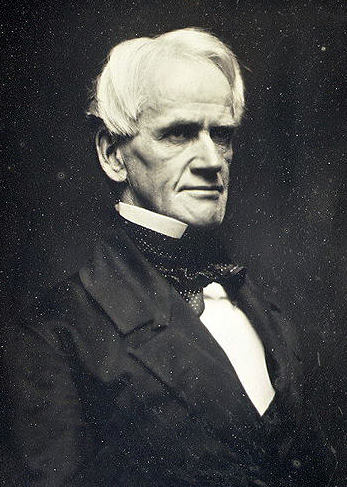
Horace Mann brought the ideal of public education for ALL children, regardless of income or ability, to the forefront in the 19th century and ushered in new philosophy on what public school should entail. 

Horace Mann

There were many early supporters of equal education for all, but there was still considerable controversy about access to education. Questions arose about whether poor children were being restricted to instruction in basic skills while the middle classes received broad education meant to maintain and improve their quality of life. It was in this period of transition from theoretical public education to an implemented system that worked for all citizens, that Horace Mann emerged as one of the principal champions of education.

Horace Mann, who many education experts and historians consider to be the father of the common school concept. With his craggy features and passionate speeches, he embodied the spirit of educational idealism during the first half of the 1800s.

Mann was born into an impoverished Massachusetts family and was largely self-taught. He managed to secure a place at Brown University, where his oratorical prowess first became evident. He was to use this rhetorical ability to further his careers in law and politics. As secretary of the first board of education in the United States, he gave lectures and started the influential Common School Journal.

Picking up on many of the ideas of the founding fathers, Mann went on to envisage how a system of universal education would best serve the social, economic, and political needs of society. He centered his lofty hopes for the nation on the solo successes of children because he believed that a common experience in school could mold them into successful individuals.

Mann developed six educational principles that would come to define his involvement, and would influence the American education system for decades:

(1) Citizens cannot maintain both ignorance and freedom;

(2) This education should be paid for, controlled, and maintained by the public;

(3) This education should be provided in schools that embrace children from varying backgrounds;

(4) This education must be nonsectarian;

(5) This education must be taught using tenets of a free society; and

(6) This education must be provided by well-trained, professional teachers.

Ever expansive in his ideas, Mann also believed that common schooling would reduce hostilities among citizens. As children grew into adults sharing a common educational experience, Mann posited that different socioeconomic, religious, and ethnic backgrounds would become less significant. Mann’s vision for schools included a common moral and political foundation, as well as the provision of opportunities for children from disadvantaged backgrounds to achieve self-sufficiency and use education to lift themselves from poverty.

By 1837, Horace Mann was busy working to mobilize support for public schools and argued that they were the training ground for youth and for individuals to be able to participate effectively as citizens of a democratic nation. Mann clearly valued a balanced and broad curriculum and supported the development of one in public schools.

Indeed, Mann’s ideal school system brought children from all backgrounds to learn together in an ungraded school. Mann advocated for the education of heterogeneous groups of students to achieve unifying goals and believed specifically in the connection between freedom, self-government, and universal education. He believed in the value of a common learning environment and the development of self-discipline. These, he maintained, could be transferred into the types of skills and behaviors needed for a free society where citizens were not only educated, but had the ability to make intelligent decisions needed for moral judgment and government participation. For Mann, the purpose of education went beyond intellectual and utilitarian goals.

Accepting that children differ regarding ability, interests, and temperament, Mann laid the groundwork for lessons to be adapted to meet the individual needs of children. The one-room school, now a nostalgic icon of American history, embodied Mann’s idyllic vision of the common school. There was little consistency in the curriculums used by one-room schools, though, and teachers had difficulty grouping children for instructional purposes.

Students studied in groups based on what they knew and what they needed to know. Students of multiple ages received instruction at the same level. Given the number of children and the different ages of children in the classroom, children principally learned via memorization. Teachers had little time to target individual needs in the classroom. Even with these drawbacks, however, the non-graded one-room school was an invaluable institution for providing free and public education for children during the 18th and 19th centuries.

Many children excelled in learning reading, writing, and arithmetic, even when the time at school was disrupted by the need to work on the family farm. The ungraded structure of the one-room school allowed for the return to school after an extended absence. It also allowed children to take a break and then return to learning, based on the knowledge they had retained.

Though the standardized assessments that are part of the educational system today did not exist, children did have oral exams at the end of the school year. These were formal quizzes on what they had learned over the course of the year. The purpose of these exams was to provide teachers with information about where to start children at the beginning of the next school year.

Passing and failing were not descriptors used to classify children’s learning behaviors in the one-room school, as progress was allowed to occur at different rates. Only when students took the exams needed to enter high schools outside of their rural communities would they experience their first taste of scholastic success or failure.

Was the one-room school on to something?

How Will Libraries Drive the Future of Learning?

When I was a child, I remember taking walks with my mother to the library to pick out a book or two. If I was lucky, and I was on good behavior, the librarian sometimes allowed me to take out three books from the library. As I grew older in school, I learned about the Dewy Decimal System, and how to find a book by using a library catalog. When I began college about ten years ago, there were floors and floors of somewhat outdated books on the shelves, and although I did not quickly find what I needed, there were books everywhere.

What I did not know then was that even ten years ago, the future of libraries had begun to change. I completed the majority of my research online, and I found myself meeting in the library with classmates to research needed information for group projects. Shortly after I graduated, my university announced it would be completely renovating the library in order to create a more technology-centered library with an increase in spaces for group work.

What I did not know then was that even ten years ago, the future of libraries had begun to change. I completed the majority of my research online, and I found myself meeting in the library with classmates to research needed information for group projects. Shortly after I graduated, my university announced it would be completely renovating the library in order to create a more technology-centered library with an increase in spaces for group work.

What Has Changed in Just the last Five to Ten Years?

All over the globe libraries have become, and are continuing to become places where learners meet, gather, and collaborate. Gone are the times when learners sat individually at tables and were told “be quiet” because they are being too loud. Although there may be space reserved for individual study, now the majority of new and renovated libraries are featuring collaboration spaces for students. Some libraries have even begun to include juice bars or mini cafes to encourage student collaboration. Group workstations are developing, and large open spaces with wide tables and laptops are becoming the norm, rather than the exception.

What Does the Future of Libraries Look Like?

Although printed books still play a critical role in the learning process and in libraries, libraries are becoming spaces that are more focused on the availability of technology, access to online libraries and resources, as well as e-books. Instead of ordering a book from your university library, and waiting for it come from another university, students can request materials online from enormous online university databases. Libraries are becoming furnished with armchairs and iPads. While students are studying in the library, iPads can be “checked out” for individual student use and research. iPads may have numbers or codes on them, just like books.

The Makerspace Movement

In addition to libraries transforming into technology centers with readily accessible iPads and laptops, modern libraries are including what are called “Makerspaces.” Makerspaces are learning centers, that can be as simple as a station with Legos for young learners to creative, invent, and build, or can even be as complex as workshops and stations for various crafts and tradespersons. Makerspaces can even be full and complete labs equipped with 3D printers, laser cutters, and or power and hand tools.

Makerspaces can contain work stations equipped with tools for any trade such as artists, seamstresses, engineers, computer programmers, computer hackers, painters, woodworkers, graphic designers, and more. These stations are becoming popular in new and modern libraries, as libraries become places of cooperation and teamwork, and are falling away from the traditional idea that libraries are quiet places for individual silent work only. Libraries are becoming learning commons for all ages, for artisans, for students, for families, and for all who wish to access the new world of Makerspaces and online learning.

What Is the Future Environment of Libraries?

Due to a shift in pedagogy and new education methods, as well the steady and fast increase in accessibility to modern-day technology, even the environment of the future library is being altered. The present and future of libraries not only include laptops and high-speed internet, but also rooms with whiteboard paint and chalkboard paint and large glass windows to allow sunlight to stream into studies spaces. As we march through the 21st Century, the century of technology, MOOCs, numbered iPads, and SmartBoards are quickly becoming standard in many libraries. Some libraries are including even Apple TV’s and other devices that we would never have found in a library, just 15 years ago.

What Are Some Concerns Regarding the Future of Libraries and Learning?

Some altruistic librarians are clutching their hardback books, and Dewy Decimal System in their hands, as books are becoming less popular in modern libraries. Physical books are being replaced by study spaces, Makerspaces, and computer labs. Although many if not all libraries still hold books on their shelves, the future of libraries is unknown. Will there always be physical books on the shelves of libraries in the year 2050? Maybe. Maybe not.  Although there is a danger in books disappearing from libraries altogether, advances in technology are making it more possible to spread information and knowledge at an ever-increasing pace.


The A-Z of Education Blogs: Letters M-Q

In this multi-part series, we are profiling the best of the best blogs in education, in alphabetical order. In the previous article, I introduced letters I-L and in this one, I will discuss letters M-Q.

Click here to access all of the articles in this series.

Magical Maths

What started out as a blog about maths has become a blog for teachers to post various opinion pieces, as well as practical ideas and exercises to implement in the classroom.

Score: Activity 18, Originality 18, Helpfulness 20, Authority 25

Total Score: 81

Twitter: @magicalmaths

MiddleWeb

MiddleWeb provides resources for the middle grades. They focus on five streams of content: Resource Roundups, Themed Blogs, Articles, Interviews and Book Reviews. Co-teaching, how to help students crush math anxiety, and opening your classroom doors to family audiences are all recent topics that have been covered on their very active blog.

Score: Activity 19, Originality 19, Helpfulness 20, Authority 20

Total Score: 78

Email: [email protected]

Twitter: @middleweb

MindShift

This is an extremely exciting blog as it explores anything and everything that is proven to help learning, be it technology, games, or new teaching methods. For teachers looking to incorporate helpful tools and techniques in the classroom, this is blog is a must read.

Score: Activity 25, Originality 25, Helpfulness 25, Authority 24

Total Score: 99

Twitter: @MindShiftKQED

Email: [email protected]

Moving at the Speed of Creativity

If you’re very into edtech, then this is a blog by Wesley Fryer is for you. Engaging posts about advancement in edtech and how to use various tools, as well as book reviews.

Score: Activity 20, Originality 24, Helpfulness 20, Authority 25

Total Score: 89

Email: [email protected]

Twitter: @wfryer

Ms. Cassidy’s Classroom Blog

Ms. Cassidy has a love of teaching that comes across in her blog posts, which describe activities she’s done with her class. It will provide you with doses of inspiration and ideas for activities you can use in the classroom.

Score: Activity 20, Originality 18, Helpfulness 18, Authority 20

Total Score: 76

Twitter: @mscassidysclass

My Paperless Classroom

A tech integration specialist presents his real-life trials and triumphs. He also shares ideas for unique Makerspace projects.

Score: Activity 17, Originality 18.5, Helpfulness 18.7, Authority 20

Total Score: 81.2%

Twitter: @SamPatue

NACAC Admitted

The NACAC (or National Association for College Admission Counseling) is the place to go if you work in admission, or if you (or your kids) are getting ready to take the plunge into the admissions process.

Score:  Active 25, Original 22, Helpfulness 24, Authority 23

Total: 94

Twitter: @NACAC

NAFSA: Association of International Educators

NAFSA focuses on the latest in news, from politics to holidays, around the world. They also offer advice on a number of different topics through guest bloggers.

Score:  Active 22, Original 24, Helpfulness 22.5, Authority 25

Total: 93.5

Twitter: @NAFSA

NEA Today

NEA Today provides News and features from the National Education Association. If you like to keep up to date on what’s going on in the field of education, including research and some theories and ideas to implement in the classroom, then this is an excellent blog.

Score: Activity 24, Originality 25, Helpfulness 23.5, Authority 25

Total Score: 97.5

Twitter: @NEAToday

On an e-Journey With Generation Y

An Australian Information Technology teacher shares her ideas and experiences around fostering global connections in the classroom. She is especially masterful in her use of Skype as a tool to teach about culture.

Score: Activity 18, Originality 20, Helpfulness 19, Authority 19

Total Score: 76

Email: [email protected]

Twitter: @murcha

On Campus

Covering the latest information on campus, this blog is a treasure trove of the latest news, trends, and statistics. It is a great resource for students, professors, and staff, and gives you a way to connect with others to get more information.

Score:  Active 22, Original 16, Help 22, Authority 17

Total: 77

Twitter: @OnCampusWGBH

Prof Hacker

This blog focuses on teaching, technology, and productivity within academia, but it does occasionally stray into politics when the latest news affects higher education.

Score:  Active 25, Original 24, Helpfulness 22, Authority 25

Total: 96

Twitter: @ProfHacker

Pearson Teaching & Learning Blog

Pearson provides products and services in the educational field and their Teaching & Learning PreK-12 Education blog is very informative, with useful tips and thoughts to ponder.

Score: Activity 23, Originality 20, Helpfulness 20, Authority 22.5

Total Score: 85.5

Twitter: @PearsonNorthAm

Q&A with Larry Ferlazzo

Larry Ferlazzo is an award-winning English and Social Studies teacher at Luther Burbank High School in Sacramento, Calif. He’s also an author of several books related to teaching and is big on using goal setting to motivate students. His blog often offers Q&As with other writers on topics surrounding education. It’s a blog that definitively provides a fresh look at teaching and education as a whole. As Larry also answers readers questions regarding teaching, you’re welcome to contact him.

Score: Activity 24, Originality 23, Helpfulness 21, Authority 25

Total Score: 93

Email: [email protected]

Twitter: @Larryferlazzo

Well, that’s it for letters M-Q. Did we miss any?


Personalized Learning: What Does Research Say About It

Increasingly, education is heading toward personalized learning for all students. In the past, gifted students and those students with special needs were the only ones to receive some personalized learning plan of some kind. Now, these programs are being expanded to reach out to all students. Research states many things about personalized learning, and it can make or break the future of education for many students.

Technology seems to be the most conventional method in which personalized learning is being achieved. Students will spend more time interacting with technology in this kind of situation, which will be a great avenue to open up one-on-one instruction time. However, research has indicated a concern with the lack of student-to-student interaction that will be lost during this one-on-one time being increased. Collaboration has proven to be a cornerstone of education in many countries that have successful students so it cannot be ignored or replaced without first being considered for its value.

As far as technology goes, some programs have proven to stand out among others in the arena of available tools for personalized learning. For example, some math programs are integrative and adaptive to the needs of each child using the program. These programs promote learning engagement and student motivation in ways that other models have failed to do so in previous years.

Some studies have spent lots of time focusing on research for these various types of technology and techniques regarding personalized learning. Schools that participated in the study have experienced positive effects as a result of using these technologies and techniques. Math, science, and reading scores have improved over the two years these schools took place in the study, too. Most of these scores are at or above national averages as well.

Unfortunately, there is not yet enough research to completely stand behind personalized learning. More research needs to be done to see if the funding costs will be worth the price for students to reap the benefits of personalized learning in a holistic way. Some of the concerns with this research being done are that it follows the standard model of research and development for typical classroom techniques to be investigated. The problem is that the processes being used in personalized learning follow modules and techniques that are not standard, so the research methods being used might not be the best ones to test what is happening in schools that are piloting many of these programs. In short, an improvement on test scores can only tell researchers so much information.

There are many upsides to personalized learning, though. Students are engaged and motivated to learn more, as stated previously. This situation occurs because learning situations are tailored to what students enjoy the most. Teachers can be more involved in making this process a reality, so long as too much technology is not involved. Projects can be made to pique student interest, making collaborative learning efforts all the more enhanced.

Another reason why personalized learning techniques might work over traditional teaching methods is the fact that the teacher-student role is somewhat reversed. Historically, teachers have been seen as leaders in the classroom, and students are meant to follow that lead completely. However, there is more autonomy given to students in a classroom that focus on personalized learning. Students no longer become a passive recipient of information because they are actively engaged and motivated, as stated previously, in the process all the more.

Though more research needs to be completed on the topic of personalized learning, it does not seem to be vanishing in the forefront of educational techniques any time soon. It should be considered as a viable method to be included in every classroom right alongside collaborative and other traditional learning methods.

Why Digital Technology is Revolutionizing Education

How is digital technology changing education? An easier question to answer perhaps is: How is digital technology not changing education. Read more to learn about how digital technology is revolutionizing the face of schools and education on a global scale.

  1. Availability of Online Classes and Programs: One of the first easy observations regarding digital technology and education is that online schools and classes are becoming widely available. Even free online classes called “MOOC’s” otherwise known as Massive Open Online Courses are becoming widely popular. Online courses and full online programs are making it possible for learners young and old to unite from all over the world at any given moment, and to have easy access to a course or program from home.
  1. Learnings Texts Are Now Digitalized: Check the backpack of many high school and college students, and you will find that physicals textbooks are slowly being replaced with iPads and various forms of devices connected to online media. With the fast-paced development of online media, e-books, e-readers, and learning programs developed for iPads, iPhones, and smartphones, the textbook is becoming “extinct” in some areas. You can forget the time when your backpack was loaded down with a stack of textbooks, because learning is going online.
  1. Mobile Learning: A combination of the result of the sharp and sudden increase in the availability of online courses and programs, and the wide availability of online resources and books, you can now study from your phone. MOOC’s such as the well-known “Future Learn” MOOC allow you to access your course(s) from your smartphone. Just open the course, plug in your headphones, and follow the content and the classroom discussions! Whether you are riding the subway or taking a bus or a train you can instantly connect to the world full of learners and learning.
  1. Personalized Teaching and Learning: Due to the increase in the presence of technology in the classroom, teachers now have more ability to personalize lessons, instructions, and projects for each group or child. By using devices and programs to distribute classwork and assignments, teachers can personalize lessons and focus on the work of each student. Individualized lessons can be provided to each student, and learning tools enable students to work, perform, and excel at their own pace. Teachers can also now provide feedback, grades, and reports directly to students through online platforms, and online school portals and log-ins.
  1. Guidance and Instruction from Diverse Teachers: The increase of digital technology has also affected the availability and access to diverse teachers and instructors for students worldwide. One student can be present in a multi-cultural online classroom with teachers with origins from South Africa, England, Brazil, Spain, Russia, and Poland all at the same time. Teachers from different backgrounds and countries all bring their own unique perspectives, cultures, and languages to the table of learning.
  1. Collaboration and Peer-to-Peer Learning in the Classroom: With an increase in access to online learning, whether part or full instruction is provided online, increased opportunities for students to collaborate together from a variety of places becomes possible. Student bodies, in turn, can be made up of students from all over the globe, with every continent represented. Diverse student bodies also increase diversity in ways of thinking and contributions to class discussions and projects. Inside and outside the classroom students can work together through online platforms and portals to exchange ideas. Students can express ideas and communicate through programs provided by their schools, and also informally through social media programs such as Facebook, Twitter, and Pinterest. Peer-to-Peer learning has become increasingly popular as students share their ideas with each other through online discussions and share documents through programs such as Google Docs. Teachers are encouraging and setting up classrooms that inspire and sometimes require peer-to-peer discussions
  1. Data Driven Instructions and Results: Another change that is occurring due to the rise of digital technology is the increase in data-driven instruction and results. Although some teachers are being forced to use online grading tools and devices, analysis tools are also becoming more precise. These devices and grading tools can provide more accurate results regarding student performance, but can also result in a teacher’s limited ability to judge a student’s performance based on the content of their writing, classroom performance, and other contributions.

What Does the Increase in Digital Technology Mean for the Future?

The increase in digital technology corresponds with the increase in the use of technology in both virtual and real-life classrooms. Although many advantages come with digitalized learning, there are also disadvantages that you should be aware of, including and not limited to minimal to zero face-to-face interaction in the classroom, and the lack of ability to work in person with your study partners and your teacher. Despite these disadvantages, overall digital technology has enhanced the future of learning and has enabled students and educators alike from all over the world to work together, spread knowledge, and increase learning opportunities for everyone.


Latest Posts