Artificial Intelligence

Win Books That Talk — All-In-One Read-Alongs!

Are you ready to dive into the world of interactive storytelling that combines the pleasure of reading with the enchantment of listening? Look no further because Win Books That Talk is here to introduce you to an all-in-one read-along experience that will take your literary adventures to a whole new level!

Win Books That Talk aims to revolutionize the way we engage with books by bringing together the immersive world of audiobooks and the traditional joy of reading in one seamless package. Our read-alongs are designed for all ages and interests, offering a compelling form of entertainment that caters to a diverse audience.

The Magic of Read-Alongs

Read-alongs provide an incredible opportunity for readers and listeners to embark on a captivating journey together. By combining print and audio elements, Win Books That Talk captures the essence of an engaging storytelling session that caters to various learning styles and preferences.

For young learners, read-alongs offer an invaluable tool as they develop their reading and comprehension skills. Emerging readers can follow along with the narration, gaining a deeper understanding of language and sentence structure through both visual and auditory cues.

Book lovers who might be intimidated by or struggle with larger texts can also find solace in our read-alongs. With dual-format storytelling, they can enjoy the story at their own pace while strengthening their reading abilities. Moreover, these interactive stories are a fantastic choice for individuals looking to improve their listening skills or learn a new language.

Why Choose Win Books That Talk?

Our read-alongs come in different genres, catering to different tastes and age groups – from timeless classics such as “Alice in Wonderland” and “The Wind in the Willows” to thrilling contemporary novels like “Harry Potter” and “The Hunger Games.”

We work closely with renowned authors and skilled narrators, ensuring that our read-along versions remain faithful to original works while enhancing them with immersive narration.

We believe in the power of accessibility, which is why Win Books That Talk offers read-alongs in various formats, including hardcover, paperback, and digital versions. This way, readers can choose their preferred platform and enjoy a unique reading experience suited to their needs.

How To Get Started

With Win Books That Talk, it’s easy to find your next favorite read-along. Just visit our website and explore the extensive collection of titles we offer. You can browse by genre, age range, or even search for a specific title or author to find the perfect read for you or a loved one.

Dive into the world of Win Books That Talk and experience the magic of read-alongs that will keep you turning pages – and listening – for hours on end!

What Would You Be Teaching If You Had to Make Your Next Lesson About the Last Thing You Googled?

Introduction

As educators, we’re always on the lookout for ways to keep our lessons fresh and exciting. The key to student engagement is often finding something unique and new to spark their curiosity. With this unconventional approach, you’ll be teaching your next lesson based on the last thing you Googled. Not only will this introduce a bit of spontaneity to your classroom, but it’ll also build excitement as students explore a new topic – especially one that’s personally interesting to you.

Setting The Stage

Before diving into the details of your recent search query, start by casually mentioning what led you to Google that last topic. This will help you make a personal connection with your students, as well as pique their interest in what’s to come. It also provides an opportunity to emphasize the importance of continuous learning and curiosity, no matter one’s age or profession.

Researching Together

Use your recent Google search as a starting point for an interactive research session. Guide your students through reputable sources and encourage them to ask questions, share their findings, and contribute their thoughts. This process not only reinforces critical thinking and research skills but also promotes collaborative learning among students.

Connecting The Dots

Once everyone’s had a chance to learn about the topic at hand, find ways for students to relate it back to what they’re currently studying or have previously studied in class. Draw parallels between concepts, themes, or disciplines – and take advantage of any moments where these newfound insights could enhance their understanding of a broader subject area.

Relevance In The Real World

To cap off this unexpected lesson plan, empower your students by discussing real-world applications of the knowledge they’ve just gained. From personal growth and creative endeavors to professional development and beyond, inspire them by showcasing the many avenues where their newly acquired information could come into play.

Reflection Time

Conclude the lesson by providing critical reflection time, allowing each student to express what they’ve learned and how it connects to their individual interests. Emphasize the importance of these reflections in preparing students for self-directed learning in the future.

Conclusion

By basing your next class on the last thing you Googled, you’ll not only teach your students something novel, but you’ll also demonstrate the power of curiosity and lifelong learning. Your impromptu lesson will show them that engaging and informative subject matter can be found anywhere if we’re open to new experiences. Let this guide serve as a catalyst to your next exciting classroom adventure!

Developing an Admiring Lens

Introduction

In today’s fast-paced world, we often focus on the negative aspects of life. We are bombarded with information that highlights our shortcomings, engrosses us in self-doubt, and urges us to be highly critical of ourselves and others. Amidst this sea of negativity, it is vital to develop an admiring lens—a perspective that encourages positivity and the celebration of our strengths and accomplishments. By adopting such a perspective, we can embrace a more joyous and fulfilling life.

What is an Admiring Lens?

An admiring lens is a mental framework that enables us to seek out and celebrate the positive qualities, achievements, and attributes in ourselves and others. It entails being open and receptive to recognizing the good in every situation, making a conscious effort to appreciate our own accomplishments and those of our peers. Cultivating an admiring lens fosters warmth, kindness, and compassion—enhancing personal well-being and promoting stronger connections with others.

Why Develop an Admiring Lens?

Developing an admiring lens offers numerous benefits for individuals who practice it:

1. Enhanced Self-Confidence: Recognizing our strengths increases self-esteem; this allows us to feel proud of what we have achieved, empowering us to take on new challenges fearlessly.

2. Improved Mental Health: Focusing on the positive can reduce anxiety levels, preventing feelings of overwhelm or hopelessness.

3. Deeper Interpersonal Relationships: Acknowledging the goodness in others fosters stronger connections and enhances emotional bonding with friends, family, and colleagues.

4. Enriched Personal Growth: By celebrating achievements—whether big or small—we create opportunities for reflection, learning, and growth.

How to Develop an Admiring Lens

Implementing these simple steps can help individuals cultivate an admiring lens:

1. Practice Gratitude: Make a habit of reflecting upon and expressing gratitude for the positive aspects in your life. This could be as simple as keeping a gratitude journal or identifying three things you are grateful for each morning.

2. Recognize Your Accomplishments: Take time to acknowledge and appreciate your achievements, both big and small. Celebrate successes with friends or family, rewarding yourself for your hard work.

3. Adopt Mindfulness Techniques: Engaging in mindfulness practices such as meditation, deep breathing exercises, or yoga can help train your mind to focus on the present moment and cultivate a positive mindset.

4. Surround Yourself with Positivity: Seek out people who inspire and uplift you. Association with those who share an optimistic outlook will encourage you to develop a similar perspective.

5. Practice Active Listening: Engage deeply in conversations with others, attentively listening to their thoughts and feelings. This will foster understanding and empathy while providing opportunities to recognize and celebrate their achievements.

Conclusion

Developing an admiring lens is vital in our journey toward personal growth and well-being. By acknowledging the goodness within ourselves and others, we can cultivate a mindset that enhances self-confidence, improves mental health, strengthens relationships, and enriches our personal growth experiences. By implementing these strategies, we can transform our lives into ones filled with positivity, resilience and success.

Creating Consistency When the Learning Environment Is Anything But

Introduction

There’s no denying that today’s learning environment is a far cry from what most of us experienced growing up. With a global pandemic, distance learning, and rapidly changing technology altering the very nature of education, teachers, students, and parents alike are grappling with this new landscape and trying to find ways to create consistency in an inconsistent educational setting.

While it may seem daunting to establish a sense of stability amidst so much change, it is possible by implementing deliberate strategies and techniques to support both learners and educators alike. In this article, we will explore key approaches for creating consistency when the learning environment is anything but predictable.

1. Establish clear expectations and routines

One of the most critical building blocks of consistency in any setting is setting clear expectations. This should extend to all aspects of the learning process: expectations for content mastery, students’ behavior, communication between teachers and families, and even daily schedules. By outlining clear expectations ahead of time and reinforcing them throughout the term or school year, you can create a sense of predictability that helps combat inconsistency.

Routines are another essential component in building stability. Where possible, establish start times for lessons (whether virtual or in-person), regular opportunities for breaks and interaction during instructional periods, standard lunchtimes or recess schedules, and predictable end-of-day procedures.

2. Prioritize communication with families

Engaging with families plays a significant role in fostering consistency across home and school environments. Keep parents updated on their child’s progress through regular reports or parent-teacher meetings to ensure they’re aware of academic expectations. Encourage conversation about study habits at home to ensure continuity with classroom practices.

It’s also vital to maintain open lines of communication to address any concerns that may arise as the educational landscape changes throughout the year. Solicit feedback from family members about their struggles at home and work together to brainstorm solutions.

3. Encourage a growth mindset

Believing in the ability to learn, grow, and adapt can help both educators and students overcome the challenges of inconsistent environments. By promoting a growth mindset, you enable individuals to accept change more readily, making adaptability a core aspect of the learning process.

To cultivate a growth mindset, teachers can:

– Celebrate effort over results

– Encourage learners to seek out new challenges

– Emphasize the process over outcome

– Provide specific, constructive feedback on performance

4. Leverage digital tools for consistency and organization

With many schools resorting to remote or hybrid learning models, it’s essential to embrace technology as an enabler for consistency. While there may be temptations to explore all the shiny new edtech tools and platforms available, you should select those that best support your existing educational goals and practices.

Choose user-friendly platforms that provide straightforward communication channels between teachers and families. Utilize digital tools that promote organization for assignments, activities, schedules, and curriculum resources.

5. Remember the power of relationships

Finally, consistency can be established by fostering strong relationships among students, teachers, and families. Build trust by being transparent about changes in classroom procedures and addressing everyone’s concerns with empathy.

Find ways to celebrate small successes together when consistent milestones are reached. Even amidst constant change in learning environments, thriving relationships will provide a sense of safety and continuity for everyone involved.

Conclusion

Creating consistency in an unpredictable learning environment is undoubtedly challenging. However, by implementing these strategies—establishing routines and expectations; prioritizing communication with families; encouraging a growth mindset; leveraging digital tools; nurturing relationships—we can build a stable foundation for all learners in any given educational scenario.

Is Giving Away $1,000 in Target Gift Cards

Are you dreaming of a shopping spree? What if you could shop guilt-free at one of America’s favorite retail stores? The prospect of winning $1,000 in Target Gift Cards is not just a dream anymore!

We are thrilled to announce an exciting giveaway that could make your shopping dreams come true. You now have the chance to win $1,000 worth of Target Gift Cards and indulge yourself with anything your heart desires, from electronics to home essentials.

Why Choose Target?

Target is one of the leading retail giants in the United States, known for offering quality products at affordable prices. With a broad range of merchandise, you can find everything from clothing and accessories to home goods, electronics, toys, and more. The company is also committed to responsible corporate citizenship through initiatives such as their commitment to sustainability and education.

How Can I Participate?

It’s easy! To enter for your chance to win $1,000 in Target Gift Cards, follow these simple steps:

1. Visit our giveaway website at “www.example.com/giveaway.”

2. Provide your name, email address, and contact information in the given form.

3. Hit “Enter Now” and you’re done! Winner selection will be announced via email.

4. Increase your chances by sharing this giveaway on social media platforms or referring friends through our referral system.

Important Dates:

The contest begins on September 1st, 2022, and ends on September 30th, 2022. The winner will be drawn at random on October 1st and notified via email.

Terms and Conditions:

Before you participate, make sure to read through the terms and conditions listed on our giveaway website thoroughly. By participating in this giveaway, you agree to comply with these rules.

Pro tip: Don’t forget to check out our ongoing weekly target deals to save even more on your shopping with coupons and discounts.

Don’t Miss Out!

This extraordinary opportunity to win $1,000 in Target Gift Cards could make your shopping dreams come true. Be sure to enter this fantastic giveaway now and share it with friends and family for maximum opportunities. Good luck and happy shopping!

11 Cool Apps for Back-to-School

As students and teachers prepare to return to school, it’s essential to have the right tools to make the learning experience as smooth and efficient as possible. For both in-person and online classes, apps are becoming increasingly useful. Here are 11 cool apps perfect for back-to-school, enhancing productivity, organization, and learning.

1. Duolingo

Learning a new language? Duolingo is an engaging app that offers an immersive way to learn more than 30 languages through interactive games, quizzes, and lessons.

2. Quizlet

Create flashcards or choose from existing sets on Quizlet for virtually any subject. This app is perfect for studying, allowing you to track your progress and compete with friends.

3. MyHomework Student Planner

Keep track of assignments, classes, exams, and even teacher contact information with MyHomework Student Planner. Receive reminders for due dates to keep everything organized.

4. Google Classroom

Google Classroom revolutionizes classroom management and collaboration. Teachers can assign homework, post announcements, share resources, and students can complete assignments online all in one place.

5. Khan Academy

Academically focused students love Khan Academy – a free app offering thousands of instructional videos and practice exercises in various subjects such as math, science, humanities, coding, SAT prep, and more.

6. Evernote

Stay organized with Evernote – take notes in various formats (text, audio & photos), clip web articles or save documents while syncing across multiple devices.

7. Photomath

Photomath is a life-saver when dealing with complex math problems. Use your phone’s camera to scan an equation, and the app will provide step-by-step instructions on how to solve it.

8. Brainscape Flashcards

Through spaced repetition and active recall techniques developed by cognitive scientists, Brainscape Flashcards enhance your retention and test-taking abilities when studying a topic.

9. Forest

Focused on promoting productivity, Forest is an app that makes staying off your phone fun. Plant a tree when you start a task, and if you don’t use your phone while working, the tree will grow.

10. Grammarly

No more grammar and spelling worries with Grammarly! This app detects potential errors in real-time, providing suggestions for proper punctuation, spelling, style, and tone.

11. EasyBib

Writing an essay or research paper is easier with EasyBib – generate accurate citations for MLA, APA, or Chicago styles instantly through the app.

These 11 cool back-to-school apps not only streamline education but also enhance communication between students and teachers. Check them out and integrate them into your school routine for a more organized and productive learning experience.

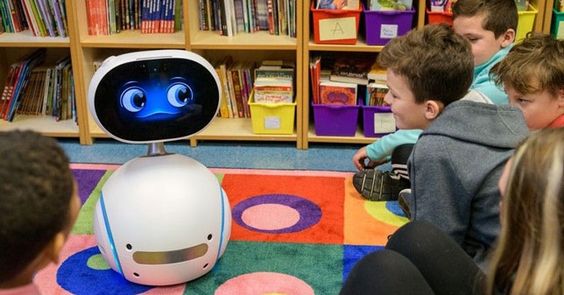
It Turns Out Learning Robotics Teaches Valuable Social Skills

Introduction:

In recent years, robotics has emerged as a popular field of study for both students and professionals. While it is evident that mastering robotics offers technical skills, it is easy to overlook the valuable social skills that can also be gained from this unique learning experience. This article highlights how robotics education might just be the key to equipping oneself with communication, collaboration, and problem-solving abilities – essential characteristics for thriving in any social or professional environment.

Communication and teamwork in robotics:

As an inherently interdisciplinary field, robotics brings together individuals from diverse backgrounds such as engineering, computer science, and design. This diversity creates an environment where communication becomes critical to achieving common goals. When collaborating on complex robotic projects, students must learn to express their ideas clearly and concisely to team members with varying levels of expertise. Moreover, they must actively listen to and consider others’ perspectives to facilitate progress. Effective verbal and non-verbal communication empowers individuals to tackle complex challenges in the future, making these practices an asset beyond the realms of the workshop.

Critical thinking and problem solving:

Robotics demands not only a deep understanding of multiple technical concepts but also the ability to apply this knowledge creatively. As students work on various stages of their projects – from ideation all the way through to implementation – they learn to formulate hypotheses and devise possible solutions for any challenges they encounter. This iterative process develops critical thinking abilities that translate into improved decision-making skills in other aspects of life.

Adaptability and resilience:

The world of robotics is ever-evolving, with constant technological advancements reshaping the industry landscape. To remain competitive in this fast-paced field, students must adapt quickly to novel situations and new information. By embracing change with curiosity instead of apprehension, learners develop resilience—an essential trait for navigating today’s unpredictable world.

Empathy and ethics:

As artificial intelligence continues its rapid expansion into daily life, ethical considerations become increasingly important. By partaking in the design and development of robotic systems, students have the opportunity to ponder the potential consequences of their creations on society. This process fosters empathy toward others, encouraging them to consider the broader implications of technology beyond simple functionality.

Conclusion:

Learning robotics not only equips individuals with technical expertise but also fosters valuable social skills integral to personal and professional success. By engaging in collaborative projects, learners sharpen their communication abilities, develop their critical thinking and problem-solving skills, cultivate adaptability, and nurture empathy for others. The interplay between technology and humanity is at the core of robotics education, making it a unique avenue for nurturing well-rounded individuals ready to tackle 21st-century challenges.

Here Are the SEL Statistics You Need

Introduction:

Social and Emotional Learning (SEL) has become a major focus in education as more and more research highlights its importance in students’ overall well-being, academic achievement, and long-term success. Educators, parents, and policymakers are recognizing the significance of developing skills like self-awareness, self-management, social awareness, relationship skills, and responsible decision-making in children. Here, we present the crucial SEL statistics you need to know that will help you understand the impact of SEL on students and their learning environment.

Statistics on the Importance of SEL:

1. According to a 2011 meta-analysis conducted by CASEL (Collaborative for Academic, Social, and Emotional Learning), students who received quality SEL instruction demonstrated an 11% increase in academic achievement compared to those who did not receive SEL instruction.

2. Another study found that students who participated in evidence-based SEL programs exhibited improved behavior and attitude towards school; they also experienced a 9-percentile point gain in academic performance on average.

3. A 2017 study revealed that individuals with high emotional intelligence (EQ) had twice the chance of outperforming their peers who had lower EQ scores on various career-related outcomes.

4. Research conducted by Columbia University’s Center for Benefit-Cost Studies of Education estimated an $11 return on investment for every dollar spent on evidence-based SEL programs.

5. A survey conducted by Microsoft identified that around 91% of employers reported that they give preference to candidates with strong soft skills such as communication, problem-solving, and adaptability.

6. Data from the World Economic Forum suggests that by 2025, skills like emotional intelligence, leadership, and active learning will be among the top 10 most sought-after skills globally.

Statistics on Mental Health and SEL:

7. Based on a study by the National Institutes of Health (NIH), nearly one in five young people in the US (13-18 years old) have a diagnosable mental health condition.

8. Data from the Centers for Disease Control and Prevention (CDC) revealed that 7.1% of children aged 3-17 years have been diagnosed with anxiety, while 5.4% had diagnosed depressive disorders.

9. CASEL reports that implementing SEL programs effectively can decrease the likelihood of students engaging in high-risk behaviors like drug and alcohol abuse and addiction.

10. A study published in “Child Development” demonstrated that adolescents who had higher social-emotional competence reported lower levels of symptoms associated with depression and anxiety as they transitioned into adulthood.

Conclusion:

These SEL statistics underline the importance of incorporating social and emotional learning into classrooms, homes, and communities. Investing time and effort in fostering SEL not only contributes to better academic outcomes but also promotes overall mental well-being and long-term success for students. Ultimately, nurturing these vital skills will help prepare children to navigate the challenges of life confidently and responsibly.

10 Role-Play Scenarios for Tough Tech Moments

Introduction:

Navigating the world of technology can be challenging, especially when difficult situations arise. Preparing for these scenarios can help you stay confident and feel more at ease when using technology in your daily life. To help you prepare, we have compiled a list of the top 10 role-play scenarios for tough tech moments. These role-plays cover common issues, ranging from technical problems to ethical dilemmas.

1. The Unexpected Software Crash

Scenario: While working on an important document or project, your software suddenly crashes, causing potential data loss.

Role-play: Rehearse what steps you would take to troubleshoot the issue, recover your work, and develop a backup plan to prevent future incidents.

2. Online Privacy Concerns

Scenario: You suspect that one of the websites or apps you recently used is collecting and selling your personal information.

Role-play: Practice explaining your concerns to a customer service representative while requesting information on their privacy policy and providing suggestions for enhanced security measures.

3. Customer Service Nightmare

Scenario: You are experiencing issues with a newly purchased tech product, and reaching customer support has proven difficult.

Role-play: Try various methods of communication — chatbots, email, phone support — and learn how to convey your issue clearly and effectively while maintaining patience.

4. Cyberbullying Encounter

Scenario: You witness or become the target of cyberbullying on a social media platform.

Role-play: Handle the situation with tact by reporting the incident to the platform administrators, offering support to the targeted individual(s), and practicing self-care in response to online negativity.

5. Handling Spoilers

Scenario: You inadvertently stumble upon spoilers for a movie or TV show you’ve been anticipating before having a chance to watch it.

Role-play: Practice self-restraint in avoiding sharing spoilers with friends or online communities while encouraging respectful discussions that respect others’ viewing experiences.

6. Adapting to New Tech

Scenario: A new software or device is introduced at your workplace, requiring a learning curve for you and your colleagues.

Role-play: Share tips and encouragement with your peers, ask informed questions when facing challenges, and develop a positive mindset regarding technological changes in the workplace.

7. Dealing with Trolls

Scenario: An online troll is causing disruptions in an online community you’re part of.

Role-play: Practice ignoring or disengaging from harmful conversations, reminding others of community guidelines, and fostering positive dialogue within the group.

8. Ethical Dilemma in AI

Scenario: You discover that an AI technology you utilize has been trained on biased data, leading to unfair outcomes.

Role-play: Advocate for addressing this issue by discussing potential solutions with stakeholders and exploring alternative AI options that prioritize ethical considerations.

9. Phishing Attempt

Scenario: You receive a suspicious email claiming to be from a company or service provider requesting sensitive information.

Role-play: Hone your skills in identifying and responding to phishing attempts by verifying the sender’s identity, exercising caution when clicking links, and using secure methods to confirm account issues.

10. Imposter Syndrome in Tech

Scenario: Working in a technical field, you experience feelings of self-doubt and imposter syndrome.

Role-play: Practice self-affirmation through openly discussing your achievements, seeking mentorship, and focusing on your unique strengths within the field.

Conclusion:

By practicing these role-play scenarios, you can better prepare yourself for tough tech moments and gain confidence in your ability to navigate and adapt to an ever-evolving technological landscape. Remember that it’s normal to encounter challenges – staying proactive and equipping yourself with effective strategies will make all the difference.

There Are No Words for This

Introduction

At times, life presents us with moments that are beyond the realm of our comprehension – moments that leave us speechless, struggling to categorize or describe the feelings that engulf us. In this article, we explore the concept of ‘There Are No Words for This,’ delving into how human beings can embrace these unexplainable occurrences and establish a deeper connection with both themselves and the world around them.

I. The Limits of Language and Emotion

Language plays a crucial role in our lives as a means of communication, enabling us to express ourselves, share ideas, and connect with others on a deeper level. However, there are instances when language falls short in capturing the essence of our emotions or experiences.

These unexplainable moments can be profoundly beautiful, deeply sorrowful or simply otherworldly – transcending our usual frame of reference. They take us by surprise and urge us to step out of our comfort zones, opening up new dimensions of understanding.

II. Embracing the Unexplainable

Acknowledging and embracing these ineffable moments allow us to tap into realms beyond the mundane. Because such instances lie outside of conventional expectations or norms, they enable us to break free from the confines of routine thought patterns or perceptions.

1. Be Fully Present: To truly appreciate these indescribable moments, it is essential to be fully present – both mentally and emotionally. By practicing presence and mindfulness, we allow ourselves to immerse in these occurrences and explore their implications.

2. Accept Uncertainty: When experiencing an inexplicable event, it’s important not to resist it due to our inability to understand or categorize it immediately. Instead, surrendering to the experience allows us to accept its uniqueness without judgment or attachment.

3. Cherish Authenticity: Unexplainable moments serve as reminders that life is an inherently complex and nuanced journey. Rather than seeking to fit these experiences into predefined frameworks, appreciate the authenticity of the emotions they evoke, even if it means walking an uncertain path.

III. The Power of Nonverbal Communication

In the face of moments that elude verbal expression, there lies potential in establishing connections through nonverbal communication. Sharing a knowing glance, a warm embrace or simply being in the presence of a loved one during these special instances often speaks louder than any words could.

IV. Creating Our Own Language

As we grow and develop as individuals, our experiences shape our perceptions and carve out new dimensions within our mental landscapes. In embracing the unexplainable, we might be inspired to develop our own language – a conglomeration of personal symbols and metaphors that encapsulate our emotions more effectively.

Conclusion

Whether through our own internal musings or nonverbal communication with others, human beings possess an innate ability to connect profoundly with the world around them. It is through acknowledging and embracing these moments when ‘There Are No Words for This’ that we find ourselves opening up to new perspectives and encountering deeper dimensions of existence – transcending barriers and fathomless beyond any words could capture.