Elementary Education

10 Interactive Morning Meeting Google Slides for January

Introduction:

Welcome to the new year! Morning meetings are a powerful way to kickstart the day, engage students and create a sense of community within your classroom. To help you build a vibrant and interactive morning meeting in January, we’ve compiled a list of 10 Interactive Morning Meeting Google Slides perfect for this snowy month.

1. New Year’s Resolution:

Start the year off right with an interactive slide that encourages students to share their New Year’s resolutions. Engage in a discussion about goal-setting and foster a supportive environment!

2. Winter Fun Bingo:

Bring some fun competition into your morning meetings with Winter Fun Bingo. Include activities like making snow angels, drinking hot chocolate, and reading by the fireplace for an engaging January icebreaker.

3. Snowflake Storytelling:

Develop students’ creative storytelling skills with this slide where each student adds on to an ever-growing story inspired by unique snowflake designs.

4. Thankful Thursdays:

Foster gratitude within your classroom with this heartwarming slide that encourages students to share what they are thankful for each Thursday.

5. January Trivia:

Stimulate young minds with fun and educational trivia questions centered around events that have happened throughout the month in history, literature, and more.

6. Inspirational Quote of the Week:

Share motivational quotes from famous personalities each Monday morning. Foster discussions and reflections on how students can apply the message to their own lives.

7. Winter-themed Would You Rather:

Develop critical thinking with fun winter-themed scenarios in this classic “Would You Rather” game slide!

8. Mindful Minute:

Help cultivate mindfulness among your students with mindfulness exercises or guided meditations each day as part of your morning meeting routine.

9. Cozy Reading Corner Show-and-Tell:

Promote literacy by encouraging students to share their favorite books or newly discovered reads during your January morning meetings.

10. Snowy Show-and-Tell:

Create a sense of excitement around the winter by asking students to share their favorite winter activity, snow day memory, or a unique snowflake-shaped item from home.

Conclusion:

These 10 interactive morning meeting Google Slides are excellent tools for building classroom community and stimulating your student’s minds in January. Make your morning meetings more engaging and memorable by trying out these interactive prompts that encourage students to connect with one another and start their day on a positive note.

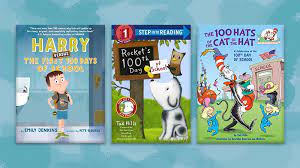
3 Great Books for the 100th Day of School

Celebrating the 100th day of school is a milestone that many teachers and students take part in all over the world. To help commemorate this special occasion, we’ve picked out three great books that celebrate learning, growing, and the importance of the number 100. Read on to discover some fantastic choices for your classroom or homeschooling curriculum.

1. ‘100 Days of Cool’ by Stuart J. Murphy

‘100 Days of Cool’ is a delightful children’s book that illustrates the significance of the number 100 in various contexts. The story follows a group of friends who learn how to understand and appreciate the concept of 100 days by exploring different creative ways to mark each day leading up to this important milestone. The vibrant illustrations and engaging narrative make it a perfect choice for young readers. Additionally, its mathematical content aligns with standard elementary curriculum, making it an excellent educational resource.

2. ‘The 100th Day Worries’ by Margery Cuyler

This fun and relatable book looks at the anxiety some children may feel leading up to the 100th Day of School celebration. The story features Jessica, who is struggling to come up with an idea for her project as part of her class’s 100th-day festivities. With the help of her family, Jessica learns valuable lessons about problem-solving, decision-making, and overcoming her fears. This heartwarming tale can serve as a gentle reminder for students that it’s okay not to have all the answers right away and that sometimes, things work out better than expected.

3. ‘I’ll Teach My Dog 100 Words’ by Michael Frith

‘I’ll Teach My Dog 100 Words’ is an entertaining book that boasts a unique blend of humor, creativity, and educational value. Aimed at young readers, the story features catchy rhymes as it narrates a boy’s plan to train his dog using 100 amusing and imaginative words. The book’s simple yet appealing illustrations make it a visual treat for children, while its use of unusual vocabulary words encourages early language development. It serves as a perfect addition to any 100th-day celebration that fosters a love for both reading and learning new vocabulary.

In conclusion, these three books provide an engaging way to get students excited about the 100th Day of School. They showcase the importance of learning, personal growth, and overcoming challenges while celebrating this milestone event. Share these stories with your students or children to create memorable and inspiring experiences that they will treasure for years to come.

Kids Often Confuse Greater Than/Less Than: This Simple Switch Can Help

Introduction:

As a child, learning mathematical concepts such as greater than and less than can be challenging. It’s common for kids to mix up the two symbols and struggle to remember which is which when solving problems. Fortunately, a simple switch can help cement these important concepts in their minds, allowing them to excel in math with ease.

The confusion around greater than/less than

Greater than (>) and less than (<) are fundamental concepts in mathematics, where children have to compare numbers to determine their relative sizes. However, as young minds grapple with these abstract ideas, they often mix up the symbols or forget the rules associated with them. This confusion can impact their confidence in math and hinder progress in grasping more complex topics.

The culprit behind the confusion is often the visual similarity of the greater than and less than symbols (> and <), leaving kids puzzled about their meanings and applications.

Introducing the simple switch – The Alligator Rule

To overcome this challenge facing young learners, many educators use a technique known as “The Alligator Rule.” The rule personifies the greater than/less than symbols as hungry alligators that always want to eat the larger number.

Here’s how it works:

1. Present the greater than and less than symbols as open-mouthed alligators. For instance, “>” would look like an alligator with its mouth open to its left, while “<” would appear as an alligator facing right.

2. Teach children that hungry alligators always prefer to eat more food rather than less – they’ll always open their mouths toward the bigger number.

3. Relate this concept frequently when teaching children how to compare numbers using the greater than/less than symbols.

Why it works

Children are generally drawn to stories and characters that boost engagement, making learning more enjoyable. By equating math concepts with relatable narratives, such as hungry alligators, kids can more easily remember these symbols and their meaning.

The Alligator Rule provides a memorable visual representation that can help children understand the concepts of greater than and less than at a deeper level. When they come across mathematical problems or equations requiring comparative thinking, they can use this technique to figure out which symbol should be used intuitively.

In conclusion

Mathematics can be intimidating for young learners. By introducing a simple switch like “The Alligator Rule,” we offer them a fun way to understand and differentiate between the greater than/less than symbols. This approach boosts their self-confidence and solidifies the foundation they need for mastering complex mathematical concepts in the future.

20 Retro School Supplies Every ’70s and ’80s Kid Loved

Nostalgia is a powerful force in many aspects of life, and our school memories are no exception. In the spirited eras of the 1970s and 1980s, school supplies not only had a practical purpose but also encapsulated the colorful pop culture of the time. Let’s take a walk down memory lane and revisit 20 retro school supplies that every ’70s and ’80s kid undoubtedly cherished.

1. Trapper Keepers – The go-to organizational accessory for every school-going child, Trapper Keepers featured attractive designs and held all your folders, papers, and notes in one place.

2. Smelly Stickers – Mmm, the classic scented stickers of fruits or chocolates that made any assignment more enjoyable.

3. Pencil Boxes with Sliding Lids – A staple for young students looking to keep their pencils, erasers, and sharpeners all in one convenient place.

4. Pee-Chee Folders – Colored cardstock folders that provided endless doodling opportunities on its sports-themed background.

5. The Big Red Calculator – Whether it was for math class or keeping track of your budget at the campus store, this giant red calculator was essential.

6. Erasable Pens – These pens allowed us to erase mistakes while enjoying the novelty of ink over pencil.

7. Milky Gel Pens – With a variety of pastel shades, these bright gel pens added vibrancy to even the most mundane notes.

8. Cabbage Patch Kids Lunch Box – Lunchtime became far more exciting with this adorable lunch box featuring one-of-a-kind Cabbage Patch characters.

9. Lisa Frank Stationery – Girls everywhere went wild for these wildly imaginative and vibrant stationery products featuring whimsical animal scenes.

10. Garfield Pencil Top Erasers – A beloved comic character instantly made your pencil more enjoyable to use.

11. Spy Tech Magazine Disguise – Not actual school supplies, but who didn’t have fun hiding their favorite magazine in a fake book cover?

12. Mr. Sketch Scented Markers – Addicted to sniffing fruity scents while creating classroom masterpieces.

13. Slap Bracelets – Technically fashionable accessories, but they somehow managed to always find their way into classrooms.

14. Push Pencils – A convenient alternative to traditional pencils

15. Puffy Rainbow Stickers – Dess up your notebooks with these cute and colorful puffy stickers.

16. The Fisher-Price Desk – First introduced in 1972, this versatile desk provided hours of fun and learning for children everywhere.

17. Handheld Electronic Games – Before smartphones conquered classrooms, games like Simon or Merlin kept students entertained during free time.

18. Micro Machines_ – These tiny toy cars were fascinations enjoyed during recess or lunch breaks.

19. Scratch-and-Sniff Book Covers – Protecting textbooks wasn’t so mundane when book covers smelled like strawberries or grape bubble gum.

20. Snap Bracelets – These had a tendency to make an appearance, although schools soon banned them due to the potential for injury caused by the metal band inside.

These beloved school supplies stood as symbols of our youth and a much simpler time in our lives when seemingly insignificant items brought joy and countless memories. Today’s children may be equipped with more advanced technologies, but the nostalgia of ’70s and ’80s school supplies is an irreplaceable part of our childhood memories.

21 Must-Read Mystery Books for Kids

Are you looking to ignite your child’s imagination and pique their interest in the thrilling realm of mystery novels? Look no further! Here are 21 must-read mystery books that will keep kids on the edge of their seats, captivated by engaging characters and intricate storylines.

1. “The Westing Game” by Ellen Raskin

A unique mystery about sixteen potential heirs competing against each other to inherit a wealthy man’s fortune.

2. “Nancy Drew” series by Carolyn Keene

This timeless collection follows the adventures of everyone’s favorite teenage sleuth, Nancy Drew, as she solves mysteries in her hometown.

3. “The Boxcar Children” series by Gertrude Chandler Warner

The Alden children work together to solve various mysteries in their community while living independently in a boxcar.

4. “The Hardy Boys” series by Franklin W. Dixon

Brothers Joe and Frank Hardy use their detective skills to investigate thrilling cases and dangerous villains.

5. “Encyclopedia Brown” series by Donald J. Sobol

Young Leroy “Encyclopedia” Brown assists his father, a Police Chief, in solving perplexing cases that confound the officers in their small town of Idaville.

6. “A Wrinkle in Time” by Madeleine L’Engle

Follow Meg Murry on a quest through space and time to find her missing father while battling an evil force.

7. “Coraline” by Neil Gaiman

Coraline steps through a mysterious door and finds herself in an eerie alternate world where she must confront her fears to save her family.

8. “Holes” by Louis Sachar

This multi-layered story connects seemingly unrelated events, following a boy wrongly accused of theft as he searches for redemption at Camp Green Lake.

9. “Chasing Vermeer” by Blue Balliett

Two children work together to unravel a mystery involving a stolen painting and an unsolved historical crime.

10. “From the Mixed-Up Files of Mrs. Basil E. Frankweiler” by E.L. Konigsburg

A sister and brother run away to the Metropolitan Museum of Art, where they discover a long-hidden secret about a famous statue.

11. “The Mysterious Benedict Society” by Trenton Lee Stewart

A group of gifted children take on secret missions to save the world from an unknown but dangerous force.

12. “Greenglass House” by Kate Milford

Young Milo must solve a home-grown mystery when strange things begin occurring during his winter break in his historic family inn.

13. “The Secret Files of Fairday Morrow” by Jessica Haight & Stephanie Robinson

Fairday Morrow faces supernatural occurrences as she deciphers riddles and uncovers her family’s spine-tingling past.

14. “Moon Over Manifest” by Clare Vanderpool

Abilene Tucker discovers mysteries hidden in her father’s past while staying in the town of Manifest during the Great Depression.

15. “Escape from Mr. Lemoncello’s Library” by Chris Grabenstein

Twelve lucky children win an overnight visit to an elaborate new library designed by a renowned game-maker, leading them on an incredible adventure full of challenges and riddles.

16. “The Invention of Hugo Cabret” by Brian Selznick

Hugo, an orphan living within Paris’ railway station walls, becomes determined to unlock the mysterious secrets of his father’s past with the help of an eccentric girl named Isabelle.

17. “Nancy Drew” series by Carolyn Keene

Follow the iconic teenage detective Nancy Drew as she solves cases and uncovers secrets in the fictional town River Heights in this classic series.

18. “The Hardy Boys” series by Franklin W. Dixon

Brothers Frank and Joe Hardy solve cases in their hometown of Bayport in this timeless series full of action and suspense.

19. “The Boxcar Children” series by Gertrude Chandler Warner

Join the Alden siblings as they embark on adventures and discover new mysteries while living in their boxcar home.

20. “A Series of Unfortunate Events” by Lemony Snicket

This darkly humorous children’s book series follows the captivating journey of the Baudelaire orphans through a series of heart-wrenching mysteries.

21. “The Westing Game” by Ellen Raskin

In this captivating standalone novel, sixteen heirs are tasked with solving the murder of eccentric millionaire Samuel Westing.

Teaching With Encanto: Activities for Grades K-5

Introduction:

The Disney movie, Encanto, has captured the hearts of children and adults alike with its enchanting story, colorful characters, and unforgettable music. The film provides educators with a fantastic opportunity to create engaging and educational activities for students in kindergarten through fifth grade. This article introduces a collection of exciting lesson plans designed to bring Encanto’s magic into the classroom.

1. Movie Talk and Discussion

Begin by showing your students select scenes or having them watch the entire movie if time permits. Afterward, have a group discussion about the story’s characters and themes. Encourage children to think critically by asking them questions like:

– Which character do you relate to most and why?

– How does each character contribute to the family’s dynamic?

– Can you identify any story elements that teach important lessons?

2. Exploring Colombian Culture

Teach your students about Colombia’s rich cultural heritage by creating activities related to traditional music, dance, food, and art inspired by Encanto’s setting. Students can:

– Discover different regional dances like Cumbia or Mapalé

– Learn about traditional clothing worn in Colombia

– Study famous artists like Fernando Botero

3. Teaching Expressions of Gratitude

Encanto emphasizes the importance of gratitude. Use this theme to teach students how to express thankfulness in various ways:

– Create “Thank You” cards for friends or family members

– Write letters expressing gratitude toward someone who made an impact on their lives

– Design posters celebrating acts of kindness they witness or experience at school

4. Music and Sing-along Activities

The movie features a catchy original soundtrack that kids love! Integrate music into your classroom activities such as:

– Teach students the lyrics to popular songs like “We Don’t Talk About Bruno” or “Surface Pressure”

– Organize a sing-along session where students can perform together

– Encourage students to create their instruments using recycled materials

5. Roleplay and Acting Exercises

Encourage students to bring the movie’s characters to life with roleplay and acting exercises like:

– Reenacting their favorite scenes from the film

– Hosting an “Encanto-themed” talent show, with children showcasing their unique “gifts” or talents

– Creating new storylines for the Madrigal family

Conclusion:

Teaching with Encanto offers limitless possibilities for creative, fun, and educational activities in grades K-5. By following these suggestions, educators can immerse their students in a vibrant learning experience that will leave them captivated by Colombia’s beauty, fascinated by its culture, and touched by the power of gratitude and family bonds.

10 Ways To Celebrate 2sday at School

1. Twin Dress-Up Day: Encourage students and faculty to dress up as twins with their friends, picking matching outfits and accessories, and taking part in activities meant for pairs.

2. Power of Two Math Challenges: Organize interactive math puzzles and fun games that highlight the concept of twos, such as multiplication tables or memorizing powers of two.

3. 2-Minute Skill Swap: Allow students to teach each other a new skill within two minutes. It not only promotes bonding between classmates but also challenges them to convey information quickly and efficiently.

4. Two-Talent Show: Organize a school talent show where each participant must showcase two different talents, emphasizing the importance of being well-rounded individuals.

5. Create “2’s Day” Art: Provide an art class where students are encouraged to use the number 2 or pairs in their creations, such as a drawing that has pairs of animals or a collage made using only two colors.

6. Twosome Classroom Competitions: Plan fun classroom activities that require teams of two, like three-legged races, egg-and-spoon relays, or tandem obstacle courses. This encourages teamwork and allows for friendly competition between classmates.

7. Two Good Deeds Day: Help students cultivate empathy by setting aside time for them to perform two good deeds each – one for a classmate and one for a teacher or staff member at the school.

8. Double Delight Snack Time: Prepare special double-themed snacks for students to enjoy during break time, such as double chocolate cookies or double-layered sandwiches with their favorite fillings.

9. Twofold Trivia Games: Create school-wide trivia games that require students to find answers in pairs and use information from various subjects they’ve learned about during the school year.

10. Film Screening with Dual Themes: As an entertaining end to the day, host a movie screening for a film with dual-themed messages or storylines, providing students with an opportunity to relax and bond after participating in the various activities.

Celebrate 2sday at school in a fun and educational way by incorporating these engaging activities. It encourages teamwork, promotes inclusivity, and showcases the power of the number two!

Get These Free School Supply Lists for Grades K-5!

Introduction:

Preparing your child for the new school year can be overwhelming, especially when it comes to shopping for school supplies. To make the process easier and more efficient, we’ve created free school supply lists for Grades K-5. Keep reading to find out how you can access these helpful resources.

Grade-Level Specific Lists:

Our free school supply lists are divided by grade level, ensuring your child has everything they need to succeed in their specific grade. From Kindergarten to 5th Grade, each list includes essential items that target the learning objectives and activities your child will encounter throughout the year.

Accessing the Lists Online:

To access these free school supply lists, simply visit our website at [website URL]. Once there, you will find a dedicated page where you can download printable PDFs of each list by grade level. We’ve made sure the lists are clear and easy to follow, making your school shopping experience quicker and stress-free.

In-Store Assistance:

Many retail stores also offer in-store assistance and have our free K-5 school supply lists readily available. If you prefer shopping in person, ask a store associate for help finding what’s on our list – they’ll be happy to help you find everything on it.

Saving Money on Supplies:

School supplies can be costly, but with some smart strategies, it doesn’t have to break the bank. To save money, consider shopping during back-to-school sales or take advantage of store coupons and discount offers. Many stores also offer price-matching guarantees on specific items. Remember to reuse any supplies from previous years that are still in good condition.

Donations and Assistance Programs:

For families who may need additional support, many schools and communities organize supply drives or assistance programs before the start of the academic year. Reach out to your child’s school or local community center for information about available resources.

Conclusion:

Using our free school supply lists for Grades K-5 will streamline your back-to-school shopping experience, ensuring you get everything your child needs while saving time and money. Make the most of these resources by accessing them online or in-store and watch as your child excels in the new academic year.

9 Reasons Why Third Grade is the Best Grade

Introduction:

Third grade is a pivotal year for children in their educational journey. With new challenges and opportunities for personal growth, it’s no wonder many people consider third grade to be the best grade. This article will explore nine reasons why third grade is truly exceptional.

1. Building Confidence

In third grade, students gain confidence as they become more independent in their learning. They are encouraged to take on new responsibilities, such as completing assignments without constant supervision and managing their time effectively.

2. Mastery of Basic Skills

By the time students reach third grade, they have developed a solid foundation in reading and math. This allows them to dive deeper into these subjects and build upon their existing skills, making them more prepared for future academic success.

3. Introduction to New Subjects

Third grade introduces students to exciting new subjects like social studies, science, and more complex aspects of mathematics. This broadens their horizons and nurtures a love for learning about the world around them.

4. Improved Reading Skills

As students enter third grade, they transition from learning to read to reading to learn. This shift allows them to explore various literary genres, enhance their vocabulary, and develop critical thinking skills through comprehension exercises.

5. Emotional Development

Third graders are at an age where they’re beginning to understand and express a wide range of emotions. Through class discussions, group activities, and personal reflections, teachers can help students navigate their emotional development while fostering empathy and respect for others.

6. Becoming Problem Solvers

With the introduction of more advanced concepts in math and science, third-grade students learn to think critically and solve complex problems using logic and reasoning skills. This ability not only aids in academic success but also helps them navigate real-life situations.

7. Engaging in Teamwork

Group projects are a common occurrence in third-grade classrooms, teaching students the importance of teamwork and collaboration. They learn to communicate effectively, share ideas, and work together to achieve a common goal.

8. Developing Time Management Skills

In third grade, students are given more responsibility when it comes to tracking their assignments and deadlines. This helps them develop essential time management skills that will prove invaluable in their academic and professional lives.

9. Creating Lasting Friendships

As children grow and mature in third grade, they begin to form deeper connections with their peers. These friendships often last through their school years and beyond, creating a support network and sense of camaraderie that can make all the difference in the face of new challenges.

Conclusion:

The third grade is an unforgettable year filled with personal growth, academic achievement, and the formation of lasting friendships. With its unique combination of challenges and opportunities, it’s no wonder that many consider third grade to be the best grade of all.

The Ultimate Checklist for 4th Grade Classroom Supplies

As a teacher of a 4th-grade classroom, it can be overwhelming to keep track of all the necessary supplies required for you and your students to have a successful year. Fear not, for we have compiled the ultimate checklist for 4th grade classroom supplies that will cover all the bases and ensure efficient learning.

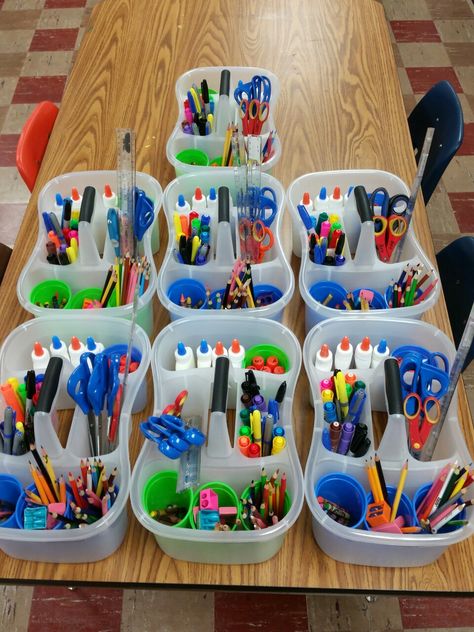
1. General Supplies:

– Pencils (No. 2)

– Erasers

– Sharpeners

– Pens (blue or black ink)

– Colored pencils and markers

– Crayons

– Highlighters (assorted colors)

– Dry erase markers (assorted colors)

– Glue sticks

– Scissors (safety scissors)

– Rulers (12 inches with metric and imperial measurements)

2. Paper Supplies:

– Loose-leaf paper (wide-ruled)

– Spiral notebooks

– Composition notebooks

– Graph paper (quadrille ruled for math activities)

– Construction paper (assorted colors)

– Index cards (3″ x 5″)

3. Art Supplies:

– Watercolor paints

– Paintbrushes

– Smocks or reusable paint shirts

– Modeling clay or playdough

4. Classroom Organizational Supplies:

– Pocket folders with brads

– Binders (1 inch, 3 rings)

– Binder dividers with tabs

– Sheet protectors

– Adhesive labels/stickers

5. Essential Teaching Supplies:

– Teacher’s planner and calendar

– Grade book or online grading system access

– Bulletin board materials (decorative borders, accent pieces, etc.)

– Classroom seating chart materials

6. Learning Aids:

– Flashcards (multiplication tables, vocabulary words, etc.)

– Educational posters (world and local maps, the periodic table, anatomy diagrams, etc.)

– Age-appropriate books for a classroom library

– Educational games and puzzles

– Practice workbooks for math, reading, and writing

– Manipulatives for hands-on learning (such as base-ten blocks)

7. Classroom Cleaning & Hygiene Supplies:

– Tissues

– Hand sanitizer

– Paper towels

– Disinfecting wipes

8. Technology:

– Computer or tablet

– Printer and ink cartridges

– Projector or SmartBoard

9. Miscellaneous:

– Stickers/awards for positive reinforcement

– Small prizes for incentives

– Timer or stopwatch

This comprehensive checklist covers most of the vital supplies needed in a 4th-grade classroom to promote an efficient, safe, and enjoyable learning experience. Be sure to go over it with your school’s administration and adjust based on specific needs. Now you can approach the school year confidently, knowing that you have all the essentials to ensure a successful year for both you and your students!