Literacy

Help Your Struggling Readers Break Through

Introduction:

Reading is an essential skill that has a significant impact on students’ success, both academically and in life. Many students may struggle with reading comprehension, fluency, or even decoding. As educators and parents, our goal is to help them break through these barriers and develop a love for reading. This article will discuss various strategies to support struggling readers and help them achieve reading success.

1. Identify the causes of reading difficulties:

Before we can adequately address reading struggles, it is essential to identify the root cause. Some common reasons include learning disabilities, lack of background knowledge, poor working memory, and limited vocabulary. Assess your student’s reading skills through assessments or observations to tailor your approach accordingly.

2. Provide additional practice opportunities:

Provide struggling readers with multiple chances to practice their skills during one-on-one tutoring sessions or small-group instruction. Ensure that you support their efforts by offering a variety of materials that cater to different reading levels and interests.

3. Focus on phonics and decoding:

Some struggling readers have difficulty decoding words or understanding letter-sound relationships. Teach phonics explicitly through engaging activities that focus on sound-letter correspondence, word families, and blending sounds.

4. Develop comprehension strategies:

Improving comprehension involves developing a set of active reading strategies such as predicting outcomes, making connections, asking questions, and summarizing information. Teach these techniques explicitly and model their use by thinking aloud during shared reading experiences.

5. Encourage fluent reading:

Fluency is the ability to read with speed, accuracy, and expression. Emphasize the importance of repeated readings using texts that are engaging and at an appropriate level for the student’s skillset.

6. Expand vocabulary knowledge:

A robust vocabulary is essential for strong reading comprehension. Encourage students to encounter new words in a variety of contexts by immersing them in rich texts and incorporating vocabulary games during instruction time.

7. Promote self-monitoring and metacognition:

Teach students strategies to self-monitor their understanding as they read, such as paraphrasing, summarizing, or re-reading when they are confused. These habits can help struggling readers become more reflective and aware of their comprehension.

8. Foster a love for reading:

Create a positive and supportive environment that encourages reading. Provide opportunities for students to explore a wide variety of literature, and foster conversations about characters, plots, and authors. Celebrate reading achievements and milestones.

9. Involve families in the process:

Parents play a crucial role in developing their child’s reading skills. Communicate frequently with families about their child’s progress, offer resources for supporting reading at home, and create opportunities for parents to be involved in school-based literacy initiatives.

10. Monitor progress and provide ongoing support:

Continuous assessment of student progress is necessary to ensure that interventions are effective. Adjust teaching strategies based on your student’s needs and celebrate small successes along the way.

Conclusion:

Helping struggling readers break through their barriers is a collaborative effort involving educators, families, and the students themselves. By identifying the root causes of reading difficulties, implementing targeted interventions, and fostering a love for reading, we can empower all students to reach their full potential in literacy skills.

The Science of Literacy Learning Is Not a Thing, So Stop Saying It

The term “science of literacy learning” has gained traction as a universal concept embraced by educators and researchers alike. Many have come to believe that there is a fixed, proven methodology for teaching literacy and language skills. However, this notion falls short by oversimplifying the complexity of literacy development and discounting the diversity of learners and their educators.

Firstly, let’s consider what the so-called science of literacy learning would entail. Like other scientific fields, it would involve theorizing, testing hypotheses, replicating results, and gradually refining our understanding through rigorous processes. While educational research contains these elements, it fails to reach the level of consensus found in traditional science. Researchers often advocate for different approaches based on conflicting theories or evidence.

Furthermore, the notion of an all-encompassing science of literacy learning ignores individual differences, both among the educators who teach and the learners who acquire literacy skills. Educators bring their own unique experiences, perspectives, and strengths to their classrooms; likewise, students come from diverse backgrounds and possess varying cognitive abilities and learning needs.

Maintaining that there is one proven method for literacy instruction disregards the importance of flexible teaching strategies that accommodate these various factors. In reality, good teaching practice requires continuous adaptation and reflection by educators. They need to observe how their students respond to different methods and modify their instruction accordingly.

Moreover, asserting that the science of literacy learning is a single entity does not account for cultural diversity in language practices or acknowledge that language evolves over time. Cultures around the world approach reading, writing, and oral communication differently; assuming that a single approach works universally would be both ignorant and detrimental.

Another critical issue is that focusing on literacy alone does not address other important aspects in education, such as emotional intelligence or social skills development. Claiming one scientifically proven way for literacy learning may inadvertently emphasize an imbalance in curriculums, neglecting these other important dimensions of personal growth.

Instead of clinging to the idea that there exists a definitive “science of literacy learning,” we should instead embrace the multifaceted nature of teaching and learning, acknowledging that no one-size-fits-all approach will work in every context. As educators and researchers, we need to respect individual differences, cultural diversity, and the ever-changing landscape of language.

In conclusion, asserting that there is a definitive science of literacy learning is both misleading and problematic. Language acquisition and literacy development are complex processes that require attention to diverse factors and learner needs. Let’s stop saying “the science of literacy learning” and strive to understand the intricacies surrounding teaching literacy in different contexts. Embracing this truth can lead us toward more effective instruction and better educational experiences for all.

Beyond the Hunger Games and Divergent: 4 Series Worth Checking Out

Introduction:

The dystopian genre has gained immense popularity over the past few years, and series like The Hunger Games and Divergent have played a major role in this surge. However, these aren’t the only series that deserve attention. In this article, we will delve into four lesser-known series that are worth checking out if you are a fan of dystopian fiction.

1. The Maze Runner series by James Dashner

This thrilling science fiction saga focuses on Thomas, a teenager who wakes up with no memory in a deadly maze filled with secrets and dangerous creatures. In order to survive, he must join forces with other teenagers who are also trying to escape the maze. As they unravel the truth about their surroundings, they uncover a shocking government conspiracy. With pulse-pounding action and a twisting plot, The Maze Runner series will keep readers on the edge of their seats.

2. Red Rising trilogy by Pierce Brown

In a society divided into castes determined by color, Darrow is a lowly Red miner who discovers that the world above ground is far different from what he was led to believe. Supported by a secretive group called the Sons of Ares, Darrow undergoes surgery to pose as one of the ruling Golds in order to infiltrate their ranks and bring down their corrupt government from within. Fans of Hunger Games and Divergent will enjoy this brutal yet fascinating examination of class struggle wrapped up in an interstellar conflict.

3. The 5th Wave series by Rick Yancey

In a post-apocalyptic world devastated by alien invasion, Cassie is on a desperate search for her younger brother Sammy while evading mysterious human-like creatures hell-bent on exterminating humanity. Along the way, she meets Evan Walker, who claims to be protecting her but may be hiding secrets of his own. This captivating mix of science fiction, dystopia, and survival story will have readers eagerly turning the pages to learn the fate of Cassie and her loved ones.

4. Legend trilogy by Marie Lu

Set in a futuristic United States known as The Republic, the Legend trilogy follows June, a prodigy born into an elite family, and Day, a notorious criminal from the streets. When June’s brother is murdered, Day becomes the prime suspect, setting off a chain of events that will bring them together and expose the buried truth behind The Republic’s disturbing history. This character-driven series offers an intriguing look at corruption and power dynamics while also providing a heart-pounding, action-packed adventure.

Conclusion:

While The Hunger Games and Divergent are undoubtedly popular for a reason, there’s a wealth of exciting dystopian series out there waiting to be discovered. Give these four series a try if you’re craving more thrilling adventures set in dark and dangerous worlds. Happy reading!

QUIZ: Which 2016 Picture Book Should You Read to Your Class Today?

Choosing the perfect picture book to read to your class can be a daunting task, especially with so many amazing options available. But fear not! We have created this quiz to help you find the perfect 2016 picture book to read to your students today. So, take a deep breath, answer the questions below, and let’s discover the ideal book for your class!

1. What theme would you prefer to explore in your classroom?

a) Friendship

b) Perseverance

c) Diversity

d) Curiosity

2. Which illustration style appeals to you the most?

a) Whimsical and colorful

b) Bold and graphic

c) Soft and subtle

d) Mixed media

3. What age group are your students?

a) Pre-kindergarten or kindergarten

b) Elementary school (grades 1-3)

c) Elementary school (grades 4-6)

d) Middle school

4. How do you want your students to feel after reading the story?

a) Happy and inspired

b) Thoughtful and reflective

c) Empowered and motivated

d) Fascinated and enlightened

5. What type of ending do you prefer in a picture book?

a) A heartwarming conclusion

b) A powerful message that lingers

c) An ending that encourages discussion

d) A surprising twist

Results:

If you chose mostly ‘a’ answers:

Book Recommendation: “The Bear Who Wasn’t There” by LeUyen Pham

This charming tale of friendship will transport your students into a magical world, filled with delightful characters and humorous encounters.

If you chose mostly ‘b’ answers:

Book Recommendation: “Ada Twist, Scientist” by Andrea Beaty

Follow the adventures of Ada, a curious and determined young girl, as she embarks on a journey to uncover the answer to her latest scientific question.

If you chose mostly ‘c’ answers:

Book Recommendation: “We Found a Hat” by Jon Klassen

This simple yet powerful story highlights the importance of friendship and selflessness while navigating the complex issue of sharing.

If you chose mostly ‘d’ answers:

Book Recommendation: “The Marvelous Thing That Came From a Spring” by Gilbert Ford

Discover the captivating history behind the famous Slinky toy in this beautifully illustrated narrative nonfiction picture book.

Now that you have your book recommendation, gather your students, get comfortable, and dive into an enchanting world of storytelling!

Children’s Books Everyone Who Grew Up in the ’90s Will Remember

Introduction:

The ’90s was a fantastic time for children’s literature. The decade produced classics that fostered our love for reading and encouraged the power of our imaginations. Here, we highlight some unforgettable children’s books that truly captured the essence of a ’90s childhood.

1. Goosebumps Series by R.L. Stine

There wasn’t a ’90s kid who didn’t anxiously await the release of each new Goosebumps book. These thrilling tales of horror introduced us to ventriloquist dummies, haunted masks, and werewolves, making us repeatedly check under our beds before going to sleep.

2. The Magic School Bus Series by Joanna Cole and Bruce Degen

Ms. Frizzle and her magically transforming school bus took us on countless educational adventures from deep inside the human body to outer space. The Magic School Bus Series seamlessly blended science lessons with delightful illustrations, making learning downright fun.

3. The Harry Potter Series by J.K. Rowling

Beginning with “Harry Potter and the Philosopher’s Stone” in 1997, J.K. Rowling enchanted us with her wizarding world filled with unforgettable characters like Hermione Granger, Ron Weasley, and Severus Snape. The series not only fueled our love for reading but also redefined children’s literature.

4. The Animorphs Series by K.A. Applegate

The ’90s wouldn’t have been complete without the thrilling adventures of Jake, Rachel, Marco, and Cassie as they battled nefarious aliens while harnessing their shapeshifting powers. This outstanding sci-fi series delivered messages about bravery, friendship, and personal growth.

5. Matilda by Roald Dahl

In this beloved classic, Matilda showed us how powerful reading can be – with her extraordinary intelligence and wit allowing her to take down an evil headmistress. Roald Dahl took us on a whimsical journey that taught us about resilience and the importance of having a vivid imagination.

6. The Giver by Lois Lowry

“The Giver” is a dystopian novel that introduced the concept of a world devoid of pain and emotions while teaching us to appreciate our own humanity. As Jonas discovers the truth behind his carefully controlled society, we delved into thought-provoking subject matter that left a lasting impact.

7. The Boxcar Children Series by Gertrude Chandler Warner

The Alden siblings remain one of the most relatable and heartwarming sibling groups in children’s literature. Their resourcefulness, empathy, and love for each other were brought to life in stories that had us yearning for our own boxcar adventures.

Conclusion:

These books, along with many others, played an integral role in capturing the heart and imagination of children growing up in the ’90s. Each tome offered a sense of wonder, adventure, and learning valuable life lessons. It is no wonder that these classic stories remain timeless favorites for both adults who grew up during this period and new generations of eager readers alike.

Financial Literacy K-12

Introduction

As the world races ahead financially and technologically, schools must also adapt to prepare students for real-world success. One of the most significant skills that are often overlooked in the traditional curriculum is financial literacy. Integrating financial education throughout K-12 lays a solid foundation for students, empowering them to make informed financial decisions throughout their lives. Here’s a closer look at the importance of Financial Literacy in K-12 education.

The Importance of Financial Literacy in Early Education

Financial literacy is the understanding of managing finances and making informed decisions related to budgeting, saving, investing, credit management, and retirement planning. Teaching children about money at an early age can lead to more responsible spending habits, an understanding of the importance of saving, and a lifelong path towards financial independence.

Increased Financial Knowledge

Teaching the basics of personal finance in school equips students with practical knowledge about money management. They will learn how to create a budget, differentiate between needs and wants, prioritize savings over impulse purchases, and understand concepts such as interest rates and inflation.

Encourages Healthy Money Habits

Starting young allows students to cultivate healthy money habits that can last a lifetime. For instance, practicing saving a portion of their allowance or income helps them avoid living paycheck-to-paycheck as adults. Teaching children different ways to save also introduces them to various investment vehicles such as stocks, bonds, and retirement accounts.

Debt Management Skills

Introducing students to credit cards and loans at an early age helps them develop debt management skills critical in today’s world. They learn about debt strategically – taking on “good debt” like student loans or mortgages when necessary – while understanding how to maintain a good credit score and avoid predatory lending practices.

Promotes Economic Participation

Educating students about personal finance instills a sense of economic awareness in them. Understanding fiscal responsibility and the effects of their purchase decisions on the economy help build a more conscious generation of consumers and investors.

How to Integrate Financial Literacy into K-12 Education

1. Age-appropriate Lessons

Incorporate age-appropriate financial lessons into the school curriculum. For younger children, focus on teaching about savings, spending, and identifying coins. As they grow older, progress to budgeting, investments, credit, and taxes.

2. Practical Exercises

Integrate hands-on projects that mimic real-world scenarios to provide students with practical experiences concerning their finances. Create mock budgets or simulate stock market investments to gain valuable insight into financial decision-making.

3. Make It Fun

Developing financial literacy doesn’t have to be boring. Use games, financial apps, and interactive activities to engage students in learning about money management.

4. Collaborate with Financial Professionals

Invite local bankers, financial planners, or entrepreneurs to share their expertise with students and provide real-life examples.

5. Parental Involvement

Encourage parental involvement in the financial education of their children by providing take-home resources and facilitating open conversations about money management at home.

Conclusion

Financial literacy is a vital skill that plays a crucial role in securing one’s future. By incorporating this education into K–12 schools, we can give future generations the tools they need to succeed financially. Teachers, parents, and policymakers must work together to build robust financial literacy programs that make a lasting impact on our children’s lives.

These Six-Word Classroom Mysteries Might Keep You Up Tonight

Introduction

Prepare yourself for a chilling journey as we explore six-word mysteries that occur within the confines of school classrooms. With tales of intrigue and suspense, these cryptic shorter-than-tales are enough to keep even the bravest souls awake at night. Fasten your seatbelts, as here we unravel some spine-tingling six-word classroom mysteries.

1. “Stolen exam: Someone knew answer key.”

In the quiet hours before dawn, a misplaced master copy of an upcoming exam disappears from the teacher’s desk. All fingers point towards a mysterious figure who had possession of the elusive answer key. As suspicions rise, students, teachers and staff all find themselves entrapped in webs of deceit.

2. “Abandoned backpack: Footprints leading nowhere.”

An ordinary school day takes a dark turn when teachers discover an abandoned backpack, its contents suspiciously scattered across the hallway floor. They follow the solitary footprints that lead away from it -only to find they lead nowhere. As speculations swirl around the vanishing student, even the bravest teachers feel shivers down their spines.

3. “Ghostly laughter echoes through halls.”

A haunted laughter apparently haunts the corridors after school hours, with no discernable source to be found. Legends surround a mischievous student ghost who lingers inside classrooms and partakes in playing pranks on unsuspecting students and teachers.

4. “Chalk writing: Midnight confessions unsolved.”

While preparing for his next class, a teacher stumbles upon puzzling notes written on his chalkboard detailing midnight confessions of anonymous wrongdoings within the school walls. As faculty members rack their brains for answers, tension grips the school community with each new cryptic message revealed.

5. “Smell lingers; mysterious lunchbox disappears.”

A worrying stench begins to emanate from a locked cupboard in the chemistry lab. As teachers and students hold their breath, a search is conducted – only to find that a mysteriously forgotten, malodorous lunchbox has inexplicably vanished…along with its nauseating scent.

6. “Locked door: Secrets lie within.”

Whispers abound about a long-forgotten room deep in the annals of the school, with rumors suggesting dark secrets hidden beyond its tightly locked door. As curiosity grows among students, daring adventurers attempt to uncover the enigmatic room’s darkest truths. However, some mysteries are best left undiscovered.

Conclusion

Our journey into the unknown draws to an end as we leave the eerie realm of six-word classroom mysteries that send chills down our spines and ignite our imaginations. While these stories may be just snippets of something larger, they retain the power to spark fear and excitement in us all and make us ponder on whatever dark forces might be lurking just beneath the surface of everyday life.

Literacy Walks: Transforming Our Practices Through Collaboration

Introduction:

In today’s fast-paced educational landscape, educators need to be versatile, adaptable, and innovative in their teaching practices. This entails not only understanding the evolving literacy needs of students but also fostering a culture of professional collaboration. One transformative approach that has gained momentum in recent years is Literacy Walks – a powerful strategy aimed at enhancing instructional practices through collaborative feedback and reflection. This article delves into the concept of Literacy Walks, their advantages, and how they can revolutionize education by promoting collective growth.

What are Literacy Walks?

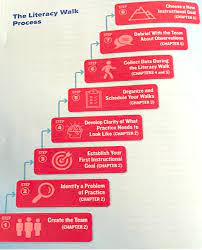
Literacy Walks are structured classroom observations that primarily focus on specific aspects of literacy instruction. During these walks, teachers observe their colleagues’ classrooms in action while paying close attention to student engagement, the clarity of instruction, and the effectiveness of learning environments. Afterwards, they engage in reflective discussions to share insights, provide suggestions for improvement, and determine any patterns that may present opportunities for growth.

The Benefits of Literacy Walks:

1. Collaborative Learning: Literacy Walks foster a collaborative culture among teachers. By observing each other’s classrooms and discussing teaching practices, educators not only learn from one another but also support their colleagues’ professional growth.

2. Enhanced Instructional Practices: Sharing insights during reflective discussions helps participants identify areas where they can improve their instructional practices. This leads to better outcomes for students and increased overall skill development.

3. Addressing Common Challenges: Identifying common challenges through observation and discussion allows teachers to develop targeted strategies to tackle these issues more effectively together.

4. Strengthened Trust and Support: Engaging in open dialogue about teaching practices enhances transparency among peers and builds trust within the educational community.

5. Professional Development: Participating in Literacy Walks is essentially a form of continuous professional development as educators constantly challenge themselves to improve their practice based on peer feedback.

Implementing Literacy Walks:

While the logistics of implementing Literacy Walks may vary depending on the school or institution, here are some general guidelines:

1. Develop Observation Goals: Identify the key focus areas for observation, such as reader’s workshop, writer’s workshop, word study, or guided reading.

2. Schedule Observations: Agree on dedicated observation times and develop a rotation schedule that allows all participating teachers to both observe and be observed.

3. Create Observation Protocols: Establish clear and consistent observation protocols, including what to look for during the walk and how to document it.

4. Debrief and Reflect: Set aside time for dialogue and reflection after each Literacy Walk session. Discuss findings openly and honestly while focusing on constructive feedback.

5. Develop Action Plans: After debriefing, identify actionable improvement strategies and commit to putting them into practice.

Conclusion:

Literacy Walks offer a unique opportunity for ongoing collaboration among educators, leading to improved instruction and success for students. By embracing this approach, schools can cultivate a culture of continuous growth that fosters excellence in literacy instruction through shared experiences and insights. As the education landscape continues to evolve, the power of collective growth through Literacy Walks becomes more critical in molding our instructional practices for the betterment of our students.

10 Questions I Intend to Ask at My Hogwarts Interview

1. What is the process for selecting first-year students for each of the Hogwarts houses?

2. How does Hogwarts ensure a diverse and inclusive environment for students from various magical backgrounds?

3. Can you provide more information about the unique learning methods utilized within the Hogwarts curriculum?

4. What extracurricular activities are available for students interested in honing their magical skills outside of the classroom?

5. How does your faculty support students with different learning styles and differing levels of magical experience?

6. What kind of career guidance and resources does Hogwarts provide in preparing students for life after graduation?

7. Is it possible to customize one’s academic experience at Hogwarts, such as focusing on particular areas of magic or completing an independent study?

8. How do you promote a sense of camaraderie between students and faculty across all four houses?

9. Can you tell me more about living arrangements at Hogwarts and what resources are available to create a comfortable and engaging living environment?

10. Are there any traditions or events unique to Hogwarts that current students feel are integral to their experience at the school?

What is Balanced Literacy?

Introduction:

Balanced literacy is an instructional framework that integrates various literacy-related teaching strategies, helping students develop strong reading and writing skills. It focuses on creating a balanced approach to literacy instruction, combining whole language and phonics methods. By using differentiated instruction and individualized support, balanced literacy aims to meet the diverse needs of all learners.

Components of Balanced Literacy:

1. Read Aloud:

In read-aloud sessions, the teacher reads a text to the students while modeling fluent reading and explaining vocabulary or complex ideas. This component helps students develop listening comprehension skills, exposes them to rich language, and builds a classroom community around shared stories.

2. Shared Reading:

Shared reading involves teachers and students reading a text together while the teacher supports students in understanding the text by modeling strategies such as predicting, questioning, and summarizing. This allows students to engage with texts at a higher reading level than they could manage independently.

3. Guided Reading:

In guided reading sessions, small groups of students with similar reading levels participate in focused sessions led by the teacher. The teacher provides scaffolding through prompts and support as needed to help students make meaning from texts.

4. Independent Reading:

Independent reading encourages students to select their own books based on their interests and abilities, fostering a love for reading while practicing their skills independently.

5. Word Study:

Word study focuses on phonics, spelling, and vocabulary instruction that empowers students to decode words effectively and efficiently. Activities can range from letter-sound correspondence to advanced word patterns and meanings.

6. Modeled/Shared Writing:

Teachers model writing for the whole class or smaller groups by thinking aloud as they compose a piece of text (modeled writing) or work collaboratively with students on creating written works (shared writing). This component demonstrates effective writing strategies, conventions, and processes.

7. Interactive Writing:

Interactive writing involves teachers and students co-constructing a text, taking turns writing sentences or sentence parts. The teacher offers guidance on spelling, punctuation, and overall sentence structure as needed.

8. Writing Workshop:

Students engage in the entire writing process, from prewriting to publishing, guided by their teacher. They work independently, in pairs, or small groups to develop and refine their writing skills.

9. Assessment and Differentiated Instruction:

Assessment is a fundamental part of balanced literacy, with ongoing informal assessments to monitor student progress and inform instruction. This allows for differentiated instruction based on individual needs.

Conclusion:

Balanced literacy is an integrated and comprehensive approach to literacy education that aims to support all students as they develop strong reading and writing skills. By combining various instructional methods and offering tailored support to meet individual needs, teachers can better equip students for success in the complex world of language.