Literacy

26 Books About Activism & Speaking Up for Young Readers

As the saying goes, children are our future, and inspiring them to stand up for what they believe in is crucial. Our world is full of injustice, inequality, and issues that affect us all. By teaching young readers about activism and speaking up, they can begin to understand how their voices can be used to make change. Here are 26 must-read books about activism and speaking up for young readers:

1. “The Youngest Marcher” by Cynthia Levinson

2. “We Rise, We Resist, We Raise Our Voices” edited by Wade Hudson and Cheryl Willis Hudson

3. “Rad American Women A-Z” by Kate Schatz

4. “Little Leaders: Bold Women in Black History” by Vashti Harrison

5. “Sometimes People March” by Tessa Allen

6. “Greta and the Giants” by Zoë Tucker

7. “Malala’s Magic Pencil” by Malala Yousafzai

8. “I Am Rosa Parks” by Brad Meltzer

9. “The Pink Umbrella” by Jonas Sickler

10. “Be Kind” by Pat Zietlow Miller

11. “Wangari’s Trees of Peace: A True Story from Africa” by Jeanette Winter

12. “The Power of One: Every Act of Kindness Counts” by Trudy Ludwig

13. “Come with Me” by Holly M. McGhee

14. “Say Something!” by Peter H. Reynolds

15. “No Voice Too Small: Fourteen Young Americans Making History” edited by Lindsay H. Metcalf, Keila V Dawson, and Jeanette Bradley

16. “She Persisted: 13 American Women Who Changed the World” by Chelsea Clinton

17. “One Love” adapted by Cedella Marley

18. “I Dissent: Ruth Bader Ginsburg Makes Her Mark” by Debbie Levy

19. “The World Needs More Purple People” by Kristen Bell and Benjamin Hart

20. “Giovanni’s Room” by James Baldwin

21. “My Best Friend, Abe Lincoln” by Robert L. Bloch

22. “A is for Activist” by Innosanto Nagara

23. “Rosa” by Nikki Giovanni

24. “All Are Welcome” by Alexandra Penfold and Suzanne Kaufman

25. “What Can a Citizen Do?” by Dave Eggers

26. “Counting on Community” by Innosanto Nagara

These 26 books not only educate young readers about important historical events and figures in activism, but they also help to empower them, showing that anyone can make a difference, no matter their age or background. With themes that touch on kindness, community, resilience, and self-belief, these books inspire a new generation of activists to stand up for what’s right and use their voices to promote positive change in the world.


7 Questions to Help Young Writers Develop Plot

As writers begin to explore their storytelling abilities, one key element often poses challenges: developing a plot. Striking the right balance between structure and creativity can be tricky, particularly for young writers. To help navigate this terrain, here are seven essential questions for budding storytellers to consider when crafting their plot:

1. What is the main idea or concept?

Before diving into the details of a story, it is essential to understand its overarching theme or concept. Identifying the central idea helps create a roadmap for your plot; it provides a focal point around which all other story elements revolve.

2. Who are your characters?

A strong, dynamic set of characters is the driving force behind any well-developed plot. As you introduce your characters, consider their personalities, backgrounds, and motivations. Understanding these aspects will enable you to expand upon how they interact within the context of the story.

3. What is the primary conflict?

Conflict is crucial for fueling tension and keeping readers engaged. By identifying your story’s main struggle—whether internal, external, or even supernatural—you establish an essential backbone for your narrative. Adding subplots and minor conflicts helps add depth and complexity to your story.

4. How does change occur within your characters?

Character development goes hand in hand with plot progression. As your characters encounter conflicts and participate in various events throughout the narrative, they must change and grow as individuals. Showcasing these transformations keeps readers emotionally invested in the tale.

5. What are the key turning points?

Dramatic turning points shift the course of a story and push both characters and events in new directions. Identifying these climactic moments allows young writers to create plot twists that will keep readers on their toes.

6. How will you pace your story?

Pacing is critical for maintaining reader interest and ensuring that each event flows smoothly into the next. Young writers must strike a balance between fast-paced action and slower, introspective moments, allowing their plot to unfold at an engaging tempo.

7. What resolution will satisfy readers?

As the story reaches its conclusion, consider how to provide a satisfying resolution for your characters and their conflicts. While not every tale ends with a neat and tidy conclusion, crafting a well-rounded ending that ties up loose ends leaves readers with a sense of closure and fulfillment.

By asking these guiding questions throughout the writing process, young authors can develop engaging, compelling plots that will captivate and inspire their readers.

16 Perfect Quotes to Make You Fall in Love With Seuss All Over Again

Introduction:

Dr. Seuss, the beloved author of numerous children’s books, has inspired generations of readers with his whimsical stories, memorable characters, and vivid illustrations. Amidst the colorful pages of his books, one can find countless life lessons and words of wisdom that continue to resonate in our hearts. Here are 16 perfect quotes from Dr. Seuss that will make you fall in love with his work all over again.

1. “Don’t cry because it’s over, smile because it happened.” – Dr. Seuss

2. “Today you are You, that is truer than true. There is no one alive who is Youer than You.” – Dr. Seuss

3. “You have brains in your head. You have feet in your shoes. You can steer yourself any direction you choose.” – Dr. Seuss

4. “The more that you read, the more things you will know. The more that you learn, the more places you’ll go.” – Dr. Seuss

5. “Why fit in when you were born to stand out?” – Dr. Seuss

6. “You’ll miss the best things if you keep your eyes shut.” – Dr. Seuss

7. “A person’s a person, no matter how small.” – Dr. Seuss

8. “Sometimes the questions are complicated and the answers are simple.” – Dr. Seuss

9. “Unless someone like you cares a whole awful lot, nothing is going to get better. It’s not.” – Dr. Seuss

10. “Be who you are and say what you feel because those who mind don’t matter and those who matter don’t mind.” – Dr.Seuss

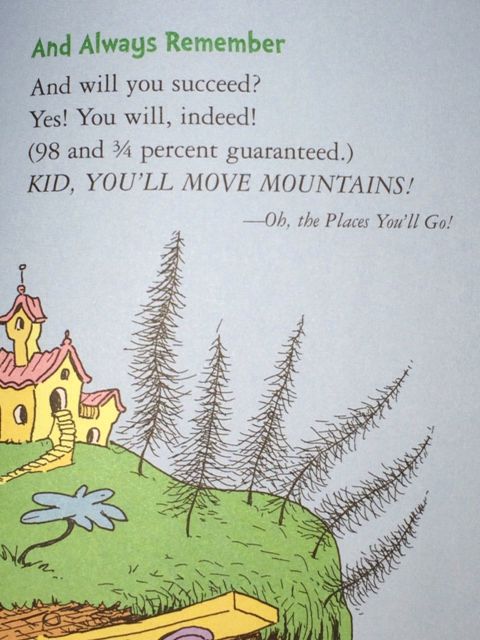
11. “You’re off to great places! Today is your day! Your mountain is waiting, so… get on your way!” – Dr. Seuss

12. “Everything stinks till it’s finished.” – Dr. Seuss

13. “Think left and think right and think low and think high. Oh, the thinks you can think up if only you try!” – Dr.Seuss

14. “To the world you may be one person; but to one person, you may be the world.” – Dr. Seuss

15. “How did it get so late so soon? It’s night before it’s afternoon. December is here before it’s June. My goodness how the time has flewn. How did it get so late so soon?” – Dr. Seuss

16. “I know it is wet and the sun is not sunny, but we can have lots of good fun that is funny.” – Dr.Seuss

Conclusion:

Dr. Seuss’ timeless tales not only nurture our imagination but also instill invaluable life lessons that remain with us throughout our lives. Let these quotes fill your heart with nostalgia and remind you of the simple joys that come from reading a delightful book by the one and only, Dr.Seuss!

15 Anchor Charts for Teaching Theme

Introduction

Anchor charts are an essential tool for educators, assisting students in their learning journey by providing a visual representation of complex ideas. One of the most significant aspects of literature that students need to understand is the theme. Teaching theme can be challenging, but using anchor charts can make the process more manageable and engaging.

In this article, we will explore 15 creative anchor charts for teaching theme, helping students gain a deeper understanding of this essential literary element.

1. Definition of Theme:

Begin with a simple anchor chart that defines ‘theme’. Provide examples of common themes in literature, such as love, friendship, and overcoming adversity.

2. Theme vs. Main Idea:

Create a chart that distinguishes between theme and main idea. By defining these terms and giving examples, students will better understand their differences.

3. Finding Theme in Literature:

An anchor chart explaining how to identify themes in literature can serve as a valuable reference for students as they read and analyze texts. Include tips on examining character actions, conflicts, and resolution.

4. Theme Statements:

Guide your students in creating strong theme statements with an anchor chart that provides examples and tips for constructing their own statements about the texts they read.

5. Common Themes in Literature:

Create an anchor chart listing universal themes found in various types of literature, such as courage, mortality, or the power of nature.

6. Symbolism and Theme:

Explore the connection between symbols and themes with an anchor chart focusing on how authors use symbols to represent larger concepts or ideas within their work.

7. Themes Across Genres:

Design a chart that showcases common themes found within different genres of literature (e.g., science fiction, mystery). This helps students recognize overarching themes in diverse texts.

8. Themes Across Cultures:

Demonstrate that themes transcend cultural barriers by creating an anchor chart featuring common themes found in literature from different countries and cultural backgrounds.

9. Visualizing Themes:

Encourage students to create visual representations of themes in literature using drawings, diagrams, or mind maps on an anchor chart. This fosters a deeper understanding and allows for creative expression.

10. Supporting Evidence for Themes:

Teach students to find evidence in the text that supports their interpretation of the theme with specific examples. Create a chart illustrating how to use quotes and other textual evidence effectively.

11. Changing Themes over Time:

Discuss how themes in literature have evolved over time using an anchor chart that examines themes in different historical eras or literary periods.

12. Comparing and Contrasting Themes:

Help students understand the similarities and differences between the themes of two texts with a Venn diagram or T-chart anchor chart.

13. Theme Analysis Graphic Organizer:

Design an anchor chart including a graphic organizer for theme analysis that guides students in organizing their thoughts and connections while reading.

14. Themes in Poetry:

Explore themes within poetry by crafting an anchor chart that demonstrates how poets communicate themes through various devices such as imagery, metaphor, and form.

15. Tracking Themes in a Novel:

Provide ongoing support for teaching theme by creating an anchor chart where students can track the themes they encounter throughout a novel or unit of study.

Conclusion

Effective teaching of theme is crucial in helping students develop their comprehension, analysis, and appreciation of literature at all levels. By using engaging anchor charts tailored to different concepts and approaches to teaching theme, teachers can help learners grasp this fundamental literary concept more easily. Happy teaching!

8 Creative Ways to Help Kids “Find the Evidence” in Nonfiction

Finding the evidence is an essential skill in comprehending nonfiction texts. Nurturing this ability in young learners can develop effective research and critical thinking skills as they progress in their education. Here, we present 8 creative ways to help kids find the evidence in nonfiction.

1. Highlighter Hunt: Provide students with highlighters and ask them to identify and highlight specific kinds of evidence, like facts, statistics, or expert opinions. This visual activity encourages them to read closely and determine which information best supports the central idea.

2. Sticky Note Annotations: Give each student a pack of sticky notes and instruct them to create brief notes summarizing or paraphrasing key pieces of evidence as they encounter them. This technique not only helps students retain information but also creates a handy study guide for future reference.

3. Graphic Organizers: Introduce graphic organizers, like Venn diagrams, flow charts, or mind maps to help students visually organize the evidence they discover. Encourage students to experiment with different formats until they find one that resonates with their learning style.

4. Evidence-Backed Debates: Divide the class into small groups, assigning different perspectives on a particular topic from nonfiction readings. Challenge each group to gather evidence supporting their position and engage in a debate using that information.

5. Question-and-Answer Sessions: Encourage students to generate questions related to the text, then work together to track down relevant evidence within the reading material. This approach turns reading comprehension into an engaging, collaborative exercise.

6. Fact-Finding Scavenger Hunt: Create scavenger hunt cards listing different types of evidence (quotes, statistics, anecdotes) related to specific topics or central ideas in a text. As students read through their nonfiction material, they must locate each type of evidence listed on their card.

7. Dramatic Interpretations: Ask students to create and perform skits based on the information gathered from nonfiction texts. This creative outlet allows them to incorporate evidence they’ve found in the reading, helping to solidify their understanding of the content.

8. Multimedia Presentations: Allow students to demonstrate their understanding of a nonfiction text by creating a multimedia presentation incorporating text, audio, and visuals. In

Our Favorite Kwanzaa, Hanukkah, and Christmas Books for Kids

The holiday season is a magical time for children. As they watch the twinkling lights and hear the melodies of festive songs, they eagerly await moments of connection, joy, and celebration. One of the best ways to enhance their holiday experience is through books. Reading together builds understanding, empathy, and strong bonds between families and friends. To help you create memories this holiday season, here is a list of our favorite Kwanzaa, Hanukkah, and Christmas books for kids.

Kwanzaa Books

1. “Seven Spools of Thread: A Kwanzaa Story” by Angela Shelf Medearis

2. “My First Kwanzaa” by Karen Katz

3. “Together for Kwanzaa” by Juwanda G. Ford

Hanukkah Books

1. “Hershel and the Hanukkah Goblins” by Eric A. Kimmel

2. “The Latke Who Couldn’t Stop Screaming: A Christmas Story” by Lemony Snicket

3. “The Eight Nights of Hanukkah” by Judy Nayer

Christmas Books

1. “How the Grinch Stole Christmas!” by Dr. Seuss

2. “The Polar Express” by Chris Van Allsburg

3. “Olive, the Other Reindeer” by J. Otto Seibold

Each book captures the excitement and wonder of the respective holidays while also introducing kids to new cultures and traditions.

“Seven Spools of Thread: A Kwanzaa Story” teaches children about the African-American holiday’s seven principles — unity, self-determination, collective work and responsibility, cooperative economics, purpose, creativity, and faith — through a beautiful tale about finding strength in our diversity.

Likewise, young readers will discover how Karen Katz’s characters prepare for Kwanzaa in “My First Kwanzaa,” and they will enjoy Juwanda G. Ford’s “Together for Kwanzaa” — a touching story of a family’s reunion during the celebration.

For Hanukkah, Eric A. Kimmel’s “Hershel and the Hanukkah Goblins” features a hero who battles various goblins to save his village’s festival of lights. While the sarcastic latke in Lemony Snicket’s “The Latke Who Couldn’t Stop Screaming” adds humor to the holiday, Judy Nayer teaches about Hanukkah traditions by detailing each night in “The Eight Nights of Hanukkah.”

Dr. Seuss’s classic “How the Grinch Stole Christmas!” reminds children about the true spirit of Christmas through its lively story and unforgettable characters. Meanwhile, kids are transported into a magical world with Chris Van Allsburg’s evocative illustrations and enchanting narrative in “The Polar Express.” Lastly, discover why Olive is not just an ordinary dog in J. Otto Seibold’s fun and engaging story, “Olive, the Other Reindeer.”

No matter which holiday your family celebrates — or if you commemorate them all — these captivating children’s books will bring warmth, love, and learning during this special time of year.

12 Anchor Charts to Help Teach Financial Literacy to Your Students

Introduction:

Financial literacy is an essential skill that helps children become responsible adults and make sound financial decisions throughout their lives. In order to teach financial literacy effectively, use these 12 anchor charts to visually communicate key concepts and foster a deeper understanding of money management for your students.

1. Wants vs. Needs:

This chart defines the difference between wants and needs, teaching students the importance of prioritizing their expenses based on necessity.

2. Savings Goals:

Help your students set SMART (Specific, Measurable, Achievable, Relevant, Time-bound) savings goals with this anchor chart, encouraging them to save money regularly.

3. Budgeting 101:

Introduce the concept of budgeting with a chart that outlines income, expenses, and savings categories. This chart demonstrates how assigning spending limits will help in managing money efficiently.

4. Types of Bank Accounts:

Explain the differences between checking accounts, savings accounts, and other banking options with this anchor chart.

5. Banking Services & Fees:

Educate your students about various banking services such as withdrawals, deposits, and transfers while making them aware of potential fees attached.

6. Credit vs. Debit:

This chart clearly differentiates between credit cards and debit cards while outlining advantages and disadvantages of each method of payment.

7. Interest Rates:

Teach your students about simple and compound interest rates to provide an understanding of why interest is a crucial factor to consider when borrowing or saving money.

8. Loan Terms & Conditions:

Dedicate an anchor chart that explains different types of loans, repayment options, and terms to familiarize students with the borrowing process.

9. The Power of Investing:

Introduce investment concepts like stocks, bonds, mutual funds, and retirement accounts through a visually appealing layout that emphasizes the benefits of long-term investing.

10. Taxes:

A tax-related anchor chart can simplify complex tax topics and explain the role of taxes in personal finance.

11. Insurance:

Explain the purpose of various insurance policies, such as health, auto, and life insurance, and how they provide financial protection against unexpected events.

12. Avoiding Financial Scams:

Equip your students with tools to identify potential financial scams and tips on how to report suspicious activities to prevent financial loss.

Conclusion:

Using these 12 anchor charts as visual tools in your classroom can significantly elevate your students’ understanding of essential financial literacy concepts. These charts serve as a starting point for interactive and engaging discussions on money management that will foster responsible financial habits for years to come.

5 Simple Intervention Strategies to Strengthen Phonics Skills

Introduction:

Phonics is the essential building block of language and literacy education. It helps young learners to develop strong reading and writing skills by understanding the relationships between sounds and letters. Students struggling with phonics may face difficulty in achieving academic success, making phonics intervention a crucial aspect of any teaching toolkit. In this article, we explore five simple yet effective intervention strategies that can help strengthen students’ phonics skills and set them on the path to becoming confident readers and writers.

1. Blending and Segmenting Games

Blending and segmenting are vital phonological skills that allow learners to understand how letters combine to form words. Teachers can facilitate this understanding with engaging game-based activities. For instance, use cards with individual letters and encourage students to blend them verbally or physically move the cards to create words. Alternatively, present a word and ask students to break it down into individual letter sounds.

2. Multisensory Teaching Techniques

Multisensory teaching techniques involve activating various senses to support learning, which caters to different learning styles and makes phonics more enjoyable. Teach letter sounds by incorporating visual (showing pictures), auditory (saying letter sounds), kinesthetic (forming letter shapes with hands), and tactile (tracing letters in sand) elements into your lessons.

3. Flashcards for Sight Words

Some high-frequency words cannot be deciphered through phonics rules, meaning they must be learned by sight. Creating flashcards with these sight words allows students to practice quick recognition outside of their regular reading sessions. Encourage repetition through regular review of the flashcards at home or in class.

4. Guided Reading With Phonetically-Decodable Texts

Ensure students have access to texts that reinforce emerging phonics skills through guided reading sessions. Utilize phonetically-decodable books that focus on letter sounds previously covered in your lessons, allowing the students to apply their new knowledge in a meaningful context. Gradually increase the complexity of the texts as students’ confidence and abilities grow.

5. Targeted Instruction for Individual Needs

Finally, it is crucial to tailor your intervention strategies to individual learners and their unique needs. Assess students’ phonics skills using diagnostic tools or informal observations to determine specific areas of difficulty. Implement targeted instruction, such as one-on-one tutoring or small group activities, that focuses on addressing these specific skill gaps.

Conclusion:

By incorporating these five simple intervention strategies into your teaching toolkit, you can help struggling readers overcome their phonics challenges and achieve success in reading and writing. Remember that consistency, patience, and encouragement are key motivators for learners as they progress on their literacy journey.

Setting Up Your Literacy Area to Emphasize Skills and Content

Introduction

A well-organized literacy area can greatly benefit both teachers and students by emphasizing essential skills and content in an inviting and engaging manner. As you set up your literacy area, keep in mind that the ultimate goal is to foster a love for reading and writing while enhancing students’ comprehension and communication abilities. In this article, we will provide you with guidance on setting up a literacy area with an emphasis on skills and content.

1. Start with an organized layout

Set up a literacy area with clear sections for different activities, including reading, writing, listening, and speaking. Organizing your space this way will allow students to easily access materials, tools, and resources they need for each activity.

2. Create an inviting atmosphere

Encourage students to feel comfortable in the literacy area by incorporating comfy chairs, pillows, and soft lighting. This promotes a relaxed environment where students can feel at ease exploring new texts and engaging in various learning experiences.

3. Choose appealing books that target skills and content

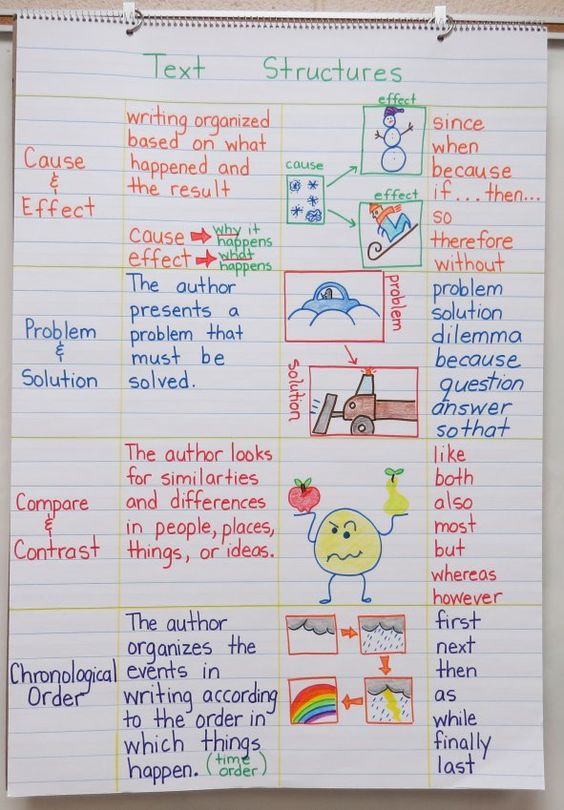
Offer a wide range of reading materials that cater to different interests, reading levels, and curricular themes. Focus on selecting books that help develop key language arts skills such as decoding words or understanding different text structures while also addressing diverse topics to promote content-based learning.

4. Label books by their level of difficulty

One way to emphasize skills is by organizing books according to their reading levels. Label your bookshelves or baskets accordingly so students can quickly find texts suitable for their skillset while gradually progressing through more challenging texts.

5. Set goals for both skills and content learning

As you introduce new reading materials or activities, establish clear objectives related to both skills and content. For example, when introducing informational texts about the solar system, outline specific comprehension goals like identifying the main idea as well as content-specific objectives such as understanding the key characteristics of planets.

6. Include engaging writing materials

Display various writing tools and stationery within the literacy area, allowing students to experiment with different materials as they work on their storytelling, persuasive essays, or poetry. Providing opportunities to explore diverse writing materials can keep students engaged while they develop essential writing skills.

7. Implement literacy centers or stations

Designate specific areas for focused learning experiences that target particular skills and content areas. Literacy centers can include activities like listening to audiobooks, working on phonics exercises, or practicing reading comprehension strategies, enabling students to engage in multiple aspects of language arts.

8. Display student work

Celebrate students’ progress by displaying their written work, illustrations, or book reviews in the literacy area. This not only promotes a sense of accomplishment but serves as a reminder of each student’s growth in both skills and content knowledge.

9. Assess and track progress

Regularly assess your students’ growth and progress in meeting literacy goals related to both skills and content. Use this information as a guide for future instruction or intervention strategies to ensure that all students have access to the support they need.

Conclusion

Setting up a literacy area that emphasizes both skills and content can help create an engaging learning environment that nurtures reading and writing abilities while addressing diverse topics across the curriculum. By following these tips, you will create a stimulating and effective space for your students to thrive in their literacy journeys.

International Books That Belong on Your High School Syllabus

In an increasingly globalized world, it is essential for high school students to be exposed to literature from various cultures and countries. Expanding a literary syllabus to include international books allows students to broaden their understanding of diverse perspectives. It also enables them to develop empathy and critical thinking skills while engaging with the different themes and issues explored by authors across the globe. Here are five international books that educators should consider adding to their high school syllabi.

1. “One Hundred Years of Solitude” by Gabriel García Márquez (Colombia)

This masterpiece of magical realism by Colombian author Gabriel García Márquez charts the history of the Buendía family over seven generations in the fictional town of Macondo. The novel offers a vivid portrayal of Latin American culture, rich in tradition, myth, and imagination. Its multilayered narrative covers themes such as love, solitude, power, and the cyclical nature of history.

2. “The God of Small Things” by Arundhati Roy (India)

Winner of the Man Booker Prize in 1997, “The God of Small Things” tells the story of fraternal twins Estha and Rahel in the Indian state of Kerala. The novel delves into universal themes like love and loss while simultaneously examining local politics, social caste systems, and cultural norms. Roy’s imaginative prose and skillful interweaving of time frames make this novel an engaging read for high school students.

3. “Things Fall Apart” by Chinua Achebe (Nigeria)

Nigerian author Chinua Achebe’s groundbreaking work provides readers an authentic look into pre-colonial African society and the effects of European colonization on tribal communities. With its protagonist Okonkwo’s tragic fall from grace, “Things Fall Apart” is a powerful examination of societal change, individual struggle for identity, and the impact of foreign cultures on traditional ways of life.

4. “Persepolis” by Marjane Satrapi (Iran)

As a two-volume graphic novel, “Persepolis” recounts the coming-of-age story of Marjane Satrapi amidst the Iranian Revolution and subsequent Iran-Iraq War. The autobiographical narrative offers invaluable insights into the political and social landscape of Iran during a turbulent time. With its poignant illustrations and candid portrayal of a young girl grappling with her identity in a world full of upheaval, “Persepolis” serves as an engaging medium for students to explore themes of political conflict, personal growth, and cultural identity.

5. “The House of the Spirits” by Isabel Allende (Chile)

A magical realist tale spanning four generations, “The House of the Spirits” follows the lives and fortunes of the Trueba family in Chile. Through their stories and experiences, the novel deals with themes such as political unrest, family dynamics, social injustice, and love. Allende’s poetic prose and multi-layered narrative offers high school students a chance to explore complex familial relationships while delving into Latin American history.

By incorporating these international books into your high school syllabus, you provide students with an enriching literary experience that broadens their cultural awareness and deepens their understanding of global issues. As they read these compelling stories from diverse perspectives, young minds are encouraged to explore shared human experiences across various cultures—and perhaps spark a lifelong love for world literature.