Literacy

12 Books About Peace to Share With Your Students

Introduction:

Teaching children about peace is one way to promote a more harmonious and accepting world. By introducing the concept of peace through literature, educators can encourage young minds to consider alternatives to conflict and grow into empathetic and responsible adults. Here are 12 outstanding books about peace that you can share with your students.

1. “Peace at Last” by Jill Murphy

This classic story of Mr. Bear, who just wants a good night’s sleep, demonstrates how we can often find peace in unexpected places.

2. “The Peace Book” by Todd Parr

An accessible and visually engaging book for young readers, this colorful exploration of the various forms peace can take is a great conversation starter in the classroom.

3. “The Little Book of Peace” by Louise Rowland

A collection of inspiring quotes, stories, and poems, The Little Book of Peace invites young readers to reflect upon the power of peacefulness in their own lives.

4. “Desmond and the Very Mean Word” by Desmond Tutu & Douglas Carlton Abrams

Based on real-life experiences of Archbishop Desmond Tutu, this beautifully illustrated tale teaches children about the transformative power forgiveness has in promoting peace.

5. “Each Kindness” by Jacqueline Woodson

A powerful story about the ripple effect kindness has within a community, this book shows how small acts of compassion contribute to a more peaceful world.

6. “Sadako and the Thousand Paper Cranes” by Eleanor Coerr

This emotional story inspired the global movement for folding paper cranes as symbols of peace. Based on a true story, it encourages empathy and understanding for those affected by war.

7. “The Sandwich Swap” by Queen Rania Al Abdullah & Kelly DiPucchio

Inspired by her own childhood experience, Queen Rania’s tale promotes cultural understanding and respect for differences, illustrating how embracing diversity can lead to peace.

8. “Malala’s Magic Pencil” by Malala Yousafzai

This captivating autobiography raises awareness about the importance of education and the power of determination in promoting peace.

9. “Amani the Boda-Boda Rider” by Paul Sutherland

Set in East Africa, this inspiring story emphasizes the importance of local action in promoting peace within a community.

10. “The Tree in the Courtyard: Looking through Anne Frank’s Window” by Jeff Gottesfeld

This poignant story presents an alternative view of Anne Frank’s experience through the eyes of a tree and highlights the resilience of hope amidst adversity.

11. “Stepping Stones: A Refugee Family’s Journey” by Margriet Ruurs

This compassionate, bilingual story follows a young girl and her family on their journey to find safety and highlights the importance of empathy and understanding in fostering peace between cultures.

12. “Can You Say Peace?” by Karen Katz

Introducing children to different ways of saying “peace” in many languages, this vibrantly illustrated book celebrates global unity and fosters cultural appreciation.

Conclusion:

Sharing these thought-provoking books about peace with your students can initiate meaningful discussions, promote empathy, and cultivate an understanding of diverse perspectives. These titles are excellent tools for nurturing compassionate and informed future generations who will work towards creating a more peaceful world.

Challenge Kids to Complete This Color-as-You-Go Reading Challenge

Introduction:

Are you looking to ignite your child’s love for reading while keeping them engaged and enthusiastic? Look no further! Introducing the Color-as-You-Go Reading Challenge – a fun and creative way to get your kids excited about reading. This interactive challenge combines the joy of reading with the satisfaction of colorful artwork, keeping your child hooked and eager to read more.

Why Choose the Color-as-You-Go Reading Challenge?

The premise of this challenge is simple but highly effective. It stimulates the visual, sensory, and cognitive aspects that contribute to a child’s learning process, while also nurturing their artistic skills.

1. Motivation: Watching the artwork grow colorful as they progress through the challenge will keep your child motivated.

2. Goals: The challenge provides short-term achievable milestones, ensuring a sense of accomplishment with every completed task.

3. Creativity: By sparking their imagination through both reading and coloring, you’re fostering their creative spirit.

4. Engagement: With each book’s unique coloring theme, it keeps them engaged and eager for new adventures.

5. Memory Retention: The act of coloring while absorbing information can help improve memory retention in children.

How To Set Up The Color-as-You-Go Reading Challenge:

1. Materials: Gather art supplies like coloring pencils or markers, along with a printable or custom-made template consisting of various boxes or shapes on paper.

2. Theme Selection: Choose themes that would interest your child, such as animals, space, fantasy creatures, nature elements, or any other subject they love.

3. Book Selection: Pick age-appropriate books that align with the chosen themes. You can visit local libraries or browse online resources to find suitable options.

4. Coloring Guide: Designate a coloring pattern or code for each theme (e.g., animal books colored in green). This colorful guide will serve as a visual reminder of their progress.

5. Color-as-You-Read: As your child finishes reading each book, have them color in the corresponding box or shape on their template.

6. Reward System: Celebrate their achievements by rewarding them with every milestone reached, such as extra playtime, a favorite dessert, or even a new book!

Tips For Successful Completion:

1. Set realistic goals and expectations based on your child’s reading capabilities and interests.

2. Provide consistency by setting aside regular reading and coloring time.

3. Encourage discussions and share insights about the books to reinforce learning.

4. Offer praise and recognition to boost your child’s confidence in their reading skills.

Conclusion:

The Color-as-You-Go Reading Challenge is an exciting and novel approach to fostering a love of reading while enhancing creativity in children. Give it a try and watch your little one’s enthusiasm for reading flourish alongside their colorful masterpieces!

10 Ways to Boost Literacy Using Audiobooks in the Classroom

1. Introduce Audiobooks as an Accessible Learning Tool

Start by informing students about audiobooks and their benefits, such as accessibility for students with visual impairments or learning disabilities. Explain how they can be a valuable alternative to print books and can support many different learning styles.

2. Set up a Listening Corner

Create a dedicated space for audiobook consumption in your classroom, complete with comfortable seating and headphones. Encourage students to use this space during reading time, free periods, or even lunch breaks.

3. Incorporate Audiobooks into Lesson Plans

Make audiobooks part of your regular lesson plans by planning group listening sessions followed by discussions or group activities based on the content. Not only will this promote literacy, but it can also spark engaging conversations about the material.

4. Assign Audiobooks for Homework

Ensure students are engaging with audiobooks outside of the classroom by assigning regular listening homework. This provides an opportunity for students to expand their understanding of different literary styles and genres while improving their listening skills.

5. Encourage Collaboration with Listening Partners

Pair students together and have them listen to audiobooks as a team, encouraging active listening and discussion afterward. This not only promotes literacy but also fosters collaboration and social skills amongst students.

6. Utilize Multi-Sensory Teaching Techniques

While playing audiobooks, display relevant visuals on a projector screen or pass out small objects related to the story to enhance the sensory experiences of your students while they listen. This allows them to engage more fully with the content, thereby improving their comprehension skills.

7. Host an Audiobook Club

Organize an extracurricular audiobook club where interested students can meet regularly to discuss the books they’ve listened to and enjoy social interaction with their peers.

8. Offer Incentives for Listening Milestones

Motivate students to consume more audiobooks by providing incentives for hitting listening milestones, such as certificates, badges, or even tangible rewards.

9. Explore Nonfiction Audiobooks

Don’t limit students to fiction audiobooks alone. Take advantage of nonfiction selections to cover various subjects and themes in your curriculum, enhancing their knowledge through engaging storytelling.

10. Teach Listening Strategies and Skills

Incorporate lessons on how to actively listen and engage with audiobook content, such as note-taking and visualization techniques. This will ensure students are absorbing the information and building strong literacy skills along the way.

Investing time and effort in integrating audiobooks into your classroom can greatly benefit your students’ literacy development. It stimulates their imagination, enhances their listening skills, and exposes them to diverse content that they may not have encountered otherwise. So, start exploring the power of audiobooks in the classroom today!

7 Words That Might Change the Way You Teach

As educators, we continually look for ways to adapt and improve our teaching methods. The key to growth lies in embracing new strategies and ideas that empower students and enhance learning experiences. Here are seven words that might provide inspiration and transform your approach to teaching:

1. Empathy

Building understanding and emotional connections with your students creates an environment of trust and respect. By demonstrating empathy toward their feelings, you can better understand their needs, helping them feel heard, valued, and inspired to perform their best.

2. Collaboration

Collaborative learning teaches teamwork and cooperation while encouraging students to express their opinions. Implementing group activities or peer feedback sessions empowers individuals by creating experiences they can learn from one another instead of relying solely on the teacher’s input.

3. Reflection

Encouraging self-reflection helps students develop critical thinking skills and achieve success in problem-solving tasks. Give your students time to pause and take a moment to evaluate their performance, allowing them room for growth by identifying areas where they could improve.

4. Autonomy

Providing opportunities for autonomous learning encourages self-directed learners capable of inquisitiveness and curiosity-based exploration. Offering choices in assignments or giving students free rein in project management can engage their interests, build confidence, and help them grow into responsible decision-makers.

5. Grit

Fostering resilience and perseverance is crucial for overcoming challenges both inside and outside the classroom. Teach students to embrace failure as part of the learning process by setting high expectations for determination and effort.

6. Mindfulness

Incorporating mindfulness practices into the classroom can reduce stress, enhance focus and retention levels, and facilitate a more relaxed atmosphere conducive to knowledge acquisition. This can be as simple as starting each class with some deep breathing exercises or dedicating time for mindful journaling on a regular basis.

7. Feedback

Purposeful feedback serves as a powerful motivator that enables students to improve and excel. When delivering evaluations, be specific, constructive, and offer them an opportunity to practice their skills further based on your suggestions.

Take a moment to reflect upon these keywords and consider how incorporating them into your teaching arsenal might revolutionize your approach in the classroom. Teaching is a constant journey of learning, growth, and adaptation – let these words be a guiding force as you continue to inspire the minds of the future.

39 Delightful Winter Poems for Kids of All Ages

Introduction:

As the snowflakes begin to fall and the temperature drops, it’s the perfect time to get cozy indoors and enjoy some fascinating winter poetry. Winter is a magical season that holds a special place in many people’s hearts, and winter poems are the perfect way to capture that magical essence. We’ve compiled a list of 39 delightful winter poems for kids of all ages that will bring joy, wonder, and warmth during this chilly season.

  1. Snowflakes by Essie Lucille Miller
  2. Winter Wonderland by Richard B. Smith
  3. Stopping by Woods on a Snowy Evening by Robert Frost
  4. Frost at Midnight by Samuel Taylor Coleridge
  5. The First Snowfall by James Russell Lowell
  6. Snow-Bound by John Greenleaf Whittier
  7. A Child’s Winter Morning by Christina Rossetti
  8. The Snowman by Wallace Stevens
  9. The Snow Fairy by Claude McKay
  10. The Coming of Winter by William Carlos Williams
  11. A Little Fable about Snowflakes by Natalia Vorontsova
  12. White-Eyes by Mary Oliver
  13. Snow Day by Marie Elena Good
  14. My Long-Eared Dog in the Snow by Billy Collins
  15. The Winter Sleep of a Small Animal by Michael Yezerski
  16. Jack Frost by Gabriel Setoun
  17. North Wind Nipping by Eleanor Farjeon
  18. Old Man Winter’s Icicle Fingers by Anon.
  19. A Winter Night Scene by X.J Kennedy
  20. A Chilly Night Rhyme by Paul Laurence Dunbar
  21. Winter Treescape from Horse Country by Bruce Guernsey
  22. The Calculus of Foam Limits by Kurt Swertfege
  23. Love in the Snow by Lacrimosa
  24. Hang the Holly, Mistletoe and Pine by Anon.
  25. When All the World is Hidden in Snow by Lavinia Ineris
  26. Snow Angels by Nikki Grimes
  27. The Season’s Beauty by Evaleen Stein
  28. Winter Birds by Edith Matilda Thomas
  29. The First Snowflakes Dancing by Oksana Rus
  30. December’s Daughter by Christina Sng
  31. Frosted Glass by Wendy Cope
  32. January in Paris by Billy Collins
  33. White Magic by Sara Teasdale
  34. The Cold Within by James Patrick Kinney
  35. Winter Rests in her Soul by Linda Gregg
  36. Let it Snow by Sammy Cahn and Jule Styne
  37. The Quiet World by Jeffrey McDaniel
  38. Snow and Creation by Wendell Berry
  39. Among the Trees by Philippe Jaccottet

Conclusion:

These 39 delightful winter poems are perfect to share with children of all ages, whether it’s a bedtime story or a fun activity on a snowy day indoors. From enchanting snowflakes to magical winter landscapes, these poems will ignite young imaginations while immersing them in the beauty of language and poetic expression. Cuddle up with your loved ones and discover the joy of shared literary experiences this winter season, creating lasting memories to cherish for years to come!

20 Activities to Support Letter Naming Fluency

Introduction:

Letter naming fluency is an essential skill for young learners that helps in improving their reading abilities. It is the ability to effortlessly recognize and correctly name the upper and lower case letters of the alphabet. Fostering letter naming fluency in children requires continuous practice, which can be done through fun yet engaging activities. The following is a list of 20 enjoyable activities that support letter naming fluency.

1. Alphabet Hopscotch: Draw a hopscotch grid with letters instead of numbers. Kids can hop on the letters while calling out their names.

2. Alphabet Hide-and-Seek: Hide magnetic or paper letters around the room and have children find them while saying the letter names.

3. Letter Flashcards: Use flashcards to practice letter naming quickly with your child.

4. Alphabet Song Sing-along: Sing the alphabet song with your child, emphasizing each letter’s name as you sing.

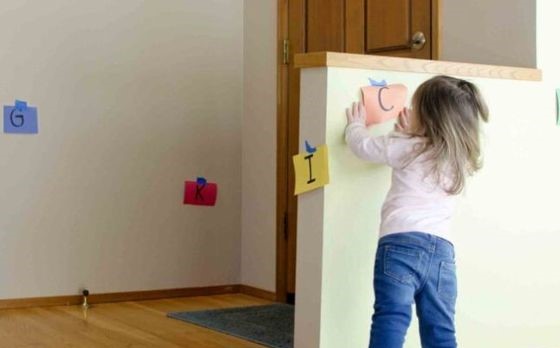
5. Swat-a-Letter: Stick large letters on the wall or lay them on the floor and let kids ‘swat’ them using a fly swatter after identifying them.

6. Alphabet Puzzle: Assemble alphabet puzzles together, naming each letter as you fit it into place.

7. Building Block Letters: Have children create letters using blocks or Legos and then identify their creations.

8. Alphabet Memory Game: Create a memory matching game using uppercase and lowercase letter cards.

9. Letter BINGO: Play BINGO games where children match called-out letters to their corresponding spaces on BINGO cards.

10. Driving Around Letters: Trace large, uppercase and lowercase letters on paper or utilize floor mats, have your child drive small toy cars around them while naming each letter.

11. Alphabet Relay Race: Arrange letter cards across a room and have kids race to collect specific ones you call out, in sequence or randomly.

12. Playdough Letter Formation: Help children form letters using playdough while identifying the letter name.

13. Painting With Letters: Get letter-shaped cookie cutters or sponge stamps for kids to paint with and recognize as they paint.

14. Alphabet Bean Bags: Toss alphabet bean bags while calling out their names – perfect for kinesthetic learners.

15. Letter Fishing Game: Create a fishing game by attaching paper clips to paper letters and using a magnetic fishing pole to pick them up.

16. Clothespin Letter Match:Write uppercase and lowercase letters on clothespins and have children match them to corresponding letters on index cards.

17. Chalkboard Alphabet Art: Write letters on a chalkboard or whiteboard and have your child trace, erase, and redraw them while naming the letter.

18. Touch-and-Feel Letters: Use textured materials such as sandpaper, felt, or foam to create touch-and-feel letter cards that kids can explore while naming them.

19. Alphabet Sorting Cups: Label cups with upper and lower case letters, then have children sort small objects or printed pictures by their first letter into the cups.

20. Chalk Alphabet Pathway: Write or draw uppercase and lowercase letters outside on sidewalks or driveways with chalk; have kids walk, skip, or hop from one letter to the next while calling out each name.

Conclusion:

The key to mastering letter naming fluency lies in consistent practice and exposure to diverse, engaging activities. Try incorporating these 20 entertaining activities into your daily routine at home or in the classroom. With time, your child will build strong letter recognition and naming skills that pave the way for successful reading development.

11 Financial Literacy Books for Kids and Teens to Really Learn About Money

Financial literacy is an essential life skill that is often overlooked in traditional education systems. It is crucial for young people to understand how money works, how to save, invest, and manage their personal finances. To help kids and teens gain a better understanding of financial literacy, we have compiled a list of 11 excellent books on the topic.

1. “Rich Kid Smart Kid” by Robert Kiyosaki

In this book, the author of the best-selling “Rich Dad Poor Dad” series teaches essential financial lessons through engaging stories and characters that kids can relate to.

2. “The Secret Millionaires Club” by Andy Heyward

Warren Buffet mentors a group of kids as they encounter various financial dilemmas. Through accessible storytelling, the book helps young readers learn valuable lessons about money management and decision-making.

3. “Finance 101 for Kids” by Walter Andal

This book offers approachable explanations of basic financial concepts designed specifically for kids, including saving, investing, budgeting, and understanding income and expenses.

4. “Money Matters Workbook for Teens (ages 15-18)” by Larry Burkett

An interactive workbook designed to help teens develop healthy financial habits and create budgets based on their own unique circumstances.

5. “The Teen Money Manual” by Kara McGuire

This comprehensive guide teaches crucial skills such as creating a budget, understanding credit, investing in the stock market, and preparing for college expenses.

6. “Broke Millennial: Stop Scraping By and Get Your Financial Life Together” by Erin Lowry

This book speaks directly to young adults who are struggling with managing their money and offers practical step-by-step advice on achieving financial stability.

7. “How to Turn $100 into $1,000,000: Earn! Save! Invest!” by James McKenna and Jeannine Glista

Suitable for both kids and teens, this book presents valuable financial tips and tricks through engaging illustrations and simple explanations.

8. “Smart Money Smart Kids: Raising the Next Generation to Win with Money” by Dave Ramsey and Rachel Cruze

Dave Ramsey and his daughter Rachel Cruze share their personal experiences and advice on raising financially responsible children in today’s consumer-driven society.

9. “Go! Stock! Go!: A Stock Market Guide for Kids” by Bennett Zimmerman

This engaging and easy-to-understand guide introduces kids to the stock market, its purpose, and how they can invest to build wealth over time.

10. “The Complete Guide to Personal Finance: For Teenagers” by Tamsen Butler

A comprehensive guide that covers various aspects of personal finance relevant to teenagers, including setting financial goals, creating budgets, understanding credit, and planning for the future.

11. “Saving Stuff: How To Save Money On Everything” by Ima Saver

This fun book is full of helpful tips on how young people can save money in daily life through creative frugality and smart decision-making.

Investing time in teaching kids and teens about financial literacy early on can significantly impact their future financial well-being. These 11 books provide an excellent foundation for learning money management skills at any age.

6 Steps to Creating Awesome Readers Theater Scripts

Are you planning to engage your students or community members in a fun-filled and educational activity? Look no further than Readers Theater! This engaging and interactive form of drama allows participants to act out stories without the need for sets, costumes, or memorization. In this article, we will guide you through 6 simple steps to create captivating Readers Theater scripts.

1. Choose a meaningful story or theme

Before embarking on the scriptwriting process, it’s crucial to select a story or theme that resonates with your audience. Carefully consider their age, interests, and cultural background before deciding on a suitable tale. You can either adapt an existing story, like a popular folktale or short story, or create an original narrative.

2. Adapt the chosen story into dialogue

Now that you have identified your theme, it is time to transform the narrative into engaging dialogue. Remember that Readers Theater is based on storytelling through narration and spoken word – there are no elaborate sets or costumes in this format. As such, make sure to focus on captivating dialogue that vividly paints scenes and creates distinct characters.

3. Incorporate narrator and character roles

In a Readers Theater script, both narrators and character roles are of equal importance. Assign one or multiple narrators to provide context and move the story forward, while simultaneously letting characters engage in conversations and interactions that bring the plot to life. Be sure to clearly distinguish between character speech and narration.

4. Create ample opportunities for expressive reading

Readers Theater relies heavily on vocal expression to convey emotions and create different settings. To ensure an immersive performance, craft your script so that it offers ample opportunities for expressive reading. Include elements such as varied tones, tempos, pauses, sound effects, and emotional cues that help actors convey their character’s emotions.

5. Make use of stage directions

Although still minimal compared to traditional theater productions, stage directions play a vital role in Readers Theater. Specifically outline key movements and actions that help visualize the scene and deliver crucial information to the audience. Ensure that stage directions are clear, concise, and easy for readers to understand and execute.

6. Rehearse, revise, and refine

Once you have completed your Readers Theater script, it’s time to conduct a read-through with your actors. This will help identify areas that require further development or clarification. Be prepared to revise and refine your script based on feedback from performers and audience members – this iterative process is necessary to ensure a successful final production.

In conclusion, creating a Readers Theater script can be an incredibly rewarding experience that fosters creativity, literacy skills, and active engagement within your group. By following these 6 simple steps, you can craft entertaining and educational scripts guaranteed to captivate your audiences. So gather your actors, unleash your inner playwright, and enjoy the thrill of Readers Theater!

36 Back to School Poems for Every Student

As summer fades and autumn leaves start to fall, it’s time for students to head back to school. To commemorate this exciting and educational time of the year, we’ve compiled a collection of 36 poems that capture the essence of returning to school. These verses reflect the experiences, emotions, and aspirations of every student embarking on a new academic journey.

1. “Books and Friends” by Emily Dickinson

2. “The First Day at School” by Roger McGough

3. “The Lunchbox Poem” by Kenn Nesbitt

4. “A Parent’s Wish” byPaula Fox

5. “First Day Jitters” by Julie Danneberg

6. “Brand New Backpack” by Bobbi Katz

7. “The Art of Study” by Henry Wadsworth Longfellow

8. “School Begins at Home” by Eloise Greenfield

9. “September Song” by Lucille Clifton

10. “In the Classroom” by Robert Frost

11. “The Lonely Homeworker” by Rachel Rooney

12. “To the Freshmen Class of…”by Maya Angelou

13. “Homework Stew” by Kalli Dakos

14. “The Wise Teacher’s Fear” by Taylor Mali

15. “Classroom Symphony” by Janine Marshman

16. “The Lesson of The Leaves” by Christina Rossetti

17. “I Love School!” By Shel Silverstein

18. “My Pencil is My Magic Wand” by Jack Prelutsky

19. “A Student’s Prayer” by Shirley Morgenthaler

20. “Memories of School Days Past” by Langston Hughes

21. “Our Great School Leaders – The Teachers”

22. “The New Kid on the Block” By Jack Prelutsky”,

23. “First Day of Middle School” By Katy Wagoner

24. “School Rules” By Helen H.Moore

25. “Recess All-Too-Soon: Walt Whitman”

26. “Back-to-school Blues: A.A Milne”

27. “Education’s Purpose: Malala Yousafzai”

28. “Learning to Fly” by Michael Rosen

29. “Equal Parts Truth and Humility” by Mary Karr

30. “My Room” by Darren Sardelli

31. “The Magic of Books” by Janet Wong

32. “Teacher Thank You Poem” By Derek Mahon

33. “High School Reunion Poem- Old friends Reunited”

34. “Science and Poetry: Through the microscopes of Emily Dickinson”

35. “Music in Classroom- The symphonies of learning”

36. “The Adventure Awaits- A Graduation Chorus”

Dive into the heart of these verses and experience the myriad emotions that accompany students, teachers, and parents during the back-to-school season. From first-day jitters to saying goodbye to summer and embracing new beginnings, these poems encourage students to grow, learn, and explore while rediscovering the beauty of literature itself.

Incorporating themes such as friendship, hard work, creativity, and overcoming obstacles, this collection of 36 back to school poems for every student serves as a powerful reminder that education can be magical and life-changing when approached with an open heart and a determined spirit.

Whether you are a young learner or a seasoned scholar, these compelling verses will inspire you to embark on your academic journey with enthusiasm, curiosity, and joy as you turn the page to yet another unforgettable chapter in your life’s storybook.

“Book Deserts” Are Real. Here’s What Schools Are Doing to Help.

Introduction

Access to books is essential for a child’s educational and intellectual development. However, many communities face a serious problem known as “book deserts.” Book deserts are areas where access to books is scarce, limiting the opportunities children have to read and hindering their academic progress. Fortunately, schools are taking innovative steps to combat this issue. This article explores the concept of book deserts and highlights the efforts schools are making to overcome them.

Understanding Book Deserts

Book deserts are typically found in low-income, disadvantaged neighborhoods where resources such as public libraries or bookstores are lacking. Additionally, families facing financial constraints may be unable to purchase books for their children, further exacerbating the issue. These factors create an environment where children have limited exposure to books and reduced opportunities for reading.

The Impact of Book Deserts

A lack of access to books can lead to numerous negative consequences for children’s education and overall development. Studies show that children who grow up in homes with few books tend to have lower literacy rates than those from homes rich in reading materials. Moreover, limited access to books contributes to a gap in vocabulary acquisition and other essential skills needed for academic success.

How Schools Are Combating Book Deserts

Recognizing the impact of book deserts on students’ educational outcomes, many schools are implementing creative solutions:

1. Mobile Libraries: Some schools use converted school buses or other vehicles as mobile libraries that travel through disadvantaged neighborhoods and provide children with access to reading materials. These libraries often run on designated routes and schedules, ensuring consistent access.

2. Sharing Programs: Educators may establish “book swaps” or lending programs within schools or communities, allowing students to share their reading materials with one another. This approach not only improves book access but also fosters a sense of community among students.

3. Community Partnerships: Schools often collaborate with community partners such as local libraries, non-profit organizations, or businesses to increase the availability of books within the area. These partnerships can result in book drives, library branches within schools, or even community-wide literacy campaigns.

4. Digital Access: Incorporating digital books and e-reading resources into the education system can also help bridge the gap. Many schools offer students access to e-books and audiobooks through apps and various online platforms, allowing children to access thousands of titles.

5. In-School Libraries: Schools can create or expand their in-house libraries, ensuring that students have constant access to books during school hours. Some educators also encourage students to take books home by implementing flexible check-out policies.

Conclusion

Book deserts pose a significant challenge to children’s learning experiences and overall academic development. By recognizing this issue and taking proactive steps to mitigate its effects, schools play a vital role in fostering a love of reading and promoting academic success for all students. Efforts such as mobile libraries, sharing programs, community partnerships, digital access solutions, and expanding in-school libraries are just a few of the ways schools can help conquer book deserts and level the playing field for every child.