STEM

Learn How to Get More Girls in STEM with These Ideas

Introduction:

The science, technology, engineering, and mathematics (STEM) fields have, for a long time, been dominated by men. While progress has been made in recent years, there is still much work to be done in order to involve more girls and women in these rewarding fields. Here are some ideas to help inspire and support girls in pursuing their passions within the realms of STEM.

1. Encourage Curiosity and Exploration:

Foster a sense of exploration in young girls by introducing them to age-appropriate STEM activities. Engaging in hands-on experiments at home and enrolling them in science clubs or workshops can spark an early love for the subjects.

2. Celebrate Female Role Models:

Highlight the accomplishments of women in the fields of science, technology, engineering, and mathematics to demonstrate that it is an achievable path for girls as well. Share stories about influential female figures like Marie Curie, Ada Lovelace, or Katherine Johnson to inspire young girls.

3. Expose Girls to Different STEM Careers:

Introduce girls to professionals from various backgrounds and sectors who are currently working within the STEM fields. This exposure will give them an opportunity to understand the different career possibilities available to them within these disciplines.

4. Promote A Growth Mindset:

Encourage resilience by teaching girls that failures could be seen as learning opportunities rather than setbacks. Promoting the belief that intelligence can be developed through hard work will help them become more confident when overcoming challenges they may face along their journey.

5. Create A Supportive Environment:

Build safe learning spaces for girls at schools, libraries, or community centers where they feel encouraged to participate in STEM activities without the fear of judgment or ridicule.

6. Remove Stereotypes:

Efforts should be made to break away from traditional gender roles often depicted in media and advertising. Encourage toys and games that require building, problem-solving, and logical thinking for both boys and girls.

7. Provide Mentorship and Networking:

Pair young girls with female mentors within STEM professions who can offer guidance, support, and motivation while demonstrating what is achievable with hard work and dedication.

8. Financial Incentives and Scholarships:

Offer financial incentives, scholarships, or internships to girls pursuing STEM education. This not only helps with accessibility to opportunities but also encourages more participation in these fields.

9. Collaborate With Other Organizations:

Partner with girl-focused organizations that work towards increasing female representation in STEM. Building a supportive network can help create change more effectively.

10. Engage Parents and Educators:

Involve parents and educators in the process of encouraging girls to explore STEM interests. They play a crucial role in shaping their children’s perception of the world around them.

Conclusion:

There is tremendous potential for girls to excel in STEM fields if provided with the right environment, opportunities, and guidance. By implementing these ideas, we can work together towards creating a brighter, more inclusive future for all within science, technology, engineering, and mathematics industries.

Girls Go CyberStart – The Student Contest We Need Right Now

Introduction:

In today’s increasingly digital world, promoting interest and skills in cybersecurity is paramount. One groundbreaking initiative aimed at inspiring young women to pursue a career in this field is the annual competition called Girls Go CyberStart. This exciting student contest serves as a much-needed catalyst for breaking gender barriers in cybersecurity and fostering an inclusive future workforce. Here’s why we need Girls Go CyberStart more than ever.

Underrepresentation in Cybersecurity:

The field of cybersecurity has traditionally been male-dominated, with women making up only a small percentage of the workforce. According to recent statistics, only 24% of the total global cybersecurity workforce included women. This enormous gender gap often results from a lack of encouragement, role models, and opportunities for girls to develop their skills and interests in cybersecurity.

Girls Go CyberStart – Bridging the Gap:

Girls Go CyberStart is an innovative online competition designed specifically to engage high school girls and expose them to the world of cybersecurity. Participants can partake in fun coding challenges, interactive quizzes, and problem-solving exercises that test their critical thinking abilities. By making cybersecurity enjoyable and accessible, Girls Go CyberStart breaks down gender stereotypes and encourages more young women to pursue careers in this field.

Highlighting Female Role Models:

Promoting gender diversity in cybersecurity cannot be achieved without emphasizing the importance of empowering female role models. Girls Go CyberStart shines light on inspirational women who have broken barriers to excel in their careers by featuring special guest speakers and industry leaders throughout the contest. This exposure helps participants relate to these inspiring women, motivating them to follow similar paths.

Cultivating Collaboration and Mentorship:

One key feature of Girls Go CyberStart is its focus on fostering collaboration and mentorship among participants. The contest consists of team-based activities that encourage competitors to work together, bringing out both individual strengths and collective problem-solving abilities. Through this, many students forge lasting friendships and professional connections that support their growth in the cybersecurity field.

Impact on Education:

The Girls Go CyberStart competition serves as a catalyst for schools to introduce cybersecurity-focused courses and programs into their curriculums. Since the onset of this initiative, numerous high schools have implemented cybersecurity classes and clubs, helping to shape the next generation of highly skilled female cybersecurity professionals.

Conclusion:

Girls Go CyberStart is a revolutionary competition with the power to transform the world of cybersecurity by leveling the gender playing field. Through this exciting contest, high school girls are not only exposed to cybersecurity concepts but also empowered to dive headfirst into this lucrative and rewarding field. In a world battling looming digital threats, we need Girls Go CyberStart now more than ever.

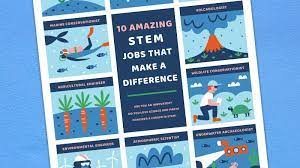
FREE Poster: 10 Amazing STEM Careers That Make a Difference

Introduction:

STEM (Science, Technology, Engineering, and Mathematics) careers have increasingly become essential in today’s world. The growing demand for skilled professionals in these industries is pushing more people to explore careers in the exciting and challenging fields within STEM. This FREE poster provides you with an insight into 10 amazing STEM careers that not only offer rewarding opportunities but also contribute to making a significant difference in the world.

1. Biomedical Engineer

Biomedical engineers create cutting-edge medical technologies that enhance the quality of life for countless individuals. They design and develop artificial organs, prosthetic limbs, and revolutionary diagnostic equipment, making vital advances in the treatment of diseases and injuries.

2. Environmental Scientist

Environmental scientists tackle pressing environmental issues such as climate change, pollution, and resource depletion. They research environmental conditions and develop sustainable solutions to protect ecosystems while ensuring public health.

3. Renewable Energy Engineer

Renewable energy engineers are at the forefront of clean energy revolutions. They design and implement renewable energy systems like solar panels, wind turbines, and geothermal power plants to reduce the world’s dependence on fossil fuels and mitigate climate change.

4. Robotics Engineer

Robotics engineers design, build, and program robots that improve productivity across countless industries – from manufacturing to healthcare. This field is also responsible for advancements in artificial intelligence (AI) that strive to enhance human capacity.

5. Genetic Counselor

Genetic counselors guide individuals in understanding their genetic makeup and potential risks through interpreting genetic data from DNA tests. They provide emotional support as well as vital information regarding family planning or life choices based on genetic predispositions.

6. Urban Planner

Urban planners are key contributors to the creation of sustainable cities by devising plans for land use, transportation networks, and community services that accommodate population growth while minimizing environmental impact.

7. Data Scientist

Data scientists use advanced analytics to extract insights from large volumes of data to help organizations make informed decisions. They leverage their knowledge of mathematics, statistics, and computer science to identify trends and solve complex problems across multiple sectors, including healthcare, finance, and government.

8. Forensic Science Technician

Forensic science technicians uncover key evidence in criminal investigations through the analysis of DNA, fingerprints, and other physical materials. They assist in constructing the narratives that can ultimately lead to justice for victims and communities.

9. Oceanographer

Oceanographers study the vast and dynamic world beneath the waves to better understand marine ecosystems while addressing pressing concerns like overfishing, coastal erosion, and marine pollution.

10.Astrophysicist

Astrophysicists investigate the mysteries of the cosmos by studying stars, galaxies, black holes, and other celestial phenomena. Their discoveries contribute to our understanding of the universe’s origins and our place within it.

Conclusion:

Each of these 10 amazing STEM careers demonstrates that professionals in these fields have ample opportunities to make meaningful contributions to society while driving progress across numerous sectors. By pursuing a STEM career, you could be at the forefront of creating a sustainable future and improving quality of life for all. Download this FREE poster today to inspire yourself or others to delve into the diverse world of STEM professions!

The Perfect Last-Minute Halloween Activity! Try Our Free STEM Challenge Cards

As the spooky season descends upon us, it’s time to get creative and turn our attention to last-minute Halloween activities that can keep children entertained, educated, and enthralled. If you’re looking for a unique and engaging activity that combines the fun of Halloween with educational learning, our free STEM Challenge Cards are your perfect solution!

STEM (Science, Technology, Engineering, and Mathematics) challenge cards offer the opportunity for children to apply their critical thinking skills to solve real-world problems and create innovative solutions using various STEM concepts. These cards present great opportunities for kids to learn and explore STEM concepts while also having fun with Halloween-themed challenges.

Our Halloween-themed STEM Challenge Cards are designed with creative and intriguing prompts that will capture the imagination of children and keep them engaged throughout the activity. Some of the exciting challenges include designing a haunted house using engineering principles, creating a spooky ghost using static electricity, or whipping up a smoking witches’ brew with simple chemistry.

To get started with our free STEM Challenge Cards, follow these simple instructions:

1. Download the free Halloween STEM Challenge Cards from our website.

2. Print the cards and cut them out along the dotted lines.

3. Gather necessary materials that will be used in the challenges (e.g., arts and crafts supplies, everyday household items) and set up an adequate workspace.

4. Choose a challenge card at random or decide on a specific one based on your interests or available materials.

5. Follow the instructions on each card and work individually or as a team to complete the challenge within a given time frame.

6. Document your results by taking pictures or recording videos, share your creations on social media using #HalloweenSTEMChallenge to showcase your spooktacular solutions!

In addition to providing an entertaining last-minute Halloween activity, our free STEM Challenge Cards offer numerous educational benefits:

– Enhance creativity and problem-solving skills by encouraging children to think outside the box.

– Promote collaboration and teamwork if challenges are attempted in groups.

– Encourage hands-on learning and help children understand complex STEM concepts using an engaging approach.

– Strengthen communication skills as children explain their thought process, solutions, and results.

Don’t wait any longer! Embrace the spirit of Halloween while unleashing the mad scientist within you and your children. Try our free, downloadable Halloween STEM Challenge Cards today for a fun-filled and educational experience unlike any other!

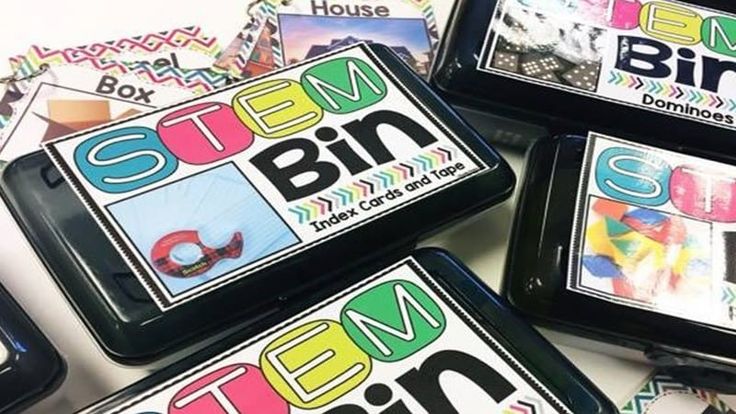
5 Ways to Use STEM Bins to Encourage Creative Thinking

Introduction

STEM bins are a fantastic tool for encouraging creative thinking and problem-solving skills in children. By providing them with a variety of materials and challenges, you can help them develop important 21st-century skills while having fun at the same time. In this article, we will discuss five ways you can use STEM bins to promote creativity and innovation in your kids or students.

1. Create Challenges

Design challenges that encourage children to think critically and innovatively. For example, challenge them to build a structure that can support a specific weight or create a device that can transport an object across a specific distance. Providing guidelines such as time limits and constraints on the materials they can use will encourage children to come up with creative solutions.

2. Encourage Collaboration

Group work is an excellent way to foster creativity, as each individual brings their unique perspective and strengths to the team. Divide your kids or students into small groups and assign them a group challenge using the STEM bins. Encourage them to discuss ideas, share experiences, and build on each other’s creativity as they work towards a common goal.

3. Make It Personal

Customize your STEM bin contents according to what resonates with your child or student’s interests. If they love animals, include items associated with different habitats or ecosystems. For kids interested in music, add materials that allow them to create their own instruments or explore sound waves. By personalizing the bin, you give them more opportunities for creative exploration.

4. Provide Reflection Opportunities

Encourage children to reflect on their experiences during the building process. Provide a selection of open-ended questions such as “What part of your structure or device do you find most interesting?” or “How did working together help you come up with new ideas?” This will allow them to analyze their thought processes, lessons learned, and how they overcame challenges.

5. Document the Learning Process

Finally, facilitate creative thinking by documenting the learning process. Create a space where kids can record their ideas, designs, and progress using photographs, drawings, or text. This documentation will serve as a roadmap for their growth and development, allowing them to trace their steps and see how they’ve evolved as creative problem-solvers.

Conclusion

Despite being simple materials at their core, STEM bins hold great potential for promoting creativity in children. By designing engaging challenges, encouraging collaboration, personalizing the content, providing reflection opportunities, and documenting the learning process, you can stimulate your child or student’s creative thinking and prepare them for real-world problem-solving situations.

5 STEM Books and Related Lessons Students Will Love

As technology continues to shape our lives, there has never been a better time to encourage students to explore the world of science, technology, engineering, and math (STEM). One way to pique their interest in STEM subjects is by introducing them to fascinating books that spark curiosity and inspire learning. Here are five STEM-focused books and related lesson ideas that students will absolutely love.

1. The Martian by Andy Weir

In this thrilling novel, astronaut Mark Watney is stranded on Mars after a dust storm separates him from his crew. Using his resourcefulness and knowledge of science, he attempts to survive and eventually communicate with Earth.

Lesson Idea: To complement the book’s theme, have students participate in a Mars survival project. Allow them to work in groups, research the Martian environment, and design innovative solutions for food production, water sourcing, and shelter construction on Mars.

2. Hidden Figures by Margot Lee Shetterly

Hidden Figures chronicles the untold story of African American women mathematicians known as “human computers” who played critical roles in the early days of NASA during the Space Race.

Lesson Idea: Educate students about the challenges these women faced to succeed in a male-dominated field. Then encourage students to research other unsung heroes in STEM fields and present their findings through oral presentations or multimedia projects.

3. The Immortal Life of Henrietta Lacks by Rebecca Skloot

This book tells the story of Henrietta Lacks, whose cancer cells were taken without her knowledge in 1951 and have been used since then for groundbreaking scientific research.

Lesson Idea: Teach students about cell biology by examining the HeLa cells’ extraordinary properties. Conduct a class debate to discuss bioethical issues surrounding consent for medical research using patient samples.

4. The Gene: An Intimate History by Siddhartha Mukherjee

This fascinating read offers an in-depth exploration of the history of genetics, delving into the science that has transformed our understanding of heredity and its impact on human existence.

Lesson Idea: Organize a lesson where students learn about the fundamentals of genetics, from Mendel’s laws to our current understanding of DNA and inheritance. Create a hands-on activity for students to build a DNA model and map genetic traits through various generations within a family.

5. The Boy Who Harnessed the Wind by William Kamkwamba and Bryan Mealer

This inspiring memoir recounts the story of William Kamkwambah, a Malawian teenager who built a windmill from scrap materials to power his family’s home amid an extreme drought.

Lesson Idea: Engage students in evaluating sustainable energy alternatives by studying wind turbine technology. Encourage them to design their own small-scale wind turbines using simple materials, and test their efficiency in generating electricity.

These captivating books are perfect starting points for thought-provoking lessons that will inspire students’ passion for STEM subjects. By connecting literature with real-world applications, educators can help create meaningful learning experiences that empower tomorrow’s innovators and changemakers.

Easy STEM Centers that Build Creativity in Students

Introduction:

STEM (Science, Technology, Engineering, and Mathematics) education is vital for nurturing creativity in students and preparing them for the future. STEM centers provide hands-on learning opportunities that foster critical thinking and problem-solving skills. In this article, we will discuss easy STEM centers that can be set up to build creativity in students.

1. LEGO Engineering Center:

The LEGO engineering center is a simple and engaging way to inspire creativity in students. This center can be set up with various LEGO bricks, gears, wheels, and other building materials. Students can work individually or collaboratively to create their own unique structures or machines. This allows them to experiment with different engineering concepts while also sparking their imagination.

2. Circuit Exploration Center:

A circuit exploration center encourages students to learn about electricity and circuitry by providing them with various components like batteries, wires, switches, bulbs, and motors. They can create simple circuits and learn about series and parallel connections by experimenting with these components. This center challenges students to think critically while also stimulating their creativity.

3. Origami Geometry Center:

Integrating origami into geometry lessons can pique students’ interest in math while encouraging creativity. Create a center with various origami papers, sketch pens, rulers, scissors, and instructional booklets. With the help of these resources, students will become familiar with different geometric shapes and patterns by folding the paper into various three-dimensional figures.

4. Coding and Programming Center:

Coding is an important skill in today’s tech-driven world. A coding center can be established using laptops equipped with Scratch or similar kid-friendly programming software. Encourage students to create their own video games or animated stories using their coding skills. This allows them to create something entirely personal while improving their logical thinking ability.

5. Magnetic Field Discovery Center:

Magnetic field discovery centers captivate students’ attention with their interactive nature. This center can be equipped with various magnets, iron filings, compasses, and other magnetic materials. Students can explore the properties of magnets and the concept of the magnetic field by engaging in hands-on experiments. As they witness their creative ideas come to life, they’re encouraged to delve further into STEM fields.

6. Recycled Material Creation Center:

A recycled material creation center is an eco-friendly way to spark students’ creativity. This center combines scientific knowledge and environmental awareness, allowing students to transform discarded items into innovative creations. Provide materials such as plastic bottles, cans, cardboard boxes, and old newspapers for students to work with.

Conclusion:

By incorporating these easy STEM centers into your classroom or home learning environment, you can stimulate students’ curiosity and encourage creative problem-solving skills. As they engage in thought-provoking activities across various disciplines, they gain a deeper understanding of STEM concepts while discovering new passions and interests in science, technology, engineering, and math.

Turn Muggles into Wizards with Harry Potter Science Experiments

Magic and mystery have always captivated the imaginations of children and adults alike. The beloved Harry Potter series transformed ordinary readers into hopeful wizards glued to the pages of J.K. Rowling’s magical universe. But what if we could bring the enchanting world of Hogwarts to life in our very own homes? With a little imagination and some hands-on science experiments, budding wizards everywhere can recreate that magical experience!

1. Invisible Ink Marauder’s Map

Creating your own Marauder’s Map is easier than you think! Using lemon juice as invisible ink, young wizards can write secret messages that only reveal themselves when heated. Simply dip a cotton swab in lemon juice and use it to write your message on paper. To uncover the hidden message, hold the paper close to a heat source such as a light bulb or iron, but be careful not to burn it! As the invisible ink heats up, it will become visible, revealing your secret message.

2. Floating Feather Wingardium Leviosa

Defying gravity is no longer restricted to the wizarding world! In this experiment, youngsters can make objects like feathers levitate using just a balloon and their static electricity. Rub a balloon on your hair or clothing for about 30 seconds to generate static electricity, then carefully move it close to a small lightweight object like a feather. The static charge will attract the object and make it float as though being lifted by a spell.

3. Colored Flames Lumos

Creating colored flames is an enchanting way to bring the Lumos spell into real life! You’ll need different metallic salts, such as copper sulfate (blue), boric acid (green), or strontium chloride (red) – these can be found at hobby stores or online. Sprinkle small amounts of each salt onto a burning wood fire or in an alcohol burner and observe as they produce mesmerizing, vibrant flames in various hues.

4. Potion-Making Herbology

Grow your own magical plants using herb seeds, soil, and a little love! Plant basil, rosemary, thyme, or lavender seeds in small pots and care for them daily by ensuring they receive adequate sunlight and water. As the herbs grow, your young wizard will develop their very own collection of magical potion ingredients.

5. Fizzing Whizbees Bubbling Potions

Recreate the fizzing magic of potions with simple household ingredients: baking soda and vinegar. Combine a teaspoon of baking soda with a couple of drops of food coloring in a cup. In another cup, mix a teaspoon of vinegar with some water. Pour the vinegar mixture into the baking soda cup and observe the colorful fizzy reaction that occurs.

These Harry Potter-inspired science experiments are sure to bring a touch of wizardry into every Muggle home. Not only do they provide a fun way to explore scientific principles, but they also encourage creativity and curiosity. Encourage your aspiring wizards to perform these experiments and let their magical journeys begin!

6 Fun Ideas with LEGO® MINDSTORMS® Education EV3

Introduction

LEGO® MINDSTORMS® Education EV3 is a versatile robotics platform that combines the excitement of building LEGO structures with the power of programming and problem-solving. Designed for students as young as 10, this educational tool allows learners to engage in real-world challenges, helping them develop the skills needed for the future. In this article, we will explore six fun ideas you and your students can try out with the LEGO MINDSTORMS Education EV3 set.

1. Create a Maze-Solving Robot

One of the most popular ways to use the LEGO MINDSTORMS Education EV3 is to build a robot that can navigate through a maze. Students can create their maze using LEGO bricks or other materials and then program the robot to find its way through using sensors such as the color sensor or ultrasonic sensor. This activity encourages students to think strategically about designing efficient algorithms and helps them learn about concepts like loops, conditional statements, and more.

2. Emulate Real-World Problem Solving with Rubik’s Cube Solver

A great way to demonstrate the power of robotics and coding is by building a LEGO MINDSTORMS robot that can solve a Rubik’s Cube on its own! With online instructions and sample code available, students can build and adapt their robot to detect different Rubik’s cube configurations using a color sensor, identify individual cubie positions, and apply an efficient solving algorithm.

3. Build and Program Your Own Robotic Arm

Introduce engineering and automation concepts by challenging your students to design, build, and program a robotic arm using the LEGO MINDSTORMS Education EV3 set. They can explore various types of movement (up-down, left-right, rotation) while refining their coding skills with sequential steps, condition loops, motor control commands, etc. As a bonus, they can work on attaching different types of tools to the arm end, such as a gripper or a magnet.

4. Create a Music-Making Bot

Unleash your students’ creativity by challenging them to build a music-making robot that can play a particular tune or sequence of notes. The robot could use different mechanisms like plucking strings, striking an object, or using the built-in sound player on the EV3 brick. This innovative activity combines elements of art with robotics and coding, broadening the students’ range of interests and inspirations.

5. Design a BattleBot Competition

A fun way to engage students in collaborative learning is by setting up a BattleBot competition. Students can work in teams to design and program their robots to battle each other in an arena. Each team will have to consider factors like speed, strength, and strategy when designing their robot. Not only will this activity foster teamwork and critical thinking skills, but it’s also a great way for kids to see practical applications of physics and engineering concepts.

6. Explore Space with Mars Rover Simulation

Inspire your students with the wonders of space exploration by having them design and program their very own Mars rover using LEGO MINDSTORMS Education EV3. They can simulate various Mars missions—such as navigating through Martian terrain, drilling for samples, or studying the planet’s geography—while learning about space technology, programming concepts, and engineering solutions.

Conclusion

LEGO MINDSTORMS Education EV3 provides countless opportunities for engaging activities that foster creativity and promote STEM learning for students of all ages. The six fun ideas mentioned in this article are just the beginning; with imagination and resources at hand, there is no limit to what you can achieve with LEGO MINDSTORMS Education EV3!

Best Gifts for STEM-Loving Kids, As Chosen by Teachers

As parents and guardians, we are always on the lookout for unique and educational gifts for our children. When it comes to fostering a love for science, technology, engineering, and mathematics (STEM), the challenge might seem daunting. However, teachers have pooled their collective knowledge to identify some of the best STEM gifts for kids that provide endless fun while nurturing their passion for learning.

Here are the top picks of STEM gifts for kids as chosen by teachers:

1. Snap Circuits: Snap Circuits is an exciting way to engage young minds in the world of electricity and electronics. Perfect for kids ages 8 and up, this building kit offers hands-on learning through modular components that snap together. Children can create their own circuits or follow guided projects in an instruction manual.

2. LEGO Boost Creative Toolbox: LEGO has always inspired creativity and problem-solving skills in children. The LEGO Boost Creative Toolbox takes it a step further by introducing robotics and programming into the mix. Suitable for ages 7-12, kids can build robots or machinery and then use a tablet app to program their creations.

3. Ozobot Bit Coding Robot: With its tiny size and big potential, Ozobot Bit robot introduces visual coding to kids aged 6 and up. Using color-coded markers or a digital app, children learn fundamental coding skills by creating paths for their robot to follow.

4. Kano Computer Kit: This all-in-one computer kit allows children aged 6 and up to assemble their own computer from scratch. With easy-to-follow instructions and engaging software applications, kids learn about coding, cybersecurity, and digital art as they explore the fascinating world of computing.

5. National Geographic Break Open Geodes Kit: Kids who love Earth science will enjoy this hands-on geode discovering kit suitable for ages 8 and up. While cracking open these natural rock formations, youngsters learn about crystal formations and the geological value of geodes.

6. Tinkering Labs Electric Motors Catalyst: This building kit merges creativity with engineering concepts, aimed at children aged 8 and up. With 50+ real parts such as electric motors, wooden components, and hardware, kids can design and build their own inventions as they learn about mechanical principles.

7. Sphero SPRK+ Robot: A programmable robot that sparks creativity and curiosity, Sphero SPRK+ is a perfect gift for budding coders aged 8 years and above. Kids can use block or text-based coding to program the robot’s movements, lights, sounds, and animations through a provided app.

To help your children dive into STEM education and future-ready skills, consider giving them a gift that combines learning with enjoyment. These recommendations from teachers offer just that – bringing together hands-on experimentation, problem-solving, and critical thinking while fostering a lifelong passion for STEM subjects.