STEM

The Ultimate Idea List for Using LEGO® Education StoryStarter

LEGO® Education StoryStarter is an innovative and engaging platform that combines classic LEGO bricks with cutting-edge technology to create a dynamic learning experience. Designed to encourage storytelling and creative writing, StoryStarter offers an endless array of possibilities for both students and teachers. In this article, we’ll explore the ultimate list of ideas for incorporating LEGO Education StoryStarter into your classroom or homeschooling curriculum.

1. Retell a Classic Tale: Students can use StoryStarter to recreate scenes from their favorite stories, plays, or movies. This offers a hands-on approach to understanding the plot, character development, and context.

2. Create an Alternative Ending: Encourage your students to think critically by asking them to devise alternative endings for well-known stories. This promotes imaginative thinking and helps develop problem-solving skills.

3. Illustrate Historical Events: Help your students bring history to life by creating dioramas of historical events using LEGO bricks. This can aid in fostering a deeper understanding of different periods and their significance.

4. Visualize Scientific Concepts: Make complex scientific ideas more accessible by using LEGO elements as visual aids. Students can build models representing cells, bodily systems, ecosystems, or even atomic structures!

5. Exploring Geometry: Use LEGO bricks as tangible examples of geometric shapes and concepts in mathematics lessons.

6. Architectural Masterpieces: Encourage budding architects by giving them the chance to design and construct their own buildings or re-create famous landmarks.

7. Create Your Own News Story: Tap into current events by having your students construct a scene depicting a news story they’ve read about or discussed in class.

8. Interpret Artwork: Encourage creativity by challenging your students to recreate famous works of art using only LEGO bricks.

9. Invent New Worlds: Nurture world-building skills by tasking students with developing their own planets or civilizations from scratch using LEGO elements as the building blocks.

10. Write Your Own Adventure: Combine StoryStarter with creative writing exercises by asking your students to write a short story based on a scene they’ve constructed.

11. Embrace Diversity: Use LEGO bricks to illustrate different cultures, lifestyles, and traditions, fostering empathy and celebrating diversity in your classroom.

12. Reinforce Language Skills: Construct engaging dioramas based on vocabulary words, idiomatic expressions, or themes from a foreign language lesson.

13. Develop Social Skills: Involve students in a collaborative project that requires teamwork, negotiation, and compromise using LEGO bricks as the medium.

14. Promote Environmental Awareness: Educate your students about environmental issues such as pollution or deforestation through hands-on LEGO projects that visually represent these concepts.

15. Create Stop-Motion Animations: Take student creativity to another level by capturing their LEGO creations in stop-motion videos to share with the class or even online.

Considering this wide array of possibilities, it’s clear that LEGO Education StoryStarter offers an invaluable resource for educators and learners alike! Whether you’re exploring literature, history, science, or art – there’s an idea on this ultimate list that can be tailored to suit your needs and spark creativity in your classroom. Happy building!

Win a 3D Printer for Your School!

Introduction:

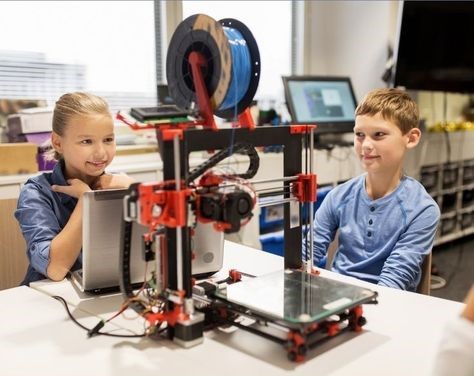
3D printing is revolutionizing industries, from manufacturing to medicine. This innovative technology has made its way into classrooms across the globe, enabling students to learn about engineering, design, and innovation through hands-on projects. To promote this vital STEM education, we’re excited to announce a nationwide competition in which your school can win a state-of-the-art 3D printer!

Join the Movement:

It’s time to ignite the creativity and innovation of your students by introducing them to the transformative world of 3D printing! By participating in this competition, you’ll be bringing cutting-edge technology to young minds while preparing them for an evolving job market.

The Prize:

The lucky winner will receive a high-quality 3D printer that can easily integrate into your school’s curriculum. Supporting educational initiatives such as project-based learning, the 3D printer will enable your students to turn their ideas into tangible creations.

How to Participate:

Entering the competition is simple! Follow these easy steps:

1. Form a team: Assemble a group of dedicated educators and students passionate about technology, innovation, and learning.

2. Develop a project proposal: Create a detailed plan outlining how your school would integrate the 3D printer into its curriculum. Be sure to highlight specific lessons, activities, and goals that showcase your unique creative vision.

3. Submit your entry: Send your project proposal along with a short video showcasing your team’s enthusiasm and dedication for integrating the 3D printer into your school.

Selection Criteria:

Our panel of experts will evaluate each submission based on:

1. Creativity & Innovation: How groundbreaking and unique is your proposed project?

2. Feasibility: Can your proposal realistically be implemented within your school’s current educational structure?

3. Impact: How will this technology benefit both students and teachers in promoting STEM education?

Awards Ceremony:

The winning school will be announced during a special online ceremony, attended by participants from across the nation. This event will serve as a platform to share innovative ideas, success stories, and future plans for integrating 3D printing in education.

With the chance to win a 3D printer for your school, it’s time to take the plunge and push the boundaries of imagination and learning. Don’t miss this incredible opportunity to champion STEM education and inspire your students to be the innovators of tomorrow!

4 Free Apps That Teach Coding Basics to Kids

Technology keeps evolving at a rapid pace, and kids’ interaction with digital devices has increased significantly over the past decade. With more exposure to gadgets and the internet, it’s essential to teach children valuable skills, such as coding. Introducing your kids to the world of programming at an early age can equip them with sought-after skills for their future career paths. Here are four fantastic, free apps that teach coding basics to kids in a fun and engaging way.

1. ScratchJr

Designed for children aged 5-7 years old, ScratchJr is a creative app that introduces essential programming concepts in an interactive manner.Kids can master coding fundamentals, such as events, loops, and conditions by creating their own stories and games. Developed by the MIT Media Lab and Tufts University, ScratchJr features colorful graphics and drag-and-drop blocks that make it easy for young minds to comprehend.

Download ScratchJr: [iOS](https://apps.apple.com/us/app/scratchjr/id895485086) | [Android](https://play.google.com/store/apps/details?id=org.scratchjr.android)

2. Tynker

Tynker is designed for kids between the ages of 7-13 years old. This app offers various coding games and interactive lessons that help build programming skills while keeping your child engaged in a fun learning process. It covers fundamental concepts like sequencing, loops, pattern recognition, and more advanced topics such as robotics and gaming design. Tynker’s visually appealing interface motivates children to explore complex coding techniques with ease.

Download Tynker: [iOS](https://apps.apple.com/us/app/tynker-learn-to-code/id805869467) | [Android](https://play.google.com/store/apps/details?id=com.tynker.Tynker)

3. CodeMonkey

CodeMonkey is suitable for kids aged 9 and above. This app introduces them to coding in a fun and captivating manner using real programming languages like CoffeeScript. Children are encouraged to solve puzzles, create games, and animate characters. They can test their coding skills through CodeMonkey’s challenging levels and earn exciting rewards as they progress.

Download CodeMonkey: [iOS](https://apps.apple.com/us/app/codemonkey-coding-adventures/id1435415056) | [Android](https://play.google.com/store/apps/details?id=com.cm_prog.Game)

4. Lightbot

Lightbot is designed for kids aged 9-12 years old who want to learn about programming concepts like loops, procedures, and conditionals. The app incorporates game-based learning using a cute robot character that helps children understand coding logic through puzzles and challenges. By introducing a variety of interactive levels, Lightbot keeps the learning experience stimulating for young minds.

Download Lightbot: [iOS](https://apps.apple.com/us/app/lightbot-code-hour/id657638474) | [Android](https://play.google.com/store/apps/details?id=com.lightbot.lightbot)

In conclusion, these four free apps offer an engaging and interactive introduction to coding basics for kids. With colorful graphics, puzzles, and challenges, children are motivated to develop their programming skills while having fun. As the demand for coding skills grows across various industries, equipping your child with such valuable knowledge is essential for future success in this digital era.

Science Giveaway | Win a Classroom Storage Cart Stocked With Supplies!

Are you ready to bring science to life in your classroom? Well, here’s your chance to kickstart the new year with a fantastic Science Giveaway! Enter this contest and stand a chance to win a fully stocked Classroom Storage Cart filled with essential science equipment and materials.

Join us in celebrating the importance of science education by participating in our giveaway. The lucky winner will receive a top-quality Classroom Storage Cart, designed to accommodate all your science teaching needs. This durable mobile cart comes equipped with shelves, drawers, and compartments to facilitate organized storage and easy access to your supplies. It’s the perfect way to introduce hands-on experimentation and discovery for students of all ages.

Inside the Classroom Storage Cart, you’ll find an assortment of essential science tools and materials that will make teaching your students about chemistry, biology, physics, and more an exciting and engaging experience. The supplies include beakers, test tubes, pipettes, Bunsen burners, microscope slides, Petri dishes, safety goggles, lab aprons as well as a range of chemicals and specimens ready for exploration!

To participate in the giveaway:

1. Share this article on your social media profiles using hashtags #ScienceGiveaway #ClassroomCart

2. Complete the entry form on our website with your name, email address, phone number and school details.

3. Write a short paragraph (150 words or less) stating why you believe it is essential to have high-quality science supplies in your classroom.

The deadline for participation is [deadline date]. The winner will be randomly selected from the pool of eligible entries after validation.

Teachers play a crucial role in shaping the innovators and problem-solvers of tomorrow by inspiring their students’ curiosity through hands-on learning. Don’t miss out on this incredible opportunity to elevate your classroom experience – invest in their future today!

So what are you waiting for? Enter the Science Giveaway now and win a Classroom Storage Cart Stocked With Supplies that will spark your students’ passion for scientific exploration! Good luck to all participants and may the best classroom win!

21 Earthshaking Activities for Teaching Layers of the Atmosphere

Introduction

Teaching the layers of the atmosphere can be a challenging task, as it requires students to conceptualize abstract concepts and visualize the various atmospheric layers that surround the Earth. To make the learning process exciting and engaging, here are 21 earthshaking activities to teach the layers of the atmosphere effectively.

1. Layer Cake Model: Have your students create a layered cake model using different colored sponges or playdough to represent each layer of the atmosphere.

2. Interactive Apps: Use interactive apps like The Earth’s Atmosphere app to help visualize and explore the different layers through animations and quizzes.

3. Stratospheric Balloon Challenge: Develop a class project designing a balloon that can withstand the harsh conditions of the stratosphere.

4. Atmospheric Collages: Ask students to create collages using images and artwork representing each atmospheric layer.

5. Layered Bottle Experiment: Create visual representations of atmospheric layers with liquids of different densities in a clear bottle.

6. Weather Balloon Launch: Organize a weather balloon launch, allowing students to observe as it travels through different atmospheric layers and gains insights into real-time data collection.

7. Atmospheric Skits: Divide your students into groups and have them write and perform skits explaining each layer’s primary characteristics.

8. Diagram Station Activities: Set up stations where students draw and label diagrams showcasing unique aspects of each atmospheric layer.

9. Field Trips: Visit facilities that study earth’s atmosphere, such as weather stations or planetariums, to enhance understanding through real-life experiences.

10. Role-playing Activities: Assign individual students roles corresponding to each atmospheric layer, having them present various facts from their allocated layer’s perspective.

11. Crossword Puzzles: Create custom crossword puzzles focusing on atmospheric layers terminology and concepts as fun review tools.

12. Classroom Jeopardy Games: Develop jeopardy-style games challenging students to answer questions related to the layers of the atmosphere.

13. Songs and Mnemonics: Encourage your students to create songs or mnemonics for remembering the sequence and significance of each layer.

14. 3D Models: Instruct students to design and build 3D models that accurately depict each layer’s spatial relationships, size, and features.

15. Atmospheric Layer Debate: Hold a debate or panel discussion on essential atmospheric functions and how human activities affect them.

16. Video Presentations: Assign video projects in which students must research and explain critical concepts related to specific atmospheric layers.

17. Augmented Reality Exploration: Use AR technology, like Google Expeditions, to immerse your students into an educational journey through Earth’s atmosphere layers.

18. Experimenting with Air Pressure: Conduct hands-on experiments demonstrating air pressure in different layers of the atmosphere using everyday items and simple tools.

19. Geoengineering Solutions: Stimulate critical thinking by encouraging students to develop research-based solutions addressing contemporary atmospheric issues, such as climate change or ozone depletion.

20. Creative Writing Prompts: Use creative writing prompts to engage imagination while incorporating atmospheric layer knowledge in stories or poems.

21. Science Fair Projects: Provide opportunities for students to represent their learning about atmospheric layers through engaging science fair projects that integrate research and experimentation.

Conclusion

Teaching the layers of the atmosphere can be an exciting adventure with these 21 earthshaking activities. By incorporating hands-on experiments, technology, art, and creative thinking, educators can ensure a comprehensive approach that engages students while expanding their knowledge of earth’s complex atmosphere.

5 Tips to Boost Young Students’ Reading Skills Using Science and Math

Introduction

In today’s fast-paced world, literacy is more important than ever. However, not every child learns to read with ease. Struggling readers may become disinterested or discouraged, making it crucial for parents and educators to harness creative techniques to help them improve their skills. Interestingly, science and math can be handy tools in boosting young students’ reading capabilities. Here are five tips for using these subjects to enhance children’s reading skills.

1. Integrate Problem-Solving Strategies

Science and math are both subjects that require problem-solving skills. You can help students apply the same strategies they use in these subjects to their reading challenges. For example, when faced with a difficult or unfamiliar word, encourage them to break it down into smaller parts or look for context clues before using a dictionary as a last resort. By doing so, they will develop critical thinking skills that will aid them in both reading and STEM subjects.

2. Make Connections between Text and Real-life Examples

Relating reading materials to real-life scenarios not only helps improve comprehension but also makes learning more enjoyable. Encourage students to make connections between the text they’re reading and familiar scientific or mathematical examples from their everyday lives. This approach can assist with understanding complex concepts, enhancing their overall reading comprehension.

3. Encourage Exploration through Non-fiction STEM Books

Including non-fiction STEM books in your child’s reading list can spark interest in science and math while promoting literacy skills simultaneously. Choose age-appropriate books on intriguing scientific topics or engaging mathematical puzzles that will keep them entertained while honing their reading abilities.

4. Use Visual Aids

Visual aids are a great way of simplifying complex information, thus supporting better comprehension of the text. Encourage young readers to create illustrations, charts, diagrams, or other visual representations of ideas from the material they’re reading. By doing so, students become more involved in their learning, translating abstract concepts into images they can easily understand.

5. Create Reading Opportunities within STEM Projects

Engage students in hands-on science and math projects where they need to read instructions, conduct research, or interpret data. These activities not only provide context for applying their STEM knowledge but also create opportunities to improve reading skills in an immersive, practical setting.

Conclusion

Incorporating science and math into reading education can be a powerful way to help young students develop critical thinking and comprehensive skills. By exploring different strategies and fostering connections between these subjects, parents and educators can inspire a love for reading while empowering children to excel in both literacy and STEM disciplines.

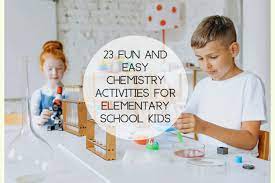
23 Fun and Easy Chemistry Activities for Elementary School Kids

Introduction:

Chemistry may seem intimidating at first, but with some fun, hands-on activities, elementary school kids can begin to love and understand it. These 23 chemistry projects are perfect for engaging young minds in the fascinating world of science.

1. Baking Soda and Vinegar Volcano – Create a miniature erupting volcano using baking soda, vinegar, and food coloring.

2. Slime Time – Learn about polymers by mixing glue, borax, and water to create slime.

3. Dancing Raisins – Watch raisins dance in a glass of soda as they demonstrate buoyancy.

4. Magic Milk – Combine milk, dish soap, and food coloring to create an explosion of colors.

5. Chromatography Butterflies – Explore how different colors separate through chromatography while creating beautiful butterflies from coffee filters.

6. Crystal Growing – Grow your own magical crystals using borax and pipe cleaners.

7. Glowing Lava Lamp – Create a mesmerizing homemade lava lamp using water, oil, food coloring, and fizzy tablets.

8. Dissolving Candy – Observe how various candies dissolve in different liquids while learning about solubility.

9. Magnetic Cereal – Discover the iron content in cereal with a simple magnet experiment.

10. Elephant Toothpaste – Witness an exciting chemical reaction by combining hydrogen peroxide, dish soap, food coloring, and dry yeast.

11. Oobleck Exploration – Investigate the properties of this non-Newtonian fluid made from cornstarch and water.

12. Invisible Ink Messages – Write secret messages using lemon juice and heat as invisible ink.

13. Edible Sweet Rocks – Experience a tasty geology lesson by creating rock candy using sugar and water solutions.

14. Foaming Dinosaur Eggs – Create colorful dinosaur eggs that fizz and foam when combined with vinegar.

15. Fingerprint Detectives – Learn about the uniqueness of fingerprints through various powders and inks.

16. Floating Eggs – Experiment with buoyancy and density by floating an egg in saltwater.

17. Color-Changing Flowers – Observe the capillary action in flowers as they absorb colored water.

18. Soap-Powered Boat – Propel a tiny boat using only soap and water.

19. Bouncy Ball Science – Learn about molecular bonds by making your own bouncy balls from borax, cornstarch, and glue.

20. Film Canister Rockets – Launch mini-rockets by using film canisters, effervescent tablets, and water.

21. Bubble Snake Tower – Create a cascading tower of bubbles while learning about soap molecules.

22. DIY Tornado in a Bottle – Discover the science behind tornadoes as you construct your own tornado using two plastic bottles and water.

23. Homemade Ice Cream – Explore freezing points as you make your own ice cream with milk, sugar, ice, and salt.

Conclusion:

These 23 chemistry activities are perfect for getting elementary school kids excited about science while fostering a deeper understanding of core concepts. With hands-on projects like these, chemistry becomes an engaging and accessible subject for young learners.

Win Everything You Need To Launch Your School’s First Esports Course

Introduction:

Esports is a rapidly growing industry, and schools worldwide are beginning to recognize the potential benefits of incorporating these competitive video gaming programs into their curriculums. Entering the world of esports can be a daunting task for many schools, which is why we’ve created an exciting opportunity for you to win everything you need to launch your school’s first esports course! Read on to find out how your school can become the next hotspot for budding gaming enthusiasts and gain a head start in this booming market.

Why Esports in Schools?

Esports provides students with numerous benefits, including fostering teamwork, communication, critical thinking, and problem-solving skills. These courses also promote healthy competition among students while teaching them about digital citizenship and online safety. By incorporating esports into the curriculum, schools can engage students who may have struggled to find their place in traditional sports or academic settings.

What’s Included in the Prize Package?

The winning school will receive everything they need to launch their first esports course. This incredible prize package includes:

1. A complete gaming setup, featuring high-powered computers with top-tier graphics cards, gaming monitors, keyboards, mice, and headsets.

2. A one-year subscription to an online esports platform that offers career education modules on game design, broadcasting, marketing, and entrepreneurship.

3. Expert training and support from experienced esports coaches to help you create a successful program tailored to your school’s needs.

4. A custom curriculum designed for your school, which uses esports as a means to teach vital life skills and engage students academically.

How to Enter:

To enter for a chance to win this fantastic prize for your school, submit an application that outlines your vision for incorporating esports into your school’s curriculum and details how winning this package will benefit your students. Be sure to highlight any unique aspects of your proposed program and demonstrate how it will promote student learning across a variety of subject areas.

Additionally, schools should share their plans for ensuring the sustainability of the program, such as obtaining local sponsorships or charging membership fees to support ongoing costs. The winning school will be selected based on the creativity, feasibility, and potential impact of their proposed esports course.

Conclusion:

Don’t miss this opportunity to jumpstart your school’s journey into the world of esports, enrich your curriculum, and provide students with an engaging and valuable extracurricular activity. Submit your application now for a chance to win everything you need to launch your school’s first esports course and set your students up for success in this thriving industry. Good luck!

20 Ways Teachers Are Getting Excited About STEM

1. Hands-on experiments: Teachers are incorporating engaging activities such as robotics and chemistry experiments to foster students’ love for STEM subjects.

2. Gamification of learning: Using gaming mechanics like points and leaderboards, teachers are making STEM lessons more enjoyable and competitive.

3. Project-based learning: Assigning group projects that involve real-world problems, encouraging students to collaborate and apply their STEM knowledge.

4. Makerspaces: Teachers are creating dedicated spaces filled with tools and materials for students to collaborate on creative STEM projects.

5. Guest speakers: Inviting industry professionals to share their experiences exposes students to potential career paths in the STEM field.

6. Virtual Reality (VR) learning: Exciting VR applications engage students in immersive STEM lessons and simulations of complex concepts.

7. Online resources: Teachers are integrating websites, YouTube videos, and other digital platforms to supplement traditional teaching materials.

8. Competitions: Participating in regional or national competitions helps develop problem-solving skills and builds excitement around STEM subjects.

9. Collaborations with local businesses: Partnering with companies offers unique learning opportunities that show real-world applications of STEM education.

10. Field trips: Visiting science centers, research facilities, or museums allows students to witness current advances in technology first-hand.

11. Career exploration days: Organizing events that focus on exploring the diverse roles within the STEM sector helps peak students’ interest toward different career options.

12. Cross-curricular connections: Combining art, music, or other subjects with STEM education encourages creative thinking and enriches the overall learning experience.

13. Professional development for teachers: Attending workshops and conferences allows educators to continuously improve on their teaching skills while staying updated on emerging trends in the field.

14. Mentorship programs: Connecting students with mentors who share their passion for STEM promotes motivation and long-lasting learning opportunities.

15. Coding clubs: Offering after-school programs that focus on coding helps bridge the technology gap and encourages students to develop valuable skills.

16. Integrating STEM into daily lessons: Teachers are finding ways to weave STEM concepts into various subjects to increase knowledge retention and build enthusiasm.

17. Parent involvement: Engaging parents through workshops or events helps create a supportive learning environment and emphasizes the importance of STEM education.

18. Specialized STEM curricula: Adopting existing programs or developing unique STEM curriculums catered towards school-specific needs increases teachers’ confidence in their subject matter.

19. International partnerships: Collaborating with schools in other countries not only promotes cultural exchange but also allows educators to gain new insights into effective STEM teaching practices.

20. Celebrating success in STEM fields: Highlighting successful individuals and notable achievements within the industry provides inspiration for students to pursue their own passions and dreams.

20 Fun and Easy Atom Activities for Different Grade Levels

Introduction

Atoms are the building blocks of everything in the universe. Teaching students about atoms can be a fun and engaging way to introduce them to the world of chemistry and physics. In this article, we will explore 20 atom activities that are tailored for different grade levels, from elementary to high school.

Elementary School

1. Build an Atom Model: Using marshmallows, toothpicks or pipe cleaners, students can create 3D models of atoms by representing protons, neutrons, and electrons.

2. Atom Memory Game: Create flashcards with atomic symbols, element names, and atomic numbers for students to match in a memory game.

3. Atomic Scavenger Hunt: Hide index cards with elements throughout the classroom, then provide students with clues to help them find the hidden elements.

4. Periodic Table Coloring: Print out blank periodic tables and have students color-code them based on element categories (metals, non-metals, etc.).

5. Molecule Building: Use gumdrops and toothpicks to model the formation of molecules by connecting atoms together.

Middle School

6. Atom Bingo: Create bingo cards with atomic numbers and element symbols for a fun class activity centered around chemical elements.

7. Edible Atoms: Use candy to represent protons, neutrons, and electrons in a creative edible atom model.

8. Chemical Reactions Race: Designate teams of students to represent different chemical reactions; have them race each other while acting out their reactions to demonstrate how each reaction occurs.

9. Atomic Structure Quiz: Students can take turns drawing an element’s symbol on the board and quizzing their classmates about its atomic number or structure.

10. Element Family Skits: Have groups create short skits or plays that represent how various elements interact within their families on the periodic table.

High School

11. Electron Configuration Battleship: Adapt the classic game of Battleship to teach students about electron configurations and valence electrons.

12. Periodic Table Trend Hunt: Challenge students to identify patterns and trends within the periodic table, such as atomic size or electronegativity.

13. Isotope Rope Activity: Using ropes of different lengths and weights to represent isotopes, students can physically differentiate between common isotopes.

14. Atomic Model Debate: Students can research historical atomic models and engage in a debate defending the accuracy of their chosen model.

15. 3D Printed Atom Models: Utilize 3D printing technology to create highly accurate atom models for students to study with.

Advanced

16. Quantum Mechanics Pictionary: Test your class’s knowledge of quantum mechanics by having them draw images that represent complex quantum phenomena like wave-particle duality or the Heisenberg uncertainty principle.

17. Building a Spectroscope: Construct a simple spectroscope using a CD, cardboard, and tape to examine spectral lines emitted by various light sources.

18. Balancing Chemical Equations Relay Race: In teams, have students race to balance chemical equations written on the blackboard.

19. Nuclear Stability Game: Create a game that teaches students about nuclear stability by having them build nuclei based on stability rules and competing against each other in terms of energy release.

20. Quantum Tunneling Experiment: Using double-slit experiment apparatus, conduct an advanced-level activity demonstrating the concept of quantum tunneling.

Conclusion

These fun and engaging atom activities cater to different grade levels and are designed to help students grasp atomic structure, the periodic table, chemical reactions, and quantum physics concepts. By combining hands-on activities with stimulating discussions and multimedia resources, these activities aim to spark students’ curiosity and passion for chemistry and physics.