Teaching Strategies, Tactics, and Methods

Teaching Students About Logarithmic Rules

Teaching students about logarithmic rules can be daunting for many math teachers. When it comes to simplifying expressions involving logarithms and exponents, it can become too complicated and overwhelming for most students.

However, logarithmic rules are critical in mathematics and are essential in solving complex math problems. In this article, I will discuss how teachers can effectively teach logarithmic rules to students in a simplified and understandable way.

Before delving into logarithmic rules, students should first be familiar with basic logarithmic functions, their properties, and how to solve them. They should also know the fundamental properties of exponents and the relationship between logarithmic and exponential functions.

Here are some effective teaching strategies to help students understand logarithmic rules:

1. Use visual aids and real-life examples

Visual aids such as graphs and illustrations can provide a clear understanding of logarithmic functions. For example, logarithmic functions can measure the strength of an earthquake, the pH level of a solution, and the measure of sound volume. These simple, real-life examples can help students grasp the concept of logarithmic functions.

2. Start with basic logarithmic rules

Start with the basic rules of logarithms such as the product rule, quotient rule, and power rule. Explain each rule separately, provide examples and exercises, and then proceed to more complex logarithmic rules.
For example, the product rule states that the log of a product is equal to the sum of the logs of individual factors. To apply this rule, students can simplify the expression log (ab) to log a + log b.

3. Apply the logarithmic rules in context to word problems

Word problems can help students connect logarithmic functions to real-life contexts. Provide practice problems that involve concepts of logarithmic functions such as decibels, pH level, and exponential growth. This can help students apply their knowledge of logarithmic rules to real-life situations.

4. Use technology

Technological tools such as graphing calculators, online simulations, and online courses can help students understand logarithmic functions and rules. For example, students can use online graphing calculators to graph logarithmic functions and study their properties. Additionally, online simulations and courses can provide interactive ways to learn about logarithmic functions and apply logarithmic rules.

Conclusion

Teaching logarithmic rules may seem challenging, but with simple strategies and clear explanations, we can make the subject more understandable for students. By using visual aids, examples from real life, starting with basic rules, applying logarithmic rules in a word problem, and using technology, students will be able to understand logarithmic functions and their rules. Ultimately, this will make it easier for students to apply logarithmic functions in advanced math problems and everyday life situations.

26 Ideas for Teaching Respect in Middle School

1. Define and discuss respect: Begin with a discussion on the meaning of respect, its importance, and how it looks like in daily life.

2. Lead by example: Teachers should model respectful behavior in their interactions with students and colleagues.

3. Encourage empathy: Teach students to put themselves in others’ shoes to help them better understand and appreciate different perspectives.

4. Create a classroom charter: Have students work together to create a set of classroom rules that promote respect and collaboration.

5. Use literature: Read books or articles that showcase characters demonstrating respect and discuss their actions.

6. Integrate role-play activities: Acting out scenarios can help students better understand different situations where respect is required.

7. Teach active listening skills: Encourage students to pay attention, ask questions, and summarize what others say during discussions.

8. Promote a positive self-concept: Help students understand their strengths, personal achievements, and contributions to the class.

9. Establish a classroom culture of kindness: Encourage acts of kindness among students through projects like “Secret Kindness Pals” or “Pay it Forward.”

10. Introduce a “respect journal”: Give students the opportunity to reflect on their experiences with respect (or disrespect) throughout the week.

11. Create opportunities for service learning: Organize community service projects giving them chances to demonstrate respect toward others.

12. Incorporate digital citizenship lessons: Teach responsible online behavior and how it reflects respectful communication.

13. Foster group work and cooperation: Assign collaborative projects where each student must rely on their peers’ skillsets, promoting mutual respect.

14. Hold students accountable for disrespectful behavior: Implement consequences that emphasize the importance of maintaining a respectful environment.

15. Discuss current events related to respect issues: Use news articles as starting points for discussions about equality, diversity, or bullying.

16. Develop conflict-resolution skills: Teach techniques such as I-messages, active listening, and compromise during disagreements.

17. Encourage self-reflection: Prompt students to evaluate their behavior and identify areas for growth in showing respect.

18. Organize workshops on diversity and inclusion: Educate students about different cultures, identities, and lifestyles to broaden their understanding.

19. Create a “Thank You” wall: Encourage students to write thank you notes for their peers or staff members highlighting their respectful actions.

20. Use teachable moments: Address instances of disrespect immediately, discuss alternatives, and reaffirm classroom expectations.

21. Recognize positive behavior: Praise and acknowledge acts of respect to reinforce positive behaviors.

22. Assign mentorship roles: Pair younger students with older “respect mentors” who can demonstrate values through guidance.

23. Host guest speakers: Invite individuals from various backgrounds to discuss topics like empathy, communication, or cultural differences.

24. Arrange field trips: Visit nearby organizations that promote diversity or offer services that emphasize respect for all individuals.

25. Provide student-led workshops: Empower students to research topics related to respect and teach their peers through presentations or activities.

26. Implement peer mediation programs: Train a group of students to help mediate conflicts while adhering to respectful communication practices.

A Teaching Elixir or Best-Fit Pedagogy? Do Learning Styles Matter?

The concept of ‘learning styles’ has long been a topic of intense debate among educators and researchers. Some argue that tailoring instruction to students’ preferred learning styles leads to improved learning outcomes, while others contend that there is limited evidence supporting this claim. So, is the idea of a teaching elixir based on matching learning styles a real solution, or should we focus on finding the best-fit pedagogy? Let’s delve deeper into this intriguing question.

Understanding Learning Styles

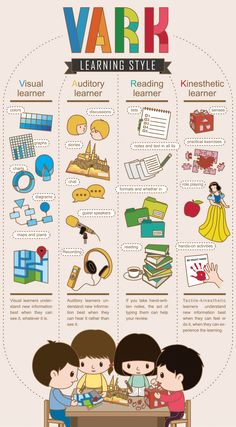
The concept of learning styles first emerged in the 1970s when researchers began identifying different ways in which people tend to process information. The most popular model, known as VARK, classifies learners into four categories: visual, auditory, reading/writing, and kinesthetic. Proponents of the learning styles theory claim that individuals learn best when content is presented in their preferred style.

Challenges and Critiques

Several critiques have been directed at the learning styles theory over the past few decades. The foremost criticism is centered around the lack of empirical research supporting its efficacy. Numerous studies have failed to demonstrate any considerable improvement in learning outcomes when students are taught in their preferred style relative to others.

Additionally, categorizing students into specific learning styles can be limiting and may foster an inflexible mindset towards learning. Critics argue that labeling a student as primarily one type of learner could prevent them from developing skills in other areas.

Best-Fit Pedagogy: A More Promising Approach

Given the scant evidence supporting learning styles and its potential drawbacks, it seems prudent for educators to look beyond this concept and focus on developing a more comprehensive understanding of effective teaching practices.

Research highlights several key factors that contribute to successful teaching:

1. Active engagement: Encouraging students to actively participate in the learning process has consistently been shown to improve retention and understanding of information.

2. Formative assessment and feedback: Providing timely feedback and assessing students’ progress throughout the learning process helps to identify areas where they may be struggling and enables educators to adjust their instruction accordingly.

3. Differentiation: Recognizing that students come with diverse backgrounds, abilities, and needs, and adapting instruction to cater to this diversity proves successful in supporting higher learning outcomes.

4. Metacognitive strategies: Teaching students how to regulate their own learning and think about their thinking can have a significant impact on their academic success.

A Call for Flexibility

In conclusion, while the concept of learning styles might be alluring as a teaching elixir, it fails to deliver the expected results. Instead of trying to cater to individual preferences, educators should consider adopting best-fit pedagogical approaches that emphasize active engagement, formative assessment, differentiation, and metacognitive strategies. By doing so, they can create more inclusive and effective learning environments that are better suited to prepare students for success in an ever-changing world.

DeMystifying Mitosis: Unveiling the Secrets of Cell Division

Mitosis is a fundamental biological process that takes place in almost all living organisms. It is how cells divide and reproduce, allowing for growth, repair and replacement of tissues. As such, it is a crucial topic in biology education. Teaching students about mitosis in an engaging and understandable way can greatly enhance their understanding of cell biology and pave the way for further learning in the field.

Here are some tips for effective teaching of mitosis biology:

1. Use Visual Aids:

Mitosis is a complex process that involves multiple stages. Using visual aids like diagrams, animations or videos can help students visualize the process and understand the different stages. It is especially helpful to use models that show the chromosomes and spindle fibers.

2. Connect it to Real Life Examples:

While mitosis takes place at the cellular level, it has real-life implications. For example, cancer is caused by uncontrolled cell division, which is a result of defects in the mitotic process. By connecting mitosis to a real-life example, students can better understand its significance.

3. Encourage Hands-On Learning:

While it may not be possible to show mitosis in action, there are many hands-on activities that can help reinforce the concepts. For example, students can use beads or candy to represent chromosomes and simulate the stages of mitosis. This can be a fun way to engage students and make the process more memorable.

4. Make it Interactive:

Mitosis is a collaborative process that involves different proteins and molecules working together. You can make the teaching process more interactive by creating group activities that simulate this collaboration. For example, students can play the roles of different proteins and work together to ensure successful cell division.

5. Connect to Other Topics:

Mitosis is just one aspect of cell biology. By connecting it to other topics like cell function, DNA replication, and inheritance students can better understand how it fits into the larger picture of biology. This can help students see the relevance of mitosis to other areas of biology.

In conclusion, teaching students about mitosis biology is a crucial aspect of biology education. It is important for teachers to use visual aids, connect it to real-life examples, encourage hands-on learning, make it interactive, and connect it to other topics to enhance students’ understanding. By using these strategies, teachers can make mitosis an engaging and memorable topic for students.  

Echoes of Dissent: Understanding the Palmer Raids and Their Enduring Legacy

The Palmer Raids were a series of arrests and deportations of suspected radicals in the United States during the 1920s. The raids were conducted by the Department of Justice under the direction of Attorney General A. Mitchell Palmer, hence the name. While the government claimed it was necessary to protect the country from perceived threats, the tactics used in the raids violated civil liberties and censored political dissent.

Teaching students about the Palmer Raids can be an interesting and thought-provoking way to explore the historical and political context of the early 20th century. Here are some ideas for how to approach this topic in the classroom:

1. Help students understand the political climate and context of the time.

The Palmer Raids were conducted during the “Red Scare,” a period of intense anti-communist sentiment and fear in the United States. Students can read primary sources from the time, including newspaper articles, political speeches, and government documents to get a sense of the rhetoric and ideas driving the Red Scare.

2. Discuss the ways in which civil liberties were violated during the Palmer Raids.

Government agents often conducted searches without warrants, arrested people without evidence, and deported individuals without due process. Students can read about specific cases and discuss whether these actions were justified in the name of national security.

3. Analyze the roles of key figures involved in the Palmer Raids.

A. Mitchell Palmer and his assistant, J. Edgar Hoover, were instrumental in carrying out the government’s anti-radical campaign. Students can research these figures’ backgrounds, political beliefs, and actions during the Red Scare. Was their response to radicalism appropriate or an overreaction?

4. Consider the impact of the Palmer Raids on society.

The Palmer Raids affected not only the people who were arrested and deported, but also their families and communities. Students can read personal accounts from those affected by the raids and discuss how the Red Scare affected society as a whole.

5. Connect the lessons of the Palmer Raids to contemporary political issues.

The use of surveillance and repression in the name of national security is a recurring theme in American history, and students can discuss how these issues continue to affect our society today. How can we balance security and civil liberties in a democratic society?

Teaching students about the Palmer Raids can be a powerful way to explore issues of social justice, civil liberties, and political dissent. By examining this chapter in American history, students can gain a deeper understanding of the forces driving political movements and the ways in which government actions can have far-reaching consequences.   

Engaging Students with Dream Girl: A Powerful Tool for Fostering Gender Equality and Inclusivity

Dream Girl, a Bollywood film released in 2019, is an entertaining yet important movie that showcases a larger narrative about gender equality and inclusivity. The film can serve as an educational tool for students to understand the importance of breaking free from stereotypes and promoting social justice. This article discusses various ways educators can engage students in learning about the Dream Girl movie.

1. Watch the movie as a class

Organize a class screening of Dream Girl, ensuring that students are aware of its objective. Provide background information on the film’s storyline, characters, and themes before watching. After the screening, lead a discussion to hear students’ thoughts and opinions on how gender stereotypes are depicted in the movie.

2. Analyze key scenes

Select a few critical scenes from the movie to discuss with your students. These scenes should highlight stereotypes and challenge gender roles while exploring inclusivity. Encourage students to compare these scenes with their own experiences or other films they have seen that portray similar themes.

3. Organize a debate-style discussion

To encourage critical thinking, organize a debate-style discussion asking whether or not Dream Girl has effectively promoted gender equality and inclusivity through its storytelling. Divide your students into two groups representing opposing viewpoints, and provide them with research materials to help develop their arguments. Ensure that both sides present well-reasoned arguments, as well as recognizing the merits of opposing thoughts.

4. Creative writing assignment

Ask your students to write a short essay or script inspired by Dream Girl’s themes of breaking stereotypes and promoting inclusivity. They can reimagine existing characters or introduce new ones representing different social backgrounds, cultures, or ethnicities to tell their unique story.

5. Role-playing activities

Create role-playing scenarios where students can act out scenarios similar to those in Dream Girl. These scenarios could include dealing with workplace gender bias, challenging family expectations, or addressing media portrayal of stereotypes. This exercise can help students gain empathy toward people affected by these issues and understand the impact of stereotypes on individuals’ lives.

6. Explore similar films and literature

Introduce your students to other movies and books that highlight gender equality and inclusivity themes. By examining different pieces of media, they can develop a deeper understanding of the topic and bust gender stereotypes more effectively.

Conclusion:

Dream Girl is an entertaining film with an essential message about breaking gender stereotypes and promoting inclusivity. By using the suggested activities in this article, teachers can turn the movie into an engaging learning experience for students, helping them appreciate and understand the importance of social justice and equality in today’s world.

Teaching Students About Morphology

Morphology is one of the essential topics in biology that students must learn to understand if they are to excel in the subject. It is the study of the shapes, forms, and structures of organisms at a microscopic and macroscopic level. The education on morphology includes both botany and zoology.

Teaching morphology involves introducing students to the different types of forms and structures that organisms have, the functions of each organism’s anatomical features, plant and animal classification, and how taxonomy works. To make the subject more engaging, teachers must adopt a student-centered approach that allows their students to actively participate in the learning process.

One way that teachers can effectively teach students about morphology is through hands-on activities that enable students to see the features of organisms they are studying. For instance, in botany, a teacher can provide plant specimens to the students for them to observe, identify and record the various parts of the plant. Students can draw and label each part and describe the plant’s function for each structure. In zoology, the lesson can be similar but using animal specimens such as preserved frogs for students to observe structures like the heart.

Another effective way to teach morphology is through the use of visual aids such as diagrams and videos. Students can easily relate to the pictorial representation of the various organisms’ structures and forms. Teachers should ensure that the diagrams show the parts of the organism they are studying in an easy-to-understand way. Teachers must also relate morphology to the daily experiences in life, such as the shape of a leaf or a flower.

Games and quizzes can also be an effective way of reinforcing learning and making it fun for the students. These activities are useful for testing the knowledge and understanding of the students, as well as to enhance their problem-solving skills. For example, a game can be created where students have to genotype different organisms based on the structures and form. Alternatively, teachers could set a quiz where students are asked to identify different parts of a plant or an animal.

In conclusion, teaching morphology to students plays a vital role in helping them understand and appreciate the diversity of life forms on earth. Morphology is not just a theory but a practical aspect of the life sciences. Teachers must create an interactive and engaging environment to make the learning process fun and relatable, using hands-on activities, diagrams, games and quizzes. With these methods, students will develop an excellent understanding of the biology of morphology.

Teaching Students About Pyongyang the Capital of North Korea

Teaching Students About North Korea’s Capital: What They Need to Know
North Korea is a country shrouded in mystery and controversy, and its capital city – Pyongyang – is no exception. As a teacher, it’s essential to educate students about the world and cultures beyond their own, and understanding more about North Korea and its capital is an excellent place to start.

Here are some key topics to cover when teaching students about Pyongyang:

Geography

Pyongyang is located in the western part of North Korea, near the country’s border with China. It sits on the Taedong River, which runs through the city and serves as a major water source. Pyongyang is one of North Korea’s largest cities, with a population estimated between 2.5 and 3 million.

History

Pyongyang has a rich history that spans more than 2,000 years. It was once a small fishing village but started to gain importance during the Goguryeo Kingdom in the 3rd century AD. Over the centuries, the city was ruled by different kingdoms and dynasties, and it was occupied by Japanese forces in the early 20th century.

In 1945, after Japan’s defeat in World War II, North Korea was established as a separate country under Soviet control, with Pyongyang as its capital. The city underwent significant development under the rule of Kim Il-sung, the country’s founding father and leader until 1994. Buildings and monuments were erected, and the city’s infrastructure was modernized. However, due to North Korea’s isolation from the outside world and the international sanctions imposed on the country, the city’s condition has deteriorated in recent years.

Culture

North Korea has a unique culture shaped by its history and political ideology. The country’s leaders have always emphasized self-reliance and loyalty to the state, and as a result, the country’s art, music, and literature reflect

patriotic and revolutionary themes.

Pyongyang is home to many museums and monuments that celebrate North Korea’s history and achievements. Among the most famous are the Grand People’s Study House, the Victorious Fatherland Liberation War Museum, and the Juche Tower, a massive monument dedicated to the country’s ideology.

Education

Education is highly valued in North Korea, and Pyongyang is home to many prestigious universities and research institutions. Among the most notable are Kim Il-sung University, Pyongyang University of Science and Technology, and the State Academy of Sciences.

However, the country’s education system is highly regimented and focuses on indoctrination rather than critical thinking. Students are taught to worship the country’s leaders and ideology and are discouraged from questioning authority.

Conclusion

Teaching students about Pyongyang and North Korea is an important step to broaden their perspectives and understand the world beyond their own. While the country is known for its isolation and controversial political regime, it has a rich history and culture that deserves to be explored and understood. By providing students with a well-rounded education, teachers can help them become more informed and compassionate global citizens.

Teaching Students About the Poynting Vector Formula

The Poynting vector formula is one of the most important equations in the field of electromagnetism. It is a mathematical expression that describes the flow of energy in electromagnetic waves. Teaching students about this formula is crucial for their understanding of the behavior of these waves.

To begin with, it’s important to explain what the Poynting vector represents. This vector is used to describe the amount of electromagnetic energy moving through a particular point in space. It is calculated by multiplying the electric field vector by the magnetic field vector and then taking the cross product of these two vectors. The result is a vector that points in the direction of the energy flow and whose magnitude is proportional to the intensity of the wave.

One way to make this information more accessible is to break it down into smaller, more manageable parts. For example, students can be taught about the concept of energy flow and how it is related to the movement of waves. They can also be introduced to the idea of a vector and how it is used to represent a physical quantity like energy.

Another approach is to use visual aids or simulations to help students understand the Poynting vector formula. There are many online resources available that can demonstrate the behavior of different types of waves and how they interact with different objects. These can be used to show students how the Poynting vector is calculated and what it represents.

It’s also important to emphasize the practical applications of the Poynting vector. For example, engineers use this formula to design antennas and other communication systems. Medical professionals use it in the development of MRI machines and other diagnostic tools. By highlighting these real-world uses, students can better appreciate the importance of the Poynting vector and its significance in scientific research.

Finally, it’s important to encourage students to ask questions and engage in critical thinking. By challenging them to think about how the Poynting vector formula can be applied in different situations, they can develop a deeper understanding of its fundamental concepts. This can also inspire them to pursue further study in electromagnetism and related fields.

In conclusion, teaching students about the Poynting vector formula is essential for their understanding of electromagnetic waves and their behavior. By breaking down the formula into smaller parts, using visual aids and simulations, emphasizing practical applications, and encouraging critical thinking, educators can help students gain a deeper appreciation of this important concept.

Teaching Students About the Thai Language

As most people know, Thailand is a beautiful and diverse country that is home to over 68 million people. Its capital city, Bangkok, is one of the world’s most popular tourist destinations and attracts millions of visitors each year. While Thailand is famous for its sandy beaches, spicy food, and elephant rides, it is also home to a unique and beautiful language: Thai.

Teaching students about what the Thai language is called is an essential part of language learning and cultural understanding. The Thai language is known as “ภาษาไทย” (Pasa Thai) in its native language, which translates to mean “Thai language.” Thai is a tonal language that is spoken by the majority of Thai people, and it is also recognized as one of the four major languages in Southeast Asia.

Introducing students to the Thai language can be an exciting and meaningful experience for both teachers and students. Not only will it provide students with valuable insights into different cultures and ways of life, but it will also help to broaden their global awareness and understanding.

One approach to teaching students about Thai could be to begin by introducing some basic Thai phrases that they may encounter while traveling or interacting with Thai people. For example, students could learn simple greetings, such as “สวัสดี” (S̄wạs̄dii), which means “hello,” or “ขอบคุณ” (k̀hxbkhuṇ), which means “thank you.” Additionally, students may want to learn how to introduce themselves in Thai, which is a valuable social skill in any language.

Another great way to teach students about the Thai language is to encourage them to participate in cultural events or activities. For instance, students could create a Thai cooking club where they learn how to prepare traditional Thai dishes while also learning about the cultural significance of each dish. This type of collaboration gives students the opportunity to interact with the language and culture while also enhancing their communication skills.

In conclusion, teaching students about the Thai language is an essential component of global awareness and cultural understanding. Introducing students to the basics of Thai will help them to develop a broader perspective that encompasses different cultures and languages while also allowing them to learn about new experiences. By understanding the Thai language, students can better appreciate the beauty and diversity of the world around them.