Teaching Strategies, Tactics, and Methods

What It’s Like to Substitute Teach During a Pandemic

Introduction:

The COVID-19 pandemic has left no stone unturned, impacting various sectors and upending daily routines. Education has experienced major disruptions with countless schools opting for remote or hybrid learning. Amidst this unprecedented situation, one group that has faced unique challenges is substitute teachers. This article delves into the experiences of substitute teachers during the ongoing pandemic and discusses how they have navigated through these uncertain times.

Adjusting to New Teaching Methods:

With the rapid shift to remote learning, substitute teachers found themselves adapting to a plethora of new technologies and tools. From mastering video conferencing platforms like Zoom and Google Meet to figuring out how to utilize digital whiteboards, these educators had to learn on their feet.

Many substitutes also took on the responsibility of ensuring their students understood the new systems and guidelines, such as navigating virtual assignments and managing their schedules. In some cases, substitutes had limited time to prepare before stepping into a virtual classroom, which further complicated their tasks.

Building Connections in a Virtual World:

Establishing rapport with students can be challenging for any teacher, but it is especially daunting for substitutes who may only interact with a particular class for a short period of time. Creating connections in a virtual setting was not straightforward; the lack of physical presence impacted non-verbal cues, classroom dynamics, and one-on-one assistance.

To overcome these barriers, many substitute teachers employed innovative strategies like hosting short ice-breakers or breakout sessions. Personalizing their approach in these ways helped students feel more at ease and facilitated better communication and engagement.

Concerns About Job Stability:

The pandemic also brought about anxieties over job stability for substitute teachers. Many faced uncertainty as schools closed temporarily or implemented staggered schedules. Moreover, a decrease in enrollment numbers due to parental concerns further led to fluctuations in opportunities within the school systems.

Substitute teachers often found themselves worrying not only about their financial stability but also about potential exposure to the virus when working in person. While some districts provided hazard pay or offered extended sick leave, many substitute teachers found themselves grappling with these concerns and the impact on their overall well-being.

Silver Linings:

Despite the various challenges, there have been positive aspects to teaching during the pandemic. Substitute teachers gained invaluable skills in remote learning technology, making them more versatile and marketable for future opportunities. Moreover, some educators reported increased engagement and collaboration with full-time staff members as they navigated the virtual landscape together.

Additionally, the remote learning environment enabled many substitute teachers to work from home, eliminating commuting time and providing more flexibility in their daily schedules. This allowed them to find a better work-life balance and engage in additional professional development opportunities.

Conclusion:

Substitute teaching during a pandemic has undeniably been a challenging experience. However, these dedicated professionals have demonstrated exceptional adaptability by embracing new technologies, fostering connections with their students, and overcoming financial strains. As the world continues to battle against COVID-19, substitute teachers have proven that they are a vital part of our education system—ready to rise above adversity for the future of our children’s education.

The Official Faculty Meeting Bingo Card

Introduction:

Faculty meetings are a staple in the world of academia. They bring together professors, administrators, and other staff members to discuss important school matters, plan for upcoming events, and keep everyone informed about school policies. However, as any faculty member knows, these meetings can sometimes feel a bit tedious and repetitive. Enter the Official Faculty Meeting Bingo Card—a playful way to add some much-needed excitement and entertainment to long, drawn-out meetings.

The Idea Behind the Bingo Card:

The concept of the Official Faculty Meeting Bingo Card is simple: it takes elements of traditional bingo and combines them with elements commonly found in faculty meetings. Instead of numbers and letters on each square, you’ll find phrases, scenarios, or actions that are frequently observed during these gatherings. Participants mark off squares as they encounter these typical occurrences throughout the meeting.

Popular Squares on the Card:

1. “Technology Issues” — It’s rare for a faculty meeting to proceed without some kind of technology problem arising. Whether it’s a malfunctioning projector or poor audio quality during a video conference call, this square is almost always guaranteed to be checked off.

2. “Budget Concerns” — Financial constraints often color discussions at faculty meetings. From hiring new staff members to allocating resources for special projects or programs, money matters usually make an appearance on the agenda.

3., “Jargon Overload” — At any given faculty meeting, there’s a high likelihood of being bombarded with an array of educational buzzwords and jargon that might be confusing or unclear. Some popular contenders include “rubric,” “curriculum mapping,” or “backward design.”

4. “Off-Topic Debate” — Sometimes faculty members can get carried away in conversation and deviate from the main topic at hand. It’s not uncommon for debates about seemingly unrelated subjects to crop up during discussions.

5. “Free Space” — This space encourages participants to mark one square at their discretion, just as in traditional bingo cards. Faculty members can choose a moment that resonates with their personal experiences or represents something unique about their institution.

The Benefits of Faculty Meeting Bingo:

While the Official Faculty Meeting Bingo Card is lighthearted and entertaining, it also serves a valuable purpose. It encourages faculty members to actively listen and engage with their peers during meetings. By nurturing a sense of camaraderie and friendly competition amongst colleagues, the game can help alleviate some of the boredom and frustration associated with lengthy meetings.

Conclusion:

The Official Faculty Meeting Bingo Card adds a touch of fun to the often-monotonous process of sitting through a long meeting. By integrating this playful activity into faculty gatherings, attendees can boost morale, promote active listening, and perhaps even learn something new in the process. Just remember to play responsibly, be respectful to your colleagues, and most importantly—enjoy the game!

What Are Kagan Strategies? Exploring Their Impact on Classroom Success

Introduction

In the realm of education, there is a continuous search for effective teaching techniques that can boost student engagement and learning outcomes. Kagan Strategies, developed by Dr. Spencer Kagan, have gained prominence in the world of educational psychology due to their collaborative learning approach designed to maximize student involvement. In this article, we will delve into what Kagan Strategies are, their key components and principles, and how they can be effectively implemented in the classroom.

What Are Kagan Strategies?

Kagan Strategies are a collection of instructional methods based on the principles of cooperative learning. These strategies aim to create an interactive and inclusive classroom environment where students work together in teams to achieve common goals. Kagan’s approach is grounded in the belief that collaboration fosters improved academic performance, self-esteem, and interpersonal skills development.

Key Components and Principles of Kagan Strategies

Kagan Strategies encompass several essential components:

1. Structured Teamwork: Teachers assign students to diverse teams with a mix of abilities, backgrounds, and strengths. Each team member has a specific role and is responsible for contributing to the collective success of the group.

2. Positive Interdependence: Students are encouraged to rely on one another as they jointly tackle challenges. The success of each individual translates into success for the entire group.

3. Individual Accountability: Each team member is held accountable for their own performance and contribution to the group’s efforts.

4. Equal Participation: All students participate actively and equitably in discussions, problem-solving activities, and decision-making processes initiated during group work sessions.

5. Simultaneous Interaction: Ensuring multiple students engage at once maximizes active learning opportunities and enhances student-to-student communication.

Implementing Kagan Strategies in the Classroom

To effectively implement Kagan Strategies in your classroom:

Establish ground rules, roles, and expectations that encourage cooperative behavior within student teams and foster a supportive classroom environment.

Use a mix of Kagan Structures—such as Think-Pair-Share, RallyCoach, or Jigsaw—to facilitate peer interaction, targeted skill development, and diverse opportunities for student engagement.

Monitor team dynamics and provide constructive feedback to students individually and collectively to promote continuous improvement.

Assess the outcomes of Kagan Strategies against set goals in terms of students’ academic performance, social skills development, and overall enjoyment of the learning process.

Conclusion

Kagan Strategies, when implemented effectively, can transform your classroom into an engaging, collaborative space that promotes student learning on multiple levels. By fostering positive interdependence and individual accountability, these strategies lead to greater teamwork abilities, increased self-esteem, and enhanced learning outcomes for all students. With careful planning and thorough execution, Kagan Strategies can become an invaluable tool in your educational repertoire.

How to Teach Happiness and Meaning to Your Students

Introduction

Education is not only about imparting knowledge but also nurturing the emotional well-being of students. Encouraging happiness and meaning in the lives of our students should be a top priority for every teacher. Here, we explore various strategies that can help in teaching happiness and meaning to your students.

1. Practice Positivity

Fostering a positive learning environment starts with the teacher’s attitude. Be open, affirming, and encouraging in your interactions with your students. Acknowledge their achievements, no matter how small, to boost their self-esteem and confidence.

2. Incorporate Social-Emotional Learning (SEL)

Integrate SEL into your curriculum to teach self-awareness, self-management, social awareness, relationship skills and responsible decision-making. By developing these competencies, students will learn to establish healthier relationships as well as balance their emotions and thoughts effectively.

3. Encourage Goal Setting

Help your students set achievable short-term goals in both academic and personal areas of their lives. This will promote a sense of accomplishment when they meet each milestone and nurture a feeling of purpose.

4. Promote Authentic Connections

Foster an environment where students feel comfortable sharing their thoughts and feelings. Enable them to form genuine connections with peers through group activities or discussions that go beyond academic topics. Emotional support from peers can build emotional resilience in the face of challenges.

5. Build Resilience Through Mindfulness

Introduce mindfulness exercises like deep breathing or guided meditation as a part of regular classroom routines or during moments of stress or anxiety. This will help them develop coping mechanisms and stay focused on the present moment rather than getting lost in negative thought patterns.

6. Explore Character Strengths

Craft assignments or discussions that allow students to explore their unique strengths, interests, and values. By understanding what makes them exceptional, they can better focus on their individual growth paths and find meaning in personal achievements.

7. Incorporate Service Learning

Engage students in community service projects. Acts of altruism and volunteering not only provide a sense of purpose but also help to build empathy and a greater understanding of the world around them.

8. Encourage Self-Reflection

Leave time for journaling or guided reflection activities that encourage students to analyze their actions, emotions, and contributions to the school community. This self-awareness will help them better understand their impact on others and develop a stronger sense of meaning.

Conclusion

Incorporating these strategies into your teaching can make a significant difference in your students’ lives by fostering happiness, meaning, and emotional well-being. Remember, a happy and mentally healthy student is more likely to excel academically and find purpose in their learning journey.

The Big List of Fast Finisher Activities: Engaging and Productive Ways to Utilize Spare Time

Introduction

In a classroom, students often finish their assignments at different paces. While some may struggle to complete within the allotted time, others complete their work quickly and are left with spare time on their hands. To address this challenge and keep all students engaged, fast finisher activities serve as a productive solution. These activities cater to various interests and academic levels while providing valuable opportunities for students to learn and grow.

The following list offers a variety of fast finisher activities that can be easily implemented in any classroom setting:

1. Reading Nook

Set up a cozy corner where students can read a book or magazine when they have finished their work early. This quiet space encourages a love for reading while fostering independent learning.

2. Brain Teasers

Place a selection of puzzles, riddles, Sudoku, and logic problems around the classroom. Students who complete their assigned tasks can work on solving these mind-bending challenges.

3. Mini Research Projects

Create a list of intriguing topics for students to research and present. Provide guidelines for research and offer constructive feedback to help students improve their presentation skills.

4. Free Writing Time

Encourage students to write freely in a journal or on their devices when they finish their assignments early. This creative exercise helps develop writing skills and sparks imagination.

5. Peer Tutoring

Pair up fast finishers with students who need assistance on specific tasks or concepts. This promotes teamwork and fosters an understanding of diverse learning styles.

6. Educational Games

Offer a collection of challenging educational games that help reinforce learning through play. Students can practice math facts, expand vocabulary, or learn about geography via interactive games.

7. Art Exploration

Supply an art area stocked with coloring pages, sketchbooks, and other materials where fast finishers can express their creativity and decompress after completing academic tasks.

8. STEM Activities

Incorporate activities that encourage students to explore science, technology, engineering, and math principles. Provide resources such as building blocks, coding challenges, and robotics kits.

9. Reflective Journals

Invite students to write reflection entries about their progress, interests, and challenges they face in their academic lives. This promotes self-awareness and helps students set goals for improvement.

10. Responsibility Chart

Create a chart with rotating classroom responsibilities like maintaining a clean space or organizing classroom materials. Assign these roles to fast finishers so that they contribute positively to the overall classroom environment.

11. Meditation and Mindfulness

Guide students through mindfulness exercises and meditation sessions that can help them relax, refocus, and connect with their inner selves.

12. Goal Setting

Encourage students to set personal and realistic goals based on their skills and interests. Provide guidance on breaking down goals into manageable steps and continually assess progress.

Conclusion

Fast finisher activities are an essential aspect of a well-rounded educational environment. They offer reinforcement of core academic subjects while also nurturing personal growth and creativity in students who complete their tasks promptly. By incorporating the above activities into your classroom routine, you ensure each student remains engaged and productive throughout the school day.

5 Tips to Move Students from ‘Googling’ to ‘Thinking’ in the Age of Distance Learning

In the age of distance learning, where information is always a click away, it’s crucial to ensure students are genuinely engaging with material and utilizing critical thinking skills. The ease of finding answers online can sometimes hinder the learning process as students may choose to ‘Google’ instead of actively pondering questions and issues. So, how can we move students from ‘Googling’ to ‘Thinking’? Here are five tips that can help.

1. Encourage Open-Ended Questions

To foster genuine critical thinking skills, educators should focus on developing open-ended questions that require more discussion and exploration than just providing a single ‘correct’ answer. This will push students to engage with different perspectives, evaluate potential solutions, and actively learn while understanding real-world challenges.

2. Provide Contextual Material

By offering students contextual resources such as relevant articles, videos, podcasts, or other supplementary materials, educators can make it more difficult for them to get quick answers from search engines. Contextual material encourages learners to think critically and evaluate the sources for accuracy and relevance while formulating an informed understanding.

3. Implement Collaborative Projects

Collaborative projects promote teamwork and active learning by requiring students to work together on solving problems. Group work tasks that demand thorough thought processes can help push them towards critical thinking instead of solely relying on search engines for answers. Collaboration helps the exchange of ideas and perspectives between students and fosters a deeper understanding of subjects.

4. Foster an Environment Focused on Learning instead of Memorization

Promote a learning approach based on understanding rather than memorizing facts and figures by implementing assessments that test students’ analytical skills rather than their ability simply to recall specific information. This will encourage them to genuinely understand the subject matter rather than just memorizing data or finding answers online.

5. Use Technology in the Right Direction

While there’s a risk of students finding answers by simply ‘Googling,’ educators can harness technology for good. Interactive and gamified learning platforms, virtual simulations, webinars, and discussion boards can engage students with course content and encourage them to think critically and apply concepts to real-life situations.

In conclusion, by creating an engaging learning environment focused on understanding, collaboration, and critical thinking rather than just memorizing answers, educators can effectively move students from merely ‘Googling’ to genuinely ‘Thinking.’ Embracing these five tips will help educators achieve enriching educational experiences for their students during distance learning.

Please Don’t Assign Homework Over Winter Break

Introduction:

Winter break is a time of year that is treasured by students and teachers alike. It’s a chance to unwind, recharge, and reconnect with family and friends after months of hard work in the classroom. One might think that time spent away from the classroom should be about relaxation and enjoyment rather than last-minute assignments or catch-up work. Yet, there seems to be an increasing trend of assigning homework over winter break. This practice not only detracts from the benefits of the holidays but also negatively affects the physical and mental wellbeing of everyone involved.

Benefits of an Assignment-Free Winter Break:

1. Improved Mental Health: Students need downtime to de-stress and maintain emotional wellbeing. A break free from academic responsibilities helps them recharge and reduces anxiety, which in turn improves their performance upon returning to school.

2. Strengthened Family Bonding: Winter break allows families to spend quality time together, building strong relationships that create a sense of stability and support crucial for successful learning.

3. Enhanced Extracurricular Engagement: Time off from school creates opportunities for students to pursue personal interests, hobbies, or sports, leading to new skills and well-rounded individuals.

4. Better Physical Health: Rest allows our bodies to repair and rejuvenate, ensuring that students return revitalized for the remainder of the academic year.

The Negative Impact of Homework over Winter Break:

1. Increased Stress Levels: Assigning homework during this time can contribute to heightened stress for both students and their families who already face various holiday-related responsivities.

2. Diminished Family Time: Homework responsibilities over winter break can diminish precious family bonding opportunities, harming relationships during a time when connection should be a priority.

3. Reduced Motivation: A lack of restorative downtime may lead to burnout, making it difficult for students to perform at their best upon returning to school.

4. Inequity Among Students: Assigning homework during the winter break may disproportionately affect those students who lack access to internet, technology, or learning resources at home.

Conclusion:

Assigning homework over winter break takes away from the intended purpose of the holiday – a time to rest, disconnect, and reconnect with loved ones. Educators should consider the adverse effects of this practice on students’ mental and physical health and family life. Instead, let’s give our students the carefree and restorative space they deserve during winter break. With ample time for rejuvenation, they’ll return to the classroom more passionate, enthusiastic, and ready to learn than ever before.

Fun with Try This Unlock-and-Learn Review Game

Introduction:

Are you tired of the same study routine and in need of an exciting way to engage students in learning? Look no further! Introducing the Try This Unlock-and-Learn Review Game, an interactive and educational game that is not only fun but also enhances learning retention. This article will guide you through what this innovative review game is all about, as well as its benefits and how to implement it in your educational space.

What is Try This Unlock-and-Learn Review Game?

The Try This Unlock-and-Learn Review Game is a teaching tool designed to support the learning process by transforming revision sessions into an enjoyable experience. This dynamic game incorporates aspects of competition, teamwork, and problem-solving while also covering a wide range of topics. Played in groups or individually, participants unlock levels by answering questions correctly or completing challenges. The ultimate goal is to level up, gain points, and beat fellow learners in a race for knowledge!

Key Benefits:

1. Enhanced engagement: The game offers an interactive learning environment that actively involves players in the learning process. By fostering friendly competition, students remain focused and motivated to learn while having fun.

2. Improved retention: The problem-solving aspect of the game helps players not only remember information but also better understand complex topics. By putting what they have learned into practice in a relaxed context, students can more effectively retain knowledge in the long run.

3. Collaboration and teamwork: When played in groups, participants learn to work together to complete challenges and answer questions. The team-based gameplay fosters an atmosphere of collaboration that can transfer over to other areas of their academic or personal lives.

4. Customization: Adaptable to various subjects, age groups, and skill levels, Try This Unlock-and-Learn Review Game can be tailored to meet specific educational needs.

5. Accessibility: The game does not require any specific resources or tools and can be easily implemented in different learning environments.

Implementing the Unlock-and-Learn Review Game:

Here are a few simple steps to help you incorporate this game into your teaching sessions:

1. Identify the topics: Select the subject matter you want to cover and create a series of questions based on it, ranging from easy to challenging.

2. Organize into levels: Group questions into levels, with each level increasing in difficulty. Consider adding rewards or incentives for unlocking higher levels or reaching specific milestones.

3. Design challenges or mini-games: In addition to the questions, include fun challenges within the game that relate to the topic at hand.

4. Establish rules and teams: Create clear rules and guidelines for participation. If playing in groups, divide players into teams.

5. Track progress: Use a scoreboard or points system to track participants’ progress throughout the game.

6. Reflect and revise: After completing the game, encourage students to reflect on what they have learned and discuss areas where they need further study or practice.

Conclusion:

The Try This Unlock-and-Learn Review Game is an excellent way to revitalize any teaching session while providing a memorable learning experience that students will carry with them long after they’ve completed their studies. By incorporating this interactive game into your educational toolset, you’ll witness increased engagement, camaraderie, and knowledge retention among your learners! So why wait? Unlock the power of learning with this one-of-a-kind review game today!

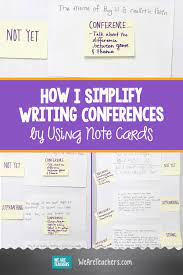
How I Simplify Writing Conferences by Using Note Cards

Introduction:

Writing conferences can get hectic, especially with multiple panel discussions, keynote speeches, and networking sessions. Keeping everything organized during these events is crucial to enjoying a productive experience. In this article, I will discuss how using note cards helps me simplify writing conferences and make them more manageable.

1. Planning the Agenda

Before starting with the conference, I list down all the sessions and discussions taking place throughout the event. Jotting down important details such as speakers’ names, topics, and time slots on individual note cards helps in sorting the information effectively. By using note cards, it’s easier to visualize which sessions to attend ahead of time and make necessary adjustments to my schedule.

2. Assigning Note Cards for Sessions

During each session that I attend, I use a distinct note card with relevant details such as session title and speaker information. By having a dedicated card per session, it’s possible to capture essential points and write them down during brainstorming sessions or quick question-and-answer rounds.

3. Color Coding for Better Organization

By utilizing color-coded note cards for different categories like workshops, panel discussions, and networking events, it becomes less complicated to identify which cards belong to what segment of the conference. Plus, this color-coding system significantly reduces the stress while reviewing the notes post-conference.

4. Engaging with Fellow Attendees

Note cards also offer an efficient means for exchanging contact information with fellow attendees during networking breaks. Instead of scrambling through electronic devices or wasting paper on several business cards, simply sharing my contact details concisely written on a small note card encourages intentional connection-making.

5. Post-Conference Review and Follow-Ups

After the conference concludes, I organize all gathered note cards chronologically for a comprehensive overview of my experience at the writing conference. Reviewing the note cards enables me to spot areas where further research or follow-up with the presenter is needed. Moreover, it helps me retain valuable insights and recall key discussion points to incorporate into my writing.

Conclusion:

In a world where electronic devices dominate, utilizing physical note cards during writing conferences offers countless benefits, from better organization to seamless networking. Adopting this simple and efficient system can enhance your conference experience, boost professional connections, and help you gain more from every event you attend.

5 Brilliant Ways Anyone Can Use Improv in the Classroom

Introduction

Improv, short for improvisation, has long been a staple of comedy clubs and theaters around the world. But did you know that its principles can be applied to enhance learning and creativity in the classroom as well? By incorporating elements of improv into your teaching style, you can help students break free from the constraints of traditional learning methods, fostering an environment where creativity, collaboration, and critical thinking can thrive. Below are five brilliant ways anyone can use improv in the classroom.

1. Warm-Up Games:

Kicking off your class with a quick improv game is an excellent way to break the ice and energize your students. Try playing simple games like “Word Association,” where students rapidly take turns saying words related to the previous one or “One Word Story,” where students must create a coherent narrative by each adding just one word at a time. These activities not only get their creative juices flowing but also encourage active listening and collaboration.

2. Role-Playing Scenarios:

Role-playing allows students to step outside their comfort zones and explore different perspectives while gaining a better understanding of subjects. Provide scenarios relevant to your course material – such as historical events, scientific concepts, or literary themes – and have students act them out. Whether it’s embodying famous scientists to discuss groundbreaking discoveries or acting out scenes from literary classics, introducing elements of improv into role-play helps students internalize complex concepts in an engaging way.

3. Think on Your Feet Exercises:

Improv is all about instant reactions and quick thinking. Incorporate exercises that encourage students to think fast and respond spontaneously to prompts or questions. For example, try playing “Expert Panel,” where students pretend to be experts on random topics chosen by their classmates, fielding questions according to their imaginary expertise. This activity not only improves critical thinking but also boosts confidence in public speaking.

4. Collaborative Storytelling:

Teaching students how to craft compelling narratives is essential regardless of their subject matter. Use improv techniques to create an interactive, collaborative storytelling experience. Have students begin a story, setting the scene, introducing characters, and initiating the conflict. Then, encourage others to jump in and add plot twists or resolve problems. This approach challenges students to flex their creativity and develop problem-solving skills while working together.

5. Encourage an Environment of “Yes, And…”:

The core tenet of improv is “Yes, And…,” a philosophy centered around accepting others’ ideas and building upon them. In the classroom, encouraging this attitude creates an open environment where students are more willing to take risks, freely express their thoughts, and collaborate effectively. Challenge your students to embrace this principle during group discussions, creative brainstorming sessions, and even when addressing conflicts or misunderstandings.

Conclusion

By integrating improv techniques in your teaching methods, you can foster a lively and dynamic classroom where learning comes alive. Help your students develop critical skills like problem-solving, collaboration, creativity, active listening, and adaptability through engaging activities and exercises rooted in the exciting world of improv theatre. So go ahead – dare to go off-script and witness the transformative power of improvisation in education!