
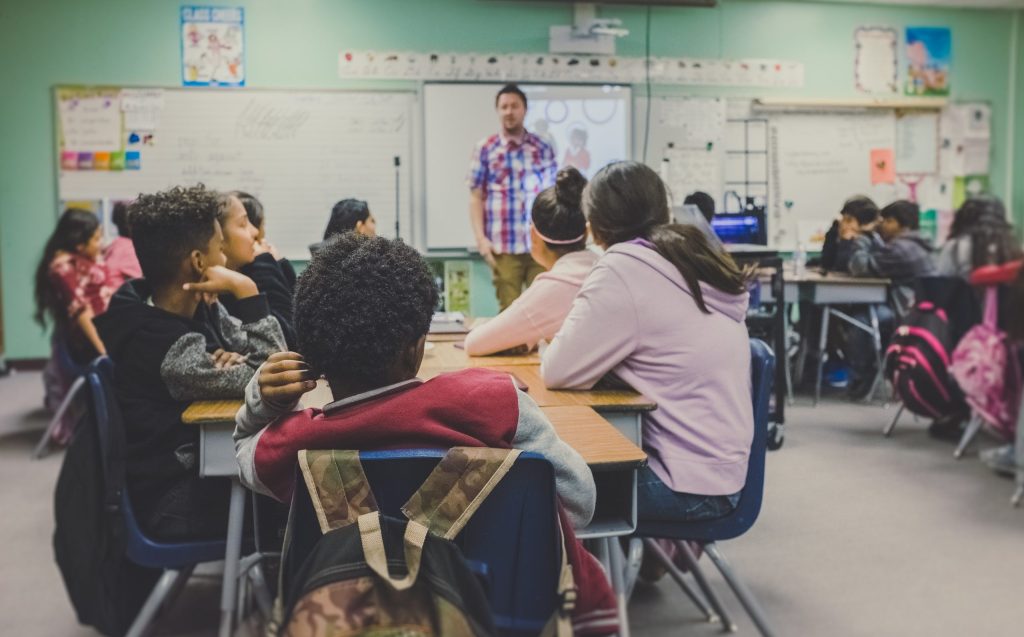
Teaching Strategies, Tactics, and Methods

What Are the Facts About Cheetahs for Kids?

  1. Cheetahs are the fastest land animal on Earth.

Cheetahs are capable of reaching speeds of up to 75 mph. They usually only get up to these speeds in short sprints as they attack their prey, with a cheetah’s average speed being around 40 mph. However, they also have an incredibly high acceleration, with the ability to go from 0 to 60 mph in only 3 seconds! The fastest run was recorded by a cheetah named Sarah, who lives at Cincinnati Zoo, as she ran the 100-meter dash in 5.95 seconds.

  1. Cheetahs have around 2000 spots.

A cheetah is one of the first animals that come to mind when we think of spotted animals. Cheetahs have approximately 2000 spots, and it is possible to identify cheetahs in wildlife management according to their unique locations and patterns.

  1. Cheetahs use their spotted coat as a disguise.

Cheetahs’ spots cover nearly all of their bodies and are thought to reinforce camouflage by providing contrast to gray-hued grasses. Cheetah cubs need masks not only to stalk prey but also to protect themselves from predators. Each cheetah has unique spots and ring patterns around its tail, like a human fingerprint.

  1. The word “cheetah” comes from Hindi.

The cheetah comes from the Hindi word “Chita,” which means “spotted one.”

  1. Only male cheetahs are social.

Males cheetahs have been known to form coalitions of 2-3 so that they can defend as much land as possible. 70% of these coalitions are made up of brothers, but occasionally they include outsiders. Males are generally not territorial towards each other but can be towards other unions or solitary males.

On the other hand, female cheetahs’ Mothers with cubs tend to stay within a short distance of one another.

  1. Cheetahs can give birth to 2-8 cubs at a time.

A cheetah’s gestation period is only 90-95 days, and a mother can give birth to anywhere from 2 to 8 cubs at a time! Unfortunately, this is due to a high cub mortality rate in the wild and captivity. Cheetah cubs have a dusty-gray coloring with long hair running down their backs, called a mantle. On average, they are about 12 inches long and weigh just 0.75 lbs at birth. After six weeks, the young are strong enough to join the hunt; they can practice killing live prey at six months.

  1. Cheetahs don’t roar.

Unlike most other big cats, such as lions and tigers, cheetahs can’t roar.

The cheetah’s voice box bones are structured the same as that of “small” cats, which means they meow! Although this design allows the cats to purr continuously, it limits the range of other sounds they can make and prevents them from roaring.

Despite not being able to roar, cheetahs can make various sounds. For example, researchers have found that male cheetahs have been known to make a “stuttering sound” when trying to impress a female. They will also growl and hiss when feeling threatened and let out a loud yelp when wanting to signal a warning.

  1. There are five types of cheetahs.

There are five different subspecies of cheetah, these include;

  • Asiatic cheetah
  • Northwest African cheetah
  • South African cheetah
  • Sudan cheetah
  • Tanzanian cheetah

The Asiatic and Northwest African cheetahs are listed as critically endangered. Although the number of cheetahs in Sudan and Tanzania is higher, the population has declined in recent years.

  1. Cheetahs have excellent eyesight.

As well as speed, cheetahs have an excellent sense of vision, which enables them to spot and chase prey from 3 miles away. Cheetahs also have black tear marks called malar stripes that run from their eyes down the sides of their face. This feature attracts the sun away from the eyes and stops the glaring sun from obstructing their view. You can see the same strategy used when football players put black streaks under their eyes.

  1. Cheetahs only hunt during the day.

Cheetahs are crepuscular hunters, which means they hunt at dusk and dawn. However, it’s believed that cheetahs have adapted to hunt during the day, unlike most other big cats, so as not to compete with the likes of lions, hyenas, and leopards. Another risk of night hunting is kleptoparasitism, in which another animal steals the catch.

  1. The cheetah’s body has adapted for speed.

We all know now that cheetahs are fast, but did you know the number of ways their bodies have evolved for them to become the world’s fastest animal? Cheetahs generally weigh around 125 pounds, making them lightweight and easy to accelerate. They have a small head, lean legs, and a flat rib cage to make them more aerodynamic by minimizing air resistance. Their semi-retractable claws and hard foot pads help their feet maintain traction, while their long tail is used to stabilize and steer the body. A cheetah’s skeleton acts as a spring, with its unusually flexible spine and hips and free-moving shoulder blades. Because running as fast as this requires lots of oxygen, their nasal passages and lungs are enlarged to help intake more air. As a result, cheetahs can breathe up to 150 times per minute while running, up from 60 breaths per minute at rest.

  1. Cheetahs live up to 10 years in the wild.

A cheetah’s lifespan is around 10 to 12 years in the wild, but it can reach up to 20 years or longer in captivity. A female cheetah in Birmingham Zoo named Dolly held the record for the oldest cheetah raised in captivity. Unfortunately, she died in 2009 after reaching the grand old age of 18 years old. Some unverified sources claim the oldest cheetah lived to be 27 years old!

  1. Can survive up to 10 days without water

The average cheetah consumes 6-8 pounds of food per day. However, in some cases, they can go as long as 4-10 days without water. This is because they hydrate from the moisture from the bodies of their prey. The cheetah’s diet consists of a wide range of game, from rabbits, wildebeest calves, birds, warthogs, and many more.

  1. Keeping a cheetah as a pet in the USA is illegal.

Cheetahs are incredibly rare in the U.S. and aren’t very common even in zoos since they are difficult to breed or import. Additionally, keeping them as pets is illegal in the United States.

  1. Cheetahs are not natural climbers.

Although a member of the big cat family, it’s quite uncommon to see a cheetah up in a tree. Cheetahs have non-retractable claws like dogs, which gives them a speed advantage but limits their tree-climbing abilities. Despite this, they will occasionally venture up a tree to gain height to see the surrounding area since most of their habitat is thick bush.

  1. Cheetahs used to be sacred in Ancient Egypt.

In Ancient Egypt, pharaohs often kept Cheetahs as pets and hunting companions, as depicted in paintings and statues. Not only that but they would usually be buried with their owners after their death, as it was thought that the cheetah’s speed would take the pharaoh’s soul to the afterlife. There was even believed to be an Egyptian Goddess named Mafdet, who was often pictured with a cheetah’s head.

  1. The population of cheetahs is only around 7000.

The population of cheetahs has severely declined over recent decades due to habitat conversion for agriculture, illegal hunting, and loss of prey species. As a result, it is estimated that there are only 7,100 cheetahs left in the wild, and their future is uncertain throughout their range.


What is Correlation?

The word correlation is called ‘co,’ meaning together, and ‘relation.’

A correlation is a mutual relationship between one or more things.

Math is often used to discuss the relationship between different data sets.

Correlation in maths

When two or more data sets are linked, they have a high correlation.

Data sets have a positive correlation when they increase together and a negative correlation when one set increases as the other decreases.

Correlation Example

An example of a positive correlation could be that the more hours you exercise, the more calories you burn.

A correlation is if the data sets generally relate to each other, with some exceptions.

Correlation can also be expressed as a value

  • 1 is a positive correlation
  • 0 refers to no correlation being present
  • -1 implies a negative correlation

Who was Mary Jackson?

Mary Jackson was an American aeronautical engineer and the first Black woman to work for NASA – learn more about this inspirational woman with our handy wiki.

Mary Jackson

Mary Jackson (1921-2005) was an American mathematician and aerospace engineer. She was the first Black female engineer to work for NASA. Her work, alongside the other women and minorities in her department, proved invaluable to the success of the US space program.

As an African American woman, Jackson faced a great deal of prejudice. Despite this, she managed to excel academically. Her love for science was matched only by her desire to help others. Throughout her career, she worked hard to help other women and minorities improve their standing in the science community and advance their careers. She even volunteered to be demoted to work in a role where she could help others more.

Mary Jackson is remembered today as an important and inspirational figure in the history of women’s rights and the rights of minorities in America. Her story has inspired books and films, and she was recognized by NASA for her contributions after her death in 2005.

The Life of Mary Jackson

Mary Jackson led a fascinating life full of struggle and determination. Throughout years of prejudice and segregation, she rose through the scientific community’s ranks. In addition, she was a committed humanitarian and touched many lives.

The Early years

Mary Winston (Jackson’s last name) was born in Hampton, Virginia, on the 9th of April 1921. Her parents were Ella and Frank Winston. She grew up in Hampton and graduated from the all-Black high school, George P. Phenix High School, with the highest honors, in 1937. Maths was one of her favorite subjects at school, and she enrolled in the Hampton Institute, graduating in 1942 with a bachelor’s degree in Maths and Physical Science.

In 1944, Mary Winston married Levi Jackson, a Navy sailor. The couple went on to have two children, Levi Jackson Jr., and Carolyn Marie Lewis.

Early Career

After graduating from university, Mary Jackson worked as a teacher in Calvert County, Maryland, at an African American school. At this time, schools were still segregated in the American south. She also began tutoring college students, which she continued throughout her life.

She returned to Hampton in 1943, where she started work as a bookkeeper. Over the next eight years, she worked several different administrative jobs. She was a receptionist at the Hampton institute and the clerk at a nearby army base. She and Levi also started a family.

NASA

In 1951, Mary Jackson worked as a research mathematician at the Langley Research Center in Hampton. The center was run by the National Advisory Committee for Aeronautics (NACA), which would go on to be replaced by the National Aeronautics and Space Administration, or NASA. Her work there was compared to a ‘human computer,’ providing data that would later prove essential to the US space program. Her manager at the time was Dorothy Vaughan, NACA’s first Black supervisor and another inspirational figure.

The department Jackson worked in, the West Area Computing Unit, was segregated and staffed entirely by African Americans. Virginia state law at the time enforced segregation in the workplace, meaning that white people and Black people had to use separate bathrooms and cafeterias. At the West Computing Unit, there was no lunchroom for African Americans, who instead had to eat at their desks, which Jackson particularly objected to.

After suffering these indignities for two years, Jackson decided that enough was enough. She made a complaint to one of her supervisors, Kazimierz Czarnecki. Czarnecki was impressed by Jackson and invited her to come and work for him rather than resign from NACA altogether. He would prove to be a mentor to Jackson for years to come.

Jackson began working for Czarnecki in the Supersonic Pressure Tunnel. This incredibly powerful wind tunnel was used to study the effects of high-speed winds on aircraft such as planes. It was here that she gained valuable experience conducting experiments. Realizing Jackson’s potential, Czarnecki encouraged her to take various engineering courses. Because of segregation, she had to obtain special permission to take classes alongside white students. She successfully passed through an engineer training program and was promoted to aeronautical engineer by what was now called NASA in 1958. This made Jackson NASA’s first Black female engineer.

The First Black Female Engineer

At the time, female engineers were very rare. In fact, during the 1950s, Mary Jackson may have been the only Black female engineer in the country. She enjoyed a prosperous engineering career for nearly 20 years, authoring and co-authoring numerous research papers on airflow around aircraft. She rose through various departments within NASA until she achieved the most senior engineering position. At this point, however, Jackson came to the bitter realization that she could rise no further as an African American and a woman.

During her years at NASA, Jackson worked tirelessly to promote the work of her fellow Black and female scientists and engineers. She helped others advance their careers by recommending what and where to study to be announced. However, Jackson was frustrated that her ability to continue this work was stunted because she couldn’t get a management-level role. So, to help others more easily, she was demoted in 1979 to become the manager of NASA’s equal opportunities program. In this new role, Jackson worked hard to improve the career prospects of the next generation of female and minority mathematicians, engineers, and scientists. She continued this work until she retired in 1985.

Beyond NASA

Throughout her incredible career, Mary Jackson earned many awards and honors for her charity work and her contributions to science. In addition, she and her husband were known to have an ‘open door policy for new employees at the Langley Research Center, helping them to get started in a new town and new career.

Jackson chaired and served on many different organizations’ boards and committees and was a Girl Scout Troop Leader for thirty years. She was repeatedly recognized for her leadership and service.

Mary Jackson’s Legacy

Mary Jackson passed away peacefully on the 11th of February 2005, at 83, in her hometown of Hampton. After her death, Jackson’s contributions to science and the US space program gained greater recognition.

In 2016, the life and career of Mary Jackson, along with her former colleagues, Katherine Johnson and Dorothy Vaughan, became the inspiration for Margot Lee Shatterley’s bestselling book, Hidden Figures: The American Dream and the Untold Story of the Black Women Mathematicians Who Helped Win the Space Race. The book was made into a critically acclaimed film soon after.

In 2017, the then 99-year-old Katherine Johnson dedicated a new, state-of-the-art computer research center to Mary Jackson at the Langley Research Center, where they both worked. Both women, alongside Dorothy Vaughan and another West Computing colleague, Christine Darden, were awarded the Congressional Gold Medal in 2019.

In 2021, NASA officially renamed its headquarters in Washington, D.C., after Mary Jackson. On February 26th, the building was formally renamed the Mary W. Jackson NASA Headquarters.

Facts about Mary Jackson you may not know!

  • Mary Jackson was raised in Hampton, Virginia, by her parents, Frank and Ella Winston. It was here that Mary Jackson achieved the highest honors during her graduation from George P. Phoenix Training School.
  • A non-fiction book called Hidden Figures The Story of the African-American Women Who Helped Win the Space Race was published in the market back in 2016 that featured the story of Mary Jackson. As well as the book, a film was made in the same year called Hidden Figures.
  • Mary Jackson was awarded the most senior engineering title at NASA after working for the institution for 34 years.
  • Mary Jackson eventually took the role of manager for the Affirmative Action Program and Office of Equal Opportunity Programs at NASA. Both of them were the Federal Women’s Program.
  • Hampton Institute awarded Mary Jackson bachelor’s degrees in physical science and mathematics in 1942.
  • In 1953 Mary Jackson went to work for engineer Kazimierz Czarnecki, conducting experiments in a high-speed wind tunnel. Czarnecki suggested that she enter a training program that would allow her to become an engineer. Unfortunately, Virginia’s schools were still segregated at this time, so Mary had to obtain special permission to take classes with white students.

What Are the Characteristics of Living Things??

Living things have a few things in common, and these characteristics determine whether something counts as a living organism.

  • Excretion – living things can get rid of unwanted materials.
  • Growth – given the right conditions, living things can grow!
  • Movement – we don’t mean that plants suddenly grow legs and start walking, but living things can change position. Plants can grow towards a light source and move from one place to another as seeds.
  • Nutrition – humans, plants, and animals can all absorb nutrients. Humans and animals eat food to get nutrients, and plants absorb nutrients from the soil through their roots.
  • Order – living things are made up of cells. Cells are the smallest unit of life, and each cell has its function or purpose. For example, the human body comprises over 30 trillion cells!
  • Reproduction – living things have to be able to reproduce to make more of what they are. E.g., plants produce to create more plants; animals produce to make more animals, etc.
  • Respiration – respiration is sometimes used as another word for breathing. Plants respire through photosynthesis.
  • Sensitivity to their environment – living things has to be able to respond and adapt to their environments. So, for example, some animals can camouflage themselves to avoid predators!

What is Halloween?

Halloween is a celebration that happens on the 31 October. It combines different cultural and religious traditions and can be celebrated differently.

How did Halloween start?

How Halloween Started is a fascinating tale. One smothered in history is where Ancient Celts created a festival named Samhain. Like most things, cultural changes happen often; this festival was one of those changes. This was because this festival was a non-religious celebration compared to all the other festivals.

Christianity was becoming the dominant religion worldwide, and many people within the Church despised the idea that people would celebrate non-religious holidays. Still, somehow celebrate religion Church decided. However, as years went by, Samhain became the more popular holiday, even with a name change to All Hallows’ Evoween, which became something people loved and anadmiredred.

How Halloween Started also came from the fear of spirits, but after a few ideas from people in small towns across the world, costumes and sweets became popular to help get everyone involved as well as help the Church like it.

What is the origin of Halloween celebrations?

It combines the same answer to dive into How Halloween Started and the origins of Halloween celebrations. Historically, Halloween was celebrated for two very different reasons. One reason was to celebrate the end of the harvest season, summer’s End or Samhain, and the other was to commemorate the two Christian holidays called All Hallow’s Days.

Initially, Ancient Celts were the first people to celebrate Halloween. Having lived in Northern Europe, where people were superstitious, it was believed that the spirits of the dead roamed freely across many towns and villages on the 31st of October. This created fear that the spirits would harm people who damaged crops or, worse, possess people who could spread an incurable sickness.

They created a plan to keep the spirits away. The Celts dressed in scary costumes made from animal hides and fired up huge bonfires to try and scare the spirits away. It might have worked, but either way, this helped begin a wave of people dressing up as ghosts and other scary things on a spooky day.

Facts about Halloween

Whether it’s the fact that Halloween has become the second biggest festival after Christmas or if it is that it’s a time of the year that truly brings a community together in a time of need, understanding How Halloween Started and the facts within it allow you and your children to feel a part of the festivities.

Below are some entertaining facts about the special holiday that can be implemented into any classroom or living room discussion:

  • No matter the day, Halloween always lands on the 31st of October.
  • Trick and Treat began with ‘souling,’ which started with people getting soul cake rather than sweets.
  • Halloween used to be called All Hallows’ Eve as it was a day to remember the dead originally.
  • Black cats have always been associated with Halloween because they were believed to protect witches’ powers.
  • Orange and black symbolize Halloween because it is located in autumn.

Halloween is an incredibly special holiday that allows teachers and parents to get creative on the best ways to help their children. A mixture of creative activities and fun resources can be used at any time to understand How Halloween truly started.

Why is Halloween so important?

The questions of why Halloween is so important and How Halloween Started all trace back to the same origins. It’s important for many reasons, as it is believed that on the day of Halloween, the souls of the dead return to their homes. This is helped by the people who dress up for a holiday in costumes and light bonfires to ward off spirits.

With Halloween becoming so popular worldwide, it’s clear why the ideas of witches, ghosts, and goblins are all linked to the holiday. This is all because of the opinion that death can be fun to celebrate.

It’s become such an important holiday that people will wait all year round to be a part of something. That is what makes Halloween so vital to the local and national communities of people.

How to Brighten Up Your Child’s Vocabulary Using Summer Verbs!

Did you know?

There is more than one type of verb! You will find that verbs can be divided into many different categories. These include:

  • finite and non-finite verbs
  • transitive and intransitive verbs
  • powerful verbs
  • past, present, and future tense verbs
  • regular and irregular verbs

Future, Present, and Past Summer Verbs

Children are expected to identify and use the different tenses a verb can express during elementary school. These include the future (things that will happen later), present (things that are happening now), and past tense (things that have already happened).

For example:

Future tense: Joe will talk to his friends.

Present tense: Joe is talking to his friends.

Past tense: Joe spoke to his friends.

When covering the different tenses of verbs, it is also important to learn about irregular past-tense verbs. These are verbs used in the past tense but don’t end in “-ed.” For example, swam, felt, ate, and fell.

Exciting summer verbs you should try this vacation season!

Who said grammar couldn’t be fun?! To help you show your children just how great learning about verbs can be, we’ve compiled a list of our favorite summer verbs that we love to include on our summer checklist! Check them out below, and be sure to let us know what you and your family get up to this summer:

  • Go for a swim: Dive in with a ginormous belly flop into the pool, where you can splash, glide, and float about for hours before getting out to dry yourself off.
  • Play at the park: Have fun as you slide, crawl, climb, hang, run, and swing! If you have time, take a short stroll through the park to chat and enjoy nature.
  • Go for a picnic: Leave plenty of room in your belly to guzzle, slurp, chomp, and chew, all kinds of delicious food! Don’t forget to bring a drink to quench your thirst.
  • Play sports: Make sure you warm up with some stretches before you play! Cheer and encourage your teammates as you hit, throw, catch, or slide your way to a big win!
  • Go on a bike ride: How fast can you pedal? Steer, balance, tilt, grip, grab, and accelerate on an awesome bike ride.

What is a Benchmark?

A benchmark is a standard, or point of reference, against which other similar things can be compared.
Usually, a benchmark provides a good example of how something should perform or function, and the things being compared should seek to emulate it.
Benchmarking is a broad term applicable in several contexts, such as technology, finance, business, and education.
Benchmarking in education occurs when standards are set that a child’s progress is measured against.
How is benchmarking used in schools?
Student attainment will often be measured against a benchmark appropriate to their age and year group.
For example, a child in Year 2 and a child in Year 4 will display different levels of attainment, so their progress will be considered against what is expected of a child of that age.
Children are expected to reach different educational milestones at different stages. These can include understanding a specific times table mathematical concept or developing
These milestones are benchmarks for positive development.

What are Wow Words?

Wow, words are advanced adjectives, verbs, and adverbs that can make a written work more vivid and interesting. These words are taught at KS2 to diversify children’s vocabulary and written ability. Teach your KS2 class about wow words today!

What are some examples of Wow Words?

Here are a few KS2 examples of wow words within the different word groups:

Adjectives: An adjective is a word used to describe or modify a noun or phrase. In some cases, they’re used to give important information about the noun being told. Here are a few examples of how adjectives can be used in a sentence:

“The expensive crimson boat sat in the harbor.”

“Grandma’s withered rug was scratchy underfoot.”

Complex adjectives can be great for use in creative writing or schoolwork, and pupils can elevate their writing skills by learning them. Here are some great adjectives that your pupils can use in their report:

  • Incredible
  • Beautiful
  • Terrifying
  • Vicious
  • Intelligent
  • Exuberant
  • Colossal
  • Skillful
  • Adventurous
  • Abrasive

Verbs: A verb is a word that describes a state, occurrence, or action which shapes the main part of a sentence. They’re often called ‘doing words’ because they explain what the subject of the sentence is doing.

“Billy watched the autumn leaves drift along the floor.”

“The cat pounced atop the fence.”

Longer verbs can be great wow words and provide KS2 children with a more good vocabulary to use in their creative writing and essays. By swapping out normal verbs for these fancier ones, they can instantly boost any report that they produce:

  • Sprinted
  • Whispered
  • Drifted
  • Zoomed
  • Prowled
  • Disturbed
  • Persuaded
  • Envisioned
  • Concentrated
  • Acquired

Adverbs: An adverb changes or modifies a verb, adjective, or clause. While verbs describe the action that has happened, adverbs can often show how, when, or to what degree it happened. Here are just a few examples:

“The mouse crawled quietly under the sofa.”

“Courteously, the gentleman held the door open.”

Adverbs can help to make writing rich and intense by adding a further description. KS2 kids can easily enhance their writing by memorizing just some of the ones on this list:

  • Gently
  • Suspiciously
  • Genuinely
  • Courteously
  • Anxiously
  • Eagerly
  • Vigorously
  • Excitedly
  • Punctually
  • Deceptively

What is a Micro-habitat?

A micro-habitat will differ from the larger environment around it, making it particularly suited to one or more species.
For instance, the damp underside of a stone in the forest could provide shelter for a woodlouse and decaying leaf and plant matter for them to eat. This micro-habitat is better adapted for the woodlouse than the exposed undergrowth of the forest floor.
Micro-habitats can be:
• A pond or puddle
• A rotten stump
• The space beneath a paving stone
• A moldy apple
• A terrarium
Micro-habitats and Biodiversity
Micro-habitats help to encourage biodiversity in the plant and animal kingdom by creating many habitats in which animals can adapt and thrive.
Microhabitats can provide alternative food and water sources, shelter, and climate than larger habitats. In addition, small animals such as insects, mice, and frogs often use micro-habitats when their habitat makes them vulnerable to predators.
A rotting log may become home to several insect species, a clump of moss, a cluster of forest fungi, and a family of frogs. Micro-habitats are amazing, and they exist all around us!
Minibeasts and micro-habitat facts
You can teach children about micro-habitats by linking them to a topic on minibeasts. Minibeasts are a great example of creatures that live in micro-habitats. And, there are lots of fascinating minibeast and micro-habitat facts that you can share with your children to engage their learning.
• Caterpillars – Many species of the caterpillar have a micro-habitat on the underside of a leaf. The leaf offers them shelter and safety from the weather and predators. A leaf also provides them with food. What more could a caterpillar want?
• Compost heaps – These are an example of artificial micro-habitat. A compost heap is full of delicious food for decomposers such as worms.
• Millipedes – These minibeasts are an example of one that has adapted to its micro-habitat. They like living under logs and rocks on the forest floor. Here they find everything they need to eat and survive. Unfortunately, many other predatory insects and animals also want to live in these places. So the millipede has adapted to protect itself. It produces a highly poisonous chemical that stops other creatures from eating it. They also have a hard outer shell, like a suit of armor, to give them added protection.

What is a Vowel Team?

A vowel team is when two vowels are paired together in a word and combined to make one sound. It is when two or more (but most likely two) letters work together to create a single vowel sound. Vowel teams often come together to make a long vowel sound, like the long e in “seat,” but that is not a rule. They can also create short vowel sounds, like the harsh e sound of “head.”

A word like read is a great way to see how vowel teams can make short or long vowel sounds, as it can be spoken with both a long and a short vowel sound to make a different word (she should read/she has read).

If you want a rule to follow to help with vowel teams, we love “when two vowels go out walking, the first one does the talking.”These patterns often follow the guideline of the first letter in each pair having the dominant sound, like “pie” and “beat.”

What are vowels in English?

A vowel is a letter used within all words in the English language.

The alphabet contains 26 letters in total. These are split into two classes of speech: vowels and consonants.

Vowels are different from consonants because of the way we say them.

Naturally, you breathe out when you say a vowel. This also means your mouth doesn’t close. With a consonant, your mouth moves differently, and your lips touch.

Try saying each out loud.

They vary in sound, pronunciation, and volume.

Vowels and Consonants List:

There are 26 letters in the English alphabet, each falling into either a vowel or a consonant category. Take a look at this handy vowels and consonants list to see which letters are which:

Vowels: A, E, I, O, U.

Consonants: B, C, D, F, G, H, J, K, L, M, N, P, Q, R, S, T, V, X, Z.

Why do we need vowels?

It’s important to understand vowels while reading aloud, singing, or simply doing comprehension and listening activities. This is because we typically concentrate on vowels over consonants to emphasize our words when singing. As a result, people are more prone to hearing vowels best over consonants.

Why are vowel teams important?

Vowel teams are important to learn because they are one of the trickiest parts of spelling. Take the long “o” sound, for example. You can create that with the following:

  • oa = boat
  • ow = glow
  • oe = woe
  • ough = though
  • ew = sew
  • o_e = home

With all those options, children need to learn which are the correct choices; otherwise, guessing on sound alone could leave us with the boat as bowt, boet, bought, or bewt! So it’s no surprise that vowel teams can inspire some of the biggest struggles with learning spelling rules and making spelling mistakes.

But with 18 vowel sounds in the English language and only a measly five vowels, we need to use vowel teams to make this tricky language work!

The technical term for vowel teams is “vowel digraphs”; however, it might be easier for children to recognize these vowel pairings with a simpler word. It also helps us to describe how the vowels work together to create a sound. So, if you want to sound smart, next time someone asks, “what is a vowel team?” you can explain it and give it the technical name, too!

Vowel digraph list

  • OW – as in know or snow
  • UI – as in fruit or bruise
  • OE – as in toe or goes
  • OA – as in boat or road
  • EA – as in thread or lead
  • EA – as in reading or beach
  • IE – as in pie or lie
  • IE – as in a field or chief
  • UE – as in glue or fuel
  • OO – as in wood or flood
  • EY – as in them or prey
  • AI – as in rain or pain.

Why do we use consonants in vowel teams?

The simplest answer is that English is an inconsistent and frustrating language that has taken on different rules from other languages over the years.

A more sensible answer is that English words are not intended to end in either “i” or “u,” and as such, we use “y” instead of the “i” and “w” for “u.”