Uncategorized

How Do You Engage Parents Who Don’t Speak English?

Teacher Kerri Gardner uses a communication app with a translation feature to connect her kindergarten class with parents and the wider community.

By Chaks Appalabattula

Parent communication is a challenge in every school. According to a Gallup poll, only 1 in 5 parents are truly engaged with their children’s school. Districts with high immigration and low income rates have the added problem that many parents don’t fully understand English. Often, these same families have incomes that make regular access to a computer impossible. Most of these families do have access to a smartphone, though. Here’s an example of how one district took advantage of that fact to engage hard-to-reach parents.

Holyoke School District is a Title 1 district in Colorado that serves more than 400 families. The district communicates with these families through teacher notes and calls, newsletters, emails, newspaper articles, and more. Holyoke also offers evening workshops and meetings throughout the year on topics including technology, literacy, and scholarship applications. There are several committees that parents are encouraged to join, including an Accountability Committee, Parents in Education (PIE), and a Wellness Committee. The district also helps families with its Migrant Program and Homeless Program. Despite all of these existing programs, engaging immigrant parents is always a challenge, since they do not feel connected to the school community.

Turning Disconnected Parents into Academic Allies

Kerri Gardner is a kindergarten teacher at Holyoke Elementary School. Like many teachers in her district, she is always looking for a way to engage parents in her classes. “I wanted parents to know what we did throughout the day so they could talk to their child about it,” she said. In her search for a way to get past the language barrier that exists with many of her parents, about a year ago she found an app called Bloomz that promised to simplify communication with parents, and decided to give it a try.

Bloomz is a free mobile and web app that works on traditional phones (via text message), on computers, or even smartphones (via a mobile app). Bloomz offers translation to more than 84 languages. When she first started using the app, Gardner “was concerned about participation level from parents because our population is high poverty and we have high populations of a second language being spoken at home. Despite this, most of my parents signed up.”

With the Bloomz translation feature, Gardner posts messages or updates in English and parents receive them automatically translated into their preferred language. Gardner also bridges the language barrier by communicating with images. Last year, she remembered, “I took a lot of pictures to share with parents what fun learning activities we were doing. Pictures worked really well in Bloomz because of the language issues with parents, and for parents to share the pictures with their child in order to increase discussion.”

Staying in touch with parents on a daily basis had an impact on the dynamics of her classroom, too. “Bloomz promotes better behavior,” she said, “letting parents know how a student’s behavior is at school so parents can reinforce good behaviors at home or discuss poor behavior.” (Bloomz has recently announced new features to help track students’ behavior and share student portfolios, which will be available in time for the new school year.)

The daily communication allowed Gardner to work with parents to their students’ academic benefit, she said. Inspired by a message from her, “A parent talks to their child about what he learned that day and sees that he could use a little more practice and works with him at home on the skill.”

Gardner also found her own innovative ways to use the app in the classroom. “We took the photos and used them in class to meet a social studies standard, putting the pictures from the year in order on a timeline,” she shared. “I’ve basically photo-documented my kindergartners’ entire year because of the Bloomz app.”

Connecting with the Community at Large

In order to have a lasting impact, though, technology has to go beyond the classroom setting to help schools build relationships with their parent communities. As Gardner put it, “Bloomz helps develop positive relationships between school, home, and even the public by letting parents see the good things we’re doing at school.”

Her school administrator has taken notice, and is now asking several other teachers to start using the app as well. “It gives him a window into my classroom so that he can see what learning activities I’m using to teach the standards,” she said.

Gardner has big plans for Bloomz beyond the classroom: “To promote positive relationships with the community, next year I’d like to invite our local newspaper to view our Bloomz feed so that if they see a learning activity that they like, they can print it in the newspaper—with parent permission if photos are involved.”

Technology doesn’t only benefit people in high-income communities. Armed with a phone, a powerful imagination, and a communication app that seamlessly translates for her diverse community, Gardner has helped catapult Holyoke into a new century of community-building and parental engagement.

Chaks Appalabattula is the CEO of Bloomz, a new app that connects teachers with parents, creating an engaged parent community in classrooms and schools.

Want to follow Bloomz on Twitter? Follow them @BloomzApp

Service-Learning Develops Character in Students

By Michele Pitman, CEO of intelliVOL

Educating the whole child and developing character goes beyond the core subjects being taught each day. Many school districts recognize this and have instituted programs encouraging or requiring students to give time in service to their community and peers. Organizations like the National Honor Society have incentivized service, giving recognition for student efforts outside of school. And, when these students apply to colleges and universities, their service record usually improves their chance at being accepted.

Given how much we as a culture value community service and the well-rounded individual, more U.S. high schools need to offer institutionalized and systemized service opportunities for their students. In the vast majority of public schools, service is a club activity. In private schools, service is so important that it is graded. But in most public schools, students must find their own charitable organization and arrange to work there of their own initiative. There may be an advisor to help in this process or they have established relationships with nonprofits thereby making it is easier to connect, but a student’s service has no bearing on their formal school record.

The National Honor Society does fill in the gap where organized, school-mandated service is not available. Through the NHS, students give hours and track that data by school sponsors who are responsible for verifying, tracking and reporting student hours given to service. This legitimizes the student’s efforts and for college applications, is a critical validation in a hyper-competitive landscape.

Yet, turning service into more than simply checking-off-the-box-so-I-can-get-into-college scenario, requires a bit more effort. In the over 10 million service hours that students have logged and tracked for schools through our company, the overwhelming majority of school leaders tell us that students need to think about their service and its impact. They need to make a personal connection between their lives and those whom they have helped. Schools call this reflection. Service, they say, is more significant and meaningful when students are required to write down their thoughts after they’ve completed their service.

Teachers and student advisors recognize this connection between action and mind. Guilford County Schools in North Carolina has a very active service-learning program with over 1.4 million service hours logged to date, and is nationally recognized as a District of Character by Character.org. Yvonne Eason is the coordinator for character development and service-learning at the district. Guilford, like many schools we work with, requires students to write down their thoughts about their service. “The reflections piece is huge for us. We’re looking for our students to reflect on the experience of service-learning. This goes well beyond just recording the number of learning hours served. It gives students a chance to share what impact each experience had on them personally as learners and individuals, as well as what type of impact they’re having on the community, or organization they’re serving,” says Ms. Eason.

Reflection is at the very base of building a well-rounded individual who has skills and experiences beyond classroom instruction. This simple action–writing down our thoughts of helping others—takes our regimented, subject-heavy learning environment beyond the “how” and answers the question, “Why?”


About the Author

Michele Pitman, creator of x2VOL developed the platform in partnership with high schools to give them an easier, more accurate way to manage, track, verify and report service hours students give in the community. x2VOL is the most widely used service tracking and reporting platform in K12 education with over 10 million approved service hours.


Performance Matters Premieres Episode 3 of Salon Series Exploring Educator Viewpoints on Personalized Professional Learning

Sandy, Utah — Aug. 16, 2016 — In a nationwide survey, more than 500 principals and teachers indicated that trust and respect are vital to a successful personalized professional learning initiative. Yet, obstacles such as differing views of the evaluation process or a lack of trust in evaluation results can make it difficult to create a climate that supports teachers’ professional learning needs. In Episode 3 of the Performance Matters (formerly Truenorthlogic) Educator Viewpoints on Personalized Professional Learning Salon Series, K-12 educators, school leaders and district administrators are invited to explore how to build trust, respect and empathy into personalized professional development in a free, comprehensive report and a webinar on Sept. 8th at 2 p.m. Eastern time.

Episode 3, titled “Trust and Respect: Must-Have Attitudes,” shares key findings from the survey and best practices from educators including how Long Beach Unified School District in Calif. developed empathy upfront in the professional learning design process, and how Boulder Valley School District (BVSD) in Colo. joined together with the teachers’ association to recreate their approach to teacher evaluations. In addition, it features an interview with the Hasso Plattner Institute of Design (d.school) at Stanford University and links to tools for interviewing and empathy mapping, among others.

”When Colorado established new educator evaluation requirements, we decided to completely revamp our system for teacher and principal evaluations. We knew that a high level of respect and trust would be required for our new system to be accepted, and this required a great deal of planning and collaboration with all parties,” said Shelly Landgraf, assistant superintendent of human resources for BVSD. “As a result, we now have an effective evaluation system that is valuable to all employees, and we look forward to sharing what we’ve learned with other districts.”

To get the Episode 3 Guide or register for the webinar, visit http://insights.performancematters.com. Educators can also join in the conversation on social media using the hashtags #AMPeducators and #PPLSuccess.

About Performance Matters

Performance Matters accelerates student success by combining powerful student and educator growth solutions with real-time analytics. The Performance Matters Platform includes tools for student assessment development and delivery, as well as educator professional learning management, performance evaluation and observer calibration. Together these solutions, leveraged with a real-time analytics engine, provide specific, actionable insights that boost student performance and build educator capacity. Performance Matters was formed through the integration of two best-in-class education solution providers: Truenorthlogic, the leader in educator professional growth tools, and Performance Matters, an authority in student assessment and data analytics. For information, visit www.performancematters.com.

Media Contact:

Leslie Eicher, APR, Eicher Communications Inc.

(314) 965-1776

[email protected]


New Studies Show Children Improve Language and Reading Skills, and Brain Function, After Using Fast ForWard Program

Oakland, Calif. — Aug. 16, 2016 — In 2015, only 36 percent of fourth-grade and 34 percent of eighth-grade students performed at or above the Proficient level in reading on the National Assessment of Educational Progress (NAEP). New approaches to improve reading skills are introduced and used in schools every year, yet the problem persists. The answer, according to research, lies not in some newfangled method, but rather in addressing the root causes of students’ reading difficulties.

In the 1990s Dr. Michael M. Merzenich, winner of the 2016 Kavli Prize in neuroscience, worked with fellow neuroscientists Drs. Paula Tallal, William Jenkins, and Steve Miller, and showed that improvements in brain function — including those cognitive skills essential to reading — could be achieved through the use of computer-controlled training. Twenty years later, the software program they developed — Fast ForWord® from Scientific Learning Corp. (OTC PINK:SCIL) — continues to be vetted and proven to remediate the underlying difficulties that keep struggling readers from making progress. To date, results have been demonstrated in more than 250 research studies, including two new, independent studies.

In an article published in Frontiers in Psychology, Sari Ylinen and Teija Kujala reviewed studies that show how auditory or phonological training leads to reading improvement and physiological changes in the brain for children with learning difficulties, including dyslexia, specific language impairment (SLI), or language learning impairment (LLI). Among the studies they cited, several demonstrated improvements in children’s language and reading skills and brain function after training with the Fast ForWord program.

In a study published in Brain Topography in December 2015, Sabine Heim, Naseem Choudhury and April A. Benasich reported that after Fast ForWord use, children with LLI showed improved language skills and changes in patterns of neural activity that indicate “a change in cognitive control strategies.” This is consistent with other neuroscience studies on children with and without LLI (Stevens et al., 2008) and children with dyslexia (Temple et al., 2003). All of these studies suggest that the improved language and literacy performance seen after Fast ForWord use may result from better attention and memory.

For information, visit www.scientificlearning.com.

Media Contact:                                                                           

Hallie Smith
Scientific Learning Corporation
(619) 888-0887
[email protected]      


How to Save Time Lesson Planning, Grading This School Year

Teachers: if you could have one additional thing to help in your classrooms this school year, what would it be? More technology? Better behaved students? Less paperwork?

How about more TIME?

When all things are equally weighed, you’d probably spring for the time component (even though a few more iPads might be nice). Teachers spend 95 minutes per weekday outside the classroom on preparation and grading and the typical teacher workday is actually 10 hours and 40 minutes according to a Bill & Melinda Gates Foundation survey. Early mornings, nights, weekends – you name it, and teachers are working during it. Teachers can’t just show up before the bell and leave when it sounds at the end of the day and expect to succeed. There is a lot of work that happens when students are not in their seats and it’s necessary work to support students.

What if those additional 95 daily minutes of prep and grading could be cut in half? Or even by 75 or 85 percent?

Teacher Prep goes High-Tech

I recently had the chance to demo Ogment, an educational content curation tool that “clips” relevant information online and saves it for teachers to use in lesson planning and execution. Unlike other systems that simply allow you to save links to reference later, Ogment actually “scrapes” the content so you have all the details, including images and videos, when you are ready to piece it together for a lesson. Ogment allows teachers grab content off the web and strip out the extraneous muck, align the content to standards, cite, format and enhance the content with other technology. In short, Ogment makes lesson creation much easier and less time consuming.

ogment 1ogment 3

Ogment offers The Stream – a treasure trove of content that teachers can search to find materials on the lesson at hand. Teachers can also collaborate inside The Stream and share content. Teachers can even add their own content to complete lesson plans. And all of the organized content is searchable.

ogment 4

Teachers can project the content in their Ogment accounts for students and also manage assignments within the tool. A live curriculum mapping tool keeps both students and teachers on track, too. Customized lesson planning is possible based on student progress tracking within the tool, making it easy to modify lessons for students or student groups.

ogment 5

The technology behind Ogment is so cutting-edge that it actually won a SIIA CODiE award, an AAP Revere award, and three Bessie awards when it was still in pilot program testing. It’s now officially rolled out to the public with the benefit of feedback from actual teachers and administrators in how the platform best works.

Ogment’s Relevancy in Today’s Classrooms

When I was a public teacher, I would have LOVED to have a curation tool like this so I had more time and energy to devote to my actual students. I know the digital native teachers-in-training in our colleges today can make an even bigger impact with the type of technology streaming that Ogment provides, too. By freeing up some of that time traditionally weighed down by research and compilation for lesson planning, teachers have more energy to inject into what actually matters: supporting student progress.

Want to start this school year off with better organization? Try a free 30-day trial with Ogment.

Black Boys in Crisis: They Aren’t Reading?

Literacy is the basic building block for the rest of an academic career and the lifetime that follows it. Research shows that kids who come from homes where reading was a priority, and they were read to by their parents, perform better academically throughout their lives. The National Center for Education Statistics reports that Kindergarten students who are read frequently to at home are more likely to count to 20, write their own names, and read (or pretend to read).

Only 53 percent of children ages 3 to 5 are read to every day by a family member, though, and that number drops for families with incomes below the poverty line. The importance of parental influence in reading extends beyond the youngest grades. The U.S. Department of Education reports that fourth-grade classrooms with low parental involvement have students with average reading scores that are 46 points below the national average.

Reading isn’t important just for its own sake, however. Literacy is the foundation for all other learning endeavors. The Educational Testing Services reports that students who read more in their homes perform better on math assessments. The connection between reading in early childhood and its impact on future years is clear. Since parents, grandparents, and siblings are the default role models most of the time during that vital 0 to 5 age group, the responsibility to instill early literacy falls on families.

That’s a problem for black boys. Only 10 percent of eighth-grade black boys in the U.S. are proficient in reading. In urban areas like Chicago and Detroit, that number is even lower. By contrast, the 2013 National Assessment of Education Progress found that 46 percent of white students are adequate readers by eighth grade, and 17 percent of black students as a whole are too. The achievement gap between the two races is startling, but the difference between the NAEP report on black students as a whole and the stats on black boys alone is troubling too. This is where that important dissection between at-risk groups needs to take place. It is not simply black children in general who appear to be failing in the basics, like literacy; it is the boys.

Where does that disconnect arise? Hypothesizing from the NAEP data, a brother and sister from the same household could have vastly different literacy levels, even if they come from the same environment and are read to the same amount of time (even if that amount of time is none). That difference – that gap in literacy achievement – shouldn’t fall on parents. That’s the fault of our schools. Literacy learning is tailored to girls. So how do we adapt it to better reach our boys – particularly our young men of color?

Reading is only one piece of the school puzzle, of course, but it is a foundational one. If the eighth graders in our schools cannot read, how will they ever learn other subjects and make it to a college education (or, in reality, to a high school diploma)? Reading scores tell us so much more than the confines of their statistics and I believe these numbers are one of the major keys to understanding the plight of young black men in our society as a whole.

What Teachers Need to Streamline Lessons, Assessments

Despite all of the educational technology advancements of the past decade, the connection between in-class learning and assessments remains blurry. With state standards changing by the school year in some cases, it takes a lot of work to know WHAT to teach – and even more work to make sure that knowledge is expressed by students on the assessments. Aligning lesson plans with state standards takes some strategizing, even if the teacher is well aware of the requirements. All of that takes time – a lot of it – and teachers already work an average of nearly 55 hours per week, according to a Scholastic study.

Technology has the power to shrink that workload though and there are already some edtech companies ahead of the curve.

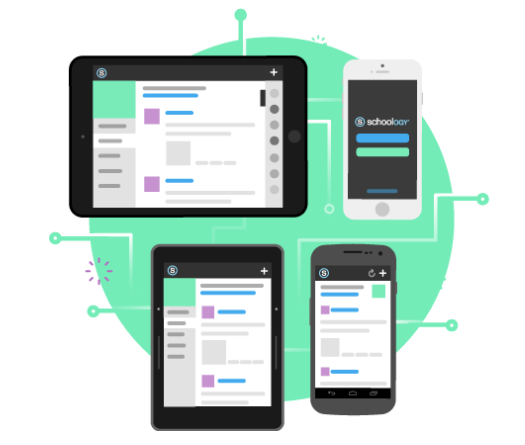
I’ve was recently able to demo Schoology, a learning management system that enables teachers with the tools to create learning content, organize lesson plans, communicate with students, collaborate with other teachers/administrators/parents, and manage the entire learning process. This all happens from a browser-based system that teachers can access anywhere with their login credentials. Schoology has third-party integration tools, too, so teachers don’t have to create their own lesson content in a vacuum.

Screenshot 2016-08-02 17.46.19


Schoology is available at the K-12, college, and corporate levels. The platform’s implications for K-12 teachers, however, are what impressed me most. Generally speaking, the level of involvement in an individual’s education gets smaller as that person gets older. In Kindergarten, parents, teachers, administrators and other caregivers are heavily involved in the education of their young students (or should be, at least). By high school, that involvement is still existent but in less hands-on ways. College and continuing education for careers usually just involve the student and his or her determination to succeed.

K-12 teachers, then, should have the most collaboration tools at their disposal. That’s not the case, though, as K-12 educators know all too well. Schoology is the first learning management and assessment management system I’ve seen that streamlines the “whole picture” of what teachers do and need for their students to succeed. It helps that the platform is incredibly easy to use and is accessible from anywhere with an internet or data-plan connection. Screenshot 2016-08-02 17.46.41

Schoology allows:

  • Connection between all school members, even after the school day ends.
  • District wide collaboration
  • Global connection between educators using the Schoology platform
  • Integration with the systems already in place at your school
  • A mobile app available on any iOS, Android or Kindle device
  • Analytics and performance tracking that boosts decision-making powerScreenshot 2016-08-02 17.46.52


Schoology is a one-stop platform for planning, teaching, collaborating, analyzing, and even testing.

Connecting to Assessments

Schoology takes its learning management system a step further than other platforms with its Assessment Management Platform. Essentially, Schoology employs an assessment engine that curates learning content and makes it available for assessment-building by teachers. It’s not just teachers, though. Districts can create and assign assessments within the system too, and deliver them in several language options.

There’s a lot of variety in the type of assessments educators deliver, from weekly quizzes to end-of-year exams. Schoology’s AMP addresses it all, each larger assessment unit building on the smaller one before it. It’s especially effective for district-wide required testing, as Cherry Creek Schools near Denver learned with its annual Algebra I assessment. I interviewed Cherry Creek’s District Instructional Technology Coordinator Kellie Ady for an Education Week piece and asked her specifically about the difference between the assessment pre-Schoology AMP, and post. Ady said that assigning work, testing students, and recording student progress/success was a cumbersome and disjointed process before Schoology. After participating in the beta program of Schoology, using just the Algebra I classes and assessments in the district, Ady said the process was much more streamlined. Teachers received immediate feedback and students were able to take the assessments in an interface that was comfortable and familiar.

“Moving forward, we will add more classes and assessments to the Schoology AMP. It just makes sense from an efficiency and effectiveness standpoint,” Ady said.

To learn more about Schoology’s learning management system and assessment management platform, head to Schoology’s K-12 features page.

Technology has the Power to Equalize Personalized Learning

Technology has the power to greatly improve equality in learning opportunities in K-12 classrooms. Not every school can afford the latest high-priced learning management software, but what if all you needed was internet access?

I recently had the opportunity to demo the personalized learning platform Kiddom and learned about a lot of cutting-edge features that are streamlining teaching.

Class Mastery

Kiddom was co-developed by serial entrepreneur Ahsan Rizvi, former alternative educator Abbas Manjee, and growth engineer Jordan Feldstein. Manjee is a teacher by trade who once worked with at-risk students in the South Bronx. During his 6 years as a public school teacher Manjee used the technology available to him (not much, and not very advanced) to figure out ways to better teach to the individual student. His system worked but wasn’t as streamlined as he knew it could be. Manjee also knew from talking with other teachers that their own students could benefit from a streamlined system and with the added expertise of Rizvi and Feldstein, that hunch became a reality.

Class Mastery 1

Today, tens of thousands K-12 teachers use Kiddom, some just for the gradebook feature and others for the full-platform experience.

See, what Kiddom creators got right is this: most teachers are haphazardly using multiple resources, aggregating on their own, and using a less-than-stellar grade book option because it’s all they have at their disposal. All of that takes up too much time and can frankly lead to some understandable frustration. Kiddom cuts right to the heart of that conundrum by consolidating resources and placing everything a teacher needs for lesson planning, grading, classroom organization, student tracking, and assessments in a central, easy-to-use hub.

Kiddom contains standards for all 50 states and updates its offerings when those standards change, making it easy for teachers to lesson plan and write assessments. In addition to classroom teachers, homeschool parents and groups have also signed on with Kiddom as a way to create lessons, track progress, and monitor state academic standards.

The end goal of Kiddom tools is not to simply automate assessments, though. It’s to create richer, more engaging projects by providing more time (and accessible content) for teachers. It’s amazing what educators can develop for students when they aren’t being overburdened with constant quick-fire assessment creation, grading, prepping for high stakes tests, and related tasks. Kiddom frees up that bandwidth so teachers can provide better learning experiences for students.

Teacher Influence 

Teacher input is important to growth of the Kiddom platform, so the company has a team of advisors called the “brain trust” that use the platform and offer insight and feedback. Anyone can apply to be part of the brain trust group, and there are also less formal teacher message boards and forums that give teachers access to answers right away.

Teacher-Student Communication

Some of the unique features of Kiddom include:

  • A teacher’s control center, with detailed reports on student progress that inform next-step instructional details.
  • Content library, with material for assignments, quizzes, videos, games and more. Some of the content partners include Khan Academy, CK-12, IXL, and CommonLit.
  • Third-party integration, so teachers can sync with other classroom management tools they already use, like Google Drive.
  • Direct teacher-student feedback.
  • Concise rubrics for students that guide them on what they should be doing and when.
  • Easy setup, with one-click student roster setup from Excel, Google or Clever.
  • Student access to real-time reports on what they’ve accomplished, what is still assigned, and where they need improvement.
  • Alignment and sharing ability for assessment material based on Common Core, state, or custom requirements.
  • The Kiddom mobile app, giving students and teachers all the classroom resources on-the-go.

The affordability of Kiddom (it’s free for teachers and students) makes it a smart tool for classroom management. Providing equity in resources is so important in our at-risk student populations and I’m so impressed that this message is at the heart of what Kiddom offers. I like that a public school teacher is part of Kiddom’s leadership team and that classroom teachers continue to drive improvements on the platform.

To sign up for Kiddom for free and request a demo, head to Kiddom.co.

What Makes 5th-Graders Dig Deeply into Texts?

An information and technology literacy specialist shares how a combination of digital and print resources helped him and his students.

By Josh Jackson

Fifth-graders can sometimes have a hard time discussing and reflecting on text-heavy content lessons. Last year, two of our 5th-grade classes were EL clusters. More than a dozen students were English language learners and had difficulty with text comprehension. There were also 10 students with various learning disabilities who required differentiated instruction to facilitate learning.

To help these students learn in a low-anxiety environment, last December my K–5 Media classes started exploring the beta version of Capstone’s 1:1 literacy solution. As part of this exploration, I partnered with the 5th-grade teachers to pilot the pre-built lessons available from pivotEd, too.

pivotEd provides a slick solution for 1:1 schools like ours to help students break out important aspects of text, reflect using a variety of mediums, and embed visual clues to help the learning process. Themes of the lessons we used included Explorers, Communities Around the World, Forces of Nature, and Electricity.

pivotEd’s combination of digital and print resources gave me a variety of options at my fingertips so I could scaffold the material as I saw fit for my students. It also allowed me to quickly check for understanding through digital means, and follow up with any lingering questions by looking through the archived responses.

Other teachers also reported to me that they used the pivotEd lessons to introduce a variety of topics. One teacher noted that the program would be great to use with stations, especially with the higher-achieving students. She wanted to set them up independently in the program and have them work together with like-achieving peers.

Students really latched onto pivotEd. While using the program, students who tended to be quiet in class were able to reflect and collaborate much more with peers via digital means than they would have otherwise. All of my students were also able to transition the knowledge they learned in the 1:1 environment to hands-on activities in the class—pivotEd transitioned nicely into our FOSS Science Kits. With print and digital resources tied to hands-on work, the content stuck—that’s a big worry of some teachers.

When the new school year starts in the fall, I look forward to continuing our exploration and supporting the classroom teachers in whatever content and methodology they choose to best fit the needs of their students.

Josh Jackson is a K-5 information and technology literacy specialist and the STAR summer program coordinator at North Trail Elementary in Farmington, Minnesota.

Want to follow Capstone on Twitter? Follow them @CapstonePub

Black Boys in Crisis: Solutions to the School-to-Prison Pipeline

In this series, appropriately titled “Black Boys in Crisis,” I highlight the problems facing black boys in education today, as well as provide clear steps that will lead us out of the crisis.

People who fall outside this fringe group of perceived misfits may wonder why the school-to-prison pipeline should matter to them. Outside of caring about the quality of life for other individuals, which is really something that is not teachable, the school-to-prison pipeline matters in more tangible ways. Each federal prisoner costs taxpayers $28,948 per year based on 2012 statistics, which is about $79 per day. That’s a measurable cost. What isn’t measurable is the indirect impact those incarcerations have on the economy in terms of those prisoners not contributing to the work force. Sure, we may pay the salary of prison employees or the CEOs of large prison privatization corporations but we are missing out on the positive impact these prisoners could have on our economy.

This is an American problem.  It hurts everyone. If we want more high school graduates, less crime, and a more robust economy, we have to stop punishing black boys with school removals or discipline effects that don’t match the offense.

If removal and zero tolerance policies don’t help black boy students long term, what is the best way to discipline students when they do misbehave?

The best answer is found long before the moment when discipline is necessary. Prevention and intervention tactics need a place in all teaching pedagogy and those tactics must adjust for demographics – and individual students. Schools need to offer robust programs for at-risk students that include mentoring from older students, after-school tutoring, and customized learning. If all of this sounds like a lot of work, that’s because it is.

Technology is making the customized learning portion much easier though and also allowing teachers to analyze student performance in a streamlined way long before problems arise. And as simple as it sounds, teachers must approach behavior problems with students in the same way they approach academic problems – with an analytical eye that looks for the best solution that will benefit everyone. Notice that I didn’t say the easiest or best for all the other students in class. I said the best solution for everyone – teacher, peers, and individual student. The benefits to keeping a child in class, or at least in school, far outweigh emotionally kicking a child out of class or recommending suspension.

Educators can certainly strive to reduce suspension and expulsion rates with better intervention and strategy. But what about the students who choose to walk away from their educations when they drop out of high school?

Students who are at risk of dropping out of high school or turning to crime need more than a good report card.  They need alternative suggestions on living a life that rises above their current circumstances. For a young person to truly have a shot at an honest life, he or she has to believe in the value of an education and its impact on good citizenship. That belief system has to come from direct conversations about making smart choices with trusted adults and peers. If we know how much less a high school dropout makes than peers with a diploma, and peers with a college education, then we should tell all high school students that number.

It’s not enough to imply that dropping out of high school is a bad idea; students should have all the facts. For students who struggle socially or behaviorally in high school, schools should intervene with non-traditional options like online courses. This is also true for students who feel the pressure to start earning a living early. The technology is already in place for all students, regardless of discipline issues or life circumstances, to earn a high school diploma. A college degree is nice too, of course, but the true key to ending the school-to-prison pipeline for black boys is keeping them in classrooms instead of removing them, and getting them across the stage to receive their high school diplomas. It will take an organized ideology shift but it’s possible, even in the next generation of black boy students.