
Uncategorized

Health Education Provides Mixed Messages

Is it possible that America’s schools are responsible for most of the country’s health problems?

Yes, these institutions of education–from the K-12 staples to universities, colleges, and trade schools–are preoccupied with messages of health, knowledge and success. But as every parent can attest, children are particularly attuned to the gap between word and deed.

In schools, millions of kids are peppered with advice about eating fruits and veggies, getting enough sleep, and avoiding the ubiquitous junk food. Then they are shuffled through cash-strapped cafeterias relying on deep fryers and sugary, fattening condiments to make frozen convenience foods palatable; athletic programs conspire with snack food retailers, gaining equipment in exchange for brand messaging and vending machines in the hallways. The nutritional guidelines individuals and institutions are supposed to follow end up being just that: guidelines, loose to the point of irrelevance.

The nutritional contradiction plaguing the nation’s schools is well known. But the mixed messages go further than diet, and set a destructive pattern that plays out over a lifetime.

School is Practice for an Unhealthy Life

Schools are the first place many children learn to sacrifice sleep. It is a conventional source of bragging rights, shared among the athletic and the poindextrous alike. Hours of rest and recovery, sacrificed in the name of study and scholarship or rehearsal and training, are exchanged as though they constitute accomplishment in and of themselves. And as common as the willfully sleepless trend is among students of all ages, it is also a quintessential element in the story of the starving artist, tortured genius, or serial entrepreneur. Again, experts can warn against the dangers of sleeplessness or critique the claims, but the cultural norm and social pressure is to treat sleep as expendable.

Never mind that fitness is the key to performance in academic endeavors as well as athletics; deprivation of sleep and a diet hinged on cost and convenience make for a more compelling personal narrative. America is obsessed with underdogs, and so has crafted a culture where we all set ourselves up for failure by neglecting the pillars of our personal health.

Poor diet and sleep habits, of course, correlate with one another: weight loss without proper sleep is nearly impossible, and poor diet can contribute to insomnia. This is well known. Also broadly understood is that the triad of diet, sleep, and exercise is implicated in virtually all of the leading causes of death and chronic illness in the United States.

Poor Young Bodies, Poor Young Minds

It is not a particularly long or winding road, therefore, from the habits of study, socialization, and personal neglect students learn to adopt in school, and the leading public health crises in the world today. And although our culture has done its level best to segregate mental health from physical wellness, the connection is clear: when our bodies fall into disrepair, our minds are likely close behind, if not leading the decline.

Schools are a training ground for lifestyle: extracurriculars go a long way in identity formation, and habits developed early on only become harder to change later. The neuroplasticity of young children in the K-12 years means it is the most critical time of all in terms of setting precedents of health. It is one thing for career-minded adults to sacrifice health and happiness in pursuit of security or advancement, but ingraining those choices as a matter of status and routine in school dooms children to duplicate that pattern in their own adult lives.

Teachers, parents, professionals, and celebrities are all setting the same example, and students are nothing if not impressionable.

They Have to Learn It Somewhere

Learning has a tendency to happen in spite of instruction, as well as in its absence. The passive instruction that drives students to skimp on sleep and compromise heavily on diet is an early life experience that will stick with them like an addiction well into adulthood.

We can’t take for granted that posters promoting apples and carrots will enter student minds by osmosis and ingrain a strong sense of what food is supposed to be–especially in the face of a contradictory message about what food is, presented by cafeterias, vending machines, and student dependence on energy drinks to survive the school day.

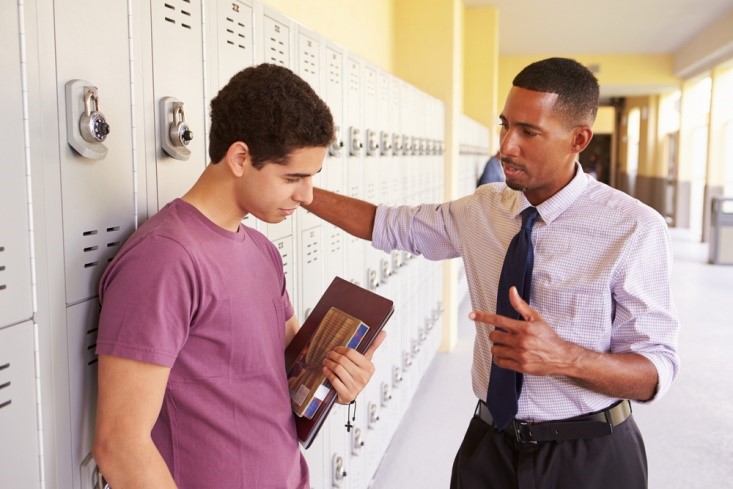
What Makes a Great School Counselor

For many of us, there’s no better feeling than having a positive impact on a kid. Growing up can be tough, and school and what lies beyond can feel like a maze. You’ve been through it yourself, and if you were lucky, you had a school counselor who helped set you on the right path.

If you’ve been teaching and want to switch gears, or if working with elementary, middle school, or high school students feels right and you know you have a lot to offer, a career in school counseling may be a perfect fit for you. You can even keep your current job while you get a Masters of Education in School Counseling at one of the country’s best colleges for counseling.

With a bachelor’s degree (in any field) from an accredited university, and taking only two classes per semester, most online degree programs can be completed in eight semesters and will qualify you for Licensed Professional Counseling Certification. Go to this website to find out the exact requirements and curriculum involved. There’s usually even financial aid available.

Being a school counselor means becoming personally involved with young students of all ages and helping them along the way to becoming productive and successful adults. School counselors work as a team with administrators and families to meet challenges students might be facing at school or at home, and serve as mentors on the journey to high school graduation and beyond.

At every level, what makes a great counselor is compassion and the ability to understand a student’s needs, interests, talents, and desires, and relate them to real-world options. Maybe above all is skill at listening to both what the student says and doesn’t say, and knowing how to channel his or her strengths and overcome his or her weaknesses.

The specific scope of the work varies with the age of the children:

Elementary School

Working with young children in elementary school, counselors are often involved with students who have behavioral issues or learning disorders. Their work can involve assessing those problems and conferring with parents and teachers as to recommended ways to resolve them, sometimes bringing in other professionals like psychologists and therapists. The earlier these kinds of difficulties are dealt with, the smoother the road a child has to academic success.

Middle School

It’s in middle school that students who may have had childhood dreams about being ballerinas or cowboys begin thinking in earnest about what they want to be when they grow up. A school counselor at this point can be an invaluable aid in guiding middle-school students toward other opportunities they may not even have known existed.

Working with students at both ends of the academic spectrum — from those with learning disorders to those in advanced placement classes — a counselor is called upon to adapt thoughtfully to each child’s needs and be a sounding board for their concerns.

High School

High School

In high school, students begin wrestling with the very real choices that lie before them. College is a goal for many, but which college and why? Technical training instead of a traditional university is another option, and students who might be inclined in that direction need help in evaluating those choices and the careers they may lead to.

High school counselors are often involved in helping students select classes and electives that will bolster their chances of acceptance, and assist them in applying to schools and finding financial aid. At the same time, high school counselors are sometimes called upon to help kids through difficulties in the social realm that can derail even the best students. Often a student finds a counselor easier to take a problem to than a parent, and it’s a fortunate teenager who has a counselor he or she can really talk to.

College-Level

Counselors at the college level work with students to plan courses of study and maximize the benefits of their degrees. They may help direct them to graduate studies that fit their career goals, and counsel them on available internships and entry-level jobs. Some may even offer assistance with writing resumes and learning how to interview. It’s a great counselor who sends a new graduate off into the working world with the confidence and skills to succeed.

For more information, and lists of each state’s licensing requirements for school counselors, visit the American School Counselor Association.


Online Tutoring Service Reaches Industry Milestone

NetTutor, an online tutoring service operated by Link-Systems International (LSI) that provides support in any subject, recently reached an industry milestone by conducting more than three million one-on-one tutoring sessions.

The 24-hour tutoring service, which pioneered the concept of online tutoring way back in 1996, is used by undergraduate, graduate, community, public, and private college students all over the United States in courses ranging from accounting to zoology.

NetTutor was able to have such a significant breakthrough for three reasons: it’s easy to use, its tutors are talented and caring, and the company partners with college administrators to accommodate their ongoing needs.

A simple interface

NetTutor offers assistance in an incredibly wide variety of subjects beyond the traditional math, science, and English. In fact, it includes such specialized areas as nursing, microeconomics, criminology, and music history.

 To initiate a tutoring session, students just click on the “Join Live Tutorial” button. They don’t need to download anything or have a ridiculous amount of bandwidth available. Even better, tutors and students collaborate via a proprietary whiteboard interface that allows them to use course-specific tools, type, draw, and use symbols.

High-quality tutors

NetTutor only hires tutors that are deeply committed to helping students become more successful learners. All tutors must have a four-year degree from an accredited university, a minimum GPA of 3.0 in any subjects they will be tutoring in, teaching or tutoring experience, empathy, and patience. Most of the tutors hold advanced degrees in their subject specialties.

In addition, the tutors have to complete a month-long training period to learn about the pedagogical and technical challenges of online tutoring.

Students say that NetTutor consistently exceeds their expectations and that the tutors are top notch. “The tutors are extremely helpful and they actually take time to explain,” says Kacey, a college student who lives in Georgia. “Both of the tutors I used frequently were interested in the grades I made on every exam that they helped me study for. NetTutor helped me reach my goal of an A and B in both portions of my anatomy and physiology classes!”

Strong industry partnerships

NetTutor integrates into almost every learning management system, and colleges can receive usage reports, student tutoring records, and archives of student sessions. If necessary, LSI will customize reports to meet administrators’ needs.

 “The ongoing relationship with the NetTutor service and LSI has proven to be of great value to the Oregon State University (OSU) Ecampus. We always have a resource available for students. NetTutor has provided us with learning support, timely reporting, and a rewarding professional business relationship with a reliable provider,” says Joan Oakes, student services specialist at OSU Extended Campus.

To the next milestone

The people behind NetTutor plan to help as many millions of students as they can. “Reaching three million tutoring sessions means we’ve been able to help a substantial population of students, across a range of higher-ed schools, improve their understanding of the course material,” says Vincent Forese, president of Link-Systems International. “Our customers report that NetTutor generates improved grades and stronger retention—a win for both the students and the colleges.”

The Next-Generation Science Standards and the Future of Learning

Cross-curricular lessons prepare today’s students for tomorrow’s jobs.

By Ted Levine

There is no public intellectual in our society who is better able to peer far into future than ISTE’s 2016 opening speaker, Michio Kaku. To a packed auditorium of thousands of teachers and educational leaders, the theoretical physicist gave a powerful address not only on the future of education, but on the future of society at large—and the role education needs to play in order to achieve that future.

One particular remark stood out to me: “Jobs of the future will require creativity, imagination, and experience… This means that educators are going to have to stress concepts and principals, rather than drudgery of memorization.” When I heard this, I immediately thought of the Next Generation Science Standards.

Unlike Common Core, NGSS have received a warm embrace from educators. The standards aim to address a critical challenge of 21st-century society in the United States: a shortfall of STEM talent across the country. That sounds pretty simple, but to be honest, the standards themselves are heavy in verbiage. Unless you spend several rounds reading through them, they can be hard to decipher. So what do they actually call for?

At the highest level, NGSS differs from previous science standards in that they call for a deeper level of context. In the past, science standards have aimed to have teachers present lessons so that students can memorize specific material and, more often than not, be tested on it. The standards didn’t call for application of that material beyond regurgitating it onto a test. But let’s think back Kaku’s quote. We need to raise a generation of thinkers and doers, and fortunately the NGSS aims to add the “doing” as a key component of science education.

A great example of how an NGSS-designed lesson differs from a traditional science lesson comes from Dr. Lauren Madden, an assistant professor of elementary education at the College of New Jersey. Instead of teaching a traditional lesson on the different forms of matter—in which students might be taught the basic principles of solids, liquids, and gases—Dr. Madden adds in an element of “doing” that brings these principals front and center through experience. She asks her students to create their own boats out of everyday materials (solids), put those models into water (liquid), and evaluate how well the boats perform. Based on their observations, student rework their models, all the while applying the principals of solids and liquids in practice.

Certainly in the above example, the remodeling of boats through observation requires some degree of creativity. But what if we take the concept of “context” and extend it one step further. What if we add into this lesson a component of history? How does this lesson apply to the broader world in which we live, not just the principals of solids and liquids?

What a lot of educators don’t realize is that science and social studies are often taught in silos not because that’s the best way to teach them, but because that’s how content and information have been distributed in the past. Furthermore, a specific scope and sequence of material and lessons are based on the distribution of a finite amount of content, traditionally in the form of a textbook. But we don’t need to follow those same rules in the future. In fact, we should design lessons and experiences that encourage a 360-degree view of a particular concept or principle, and encompass content and context that span several areas of study.

To create this kind of fluid learning experience, we should look to Marshall McLuhan—like Kaku a public intellectual who gazed into the future—who famously said, “The medium is the message.”

Only with thoughtfully interconnected digital curriculum can we empower students to answer far-ranging but interconnected questions such as “Why do we have boats in the first place? What role do boats play in our lives today? How have boats influenced the course of history and civilization throughout the world?” With standards-aligned digital curriculum, incorporating activities that help reinforce specific science principles like solids and liquids is just the tip of the iceberg. Let’s go beyond that and find ways to build a comprehensive view of how those principles impact humans and how we as a global society interact with one another. We can even tie in the impact those interactions have on the planet we inhabit.

Incorporating physical science, geography, world history, and earth science in the same lesson may sound like an unlikely scenario. But in my opinion, it’s a challenge we should accept—and with the power of digital curriculum, I believe it’s a goal we can accomplish. If we can all put on Kaku’s lens for a moment, we can envision entirely new kinds of lessons that harness the power of cross-curricular design and achieve a level of context never before seen in K-12 education.

Ted Levine is the president and CEO of the award-winning social studies and science publisher Kids Discover.

Herminston School District Expands Fast Forward District-Wide after Seeing Average Reading Gains of 1 Year in 64 Days of Use

Oakland, Calif. — July 6, 2016 — After successfully implementing the neuroscience-based Fast ForWord® program in two schools and seeing average reading level gains of one year in only 64 days of use, Eastern Oregon’s largest district, Hermiston School District, has decided to expand its implementation to all eight schools, for select students. Developed by Scientific Learning Corp. (OTC PINK:SCIL), Fast ForWord is an online language and reading intervention that targets issues at their core, starting in the brain.

“Previously, we had multiple interventions. Each was helping a small cross-section of children but nothing met the needs of students across the district,” said Special Education Director BJ Wilson. “After examining several independent studies, we found that Fast ForWord showed the best overall effectiveness, and we decided to pilot it in two schools. We saw tremendous gains, and soon, teachers from other schools began asking for it.”

In 2015-16, Rocky Heights Elementary and Armand Larive Middle School implemented the Fast ForWord program with struggling readers and students with special needs. Students showed an average reading level gain of one year in only 64 days of use. According to Wilson, students saw gains on the easyCBM reading assessment as well. While sixth grade students grew 4 percent on average from the fall to the spring benchmark, sixth graders who used the Fast ForWord program grew an average of 12 percent.

“Students who have used the Fast ForWord program say they’re better able to read and understand what their teachers are saying, in all their classes. It has really boosted their confidence,” said Wilson.

Hermiston School District will use the Fast ForWord program during summer school and then roll it out to select students district-wide in the fall. The program will be targeted to struggling readers and students with special needs.

“Typical interventions usually give students more of the same thing that hasn’t worked before, or they give them extra work. Neither of those approaches works well,” said Wilson. “Fast ForWord is different. It is brain-based; so, you are not just targeting one skill, like comprehension. Instead, it fills in the holes and readies students’ brains to read and learn.”

For more information, visit www.scientificlearning.com.

Media Contact:                                                                           

Hallie Smith
Director of Marketing
Scientific Learning Corporation
(619) 888-0887
[email protected]

Plagiarism Concerns Are Prevalent Among US Students

Today we see the impact of technology becoming more and more integrated into our daily lives. The way we commute, listen to music, shop and now, the way we study and research. Education has also changed dramatically with the evolution of technology. A recent survey found some startling results about the relationship US university students have with citations and plagiarism, and the role technology plays in helping them navigate the issues.

Early this year, popular digital reference management tool, RefME conducted two online surveys among 2,111 US higher education students to discover more about their attitudes towards plagiarism and the types of tools they use to support them as they write and research. There were two groups surveyed: students who currently use the RefME citation tool and those who do not. The survey revealed that students are seeking more information, and new approaches to help them avoid plagiarism. For example, Of all the students surveyed, only 40% agreed when asked if they felt they had received enough information about citing during their studies. This could be partly explained by the rapidly changing nature of research with online sources – including social media – which could have left some libraries’ and faculties’ teaching of citations behind the innovation curve.

The results revealed that 72% of US students fear facing disciplinary action for plagiarism – reasons could vary from being misinformed to lacking the knowledge of how to cite. It’s no surprise that citing accurately is not a straightforward task nor is it ever one size fits all. Referencing practices can change over time and evolve as new technologies bring forth new sources to cite. So, how are we expecting students to stay informed and know how to cite the more specific sources such as a tweet, YouTube video or the more common book or journal article? Between new technologies and various kinds of citation formats such as MLA and APA, students can find it challenging to maintain accuracy within their bibliographies and ensure that the comma comes before the publication year… or is it after?

RefME’s CEO, Tom Hatton believes that the findings suggest a “real problem that tools like RefME are trying to solve,” he states, “We want students to do better research by knowing that they can use tools like RefME to help them along their research journey. I hope we can look back at these numbers in a couple of years and see evidence that the sentiment towards plagiarism has changed.”

Using tools and new technologies to automate the citation process allows students to keep their work free from plagiarism, leaving time for students to focus on broadening their research, finding new sources and strengthening their writing. Though the survey results demonstrate that automated tools do not remove the need to educate students in what they need to cite, and understanding why citing is important – for example, 18% of US students were unsure as to whether ‘ghost writing’ constitutes academic misconduct; and 38% of students were either unsure or unaware that they do not need to cite common knowledge and everyday phrases in their assignments.

It’s important that students develop strong writing and research skills as well as learning the core requirements of the referencing style they are using so that they do not rely completely on technology, but rather use it as a support within their whole research journey.

RefME believe that students need to learn how to paraphrase, use quotes and embed citations and though offering an automate citation generator online, they also offer several web and video resources that explain exactly how to reference and why it’s important.


Understanding the 4 Main Schools of Philosophy: Principle of Idealism

Understanding philosophy is important for educators not only so that they possess an individual philosophy but gain more awareness to the philosophies of their students and administrators. In this series on the four main schools of philosophies idealism, realism, postmodernism, and pragmatism will be reviewed to assist with understanding the elements of philosophy. This article focuses on idealism.

Philosophy has a number of well-defined schools of thought. Philosophical schools of thought have had a profound influence on approaches to teaching and learning, as well as on the progression of human society. The role of teachers also evolves according to the dominant accepted philosophy of the time.

The underlying principle of idealism is that reality is largely an extension of mental processes, which are the true reality. Idealism proposes that ideas are universal and eternal, unlike physical objects, which are subject to the alteration of the forces of nature. Idealism can be categorized into three main sections: classical, modern, and religious.

Classical idealism refers to the set of theories put forward by Socrates and Plato (427–347 BC) in their search for an Absolute Truth. Socrates and Plato questioned the fundamentals of reality, knowledge, and human nature. From these teachings emerged the Socratic method—the process of gaining knowledge by carefully questioning and then criticizing the answers. Socrates believed that all humanity possessed and was capable of such knowledge. Plato believed his ideas, referred to as forms, were all connected and arranged in a hierarchy, with the greatest of all forms being the Forms of Good. He believed that only the most knowledgeable would reach ultimate truth.

Religious idealism theorizes that there are two separate worlds: the worlds of God and humanity.

St. Augustine (AD 354–430) was a religious idealist who speculated that God created knowledge and that we must uncover this unchanging truth. Throughout the history of the United States, the religious idealism of Christianity has been the most influential on education, although idealism from other religions is a strong part of education worldwide.

Modern idealism is hypothesized by both René Descartes (1596–1650) and George Berkley
(1685–1753). Modern idealists also believed in two worlds: a material world and a world of the mind.

Modern idealists questioned existence, God, and perception, most famously in Descartes’ declaration:
“I think, therefore I am.” Modern idealist educators consider their students to be rational, thinking beings who are capable of seeking and understanding the truth.

They generally believe in going beyond the mere development of the mind and seek to bring about an overall character development in their students. These idealist educators act as moral and mental role models for their students and encourage them to achieve ideas of the highest quality possible by learning from the wisdom of great thinkers of the past. The approach to teaching is generally governed by the concept of viewing the world as the sum of many parts, with the core skill required being to generate and analyze ideas to gain an understanding of the whole. Idealist educators highly value self-directed activity, engaging their students in activities and reading materials that encourage reflection on their own nature, as well as promoting a comprehensive understanding of the world at large.

Reform schools provide a good example of an idealist education. Reform schools typically seek to train students that need further instruction in character development, creating or strengthening morals and values in each of the students, all while teaching the basic core curriculum that is taught in a typical school.

Based on the three segments of idealism what is your philosophy and does it align with your school’s education system? It is necessary to know the philosophy behind your school because as a teacher you are viewed as one who is upholding these values and beliefs. Continue reading the other sections of this series to understand the schools of thought pertaining to philosophy.

Check out the 5 Steps One School Takes to Transform Dropouts into Graduates

When you think about credit-recovery programs, you likely think of truant or at-risk students. These students, who need a push to catch up after falling behind, are getting lost in the shuffle, leading to lower overall graduation rates in high schools across the country. But with a well-structured academic support system combined with credit-recovery options, district leaders at Lawrence County Community Unit School District experienced a 9% increase in graduation rates.

Now here’s a typical story from Lawrence County CUSD. The only thing between Joe (a senior whose name has been changed) and his hard-earned high school diploma was one English final. Thinking he could breeze by, Joe failed the test, meaning that walking the stage to collect his diploma with the rest of his class was no longer a reality. After a series of meetings with the school’s guidance counselor and the principal, the team created a credit recovery plan. Joe was given three days to complete an entire semester’s work. Two all-night study sessions, three long days in the computer lab, and a passing grade got him a diploma—and the overwhelming feeling of success earned through determination.

Joe was lucky. He had a second chance, something many students don’t ever get. The reputation and perceived expense of credit-recovery and second-chance programs has caused schools across the country to quietly cut these programs, leaving students to find their own options. The truth is, not every student who could benefit from credit recovery or alternative options is an at-risk student. Many are special ed, are working to get ahead of the curve, or graduate on time with the rest of their class.

Lawrence County CUSD started its Second Chance Program about 13 years ago to help the group of nonconforming, at-risk students gain diploma status. Students would leave the traditional classroom setting to receive extra time and help from a specialized teacher. Within eight years, the school’s graduation rates increased dramatically.

But in 2012, funding for Lawrence County’s Second Chance Program was cut, leaving at-risk students to struggle through courses in the traditional classroom setting. Graduation rates quickly dropped to less than 70%. Two years later, the Second Chance Program was revived with a new look, a new name, and a new online component allowing for even more flexibility. Since its resurgence, graduation rates have increased from 70% to 79%. This school year, administrators at Lawrence County CUSD hope to reach their goal of an 85% graduation rate.

Here are the steps Lawrence County CUSD are taking today to dramatically increase their graduation rates after they restarted their Second Chance program.

1. Students get special attention. At Lawrence County CUSD, teacher Barbara Fabyan has her own school within a school classroom at the high school where students needing extra academic support can come during the school day. It’s an environment that removes students from their regular classrooms, so they’re able to concentrate on their schoolwork without distraction. At any given time, she may have a 9th-grade student with an IEP needing special assistance on a project or another student who is at risk of dropping out and without determination may miss the deadline to graduate with the rest of his or her class.

2. Technology is used to make individualized instruction easier. While dozens of students come into her class strictly to recover failed credits, “Odysseyware, the customizable online curriculum program and credit recovery software we use, allows me to restructure entire courses or individual topics and assessments to best fit the student’s needs,” Fabyan said.

Fabyan’s classroom also serves as an alternative for students wishing to work at a faster pace. For example, one of her students had knee surgery and couldn’t participate in gym class. Instead, she worked through an online curriculum provider to earn a year’s worth of history credits in one semester.
Online options give students the freedom to work at their own pace while sticking with Illinois State Standards. Lawrence County offers a blended learning option which, based on the increase in graduation rates, has proven successful for students so far.

3. Fabyan uses a “tough love” approach to teaching in the credit-recovery classroom. “Making mistakes is part of learning,” she said. “When students come in, they know it’s their last chance to complete the work and make it to graduation. Some students have dug themselves a deep hole with truancy and behavioral issues, and they know my classroom is the only place they can go to dig themselves out. It’s a wake-up call.”

4. Students develop an unshakeable belief in themselves. When students enter Fabyan’s classroom, they often have negative thoughts about specific classes, teachers, and school in general—prejudices that hold them back from success. Her mission is to break down the walls of what “school” is and show students success is possible, but it won’t come easy. With the support from her fellow teachers and administration, Fabyan and her students are constantly empowered to beat the odds and push through adversity. It’s the encouragement that keeps the program alive, allows students to reach their goals using whatever means it takes.

5. Students actually get to explore their interests in school. According to the Center for Public Education, 47% of high school dropouts cite “uninteresting classes” as the major reason for leaving, and 35% say “failing in school” was a major factor in dropping out. With the virtual labs, videos, audio, and games that they get from an online curriculum, students are pleasantly surprised, then challenged and engaged.

“My students realize the traditional courses they were taking may have been easier compared to Odysseyware,” said Fabyan. “Students that used to be failing are excelling with more difficult content. They realize they really have to work hard to pass. It’s more challenging, but in a way they are more engaged in the content and actually learning.”
She notes many students saying, “I really feel like I’m learning something,” and, “If I had this online option for more of my courses I would know more, and wouldn’t have fallen behind in the first place.”

That sort of realization makes students sprint to the end and get their diplomas. By the time at-risk students have their certificate in hand, they’ve learned a lot more than the Common Core. They’ve mastered the art of overcoming challenges and are part of changing the reputation of students using credit recovery. And now, because of the great success of the Second Chance Program, classroom teachers all over Lawrence County CUSD are using Odysseyware to better align their lessons with CCSS and engage students in a typical classroom setting.
If you are an educator in a school struggling with graduation rates, what are some steps you are taking to improve them? Feel free to leave a comment.

Learning List™ & The College Board Forge Advanced Placement® Materials Alliance

Learning List’s review methodology will be used to assess materials for alignment to the new AP® course frameworks for math, science and social studies courses.

Austin, TX July 12, 2016 – Today Learning List, the leading instructional materials review service for schools and districts, announces its alliance with The College Board to provide professional, independent reviews of Advanced Placement (AP) materials to empower educators to select instructional materials that will best prepare their students for success in AP courses.

In collaboration with the College Board, Learning List has developed a review methodology that assesses materials’ alignment to the Learning Objectives and Skills/Practices contained in the new AP course frameworks for math, science and history courses. The College Board will use Learning List’s reviews to select materials for the AP Example Textbooks lists.

For each AP instructional material, Learning List provides three professional reviews:

  • Spec Sheet: two-page overview of product’s key academic attributes and technology requirements
  • Alignment Reports: detailed verification of the material’s alignment to the content standards and to the skills/practices contained in the relevant AP course framework and
  • Editorial Review: a deep dive into the product’s instructional content and design to help teachers identify which products contain the supports they and their students need.

Additionally, Learning List subscribers are able to share their experiences by rating and reviewing the materials featured on LearningList.com.

“These reviews will help AP teachers select textbooks and resources that are most aligned to AP course frameworks,” says John Williamson, College Board’s vice president of Advanced Placement instruction. “The independent reviews authored by experienced AP teachers provide the information AP teachers need to select materials but also use those materials most effectively in making sure their students are exposed to all of the knowledge and skills articulated in the frameworks.”

To ensure the highest quality reviews, Learning List enlisted teachers who developed the new course frameworks for the College Board to review AP materials. The reviewers’ bios can be found under “Advanced Placement” on this page. As one reviewer commented, “You can be guaranteed that any text reviewed by Learning List has been thoroughly analyzed by professionals in the field. Content, questions, and problems have been scrutinized to ensure alignment.”

“Our reviews and tools are designed to build teachers’ confidence in and increase their use of the materials their districts have purchased,” says Jackie Lain, President of Learning List. “With guidance from The College Board, we developed a review methodology that assesses which AP materials will help teachers make critical connections between the components of the new course frameworks and teach students the knowledge and skills they need to be successful academically.”

Contact Chelsea Twohig for more information about Learning List’s reviews of AP materials.

About Learning List – Learning List is a subscription-based instructional materials review service for schools and districts nationwide. Learning List’s detailed alignment reports and professional reviews give educators confidence that the instructional materials they select are deeply aligned to the standards and will help lead to their students to academic success. Learn more at LearningList.com.

Media Contact for Learning List:
Jacob Hanson
PR with Panache!
[email protected]
970-560-0856

Three Signs Your Class Is Suffering from the Digital Divide

While technology is a major force across the world, its impact is not felt equally. While it’s wonderful when obtaining new technology for experiment and implementation isn’t a problem for schools and everyone in them, that condition is anything but the norm. Classrooms, teachers, and students across the nation – and across the world – suffer from being on the wrong side of the digital divide.

The digital divide is the disconnection between those with access to technology and those without. This disconnection includes the following aspects:

1. European American students have much more access to computers than African American students: 81% of European American students use computers at home, but only 44% of African American and 49% of Latino students do.

2. Wealthy schools have more and better technology resources than schools that serve poor students.

3. There is a difference in computer literacy in favor of boys over girls.

In the classroom, computers are used differently by middle-class children who have been in touch with computers than by children who have spent more time in rural areas or are from a low-income family. Middle-class children have better knowledge and a deeper understanding of how a computer works, and so they can take advantage of the technology and concentrate on building new knowledge rather than the basics of learning how to use a computer.

Schools have made great efforts toward reducing the digital divide by increasing the number of computers in schools. Currently, 88% of public high school students have access to computers at their school. In the public school setting, the percentage of European American, African American, and Latino students with access to computers is almost equal.

Race and class may influence how students use computers in schools. Studies have shown that European American students use computers primarily for simulations and applications, and less for drill-and-practice use. Simulations and applications are computer-focused research. Drill-and-practice are more basic activities, focusing on practicing a certain mechanical skill. In contrast, African American students reported using computers for simulation and applications only 14% of the time and reported spending 52% of the time on drill-and-practice. This difference is also apparent in institutions that serve poor students, because the time they dedicate to simulation and application use is only 13% of the total, while in wealthier schools this percentage rises to 30%.

Another aspect of the digital divide is in terms of gender. Several studies on the various differences between girls and boys and their response to or interaction with technology show that both boys and girls use technology, but for very different reasons. The girls studied spent more time using social networking tools, favoring activities and software tools that emphasize creativity, collaboration, and cooperation. The boys, on the other hand, spent more time with software and tools that emphasized competition and allowed them to develop abilities that
would differentiate them from their peers. These studies demonstrated no differences in how quickly children of either gender adapt to technology,
but there may be gender differences in how well the technology is
used by students in the classroom setting for various tasks.

What is the composition of your classroom like? Do students and their families have the economic resources necessary to extend technology from the classroom to the home? Are there limitations on what your school can obtain? What does the pre-existing technology literacy look like among your students?

While modern technology is great, blind application of it can be detrimental in more ways than one. Think about where your classroom falls around the digital divide, and plan out how you’ll bridge the gap accordingly.
