Uncategorized

Michelle Obama’s “Let’s Move” Campaign and the Benefits of Play-Therapy

Throughout the Obama administration, Barack Obama and first lady Michelle Obama have made great strides in helping young people. From young children and school-aged adolescents to college-aged young adults looking to find their place in the world, the Obamas maintained a strong commitment to helping children and families. During the Obama administration, one of the most influential changes was

Michelle Obama’s “Let’s Move” campaign. This campaign encouraged mandatory school recess times and healthy living tips for children and families.

Though the obvious aspects of health and wellness were addressed by this campaign, there were many additional benefits for allowing plenty of recess for young people in kindergarten through elementary school. Among the less discussed but widely recognized reasons for the need to play is the therapeutic nature of play itself.

What is Play Therapy?

The concept of “play therapy” refers to the use of play games in psychological/therapeutic scenarios. Play therapy is presented as a way to understand children and help them grow developmentally, emotionally and physically. In the classroom, students are forced to adhere to a strict guidebook for behavior and outcomes. Students will learn, complete assignments, complete exams and receive grades. There is little room for originality or thought exploration. Through playing, children are more able to express their conscious feelings and thoughts through the play activities than by words alone. Teachers may strive to help young students communicate their thoughts and feelings. However, it often becomes the job of instructors to reach out to children on their level. Through games, more can be communicated than can be said.

Play Therapy as an Evaluation Tool

During play therapy evaluation in the classroom, teachers symbolically interact with children and learn to observe patterns of behavior. The assessment of children through play interaction is a necessary tool to compile reports in potential cases of abuse or neglect. Michelle Obama took a stand during the “Let’s Move” campaign not only for physical wellness but also for the emotional well-being of children and families. Interaction through play is key to cogitative development as well as trauma assessment and recovery.

Play activities serve a vital role in mental and emotional development. These activities also serve as a means of communication between child and caregiver when a child’s communication skills are lacking. The positive use of play therapy to interact with children and understand a child’s perspective is a concept often taught to parents through various schools, day care agencies and safe houses for at-risk children. Working in partnership with teachers and families, more children can get the help they need.

The Role of Symbol Interaction

Symbolic interaction occurs through play by conveying messages children are unable or unwilling to say. Less harmful behaviors like ‘acting out’ or refusing to take part in activities are met with small-scale steps to help a child feel in control.

However, symbolic language is certainly not limited to childhood. Unspoken messages through artwork, theater, behaviors, interactions or other means of symbolic communication exist everywhere. Symbolic thought, for children, often manifests itself in metaphorical artwork and role-play games. For these reasons, it is important for educators to understand the necessity of devoting time to such activities during school hours and recesses. It is equally important for government policies to fully represent the interests of young children who may be struggling.

The Popularity of Play Therapy

Play therapy for children is a broadly used and encouraged psychological and developmental tool. The use of play therapy as a tool to evaluate children in therapy clinics, classrooms, daycares, parenting classes or extensions of other health and human service programs is growing. For children affected by various traumas, the symbolic interaction with peers, parents/guardians and teachers can potentially heal the grief while opening communication. Children tend to speak a similar language of interaction between one another. For adults, even as a parent, interacting can be a challenge. Thus, it often becomes the duty of schoolteachers and counselors to act as a middleman between children and families.

Cognitive development is reflected by a child’s awareness of their surroundings.  Concepts, skills, language and other learned developmental steps. In all classrooms, the staff works to engage children with basic/advanced sensory activities, dramatic play, puzzles, art, music, books, and other hands-on activities. Teachers are trained on how best to deal with an introverted (quiet, removed) child as well as extroverted (aggressive, vocal, attention-seeking) children. Play therapy is then used as a means of evaluation regarding physical and mental/emotional development. An ‘Ages and Stages Questionnaire’ (A.S.Q.) is conducted based on a child’s physical skills demonstrated through play. The Ages and Stages Questionnaire for mental/emotional development is often gauged through behavior and interaction during play.

Dramatic play activities are especially useful in understanding where a child’s thoughts lie, as they often repeat concepts and act out scenarios that mirror their lives. Trauma can manifest itself as an unexpected/unwarned reaction to something. Reactions to scenarios of surprise, arguments with peers or other play interactions are often indicative. The goal of play in context with therapeutic benefits lies in the overall retraining of any negative behaviors, and the healing of any trauma.

Conclusion

The Obamas went a long way to represent the struggles of average schoolchildren and families. School recess is not simply a privilege to be given and taken away based on governmental shifts. By teaching children how to express themselves through play, and teaching parents how to speak the language of interaction, both parents and children do not feel so frustrated. Additionally, the outcome of play therapy is to prepare children for integration into higher education, social interaction and healthier home lives.




Education Policy: A Fight for Systematic Change

By H. Davis

The world has changed in so many ways since the start of the 21st century. With the internet and mobile communication just within arm’s reach, new possibilities have opened up across the world. In this new world, education has become even more important. Although the U.S. has proven to keep up with all the technological changes, there’s one area we continue to fall behind in. Education.

This problem begins early on in the national academic system. The Council on Foreign Relations, for example, conducted a recent study in the U.S. and discovered that education reform and national security declines every year. In other words, failure in educational performance can jeopardize the U.S. national security, including the country’s ability in a high-skilled global marketplace. Educational failures, as noted by Joel I. Klein, also “puts the United States future economic prosperity, global position, and physical safety at risk” as well.

As it turns out, there’s no high-stakes exam that can account for this; but the studies released by the Southern Education Foundation show that more than half of the students enrolled in U.S. public schools live in poverty. A measurement that places the U.S. on the road to overall social decline.

The problem is so severe, that it’s even begun escalating to universities. Resulting in a hailstorm of complaints from college faculties and concerns by other officials.

College faculty also complains that first-year students are poorly prepared in:

  • Subject matter
  • Critical thinking skills
  • Mathematics skills
  • Writing and verbal abilities
  • Study skills and library skills
  • Knowledge and understanding of history, science, and literature.

Did I miss anything?

A significant amount of first-year students also don’t know anything academic and aren’t genuinely interested in anything academic. The most compelling evidence, however, is the fact that college officials graduate most of these students, even though they still lack the characteristics of an educated person.

“Why?” you ask.

I’ll give you a hint. Money!

The Problem

As I noted earlier on, the problem starts with our policies. To put it another way, it starts with the way we govern schools, measure success, and teach children. In all honestly, there are a number of teachers out there right now discussing subjects they themselves aren’t even the experts in. If a teacher isn’t invested in the subject he/she is teaching, than why would they value teaching the subject in the first place? The answer is simple, they won’t.

For this reason, college professors have begun blaming high school teachers for the student’s inability to learn. As college faculty points the finger at high schools, we must remind ourselves that the criticisms given to high schools, should also be applied to colleges and universities. We also need to remember that high school teacher’s went through college classes out here, and were granted degrees from our schools.

The Overall View

By now I’m sure we’ve all heard of the amount of budget cuts district have gone through over the past decade. But with a combination of budget cuts (resulting in overcrowded schools), poverty levels increasing, political pressure, and distractions at nearly every corner, it’s no wonder why we haven’t overcome this problem yet.

Although we have education officials advocating for systemic change in education the reality is, this is a project that will require more than a few hundred-thousand people, including parents/guardians, government officials, teachers, and everyone else invested in the child’s education. There’s a reason why mentors say, “It’s takes a village to raise a child.”

A resolution

Encourage Kids to Learn at Their Own Pace. Schools and school districts have been hot to adopt all kinds of new technologies from iPads to changing classroom structure. Some of these things have had a small effect on a child’s learning in the classroom while others, haven’t had any effect according to Laura Hamilton. Such technology-based curriculum encourages kids to learn at their own pace and set their own goals. In addition to this, it also gives teachers the opportunity to focus on smaller groups in the class that might be struggling with certain material.

In order for this to work effectively, teachers must know how to use these tools, and students must be willing to be in the time and effort. The teacher can’t learn for the student, that’s up to the young scholar.

Invest in Training Teachers – and Their Supervisors. The quality of a child’s teacher is single handedly the most important factor in a child’s success in the classroom; and there’s no question that we need to do a better job of producing properly trained teachers, principals, and other officials.

Better training for teachers is only the first step. We also need to improve the quality of our districts and education leaders, so that they have the right tools to lead teachers, districts, and most importantly, children to a path of success.

Focus Less on Test Scores. As a student in junior high school, I always felt a teacher’s primary role was to produce quality test takers. In other words, they want the classroom environment to emphasize the learning process vs. hammering away on the importance of memorization or test taking skills. At a larger level, this made me feel like the education system perpetuates a test taking culture vs. critical thinking and passion for learning.

Get Families Involved. Words cannot describe how important it is for parents to get and stay involved in their child’s life when it comes to learning. As parents, you cannot leave it up to the teacher to educate your child on everything he/she needs to know. It’s not fair to them, and it’s not fair to the child. Raising a child is a joint process, and requires everyone to get involved, and stay involved even if you feel your child will excel in a certain subject.

Get Out of the Classroom. Students desire experience and out of the classroom instruction. When I helped run an after school program, I learned that the environment is everything for a child. For instance, whenever we did rehearsals in the gymnasium, the kids were more likely to play and run around. But when I switched up the environment and did rehearsals in the hallways, or on the grass area, they were more likely to listen and focus on building a community.

Although “school is not life,” it should reflect more of it. To put it differently, I think a child should always be challenged to learn. This shouldn’t only happen in a classroom setting, but everywhere they go and every event they participate in.

“This job of keeping our children safe, and teaching them well, is something we can only do together, with the help of friends and neighbors, the help of a community, and the help of a nation.”

-Barack Obama


Kids Discover Online Announces Winners of Cross-Curricular Lesson-Building Contest

Educators win site licenses and other prizes by creating their own interdisciplinary lessons using Kids Discover Online content for free during contest

(NEW YORK, NY) November 14, 2016 – Kids Discover, a leading provider of dynamic, engaging online science and social studies curriculum, is excited to announce the winners of its Cross-Curricular Lesson-Building Contest. The contest, identified by the hashtag #XCurricular, was aimed at rewarding educators who create and share engaging lessons for their classrooms.

To be eligible for the contest, educators were required to merge two or more disciplines in a meaningful way, be appropriate for grades 3–8, and include at least one Kids Discover resource. A panel of three educational thought leaders judged contestants on the clarity, creativity, practicality, and originality of each section in their lesson plan outline.

“Our goal with the Cross-Curricular Lesson-Building Contest was to embolden teachers to bring interdisciplinary teaching into their classrooms,” said Ted Levine, the president and CEO of Kids Discover. “Cross-curricular learning empowers students to take their learning into their own hands and make their own connections between subjects. When students are inspired to pursue their innate curiosity, they turn into lifelong learners.”

The winner of the contest was Mary Lynn Espinosa from River’s Edge Montessori in Ohio. Her lesson asked students to examine how the Wright Brothers used their own bodies as a human interface to replicate the twisting motion of a bird’s body in flight in the operation of their gliders.

“Integrating problem-based learning into my lesson-planning requires cross-curricular lessons,” said Espinosa. “These lessons immerse students in the content. This leads to an increased level of engagement.” Espinosa was awarded a Site License to Kids Discover Online for her entire school.

Second place went to Amy Cramer of South Park Elementary School in Pennsylvania. Cramer’s lesson, involving students using engineering skills to build a monument for a person they admire, won her three educator subscriptions to Kids Discover Online, plus the Kids Discover print collection.

“Cross-curricular lessons create a flexible framework for learning that enables students to focus on the big ideas and essential questions and to consequently use multiple skill sets to solve problems instead of being boxed in by preconceived notions that one content area will provide the best solutions,” Cramer said.

Third place winner Kelly Grant Horrocks from DeWitt Middle School in New York was awarded a $300 credit towards Kids Discover print and digital products. Horrocks’s lesson plan explored how government, economy, and social structures developed differently across cultures according to their environment. Horrocks not only implements cross-curricular lessons in her classroom, but also collaborates with other teachers.

“I work with an ELA, science, and math teacher who all see the benefit of having a theme running through all our classes that is transparent to the students,” she said. “We decide on similar languages and approaches and focus on the same theme in these integrated units. It is by far the best and most effective teaching method I know.”

All three winning lessons are now available for other teachers on the Kids Discover website.

About Kids Discover
For more than 25 years, Kids Discover has been creating beautifully crafted nonfiction products for kids. With a specialty in science and social studies, the team of talented writers, award-winning designers and illustrators, and subject experts from leading institutions is committed to a single mission: to get children excited about reading and learning. For information, please visit KidsDiscover.com.

Press Contact:
Jacob Hanson
PR with Panache!
[email protected]
(970) 560-0856

Insight ADVANCE Names Dynamic Educational Leaders to its Inaugural Advisory Board

Members will bring expertise in ed tech, school leadership, entrepreneurship, and educational law

(ENCINO, CA) November 15, 2016 — Insight ADVANCE today announced the formation of its first Advisory Board. The four inaugural members of the board are accomplished education and business experts who will provide strategic direction, guide quality improvement and assess the effectiveness of the organization.

Dr. Michael Moody, CEO and co-founder of Insight ADVANCE said, “When choosing our first Advisory Board, we sought out individuals with a cross-section of both experience and opinions. We are driven by a mission of ensuring that educators get the feedback and coaching they need—and want—to improve, and our Board was created to provide Insight ADVANCE with the feedback and guidance necessary to build a company that will transform educator growth.”

The members of the Advisory Board are the following:

Jim Mylen is the president of Amplify. He works closely with the senior leadership of large city school districts across the country in helping them achieve their goals of improving student literacy and in closing the achievement gap with disadvantaged children. Previously, Jim held sales executive positions with various K-12 educational technology companies. He began his career at DataGuide Systems, which developed the first PC-based, norm-referenced, test-scoring software and was acquired by McGraw-Hill.

Dr. Shaun Nelms is the superintendent of the East Educational Partnership Organization (EPO), a new position created by the partnership between the New York State Education Department, the Rochester City School District, and the University of Rochester. A renowned speaker on cultural competence, differentiation, and administrative leadership, Dr. Nelms is also an associate professor for the University of Rochester, where he teaches Human Resources and Urban Leadership programs.

Victor Reinoso is COO of Independent Sector, the nation’s leading voice for the social sector, and founder of Hopscotch Ventures, a mission-driven investment, advisory, and management firm focused on technology and real estate. Previously, Reinoso was an elected school board member and was later appointed D.C.’s first deputy mayor for education. As Deputy Mayor, he led the mayor’s takeover of the District of Columbia Public Schools and oversaw the city’s $1-plus-billion education budget.

Lisa T. Scruggs is a partner with the law firm of Duane Morris, LLP, where she provides litigation and counseling services to innovators in education. She advises public and private schools and school networks, school reform organizations, and other education industry clients. Her work includes a range of litigation, transactions and policy matters relating to new school development, teacher evaluation, credentialing and certification reforms, public/private education ventures, competency-based and personalized learning, and parent and student civil rights. Scruggs was the inaugural General Counsel for the Illinois State Charter School Commission, Senior Policy Advisor to the Chicago Public Schools CEO, and a member of the National Alliance for Public Charter Schools’ Model Law Advisory Board.

All members of the Insight ADVANCE Advisory Board will serve two-year terms.

Dr. Nelms said, “As an educational leader, I have seen first-hand that gathering, analyzing, and acting on feedback from a variety of sources is absolutely instrumental to constant improvement. I am pleased to see Insight ADVANCE put this philosophy into action, and I look forward to creating a virtuous cycle where the Board supports the growth of the company so that the company can better support the growth of teachers and school leaders.”

About Insight ADVANCE
Based on years of on-the-ground experience in states, districts, and schools across the country, Insight ADVANCE is passionate about changing the status quo on how educator feedback and collaboration are done in our schools today. The company provides a suite of products that support educator observation, coaching and calibration—through the power of video and in-person—to permanently impact how all educators involved in teacher growth are supported. For more information, visit insightadvance.com.

Media Contact:
Jacob Hanson
[email protected]
(970) 560-0856

6 Ways Technology Utilization in a Classroom Environment

Technology is increasingly becoming a fundamental part of our lives. Its adoption to the various functionalities of a person’s life from childhood with playing toys to adulthood has made life easier and complex at the same time. Its implementation is being advocated for yet its effects seem to grow with each passing day. However, it is important to understand that its use is diverse and the benefits associated outweigh the limitations and effects.

As a fact, technology utilization in a classroom is now being used in schools for different learning activities. Today, many teachers have taken to issuing exam papers, results, reading materials and other evaluation or learning equipment online. These are just some of the ways that technology revolutionize education. Without the proper technological knowledge, some of the tasks expected of a teacher or student can be difficult to achieve. Therefore, technology is perceived as annoying, irritating and to some extent intimidating. Well, here are seven ways that you can use to implement or use technology in your classroom.

1. Social media

The social media is a major aspect of children in this era. Teachers can use this media or platform to their advantage by becoming friends and sharing essential information through the technological platform. Students, parents and their teachers can sign up for online conferencing and hold meetings, give parents their children’s school progress, share learning materials etc. Teachers, for example, can share unique students write ups with the rest of the class and or solicit their opinion in regards to a topic or subject to be or already covered. For example, through Twitter’s backchannel, teachers can obtain students feedback, share ideas or learning materials. Furthermore, the student’s attention will be with you as all of them are quite fond of the social media.

2. Blogs, Wiki and YouTube

Advanced level students can use these for learning purposes. This includes posting assessments and evaluations and other important such as best write-ups that students have in a certain period. The blogs can also be a strategic learning as well as a support initiative where students are encouraged to be themselves. They can post their hand works online for others to see, evaluate and rate or criticise for better growth. The teacher can also publish the best works by the students on the same platform. This further encourages them and also sharing the information in class is a major way of promoting and showing appreciation to the students.

3. Creating Google and Apple Apps

These are quite essential especially in sharing important and pertinent information with class, parents and other stakeholders. Teachers can create school calendars, an app containing different school materials to assist the students in reading on their own. In addition, the students can use many forums in these apps for their own benefit and learning purposes. For example, an educative and fun app for games is a nice way for the students to be engaged in a class. This is in relation to games that are related to different games that are developed from a topic on the school books or class subjects.

4. Video Streaming

Pictures, images or videos are quite fundamental in forming opinions and learning. It is said that information tends to be imprinted into a person’s mind and are easier to remember for everyone. Furthermore, they capture and entertain the students, which make learning fun. This is an example that is being set by YouTube and other video streaming facilities. With a step by step instruction manual with pictures to illustrate it further, it becomes the most effective means of teaching and for students, the easiest means to grasp and understand what is being taught. In addition, these videos are already there on any subject and therefore, finding one that rhymes with your topic is not that difficult.

5. Mobile devices

This is on an increasing trend especially in use inside the classrooms. It is evident that many students use them for other purposes other than learning. Therefore, introducing class assignments to be shared and distributed through the mobile devices e.g. WhatsApp. You can create students groups and assign them various tasks that they will be required to full fill using their internet or mobile connection. This ensures they pay attention to their learning and education and creates cohesion among the students assigned a specific task. Also encourage them to let others acquire reading materials by sharing them with others.

6. Video conferencing

This is one of the best means of teaching for both students and teachers. For students, it means that their favourite teacher will be present even though he/she is in a different geographical location. Video conferencing offers a platform for interactions between students and their teacher. It can be used to issue the student’s instructions on their daily tasks, offer presentations and much more.

Conclusion

Technology is a useful tool in the development and growth of schools and other educational institutions. Its utilisation for schooling and classroom purposes is an added advantage to the society and specifically to the children.

10 Ways to Incorporate Music into Your Classroom

A teacher librarian shares her best practices for tuneful teaching

By Shannon McClintock Miller

“Music gives a soul to the universe, wings to the mind, flight to the imagination and life to everything.” ~Plato

One of the most important gifts we can give to our young children is a healthy foundation for lifelong learning. We want to capture their excitement, bottle their enthusiasm, and give life to their imagination. As educators, we look for resources that support and enhance these magical learning experiences. As shown in the Learning With Music infographic above, music stimulates and connects the different areas of the brain. For our youngest learners who are at a crucial time of development, this is an essential building block for their future.

In the article Music and Learning: Integrating Music in the Classroom from John Hopkins School of Education, Chris Boyd Brewer touts the benefits of using music throughout the day. “The intentional use of music in the classroom will set the scene and learning atmosphere to enhance our teaching and learning activities,” he writes. “Plus, using music for learning makes the process much more fun and interesting.”

Let’s look at 10 ways to incorporate music into your classroom, instruction, and library collection.

  1. Bookend your day with music. Music promotes listening and focus as we get started with our morning and as we end activities in the afternoon. This is also important with focusing children at home. At school or at home, songs can remind kids to wash their hands for snacks or clean toys up at the end of the day.
  1. Use music to establish a positive learning space. The right music creates the atmosphere you want for a given lesson, contributes to the community of the classroom, and builds rapport. The new series School Time Songs from Cantata Learning sets a fun tone for everything you do.

Cantata’s books combine stories, illustrations, and songs to captivate young learners, build literacy skills, and instill a lifelong love of reading. In the back of each book there is a CD that contains the song. You can also find all of the music online by scanning a QR code included three places within each book.

  1. Inspire your students to release energy and tension throughout the day. Whether for one student or a gym full of kids, brain breaks fueled by music motivate kids to get some healthy exercise and help them refocus on learning.
  1. When you kick off a new topic or lesson, really hook your students with music. Music will reinforce new information. It can be paired with other resources, such as non-fiction and research, to provide guiding questions and bring new concepts to life.
  1. Use music to enhance imagination. We all know that kids love to dream about who they might be someday. With the new STEM series from Cantata Learning, they can do just that by taking a closer look into science, technology, engineering, and math information, careers and interests.
  1. Engage students’ brains to learn and memorize. Kelly Benge, who is a 5th-grade special education teacher in Iowa, uses the Read, Sing, Learn…Songs About the Part of Speech series to teach her class to identify the parts of speech. Benge said, “The music engages the brain to learn and memorize in ways nothing else can. The songs draw in the interest of students, especially those who get easily distracted.”
  1. Teach students to be more receptive and sensitive to understanding things differently. The Mad Monkey, from the Songs About Emotions series, takes a look at the social emotional aspect of children. It will help them understand others’ emotional perspectives, too.
  1. Use music as a collaborative tool among teachers. One of my favorite new series is Fairy Tale Tunes. Just think how perfect these are for a “fractured fairy tale” unit! This is an important piece of the curriculum which holds lots of potential for collaboration among teachers within the classroom, art, music, and library.
  1. Facilitate a multisensory learning experience in a musical makerspace. Heather Fox, who is a teacher librarian in Iowa, set up a musical makerspace in her library by placing Cantata Learning book covers in a display and having students use iPads to scan the QR codes to listen, read, and sing. As part of the multisensory learning experience, they could also create musical instruments in a station she set up out of recycled goods.
  1. Bring fun to learning! Karyn Lewis, who is a teacher librarian in Texas, wrote, “I invited the pre-K and kindergarten English language learner students to the library once a week to work on vocabulary using several of the Cantata Learning ebooks and songs. We couldn’t help but sing, clap, and dance along to the books we read together! They requested to play the song again and again.”

Music will bring noise to classrooms and libraries, but ultimately it creates lifelong learners through stories, movement, curiosity, collaboration, rhythm, and fun!

Shannon McClintock Miller is a teacher librarian, international speaker, consultant, and author. She is a recipient of the 2014 Library Journal Mover & Shaker Award and the 2016 ISTE Make It Happen Award. Follow her on Twitter at @shannonmmiller.


Understanding Three Key Classroom Management Theories

By Tricia Hussung

How teachers manage their classrooms is an important part of achieving an effective learning environment. Educators know that all students learn differently, and choosing the right instructional style can mitigate behavioral issues and make good instruction possible. According to the National Comprehensive Center for Teacher Quality, a significant body of research also demonstrates that classroom organization and the ability to effectively manage student behavior “significantly influence the persistence of new teachers in teaching careers.” Within this context, it is clear that instructional theory and classroom management strategies are among the most important aspects of teacher education.

While classroom management theory is constantly evolving, there are three key theorists who stand out when it comes to modern education. Throughout the 20th and 21st centuries, experts like B.F. Skinner, William Glasser and Alfie Kohn revolutionized the ways that teachers deliver education. Understanding their theories can help educators define their own classroom management methods and make decisions about how to best approach interactions with students.

1200x75-classroommngment-subheader1-huss

B.F. Skinner’s contribution to learning theory can’t be overstated. His work is based upon the idea that learning is a function of change in overt behavior. According to Skinner, changes in behavior are a result of individuals’ responses to events, or stimuli, that occur in their environment. When a stimulus-response (S-R) pattern is rewarded, the individual is conditioned to respond similarly in the future. The key to Skinner’s theory is reinforcement, or anything that strengthens the desired response. This could include praise, good grades, a reward or even a feeling of accomplishment. Of course, negative reinforcement occurs when a stimulus results in increased response when it is withdrawn. The central tenet of Skinner’s work is that positively reinforced behavior will reoccur. This is why information is presented in small amounts. Responses can be reinforced, and reinforcement will be applied to similar stimuli.

Skinner’s work in operant conditioning has been integrated into both classroom management and instructional development. When applied to programmed instruction, the following should occur:

  • Practice should occur in a question-answer format that exposes students to information gradually through a series of steps.
  • The learner should respond each time and receive immediate feedback.
  • Good performance should be paired with secondary reinforcers like praise, prizes and good grades.
  • Instructors should try to arrange questions by difficulty so the response is always correct, creating positive enforcement.

There are many obvious ways that Skinner’s work has been directly incorporated into modern school systems. Though rewards were utilized for good behavior long before Skinner, many behavior management systems utilized in today’s classrooms are influenced by his theories. Teachers utilize immediate praise, feedback or rewards when seeking to change problematic student behavior, and some even use “token economies” to reward students in a systematic way.

1200x75-classroommngment-subheader2-huss

William Glasser coined the term “choice theory” in 1998. In general, this theory states that all we do is behave. Glasser suggests that almost all behavior is chosen, and we are driven by genetics to satisfy five basic needs: survival, love and belonging, power, freedom and fun. In choice theory, the most important need is love and belonging because connectedness with others is required as a basis in satisfying all other needs. The classroom should therefore be a needs-satisfying place for students.

Glasser’s work impacts learning theory in a variety of ways. It has been utilized in schools across the globe and has changed the ways that teachers deliver instruction.

First, Glasser identifies teachers as managers who need to work effectively if they want to successfully teach their students. The role of teachers as managers requires them to guide students in understanding that working hard and being obedient is worth it and will have a positive influence on their lives. Teachers can achieve this through developing positive relationships with students and creating active, relevant learning experiences that enable students to demonstrate mastery and success.

When it comes to developing lessons, teachers who practice choice theory work to make sure that student classroom activities are designed to satisfy the students’ needs. This allows learning to increase while diminishing disruption. Students are able to “connect, feel a sense of competence and power, have some freedom, and enjoy themselves in a safe, secure environment,” according to Funderstanding. There are three common characteristics of classrooms and schools that apply choice theory:

  • Coercion is minimized because it never inspires quality. Students aren’t “made” to behave using rewards and punishments. Instead, teachers build positive relationships with their students and manage them.
  • Teachers focus on quality. They expect mastery of concepts and encourage students to redo their work and try again until they have demonstrated competence and high-quality work. The emphasis is on deep learning through application.
  • Self-evaluation is common. Students are provided with helpful information and take ownership of their learning by evaluating their own performance. This promotes responsibility and helps students reach goals while becoming skilled decision-makers who are actively involved in their own education.

1200x75-classroommngment-subheader3-huss

Alfie Kohn’s work critiques many aspects of traditional education, namely the use of competition or external factors as motivation. Kohn maintains that societies based on extrinsic motivation always become inefficient over time. He questions the hierarchical structures at work in mainstream education. Positions of authority are “unnaturally scarce,” and such systems assume that all people have a competitive nature. He argues that positive enforcement only encourages students to seek out more positive enforcement, rather than truly learn. Kohn believes that the ideal classroom emphasizes curiosity and cooperation above all, and that the student’s curiosity should determine what is taught. Because of this, he argues that standards should be kept very minimal and is critical of standardized testing. Kohn also argues that a strict curriculum and homework are counterintuitive to student needs. When it comes to classroom management, Kohn believes that most teachers rely too heavily on extrinsic motivation rather than more intrinsic factors. He suggests teachers keep cooperation in mind because when curiosity is nurtured, rewards and punishments aren’t necessary.

To implement Kohn’s approaches in the classroom, teachers can allow students to explore the topics that interest them most. Students “should be able to think and write and explore without worrying about how good they are,” he suggests. In general, Kohn believes that there is too much emphasis on achievement rather than the learning process. He emphasizes that not all students learn at the same pace, and standards do not take this into account. In general, Kohn believes in classrooms where the student is at the center of everything. Ideally, such a classroom would feature:

  • Multiple activity centers with various classroom structures for group work
  • Displays of student projects
  • Students exchanging ideas
  • A respectful teacher mingling with students
  • Students excited about learning and actively asking questions
  • Multiple activities occurring at the same time

In terms of modern school systems, Kohn’s approaches are more consistent with those used in elementary classrooms. The key element is a “shift from a quiet, well-managed classroom to one that is lively and features an emphasis on student learning,” explains Thomas Hanson on OpenEducation.net.

1200x75-classroommngment-subheader4-huss

When educators are able to focus on classroom organization as a means of behavior management, they achieve better results for students. If you are interested in education topics like this, consider the online Master of Education from Husson University. Graduate-level education is ideal for teachers looking to advance their career and become leaders in the classroom and beyond. In addition, this degree program is ideal for individuals interested in becoming curriculum/instructional specialists, corporate trainers, course designers, education policy developers or adjunct faculty members.

Regardless of your professional focus, Husson’s program helps educators develop successful learning techniques through an inquiry-based approach. You can learn more about this fully online program here.

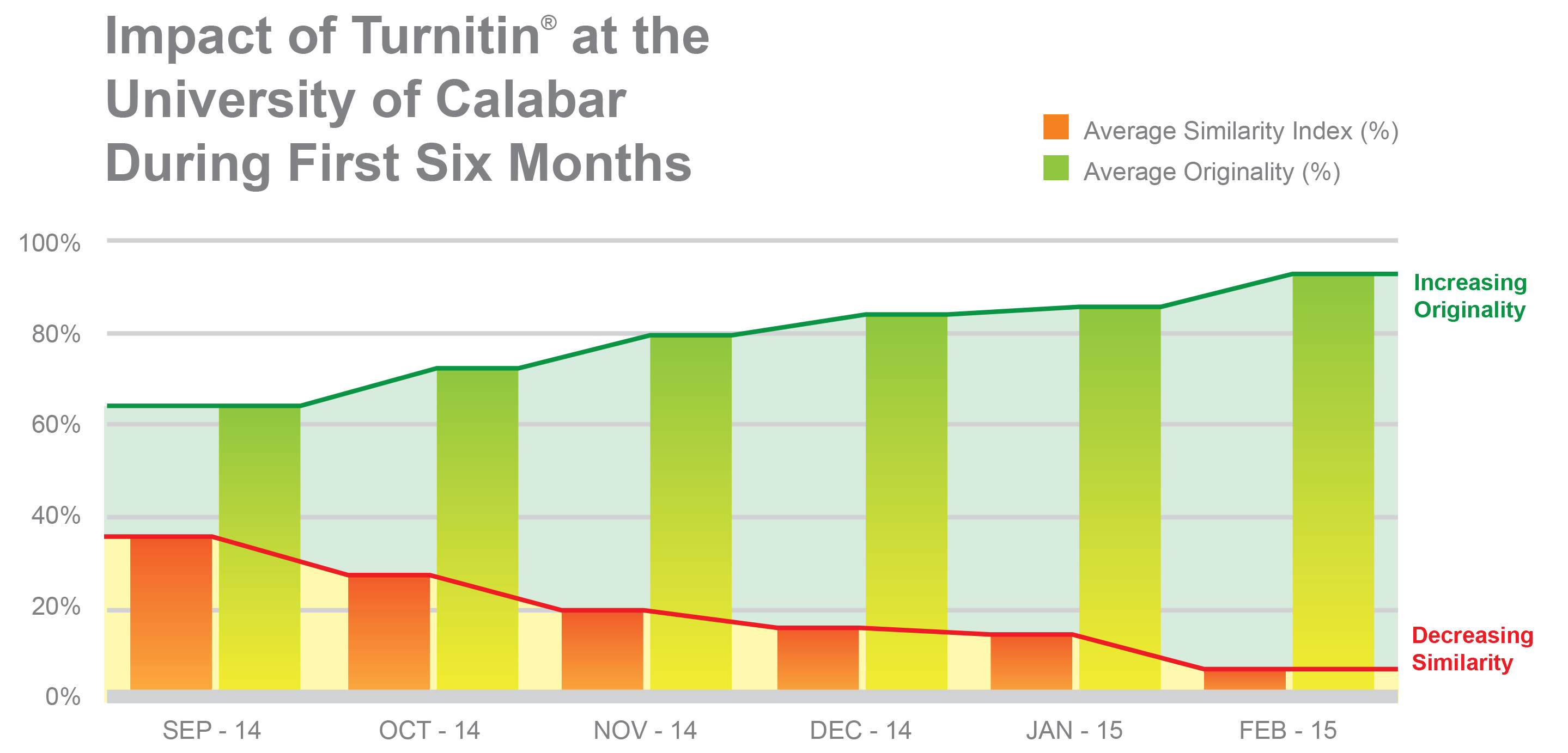
University of Calabar Finds that Turnitin Helps Improve Quality of Writing

Visibility on the international stage of academia hinges, in part, upon University faculty and students being published in respected journals and conference proceedings. For universities from developing countries, gaining such recognition is no easy feat. In 2014, the University of Calabar in Nigeria began an effort to help its faculty and graduate students bring their writing up to global standards for academic integrity and quality with the express intent that publishing efforts would be more successful. The University turned to Turnitin Feedback Studio as one resource their faculty could use to improve the quality of their writing.

Princewill Odum, who lectures in Remote Sensing and GIS, took a lead role in bringing Turnitin Feedback Studio to the campus because he felt it would help his colleagues and the University’s graduate students. Associates and students could use Feedback Studio to self-evaluate their writing and citation methods before submitting for internal assessment to be awarded higher degrees, or for acceptance by journals and conference evaluating committees. Receiving feedback from Feedback Studio early in the writing process would foster more original thinking and hopefully help improve clarity of expression. As quality of writing improved, he expected that successes in publishing and advanced degrees should also follow.

Students, Princewill said, quickly discovered that putting their papers through Feedback Studio in their draft stages gave them valuable—and correctable—feedback prior to the final submission. The same was true for faculty members who had lamented that some of their submissions to academic journals and conferences were being rejected for improper citation and substandard writing quality.

Incorrect citation and plagiarism is quite often unintentional. “Their papers were turned down for potential plagiarism, as I explained to them, but with Turnitin they are able to see or understand word for word. More of these jobs get to pass. I think it’s really helping the writing skills,” he said. No data exists to quantify how much plagiarism is intentional and how much is accidental, however it is a fair estimate that a substantial portion of incorrect or omitted citations are due simply to the fact that the author is unfamiliar with academic writing conventions.

“What is significant about University of Calabar’s efforts is that they are being proactive and using Turnitin as an educational tool to improve the quality of writing. Teaching how to cite intellectual property correctly is best done before or during the writing process, not at the end,” said Gill Rowell, education manager at the company. “When students and faculty are presented with an originality report and then register where they went wrong, it pushes them to think more clearly and to find new ways to synthesize and then re-share that information.”

Digital analysis of a papers by Turnitin Feedback Studio which looks for improper citation or attribution creates an immediate learning opportunity. Writers see their errors and make edits of their own initiative, rather than waiting days or weeks for an instructor to return their papers. Or in the case of submitting to academic journals, waiting months before a rejection letter is received, assuming one is sent at all.

“For our students, Turnitin is a gauge, a meter,” said Odum. “They use it to check if their work is something to be proud of…That gives them good joy to know that their work is of an international standard.”

There has been a noticeable improvement in writing quality. In the first six months of using Feedback Studio, the originality percentage for research documents and final theses increased from 64 to 92.5 percent.

Print

The quality of submitted papers clearly showed improvement and Odum feels that recognition will naturally follow as this trend continues. Along the way, the learning process for faculty and students has been invaluable. “Before now, they [told us] ‘we sent our paper for publication and it was rejected.’ They didn’t really understand what they meant,” said Princewill. With Turnitin helping guide them to better writing, “there is wider acceptability of papers to publish in reputable journals than before. That’s commendable.”

Princewill was honored by Turnitin this year as the Global Innovation Award winner for his efforts to bring his University onto the world stage and help his colleagues and University students become better writers.

Should I grade-skip my gifted child?

Jonathan Wai, Duke University; Ann Lupkowski Shoplik, University of Iowa, and Susan Assouline, University of Iowa

The American school system puts students in grades based on age. However, for a large number of students, being with same-age peers in the classroom does not work.

A recent report from Johns Hopkins University shows that about two out of every seven children are ready for a higher-grade curriculum. These children are not learning something new each day, and are likely bored in class.

This has serious implications: Research has shown that greater intellectual stimulation is important for helping talented kids achieve their full potential.

One effective way to help talented students remain intellectually challenged and engaged in school is to have them skip a grade. Research shows that about 1 percent of students grade-skip. Students can skip grades at any level, and they can even skip multiple grades.

Grade-skipping has led to many concerns. In particular, concerns have been raised related to students’ social adjustment and emotional health.

We are scholars of gifted education. Our research – A Nation Empowered – shows many advantages to grade-skipping for talented students. However, students skipping grades need to be socially and emotionally ready for it.

What studies show

A synthesis of many studies by a professor of gifted education, Karen B. Rogers, on the impact of grade-skipping showed uniformly positive effects across a range of academic outcomes.

These outcomes included higher grade point average, school satisfaction, honors received, success on exams, number of university credits awarded, education level attained, income as an adult and innovations made.

When gifted students who grade-skipped were compared to similarly gifted students who did not grade-skip, the grade-skipped students came out ahead in all academic categories.

Grade-skippers have been found to do well academically. MJGDSLibrary, CC BY-NC-ND

For example, a study by K–12 educational research and policy expert Katie L. McClarty found that grade-skippers were more likely than non-grade-skippers to have more prestigious jobs, higher earnings and job satisfaction.

Another study, by researchers Gregory J. Park, David Lubinski and Camilla P. Benbow, that followed highly gifted children 40 years into their adulthood and examined the long-term impact of grade-skipping related to science, technology, engineering and mathematics (STEM) came up with similar findings.

Grade-skippers were found to be significantly more likely to achieve Ph.D.‘s, publish their first paper at an earlier age and achieve highly cited publications by age 50. Grade-skippers compared to non-grade-skippers were 1.6 times as likely to earn a doctorate of any kind, twice as likely to earn a STEM Ph.D., 1.6 times as likely to earn a STEM publication, and 1.6 times as likely to earn a patent.

More social skills, better mental health

However, there have been concerns whether grade-skippers are able to make social and psychological adjustments.

Psychologist Maureen Neihart, who reviewed many studies on the social and psychological outcomes of grade-skipping, concluded that there was no major positive or negative impact.

However, the meta-analysis by Karen B. Rogers described earlier showed, in fact, positive effects on a range of social and psychological adjustment outcomes, including greater social skills, maturity, peer acceptance, motivation and persistence.

Additionally, a 20-year longitudinal study by gifted education expert Miraca Gross also found social and psychological benefits to grade-skipping.

Gross found that students who had skipped two or more grades (37 percent of the sample) in early elementary school had higher social self-esteem in childhood and built better social relationships later in life.

Should I grade-skip my child?

Overall, we found that grade-skipping is a highly effective method of challenging talented students and helping them stay engaged in school. We did not find any negative social or psychological impact of grade-skipping.

So how should parents and students decide whether or not to skip a grade?

Should you grade-skip your gifted child? Girl image via www.shutterstock.com

The answer to this question depends largely on the degree to which students are bored in school and whether they are mature enough to be able to interact with older peers. It is not recommended for all gifted students.

Researchers have now developed a scale that can help a parent make such a decision for their child in kindergarten through eighth grade. The scale helps parents or teachers look at the main factors they need to consider when making such a decision. It also provides guidelines on how to weigh the relative importance of each of these factors.

Generally, decisions on whether to grade-skip center on academic and social readiness. Parents also need to understand that students can grade-skip at any point of their academic trajectory. For example, it could be as early as entrance to kindergarten or much later, such as an early start to college. Research shows the benefits are the same whatever the age.

Decision carries costs

Despite the positive evidence on grade-skipping, however, the number of students who are academically ready to grade-skip is much larger than the actual number of students that utilize this opportunity. This has costs for both schools and students.

Teaching millions of students content they already know wastes tens of billions of dollars each year.

For parents concerned about the negative impact on social and psychological adjustment, it may also be important to consider the potential fallout even when a student does not skip a grade.

Unchallenged students can become bored and disengaged from school and lose their joy of learning, and this can lead to underachievement. This can be a loss both for the student and for society.

The Conversation

Jonathan Wai, Research Scientist, Duke University; Ann Lupkowski Shoplik, Administrator, Acceleration Institute and Research, University of Iowa, and Susan Assouline, Professor of Education, University of Iowa

This article was originally published on The Conversation. Read the original article.

Play video games, advance science

Scott Horowitz, University of Michigan and James Bardwell, University of Michigan

Computer gaming is now a regular part of life for many people. Beyond just being entertaining, though, it can be a very useful tool in education and in science.

If people spent just a fraction of their play time solving real-life scientific puzzles – by playing science-based video games – what new knowledge might we uncover? Many games aim to take academic advantage of the countless hours people spend gaming each day. In the field of biochemistry alone, there are several, including the popular game Foldit.

In Foldit, players attempt to figure out the detailed three-dimensional structure of proteins by manipulating a simulated protein displayed on their computer screen. They must observe various constraints based in the real world, such as the order of amino acids and how close to each other their biochemical properties permit them to get. In academic research, these tasks are typically performed by trained experts.

Thousands of people – with and without scientific training – play Foldit regularly. Sure, they’re having fun, but are they really contributing to science in ways experts don’t already? To answer this question – to find out how much we can learn by having nonexperts play scientific games – we recently set up a Foldit competition between gamers, undergraduate students and professional scientists. The amateur gamers did better than the professional scientists managed using their usual software.

This suggests that scientific games like Foldit can truly be valuable resources for biochemistry research while simultaneously providing enjoyable recreation. More widely, it shows the promise that crowdsourcing to gamers (or “gamesourcing”) could offer to many fields of study.

Looking closely at proteins

Proteins perform basically all the microscopic tasks necessary to keep organisms alive and healthy, from building cell walls to fighting disease. By seeing the proteins up close, biochemists can much better understand life itself.

Understanding how proteins fold is also critical because if they don’t fold properly, the proteins can’t do their tasks in the cell. Worse, some proteins, when improperly folded, can cause debilitating diseases, such as Alzheimer’s, Parkinson’s and ALS.

Taking pictures of proteins

First, by analyzing the DNA that tells cells how to make a given protein, we know the sequence of amino acids that makes up the protein. But that doesn’t tell us what shape the protein takes.

An electron density map of a protein, generated by X-ray crystallography. Scott Horowitz, CC BY-ND

To get a picture of the three-dimensional structure, we use a technique called X-ray crystallography. This allows us to see objects that are only nanometers in size. By taking X-rays of the protein from multiple angles, we can construct a digital 3D model (called an electron density map) with the rough outlines of the protein’s actual shape. Then it’s up to the scientist to determine how the sequence of amino acids folds together in a way that both fits the electron density map and also is biochemically sound.

Although this process isn’t easy, many crystallographers think that it is the most fun part of crystallography because it is like solving a three-dimensional jigsaw puzzle.

An electron density map of a protein with the protein threaded through the map, revealing how the protein folds. Scott Horowitz, CC BY-ND

An addictive puzzle

The competition, and its result, were the culmination of several years of improving biochemistry education by showing how it can be like gaming. We teach an undergraduate class that includes a section on how biochemists can determine what proteins look like.

When we gave an electron density map to our students and had them move the amino acids around with a mouse and keyboard and fold the protein into the map, students loved it – some so much they found themselves ignoring their other homework in favor of our puzzle. As the students worked on the assignment, we found the questions they raised became increasingly sophisticated, delving deeply into the underlying biochemistry of the protein.

In the end, 10 percent of the class actually managed to improve on the structure that had been previously solved by professional crystallographers. They tweaked the pieces so they fit better than the professionals had been able to. Most likely, since 60 students were working on it separately, some of them managed to fix a number of small errors that had been missed by the original crystallographers. This outcome reminded us of the game Foldit.

From the classroom to the game lab

Like crystallographers, Foldit players manipulate amino acids to figure out a protein’s structure based on their own puzzle-solving intuition. But rather than one trained expert working alone, thousands of nonscientist players worldwide get involved. They’re devoted gamers looking for challenging puzzles and willing to use their gaming skills for a good cause.

Playing Foldit.

Foldit’s developers had just finished a new version of the game providing puzzles based on three-dimensional crystallographic electron density maps. They were ready to see how players would do.

We gave students a new crystallography assignment, and told them they would be competing against Foldit players to produce the best structure. We also got two trained crystallographers to compete using the software they’d be familiar with, as well as several automated software packages that crystallographers often use. The race was on!

Amateurs outdo professionals

The students attacked the assignment vigorously, as did the Foldit players. As before, the students learned how proteins are put together through shaping these protein structures by hand. Moreover, both groups appeared to take pride in their role in pioneering new science.

At the end of the competition, we analyzed all the structures from all the participants. We calculated statistics about the competing structures that told us how correct each participant was in their solution to the puzzle. The results ranged from very poor structures that didn’t fit the map at all to exemplary solutions.

The best structure came from a group of nine Foldit players who worked collaboratively to come up with a spectacular protein structure. Their structure turned out to be even better than the structures from the two trained professionals.

Students and Foldit players alike were eager to master difficult concepts because it was fun. The results they came up with gave us useful scientific results that can really improve biochemistry.

There are many other games along similar lines, including the “Discovery” mini-game in the massively multiplayer online role-playing game “Eve Online,” which helps build the Human Protein Atlas, and Eterna, which tries to decipher how RNA molecules fold themselves up. If educators incorporate scientific games into their curricula potentially as early as middle school, they are likely to find students becoming highly motivated to learn at a very deep level while having a good time. We encourage game designers and scientists to work together more to create games with purpose, and gamers of the world should play more to bolster the scientific process.

The Conversation

Scott Horowitz, Research Fellow, University of Michigan and James Bardwell, Professor, Molecular, Cellular and Developmental Biology, University of Michigan

This article was originally published on The Conversation. Read the original article.