Uncategorized

Launch Multiple On-Demand Business With Uber-Like Services For X

The online industry is flourishing with on-demand apps. Many on-demand apps are available in the market. People can access services ranging from taxi services to healthcare services. With one tap, the customers are assisted by the service provider right at their doorstep. You can launch any services with the ready-made solution of Uber-like services for X

Entrepreneurs and users are gaining a lot of benefits from these on-demand services. In a crucial crisis like Covid-19, the demand for these services took it to peak in the online industry. Almost everyone sought on-demand services from any part of the world. This created a boom for the entrepreneurs to invest in the on-demand services apps. 

Definition Of Uber For X

The main purpose of Uber for X is that you can build any service with these complete solutions. You can give a seamless experience for your users. You can create any services such as taxi app, food delivery, home services, laundry, etc. These services can be built in just one app like Uber for X.  

What are the services that you can create through Uber-like services for X?

  • On-demand Delivery services: Delivery apps are trending in the online market. Uber app has been the pioneer in on-demand delivery apps. Uber for X provides all the facilities like picking up the product from the store and delivering it to the customer’s doorstep. It also includes a real-time tracking system, user-friendly features, multiple payment options, and so on. With all these, it provides robust performance for the users. 
  • Healthcare Services: Almost everything has been made online; even healthcare has shifted to on-demand apps. The user does not need to travel if they fall sick. Through these on-demand healthcare services apps, they can book an appointment. A virtual meet with the doctor will be booked. The well-furbished app is integrated with digital prescription and real-time interactions with the doctor. 
  • Home services: The Uber like services for X provide the complete solutions for all the services. The users can connect with the service providers they require, which will be fixed within an hour or day. The users can now easily place an order for the service and can also schedule it. This made to save tons of time for the users and boost up the service providers’ business. 

This is a gist of the services that you can integrate with Uber for X on-demand apps. You can analyze the trending services and can create a trending multiple service app. 

Various solutions with Uber for X on-demand apps

  • Simplified SignUp at a Tap through Social Media Accounts
  • Schedule Rides/ Book Now options
  • Google Maps Integration.
  • Multiple Booking and Payment Options
  • Live Tracking and Location Updates
  • Cost Estimation and ETA
  • Invoice and Transaction Management
  • Customer Feedback

Winding Up 

In brief, You can hire expert app developers to launch apps like Uber for X. With the fast development of on-demand apps, and it is a great boon for your business.

20 Ways to Encourage Learners to Attempt New Tasks

Are you looking for ways to encourage students to attempt new tasks? If so, keep reading.

1. Minimize emphasis on competition (e.g., academic or social). Fear of failure may cause the student to refuse to attempt new tasks or tasks.

2. Give the student self-checking learning materials so they may check work privately, thus reducing the fear of public failure.

3. Get the student to attempt the new task in a private space (e.g., carrel, “office,” quiet study area, etc.).

4. Get the student to practice a new skill (e.g., jumping rope, dribbling a basketball, etc.) alone or with a peer or the teacher before the entire group attempts the learning experience.

5. Give the student the chance to finish the task in an assortment of ways (e.g., on a recording, with a calculator, orally, etc.).

6. Let the student perform a new task in an assortment of places in the school building (e.g., resource room, library, learning center, etc.).

7. Give the student a sample of the task that has been partially finished by a peer or teacher (e.g., book report, project, etc.).

8. Get the student to keep a record (e.g., chart or graph) of their performance in trying new assignments/tasks.

9. Give the student the option of performing the task at another time (e.g., earlier in the day, later, on another day, etc.).

10. Make sure that the student has all the learning materials needed to finish the task.

11. Get the student to rephrase to the teacher what should be done to finish the task.

12. Tell the student that work not done during work time will have to be made up at other times (e.g., at break time, before school, after school, during lunchtime, etc.).

13. Teach the student instruction-following skills: (a) listen carefully, (b) ask questions, (c) use environmental signals, (d) rely on examples given, and (e) wait until instructions are given before beginning.

14. Give the student optional courses of action to prevent total refusal to obey teacher instructions.

15. Let the student perform alternative versions of a new task. As the student shows success, slowly present more components of the regular tasks until they can be performed successfully.

16. Get the student to teach a concept they have learned to another student.

17. Give practice for new tasks using an app that gives the student instant feedback.

18. Make sure the student has mastery of ideas at each level before introducing a new skill level.

19. Get the student to time learning activities to monitor their own behavior and accept time limits.

20. Connect clearly to the student when it is time to begin.

Create a trending on-demand shopping app with Multi-vendor E-commerce software

E-commerce platforms are playing a prominent role in the digital market. The multi-vendor apps like amazon, Flipkart, Etsy, Snapdeal, and so on have vigorously grown in the digital marketplace. The multi-vendor platforms are serving as an excellent place for small and large-scale industries to multiply their business. Many app developers support the entrepreneurs with a complete on-demand ecommerce script

Entrepreneurs can flourish in the online marketplace with trending e-commerce app. The e-commerce platform provides the consumers to order or buy any products at any time, and the products will be delivered to the customer’s doorstep. 

How Do Merchants Benefit From This Multi-vendor Platform?

E-commerce is a wonderful platform for small and large-scale vendors to invest in online shopping. All the brands and sectors can be added to this on-demand app. This is an add-on boost for users to buy products from any company or brand from a single multi-vendor platform.  

The app will have its fleet of delivery agents drop the products instantly at the customer’s doorstep. Furthermore, there is no need to hire separate delivery agents for the companies. The admin will do all the necessary things to work things out in the app. 

The admin will also have customer services 24/7 to assist the customer with any queries or details regarding purchasing any products. With the Live chat, the consumer can directly connect with the vendor regarding the products.

In the retailer’s panel, the seller can see the insights of the growth and, along with the feedback from the customers, can productively lead their companies. The app is compatible with all the devices such as Android devices, iOS devices, and PC. 

Advanced Features:

  • Analytical Reports: The admin will be able to view the insights visually about the merchant, customer behavior, and purchase trends.
  • Dispute Management: The consumer can raise any conflicts with the seller regarding the products, or any other reasons will be solved immediately by the admin.
  • Track Orders: The expected time of arrival (ETA) is generated to the customers instantly as soon as the order is placed. 

Wrapping Up:

There is a wide range of multi-vendor e-commerce platform for users to sell their products and buy from different sectors and brands. This made the life of the retailers efficient in the digital platforms. The highly qualified app developers at TurnkeyTown provide a complete ready-made solution of e-commerce clone script for the entrepreneurs to kick start with their business digitally.  

13 Simple Ways to Help Learners Who Cannot Finish Sentences or Express Complete Thoughts When Writing

Are you looking for simple ways to help students who cannot finish sentences ot complete thoughts when writing? If so, keep reading.

1. Praise the student for using finished sentences or thoughts when writing: (a) give the student a concrete reward (e.g., privileges such as leading the line, handing out learning materials, 10 minutes of free time, etc.) or (b) give the student an informal reward (e.g., praise, handshake, smile, etc.).

2. Make the student proofread all written work and reinforce them for finishing sentences or thoughts in legible handwriting.

3. Converse with the student and explain that they are using unfinished sentences or thoughts when writing and explain the importance of expressing finished thoughts in written work.

4. Teach the student the difference between communicating orally and in written form. On occasions where speaking, using unfinished or run-on sentences, pronouns without referents, etc., is more acceptable because non-oral signals can be used to clarify the message. However, such signals are not available in written work.

5. On occasions where correcting the student’s written work, make sure to give written and oral evaluative feedback that is designed to be instructional (e.g., help the student rewrite for better conclusion of sentences or thoughts, rewrite legibly for student, etc.).

6. Give the student, both orally and in written form, with sentence starters (e.g., Go __, Run __, Today ­­__. Anyone can __, etc.) and have them write finished sentences.

7. Utilize various size pencils or pencil grips to assist the student with fine motor skills to produce acceptable writing.

8. Get the student to correct a sequence of phrases by making each a finished sentence.

9. Teach the student to proofread each sentence in isolation to check for a finished thought.

10. Give the student appropriate time limits for the conclusion of written tasks.

11. Teach the student to use a typewriter or computer if inadequate fine motor skills make handwriting skills complicated for him/her.

12. Utilize adhesive content (e.g., tape, etc.) to keep paper positioned properly for handwriting.

13. Consider using one of the apps on one of our best writing apps lists:

The Tech Edvocate’s List of 31 Grammar & Writing Apps, Tools & Resources

Ten Apps to Help Learners Develop Writing Skills

10 of the Best Grammar and Writing Apps for Elementary School Learners

11 of the Best Grammar and Writing Apps for High School Learners

10 of the Best Grammar and Writing Apps for Middle School Learners

23 Strategies to Help Learners Who Have Trouble Distinguishing the Speech Sounds They Hear

Are you looking for strategies to help students who have trouble distinguishing speech sounds that they hear? If so, keep reading.

1. Get the student’s hearing reviewed if it has not been recently reviewed.

2. Assess the level of difficulty of the information that the student is required to listen to (e.g., /ch/ and /sh/ blends, similar consonant sounds, rhyming words, etc.).

3. Get the student to repeat or rephrase what is said to them to ascertain what was heard.

4. Make sure the student is paying attention to the source of information (e.g., making eye contact, hands free of other learning materials, looking at tasks, etc.).

5. Place emphasis on or repeat /ch/ or /sh/ blends, similar vowel sounds, similar consonant sounds, rhyming words, etc.

6. Talk concisely when communicating with the student.

7. Put the student in the place most appropriate for them to hear what is being said.

8. Minimize distracting stimuli (e.g., noise and motion in the classroom) to enable the student’s capacity and ability to listen successfully.

9. Get the student to keep a notebook with images of words that rhyme.

10. Separate at crucial points when delivering directions, explanations, and instructions to ascertain student comprehension.

11. Find a list of words with /ch/ and /sh/ blends, similar vowel sounds, similar consonant sounds, rhyming words, etc., that the student will practice listening for when someone else is speaking.

12. Stand directly in front of the student when delivering information.

13. Organize a game in which the student tries to mimic the sounds made by the teacher or other students (e.g., Simon Says).

14. Utilize images of similar words to help the student recognize their differences (e.g., if the student has trouble differentiating /ch/ and /sh/ blends, use images of /ch/ and /sh/ words such as chips and ships).

15. Provide the student with simple words and ask them to rhyme them orally with as many other words as possible.

16. Utilize fill-in-the-blank sentences and have the student pick the correct word from a group of similar words (e.g., I ____ (wonder, wander) what is in the box, etc.).

17. Get the student to make up poems and tongue twisters using /ch/ and /sh/ blends, similar vowel sounds, similar consonant sounds, and rhyming words.

18. Show pairs of words and have the student tell if the words rhyme.

19. Explain and demonstrate how similar sounds are made (e.g., where the tongue is placed, how the mouth is shaped, etc.).

20. Get the student to listen to a sequence of instructions and act out the ones that make sense (e.g., bake your head, rake your bread, shake your head).

21. Find the speech sounds the student has difficulty differentiating. Spend time each day having the student listen to sounds and have the student use the sounds in conversation.

22. Teach the student listening skills: • Separate working. • Clear desk of nonessential learning materials. • Attend to the source of information. • Jot down essential points. • Ask for clarification. • Wait until all instructions are received before beginning.

23. Urge the student to watch the lips of the person speaking to him/her.

An Evolution in SEO Dynamics: The Impact of Voice Search on Google

The internet is the most complex yet the easiest that technology has given us. It makes finding information and sharing it a piece of cake. However, the systems that operate at the backend are not that simple. The internet is also known as the World Wide Web as it is a connection of computers.

The internet is an interconnected system that is connected to a server. It allows the flow of information between systems. The internet became publically popular during the mid-’90s around the world.

The world thought of the internet as a luxury. However, if we realize, it is a necessity. The internet has dominated our lives. There are only a few occupations that do not require the internet or using a computer. It has changed how we work, interact, and live. The internet has changed everything about us and our lifestyle. We can order food, shop for clothes, get groceries at our doorstep and even find Online Exam Help.

Experts suggest that data and information is the new valuable currency. Governments are spending billions of dollars to retrieve and secure information. The internet is responsible for the exchange of this sort of information.

HOW IS INTERNET SO EASY TO USE?

How can we use it so easily if the internet is as difficult as it sounds? For example, you can look up a topic and find relevant information. The web will show me results, and I can avail of the services. How is this so simple? The answer is search engines.

WHAT ARE SEARCH ENGINES?

The search engines are software that allows us to search the web. They allow us to view and filter results as per our needs. Internet Explorer is one of the first search engines. It is software that allowed the flow of information on both sides. You can search for a topic on it and then get the relevant results.

WHY ARE SEARCH ENGINES IMPORTANT?

The internet is an endless web of information. It can show millions of results for a single search. Imagine getting results in scattered form. How would a user be able to filter out the relevant results? It is where the search engines come in. The words that you use in your search are known as keywords. These keywords act as filters for the results, and the system displays the most relevant information as per the keyword. Things are changing fast. It is becoming essential for companies to develop better SEO methods.

WHAT IS SEO AND ITS EVOLUTION?

SEO stands for search engine optimization. It is a method that allows companies to get maximum traffic. It uses generalized keywords that let users land on specific pages. The more accurate the SEO is, the more traffic it will have. Companies spend thousands of dollars to make sure the optimization of their content to get the best results. SEO first began as short-tail keywords that evolved into long-tail keywords.

WHAT IS THE FUTURE FOR SEO?

Human beings are curious and ease loving creatures. They like to keep things simple and as easy as possible. We evolved from studying in the library to learning in our homes. We shifted from traditional material to online books. Humans want to save themselves from writing as well. IT companies introduced voice search for this.

WHAT IS VOICE SEARCH?

Voice search is a technology that allows the user to command the device. The user can speak into the gadget directly and give commands. These commands are either device-oriented or internet-oriented. You can make your phone to look for specific files on your phone. You can use the system to make the device to search on the internet. It can search for a website, a page, a topic, or a file. IT companies introduced multiple software for voice search. The most popular is Cortana and Siri that was developed by Apple and Android. Another essential mention includes Amazon Echo.

IMPACT OF VOICE SEARCH:

The ability to do voice search has changed our lives. It has changed how we interact with our devices. It expanded the possibilities of using our phones. Having this voice search is like having a personal assistant. You can use this assistant to line out your daily tasks. Imagine getting your digital work done without moving a finger. It is possible to do so now.

The voice search is an interactive technology that requires the user to speak. The user can speak into the device directly. The gadget takes these words as inputs and carries out the task. It is a milestone in the world of technology.

WHY IS IT BECOMING POPULAR?

People love it when they have an easier way out. This technology allows users to do their tasks with ease. 40% of the people use voice search for their web use. It has helped Google’s accuracy reach up to a booming 90%. According to Hubspot, 18% of people use Siri for their work daily. It is a considerable number keeping in mind that voice search is not old technology. IT companies are spending millions trying to improve voice search technology. It is becoming popular each day.

DOES VOICE SEARCH EFFECT THE SEARCH ENGINE OPTIMIZATION?

If you’re wondering if search engines care about voice search? Then yes, they do. Companies must incorporate voice search in their content. Let us explain why it is so important. Imagine 20% of the potential customers use voice search. How will they reach your website or services if your business is not voice search optimized?

It is essential to make things as facilitative for users as possible. Enterprises must add voice search optimization in their marketing. They cannot afford to lose customers and clients. Thus they make every possible upgrade to ensure that they get a full response. Thousands of countries are entering the market every day. It is becoming a cutthroat business to make sure that you stay on top. The problem with voice search is that it shows multiple pages. It means that the user will find more options to select from on the internet.

Each page will reduce the probability of the user reaching your website. Humans psychologically tend to choose the results that get shown on top. Thus, companies need to stay on top. The higher their ranking on a search engine, the more traffic they will likely have. It is all about maintaining the number of users.

LETS DIVE INTO DETAILS:

All companies want to attain and maintain position zero. It is a technical term used for the result on top, and the longer a company retains this position, the more business it attracts. Companies devise interactive and creative strategies to ensure that they do not lose this spot. The advancement from type to speak has made it crucial for companies to integrate voice search.

CONCLUSION:

In a nutshell, we know that voice search is now a crucial element of internet search. It has impacted the web and its strategies, and systems are improved every day. Voice search will soon become the primary source of searching online. Make sure to use voice search the next time you search for Take My Online Class For Me.


10 Technologies to Keep Schools Safe

With all the news of different school shootings, it is becoming increasingly important to take advantage of new technology to keep schools safer. Implementing effective high-technology security systems can be costly and lengthy but there are four tips to make the decision of what is best for your school:

  • Know your school’s unique needs.
  • Start small, then build smart…don’t try to implement every technology security system at once.
  • Head off controversy by including the families of students in the decision-making process.
  • Don’t forget to hire people to oversee, run, maintain, and upgrade the system.

With these four tips in mind, here are ten very popular and effective technologies that keep schools safe.

#1 Social Net Watcher

At a middle school in Indiana, administrators launched their new computer program, Social Net Watcher. This program works in “the cloud” to find dangerous words posted on Facebook which then, through the program’s algorithm, will alert the school administrators.  This program helps the school to keep an eye on cyber bullying. Bruce Canal, the President of Social Net Watch, said “With the new bullying law that went into effect in Indiana this summer, schools are now required to report to the Department of Education the number of bullying events that they’ve had. Our software also allows them to go in and create a report to send to the Department of Education.”

#2 Anonymous Alerts

Another technology that helps prevent bullying or other severe and dangerous situations such as a weapon on campus is the Anonymous Alerts app. At Round Rock ISD, students and staff can download this app on their Apple or Android products and can anonymously report incidents. Round Rock ISD spokesperson, Corey Ryan, mentioned that they want students to feel safe and comfortable when sharing concerns about safety and security.

#3 NetSafe Kit

Many schools feel that they can’t completely protect their students online. So, they are focusing on teaching students to be prepared and safe while online. This NetSafe Kit helps schools teach students cyber safety and digital citizenship.

#4 Visitor Management System

Many schools require visitors to sign in on a paper log and show proof of ID before entering the halls of the school. However, at Stow-Munroe Falls High School, the administration is using a technological visitor management system to protect its students. Visitors have their state or federal identification scanned and the system checks a national database of registered sex offenders.

#5 Entry Control Equipment

Not only should schools require visitors to check in with the office before going any farther into the school, but many schools feel it necessary to keep all exits locked at all times. These schools have entry control equipment: electromagnetic doors that can be remotely locked or unlocked. Visitors buzz in and the office staff can choose to unlock the doors for them or not.

#6 Metal Detectors/X-Ray Machines

Especially in inner-city schools where violence and drugs are rife, metal detectors and x-ray machines are a necessity to keep entrances to the school campus safe. This will allow detection of guns, knives, or other weapons before they are brought on campus.

#7 Surveillance Cameras

Over 90% of K-12 schools in the United States have security cameras and video surveillance equipment. Cameras should be placed in the school hallways, large rooms (such as the library, cafeteria, and gym), and especially near the front entrance. Some security systems come with alert buttons that send emergency transmissions to police.

#8 Panic Buttons

Teachers can wear small panic buttons such as the Mobile Duress panic button on their belts or pockets during the day. If some trouble or danger arises, the teacher can push the button and an alert is sent to both the authorities and the school administrators. The administrators will then make everyone in the building aware of the threat while first responders make their way to the school. Different brands of panic buttons can double as microphones or voice amplifications systems.

#9 Mass Messaging Software

Mass messaging software, such as e2campus, allow schools to immediately send messages to parents, students, faculty, and staff at the same time when there is a threat. Messages can be sent in the form of email, voice, or text and can be sent to both computers and smart devices. Even without threats or danger to the school, this program is nice to have to send community-wide reminders or memos.

#10 Alertus Desktop

Having all the computers of staff members connected is important to keeping the school safe. Using Alertus Desktop, or other similar programs, allows desktop alerts to appear on every computer screen on campus. This is a great idea, especially if a student or faculty member is in an area that doesn’t have great cell service. It can also help all staff members stay coordinated and be used to send staff memos and reminders.

Remember, the safety of the students and staff at your school are of the utmost importance. Don’t be too paranoid in your decision making, but be smart.


An Open Letter to District Administrators

Dear School District Administrators,

Most open letters are written as a passive criticism or open critique of a large institution. I have no wish to be passive in my critique and observations.  They are intended to spur conversation and reflection.  These are the tools of our trade as teachers.  I was hired to critique and foster reflection.


After studying and researching in your administrative offices over the previous year, you have embraced personalized learning as a targeted result, as we deploy technology throughout the district.  It is a goal widely acknowledged to be systemic in scope and paradigm shifting by its nature. So with all sincerity, I applaud your willingness to step bravely into a well-reasoned approach to 21st-century learning.

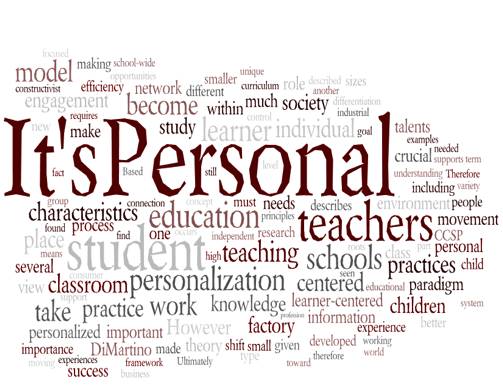
It is widely agreed that personalized learning is also a new pedagogical mindset that must extend beyond the classrooms; that fact pushes forward my primary question “How does the leadership of a personalized learning environment shift itself to accommodate the new network of change?”

pass or failAs I continue learning to apply a more personalized approach to my teaching. I have found that many of those same skills can be used to reflect and evaluate options. So I have tried here to apply a similar cognitive approach, an open critique and sincere question on eight observations I have noted as my school, and our district has embarked on a journey of blended and personalized learning.

In the classrooms we are, approaching the close of another school year, you at the District offices are approaching the hiring season. As you do so, I would ask that you perhaps take some time to consider the qualities your prize as you develop a leadership team for the future.  It is commonly understood that there is a shortage of new teachers in the US, as well as a disconcertingly high number of experienced professionals leaving our classrooms. But that is not the case for program administrators and principals. The number of people earning Masters Degrees’ in educational leadership or seeking an administrative endorsement is higher now than at any time in the past 25 years. According to the US Bureau of Labor Statistics

You have the opportunity to look broadly and consider carefully those that will help lead us through this systemic paradigm shift.

Personalized learning achieved through a blended curriculum keeps students engaged; it pushes them to grow and demands that they understand both themselves as learners and our curriculum as it pertains to their lives. In a very real sense, PL embodies the vision that led so many of us into teaching as a profession. The opportunity to connect not just with a child, but with a child through teaching and learning.

Personalization is full of hard data, human connections and an intricate web of lessons, apps, and projects. Peel back that top layer and the overwhelming nature of the idea begins to surface, PL disseminates the control of the learning within a classroom, the students practicing to take control of their own path. The teacher building supports and taking them away.

That complex dance of adding and subtracting scaffolding while it is being used is being successfully done. But it is severely limited when it has to fall within blocks of time and for a set number of minutes each week.

  • Where once our administration needed to be skilled at defining, defending and delineating blocks of time we are now asking them to find flexibility within a rigid structure and extra time where the was never enough.

?  How do we as a district support the required complexity of a school schedule while still offering the time to rigorously dig deeply into an area of study?

Underneath the popular jargon and interview buzzwords that you will hear, like Grit and Mindset, are classrooms where those life skills are being developed.  In those rooms, both students and teachers are failing, examining their efforts and sometimes failing again.  Learning to fail and from failure is important for real success.

  • As an institution, we are built to reward success and admonish failure. As a culture of educators, we are largely populated by those that thrived in that climate exemplifying their own successes and hiding their failures.

? How do we insure ourselves and reassure others that our district leadership understands the role of failure and exploration as we move into a new mindset?

We do not work in an industry where taking chances, innovating or finding a creative alternative is celebrated, least of all at the administrative level. Rather we as a profession, are accurately profiled as safe, steady, stable, predictable types.  Our administrators even more so than those of us in the classroom.

  • We are now in an era where we will need to be inventive, take calculated chances and create new ideas. We will need to look for those traits in our leaders as we move into uncharted paths with impressionable cargo.

? What are the important character trait of a 21st-century school administrator, and how do we ensure that the status quo does not continue to be the status quo?

?  How will the changing power dynamic in classrooms impact both our schools and our district as a whole?

One of the most powerful aspects of personalized learning is that it is, out of necessity, powered from the classroom up.  Teacher-leaders are the ones moving the bar and setting the standards. Those classroom maestros will need strong support and stronger feedback.

  • Please remember as you consider the next steps for those that will be leading the dwindling number of magnificent classroom teachers that we are a profession built on the artful combination of personal connections, honest feedback, and transparent agendas with all of our students, not simply those in the most need.

?  How can we use our transition into personalized learning, as an opportunity to both support and capitalize on the prowess of our teacher-leaders?

The devices, the web resources, the alignment of lessons and project to a standard, all of these pieces are new and as unfamiliar as they are integral to this shift.  As a teacher, I know there is no shame in saying I don’t know, and that I will not be able to master all of those elements of the job I love without support.  I am confident and comfortable say that my principal and school as a whole will need support as well.

It is not an uncommon critique to observe that the current structure of our educational system was built with management in mind rather than support and growth. Nor is it an uncommon refrain for teachers ask for support. It is uncommon, however, to have the opportunity to create the needed change.

?  What structures of support can we enhance or establish to best help our schools thrive as centers of blended and personalized teaching?

?  How do we find a way to structure and support creativity while still managing growth and learning?

If you are overwhelmed by the questions and standards set before you if you feel as though the task is disproportionate to the tools available. Please know that I, and every classroom teacher, that works for you is familiar with those insecurities. We grapple with them every fall, we understand, from experience I can tell you that the while the challenge never fades the overwhelmed feeling does.

With sincere thanks for all that you do to move us forward,

Brian Cleary  @oldbrainteacher


Continue reading

Students Searching for Universal Data

I love looking at the cellular data network coverage maps showing where your phone will be able to connect to the Internet. Every carrier has their own version, spangled in the company colors so you know who to thank. But in a way, these maps aren’t just advertorial: they show the edge of modern civilization.

After all, mobile data is quickly becoming the new standard for Internet access; smart devices are the preferred platform for everyone from doctors and nurses to college students and presidents. It is like a systemic paraphrasing of The Lion King: “Everything the data map covers is our kingdom.”

The kingdom, in the 21st century, means relevance, engagement, access to knowledge and news, having a voice. For students and schools outside the kingdom, opportunity can seem out of reach.

Needs, Dreams, and Rights

While access to the Internet is by no means a guarantee of outcomes, achievements, or even learning, the absence of this access is effectively punitive for students, teachers, and school.

By Obama’s reckoning, “The Internet is not a luxury, but a necessity,” and key to realizing the modern American Dream. In Canada, a similar spirit informed plans to get every citizen connected to high speed internet, officially designating the service as an essential telecommunications service, thereby affording it greater protections and subjecting it to different regulations. The United Nations went even further with its finding that Internet access constitutes a new human right.

But they weren’t all talking about the same Internet.

Mobile data–the stuff of cellular plans as well as ambitious projects out of Silicon Valley to make coverage maps irrelevant–doesn’t provide the exact same connectivity as dedicated high-speed cable or fiber optic lines. Indeed, the very brands working to make global connectivity a reality would also be gatekeepers choosing which sites, services, and data their users accessed. One may safely assume that free global internet provided by Facebook would send users by default to Facebook as a homepage.

But mobile data is easier and cheaper to push out across greater areas, and to upgrade as the technology improves. This is especially true for poor, rural, or extremely remote regions–those few spots on the map devoid of color and coverage. With branded Internet filling the gaps, the range and type of content users see could well become something akin to a class-based feature.

So even as access itself is championed as the sine qua non of modern living (and schooling), different types of access–to different versions and degrees of the Internet–is further complicating the question of how much data is enough.

What Do We Mean by “Internet” ?

Schools don’t necessarily need access to the full unfiltered Internet anyway.

Nearly one quarter of all mobile searches is for porn, and some 90 percent of teenagers today will encounter some form of porn online before they reach adulthood. That is hardly part of the academic mission schools pursue by securing Internet access. But “porn” itself, not unlike “literally,” has undergone a change of definition in the Internet era away from its original, specific meaning to a term of emphasis or hyperbole.

Social media has popularized various hobbies and interest groups as pornography–just search Instagram for “food porn” and take an the epicurean journey around the world; or, to satisfy your wanderlust, find any of the hundreds of “travel porn” blogs to witness entirely lust-free accounts of vacations, road trips, and cruises. And just as each subgroup has its own, personalized version of “porn,” the world has been steadily realigning itself online into isolated pockets of alternative facts.

Long before Kellyanne Conway used the term, politicos and casual browsers alike self-sorted into ideological bubble communities, where challenging ideas and interpretations of science itself were cut off from one another. To go online today is to choose a camp and stay there, insulated from contradiction or contest.

Porn isn’t porn, facts aren’t facts, the Internet isn’t the Internet, and literally is now figurative–so is data really access?

The next shift in what the Internet itself really is may hold answers.

Data, Things, and People

Were Yakov Smirnoff to apply his classic Russian Reversal joke to today’s online culture, he might say, “In Soviet Russia, the Internet uses you!” Except he wouldn’t be wrong–and this role reversal isn’t limited to one place.

The Internet of Things is already making itself known around the world. Rather than users navigating the Internet through user-friendly browsers and screen-based interfaces, smart devices are taking responsibility for creating, exchanging, and accessing information. Wearables ranging from step-tracking fitness bracelets to implantable heart monitors are gaining in both popularity and functionality. In the classroom, silent monitoring systems gauge engagement, performance, and comprehension to automatically alert teachers to individual student needs and opportunities–or simply adjust tests and assignments responsively on their behalf.

In short, people don’t just use passive technology–the technology is active, autonomous, and capable of “making” its own Internet, sharing data among a network of devices, rather than between human users. In the Internet of Things, the devices do in fact use us.

Before universal Internet access even became a reality, the nature of the Internet, and data, and access have all been thrown into confusion. More critical thinking than ever is needed to navigate the world’s online troves of knowledge, in order to distinguish fact from opinion, reliable from unreliable sources, even real people from chat bots.

For all the importance we’ve come to place on getting schools and students connected, the most important skills of all remain social, interpersonal, and based in the real, rather than digital, world. Internet access remains a worthy goal, but equally important is ensuring that future generations of students and their instructors are equipped to navigate the web, given the opportunity.