“The future of education is digital. We live in an increasingly digital world, where technology is a part of our lives in so many ways. Now more than ever, it is crucial that we incorporate digital technology into education. To prepare students for higher education and future jobs, we must ensure that they are familiar with technology. Administrators who want to prepare their K-12 school for the future of education should look at the ways they use technology in the classroom. Schools that are future-ready are those that blend technology with learning seamlessly and include technology in nearly every lesson.”
I just shared my thoughts on the future of education, but what do my peers think? To find out, we decided to produce an expert roundup on the topic of the future of education. We asked 106 education experts to answer one question: “What are your thoughts on the future of education?” In part 3 of this series, we will focus on the future of higher education.
Higher Education
*Numbering is for organizational purposes only, and does not denote a participants rank or level of influence.
“Higher education must reinvent itself to be relevant to the challenges of today’s world. When costs and debt soar while innovation and application lag, families struggle. We must do more than recognize change; we must lead it. To do so, we must think and act differently. “The dogmas of the quiet past are inadequate for the stormy present.” The future of work is changing. I use to say that we can no longer expect a sustainable future for bright but uneducated people. Now I feel that way about people educated via the methods of the past.”
“Artificial Intelligence (AI), Augmented Reality (AR) and Virtual Reality (VR), are all technological innovations that the education space is going to have to deal with in one form or another in the future. Some segments of education will embrace them, some will watch them and others will ignore them. Hybrid learning will continue to expand, and as it does AI, AR, and VR will be used to enhance the education experience. For example, using chatbots to field student queries affords 24/7 access, further increasing the flexibility of learning solutions. Education is here to stay, and so is technology – the convergence will continue.”
“Education is about making successful learning connections with students in a changing world. Just as our teaching techniques have changed to address our current learners, these will continue to evolve. The future will introduce even more sophisticated technologies adjusting our teaching models to match how our new generations of students are accustomed to connecting with information. Additionally, global and industry partner collaboration with the education environment will become the norm, and more flexible, virtual alternatives will add educational options to traditional brick and mortar learning.”
“While much of the education colleges and universities are providing is becoming increasingly specialized, cross-functional skills such as adaptability and critical thinking, and the ability to connect the dots and understand context will continue to be vital even with the changing nature of jobs. As technology rapidly evolves, knowledge base expands, and industries continue to automate, a narrow subset of specialized skills and knowledge may not apply to jobs five or ten years in the future. Simply put, there is no replacement for the value of a liberal arts degree.”
“Higher education will adapt to a more sustainable model that produces graduates with practical skills for a functioning society. Universities in their current form will shrink. They will continue to produce medical doctors, teachers, nurses, engineers, etc., but there will be fewer people enrolling in degrees that offer no practical skills. Society also needs plumbers, electricians, police officers, firefighters, municipal workers, and they require training not philosophy. Distance education will continue to grow for learning and training as people will need to upgrade continually to maintain tech skills required for their jobs.”
“If we are serious about issues of access, quality, accountability, and even financial efficacy, the educational community must embrace through common practice the imperative of universal design. Architecture, the construction of facilities and public spaces, and even technology have evolved in practice at a much more substantial scope and pace than has the delivery of the instruction and related services that these structural features support. Whether at the K-12 or collegiate level, the increasing diversity of students and the quest for improved learning outcomes will demand that policy-makers and practitioners create environments and common curricula that optimize the results and learning experiences for all modalities and profiles found in the classroom.”
“To keep pace with the evolving education sector, schools must provide classroom settings that allow for more digital, mobile and technology-based learning environments. Educating the twenty-first century workforce and beyond requires modern IT infrastructure.
In the near future, institutions will have to transform their IT and cable infrastructure into a modern technological system that has the flexibility to adapt to the evolving needs of student, faculty and administration. By providing both traditional and expanded services more efficiently and at lower costs, IT infrastructure will fully support the institution’s main mission of delivering quality education.”
“There will be new paths to affordable college. Five million people take online classes for credit now but at full tuition. It would be very inexpensive for a philanthropy or government to put one ‘best in class’ college course online from a great professor in each subject, available free to all and with a College Board style test attached to prove student skill and earn accreditation at traditional schools. The College Board AP and CLEP exam system and the exam system in the U.K are examples to build upon and expand.”
“I think that education needs to become more nimble and flexible – it needs to provide content as well as skills in its delivery. For far too long, we have not concentrated on preparing college faculty that can actually teach —we privilege content knowledge, which is important, but creative and engaging delivery is essential. If we don’t change, we are going to lose students to non-traditional approaches. Higher education will become less relevant.”
“Online and blended learning is enabling educators and allowing students to learn faster in and outside the classroom. New business models will continue to provide opportunities for students to take short courses for high-demand skills (i.e. code bootcamps, data science, online marketing etc.) with exceptional employment outcomes reflecting a high return on investment (ROI).
Affordability is the greatest barrier to educational access globally, particularly for tertiary education. Automated, digital financial aid (scholarships & loans) from educators and lenders, both public and private, will increasingly expand educational access.”
We would like to thank all our experts for contributing to this roundup. How is your school or organization working to prepare for the future? Let us know what’s worked and what hasn’t worked.
“The future of education is digital. We live in an increasingly digital world, where technology is a part of our lives in so many ways. Now more than ever, it is crucial that we incorporate digital technology into education. To prepare students for higher education and future jobs, we must ensure that they are familiar with technology. Administrators who want to prepare their K-12 school for the future of education should look at the ways they use technology in the classroom. Schools that are future-ready are those that blend technology with learning seamlessly and include technology in nearly every lesson.”
I just shared my thoughts on the future of education, but what do my peers think? To find out, we decided to produce an expert roundup on the topic of the future of education. We asked 106 education experts to answer one question: “What are your thoughts on the future of education?” In part 2 of this series, we will focus on the future of edtech.
Edtech
*Numbering is for organizational purposes only, and does not denote a participants rank or level of influence.
“In the next year I think we will see an increase in scannable technology and virtual reality integration in PreK-20 schools. From augmented reality experiences where our youngest learners scan and watch a diagram pop off the page, to immersive 360 video where secondary students explore different corners of the world, the possibilities are endless!”
“Google can solve basic and complex math equations in an instant, but only those students who are truly inspired have the power to enact real change, and this must begin at a younger age. For this reason, children should be taught soft skills such as mindfulness in public schools. Schooling should be disruptive, and needs to be flipped on its head to draw clear connections between general knowledge and higher purpose.”
“We are the midst of a digital revolution, both within and outside of education. It is our responsibility to recognize this and see it as an opportunity rather than something to be feared. My hope is that the future of education will bring more varied creative opportunities for teachers and students. We will see more and more students actively participating in and contributing to the world around them and we will no longer see school as merely “preparation” for that world.”
“Technology will fundamentally alter education in three ways. First, technology will allow teachers to better assess children and customize lessons to provide higher quality education for each student. Second, technology (e.g. computer programming and networking) will become as ubiquitous across curriculums as reading and writing are today. Third, this ubiquitous technology education will enable gender and racial parity across the study of and output from Technology, leading to a far more diverse set of inventors and innovations.”
Year 6 leader at an international school in Shanghai, China.
“The future of education is very exciting. With the increasing use of tech in schools, the possibilities for creativity and innovation are endless! I am particularly interested to see how virtual reality will become a key part in lessons; its potential is huge. Furthermore, with collaboration becoming easier due to online tools, I can’t wait to work with others around the world on joint projects.”
“Edtech startups bet that the future of education is going to be STEM learning, 3D printing, learning through VR/AR, teaching coding, and GBL; but I believe it is going to be all of that and more. I believe that the future of education will produce more creators, more problem solvers and more entrepreneurs – if we can teach students to become leaders, then we can build a brighter future.”
“The future of education will be shaped by our ability to meaningfully adopt emergent technology, rather than forcefully integrate. “Adoption” infers being more than just tacked on to a culture, it illustrates acceptance as part of the cultural norm. Here we will find ourselves in a paradigm shift where our learner-centered instruction will yield powerful experiential knowledge. The resulting shift will hold increasingly tangible learning experiences for learners to connect with places previously only available through static, one-dimensional delivery. Further, learners will be afforded opportunities to leverage emergent technology to create authentic products for their individual learning context.”
“The future of education is amazingly bright! Our educators and leaders are doing more to foster true student learning than they ever have, and new technologies are helping. AR (augmented reality) and VR (virtual reality) additions to the classroom will become more prevalent in 2018 and help the learning to be even more interactive and engaging. Geographic and social/economic boundaries will continue to fall as the Internet of Things connects us together more and more. It is an exciting time to be both a teacher and a student!”
“We need to start treating (or elevating) some digital games to be more than technology tools. Many are “new media” designed to tell narratives and to generate emotions from players. As a comparison, we don’t consider documentaries to be technology tools just because they may be played on a DVD player!
In my book, Game-Based Learning in Action, teacher John Fallon uses the game Her Story to teach literary devices (also see his blog post). Many good games tell open-ended narratives and should be examined the same as we analyze novels, film, and other “traditional” media.”
“I believe we are in the most incredible time to learn and teach than at any other point in history. The near ubiquitous access to information, advanced devices and a growing network of connected educators makes the classroom an awesome place to be. While we cannot predict exactly what the future will hold I think we will see movements come and go, but what will continue its growth is a passion for helping kids (and adults) find meaning in their learning, new ways to connect and rapid innovation in the education profession.
Creator of //CODE programming game series, ThinkFun
“Thanks to adaptive learning technologies, students will be able to learn at their own rate and repeat lessons as needed to gain complete mastery. This stronger focus on using technology to develop core competencies will free up teachers to use classroom time more creatively, providing fun experiences that reinforce and extend what the kids are learning. Computer science is the new literacy, and will be integrated into a wide variety of K-12 subjects.”
“People always ask me, “What do you predict the classroom of the future will look like?” I always reply, if I could predict the future classroom, I’d be sorely disappointed. I love being surprised by new developments in technology and pedagogy. I love seeing the impossible become commonplace. The search for classroom innovation is an ongoing expedition, and I can’t wait to see what tomorrow’s discovery brings.”
“Huge question. I am excited about the role tech can play in empowering people to be lifelong learners and to find a community for what they want to learn. I am also excited to see student voice and choice and project-based learning become part of so many new and ongoing educational institutions. I am concerned about inequities in access to high-quality education and schools and I hope that that is rectified nationally and globally in the future. Empowering and encouraging students to become leaders and citizens and to participate in their local and national public spheres to identify and solve problems should be the mission of schools going forward.”
“AI helps teachers become better, not setting algorithmic limits to the brains of students. VR is used on daily basis from daycare to corporate environments, however, proper time limits are set and the danger of addiction is managed. Brain to PC neuron connectivity unleashes the human potential by helping us convert thoughts to actions. Big data are used to coach, mentor citizens, for those that opt-in of course Every citizen has the right to learn anything at a 0.99 cents cost but they understand as well the responsibility of doing so.”
“We are moving toward an era where all educators and students have access to tools and technology to help them achieve academic success. Engaging, personalized learning programs – powered by technology – are becoming more prevalent and impactful across K-12 education. Educators have the ability to identify each student’s strengths and weaknesses, enabling individualized instruction at scale. Students have the freedom to learn anywhere, at any time, and at their own pace, taking ownership for their learning. The days of ‘teaching to the middle’ are over.”
“The use of technology and gamification in the classroom is a growing trend – one that can be harnessed in multiple forms to enhance an instant digital interaction between the teacher and the student. Implementing technology into the curriculum also allows for parents to be more involved in their child’s education, thereby creating a 360-degree experience between parent, teacher and child. While technologies such as augmented and virtual reality are still emerging, I believe that game-based learning will eventually incorporate them as well, as they will allow children the chance to explore concepts they otherwise would not have access to.”
“Teachers will become more important going forward than ever before. They will continue to be critical potential “life long” role models for students, and given that they are on the front lines interacting with students every day, they know better than anyone what methods and digital technologies work best in the classroom to engage students. The role of the teacher will evolve from a lecturer to a guider of students – helping students develop 21st Century problem solving skills, creative skills and real world project based team collaboration skills. Teachers will capitalize on data on individual students to help them develop personalized learning plans. As a leader in the gamification of learning, Kahoot! believes that gamification will be central to helping teachers achieve the learning outcomes they are seeking for their students.”
“I believe in the promise for education to nurture social change and tackle some of the most challenging issues we deal as societies. In the future, there will be more steps towards bridging the gap between educational theory, research and practice worldwide. These should focus on systematic and meaningful technology-enhanced instructional approaches to maximize the learning potential for students in view of 21st century demands.
“Future students and educators will learn to see past their own perceptions by utilizing tools designed to accurately reflect strengths and weaknesses and facilitate meaningful growth. Accessible, mobile tools will allow us to be responsive as students and educators by anticipating challenges and implementing better practices to meet needs quickly and effectively. Technology will empower us all to be more connected, social and collaborative in ways that foster deeper empathy, curiosity and creativity. Ultimately, the essential skills of problem-solving and critical thinking will become more robust as we continue to work together redefining and revolutionizing education. “History starts now!”
“The future of education will almost certainly include technology. The rise of tablet use in schools alongside the growing trend for interactivity to help build 21st Century skills means that technologies such as Augmented Reality (AR) and Virtual Reality (VR) will gain more of a presence. Simple, affordable learning tools such as the award-winning AugmentifyIt®️ AR Card Quiz Games designed to encourage STEM and STEAM engagement are already gaining momentum and will become more commonplace in classroom activities to extend curriculum topic learning.”
“Teachers and students will lead the technology revolution in education and beyond. Teachers and students will create new uses for existing technology in the classroom and the workplace. Educators and learners will design and construct the technologies needed to meet the demands of the diverse student population throughout their learning career.”
“The future of education sees students as more than consumers of information and media – but rather producers of knowledge and creators of stories. Beyond memorizing discrete facts, students will learn to sift through information to determine its value, then make their own connections and collaborations. Emerging technology tools, such as augmented and virtual reality have the potential to make powerful changes to the ways students demonstrate understanding of concepts and empathy for others – key elements for their engagement as participants in face-to-face and digital societies.”
No matter the delivery, online or in person, the best learning environments have a great teacher font and center. Instead of a dystopia of abandon buildings displaced by adaptive learning, bots, and AI, I see technologist ultimately learning to serve instead of aiming to replace educators.
Change often comes through cloaking technology in a “facade of the familiar,” EdTech companies will provide teachers familiar tools that employ radical advances in technology. Striking a middle ground of familiar and new will make large-scale technology adoption possible.
“Blended learning is the future of education. The combination of online digital content and classroom experiences will allow for deeper more meaningful learning. Blended learning allows for flexible instruction where a teacher may flip their class one day, then use station rotations the next day, or playlist completion another day. Blended learning allows for teachers to differentiate their instruction in a way that connects with students and gives students control they’ve never experienced. Blended learning will allow teachers to provide relevant context that has been missing in education while changing how the group instructional space is used.”
“Whenever you teach, you also touch the future! With the growth of technology, we as educators can touch the future even faster. So, I think innovative teachers are those that harness the power of education and those who follow the technological wave.”
“STEM Education will lurch from the factory model to personalized approaches due to cultural shifts, new enabling technologies, and the diversity of students who want to learn individually, collaboratively, and experientially. Schools walls will grow increasingly porous as students connect with multi-age peers and STEM professionals to learn through games, maker spaces, clubs, and groups with STEM social action agendas. Coding and technology platforms will increasingly be used for creative expression and to demonstrate learning. New technologies will enable students learning English and those with different learning patterns and abilities.
Teaching will become more professionalized and collaborative, opened to individuals who have a range of STEM knowledge and skills and who can link students to STEM in the community. Equity issues could improve or be exacerbated, depending on policies on housing, school choice, school funding, and a recommitment to the American Dream.”
“With the advances in technology, our role as educators is to facilitate learning, thinking, and problem-solving in a way which harnesses the incredible power at our fingertips. Instantaneous access to world events, scientific and research data, and creativity tools currently exist in the palm of our students’ hands. As educators, how do we use it in a way that is not distracting but enlightening? #educatorchallenge”
“Should edtech be school led … or teacher led? Science teachers choose which experiments best suit their students, whilst Geography teachers choose the best places to explore. Maths teachers select the most apt problems, and Language teachers which grammar challenges. Why shouldn’t the same be true of edtech? I believe a personalised edtech pedagogy is the future – after all, it’s not what you use, but how you use it that matters. We all teach in our own special way, and it’s time to embrace digital technologies with the same ethos. “Right tech, right teacher” is the future of edtech.”
“Despite the many challenges facing education, we live in a time of great promise for education. As an educational technologist and pedagogist, I see the vast potential technology coupled with effective pedagogy has to continue transforming when, where, and how teaching and learning takes place. We are moving from learning from and with technology to providing powerful learning anytime, anywhere through technology. This shift will provide learners with increased opportunities to take more ownership of their learning—allowing them to determine what they learn and how they demonstrate their learning to best meet their needs and goals. Teaching and learning will become increasingly less defined by formal learning contexts. I envision an increase in informal learning spaces—many facilitated through technology—where learners from around the globe can connect and learn from each other and from educators and experts. Learners will be part of numerous learning communities—formal and informal—that will help shape their educational experiences.”
“The cultivation of digital literacy and information fluency development in education will help students become contributing members of our growing knowledge economy. We need to encourage learners to not only interpret and evaluate information, but also to produce and share creative content. By nurturing life-long learning practices, educators are preparing learners to be continuously engaged to support their future academic and career journey. Learning experiences should encourage students to ask critical questions, think deeply, collaborate cross-culturally, and encourage agility when faced with challenges or even professional opportunities that may not exist yet.”
“In the future, there will no longer be talk of banning technology so students pay attention to the lectures of their teachers. Instead, time together will be spent meaningfully with the teacher providing an environment for rich discussion and creation. Lectures can be viewed independently along side transcripts, notes, and presentation materials.
In the future, student work will no longer be locked inside a classroom or school building. Instead their work will be made for an authentic audience with a focus on contributing to making the world a better place in someway.
In the future, student work will no longer be represented by numbers, grades, and a few one-size-fits-all tests. Instead, there will be authentic methods of assessment that make learning more transparent including digital portfolios and transcripts that capture mastery and micro-credentials.”
“This is such a fantastic time to be a teacher. The increasing availability of technology in the classroom allows teachers to create amazing learning opportunities our students, encouraging them to create representations of their knowledge, communicate and collaborate with their peers in the classroom and around the world, and think critically to solve problems. I’m excited to see these opportunities continue and increase in the coming years, as teachers work to create meaningful learning experiences for our students!”
“In the near future, technology will play an even more fundamental role in transforming not only how we teach, but also how students learn. The role of teacher will have completely morphed into that of a coach or mentor, and teachers will place much more emphasis on self-directed, competency-based learning. In that setting, students will be assessed not on how much they know, but on what they can do with what they know.”
“All learning is personal today and in the future…at least anything that is authentic, lasting, and relevant. Technology in education, whether a device or a platform, is simply a tool that helps students make connections necessary to build knowledge; create and share ideas; and find solutions to complex problems. Technology solutions that will best enable teachers, schools, and districts to support seamless, high quality, and purposeful personalized learning pathways for all students will have the most value for years to come.”
“My view: the future of education is rapidly changing, impacted by technologies, time, resources, and competition. In academia, quick access to content and increased technology use are key. Also included:
Computer skills and digital literacies for all levels
“From the one room school house to a limitless world at your fingertips, education continues to evolve as a means to maximize human potential. The excitement of today’s possibilities provides a vision for what the future has to offer: students who are part of networks of interaction linked by common interests where shared responsibility ignites passion for learning. It is in this setting where teachers’ roles, pedagogical approaches, and the use of artificial intelligence shift to ensure that learning expectations are met within the context of a professional community.”
37. Steve Coxon, PhD
Associate Professor and Executive Director,
Center for Access and Achievement, Maryville University
Steve Coxon
“As VR tech advances and prices fall, educational opportunities will expand dramatically and become available to almost everyone. At Maryville University, for example, we help prepare better teachers by using 360 cameras and VR headsets that enable them to review everything happening in their practicum classrooms.
Other forms of education won’t disappear, but soon students of all ages and backgrounds will have access to high quality educational experiences previously impossible; from young children creating virtual field trips of local ecosystems and sharing them worldwide to medical students practicing surgery. Inequitable access to high-speed internet is the biggest barrier to overcome.”
38. Brian Dall Schyth, Ph.D., M.Sc., High School teacher at Aarhus statsgymnasium (High School), Århus, Denmark: https://www.aarhusstatsgymnasium.dk/; Animator and illustrator in the company ExplainWays: www.explainways.com
“The future of education will, due to an increase in opportunities and freedom for both teacher and student, be even more concerned with making the right choices than what we see today. Adaptation to individual student needs will be required to increase student success thereby requiring extensive formative evaluation why I imagine that computer-aided systems for correcting assignments will be used even more than today – a paradox to be addressed. Virtual reality (VR) and augmented reality (AR) in combination with 2D/3D animation will surely add to the highly engaging ways of hooking students, stimulating learning and explaining hard to grasp relationships in the real world. Teachers or mentors will still be the student’s possibility for gaining help in choosing and for tying together the information and experiences from the different curriculum parts into what we call learning.”
“Education has always been about connecting students to their future – and the future of education is connected learners. Internet-based tools and communications are transforming education by giving students more opportunities to learn than ever before. Online tools and personalized resources empower students to gather information, collaborate with other learners, and share their work with the world. The key to unleashing this potential lies in reducing the entry barriers to our digital society and providing electronic devices and persistent Internet connections to our students. If we succeed at that, our students will be connected to a very bright future.”
“I believe the future of education begins with transforming teaching and learning, which means teachers are no longer at the front of the classroom lecturing to students with written instruction or having students memorizing facts. My hope is we create innovative learners and thinkers that can harness the knowledge and power of the Internet. We are no longer looking for excellent test takers or trying to find out what a student memorized. Instead, we want to build and establish upon their interests and be curious about personalized learning. I want kids to thirst for knowledge in a creative way, thinking critically, communicating and engaging about what could be or have the willingness to find out the possibilities.”
41. Rich Nedwich, global director of education at Ruckus
“Schools are advancing toward 100% digital curriculum delivery while balancing the needs for digital equity and student data privacy. Each step along the journey brings its own set of challenges from an IT perspective (scalable, secure and reliable networks) and pedagogical (professional development, digital curriculum selection and lesson plan development). The promised land would deliver more personalized learning, higher graduation rates and students becoming digital citizens, prepared for the yet unimagined jobs of the future.”
We would like to thank all our experts for contributing to this roundup. How is your school or organization working to prepare for the future? Let us know what’s worked and what hasn’t worked.
Your child’s early years are full of wonder and rapid growth in every area of their life. Parents want to ensure that their children are meeting all of the necessary developmental milestones on time. With preschool looming on the horizon for many kids, parents want to take a few moments to review whether their child is really ready.
How many of these benchmarks has your child already started to meet?
PhysicalMilestones
Physical milestones are often the easiest for parents to judge around age four. Their gross motor skills should be developing rather rapidly. Overall, these newfound physical abilities give your child more independence on a daily basis. By the age of four, children are usually able to:
Hop on one foot
Balance on one foot for two seconds or longer
Swing or climb
Catch a bounced ball most of the time
Mash their own food with supervision
Children with more motivation may begin to master more difficult skills like skipping or climbing the stairs on their own. Parents should evaluate how much motivation their children have to learn these skills. Experts recommend ensuring they have enough playtime with other children, away from excessive amounts of toys. This will help your child to develop better physically.
Language
Language is one of the most useful skills that your child is continuing to develop at age four. By this age, they should be able to say their own name and address or tell their own stories. They may also memorize and sing silly poems or children’s songs like The Wheels on the Bus.
They should also be developing a firm grasp on the future tense and identifying some very rudimentary grammar concepts (such as pronoun usage). Sentences should have approximately five words or more.
Social and Emotional
At age four, many children are quickly developing the ability to make friends and relate to peers. They develop a strong desire to please children their own age and to mimic behaviors seen in others. When it comes to playtime, here are a few standard milestones most children achieve at this age:
Cooperating with rules and other children during play
Imaginative play or roleplaying
Preference of playing with others versus alone
Talking about interests and likes or dislikes
Separating make-believe from reality
Interest in singing and dancing
Cognitive
Parents are often very interested in what their child should be learning by the age of four. Keeping up with the skills your child has mastered allows you to set them up for better school success. At age four, there are a few common things most children will be able to do cognitively according to the CDC:
Beginning to name colors, numbers, and shapes
Some grasp on time
Recall parts of a story
Draw people with two to four body parts
Play simple board games or card games
Start to categorize items (things that are the same versus things that are different)
Developmental Delays
These are just a few of the standard capabilities of a four-year-old according to research standards. If you feel like your child isn’t reaching these milestones and developmental benchmarks, consult with your pediatrician.
Many of the warning signs of developmental delays at age four consist of issues regarding their independence and daily living skills. These can include things like struggling to dress or undress, inability to brush teeth or wash hands, and issues with potty training. However, if your child is consistently behind in many of these areas, you should consult a trusted pediatrician for a potential cause.
Your child’s fourth year will bring tremendous growth in their cognitive, social, and physical capacities. Consider the amazing ways their minds and bodies will develop. You can use this checklist to help determine if your child is meeting their milestones and could be ready for preschool.
Preschool teachers are the angels of elementary education, and they each deserve a gold star for the work they do.
These experts know how to gently herd and corral twenty-two four-year-olds, keeping them calm, disciplined, and safe. Preschool teachers are the peacemakers in their schools.
Most preschool teachers are also too diplomatic to say what they are thinking. The things preschool teachers won’t say include:
Show your trust in me by telling me from the beginning that your child
. . . has allergies/can’t tolerate something or is suffering emotional trauma, we can provide better support and care. We need to know who is permitted to pick up your child, whether he’s gluten intolerant, or isn’t potty-trained. Better communication between us will improve the quality and safety of your child’s preschool experience.
. . . is ill, so that we can send her home with you. That’s not meant to be a punishment for you. We aren’t a hospital or doctor’s office, and it’s not fair to expose the other children or us to an illness. A sick child should be with her parent.
Please understand that
. . . children do come to school sick sometimes. Parents might not realize that their child has a cold/scabies/chicken pox/head lice when they dropped him off at school. Sometimes the illness or infestation doesn’t manifest itself in visual signs until a few hours into the day. Sympathize with your preschool teacher; s/he catches the same illnesses.
. . . your child can do far more than you might realize. They can use scissors and pencils, put on their own jackets, and clean up after themselves. Stop doing everything for them, and don’t expect us to do it, either. Let your child take responsibility for his actions.
Growing up is messy, so you can expect your child
. . . to come home wearing a little mud, some paint, and maybe glue. Learning is about experiences. Sometimes we get dirty. We do the best we can to clean it off, but there may be times the expensive clothing you sent your daughter to school in aren’t practical for school.
Always believe
. . . that there are two sides to every story. Your child will tell you about getting hit or bitten in school but may leave out the part about being the one that started the ruckus. Listen to our point of view as well as your child’s.
. . . and finally, that your child is doing the best he can.
You want your children to be successful adults, right?
Teach these ten life skills that all kids should know.
Prepare food.
Every child must know how to fix themselves food. Begin with the basics, like fixing a bowl of cereal, and then work up to sandwiches and even meals requiring following a set of directions.
Wash clothes.
Are you still doing your college-age kids’ laundry? Children as young as six can wash their own clothes, although they may need a stepstool and directions on how to operate the washer and dryer. The laundry might not get folded perfectly, but you’re instilling can-do attitude when you trust your kids to care for themselves.
Wake themselves up.
Kids do well when they have a routine to follow. There’s a time for everything, including when to go to sleep at night and when to wake up in the morning. You can help them set that routine by establishing a predictable schedule, but encourage your child to set an alarm by which to wake up.
Put gas in a vehicle.
If you’re the one always doing this for your child, what happens when she drives long enough to empty the gas tank, and you’re not there to help? Even if you live in a city with excellent public transportation, children should learn how to pump gas.
Develop a budget.
Money doesn’t grow on trees; there is no endless supply of dollar bills that will magically appear whenever your child wants something. Teaching your child how to make and stick to a budget is one of the smartest things you can do to prepare him for life.
Shop for groceries.
Teach your kids where to find produce and dairy in the supermarket and how to find bargains. Teach label-reading to older children so they know what they are purchasing and eating.
Establish good hygiene habits.
Children who develop the habit of daily bathing, brushing and grooming are healthier and often more popular than their peers who don’t brush their teeth or use deodorant.
How to do chores.
There’s plenty to do in a household. In addition to cooking and washing clothes, you have to dust, vacuum, mop floors and mow the yard. Unless you have a staff to help you with domestic duties, your kids can pitch in, taking on age-appropriate tasks.
Think creatively.
By encouraging your kids to think on their own, you are preparing them to be problem-solvers. Creative thinking begins with coloring everyday items non-traditional colors (who says a horse can’t be purple?) and can be as elaborate as building Rube Goldberg machines.
Self-advocate. By the time your child is in high school, she should be able to talk respectfully to teachers about her assignments or grades. Children who are prepared with basic life skills can seek to understand, communicate with adults, and speak up for themselves.
Children who can perform these ten basic life skills will develop the confidence and self-reliance needed for adulthood.
The second biggest day of your child’s life has arrived. S/he is college bound.
Preparations for the transition to college are in full swing, and so are the emotions you and your kid will feel at this time. What you are feeling is normal, but you might be able to use a little advice:
Dear Parents of College-Bound Children:
You’re looking forward to this next milestone in your child’s life. The day s/he goes to college is every bit as emotional as the day your child arrived in your world.
There’s a lot to remind your son or daughter about, like remembering to charge the phone and avoid washing the colored clothes in hot water, but you’ll want to share some of your wisdom and reflections, too.
Communicate in writing
I encourage you to write a letter to your child. It’s something s/he can read after you’ve left. The beauty of a personal and heartfelt message is that it will become a treasure, tucked away in a safe place and re-read often.
Take on new roles
You’ve been the parent for 18 years, and if the two of you have gotten this far, you’ve done a good job. You’ll continue to be the parent in the relationship, but how you parent will begin a metamorphosis. You’ll no longer be the problem-solver. Your college freshman will have to learn solve his or her own problems.
If your child does call home for advice, ask open-ended questions that allow for self-reflection. You want your child to come up with solutions on his or her own. Coach them through the process.
Preserve trust
You also need to be the stabilizer.
Your child has his/her feet in two worlds right now. S/he is not at home with you but isn’t truly living on his/her own yet. Maintain trust in your relationship by keeping your child informed of changes back at home, such as deciding to downsize or the death of a family pet.
Let go.
You don’t need to call the college professors to check if your child’s assignments have been turned in or if there are any failing grades. Most professors won’t tell you anyway because you’re not the adult taking the class.
Your child is.
And your son or daughter must be the one to manage his/her workload, get assignments turned in, and follow up with them.
The disability itself (use for knowing what to expect physically, intellectually, emotionally)
Best practices in education for the disability (to be an active participant in Section 504/IEP or ARD Meetings)
Groups that provide support (for finding additional support and reassurance)
Build a support team
You don’t have to attend to all of your child’s special needs on your own.
Most parents rely on a team of medical professionals and school personnel to assist with giving their special needs children the care they need. Your available resources don’t stop there.
Schools are tasked with identifying special needs children and providing educational services for them as early as three years of age, but younger children may also receive support services.
Your team of professionals will do more than assist your child; they’ll help you, too.
For the parent of a special needs child:
Allow time for yourself
It’s easy to get so wrapped up in the needs of your child that you forget or forego your own needs. There’s a saying that you can’t pour refreshments into anyone else’s glass until your own pitcher is full.
As much as you want to be there 100% of the time for your child, know that it’s okay to take time for yourself. Schedule a date night with your spouse. Eat out at a restaurant or take a leisurely stroll. Devote some of your time to your hobby. You’ll return refreshed and ready to resume your duties.
Connect with others
Find parents who are experiencing similar challenges in raising a special needs child, or with parents and caregivers of children with the same condition as your child. We are strongest when we connect with others.
Creating a network of understanding and forging relationships that support each other goes a long way toward effective parenting when raising a child with special needs.
Their children’s struggles are unique, and every tiny step is a major milestone. That milestone may be as monumental as learning to read or as simple as feeding oneself, but not one of the successes happen overnight. Along the way, parents learn to enjoy the moment for what it is, hope for the best, and accept their child for who s/he is.
Nearly seven percent of children in the United States has had one or more parents who were incarcerated. That’s five million children who have experienced the absence of a parent because of a mandatory jail sentence.
Being behind bars doesn’t mean you stop being a parent. It says you have to develop some creative ways to parent.
Using modern technology
Innovative programs like those developed by the Child and Family Services of New Hampshire and the New Hampshire Department of Corrections encourage incarcerated parents to participate actively in their children’s lives. Doing so reassures the child and lessens the likelihood of separation anxiety.
Another program, developed by Lutheran Social Services of the South, is helping incarcerated parents build a bridge between ”life in the free” and the time they spend in incarceration. The organization teaches parenting skills and assists fathers in creating video diaries for their children.
An inmate can’t walk over to the desk in her room and pen a letter to her child. There’s no desk. Unless it’s a minimum security prison, there’s no paper and no pen, either. Those items are considered contraband, and they can only be used under supervision.
Parents who choose to write their children a letter will have to take advantage of the time allotted to them when they are in the library or recreation hall. That can mean developing time management skills and maintaining a level of trust within the prison to use the materials.
Developing a support system
Parenting is no easy job. It’s made all the more difficult from behind bars.
Incarcerated parent need a support system to make sure that both their needs and those of their children are being met. That may mean having access to ongoing professional help, in the form of mental-health experts and social services. Children need access to understanding teachers and regular opportunities for counseling.
Only when both parties’ needs are met can the parent-child relationship be preserved.
Worth the effort
Helping incarcerated adults parent their children from behind bars takes effort, but doing so may lessen the likelihood that their children will also experience prison. According to doctoral candidate in clinical psychology Marie Gillespie, without parental involvement, these children “are up to 5 times more likely to end up in jail or in prison themselves.”
The children of incarcerated parents love their parents unconditionally. Our job is to help their parents be a part of their children’s lives.
During the preschool years, children are like sponges absorbing new skills every day. For this reason, it is a wise decision to have your brain-ready child attend preschool. Plus, multiple studies have indicated that children who attend preschool tend to have a head start compared to their peers as they enter elementary school.
The US Department of Education states, “Studies also reveal that participating in quality early learning can boost children’s educational attainment and earnings later in life. Children who attend high-quality preschool programs are less likely to utilize special education services or be retained in their grade, and are more likely to graduate from high school, go on to college, and succeed in their careers than those who have not attended high-quality preschool programs.”
However, not every preschool program is quality. Therefore, it is necessary to choose a preschool program where your child is learning the right skills for future school success. Let’s look at the most important skills your child should be learning in preschool.
How to Be a Friend
Preschool is when a child learns how to be a good friend. For many children, preschool is one of their first significant social experiences. Children will learn how to share with one another, as well as how to take turns. Your child should also begin to play imaginatively with others. During this first year of school, children are learning how to be kind to one another and how to handle conflict.
An Introduction to Letters
During four-year-old preschool, your child will be introduced to letters. Your child should learn to say and recognize the alphabet. By the end of the school year, your child may even be able to spell his or her name. You can help your child master the alphabet by encouraging him or her to notice letters throughout the day and in your home. Also, books like Chicka Chicka Boom Boom are great for reinforcing this skill.
An Introduction to Numbers
Preschoolers will also begin to count. These are the very beginning counting skills, so you should only expect your child to be able to count to ten. However, this also means your child will learn to count objects and not merely repeat the numbers from one to ten.
An Introduction to Colors and Shapes
The preschool year is when your child should master the primary colors and shapes. Preschool teachers will work diligently to help children distinguish between the colors of the rainbow and the shapes in the classroom.
How to Use Writing Tools
One thing that surprises many preschool parents is that their children will be expected to know how to use writing tools correctly by the end of the school year. For example, if scissors are off limits in your household, you may be shocked to learn that preschool teachers are checking your child’s fine motor skills when it comes to cutting. Additionally, while much of the beginning of this year your child will be scribbling, you should expect your child to begin to learn how to draw circles and write some letters.
As you prepare to find a high-quality preschool, remember that research has proven children at this age learn best through play. While the aforementioned skills should be taught, they should be presented in a fun, playful way.
Unfortunately, drugs and alcohol are easily accessible for teenagers. Therefore, it is critical to teach your teen about drugs and alcohol directly. While it may be uncomfortable, it is necessary.
Don’t Make False Assumptions
First, do not assume your teen will not abuse drugs or alcohol. No matter what your personal home life or background is like, there is a real possibility that your teen will be exposed to drugs or alcohol at some point. For instance, while drugs are illegal, alcohol is legal for those over 21 years old. According to Recovery Village, “Not surprisingly, it causes the most harm — teen alcohol abuse is responsible each year for nearly 200,000 ER visits and 4,300 deaths among kids under 21.”
Furthermore, statistics show that most teens have either used, been offered, or know someone who sells drugs. Do not assume that just because your teen is not a troublemaker that he/she will not have the chance to abuse drugs or alcohol.
Talk About Drugs and Alcohol Openly
Begin talking about the negative consequences of drugs and alcohol at an early age. Have age-appropriate discussions about what happens when people abuse drugs and alcohol. Additionally, when your teens ask you questions about drugs and alcohol, it is best to answer them honestly.
As your child hits the teenage years, be open about how drugs and alcohol are abused and the possible results. Today’s parents must also address prescription drug abuse with their teens and explain how even though a doctor prescribes these medications, they can be misused and cause great harm.
Give Examples
We all learn best through examples, so use models when you try to teach your teen. Point out examples from television shows and movies where people abuse alcohol and discuss what could happen in real life. Additionally, personal stories are valuable lessons. If you know someone who has suffered the consequences of drug or alcohol abuse, talk to your teen about the experience.
Role Play Various Situations
Peer pressure is still prevalent, and it remains one of the most common reasons teens begin to abuse drugs and alcohol. Even if your teen seems resistant, talk to him/her about how to handle various situations. Try role-playing scenarios that teach teens how to say no, as well as what to do when they are in a dangerous situation and need help.
Use Resources
There are plenty of resources you can use for teaching your teens specific information relating to drugs and alcohol. The school counselor can help you with age-appropriate materials. Additionally, there are online resources, videos, and books that are designed to educate teens. For instance, WebMD has an entire online directory of resources.
Have a Safe Ride Policy
While you need to have clear rules and consequences regarding drugs and alcohol, you should also have a safe ride policy with your teen. Make sure your teen knows they can call you or someone else you trust for a ride if they ever need one – no questions asked.
With drugs and alcohol being abused by large numbers of teenagers, it is wise to have a plan for talking with your teen. Do not think this is a one-time conversation. This discussion needs to be an ongoing conversation, and a constant reminder, through their teenage years.



 “Artificial Intelligence (AI), Augmented Reality (AR) and Virtual Reality (VR), are all technological innovations that the education space is going to have to deal with in one form or another in the future. Some segments of education will embrace them, some will watch them and others will ignore them. Hybrid learning will continue to expand, and as it does AI, AR, and VR will be used to enhance the education experience. For example, using chatbots to field student queries affords 24/7 access, further increasing the flexibility of learning solutions. Education is here to stay, and so is technology – the convergence will continue.”

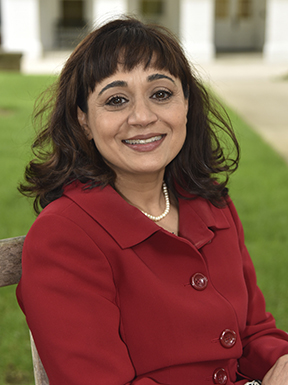 “While much of the education colleges and universities are providing is becoming increasingly specialized, cross-functional skills such as adaptability and critical thinking, and the ability to connect the dots and understand context will continue to be vital even with the changing nature of jobs. As technology rapidly evolves, knowledge base expands, and industries continue to automate, a narrow subset of specialized skills and knowledge may not apply to jobs five or ten years in the future. Simply put, there is no replacement for the value of a liberal arts degree.”
 “Higher education will adapt to a more sustainable model that produces graduates with practical skills for a functioning society. Universities in their current form will shrink. They will continue to produce medical doctors, teachers, nurses, engineers, etc., but there will be fewer people enrolling in degrees that offer no practical skills. Society also needs plumbers, electricians, police officers, firefighters, municipal workers, and they require training not philosophy. Distance education will continue to grow for learning and training as people will need to upgrade continually to maintain tech skills required for their jobs.”
 “If we are serious about issues of access, quality, accountability, and even financial efficacy, the educational community must embrace through common practice the imperative of universal design. Architecture, the construction of facilities and public spaces, and even technology have evolved in practice at a much more substantial scope and pace than has the delivery of the instruction and related services that these structural features support. Whether at the K-12 or collegiate level, the increasing diversity of students and the quest for improved learning outcomes will demand that policy-makers and practitioners create environments and common curricula that optimize the results and learning experiences for all modalities and profiles found in the classroom.”
 “To keep pace with the evolving education sector, schools must provide classroom settings that allow for more digital, mobile and technology-based learning environments. Educating the twenty-first century workforce and beyond requires modern IT infrastructure.
 “There will be new paths to affordable college. Five million people take online classes for credit now but at full tuition. It would be very inexpensive for a philanthropy or government to put one ‘best in class’ college course online from a great professor in each subject, available free to all and with a College Board style test attached to prove student skill and earn accreditation at traditional schools. The College Board AP and CLEP exam system and the exam system in the U.K are examples to build upon and expand.”
 “I think that education needs to become more nimble and flexible – it needs to provide content as well as skills in its delivery. For far too long, we have not concentrated on preparing college faculty that can actually teach —we privilege content knowledge, which is important, but creative and engaging delivery is essential. If we don’t change, we are going to lose students to non-traditional approaches. Higher education will become less relevant.”
 “Online and blended learning is enabling educators and allowing students to learn faster in and outside the classroom. New business models will continue to provide opportunities for students to take short courses for high-demand skills (i.e. code bootcamps, data science, online marketing etc.) with exceptional employment outcomes reflecting a high return on investment (ROI).


 “We are the midst of a digital revolution, both within and outside of education. It is our responsibility to recognize this and see it as an opportunity rather than something to be feared. My hope is that the future of education will bring more varied creative opportunities for teachers and students. We will see more and more students actively participating in and contributing to the world around them and we will no longer see school as merely “preparation” for that world.”

 “The future of education is very exciting. With the increasing use of tech in schools, the possibilities for creativity and innovation are endless! I am particularly interested to see how virtual reality will become a key part in lessons; its potential is huge. Furthermore, with collaboration becoming easier due to online tools, I can’t wait to work with others around the world on joint projects.”
 “Edtech startups bet that the future of education is going to be STEM learning, 3D printing, learning through VR/AR, teaching coding, and GBL; but I believe it is going to be all of that and more. I believe that the future of education will produce more creators, more problem solvers and more entrepreneurs – if we can teach students to become leaders, then we can build a brighter future.”
 “The future of education will be shaped by our ability to meaningfully adopt emergent technology, rather than forcefully integrate. “Adoption” infers being more than just tacked on to a culture, it illustrates acceptance as part of the cultural norm. Here we will find ourselves in a paradigm shift where our learner-centered instruction will yield powerful experiential knowledge. The resulting shift will hold increasingly tangible learning experiences for learners to connect with places previously only available through static, one-dimensional delivery. Further, learners will be afforded opportunities to leverage emergent technology to create authentic products for their individual learning context.”
 “The future of education is amazingly bright! Our educators and leaders are doing more to foster true student learning than they ever have, and new technologies are helping. AR (augmented reality) and VR (virtual reality) additions to the classroom will become more prevalent in 2018 and help the learning to be even more interactive and engaging. Geographic and social/economic boundaries will continue to fall as the Internet of Things connects us together more and more. It is an exciting time to be both a teacher and a student!”
 “We need to start treating (or elevating) some digital games to be more than technology tools. Many are “new media” designed to tell narratives and to generate emotions from players. As a comparison, we don’t consider documentaries to be technology tools just because they may be played on a DVD player!
 “I believe we are in the most incredible time to learn and teach than at any other point in history. The near ubiquitous access to information, advanced devices and a growing network of connected educators makes the classroom an awesome place to be. While we cannot predict exactly what the future will hold I think we will see movements come and go, but what will continue its growth is a passion for helping kids (and adults) find meaning in their learning, new ways to connect and rapid innovation in the education profession.
 “Thanks to adaptive learning technologies, students will be able to learn at their own rate and repeat lessons as needed to gain complete mastery. This stronger focus on using technology to develop core competencies will free up teachers to use classroom time more creatively, providing fun experiences that reinforce and extend what the kids are learning. Computer science is the new literacy, and will be integrated into a wide variety of K-12 subjects.”
 “People always ask me, “What do you predict the classroom of the future will look like?” I always reply, if I could predict the future classroom, I’d be sorely disappointed. I love being surprised by new developments in technology and pedagogy. I love seeing the impossible become commonplace. The search for classroom innovation is an ongoing expedition, and I can’t wait to see what tomorrow’s discovery brings.”
 “Huge question. I am excited about the role tech can play in empowering people to be lifelong learners and to find a community for what they want to learn. I am also excited to see student voice and choice and project-based learning become part of so many new and ongoing educational institutions. I am concerned about inequities in access to high-quality education and schools and I hope that that is rectified nationally and globally in the future. Empowering and encouraging students to become leaders and citizens and to participate in their local and national public spheres to identify and solve problems should be the mission of schools going forward.”
 “AI helps teachers become better, not setting algorithmic limits to the brains of students. VR is used on daily basis from daycare to corporate environments, however, proper time limits are set and the danger of addiction is managed. Brain to PC neuron connectivity unleashes the human potential by helping us convert thoughts to actions. Big data are used to coach, mentor citizens, for those that opt-in of course Every citizen has the right to learn anything at a 0.99 cents cost but they understand as well the responsibility of doing so.”
 “We are moving toward an era where all educators and students have access to tools and technology to help them achieve academic success. Engaging, personalized learning programs – powered by technology – are becoming more prevalent and impactful across K-12 education. Educators have the ability to identify each student’s strengths and weaknesses, enabling individualized instruction at scale. Students have the freedom to learn anywhere, at any time, and at their own pace, taking ownership for their learning. The days of ‘teaching to the middle’ are over.”
 “The use of technology and gamification in the classroom is a growing trend – one that can be harnessed in multiple forms to enhance an instant digital interaction between the teacher and the student. Implementing technology into the curriculum also allows for parents to be more involved in their child’s education, thereby creating a 360-degree experience between parent, teacher and child. While technologies such as augmented and virtual reality are still emerging, I believe that game-based learning will eventually incorporate them as well, as they will allow children the chance to explore concepts they otherwise would not have access to.”

 “I believe in the promise for education to nurture social change and tackle some of the most challenging issues we deal as societies. In the future, there will be more steps towards bridging the gap between educational theory, research and practice worldwide. These should focus on systematic and meaningful technology-enhanced instructional approaches to maximize the learning potential for students in view of 21st century demands.
 “Future students and educators will learn to see past their own perceptions by utilizing tools designed to accurately reflect strengths and weaknesses and facilitate meaningful growth. Accessible, mobile tools will allow us to be responsive as students and educators by anticipating challenges and implementing better practices to meet needs quickly and effectively. Technology will empower us all to be more connected, social and collaborative in ways that foster deeper empathy, curiosity and creativity. Ultimately, the essential skills of problem-solving and critical thinking will become more robust as we continue to work together redefining and revolutionizing education. “History starts now!”
 “The future of education will almost certainly include technology. The rise of tablet use in schools alongside the growing trend for interactivity to help build 21st Century skills means that technologies such as Augmented Reality (AR) and Virtual Reality (VR) will gain more of a presence. Simple, affordable learning tools such as the award-winning AugmentifyIt®️ AR Card Quiz Games designed to encourage STEM and STEAM engagement are already gaining momentum and will become more commonplace in classroom activities to extend curriculum topic learning.”
 “Teachers and students will lead the technology revolution in education and beyond. Teachers and students will create new uses for existing technology in the classroom and the workplace. Educators and learners will design and construct the technologies needed to meet the demands of the diverse student population throughout their learning career.”
 “The future of education sees students as more than consumers of information and media – but rather producers of knowledge and creators of stories. Beyond memorizing discrete facts, students will learn to sift through information to determine its value, then make their own connections and collaborations. Emerging technology tools, such as augmented and virtual reality have the potential to make powerful changes to the ways students demonstrate understanding of concepts and empathy for others – key elements for their engagement as participants in face-to-face and digital societies.”
 No matter the delivery, online or in person, the best learning environments have a great teacher font and center. Instead of a dystopia of abandon buildings displaced by adaptive learning, bots, and AI, I see technologist ultimately learning to serve instead of aiming to replace educators.
 “Blended learning is the future of education. The combination of online digital content and classroom experiences will allow for deeper more meaningful learning. Blended learning allows for flexible instruction where a teacher may flip their class one day, then use station rotations the next day, or playlist completion another day. Blended learning allows for teachers to differentiate their instruction in a way that connects with students and gives students control they’ve never experienced. Blended learning will allow teachers to provide relevant context that has been missing in education while changing how the group instructional space is used.”
 “Whenever you teach, you also touch the future! With the growth of technology, we as educators can touch the future even faster. So, I think innovative teachers are those that harness the power of education and those who follow the technological wave.”
 “STEM Education will lurch from the factory model to personalized approaches due to cultural shifts, new enabling technologies, and the diversity of students who want to learn individually, collaboratively, and experientially. Schools walls will grow increasingly porous as students connect with multi-age peers and STEM professionals to learn through games, maker spaces, clubs, and groups with STEM social action agendas. Coding and technology platforms will increasingly be used for creative expression and to demonstrate learning. New technologies will enable students learning English and those with different learning patterns and abilities.
 “With the advances in technology, our role as educators is to facilitate learning, thinking, and problem-solving in a way which harnesses the incredible power at our fingertips. Instantaneous access to world events, scientific and research data, and creativity tools currently exist in the palm of our students’ hands. As educators, how do we use it in a way that is not distracting but enlightening? #educatorchallenge”
 “Should edtech be school led … or teacher led? Science teachers choose which experiments best suit their students, whilst Geography teachers choose the best places to explore. Maths teachers select the most apt problems, and Language teachers which grammar challenges. Why shouldn’t the same be true of edtech? I believe a personalised edtech pedagogy is the future – after all, it’s not what you use, but how you use it that matters. We all teach in our own special way, and it’s time to embrace digital technologies with the same ethos. “Right tech, right teacher” is the future of edtech.”
 “Despite the many challenges facing education, we live in a time of great promise for education. As an educational technologist and pedagogist, I see the vast potential technology coupled with effective pedagogy has to continue transforming when, where, and how teaching and learning takes place. We are moving from learning from and with technology to providing powerful learning anytime, anywhere through technology. This shift will provide learners with increased opportunities to take more ownership of their learning—allowing them to determine what they learn and how they demonstrate their learning to best meet their needs and goals. Teaching and learning will become increasingly less defined by formal learning contexts. I envision an increase in informal learning spaces—many facilitated through technology—where learners from around the globe can connect and learn from each other and from educators and experts. Learners will be part of numerous learning communities—formal and informal—that will help shape their educational experiences.”
 “The cultivation of digital literacy and information fluency development in education will help students become contributing members of our growing knowledge economy. We need to encourage learners to not only interpret and evaluate information, but also to produce and share creative content. By nurturing life-long learning practices, educators are preparing learners to be continuously engaged to support their future academic and career journey. Learning experiences should encourage students to ask critical questions, think deeply, collaborate cross-culturally, and encourage agility when faced with challenges or even professional opportunities that may not exist yet.”
 “In the future, there will no longer be talk of banning technology so students pay attention to the lectures of their teachers. Instead, time together will be spent meaningfully with the teacher providing an environment for rich discussion and creation. Lectures can be viewed independently along side transcripts, notes, and presentation materials.
 “This is such a fantastic time to be a teacher. The increasing availability of technology in the classroom allows teachers to create amazing learning opportunities our students, encouraging them to create representations of their knowledge, communicate and collaborate with their peers in the classroom and around the world, and think critically to solve problems. I’m excited to see these opportunities continue and increase in the coming years, as teachers work to create meaningful learning experiences for our students!”
 “In the near future, technology will play an even more fundamental role in transforming not only how we teach, but also how students learn. The role of teacher will have completely morphed into that of a coach or mentor, and teachers will place much more emphasis on self-directed, competency-based learning. In that setting, students will be assessed not on how much they know, but on what they can do with what they know.”
 “All learning is personal today and in the future…at least anything that is authentic, lasting, and relevant. Technology in education, whether a device or a platform, is simply a tool that helps students make connections necessary to build knowledge; create and share ideas; and find solutions to complex problems. Technology solutions that will best enable teachers, schools, and districts to support seamless, high quality, and purposeful personalized learning pathways for all students will have the most value for years to come.”
 “My view: the future of education is rapidly changing, impacted by technologies, time, resources, and competition. In academia, quick access to content and increased technology use are key. Also included:
 Assistant Superintendent Educational Services

 “The future of education will, due to an increase in opportunities and freedom for both teacher and student, be even more concerned with making the right choices than what we see today. Adaptation to individual student needs will be required to increase student success thereby requiring extensive formative evaluation why I imagine that computer-aided systems for correcting assignments will be used even more than today – a paradox to be addressed. Virtual reality (VR) and augmented reality (AR) in combination with 2D/3D animation will surely add to the highly engaging ways of hooking students, stimulating learning and explaining hard to grasp relationships in the real world. Teachers or mentors will still be the student’s possibility for gaining help in choosing and for tying together the information and experiences from the different curriculum parts into what we call learning.”
 “Education has always been about connecting students to their future – and the future of education is connected learners. Internet-based tools and communications are transforming education by giving students more opportunities to learn than ever before. Online tools and personalized resources empower students to gather information, collaborate with other learners, and share their work with the world. The key to unleashing this potential lies in reducing the entry barriers to our digital society and providing electronic devices and persistent Internet connections to our students. If we succeed at that, our students will be connected to a very bright future.”
 “I believe the future of education begins with transforming teaching and learning, which means teachers are no longer at the front of the classroom lecturing to students with written instruction or having students memorizing facts. My hope is we create innovative learners and thinkers that can harness the knowledge and power of the Internet. We are no longer looking for excellent test takers or trying to find out what a student memorized. Instead, we want to build and establish upon their interests and be curious about personalized learning. I want kids to thirst for knowledge in a creative way, thinking critically, communicating and engaging about what could be or have the willingness to find out the possibilities.”
 “Schools are advancing toward 100% digital curriculum delivery while balancing the needs for digital equity and student data privacy. Each step along the journey brings its own set of challenges from an IT perspective (scalable, secure and reliable networks) and pedagogical (professional development, digital curriculum selection and lesson plan development). The promised land would deliver more personalized learning, higher graduation rates and students becoming digital citizens, prepared for the yet unimagined jobs of the future.”
