
Uncategorized

Positive Reinforcement is Key Element in Preventative Behavior Management

By Mark MacDonald

Some kids always do what they’re supposed to. Others need a nudge every now and then to encourage proper behavior. Both types of students benefit from a system that rewards them for doing the right thing instead of simply punishing them when they mess up.
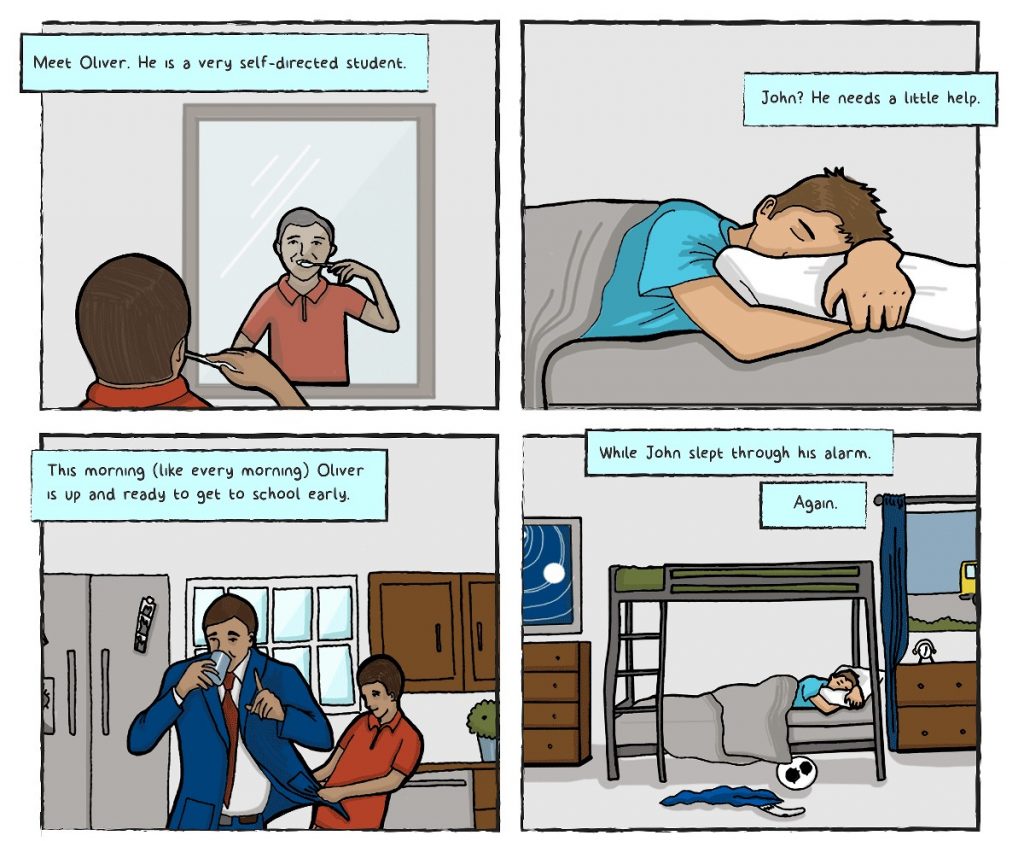
Positive behavior isn’t always automatic. Some students do the right thing on their own. Others need guidance and support. All students benefit from positive recognition for doing the right thing.

Research suggests that traditional approaches to school discipline (such as detentions and suspensions) have, at best, only a short-term effect on student behavior—and they might even increase problem behaviors for some students over time.

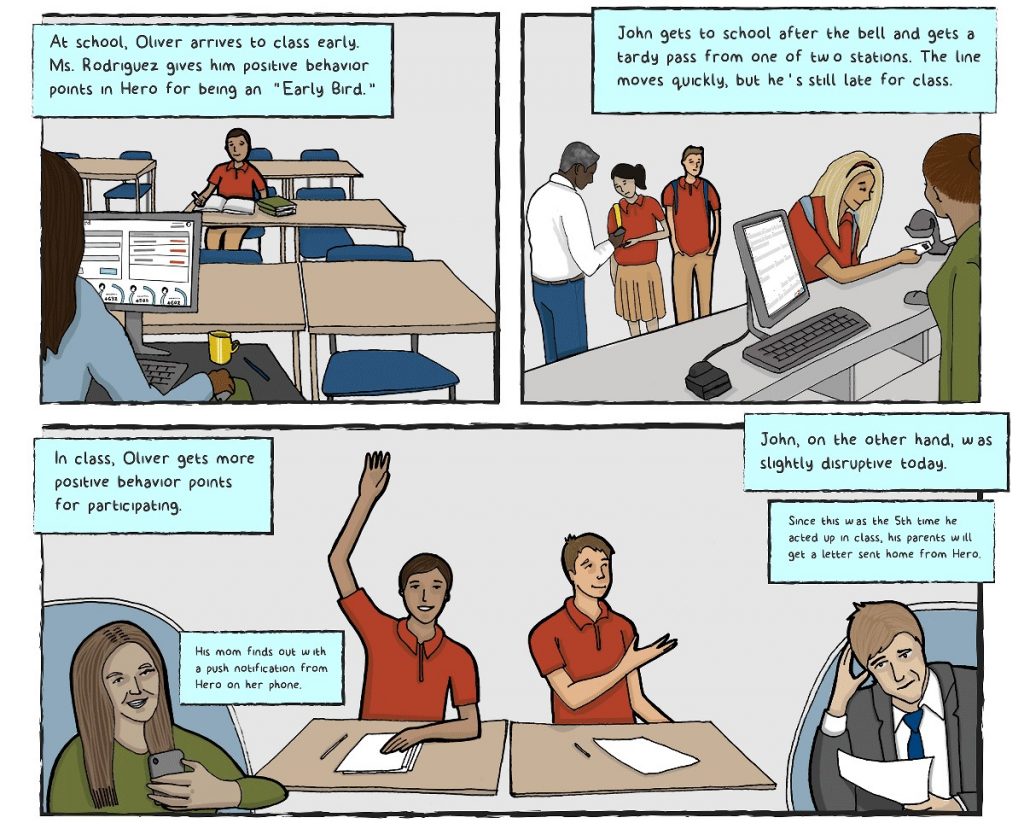
On the other hand, giving students positive feedback when they act appropriately can have a powerful effect on shaping behavior. Studies indicate that positive feedback reinforces good behavior, leads to intrinsic motivation among students, and helps them develop a sense of competence.
Hero K12 is a digital platform to recognize and reward students which reinforces making good choices.

Positive reinforcement is a key element of preventive approaches to school discipline, such as Positive Behavioral Interventions and Supports (PBIS). PBIS is an evidence-based framework for reducing disciplinary infractions, improving school climate, and increasing student achievement.

PBIS takes a three-tiered approach to instilling good behavior in schools. Tier 1 consists of interventions that are used for all students, school-wide, such as actively teaching and reinforcing appropriate behaviors. Tier 2 applies a more targeted approach to students who need further attention, while Tier 3 is for students who have significant behavioral problems and who might need wraparound support services.

Students learn how to act appropriately in the same way they learn other key skills, such as how to read and write: through a continuous cycle of instruction, practice, feedback, and support. PBIS acknowledges this fact by ensuring that positive behaviors are explicitly taught and encouraged throughout the entire school community. This encouragement can happen in many ways, such as by acknowledging or praising students for their good behavior and even offering prizes or other incentives when they do the right thing.
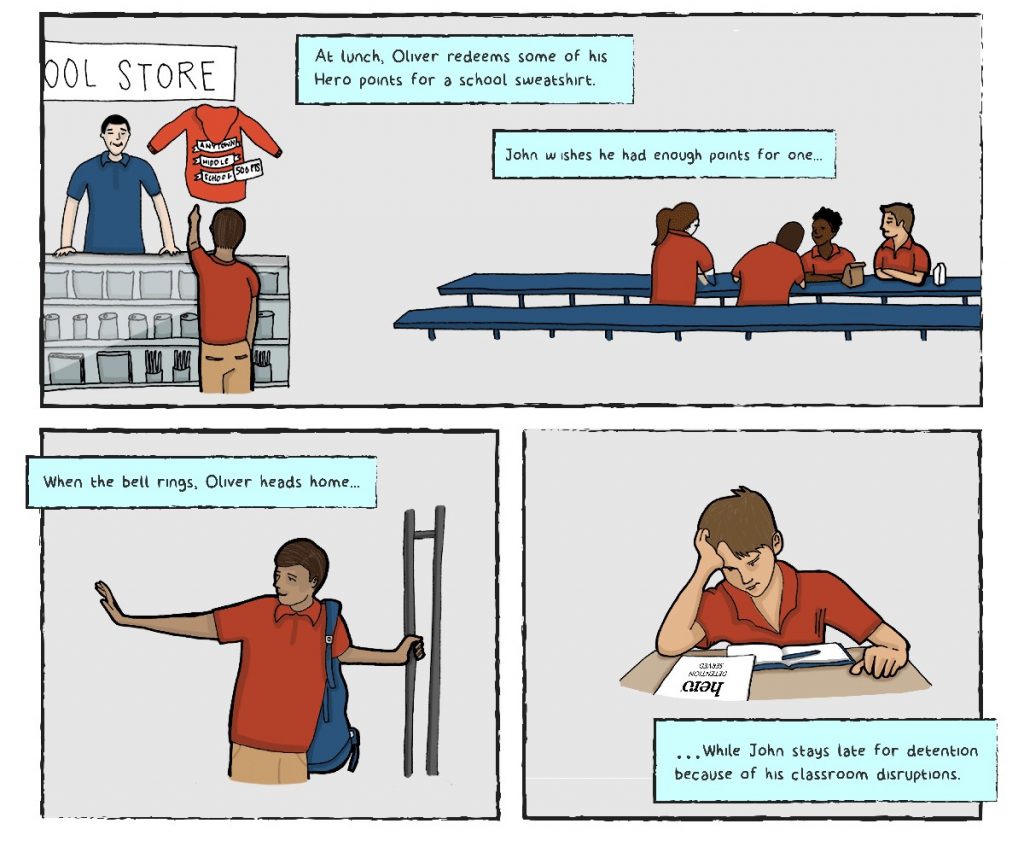
Consistent recognition for positive or disruptive behaviors is an important part of establishing trust in school staff and in the system.

One obvious advantage of this method is that it actively engages all students, and not just those who frequently need a nudge. Too often, schools tend to focus the bulk of their efforts on the handful of students who present the biggest challenge. Meanwhile, the majority of students continue doing what they should be doing, but without receiving any apparent recognition.

In contrast, all students benefit from a PBIS approach. Instead of feeling taken for granted, those who consistently do the right thing without having to be told are rewarded for their actions. When students who need frequent reminders see their classmates being rewarded, they too want to earn incentives—and when they begin to experience success, this motivates them even further.
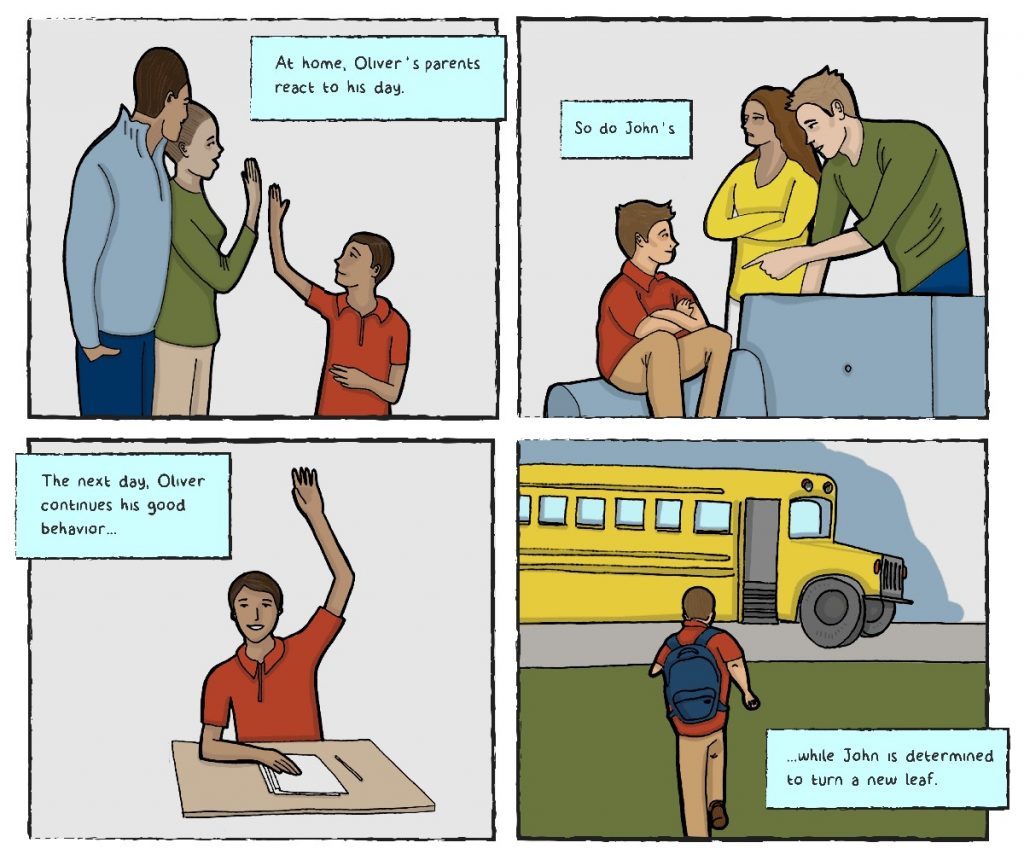
Immediate intervention gives the greatest opportunity for learning.

In schools that have adopted PBIS, the entire staff is involved in defining the expectations for student behavior and then teaching and reinforcing these skills. Typically, a leadership team consisting of a wide range of stakeholders—including administrators, general education teachers, special education teachers, and paraprofessionals—will meet regularly to review disciplinary data and determine which students need further intervention.

Research on the use of PBIS in schools has found decreases in problem behaviors, increases in student attendance and achievement, improved school climate, and greater satisfaction among staff. For PBIS to work, however, educators need a system for teaching and reinforcing positive behavior school-wide—and they need data to support their decision making.

This is what we had in mind when we developed Hero, a powerful online platform that allows users to track and acknowledge positive student behaviors in addition to recording disciplinary infractions. When teachers or administrators notice that students are doing what they are supposed to, they can assign “Hero points” that reward students for these good behaviors. Students can redeem these points for prizes, special privileges, and other incentives as determined by the school community.

We have seen time and again that students will strive to do the right thing when their positive behavior is recognized and rewarded. And if they have made a mistake in the past, this shouldn’t become an albatross hanging around their neck. They need to be able to start over at any time with a fresh slate. That’s why, although school leadership teams can view aggregated data on tardies and other disciplinary infractions over time, each student’s individual Hero points and infractions are wiped clean at the end of the year.
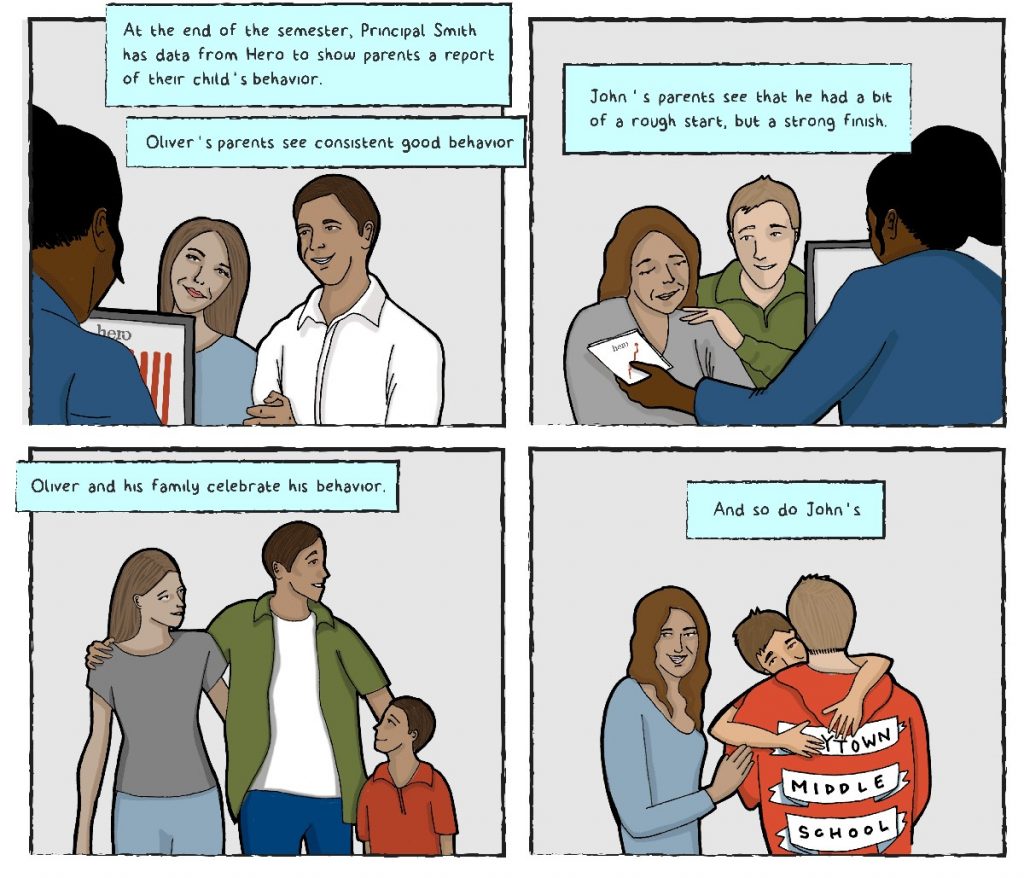
A positive culture shift creates ripples of success.

We work with thousands of schools that have seen a marked improvement in student behavior using this approach. For instance, Cedar Creek Middle School in Texas has seen a decline in the number of students who are late to class—and students are exhibiting more positive behaviors as well. In just a few short months, Kentucky’s Valley High School saw class tardiness fall by 25 percent, and inappropriate use of cell phones in class dropped 32 percent. More importantly, students were more engaged and prepared for class—and they were more courteous and helpful to others.

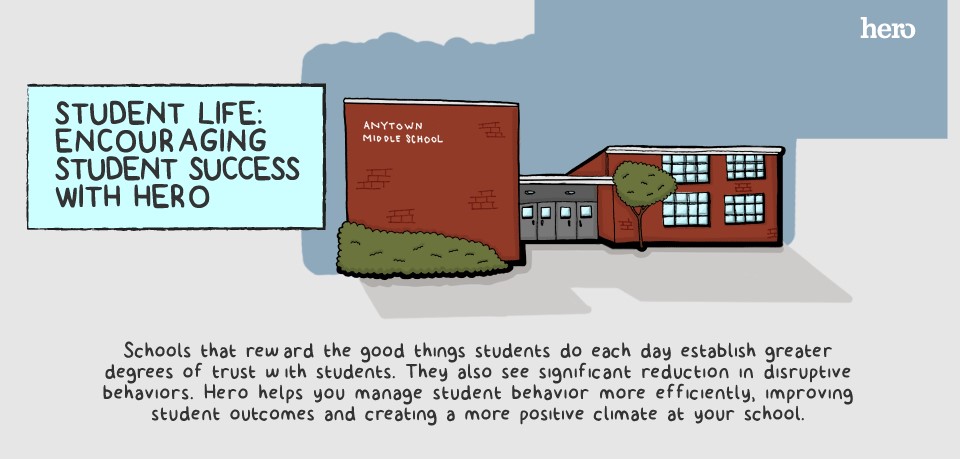
Schools that reward the good things students do each day establish greater trust among students. They also see a significant reduction in the number of disruptive behaviors. Our experience is proof that rewarding students for positive behavior has a significant effect on school climate and culture. It helps reinforce the good choices that students make, which leads to dramatically better outcomes in both the short and long run.

About the Author

Mark MacDonald is president and CEO of Hero K12. He and his team of Hero colleagues have helped thousands of schools recognize and reward students when they do the right thing which ultimately builds schools into places where students can learn and thrive.




How to Teach Your Child Athlete to Be a Good Sport

There’s nothing more painful than watching your eight-year-old storm off the soccer field after a losing game. Most parents want their children to be involved in athletics because it’s good for their overall health. It promotes their physical wellbeing, teaches them important life skills, and allows them to make new friends. However, what do you do if your child isn’t a good sport about the game?

Close to 65 percent of adults agree that sportsmanship is worse now than it has been in the past. Children are more concerned with receiving praise for scoring the winning goal than they are with having a good time on the field. Combatting these negative attitudes can be an uphill battle for concerned parents.

If you’re concerned about your child’s sportsmanship, try teaching them a few of these concepts before their next big game.

Encourage them to try their hardest.

Telling kids to do their best has been always been a part of children’s sports practices and competitions. You want to encourage your child to give their very best effort at everything they do. Explain to them that winning isn’t really important if you know that you did your absolute best.

Part of inspiring your child to give their best effort at a game is acknowledging the things they’re doing well. Even if they don’t have perfect form, give them a high five for their hustle or their attentiveness to a teammate. Showing them what’s truly important during the game may inspire them to do the same to encourage their friends.

Don’t discuss difficulties on the field.

If your child still storms off after the game, that probably isn’t the best time to discuss what went wrong. Give your child some space to calm down first, even if it means putting them in your car for a few minutes. You can have a better conversation when your child isn’t agitated by losing the game.

Once they’re calm, make sure you address their inappropriate behavior and poor sportsmanship. You can brainstorm better ways for your child to handle their frustration in the future. Remind them of the importance of telling the other team they did a great job and encouraging their own team with the things they excelled at.

Find good examples for your child.

It isn’t enough to simply explain what good sportsmanship should look like. Children often learn best by imitating behavior they see in others. Take a look at professional athletes who play the sports that interest your child. You should be searching for a role model who always has excellent sportsmanship. Giving them someone to look up to may be able to change their attitude toward winning and losing.

Allow them to watch this athlete perform on a regular basis and discuss the way they handle themselves during and after the game. Is there a major difference between this athlete’s behavior and your child’s? Help them to spot the differences and brainstorm ways they may be able to have better sportsmanship in the future.

Helping your child to be a better sport can be essential for allowing them to develop a true love for the game. They’ll have an easier time participating in these activities, as well as making friends. Sportsmanship can carry over into all areas of their life, so make sure you’re investing plenty of time to teach your child this important life lesson.

Helping Kids Thrive in a Digital World

Do you ever feel like your kids spend too much time on their tablets, phones, and other electronic devices? Statistics show that children between the ages of eight and eighteen spend more than seven hours per day on screens. Digital technology has clearly become a standard part of our routines and daily lives.

The media promotes the dangers of allowing children to spend too much time on their digital devices, with consequences ranging from meeting strangers in internet chat rooms to being bullied by classmates. Raising your child in a digital world is a necessary evil, so how can you help them to truly thrive?

Teaching your child the importance of online safety and interactions is essential in today’s digital age. Following a few of these important steps can help you to reinforce these lessons for your child.

Be active on social media.

Maybe you’ve shunned social media in the past, but being active on your own sites can help you to better monitor your child. Many parents require their children to add them as a friend or to follow them on their accounts. If a child refuses to allow their parents to view their social media, it’s probably a sign that they aren’t using it maturely or appropriately.

Actively following your child’s account is a great way to monitor their social interactions. Parents can use their own examples of mean-spirited comments to teach the proper etiquette for online conversation. You may also be able to monitor their friend list for suspicious online strangers. The benefits of being added to your child’s accounts are almost endless.

Set the standard for internet safety.

In years past, you may have taught your child how to interact with strangers who attempt to get their personal information. Children sometimes have difficulty applying this concept to people they meet online. Without having to specifically face the consequences, it can be simple to hand out pertinent information that can put your family in jeopardy.

Make sure you have a clear standard about what information is alright for your child to share with others online. For example, they may share their first name but should always keep their home address private. Give them specific examples of how some of these important clues could be used to track them down in the event that an online friend turned out to be a predator.

Teach them what’s appropriate to share.

Once something is available on the internet, it can be extremely challenging to remove all traces of it. Whether your child posts an inappropriate photo or sends information that’s too personal, the long-lasting repercussions of their actions are impossible to erase. That’s why it’s so important to teach your child what is appropriate in advance.

You may help your child to develop a sense of what’s appropriate by asking them if they would feel comfortable sharing their photo with their grandparents. If it’s too risqué for grandma to see, it’s probably not something you should put up as your profile picture on social media.

Model how technology should be used.

We all know that it isn’t healthy to be in front of a screen all day long. Make sure that your child sees you taking breaks from social media, catching up on work emails, and texting your friends. Technology is great, but sometimes we just need to disconnect from our screens. You can model this during set times throughout the day, such as at the dinner table.

You may decide to institute a policy for the entire family. Phones are put up for one hour each night to have dinner together and talk. This ensures that your child is paying attention to the healthy behavior you’re modeling and it makes the break a standard for everyone in the home. Once you make it a rule, you have to make sure that you’re willing to consistently abide by it also.

Technology has the potential to significantly improve your child’s life. They can use tablets to play games, study for class, and learn how to interact better with their peers. When it’s used incorrectly, it can lead to lasting consequences and damage to their self-esteem. Start early by teaching your children the right ways to navigate this new digital age in a healthy way.

How to Help Children Overcome Phobias

It’s normal for your child to have a healthy fear of something dangerous. Sometimes, those fears start to cross the line into irrational territory. When a small fear develops into an overwhelming phobia, it may begin to impede your child’s ability to live their daily life. Parents are often challenged by these fears and are stumped at how to help their child overcome their phobias.

If you want to encourage your child to live their life without fear, some of these easy solutions may help. Your child will be able to put their fear back where it belongs in no time.

Help them to identify what scares them.

A child who is old enough to talk can often express exactly what it is they are scared of. Parents have to know how to ask the right questions to get to the bottom of a child’s phobia though. For example, it may appear that a child is simply afraid of dogs, but she is really scared the dog will bite her. Understanding their specific fear is essential to helping them overcome it.

Expose your child to situations that make them slightly nervous.

Many children are okay with being in proximity to something they’re afraid of if they know they will be protected. For example, a child who is terrified of snakes may be able to look at them through the glass at the pet store. Start exposing your child to some of these anxiety-provoking situations to challenge their typical thought pattern.

Asking questions about what they think will happen next and how they feel will get your child thinking about whether they are in immediate danger. You can make this silly to take the pressure off of an anxious child, but take care not to make jokes that will frighten them.

Give your child some positive coping skills.

It’s normal to encounter fear in your daily life. As an adult, you may be afraid of public speaking or spiders. You know that your fear isn’t going to prevent you from performing your daily tasks though. Give your child some positive coping skills that they will be able to use even as adults. These may include simple things like deep breathing or positive self-talk.

When you face a situation that makes you nervous, comment to your child about how it makes you feel. You may tell them that you feel nervous when you see a big dog so you’re going to take some deep breaths while you’re at the pet store. This action models positive coping skills and teaches children that it’s normal to have some fears.

Remember that fear is a normal part of life. Your child needs you to validate their feelings and acknowledge that their fear is very real. You don’t need to argue with them over why a fear is irrational. Simply concede that their fear must be very difficult for them, and then work on some of these solutions. By giving them some power and control, your child will have a much easier time conquering their fears.

How to Rebuild Your Child’s Self-Esteem After Bullying

More than twenty percent of all kids are now admitting that they have been openly bullied at school or on social media. The cause for most bullying revolves around a child’s appearance, whether that means their body shape or the color of their skin.

Your child may suffer many long-term side effects of this bullying, ranging from social anxiety to depression. Not surprisingly, it’s their self-esteem that takes the largest nosedive following prolonged bullying.

Once you know that your child’s low self-esteem has been caused by the careless actions of their classmates, how do you help them gain confidence? If you’re struggling to help your child boost their confidence and rebuild self-esteem, these small steps may help them almost immediately.

Help them explore something new.

It can be difficult to put yourself out there when trying something new. Give your child a new environment where they may thrive, and encourage them to stick with it. Has your daughter always expressed an interest in pottery? Perhaps your son is mechanically-inclined enough to participate in robotics. Find a place where they can learn new skills and engage with new people.

When they discover hidden talents, your child will learn to be more confident overall. This also gives them a new outlet to make friends, apart from the children who bullied them in school.

Teach them to express themselves.

Does your child strictly follow the latest fashion trends but prefers more eclectic attire? Encourage your child to follow their true passions and express themselves. When they wear clothing or get a haircut they truly love, they will naturally feel more confident. Particularly because the majority of bullying revolves around appearance, help your child’s self-esteem by teaching them to love their appearance.

Show them how to stand up for themselves.

Young children often lack the language to defend themselves against bullies. If you notice that your child is taunted about the same things on a daily basis, teach them how to stand up for themselves. They will feel empowered and more independent, which can be a serious self-esteem booster.

Spend more time with your child.

Most parents already know that their children need lots of attention. One of the best ways to build your child up following bullying is to invest lots of time. Quality time and attention give your child the opportunity to share their struggles with you, and it creates more positive memories. When they go through difficult times, they can associate spending time with you as a relaxing activity and may request another “date day.”

Children who know they are valued by their parents tend to have higher self-esteem. Your acknowledgment of their best characteristics can rebuild poor self-esteem and negate the effect of bullying.

Bullying is a terrible experience for any child to go through. It creates a complex in children who wonder if they are really as terrible as bullies tell them they are. Practicing a few of these simple actions may make a huge difference when it comes to rebuilding your child’s self-esteem and teaching them to be confident about who they are.

5 Ways to Keep Students (and Teachers) Learning Over Winter Break

One educator shares her best practices for staying connected and keeping her students learning while school is out.

By Camille Cavazos

With holidays, friends, travel, and a multitude of other distractions, keeping kids learning over school breaks can be challenging. Though the brain drain that happens over winter break may not be as severe as the dreaded “summer slide,” I still feel it’s better to do something than nothing at all during the holiday vacation. It’s important for kids to see that learning is a joy, and that it hardly ever comes to a complete stop. Here are some great ways for teachers to keep students learning before, during, and after the holidays.

1. Relate learning to the upcoming holiday.

During the weeks leading up to winter break, I try to do some holiday-themed lessons to capitalize on the excitement the kids feel about the break, and connect that excitement to their learning. In math class, students go through advertisements and create their own Christmas list. They estimate the cost of their Christmas list, practicing their number-rounding skills. After that, they find the actual total by adding decimals.

We will also find a Christmas recipe, read it, and discuss it. Then students write a procedural, expository piece on the recipe. We then make the recipe in class and enjoy it together. (It’s usually Christmas Chex mix).

2. Give fun assignments over break.

I am able to do fun, real-time assignments through my parent-teacher communication app, Bloomz. For example, I did a treasure hunt competition with the help of parents. The first 10 students to submit pictures of the three types of angles found at home or in public would receive free homework passes. It was a race to the finish, and since I required the pictures to be submitted through the app, it required parents to engage with their children’s learning at home. I also did a similar assignment where students had to find and post pictures of the different types of precipitation. The kids loved these, and so did the parents. Some even posted videos!

3. Keep in touch with your students in non-academic ways.

It’s important to me that my students know I care about them as whole people, so I make sure I connect with them in non-academic ways, too. I’m the faculty sponsor for our elementary running team, Ranger Runners. Over the Thanksgiving break, we even participated in a local run, the Turkey Trot.

My students also participate in other activities outside of school. I like to support them in and out of the classroom, so I make sure to attend those activities as well. Recently, six of my students had basketball games over the Thanksgiving break, so I made sure to go and cheer them on. Building great relationships with my students and parents is extremely important. If you capture their hearts, you capture their minds.

4. Keep up with your own learning.

As teachers, we can’t neglect our own learning over breaks, either. Whether this means reading, taking a class, attending a seminar, or comparing notes with colleagues, we should all be striving to make learning a regular part of our lives.

I’m actually working on my Doctorate in Educational Leadership, so I’m currently reading Robert’s Rules of Order for an upcoming assignment. I’m also always looking for different activities to tackle our hotspots for when we come back after the break.

5. Welcome students back.

To prep students for coming back to school after a break, I normally send a message through Bloomz saying something like, “I can’t wait to see you at school tomorrow. I’ve missed you!” I also post video links to objectives that I’ll be teaching during the upcoming week, so they can have a preview of what we’ll be learning.

I welcome them back with open arms and take a little time to reconnect with them and help them reconnect with each other. It’s important for them to know that I care, so we just take a little time to be together and enjoy stories about their break. I plan activities that are fun and engaging, have games, review previously taught materials, and have small group discussions. This subtly puts them back into our class routine with minimal stress.

A teacher’s job is constant, 24/7. I wouldn’t have it any other way. We’re always looking for bigger and better ways to engage our learners. I aspire to cultivate learning every day, so whether classes are in session or not, I am always looking for things to raise curiosity and hook my learners.

Camille Cavazos teaches 4th grade at Jane W. Long Elementary School in Harlingen, TX.

What Your Child Should be Learning in 11th Grade

It’s almost time for your teenager to head off to college. In their final years of high school, there’s still much learning to be done. By this point, most students have completed many of their required courses for graduation and may start to choose more electives. Students are beginning to develop a love for learning in areas that interest them.

The focus during the junior year is more on independence and college planning. The curriculum can vary drastically depending on the state you live in, the courses your child selects, and their performance in school.

Parents want to help their children succeed in the college years that are looming close on the horizon. Some of these important skills are going to be necessary, so you should ensure that your child has them by the time they finish their junior year.

Math

The primary goal for math classes during the junior year is to teach students to analyze the data in front of them. The specific courses that an eleventh-grader needs to take will vary from school to school. Some may still be taking algebra classes, while others will have moved on to geometry, pre-calculus, or statistics. Concepts and equations become more advanced in all of these courses.

Language Arts

As students move through the eleventh grade, there should be a heavy emphasis on writing skills. Their research papers should be well structured, have clear ideas, and use conventional writing standards to provide evidence. Good grammar should make papers easier to understand and incorporate more advanced concepts like hyphenation. Other key writing skills include:

  • Conducting thorough research on a given topic
  • Giving and receiving feedback on writing samples
  • Writing clear narrative experiences (both fiction and non-fiction)
  • Developing claims and counterclaims based on the audience

Most eleventh-grade language arts curriculums incorporate prominent American literature from all genres. Students will demonstrate the ability to draw conclusions, compare texts, and identify key literary features that make each text unique.

Science

Students often have a lot of flexibility when it comes to selecting their science classes. High schools typically require at least three years of science, but they don’t always specify which courses. Common classes include both biology and chemistry, but then juniors may choose from physical science, physics, anatomy, or any other unique course offered.

Advanced students may choose to use their junior year to further their knowledge in a specific area. For example, they may take an AP biology or chemistry course for more in-depth understanding to prepare them for college. As a bonus, they may even gain college credit if they pass these exams.

Social Studies

Much like science classes, eleventh-grade students may have some flexibility in their social studies courses. Students are likely required to take specific classes before they graduate, including American history and a simple course on economics and government. The eleventh-grade year is typically reserved for a US history course, though not always.

In this type of class, juniors will be expected to learn about the age of exploration all the way up until modern times. It’s a very fast-paced curriculum that’s intended to give students a thorough understanding of all important eras in American history. Other key topics include the development of the Constitution, the Civil War, World Wars I and II, the Great Depression, civil rights, and the Cold War.

Your child’s eleventh-grade year is usually focused on preparing for college. Students should be encouraged to take the SAT or ACT, begin drafting college essays, and research potential universities. While they do still have important skills to learn, teachers are often focused on helping students to realize their futures. You can ensure your child stays on track by monitoring their progress on some of these academic standards.

Early Signs Your Child Could Have a Learning Disability

Most children will face some academic challenges over the years, but some will struggle more than others. Have you noticed that your child is having great difficulty keeping up with their peers in school? Out of all the children receiving special education services, more than 35 percent have been diagnosed with a learning disability. It’s possible that your child may fall into this category.

Learning disabilities can take multiple forms, which is why they are often difficult to identify in children. If you suspect that your child isn’t performing up to their full ability despite great effort, they may have a condition hindering their potential. Find out how you can spot the early warning signs of a learning disability.

Difficulty with Reading, Writing, or Arithmetic

This is perhaps the most easily-spotted sign that a child could be struggling with a learning disability. Your child may struggle to learn or identify numbers, letters, or simple sight words. Some children may simply be slower learners or late bloomers. However, if the problem persists and they are consistently behind their peers, it could be a symptom of a larger issue.

Inability to Follow Directions

Does your child struggle to follow directions and you can’t figure out why? It may not be the defiant attitude that you expect. If your child is generally agreeable and cooperative, a learning disability may hinder them from following directions. Commands may need to be simplified to see improvement in this area.

Short Attention Span and Hyperactivity

If your child has difficulty memorizing simple things like songs, it could be because of a learning disability. This is particularly true if your child is also frequently hyperactive and often fails to finish tasks. Children with challenges in this area may demonstrate an inability to organize. When this issue is exaggerated compared to peers, there’s a high likelihood that a learning disability could be at play.

Poor Coordination

A child who develops physical milestones more slowly could also have a learning disability. Children who display this early sign may manifest difficulties in these areas:

  • Dressing, including buttons or zippers
  • Awkward gait when running and jumping
  • Clumsiness
  • Catching and throwing
  • Cutting

Other Signs and Symptoms

While the other early signs of a learning disability may be the most common, parents sometimes begin to notice a pattern of other behaviors. According to the National Institutes of Health, children could have some of these secondary signs of a learning disability:

  • Behavior problems at school or in social situations
  • Difficulty with speech and language
  • Immature manner of speech
  • Difficulty with listening attentively
  • Inability to deal with new things
  • Trouble understanding new words or concepts

Maybe you can see the frustration that’s growing inside of your child, prompting them to act out in class. They may be falling behind their peers socially and emotionally. No matter what symptom brings your child’s struggle to your attention, it could be an indicator of a learning disability.

Be sure to take a closer look at any potential signs of a learning disability. You will need to enlist the help of a professional to perform an official assessment. Once diagnosed, you can move forward with gaining the services and accommodations your child may need to succeed.

What Your Child Should be Learning in 7th Grade

Middle school is often a difficult transition for children and preteens. By the seventh grade, children are able to settle into the new routine of changing classes and teenage angst. This familiarity with routine and independence allows them to focus more on the academic challenges associated with their new grade.

If you want to ensure that your child is on track to success this academic year, take a look at what they should be learning in the seventh grade.

Reading and Writing

Language arts is one clear area that stands out from the previous years of schooling experience. Students will be presented with longer passages that require more than simple reading comprehension. Teachers will need students to make inferences about the meaning of the text and use outside sources to come up with their own conclusions.

This is a clear time for students to pinpoint the differences in texts, such as poetry, drama, and film. They may be exposed to new perspectives, analyze the use of word choice, and explain how elements work together to create a story.

Writing is also emphasized heavily during the seventh-grade year. Children are expected to back up their ideas with evidence. Many teachers will begin implementing a system of peer review, which allows students to experience multiple writing styles and receive feedback. Scholastic recommends that core writing skills will include:

  • The ability to write an opinion piece, informative essay, or a narrative with age-appropriate conventional language
  • Citing sources
  • Using quotations for support
  • Researching to come to a conclusion and answer a specific question

Math

Seventh-grade math classes provide the building blocks for your child’s future high school courses. Some schools may focus more exclusively on algebra concepts, but most provide a well-rounded combination of algebraic and geometric topics. Khan Academy includes some of these topics as a standard for a seventh-grade math course:

  • Negative numbers
  • Fractions, decimals, and percentages
  • Ratios and proportions
  • Algebraic equations
  • Geometric shapes and measurements like volume and area
  • Statistics and probability

Science

The content of a given science curriculum can vary drastically, but the concepts remain much the same. Children are expected to learn the basics of conducting an experiment, writing a hypothesis, and using the entire scientific method. At the end, they will typically write up a lab report which reinforces the skills taught in language arts.

The material covered in science will vary. However, some curriculum experts point out that many schools will cover biology topics like the human body or nature.

Social Studies

The primary goal of social studies is to teach seventh-graders how to take notes and study for exams properly. This core subject is often used to reinforce the topics seen in language arts and help to apply those skills to other areas. However, many schools will choose to give students a crash course in American history.

Your child’s seventh-grade year is packed with information that will influence the rest of their high school career. It includes important concepts that teach them independence in their academics, as well as the foundational items for language arts and math. If your child is struggling to meet these standards by the end of the year, it may be a good time to evaluate if tutoring is necessary to help them before eighth grade.


What to Expect: Age 5

By the time kindergarten is close, your child is a wellspring of imagination and conversation. This magical age brings about new skills and capabilities that expand their small worlds. Your child is going to continue to grow, learn new skills, and develop their relationships with others. If you have questions about what you should expect from your five-year-old, take a look at these major milestones.

Social and Emotional

By the age of five, children are generally more likely to comply with rules. According to the CDC, your child is going to be learning a whole host of social behaviors this year. While most of the behaviors and expectations of a five-year-old are wonderful for parents, you may still face the occasional battle. The argumentative nature of small children is simply one of the natural hazards of parenting.

Other social and emotional skills can include:

  • Strong desire to please peers and imitate friends
  • Awareness of gender
  • Better distinction between reality and pretend
  • Alternately demanding and cooperative
  • Greater degree of independence from parents

Language

Language becomes significantly more robust at age five. Their vocabulary should expand past the point where parents can count the number of words their child can say. Perhaps more importantly, children should have relatively clear communication that is understood by all adults. Some say that a slight lisp at this age is common and will likely disappear by age six.

Most children can tell some stories from memory, using more complex sentence structures. Their grasp of grammar is stronger by age five. Future tense becomes more common in their speech, and your child may focus more on predicting what comes next.

They may ask more questions about why things happen or how things work. It’s normal for their curiosity to peak during these ages, as well as for them to begin exploring potential answers.

Cognitive

Children are learning more about the world around them each year. Around kindergarten age, most children can recite basic information about themselves like their name and address. Your child will be in the beginning stages of reading, which means they can identify some letters and copy them. Other cognitive skills can include:

  • Copying basic geometric shapes
  • Counting to ten or higher
  • Recognizing at least six body parts
  • Basic knowledge about standard items like food and money
  • Naming colors
  • Better awareness of time

Physical

Children at this age can become relatively playful as their gross motor skills continue to develop. Parents can enjoy their child’s physical independence to a greater degree. Around this age, children should be capable of independently dressing themselves and using the restroom on their own. They may also be able to use a fork and spoon regularly, as well as practice with using a dull table knife.

Playtime may become significantly more active. At five years old, many children begin to enjoy basic gymnastics such as somersaults. They are learning the coordination and balance required to swing, skip, hop, and stand on one foot for a full ten seconds. They can learn to swim and jump rope as well.

Each child will ultimately develop at their own rate, but these are milestones common to most children. If you have major concerns about whether or not your child is reaching their potential, contact your pediatrician. You may want to discuss the possibility of a developmental delay if your child is extremely behind in these benchmarks.

Overall, most five-year-olds are wonderful children with great imaginations and an even greater degree of independence. You can work to encourage these skills in your children with very little prompting. Simply sit back and let your child direct your interactions with them.