
Uncategorized

Health Education Provides Mixed Messages

Is it possible that America’s schools are responsible for most of the country’s health problems?

Yes, these institutions of education–from the K-12 staples to universities, colleges, and trade schools–are preoccupied with messages of health, knowledge and success. But as every parent can attest, children are particularly attuned to the gap between word and deed.

In schools, millions of kids are peppered with advice about eating fruits and veggies, getting enough sleep, and avoiding the ubiquitous junk food. Then they are shuffled through cash-strapped cafeterias relying on deep fryers and sugary, fattening condiments to make frozen convenience foods palatable; athletic programs conspire with snack food retailers, gaining equipment in exchange for brand messaging and vending machines in the hallways. The nutritional guidelines individuals and institutions are supposed to follow end up being just that: guidelines, loose to the point of irrelevance.

The nutritional contradiction plaguing the nation’s schools is well known. But the mixed messages go further than diet, and set a destructive pattern that plays out over a lifetime.

School is Practice for an Unhealthy Life

Schools are the first place many children learn to sacrifice sleep. It is a conventional source of bragging rights, shared among the athletic and the poindextrous alike. Hours of rest and recovery, sacrificed in the name of study and scholarship or rehearsal and training, are exchanged as though they constitute accomplishment in and of themselves. And as common as the willfully sleepless trend is among students of all ages, it is also a quintessential element in the story of the starving artist, tortured genius, or serial entrepreneur. Again, experts can warn against the dangers of sleeplessness or critique the claims, but the cultural norm and social pressure is to treat sleep as expendable.

Never mind that fitness is the key to performance in academic endeavors as well as athletics; deprivation of sleep and a diet hinged on cost and convenience make for a more compelling personal narrative. America is obsessed with underdogs, and so has crafted a culture where we all set ourselves up for failure by neglecting the pillars of our personal health.

Poor diet and sleep habits, of course, correlate with one another: weight loss without proper sleep is nearly impossible, and poor diet can contribute to insomnia. This is well known. Also broadly understood is that the triad of diet, sleep, and exercise is implicated in virtually all of the leading causes of death and chronic illness in the United States.

Poor Young Bodies, Poor Young Minds

It is not a particularly long or winding road, therefore, from the habits of study, socialization, and personal neglect students learn to adopt in school, and the leading public health crises in the world today. And although our culture has done its level best to segregate mental health from physical wellness, the connection is clear: when our bodies fall into disrepair, our minds are likely close behind, if not leading the decline.

Schools are a training ground for lifestyle: extracurriculars go a long way in identity formation, and habits developed early on only become harder to change later. The neuroplasticity of young children in the K-12 years means it is the most critical time of all in terms of setting precedents of health. It is one thing for career-minded adults to sacrifice health and happiness in pursuit of security or advancement, but ingraining those choices as a matter of status and routine in school dooms children to duplicate that pattern in their own adult lives.

Teachers, parents, professionals, and celebrities are all setting the same example, and students are nothing if not impressionable.

They Have to Learn It Somewhere

Learning has a tendency to happen in spite of instruction, as well as in its absence. The passive instruction that drives students to skimp on sleep and compromise heavily on diet is an early life experience that will stick with them like an addiction well into adulthood.

We can’t take for granted that posters promoting apples and carrots will enter student minds by osmosis and ingrain a strong sense of what food is supposed to be–especially in the face of a contradictory message about what food is, presented by cafeterias, vending machines, and student dependence on energy drinks to survive the school day.

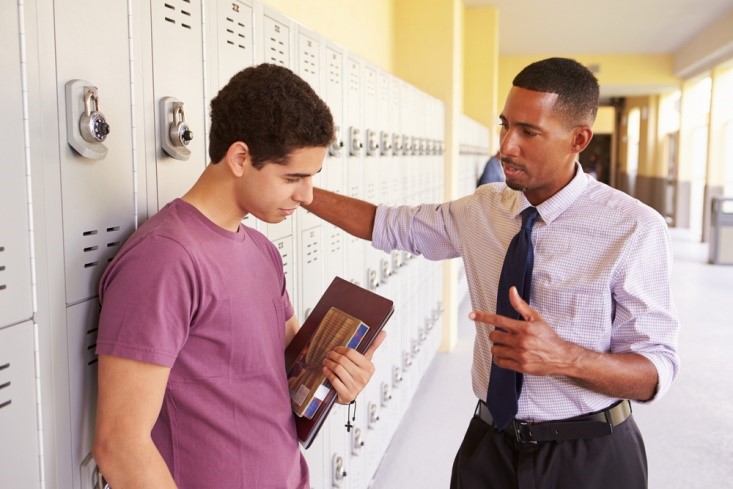
What Makes a Great School Counselor

For many of us, there’s no better feeling than having a positive impact on a kid. Growing up can be tough, and school and what lies beyond can feel like a maze. You’ve been through it yourself, and if you were lucky, you had a school counselor who helped set you on the right path.

If you’ve been teaching and want to switch gears, or if working with elementary, middle school, or high school students feels right and you know you have a lot to offer, a career in school counseling may be a perfect fit for you. You can even keep your current job while you get a Masters of Education in School Counseling at one of the country’s best colleges for counseling.

With a bachelor’s degree (in any field) from an accredited university, and taking only two classes per semester, most online degree programs can be completed in eight semesters and will qualify you for Licensed Professional Counseling Certification. Go to this website to find out the exact requirements and curriculum involved. There’s usually even financial aid available.

Being a school counselor means becoming personally involved with young students of all ages and helping them along the way to becoming productive and successful adults. School counselors work as a team with administrators and families to meet challenges students might be facing at school or at home, and serve as mentors on the journey to high school graduation and beyond.

At every level, what makes a great counselor is compassion and the ability to understand a student’s needs, interests, talents, and desires, and relate them to real-world options. Maybe above all is skill at listening to both what the student says and doesn’t say, and knowing how to channel his or her strengths and overcome his or her weaknesses.

The specific scope of the work varies with the age of the children:

Elementary School

Working with young children in elementary school, counselors are often involved with students who have behavioral issues or learning disorders. Their work can involve assessing those problems and conferring with parents and teachers as to recommended ways to resolve them, sometimes bringing in other professionals like psychologists and therapists. The earlier these kinds of difficulties are dealt with, the smoother the road a child has to academic success.

Middle School

It’s in middle school that students who may have had childhood dreams about being ballerinas or cowboys begin thinking in earnest about what they want to be when they grow up. A school counselor at this point can be an invaluable aid in guiding middle-school students toward other opportunities they may not even have known existed.

Working with students at both ends of the academic spectrum — from those with learning disorders to those in advanced placement classes — a counselor is called upon to adapt thoughtfully to each child’s needs and be a sounding board for their concerns.

High School

High School

In high school, students begin wrestling with the very real choices that lie before them. College is a goal for many, but which college and why? Technical training instead of a traditional university is another option, and students who might be inclined in that direction need help in evaluating those choices and the careers they may lead to.

High school counselors are often involved in helping students select classes and electives that will bolster their chances of acceptance, and assist them in applying to schools and finding financial aid. At the same time, high school counselors are sometimes called upon to help kids through difficulties in the social realm that can derail even the best students. Often a student finds a counselor easier to take a problem to than a parent, and it’s a fortunate teenager who has a counselor he or she can really talk to.

College-Level

Counselors at the college level work with students to plan courses of study and maximize the benefits of their degrees. They may help direct them to graduate studies that fit their career goals, and counsel them on available internships and entry-level jobs. Some may even offer assistance with writing resumes and learning how to interview. It’s a great counselor who sends a new graduate off into the working world with the confidence and skills to succeed.

For more information, and lists of each state’s licensing requirements for school counselors, visit the American School Counselor Association.


Online Tutoring Service Reaches Industry Milestone

NetTutor, an online tutoring service operated by Link-Systems International (LSI) that provides support in any subject, recently reached an industry milestone by conducting more than three million one-on-one tutoring sessions.

The 24-hour tutoring service, which pioneered the concept of online tutoring way back in 1996, is used by undergraduate, graduate, community, public, and private college students all over the United States in courses ranging from accounting to zoology.

NetTutor was able to have such a significant breakthrough for three reasons: it’s easy to use, its tutors are talented and caring, and the company partners with college administrators to accommodate their ongoing needs.

A simple interface

NetTutor offers assistance in an incredibly wide variety of subjects beyond the traditional math, science, and English. In fact, it includes such specialized areas as nursing, microeconomics, criminology, and music history.

 To initiate a tutoring session, students just click on the “Join Live Tutorial” button. They don’t need to download anything or have a ridiculous amount of bandwidth available. Even better, tutors and students collaborate via a proprietary whiteboard interface that allows them to use course-specific tools, type, draw, and use symbols.

High-quality tutors

NetTutor only hires tutors that are deeply committed to helping students become more successful learners. All tutors must have a four-year degree from an accredited university, a minimum GPA of 3.0 in any subjects they will be tutoring in, teaching or tutoring experience, empathy, and patience. Most of the tutors hold advanced degrees in their subject specialties.

In addition, the tutors have to complete a month-long training period to learn about the pedagogical and technical challenges of online tutoring.

Students say that NetTutor consistently exceeds their expectations and that the tutors are top notch. “The tutors are extremely helpful and they actually take time to explain,” says Kacey, a college student who lives in Georgia. “Both of the tutors I used frequently were interested in the grades I made on every exam that they helped me study for. NetTutor helped me reach my goal of an A and B in both portions of my anatomy and physiology classes!”

Strong industry partnerships

NetTutor integrates into almost every learning management system, and colleges can receive usage reports, student tutoring records, and archives of student sessions. If necessary, LSI will customize reports to meet administrators’ needs.

 “The ongoing relationship with the NetTutor service and LSI has proven to be of great value to the Oregon State University (OSU) Ecampus. We always have a resource available for students. NetTutor has provided us with learning support, timely reporting, and a rewarding professional business relationship with a reliable provider,” says Joan Oakes, student services specialist at OSU Extended Campus.

To the next milestone

The people behind NetTutor plan to help as many millions of students as they can. “Reaching three million tutoring sessions means we’ve been able to help a substantial population of students, across a range of higher-ed schools, improve their understanding of the course material,” says Vincent Forese, president of Link-Systems International. “Our customers report that NetTutor generates improved grades and stronger retention—a win for both the students and the colleges.”

The Next-Generation Science Standards and the Future of Learning

Cross-curricular lessons prepare today’s students for tomorrow’s jobs.

By Ted Levine

There is no public intellectual in our society who is better able to peer far into future than ISTE’s 2016 opening speaker, Michio Kaku. To a packed auditorium of thousands of teachers and educational leaders, the theoretical physicist gave a powerful address not only on the future of education, but on the future of society at large—and the role education needs to play in order to achieve that future.

One particular remark stood out to me: “Jobs of the future will require creativity, imagination, and experience… This means that educators are going to have to stress concepts and principals, rather than drudgery of memorization.” When I heard this, I immediately thought of the Next Generation Science Standards.

Unlike Common Core, NGSS have received a warm embrace from educators. The standards aim to address a critical challenge of 21st-century society in the United States: a shortfall of STEM talent across the country. That sounds pretty simple, but to be honest, the standards themselves are heavy in verbiage. Unless you spend several rounds reading through them, they can be hard to decipher. So what do they actually call for?

At the highest level, NGSS differs from previous science standards in that they call for a deeper level of context. In the past, science standards have aimed to have teachers present lessons so that students can memorize specific material and, more often than not, be tested on it. The standards didn’t call for application of that material beyond regurgitating it onto a test. But let’s think back Kaku’s quote. We need to raise a generation of thinkers and doers, and fortunately the NGSS aims to add the “doing” as a key component of science education.

A great example of how an NGSS-designed lesson differs from a traditional science lesson comes from Dr. Lauren Madden, an assistant professor of elementary education at the College of New Jersey. Instead of teaching a traditional lesson on the different forms of matter—in which students might be taught the basic principles of solids, liquids, and gases—Dr. Madden adds in an element of “doing” that brings these principals front and center through experience. She asks her students to create their own boats out of everyday materials (solids), put those models into water (liquid), and evaluate how well the boats perform. Based on their observations, student rework their models, all the while applying the principals of solids and liquids in practice.

Certainly in the above example, the remodeling of boats through observation requires some degree of creativity. But what if we take the concept of “context” and extend it one step further. What if we add into this lesson a component of history? How does this lesson apply to the broader world in which we live, not just the principals of solids and liquids?

What a lot of educators don’t realize is that science and social studies are often taught in silos not because that’s the best way to teach them, but because that’s how content and information have been distributed in the past. Furthermore, a specific scope and sequence of material and lessons are based on the distribution of a finite amount of content, traditionally in the form of a textbook. But we don’t need to follow those same rules in the future. In fact, we should design lessons and experiences that encourage a 360-degree view of a particular concept or principle, and encompass content and context that span several areas of study.

To create this kind of fluid learning experience, we should look to Marshall McLuhan—like Kaku a public intellectual who gazed into the future—who famously said, “The medium is the message.”

Only with thoughtfully interconnected digital curriculum can we empower students to answer far-ranging but interconnected questions such as “Why do we have boats in the first place? What role do boats play in our lives today? How have boats influenced the course of history and civilization throughout the world?” With standards-aligned digital curriculum, incorporating activities that help reinforce specific science principles like solids and liquids is just the tip of the iceberg. Let’s go beyond that and find ways to build a comprehensive view of how those principles impact humans and how we as a global society interact with one another. We can even tie in the impact those interactions have on the planet we inhabit.

Incorporating physical science, geography, world history, and earth science in the same lesson may sound like an unlikely scenario. But in my opinion, it’s a challenge we should accept—and with the power of digital curriculum, I believe it’s a goal we can accomplish. If we can all put on Kaku’s lens for a moment, we can envision entirely new kinds of lessons that harness the power of cross-curricular design and achieve a level of context never before seen in K-12 education.

Ted Levine is the president and CEO of the award-winning social studies and science publisher Kids Discover.

Equity Comes to SAT Prep

SAT testing is changing, and college admissions along with it. Urged by college admission officers to make a change, the College Board released an expanded essay portion of the standard college entry test for 2016. The increase in writing is intended to better determine the communication skills of potential college students, who often show up without basic writing competency (according to studies).

The SAT is an end point, though, and not intended to be a benchmark on learning. It’s supposed to tell potential colleges what a student already knows, and in what ways that student is already competent. As a result, students must already be skilled writers when they take the test, making essay-writing practice a now-essential part of SAT prep.

In a time where information is ubiquitous, the ability to write critically is a necessary skill – but how can students learn it? Even the best writing instructors face typical classroom issues that can stand in the way of making their students shine – from crowded classrooms, to disinterest from students, to needed remediation but no time to make it happen. College-bound kids MUST have writing expertise, and the change in SAT testing now ensures it.

So how can teachers reach all of their students with effective writing tools that help them improve and ultimately get into college?

SAT Prep for ALL Students

Turnitin – the company most teachers know for its plagiarism detection software – recently released its Revision Assistant software that guides students through the writing process. The platform provides feedback for students on the spot, giving them the chance to revise their documents unlimited times until the writing is clear, concise and error-free. Revision Assistant is designed for students in grades 6 to 12, but is also for use by those taking foundational college writing courses.

By the end of this year, students from all walks of life can access free writing practice in a publicly available version of Turnitin’s Revision Assistant, as part of a Khan Academy package that uses real SAT writing prompts. Students will be able to access step-by-step writing guidance that will ultimately prepare them for the SAT’s new essay portion.

Revision Assistant as SAT Tool

I think that the power of technology like Revision Assistant is a turning point for disadvantaged students who often can’t afford one-on-one tutoring. Revision Assistant gives real-time feedback on writing, offering tips on how to improve on it both contextually and technically. Now that there is a free version available, equitable access to this fantastic tool is available.

That immediate feedback is not lost on students. In pilot studies, students revised an average of six to ten times using Revision Assistant to improve their writing. When students can see exactly what needs improvement, and are guided in the steps to get there, their writing improves. I’ve written before about how student-friendly the aesthetics and functions are on Revision Assistant and that’s even more important to note now that even more students will have access to it.

Using technology to improve writing is a smart way to prep students for the SAT, and college beyond it, and Revision Assistant is providing that much-needed service in an equitable way.

A Blended Approach to Phonics Helps Struggling Readers and Improves Test Scores

A principal set out to find a literacy tool to help dyslexic students but ended up revolutionizing her early literacy curriculum.

By Dr. Christy Hiett

According to the International Dyslexia Association, approximately 15% of the general population has some symptoms of dyslexia, with a significant number of them going undiagnosed. Many young students with dyslexia struggle silently and have lifelong literacy issues. To help these students, in the fall 2015, the Alabama State Board of Education voted to define dyslexia as a learning challenge. This means every school in our state is required to screen students for dyslexia, and provide accommodations and intervention so they have the resources to become successful readers.

As part of the new requirements, Alabama schools provide assistive technology so students with dyslexia have the option of having text read to them and using speech-to-text software instead of writing. Last fall, I was informed our first dyslexia-diagnosed student was planning to transition to Fruithurst for the following school year. At the time, Fruithurst didn’t have assistive tech meeting the requirements for dyslexic students, so I began my search for the right technology tool.

Building a Foundation of Phonics

To prepare, I took a trip to a nearby school in Georgia to see what tools they were using to help students who were classified with dyslexia and other reading disabilities. There, I discovered a phonics-focused, blended learning print and digital curriculum called Reading Horizons that is designed to help students with dyslexia and a wide range of reading difficulties.

Fruithurst is a rural school where 76% of students are considered at poverty level, and getting students to read at or above grade level has often been a difficult task for us. After seeing a steady decline in student reading levels over my eight years as an administrator, I finally found the key to reversing that trend: ensuring that all students receive a solid phonics foundation.

In January 2016 we overhauled our entire K–2 reading curriculum to include Reading Horizons Discovery® direct instruction and software. Our goal was to serve students with reading disabilities as well as provide all of our students with a solid reading foundation.

The Blended Approach

Fruithurst uses Reading Horizons Discovery as its main reading program for students in grades K–2, and as reading intervention. Lessons typically last 30-40 minutes per day and incorporate whole-group instruction, small-group work, and individual work time. Many of my teachers use print resources like word list cards for dictation and transfer activities during whole-class instruction. Then, they use the digital program during reading stations so students can practice and reinforce the skills they worked on as a group.

Within two weeks of overhauling the K–2 curriculum, Fruithurst saw increases in student test scores, especially through spelling tests. I saw students as young as kindergarten learning how to decode words and, ultimately, to read. The decoding process actively involves students in their own learning: Students stand up from their desks and use whiteboards to decode words using the phonetic skills. We’ve found the phonics-based curriculum is a great solution for a classroom of children with a mixture of ability levels because it challenges those at a higher level while reinforcing phonics skills for children who are still struggling.

The engaging and comprehensive program helps children truly learn phonetic skills as opposed to memorizing spelling words for a test and forgetting them the next week. Before, many students were not doing well on spelling tests because they couldn’t grasp the concepts of the English language “code”. A handful of students were constantly making zeros and lacked the most basic foundations for spelling. I’m happy to report even students who were making zeros were making 100s after only a few weeks!

A Literacy Success Story

A great example of how our new approach works was a first-grade student who entered Fruithurst after completing kindergarten, twice. After multiple moves between family members and foster homes, he transferred to Fruithurst with the hope of finding a quality education and a stable living situation. Teachers diligently tried to teach this student to read, and to help him look past his struggles at home for a few hours each day, but he continued to struggle and had failing grades. With the implementation of the new phonics curriculum, he started getting 105% on spelling tests within a few weeks.

After grasping the concept of phonics, he was able to connect what he was learning to the classroom, which is something this particular student had never done before. He finished the school year above average, full of confidence in his ability to read.

At Fruithurst, the hunt for a new curriculum to help students with dyslexia and other struggling readers evolved into a complete curriculum overhaul. Using a blended approach to teach core reading skills allows students to move at their own pace and allows teachers to provide appropriate intervention to struggling readers. I am now confident that all of our students are receiving a great phonics foundation and have the best possible chance to be great readers in the future.

Dr. Christy Hiett is the Principal of Fruithurst Elementary School in Fruithurst, Alabama.

Black Boys in Crisis: Does Anyone Even Care?

In this series, appropriately titled “Black Boys in Crisis,” I highlight the problems facing black boys in education today, as well as provide clear steps that will lead us out of the crisis.

When we talk about reaching students in our classrooms that come from disadvantaged backgrounds, we tend to put several groups under one umbrella. Minority students. Immigrant students. Kids from low socioeconomic households. While it’s true that all of these groups of students need a different approach than their white, English-speaking, middle-class peers, our education system is not yet doing enough to address specific needs within these at-risk groups. The initiatives that help one group tremendously may not have as large a positive impact on another, and vice versa.

Black boys are a student demographic that has been, and continues to be, misunderstood in P-20 classrooms. Misbehavior, learning styles, and social skills are often misconstrued as problems by educators when in fact, black boys are simply not receiving the most effective forms of discipline, lessons, and peer-interaction opportunities. As a result, many are slipping through the proverbial cracks and not learning at their potential levels. That lack of learning leads to higher school dropout levels, higher rates of poverty, and higher incarceration rates, too.

Perhaps there is no real connection between the academic failures of black boys and incarceration/poverty, or the eerily similar statistics associated with young Latino men. Are these young people simply bad apples, destined to fail academically and then live a life of crime? Proponents of genetic predisposition would argue that these young men never stood a chance at success and have simply accepted their lots in life. When I hear these sorts of excuses for why we aren’t best serving the black boys in our classrooms, I often think they are just too easy to be the right answers. They are all just too convenient, particularly if the people speaking them into existence come from backgrounds and experiences that are not indicative of black young men.

What if all of these theories, these so-called truths about these often-vilified children learning in our schools, are just the lazy way out? What if scoffing at a connection between a strong education and a life lived on the straight and narrow is an easy way to bypass the real issues in K-12 learning that actually put real barriers in place for black boys? What if the failures of black boys are really our faults, not theirs?

While there is always a level of personal responsibility on the part of the student to weigh in, I believe all of society’s failures when it comes to black boys are traceable back to education. While it is certainly not the fault of teachers or classroom settings, placing the blame on outside factors, like family setup or poverty, does not actually solve the problem. Schools, particularly public ones, are great equalizers for our children and youth.

When we have disadvantaged students in our midst, why aren’t we employing every tactic we’ve got into trying to combat those outside factors that are so detrimental? When we throw up our hands and say that black boys can’t be saved, or that individual students are better off serving suspensions or expulsions than sitting in our classrooms learning, we are really saying that we don’t have any power in the lives of our students. I think most rational educators would argue that is the farthest argument from the truth.

Consider this: Black students tend to have lower amounts of teachers who are certified in their degree areas. A U.S. Department of Education report found that in public high schools with at least 50 percent Black students, only 75 percent of math teachers were certified, compared to 92 percent in predominantly white schools. In English, the numbers were 59 and 68 percent, respectively and in science, they were 57 percent and 73 percent. Numbers like these are just the tip of the iceberg when it comes to the disadvantages that take place in schools where children of color are the majority. When those children are boys, the outlook is even more dismal.

As an educational community, it’s time to stop acting like generational poverty and crime are not related – that harsh discipline in schools is not related to incarceration rates. Low rates of literacy and high rates of special education referrals among black boys aren’t coincidences. There isn’t one reason that black boys are failing on such a large scale; the factors that play into the general underachievement of the black young men in our classrooms are varied, and complicated. Like all of the intricate problems in our school systems, improving the achievement of black young men in our schools won’t happen overnight.

Black Boys in Crisis: The School-to-Prison Pipeline

In this series, appropriately titled “Black Boys in Crisis,” I highlight the problems facing black boys in education today, as well as provide clear steps that will lead us out of the crisis.

It’s a statistically sound fact that high school dropouts in all demographics have a higher likelihood of incarceration at some point in their lives. Sadly, over half of black young men who attend urban high schools do not earn a diploma. Of the dropouts, nearly 60 percent will go to prison at some point. In fact, The Sentencing Project projects that 1 in 3 black men will likely see the inside of a prison cell at some point in their lives. The connection here is not just superficial.

Yes, it’s fair to say that high school dropouts are more likely to commit crimes because they do not have the means to make an honest living, but I also think this connection centers on a mentality. The same black boys who believe they aren’t good enough to earn the basic American right, a high school diploma, are the ones who feel they cannot make a solid contribution to society at large.

In order to delve more deeply, we need to go even further back. The decision to drop out of high school, after all, isn’t reached overnight. There are many factors that play into any student’s choice to not continue on to earn a high school diploma, some that are completely out of the control of the school and others that are certainly influenced by it.

Look in the face of any Kindergarten student and you’ll find some common themes: innocence, unquenchable curiosity, and potential. More so than the grades that follow, Kindergarten is a mixed bag of developmental, social and academic levels. Some kids arrive with a few years of childcare and preschool under their belts, while others have never even had a book read to them. The students who arrive in these Kindergarten classrooms are already products of their limited life experiences but their public school classrooms are intended to be equalizers. In a perfect world, what has happened outside the classroom should not be a factor in the learning environment and all students should have the same clean slate.

The reality, of course, is that the behavior of children is impacted by their life experiences and that behavior does impact the way a classroom functions. Kindergarten is just the first opportunity in our official public school system for teachers to effect positive change in students who need it from a behavioral standpoint – the real work starts before that though. The U.S. Department of Education Office for Civil Rights reports that black students make up just 18 percent of preschoolers but account for almost half of all school suspensions.  Those statistics don’t improve with age. Around 5 percent of white students are suspended or expelled at some point in a K-12 career, compared with 16 percent of black students.

Enter the school-to-prison pipeline, or the correlation between students who are removed (suspended or expelled) from school and those who end up in prison at some point in their lives. Students who are removed from school, either temporarily or forever, also drop out of high school at much higher rates than students who are never removed from a classroom setting.

A study published by the University of Pennsylvania reports that black students make up 39 percent of students suspended in Florida, which doesn’t sound all that terrible until you consider another statistic: black students only account for 23 percent of the public school population in Florida. The study notes that black students are suspended and expelled more due to “unfair discipline practices” and appearing as “disrespectful or threatening.”

While the numbers for the state are bad, it gets worse in Orange County in the central part of the state where Orlando is located. Making up just 27 percent of the county’s public school population, black students represents 51 percent of the students suspended.

This is just a small portion of the country, of course, but consider this: 18 percent of the nation’s public school students are black but an estimated 40 percent of all students that are expelled from U.S. schools are black. This makes black students over three times more likely to face suspension or expulsion than their white peers. When you add in Latino numbers, 70 percent of all in-school arrests are black or Latino students. If you want to see the correlation between these school-age statistics and lifetime numbers, consider this: 61 percent of the incarcerated population are black or Latino – despite the fact that these groups only represent 30 percent of the U.S. population when combined. Nearly 68 percent of all men in federal prison never earned a high school diploma.

Given this information, the fact that the U.S. has the highest incarceration rate in the world is no surprise. The road to lockup starts in the public school systems — and it starts with unfair punishment.

Sixty-five percent of U.S. public schools reported at least one violent incident in 2013-2014, according to the National Center for Education Statistics (NCES) in their schools each year, but that number rises to 82 percent for schools where black students make up a majority. Though Hispanic boys are the most likely to be involved with gang activity at school, it is certainly an issue for black boys too – with 31 percent of students nationwide reporting seeing black gang activity in their schools. Violence is just one part of the criminal side of K-12 hallways, though. There are also higher numbers of non-violent crimes, like theft, in schools where more students are black than any other race.

All of that being said, there is still plenty of violence in schools where black students are the minority, and those acts are committed by non-black students. It’s also important to note that reporting standards for school crime may vary from school to school. This isn’t to say that educators and administrators are not telling the truth in predominantly white schools, but rather to say that based on other statistics, students of color tend to face harsher punishment for even the smallest offenses.

What do you think? Do students of color really face harsher punishment in K-12 schools across America?

Black Boys in Crisis: Why Are Schools So Quick to Lock Them Up?

In this series, appropriately titled “Black Boys in Crisis,” I highlight the problems facing black boys in education today, as well as provide clear steps that will lead us out of the crisis.

Over and over statistics show that punishment for black boys – even first-time offenders – in schools is harsher than any other demographic.

Black boys taken from schools in handcuffs are not always violent, or even criminals. Increasingly, school-assigned law enforcement officers are leading these students from their schools hallways for minor offenses, including class disruption, tardiness and even non-violent arguments with other students. It seems that it is easier to remove these students from class through the stigma of suspension or arrest than to look for in-school solutions.

Simply put, the currently accepted way of disciplining students—mainly “zero tolerance” policies — is doing more harm than good for young black boys.

When one student is causing a classroom disruption, the traditional way to address the issue has been removal – whether the removal is for five minutes, five days or permanently. Separating the “good” students and the “bad” ones has always seemed the fair, judicious approach. On an individual level this form of discipline may seem necessary to preserve the educational experience for others. If all children came from homes that implemented a cause-and-effect approach to discipline, this might be the right answer.

Unfortunately, an increasing number of students come from broken homes, or ones where parents don’t have the desire or time to discipline. Even the parents with the skillset to discipline in this fashion may not have the time or energy, especially in a home where finances are tight. For these students, removal from education is simply another form of abandonment and only furthers the lesson that they are not good enough to learn alongside their peers.

High profile instances of school violence in recent years have led to a higher presence of law enforcement officers in public schools, often politely labeled as resource officers or a similarly vague term. Of course the presence of guns and other immediate danger items in schools are cause for arrest, or at least temporary removal of the student, but the American Civil Liberties Union reports that children as young as 5 throwing tantrums have been removed in handcuffs by these officers. Rather than addressing the heart of the individual problems, it is easier for public schools to weed out troublesome students under the umbrella of protecting the greater good. Convenience triumphs over finding actual solutions.

The term “zero tolerance” may sound like the best way to handle all offenses in public schools, but it really does a disservice to students. Not every infraction is a black and white issue and not every misstep by a student is a result of direct defiance. Often students with legitimate learning disabilities or social impairment are labeled as “disruptions” and removed from classroom settings under the guise of preserving the learning experience for other, better-behaved students. I suppose there is an argument to be made for protecting straight-and-narrow students from the sins of others, but at what cost?

We tell students that gaining an education is an unalienable right in America but then we withhold it from their peers in the name of discipline and order. Would we withhold food from students who interrupted our math lesson? Of course we wouldn’t because nutrition is something that isn’t earned – it is a necessity for growing children. The same is true of education. Our knee-jerk reaction of removal, particularly of children of color, is not one that has the best interest of any children in mind.

Though ideology on problem students is slowly evolving, at least at present the removal process is most widely accepted. So let’s look at what happens when these individuals, these students who are suspended or expelled, do eventually slip through the accepted cracks and wind up dropping out of high school or landing in prison.

Children are just as much a product of their environments as the expectations placed on them. Parents on a first-name basis with law enforcement officials certainly influence the behavior of their children, but school authorities with preconceived negative associations create an expectation of failure too. Increasingly, educators are learning how to recognize the signs of textbook learning disabilities like ADHD or dyslexia. But what about the indirect impact that factors like poverty, abuse, neglect or simply living in the wrong neighborhood have on a student’s ability to learn? Why aren’t we finding ways to identify the known risk factors for academic impairment and intervening earlier?

Educators should approach students from disadvantaged backgrounds with more understanding, and less preconceived notions. Behavior is a choice but students who have never seen the right way to act modeled for them, or who are looking for that extra bit of attention in classrooms, bad behavior is an academic disadvantage. Instead of less time in classrooms, black boys and especially those with very minor behavior issues should participate more in the learning experience.

Black Boys in Crisis: Solutions to the School-to-Prison Pipeline

In this series, appropriately titled “Black Boys in Crisis,” I highlight the problems facing black boys in education today, as well as provide clear steps that will lead us out of the crisis.

People who fall outside this fringe group of perceived misfits may wonder why the school-to-prison pipeline should matter to them. Outside of caring about the quality of life for other individuals, which is really something that is not teachable, the school-to-prison pipeline matters in more tangible ways. Each federal prisoner costs taxpayers $28,948 per year based on 2012 statistics, which is about $79 per day. That’s a measurable cost. What isn’t measurable is the indirect impact those incarcerations have on the economy in terms of those prisoners not contributing to the work force. Sure, we may pay the salary of prison employees or the CEOs of large prison privatization corporations but we are missing out on the positive impact these prisoners could have on our economy.

This is an American problem.  It hurts everyone. If we want more high school graduates, less crime, and a more robust economy, we have to stop punishing black boys with school removals or discipline effects that don’t match the offense.

If removal and zero tolerance policies don’t help black boy students long term, what is the best way to discipline students when they do misbehave?

The best answer is found long before the moment when discipline is necessary. Prevention and intervention tactics need a place in all teaching pedagogy and those tactics must adjust for demographics – and individual students. Schools need to offer robust programs for at-risk students that include mentoring from older students, after-school tutoring, and customized learning. If all of this sounds like a lot of work, that’s because it is.

Technology is making the customized learning portion much easier though and also allowing teachers to analyze student performance in a streamlined way long before problems arise. And as simple as it sounds, teachers must approach behavior problems with students in the same way they approach academic problems – with an analytical eye that looks for the best solution that will benefit everyone. Notice that I didn’t say the easiest or best for all the other students in class. I said the best solution for everyone – teacher, peers, and individual student. The benefits to keeping a child in class, or at least in school, far outweigh emotionally kicking a child out of class or recommending suspension.

Educators can certainly strive to reduce suspension and expulsion rates with better intervention and strategy. But what about the students who choose to walk away from their educations when they drop out of high school?

Students who are at risk of dropping out of high school or turning to crime need more than a good report card.  They need alternative suggestions on living a life that rises above their current circumstances. For a young person to truly have a shot at an honest life, he or she has to believe in the value of an education and its impact on good citizenship. That belief system has to come from direct conversations about making smart choices with trusted adults and peers. If we know how much less a high school dropout makes than peers with a diploma, and peers with a college education, then we should tell all high school students that number.

It’s not enough to imply that dropping out of high school is a bad idea; students should have all the facts. For students who struggle socially or behaviorally in high school, schools should intervene with non-traditional options like online courses. This is also true for students who feel the pressure to start earning a living early. The technology is already in place for all students, regardless of discipline issues or life circumstances, to earn a high school diploma. A college degree is nice too, of course, but the true key to ending the school-to-prison pipeline for black boys is keeping them in classrooms instead of removing them, and getting them across the stage to receive their high school diplomas. It will take an organized ideology shift but it’s possible, even in the next generation of black boy students.
