Uncategorized

Black Boys in Crisis: How to Get Them to Read

In this series, appropriately titled “Black Boys in Crisis,” I highlight the problems facing black boys in education today, as well as provide clear steps that will lead us out of the crisis.

The statistics point to a startling, yet simple, truth: black boys who cannot read are already in trouble. So if we know that black boys aren’t reading the level they should, what can we do to improve that? It starts with awareness and extends to:

Customized reading plans

A large part of improving the reading rates of black boys is to provide curriculum plans that are a little less rigid and a little more nuanced. As adults, the reading materials we pick up for the pure joy of reading are as varied as we are and it’s acceptable for individuals to prefer certain genres over others. Kids don’t have the same freedom. In fairness, before kids can determine what reading materials they will love, they must first have exposure to a wide variety. Still. When reading is uninteresting, it’s hard. That’s something that doesn’t change into adulthood. Early learning teachers, from preschool through the rest of elementary school, must have a diverse knowledge of the reading materials available for their age groups and try, try, and try again until a certain subject or genre clicks.

The idea that all Kindergartners, and older grades, should read the exact same things is not only flawed, it’s unnecessary. Today’s technology makes it simple for kids to read a variety of materials that are equal in grade level to each other, even if the topics differ. There is even educational software that creates supplemental and testing materials based on the individual pieces that children read so that teachers are not tasked with writing 20 different lesson plans based on reading preferences. Young children love fantasy, but they also connect most with what they know.

Diversity in reading materials and the ability to choose what to read based on interests will go a long way toward pulling black boys into the literacy realm early on and keeping them there. This is true from preschool through college graduation. This strict adherence to a literary canon filled with mainly white, European, male authors and viewpoints hurts all of our students, but particularly those of color. To instill a love for reading our students have to genuinely love what their eyes see. That view must expand to include much more diversity in options, both electronic and books in hand.

Intervention targeting

The concept of learning everything first, and testing last, is starting to see its way out of our classrooms – but not fast enough. Feedback throughout the learning process, and taking action immediately when students are falling behind, is a much smarter way to keep students invested in learning. A student who misses out on a learning concept will not learn at the next level and that will continue indefinitely until remediation occurs. Teachers are on the frontlines of intervention, and parents are a close second string. Parents whose own parents were never involved in their learning pursuits may not know how to follow their kids’ progress and some may simply not care. When either scenario takes place, it falls on the teacher to step up and fill in the learning gaps.

When it comes to intervention targeting, Kindergarten teachers should take entry assessments as more than a baseline number; they should see them as a call to action. Very specific actionable steps should be at the disposal of the teacher so when certain weakness are noted, there is a plan in place that addresses them. These plans must be thorough and come with benchmarks that delve deeper than what the average and above-average performing students must achieve. Does this mean more work for teachers? Some extra upfront time and planning time, yes. Which is why entire school systems must recognize the need for better reading intervention that begins on day one of Kindergarten, whether that manifests itself in more teacher aides, better technology for reading customization, or more reading specialists on staff.

I’m not suggesting that teachers label and remediate every student individually, but rather that more concrete policies on how to bring students up to speed are put in place in school districts around the country. In public schools this is especially vital. While it’s true that some parents choose public schools, the majority of children attend out of default. It’s not a bad thing – but parents who take the time to research and send their children to non-public options often have the time and energy to follow the academic journeys of their kids. There’s a stronger chance that a child in a public school needs that extra watchful eye of a teacher in order to reach goals. That eye can’t just observe; it must take what it sees and use it as a tool for strengthen academic weaknesses.

Individual intervention is not the only thing that black boys need to read better and perform at a higher academic level. Blanket programs that research, create, and deliver literacy-driven content to black boys should exist. Public schools are wards of the state but this issue is too big to leave to the whims of partisan-driven agendas. More federal oversight into what black boys, and all at-risk groups, are reading from their earliest days in public school classrooms is needed.

These programs need insight from experts in the fields of education, literacy, minority studies, and even civil rights. To really get to the heart of the problem of black boys not reading at an acceptable rate, expertise must combine with first-hand experience. Teachers who work in early education classrooms should certainly sit on the consultation teams in order to develop appropriate standards of intervention based on real-life scenarios that take place. A wider approach to answering the needs of black boys in a reading crisis will go a long way toward raising awareness and actually impacting individual children.

Black Boys in Crisis: How to Solve the Black Boy-Special Education Problem

In this series, appropriately titled “Black Boys in Crisis,” I highlight the problems facing black boys in education today, as well as provide clear steps that will lead us out of the crisis.

The statistics on high numbers of black and Latino boys in special education programs is more than an interesting tidbit – it’s a call to action. What can we do to identify true learning delays and isolated behavior problems and disseminate them from disabilities?

Early intervention.

Here we are again, using the word intervention to identify an actionable step to improve academic success for black boys. There’s a reason intervention is more than just a buzz word; catching developmental delays early on shows the greatest promise for improvement. This starts before Kindergarten in the Head Start programs across the country and state-run intervention initiatives, like Florida’s Early Step program. Investments in early education have shown to return as much as $17.07 to society on every dollar spent.

Doctors are at the frontlines of the early intervention referral program and know what warning signs to heed, even when parents may not. The time between a doctor’s referral and the start of services can take several months, depending on the state and resources available, and that is precious time in the development of the child. For early intervention to have its biggest impact, the time between suspicion of delays and start of services must be accelerated. Children who are diagnosed with developmental delays by the age of 3 have the best shot at catching up to their peers by the time they reach Kindergarten. After that age cutoff, the likelihood of children keeping with their classmates fades.

When black boys with obvious developmental delays do wind up in Kindergarten classes, however, it’s vital that teachers spot it. This takes specialized training that is updated and repeated throughout a teacher’s career to address the ever shifting issues facing our youngest students. Change also calls on teachers to look beyond their preconceived notions of learning disabilities to determine which students may have a shot at overcoming the hurdles and avoiding the special education label. Rather than grouping students for life, we need to start looking at some academic and behavioral issues as temporary and applying the resources we can to guide students over the hurdles.

Mainstreaming

The idea that special education students should be removed in order to learn best is actually being flipped on its head due to recent research. A study done at The Ohio State University found that special-needs preschoolers who spent at least some time in classrooms with typical students had language scores 40 percent higher than peers who remained in special-needs only settings. The improvements extended beyond the special-needs kids, as well. The highly-skilled peers also improved their reading skills over rates from when no special-needs students were in the classroom. In short, the “weakest link” mentality did not apply.

It’s true that true special needs students need a different educational plan than their mainstream peers and that ultimately means some time outside the typical classroom. Special needs students should never be completely isolated from their peers though, and in cases where the classification is not accurate, that will become apparent as children overcome the developmental hurdles they face.

Cultural awareness

It’s extremely vital that teachers have a knowledge set of students outside of their own life experiences and an understanding of how the way those children behave is impacted by it. Students without the benefit of preschool or parents who had the time and availability to teach them literacy basics will not perform as well when they arrive in classrooms. Next to their peers who have had such advantages, they may even seem delayed. It’s important to note, however, that the first required schooling for American children is Kindergarten. There is a push for a lot more learning a lot earlier, but from a purely legal standpoint, kids are not required to show up to learn until they are Kindergarten age (which is defined as late as 7 years old in some states). The cultural expectation is that these children should already know a lot when they arrive, both academically and socially, but for children from families who waited for that Kindergarten age, it truly is the first time they’ve seen a classroom.

Universal preschool in states like Florida, Illinois and Oklahoma can help bridge that learning and socialization gap for low-income families but once again, these programs are voluntary. It’s not fair or accurate for educators to assume that even in states when preschool education is affordable or free, parents are taking advantage of it. There are many factors that go into the level of education families pursue for their children before the school years officially start. Compared to peers, this puts children with no prior classroom experience at a disadvantage. But compared to what is actually required of the students when they show up on that first day of Kindergarten, these blank slate students are exactly where they need to be from a learning perspective.

With that in mind, early grade educators must know the difference between true special education warning signals and a kid who just needs to catch up. There are evaluation processes in place beyond the teacher but it starts in a classroom. This isn’t to say that teachers should try to champion behavior or learning issues they cannot change but merely for them to be aware that not all children have the advantages of an early learning foundation. That doesn’t mean necessarily that all of those children have special education needs.

What do you think? How should schools address this issue?

Black Boys in Crisis: Why Are So Many of Them in Special Education?

In this series, appropriately titled “Black Boys in Crisis,” I highlight the problems facing black boys in education today, as well as provide clear steps that will lead us out of the crisis.

Special education classes have changed drastically in the past 20 years. Namely, the students who take advantage of these adapted learning classrooms have changed. Contemporary public school education recognizes that there are degrees of disabilities that may impact student learning and the rise of conditions like autism has fueled the need for more special education intervention.

As a result, the mental image that even today’s youngest educators have of special education students is probably not accurate. For example, did you know that black boys are more likely than any other group to be placed in special education classes, with 80 percent of all special education students being Black or Hispanic males?  Black boys account for 20 percent of U.S. students labeled as mentally retarded, even though they represent just 9 percent of the population. On the other end of the extreme, black boys are 2.5 times less likely to be classified as “gifted and talented” even if their academic record shows that potential.

If all things were weighed equally, these statistics would indicate that there is something genetically wrong with these young men that is causing a higher incidence of disabilities and smaller percentage of gifted individuals. Educators know better. While some, perhaps even a majority, of the black boys categorized as special education students belong in that grouping, some are simply misunderstood.

While unpleasant behavior is certainly a symptom of learning disabilities – like ADHD and some degrees of autism – it isn’t in and of itself a disability. A lack of understanding surrounding how black boys interact with the world, and a quick trigger when it comes to disciplinary and removal practices, is contributing to higher-than-average numbers of black boys in special education classrooms. This is not something that any educator can sit by and let continue, for it impacts the way all students are treated in the public school landscape.

Black Boys in Crisis: The Lack of Positive Role Models

In this series, appropriately titled “Black Boys in Crisis,” I highlight the problems facing black boys in education today, as well as provide clear steps that will lead us out of the crisis.

There are plenty of black men who positively impact the young men coming up in their communities. Some are high-profile while others are local businessmen, or even teachers. As a general statement, however, black boys have less people to look up to and hold accountable than their white, and even other minority, peers.

Consider these statistics: Less than half of black males’ graduate high school on time. In 2008, only 11 percent of black males in America had completed a bachelor’s degree – and only half of the 4.6 million who had attended college had made it to graduation. Seventy-two percent of black children are raised in single-parent households and the national average is only 25 percent. Those single parents are more likely to be employed than the national average, but also more likely to live in poverty. Here’s a humbling stat on incarceration: 61 percent of the U.S. prison population is black or Latino.

School is a second home to K-12 students and black boys don’t have many role models who look the way that they do. Black males make up just 2 percent of the K-12 school teacher population. Less than 20 percent of U.S. teachers are not white even though minority students combined make up a majority of K-12 students. It’s not that educators who are female and white can’t have a positive impact on the lives of their students – they certainly can and do. There’s a difference between a teacher who has a different life viewpoint than you and a true role model. Black boys need to see adults like them who are high school graduates, have college degrees, are successful in the workplace, and who aren’t incarcerated. If that adult also happens to be a teacher, even better. How do we make that happen though in a school landscape that is a far cry from it right now?

Better recruitment

Here’s a thought: If we aren’t seeing enough diversity in our teaching pool, perhaps we need to try harder to bring them into the industry. This starts before college, though. Young black men of promise in middle and high school should see the field of education as a life path for them. Schools of education at colleges need scholarships to recruit these men and school districts need the extra funding to attract these men when they have their degrees.

The Call Me MISTER Program, first started in South Carolina, has made its way south and onto the campus of Edward Waters College. Starting in 2000 at Clemson University, the Call Me MISTER Program was designed to “increase the pool of available teachers from a broader, more diverse background particular among the State’s lowest performing elementary schools.”

In essence, the program is needed to address the low number of minority male teachers. According to the Department of Education, less than two percent of public teachers nationwide are black men.

This program aims to increase that number by offering scholarships to qualified applicants.

To apply for the program, applicants must have a high school diploma with a 2.5 GPA or better, letters of recommendation, an ACT score of 21 or higher, an SAT score of 1000 or better, and two essays. One to express interest in the program and the other regarding “Why I Want to Teach.”

Why is having more black men in the classroom important? Yes, it’s great for the purpose of diversity and to increase numbers that are tracked by the government. But for many students who need positive black male role models, this program certainly is one of the more important ones offered by our institutions of higher education.

More outreach from the business community

Educators alone simply cannot turn the tide for black boys of color. It’s important that those who have been successful breaking free of poverty or incarceration turn back around and inspire the next generation to do the same.

An example of this in action happened on the first day of school 2015 when 100 men of color wearing suits greeted elementary students of color on their first day of school.

The message these men were trying to send was that if you did work hard and get good grades in school, you’ll eventually find some semblance of the American dream in life. It’s what all kids are taught as they matriculate through grade school. It’s why we so often hear the saying that one should “dress for success.”

This image contrasts against the statistics, which state that black male “students in grades K-12 were nearly 2 1/2 times as likely to be suspended from school in 2000 as white students” and that most of the nearly 2.5 million people in prisons and jails “are people of color…and people with low levels of educational attainment.”

From pictures to videos, so many kids of color see men of color as effigies of what not to become. The criminal on the news is likely a man of color and so is the high school drop-out. Seeing a roaring crowd of black men cheering on young students from kindergarten to fifth and sixth grades was not only heartwarming, it was inspiring. A suit represents so much more than just a tailored look. It’s success; it’s happiness; it’s an ability to overcome; it’s positive; it’s anti-everything we’ve been feed to believe that’s negative about black men. For each kid seeing that image, it’s eternal.

I applaud this action and know it will have a long-term impact. Now it’s time for more men of means and success to throw their own hats in the ring as mentors and role models.

How to Save Time Lesson Planning, Grading This School Year

Teachers: if you could have one additional thing to help in your classrooms this school year, what would it be? More technology? Better behaved students? Less paperwork?

How about more TIME?

When all things are equally weighed, you’d probably spring for the time component (even though a few more iPads might be nice). Teachers spend 95 minutes per weekday outside the classroom on preparation and grading and the typical teacher workday is actually 10 hours and 40 minutes according to a Bill & Melinda Gates Foundation survey. Early mornings, nights, weekends – you name it, and teachers are working during it. Teachers can’t just show up before the bell and leave when it sounds at the end of the day and expect to succeed. There is a lot of work that happens when students are not in their seats and it’s necessary work to support students.

What if those additional 95 daily minutes of prep and grading could be cut in half? Or even by 75 or 85 percent?

Teacher Prep goes High-Tech

I recently had the chance to demo Ogment, an educational content curation tool that “clips” relevant information online and saves it for teachers to use in lesson planning and execution. Unlike other systems that simply allow you to save links to reference later, Ogment actually “scrapes” the content so you have all the details, including images and videos, when you are ready to piece it together for a lesson. Ogment allows teachers grab content off the web and strip out the extraneous muck, align the content to standards, cite, format and enhance the content with other technology. In short, Ogment makes lesson creation much easier and less time consuming.

ogment 1ogment 3

Ogment offers The Stream – a treasure trove of content that teachers can search to find materials on the lesson at hand. Teachers can also collaborate inside The Stream and share content. Teachers can even add their own content to complete lesson plans. And all of the organized content is searchable.

ogment 4

Teachers can project the content in their Ogment accounts for students and also manage assignments within the tool. A live curriculum mapping tool keeps both students and teachers on track, too. Customized lesson planning is possible based on student progress tracking within the tool, making it easy to modify lessons for students or student groups.

ogment 5

The technology behind Ogment is so cutting-edge that it actually won a SIIA CODiE award, an AAP Revere award, and three Bessie awards when it was still in pilot program testing. It’s now officially rolled out to the public with the benefit of feedback from actual teachers and administrators in how the platform best works.

Ogment’s Relevancy in Today’s Classrooms

When I was a public teacher, I would have LOVED to have a curation tool like this so I had more time and energy to devote to my actual students. I know the digital native teachers-in-training in our colleges today can make an even bigger impact with the type of technology streaming that Ogment provides, too. By freeing up some of that time traditionally weighed down by research and compilation for lesson planning, teachers have more energy to inject into what actually matters: supporting student progress.

Want to start this school year off with better organization? Try a free 30-day trial with Ogment.

Black Boys in Crisis: They Aren’t Reading?

Literacy is the basic building block for the rest of an academic career and the lifetime that follows it. Research shows that kids who come from homes where reading was a priority, and they were read to by their parents, perform better academically throughout their lives. The National Center for Education Statistics reports that Kindergarten students who are read frequently to at home are more likely to count to 20, write their own names, and read (or pretend to read).

Only 53 percent of children ages 3 to 5 are read to every day by a family member, though, and that number drops for families with incomes below the poverty line. The importance of parental influence in reading extends beyond the youngest grades. The U.S. Department of Education reports that fourth-grade classrooms with low parental involvement have students with average reading scores that are 46 points below the national average.

Reading isn’t important just for its own sake, however. Literacy is the foundation for all other learning endeavors. The Educational Testing Services reports that students who read more in their homes perform better on math assessments. The connection between reading in early childhood and its impact on future years is clear. Since parents, grandparents, and siblings are the default role models most of the time during that vital 0 to 5 age group, the responsibility to instill early literacy falls on families.

That’s a problem for black boys. Only 10 percent of eighth-grade black boys in the U.S. are proficient in reading. In urban areas like Chicago and Detroit, that number is even lower. By contrast, the 2013 National Assessment of Education Progress found that 46 percent of white students are adequate readers by eighth grade, and 17 percent of black students as a whole are too. The achievement gap between the two races is startling, but the difference between the NAEP report on black students as a whole and the stats on black boys alone is troubling too. This is where that important dissection between at-risk groups needs to take place. It is not simply black children in general who appear to be failing in the basics, like literacy; it is the boys.

Where does that disconnect arise? Hypothesizing from the NAEP data, a brother and sister from the same household could have vastly different literacy levels, even if they come from the same environment and are read to the same amount of time (even if that amount of time is none). That difference – that gap in literacy achievement – shouldn’t fall on parents. That’s the fault of our schools. Literacy learning is tailored to girls. So how do we adapt it to better reach our boys – particularly our young men of color?

Reading is only one piece of the school puzzle, of course, but it is a foundational one. If the eighth graders in our schools cannot read, how will they ever learn other subjects and make it to a college education (or, in reality, to a high school diploma)? Reading scores tell us so much more than the confines of their statistics and I believe these numbers are one of the major keys to understanding the plight of young black men in our society as a whole.

What Teachers Need to Streamline Lessons, Assessments

Despite all of the educational technology advancements of the past decade, the connection between in-class learning and assessments remains blurry. With state standards changing by the school year in some cases, it takes a lot of work to know WHAT to teach – and even more work to make sure that knowledge is expressed by students on the assessments. Aligning lesson plans with state standards takes some strategizing, even if the teacher is well aware of the requirements. All of that takes time – a lot of it – and teachers already work an average of nearly 55 hours per week, according to a Scholastic study.

Technology has the power to shrink that workload though and there are already some edtech companies ahead of the curve.

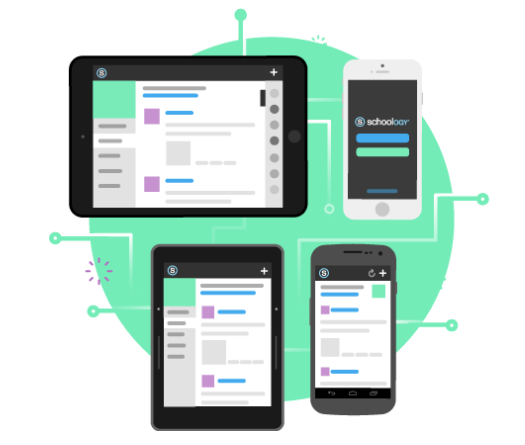
I’ve was recently able to demo Schoology, a learning management system that enables teachers with the tools to create learning content, organize lesson plans, communicate with students, collaborate with other teachers/administrators/parents, and manage the entire learning process. This all happens from a browser-based system that teachers can access anywhere with their login credentials. Schoology has third-party integration tools, too, so teachers don’t have to create their own lesson content in a vacuum.

Screenshot 2016-08-02 17.46.19


Schoology is available at the K-12, college, and corporate levels. The platform’s implications for K-12 teachers, however, are what impressed me most. Generally speaking, the level of involvement in an individual’s education gets smaller as that person gets older. In Kindergarten, parents, teachers, administrators and other caregivers are heavily involved in the education of their young students (or should be, at least). By high school, that involvement is still existent but in less hands-on ways. College and continuing education for careers usually just involve the student and his or her determination to succeed.

K-12 teachers, then, should have the most collaboration tools at their disposal. That’s not the case, though, as K-12 educators know all too well. Schoology is the first learning management and assessment management system I’ve seen that streamlines the “whole picture” of what teachers do and need for their students to succeed. It helps that the platform is incredibly easy to use and is accessible from anywhere with an internet or data-plan connection. Screenshot 2016-08-02 17.46.41

Schoology allows:

  • Connection between all school members, even after the school day ends.
  • District wide collaboration
  • Global connection between educators using the Schoology platform
  • Integration with the systems already in place at your school
  • A mobile app available on any iOS, Android or Kindle device
  • Analytics and performance tracking that boosts decision-making powerScreenshot 2016-08-02 17.46.52


Schoology is a one-stop platform for planning, teaching, collaborating, analyzing, and even testing.

Connecting to Assessments

Schoology takes its learning management system a step further than other platforms with its Assessment Management Platform. Essentially, Schoology employs an assessment engine that curates learning content and makes it available for assessment-building by teachers. It’s not just teachers, though. Districts can create and assign assessments within the system too, and deliver them in several language options.

There’s a lot of variety in the type of assessments educators deliver, from weekly quizzes to end-of-year exams. Schoology’s AMP addresses it all, each larger assessment unit building on the smaller one before it. It’s especially effective for district-wide required testing, as Cherry Creek Schools near Denver learned with its annual Algebra I assessment. I interviewed Cherry Creek’s District Instructional Technology Coordinator Kellie Ady for an Education Week piece and asked her specifically about the difference between the assessment pre-Schoology AMP, and post. Ady said that assigning work, testing students, and recording student progress/success was a cumbersome and disjointed process before Schoology. After participating in the beta program of Schoology, using just the Algebra I classes and assessments in the district, Ady said the process was much more streamlined. Teachers received immediate feedback and students were able to take the assessments in an interface that was comfortable and familiar.

“Moving forward, we will add more classes and assessments to the Schoology AMP. It just makes sense from an efficiency and effectiveness standpoint,” Ady said.

To learn more about Schoology’s learning management system and assessment management platform, head to Schoology’s K-12 features page.

Technology has the Power to Equalize Personalized Learning

Technology has the power to greatly improve equality in learning opportunities in K-12 classrooms. Not every school can afford the latest high-priced learning management software, but what if all you needed was internet access?

I recently had the opportunity to demo the personalized learning platform Kiddom and learned about a lot of cutting-edge features that are streamlining teaching.

Class Mastery

Kiddom was co-developed by serial entrepreneur Ahsan Rizvi, former alternative educator Abbas Manjee, and growth engineer Jordan Feldstein. Manjee is a teacher by trade who once worked with at-risk students in the South Bronx. During his 6 years as a public school teacher Manjee used the technology available to him (not much, and not very advanced) to figure out ways to better teach to the individual student. His system worked but wasn’t as streamlined as he knew it could be. Manjee also knew from talking with other teachers that their own students could benefit from a streamlined system and with the added expertise of Rizvi and Feldstein, that hunch became a reality.

Class Mastery 1

Today, tens of thousands K-12 teachers use Kiddom, some just for the gradebook feature and others for the full-platform experience.

See, what Kiddom creators got right is this: most teachers are haphazardly using multiple resources, aggregating on their own, and using a less-than-stellar grade book option because it’s all they have at their disposal. All of that takes up too much time and can frankly lead to some understandable frustration. Kiddom cuts right to the heart of that conundrum by consolidating resources and placing everything a teacher needs for lesson planning, grading, classroom organization, student tracking, and assessments in a central, easy-to-use hub.

Kiddom contains standards for all 50 states and updates its offerings when those standards change, making it easy for teachers to lesson plan and write assessments. In addition to classroom teachers, homeschool parents and groups have also signed on with Kiddom as a way to create lessons, track progress, and monitor state academic standards.

The end goal of Kiddom tools is not to simply automate assessments, though. It’s to create richer, more engaging projects by providing more time (and accessible content) for teachers. It’s amazing what educators can develop for students when they aren’t being overburdened with constant quick-fire assessment creation, grading, prepping for high stakes tests, and related tasks. Kiddom frees up that bandwidth so teachers can provide better learning experiences for students.

Teacher Influence 

Teacher input is important to growth of the Kiddom platform, so the company has a team of advisors called the “brain trust” that use the platform and offer insight and feedback. Anyone can apply to be part of the brain trust group, and there are also less formal teacher message boards and forums that give teachers access to answers right away.

Teacher-Student Communication

Some of the unique features of Kiddom include:

  • A teacher’s control center, with detailed reports on student progress that inform next-step instructional details.
  • Content library, with material for assignments, quizzes, videos, games and more. Some of the content partners include Khan Academy, CK-12, IXL, and CommonLit.
  • Third-party integration, so teachers can sync with other classroom management tools they already use, like Google Drive.
  • Direct teacher-student feedback.
  • Concise rubrics for students that guide them on what they should be doing and when.
  • Easy setup, with one-click student roster setup from Excel, Google or Clever.
  • Student access to real-time reports on what they’ve accomplished, what is still assigned, and where they need improvement.
  • Alignment and sharing ability for assessment material based on Common Core, state, or custom requirements.
  • The Kiddom mobile app, giving students and teachers all the classroom resources on-the-go.

The affordability of Kiddom (it’s free for teachers and students) makes it a smart tool for classroom management. Providing equity in resources is so important in our at-risk student populations and I’m so impressed that this message is at the heart of what Kiddom offers. I like that a public school teacher is part of Kiddom’s leadership team and that classroom teachers continue to drive improvements on the platform.

To sign up for Kiddom for free and request a demo, head to Kiddom.co.

What Makes 5th-Graders Dig Deeply into Texts?

An information and technology literacy specialist shares how a combination of digital and print resources helped him and his students.

By Josh Jackson

Fifth-graders can sometimes have a hard time discussing and reflecting on text-heavy content lessons. Last year, two of our 5th-grade classes were EL clusters. More than a dozen students were English language learners and had difficulty with text comprehension. There were also 10 students with various learning disabilities who required differentiated instruction to facilitate learning.

To help these students learn in a low-anxiety environment, last December my K–5 Media classes started exploring the beta version of Capstone’s 1:1 literacy solution. As part of this exploration, I partnered with the 5th-grade teachers to pilot the pre-built lessons available from pivotEd, too.

pivotEd provides a slick solution for 1:1 schools like ours to help students break out important aspects of text, reflect using a variety of mediums, and embed visual clues to help the learning process. Themes of the lessons we used included Explorers, Communities Around the World, Forces of Nature, and Electricity.

pivotEd’s combination of digital and print resources gave me a variety of options at my fingertips so I could scaffold the material as I saw fit for my students. It also allowed me to quickly check for understanding through digital means, and follow up with any lingering questions by looking through the archived responses.

Other teachers also reported to me that they used the pivotEd lessons to introduce a variety of topics. One teacher noted that the program would be great to use with stations, especially with the higher-achieving students. She wanted to set them up independently in the program and have them work together with like-achieving peers.

Students really latched onto pivotEd. While using the program, students who tended to be quiet in class were able to reflect and collaborate much more with peers via digital means than they would have otherwise. All of my students were also able to transition the knowledge they learned in the 1:1 environment to hands-on activities in the class—pivotEd transitioned nicely into our FOSS Science Kits. With print and digital resources tied to hands-on work, the content stuck—that’s a big worry of some teachers.

When the new school year starts in the fall, I look forward to continuing our exploration and supporting the classroom teachers in whatever content and methodology they choose to best fit the needs of their students.

Josh Jackson is a K-5 information and technology literacy specialist and the STAR summer program coordinator at North Trail Elementary in Farmington, Minnesota.

Want to follow Capstone on Twitter? Follow them @CapstonePub

High School Vocational Courses Need Updating, More Women

Cornell University recently released new research that demonstrates that women have largely been left out of the vocational education and apprenticeship equation.

Working class communities that implemented vocational high school training reduced both men’s and women’s likelihood of attending a four-year college, research shows. Many students who take such courses enter the workforce immediately or enroll in a professional apprenticeship or certificate program. The goal of these programs is to equip students with the skills necessary to fill in-demand jobs quickly. However, offering career and technical school options to high school students lead to different outcomes for men and women as they begin looking for jobs.

The study found that there is a greater number of men enrolled in vocational high school programs, compared to women and they had a higher rate of employment upon course completion. Women participating in the programs were less likely to be employed at all and less likely to work in a professional occupation when they were employed. For women who secured high-skilled jobs, the pay was less than their male counterparts. Among 25 to 28-year-old high school graduates in such positions, women made 78 cents for every dollar men made.

A recent bill was introduced to examine the career and technical education law, which has not been updated for over a decade. This law dictates federal support to state and local technical education programs with the aim at placing students in high demand, skilled occupations.

One concerning issue facing career and technical programs for both young men and young women is their lack of availability to students. For example, in Philadelphia’s public school system in 2014, 11,000 applications were submitted for its career and technical program, while there was only room for 2,500. In Massachusetts, 4,600 students are on a wait list for similar programs.

The importance of technical education has risen and clearly needs to more effectively incorporate women in the years to come.