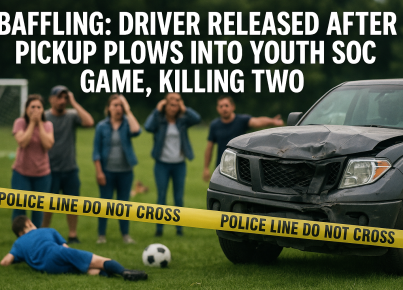
Imagine waking up to a frantic message on your phone, an image attached showing stern-faced immigration agents outside a familiar building – perhaps your workplace, or a place where your friends gather. The image looks disturbingly real, the uniforms crisp, the expressions grim. Now imagine you’re an undocumented immigrant, living with the constant, low hum of anxiety about deportation. That’s the chilling reality for many in places like San Francisco, where sophisticated AI-generated images of fake Immigration and Customs Enforcement (ICE) raids are circulating, sowing genuine fear and panic.
It’s a frightening new frontier in misinformation, one where the digital merges with the deeply personal. These aren’t just crude fakes; these are increasingly realistic AI-generated images, designed to deceive. They’re spreading like wildfire through tight-knit community networks, particularly on platforms like WhatsApp, and the consequences are anything but artificial. For individuals like Juan, an undocumented immigrant in the Bay Area, receiving such an image depicting ICE agents outside a Chipotle wasn’t just a fleeting worry; it triggered an immediate, visceral response. He quickly warned his colleagues, mentally preparing for a potential raid, the kind of fear that disrupts lives, causes missed work, and undermines the fragile sense of security many in these communities desperately try to maintain. The San Francisco Rapid Response Network has confirmed what many suspected: these alarming visuals are indeed AI-generated, a stark reminder of the deceptive power now wielded by advanced AI.
The Unsettling Realism of AI-Generated Images
What makes these particular AI-generated images so potent and dangerous isn’t just their existence, but their escalating realism. We’ve all seen early examples of AI-generated art, often quirky, sometimes surreal. But the technology has advanced at a breakneck pace. Today’s generative AI models can produce visuals that are almost indistinguishable from genuine photographs, capturing nuances of light, shadow, texture, and even human expression with terrifying accuracy. This isn’t about a simple Photoshop job; it’s about algorithms learning from vast datasets of real images and then creating entirely novel ones that mimic reality down to the smallest detail.
Think about the details Juan described: ICE agents, identifiable uniforms, a specific, recognizable location like Chipotle. These aren’t generic scenes. They’re tailored, or at least appear to be, to specific contexts that resonate deeply with the fears of immigrant communities. When an image appears to show agents operating in a familiar neighborhood, or outside a business frequented by community members, it gains an immediate credibility that a more generic fake might lack. This isn’t just a technical achievement for AI; it’s a social weapon, capable of exploiting vulnerabilities with precision. The speed at which these images can be created and disseminated, coupled with their increasing fidelity, presents a monumental challenge for those trying to combat misinformation.
How Deepfakes Exploit Trust Networks
The method of distribution is as crucial as the realism of the AI-generated images themselves. These fakes aren’t typically appearing on mainstream news sites or even overt propaganda channels. Instead, they’re propagated through the very channels built on trust: private messaging apps like WhatsApp. Within immigrant communities, these apps are lifelines. They’re used to share information about job opportunities, community events, family news, and crucially, safety alerts. When a message comes from a friend, a family member, or a trusted community leader within these tight-knit groups, it carries an inherent weight. The instinct isn’t to scrutinize; it’s to believe and to act. (See: CDC on immigrant health concerns.)
This exploitation of trust is particularly insidious. People aren’t checking Snopes or fact-checking websites when a message from their cousin warns of an immediate threat. Their primary concern is protecting themselves and their loved ones. This creates a perfect storm for misinformation: highly realistic AI-generated images, crafted to trigger deep-seated anxieties, spreading through channels where critical thinking is often superseded by immediate concern and trust in the sender. It means that by the time a fake image is debunked, the damage – the fear, the missed work, the disruption – has already been done. It’s a psychological blow that leaves lasting scars, further eroding trust in information itself.
The Tangible Impact on Vulnerable Communities
While the images themselves are digital fabrications, their impact is profoundly real. For undocumented immigrants, the threat of an ICE raid isn’t abstract; it’s a constant, background hum of anxiety. These AI-generated images amplify that fear, transforming a general worry into an acute, immediate panic. Consider the ripple effects: a person like Juan sees an image, believes it, and misses a day of work to avoid a potential raid. That’s a lost day’s wages, which for many in these communities can mean the difference between putting food on the table or falling behind on rent. Multiply that across dozens, hundreds, or even thousands of individuals, and you start to see the significant economic and social disruption these fakes can cause.
Beyond the immediate financial strain, there’s the psychological toll. Living in a constant state of alert, where every unexpected message could signal a genuine threat, is exhausting and debilitating. It breeds paranoia and deepens distrust in institutions, in information, and even in one another. These AI-generated images aren’t just spreading false information; they’re actively undermining community cohesion and mental well-being. They force people to make difficult decisions based on non-existent threats, leading to unnecessary stress, isolation, and a pervasive sense of insecurity. The very fabric of community support can begin to fray when the reliability of shared information is so thoroughly compromised.
The Broader Implications for Misinformation and AI Ethics
The misuse of AI-generated images to simulate ICE raids is a particularly chilling example, but it’s really just the tip of a much larger iceberg. This incident serves as a stark warning about the broader implications of advanced AI in the context of misinformation. If AI can convincingly fake something as sensitive as an immigration raid, what else can it fake? We’ve already seen deepfake videos used to create fake political speeches or to spread defamatory content. The ability to generate realistic, context-specific images and videos on demand means that verifying the authenticity of visual information is becoming exponentially harder for the average person.
This raises profound ethical questions for the developers of AI technology. While the creators of these generative models likely didn’t intend for them to be used to terrorize vulnerable communities, the potential for misuse is inherent in their power. Should there be stricter controls on who can access and use these technologies? Are there mechanisms that can be built into AI models themselves to detect and flag their own output as synthetic? These aren’t easy questions, and the answers will undoubtedly involve complex trade-offs between innovation, freedom of expression, and public safety. But ignoring them is no longer an option. The current situation demands a serious, global conversation about AI ethics and the responsibility of those who develop and deploy these powerful tools. (See: Associated Press news on misinformation.)
Combating the Tide: Community Response and Digital Literacy
In the face of such sophisticated deception, what can be done? Community organizations like San Francisco’s Rapid Response Network are on the front lines, playing a crucial role. They act as trusted sources, verifying information and dispelling rumors in real-time. When Juan received that fake image, it was networks like these that could confirm its artificial nature, offering a measure of reassurance, even if the initial fear had already taken hold. These networks often have direct lines to legal aid, immigration experts, and local authorities, allowing them to quickly ascertain the veracity of reported incidents and communicate accurate information back to the community.
Beyond rapid response, there’s a growing need for widespread digital literacy education. We need to equip individuals, particularly those in vulnerable communities, with the tools to critically evaluate the information they encounter online. This means teaching people how to spot the subtle tells of AI-generated images – though these are becoming increasingly hard to discern – and, more importantly, to cultivate a healthy skepticism. It means encouraging people to verify information with trusted sources before sharing, especially when the content is emotionally charged or designed to provoke an immediate reaction. It’s a monumental task, akin to teaching a new form of critical thinking for the digital age, but it’s absolutely essential if we are to counter the pervasive spread of AI-driven misinformation. This isn’t just about spotting fakes; it’s about fostering resilience against psychological manipulation.
The Role of Tech Platforms in Battling AI-Generated Misinformation
While community efforts and digital literacy are vital, the platforms where these AI-generated images spread also bear significant responsibility. Companies like Meta (owner of WhatsApp, Facebook, and Instagram) and X (formerly Twitter) are grappling with the sheer volume of content, much of it now AI-generated. There’s a growing call for these platforms to implement stronger moderation policies, develop better AI detection tools, and provide clearer labeling for synthetic media. Imagine if WhatsApp had an automatic flag for images suspected to be AI-generated, prompting users to verify the content. This kind of intervention, while challenging to implement at scale without infringing on privacy, could significantly slow the spread of harmful fakes.
Some platforms are exploring watermarking or metadata solutions that could embed information within AI-generated images to indicate their synthetic origin. However, bad actors are always looking for ways to bypass these safeguards. The challenge is immense, requiring continuous innovation from tech companies to keep pace with the rapidly evolving capabilities of generative AI. It’s not just about removing content after it’s gone viral; it’s about proactive measures that prevent the damage in the first place, or at least mitigate its impact by offering immediate context and verification options to users.
Ethical Frameworks for AI Development
The conversation around AI-generated images and misinformation circles back to the core ethical considerations for AI developers. The “move fast and break things” mentality simply doesn’t work when the “things” are human lives, trust, and societal stability. There’s a strong argument for integrating ethical design principles from the very beginning of AI model development. This means anticipating potential misuse cases and building in safeguards, rather than reacting to crises after they occur. For example, some AI models are being trained with filters to prevent the generation of overtly violent or discriminatory content. However, the nuance required to prevent images of fake ICE raids, which are deceptive rather than overtly violent, presents a more complex technical challenge. (See: New York Times coverage of immigration.)
Governments, too, have a role in establishing regulatory frameworks that balance innovation with accountability. Discussions are ongoing globally about how to regulate AI, from data privacy to transparency and safety. The incident with AI-generated ICE raid images serves as a potent case study, highlighting the urgent need for these discussions to translate into actionable policies that protect vulnerable populations from the darker applications of powerful AI tools.
Looking Ahead: The Future of AI-Generated Images and Society
The current situation with fake ICE raid images is a chilling harbinger of what’s to come. As AI technology continues its relentless march forward, the ability to generate convincing, deceptive content will only improve. We’re entering an era where distinguishing between what’s real and what’s AI-generated will become a constant, conscious effort. This isn’t just a challenge for immigrant communities; it’s a challenge for democracy, for journalism, and for the very fabric of shared reality.
Consider the implications for elections, for public health campaigns, or even for personal relationships. If AI can create images that instill fear or spread division, it can also create images designed to manipulate public opinion, discredit individuals, or sow widespread distrust in institutions. The solutions won’t be simple. They’ll likely involve a multi-pronged approach: technological safeguards, robust fact-checking initiatives, legal frameworks to address malicious deepfakes, and a sustained investment in public education. Ultimately, our ability to thrive in a world saturated with AI-generated content will depend on our collective capacity to adapt, to question, and to rebuild trust in verifiable information. It’s a race against the machine, but more importantly, it’s a race for human discernment and community resilience. The future of AI-generated images is not just about the technology itself, but about how we, as a society, choose to respond to its unprecedented power.
Trending Now
Frequently Asked Questions
How are AI-generated images affecting immigrant communities?
AI-generated images are creating real fear among immigrant communities by depicting false scenarios, such as fake ICE raids. These images appear highly realistic and spread quickly through social networks, leading to panic and anxiety about deportation among undocumented immigrants.
What is the impact of misinformation on undocumented immigrants?
Misinformation, particularly through AI-generated images, exacerbates the fear of deportation among undocumented immigrants. It disrupts their lives, causes missed work, and undermines their sense of security, as they feel compelled to react to these alarming visuals.
Why are AI-generated images considered dangerous?
AI-generated images are dangerous because they are highly realistic and can easily deceive people. This level of realism can lead to panic and misinformation, particularly in vulnerable communities, as individuals react to false threats that seem credible.
What role do social media platforms play in spreading AI-generated misinformation?
Social media platforms, especially messaging apps like WhatsApp, facilitate the rapid spread of AI-generated misinformation. These platforms allow for quick sharing among tight-knit communities, amplifying the reach and impact of deceptive images.
How can communities protect themselves from AI-generated misinformation?
Communities can protect themselves by staying informed about the existence of AI-generated misinformation and verifying images before reacting. Engaging with trusted local organizations and networks can help spread accurate information and reduce panic.
What's your take on this? Share your thoughts in the comments below — we read every one.