
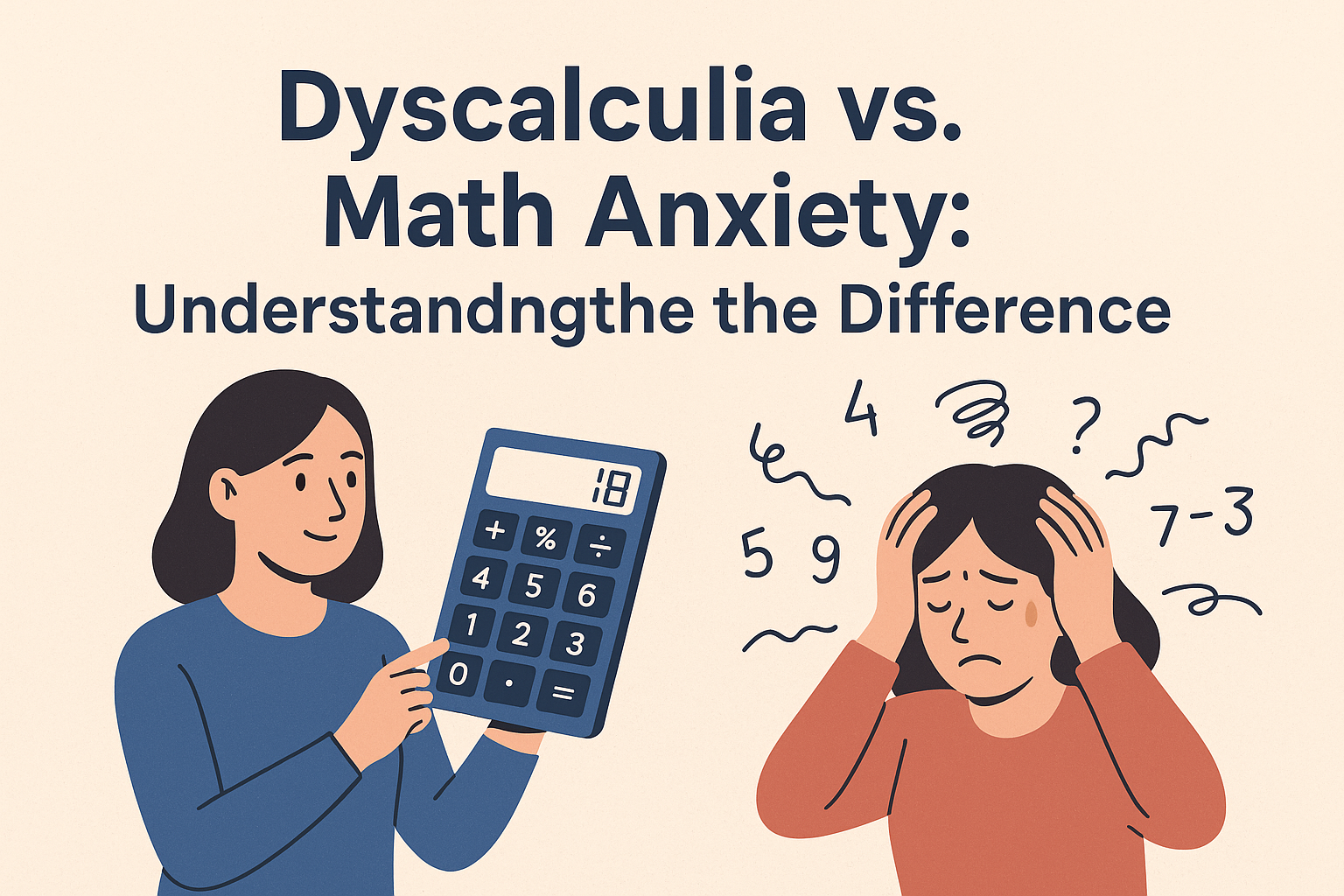

“`html
Math can often feel like a foreign language, filled with abstract concepts and anxiety-inducing numbers. For many, this struggle is compounded by the differences between dyscalculia vs math anxiety. Understanding these distinctions is crucial, especially for educators, parents, and those experiencing these challenges firsthand. This article delves deep into dyscalculia and math anxiety, examining their causes, symptoms, and the impact they have on individuals.
1. What is Dyscalculia?
Dyscalculia is a specific learning disability that predominantly affects an individual’s ability to understand numbers and perform mathematical tasks. It’s not merely a lack of mathematical skills; it’s a neurological condition that impacts how the brain processes numerical information. Research suggests that dyscalculia affects approximately 5-7% of the population, making it a significant concern within both educational and psychological contexts.
Individuals with dyscalculia may find it difficult to grasp number concepts, perform calculations, and understand mathematical symbols. Symptoms can vary widely, ranging from trouble telling time and estimating quantities to difficulties with more complex math operations like division or fractions. Many people with dyscalculia might excel in other areas but struggle profoundly in math, leading to frustration and low self-esteem. This builds on essential teacher insights.
2. Understanding Math Anxiety
Unlike dyscalculia, math anxiety is not a learning disability but rather a psychological condition that manifests as intense fear or apprehension regarding math-related tasks. This anxiety can lead to avoidance of math altogether and can severely impact academic performance and career choices. Estimates indicate that about 20-30% of students experience significant math anxiety, which can develop during childhood or early adolescence, often exacerbated by negative experiences.
Math anxiety can be triggered by various factors, including high-stakes testing, past failures, or even societal stereotypes surrounding math abilities. The fear of making mistakes can create a vicious cycle, where anxiety leads to poor performance, reinforcing the fear and perpetuating the problem. Those dealing with math anxiety might experience physical symptoms like sweating, a racing heart, and even panic attacks during math assessments.
3. Dyscalculia vs Math Anxiety: Key Differences
At first glance, dyscalculia and math anxiety may appear similar, particularly since both can result in poor math performance. However, dyscalculia vs math anxiety highlights distinct differences that are important to recognize. Dyscalculia is rooted in cognitive processing, while math anxiety is an emotional response to mathematical situations.
For individuals with dyscalculia, difficulties with math are not a result of fear or emotional distress but rather stem from a fundamental cognitive difference in how numbers are understood and manipulated. On the other hand, someone with math anxiety may possess the necessary cognitive skills to perform mathematical tasks but is hindered by their emotional response. This distinction is crucial when it comes to devising effective strategies for support and intervention.
4. Causes of Dyscalculia and Math Anxiety
The causes of dyscalculia can be linked to genetic, neurological, and environmental factors. Research has shown that dyscalculia often runs in families, indicating a hereditary component. Neurologically, brain imaging studies suggest that individuals with dyscalculia may have differences in brain regions responsible for numerical cognition, particularly the intraparietal sulcus, which is crucial for processing numerical quantities. (See: Understanding dyscalculia from NIH.)
In contrast, math anxiety is often situational and can develop in response to stressors such as high-stakes testing or negative reinforcement from educators or parents. Although it can be influenced by cognitive factors, environmental influences such as societal attitudes toward math can also play a significant role. Children who witness parents expressing anxiety about math or struggling with numerical tasks may internalize these fears, which can manifest later as math anxiety.
5. Symptoms and Signs
Recognizing the symptoms of dyscalculia and math anxiety is crucial for effective intervention. For dyscalculia, signs may include consistent difficulty with basic arithmetic, trouble with number sequences, and issues with tasks that involve counting or measuring. It’s important to note that these challenges persist despite adequate instruction and support, indicating that the issue is not simply due to lack of effort or practice.
Conversely, math anxiety manifests through emotional and physical symptoms. Individuals may experience extreme worry before tests, physical symptoms like nausea or sweating, and avoidance of math-related activities or courses. They may also express negative thoughts about their own math abilities, reinforcing a cycle of anxiety and avoidance. Understanding these symptoms can help educators and parents identify whether a child is grappling with dyscalculia, math anxiety, or both.
6. Effective Strategies for Support
Addressing dyscalculia vs math anxiety requires tailored strategies that align with the specific challenges presented by each condition. For students with dyscalculia, interventions often involve multi-sensory learning approaches that incorporate visual, auditory, and kinesthetic activities to build number sense. Tools such as manipulatives, visual aids, and technology-assisted programs can also be effective in helping students grasp mathematical concepts.
On the other hand, supporting someone with math anxiety involves creating a low-stress learning environment that encourages a growth mindset. Techniques may include relaxation exercises, positive affirmations, and reframing negative thoughts. Educators can help by using collaborative learning opportunities that emphasize teamwork over competition, reducing the pressure associated with individual performance. Providing opportunities for practice in a supportive setting can also help build confidence and reduce anxiety.
7. Current Relevance and Research
The relevance of understanding dyscalculia vs math anxiety has never been more pronounced. As educational systems increasingly emphasize standardized testing and STEM education, the pressure on students grows, potentially exacerbating math anxiety. Additionally, awareness of dyscalculia is improving, leading to better identification and support for those affected.
Recent research continues to explore the neurological underpinnings of dyscalculia, aiming to develop targeted interventions. Psychological studies are also shedding light on effective methods for reducing math anxiety, emphasizing the importance of early intervention and supportive educational environments. As more educators and parents recognize these issues, the hope is to provide a more equitable learning experience for all students.
8. Resources for Parents and Educators
For parents and educators seeking to support children experiencing dyscalculia or math anxiety, numerous resources are available. Organizations like the National Center for Learning Disabilities (NCLD) offer valuable insights into dyscalculia, including strategies for identification and intervention. Additionally, websites dedicated to math education often provide tools, games, and activities designed to build math skills in a fun and engaging manner.
Support groups and forums can also be instrumental for parents seeking advice and sharing experiences. Connecting with other families navigating similar challenges can provide emotional support and practical tips. Finally, considering professional assessment and intervention from educational psychologists or special education teachers can help tailor a child’s learning plan to their unique needs. (See: Mental health response by WHO.)
9. Personal Stories and Testimonials
Hearing firsthand accounts from individuals facing dyscalculia and math anxiety can be enlightening. Many share stories of how they struggled with math throughout their education, often feeling isolated and misunderstood. For instance, one individual with dyscalculia described feeling overwhelmed by math classes, despite working hard to understand the material. Their experience highlights the emotional toll that dyscalculia can take, leading to feelings of inadequacy.
Conversely, those with math anxiety often recount experiences of panic during tests or a relentless fear of math-related situations. These testimonials underscore the importance of empathy and tailored support in educational settings. By sharing these stories, we can foster a deeper understanding of the impact of dyscalculia and math anxiety, promoting a culture of acceptance and support.
10. The Path Forward
As awareness of dyscalculia vs math anxiety continues to grow, there is hope for a better future for students struggling with these challenges. Increased training for educators on recognizing and addressing these issues can create a more inclusive and supportive learning environment. Moreover, further research into the neurological aspects of dyscalculia and effective strategies for managing math anxiety can lead to improved educational outcomes.
Ultimately, fostering a culture that values diverse learning needs and encourages resilience will benefit all students. By addressing the unique challenges posed by dyscalculia and math anxiety, we can help individuals build confidence in their mathematical abilities and prepare them for future success.
11. Common Misconceptions About Dyscalculia and Math Anxiety
There are several misconceptions that can obscure the understanding of dyscalculia vs math anxiety. One common myth is that dyscalculia is just an excuse for poor performance in math. In truth, it’s a legitimate learning disability that affects cognitive processes, similar to how dyslexia affects reading abilities. Another misconception is that math anxiety only affects those who struggle with math skills. In reality, even proficient math students can experience significant anxiety around mathematical tasks.
Another misunderstanding is that people with math anxiety simply need to practice more. While practice can help, if anxiety is not addressed, the underlying fear may continue to hinder performance. Many individuals suffering from math anxiety require strategies that go beyond traditional practice, including emotional support and confidence-building exercises.
12. Statistics and Studies
Statistics reveal the severity of the challenges posed by both dyscalculia and math anxiety. For instance, a study published in the journal Learning and Individual Differences found that approximately 25% of students reported experiencing high levels of math anxiety, which significantly correlated with their math performance. In contrast, another study indicated that among students diagnosed with dyscalculia, around 70% struggled with basic arithmetic and number sense, highlighting the pervasive nature of this learning disability.
Furthermore, research shows that students with dyscalculia are at a higher risk for developing math anxiety as they progress through school. A longitudinal study found that early intervention can effectively reduce the severity of both dyscalculia and associated anxiety, underlining the importance of timely and appropriate educational support.
13. Frequently Asked Questions (FAQ)
What are the main signs of dyscalculia?
Signs of dyscalculia often include difficulty with basic arithmetic, confusion with numbers, challenges in understanding mathematical symbols, and trouble with sequencing or time management. Children may also struggle with estimating quantities or remembering mathematical facts.
How can I help my child with math anxiety?
Helping a child with math anxiety involves creating a supportive environment. Encourage a positive attitude toward mistakes, utilize calming techniques like deep breathing, and provide opportunities for low-stakes practice. Additionally, building a growth mindset can help them view challenges as opportunities for learning rather than threats.
Is dyscalculia recognized in schools?
Yes, dyscalculia is recognized as a specific learning disability in many educational systems. However, the level of awareness and available resources can vary. Schools are increasingly adopting individualized education plans (IEPs) to support students with dyscalculia.
Can you outgrow math anxiety?
While some individuals may find that their math anxiety diminishes over time, many continue to experience it into adulthood. Early intervention and ongoing support are crucial for managing math anxiety effectively.
Are there therapies specifically for dyscalculia?
Yes, several targeted interventions are designed for dyscalculia, including specialized tutoring, multi-sensory teaching techniques, and the use of assistive technology. Engaging with a professional who understands dyscalculia can provide tailored strategies that cater to the child’s specific needs.
“` Related reading: printable symptom checklist.
Trending Now
- our breakdown of iep accommodations for students with dyslexia and reading challenges
- the complete explanation
- How IEPs Support English Language Learners with Disabilities
- IEP Goals for Improving Executive Function Skills
- our breakdown of understanding your child’s iep: a parent’s guide for elementary school
Frequently Asked Questions
What are the symptoms of dyscalculia?
Symptoms of dyscalculia can include difficulty understanding number concepts, trouble performing calculations, and challenges with mathematical symbols. Individuals may struggle with telling time, estimating quantities, or executing complex math operations like division or fractions, leading to frustration and low self-esteem.
How does math anxiety differ from dyscalculia?
Math anxiety is a psychological condition characterized by intense fear or apprehension about math, while dyscalculia is a specific learning disability that affects numerical understanding and mathematical skills. Math anxiety can lead to avoidance of math tasks, whereas dyscalculia results in persistent difficulties with math concepts.
Can dyscalculia be treated or managed?
While dyscalculia cannot be cured, it can be managed through targeted interventions, such as specialized tutoring, educational accommodations, and the use of assistive technology. Early identification and support can significantly improve the mathematical skills and confidence of individuals with dyscalculia.
What causes math anxiety in students?
Math anxiety can stem from various factors, including negative past experiences with math, high-stakes testing pressure, and a lack of confidence in mathematical abilities. These elements can create a cycle of fear and avoidance, negatively impacting academic performance.
Is dyscalculia common among students?
Yes, dyscalculia affects approximately 5-7% of the population, making it a significant concern for educators and parents. Many students with dyscalculia may excel in other areas while experiencing profound challenges in math, highlighting the need for awareness and support.
Have you experienced this yourself? We’d love to hear your story in the comments.



