

“`html
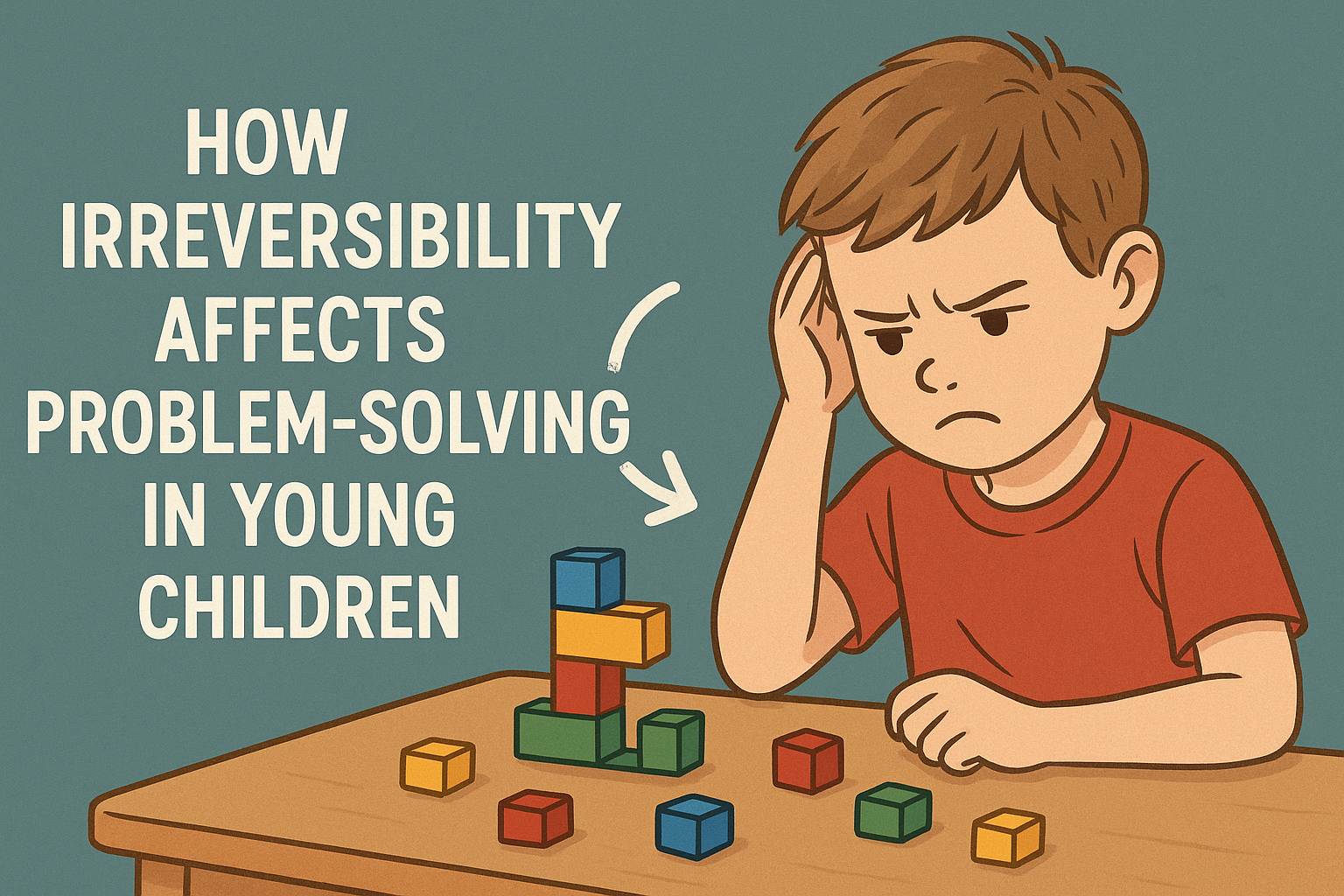
When it comes to young children, the world is a playground of learning and discovery. However, nestled within their developmental journey is a critical concept known as irreversibility in problem solving. This phenomenon can significantly impact how children understand and tackle problems, shaping their cognitive skills in profound ways. In this article, we’ll explore what irreversibility means in the context of child development, its implications for problem-solving, and practical strategies for parents and educators to support young learners.
Understanding Irreversibility in Problem Solving
Irreversibility refers to the inability to mentally reverse a sequence of events or processes. In young children, this often manifests as a struggle to understand that certain actions can be undone or that a situation can return to its original state. This concept is rooted in developmental psychology, particularly in the work of Jean Piaget, a Swiss psychologist who extensively studied cognitive development in children.
According to Piaget, children progress through distinct stages of cognitive development, with irreversibility being most prominent during the preoperational stage, which typically spans ages 2 to 7. During this time, children begin to use language and think symbolically, but their thought processes remain largely intuitive and egocentric. This makes it challenging for them to grasp that physical transformations can be undone. There’s a fuller look at milestones in overcoming irreversibility.
Implications of Irreversibility for Problem Solving
The implications of irreversibility are significant. When faced with a problem, children may fixate on the current state of affairs, unable to consider alternative outcomes or solutions. For instance, if a child spills a cup of juice, they may become upset about the mess without recognizing that they can clean it up or pour another drink. This inability to mentally reverse the situation can hinder problem-solving abilities and emotional regulation.
Moreover, irreversibility can also lead to challenges in developing logical reasoning. Children may struggle to understand concepts such as conservation—where objects remain the same despite changes in form or appearance. For example, if a child sees a ball of clay flattened into a pancake shape, they might believe there’s less clay than when it was in a ball because they cannot reverse the transformation mentally. Such misconceptions can create barriers to understanding more complex problem-solving strategies as they grow older.
Recognizing Signs of Irreversibility
Identifying signs of irreversibility in young children can be crucial for parents and educators looking to support their developmental needs. Some common indicators include:
- Difficulty in Reversing Actions: Children may struggle to understand that they can undo actions, leading to frustration when they encounter problems.
- Fixed Thinking: A child might insist that a situation cannot change, showing resistance to alternative perspectives or solutions.
- Emotional Outbursts: The inability to reverse a situation may lead to heightened emotional reactions, such as tantrums or crying, particularly in stressful scenarios.
- Lack of Logical Reasoning: Children may find it difficult to comprehend cause-and-effect relationships, which can impede their ability to solve problems.
Recognizing these signs is the first step toward helping children develop more flexible problem-solving skills.
Strategies to Mitigate Irreversibility
Fortunately, there are several strategies that parents and educators can employ to mitigate the effects of irreversibility in problem solving: (See: Jean Piaget's contributions to psychology.)
1. Encourage Play-Based Learning
Play is a natural way for children to explore their environment and experiment with different outcomes. Engage children in activities that allow them to manipulate objects, such as building blocks, art projects, or even simple science experiments. These hands-on experiences can help them practice reversing actions and understanding cause and effect.
2. Use Real-Life Examples
Incorporate real-life situations into problem-solving exercises. For example, if a child spills something, use it as a teachable moment. Discuss how they can clean it up or restore the space to its original state. This practical approach reinforces the idea that many actions can be reversed and that solutions are within their reach.
3. Foster a Growth Mindset
Encourage children to adopt a growth mindset, where they view challenges as opportunities for learning rather than insurmountable obstacles. Praise their efforts, not just their successes, to reinforce the idea that mistakes can be valuable learning experiences. This mindset can help them feel more empowered in their problem-solving abilities.
4. Model Problem-Solving Behaviors
Children learn a great deal by observing adults. When you encounter a problem, verbalize your thought process as you work through it. For instance, if you’re trying to find a lost toy, talk about the steps you’ll take to search for it. This modeling helps children understand that problem-solving often involves trial and error, and they can apply similar strategies in their own lives.
5. Encourage Questions and Exploration
Rather than providing direct answers to children’s questions, encourage them to explore potential solutions. Ask guiding questions that prompt them to think critically. For example, if they encounter a puzzle, instead of simply showing them the solution, ask, “What do you think happens if we try moving this piece here?” This approach builds their confidence in problem-solving and reduces reliance on fixed thinking.
The Importance of Contextual Learning
Contextual learning plays a pivotal role in overcoming irreversibility in problem solving. When children can connect new information to their existing knowledge, they are more likely to understand and retain it. This connection is crucial because it helps them see the relevance of problem-solving skills in their everyday lives.
For example, if a child learns about addition and subtraction through a baking activity, they can physically see how ingredients increase or decrease in quantity. This tangible experience reinforces the concept of reversibility—if they add sugar, they can also take some out. Connecting abstract concepts to real-world scenarios enhances understanding and retention.
Current Relevance and Future Implications
As society increasingly emphasizes critical thinking and problem-solving skills, understanding irreversibility in problem solving becomes all the more relevant. The ability to adapt, innovate, and think flexibly is essential in today’s fast-paced world, and this starts with the foundations laid in early childhood.
Moreover, the implications extend beyond individual children; they can impact educational practices and policies. By recognizing the significance of irreversibility, educators can develop curricula that support cognitive development more effectively, fostering environments where children can thrive as problem solvers. (See: CDC on child development stages.)
Furthermore, as we become more aware of diverse learning styles and challenges, understanding irreversibility can also aid in developing targeted interventions for children who may struggle with problem-solving due to cognitive delays or disabilities. Tailoring approaches to accommodate different learning needs can optimize educational outcomes for all children.
How Irreversibility Affects Learning Styles
When considering the impact of irreversibility on problem solving, it’s important to examine how different learning styles may influence children’s understanding of reversibility. Visual learners, for example, might benefit from diagrams and illustrations that depict processes in a reversible manner. In contrast, kinesthetic learners may excel through hands-on experiences where they can physically manipulate objects.
Additionally, auditory learners may find discussions about problems and solutions particularly helpful. By engaging them in conversations about their thought processes, you can bridge the gap created by irreversibility. Adapting your teaching methods to suit individual learning styles can significantly enhance children’s understanding of problem-solving and reversibility.
Expert Perspectives on Irreversibility
Experts in child development emphasize the importance of understanding irreversibility. Dr. Laura Smith, a child psychologist specializing in cognitive development, notes that “children’s inability to see things from different perspectives can lead to frustration during problem-solving situations. It’s crucial to guide them in understanding that solutions are often available even when the current state seems dire.”
Similarly, Dr. James Turner, an educator and author, suggests that “teachers should incorporate exercises that explicitly address reversibility. When children can practice undoing actions in a safe, supportive environment, they build the cognitive flexibility necessary for effective problem-solving.”
Comparing Irreversibility with Related Concepts
Irreversibility is often discussed in conjunction with other cognitive concepts such as centration and egocentrism. Centration refers to a child’s tendency to focus on one aspect of a situation while ignoring others, which can further compound the effects of irreversibility. For example, if a child is fixated on the height of liquid in a glass, they might overlook the width of the glass and believe that it contains less liquid when poured into a shorter but wider glass.
Understanding how these concepts interrelate can help parents and educators develop more effective strategies for addressing cognitive limitations in young children. For example, activities that encourage multitasking or exploring multiple variables can help mitigate the effects of centration and reinforce the idea of reversibility.
Frequently Asked Questions (FAQ)
1. What age do children typically start to exhibit signs of irreversibility?
Children usually begin to show signs of irreversibility during the preoperational stage, around ages 2 to 7. This is when they start using language and symbols but may struggle to mentally reverse actions.
2. How can I help my child understand that actions can be reversed?
Engaging in interactive play, discussing real-life situations, and modeling problem-solving behaviors can help your child understand the concept of reversibility. Use everyday examples to illustrate how actions can be undone.
3. What should I do if my child frequently has emotional outbursts due to irreversibility?
It’s important to remain calm and supportive. Acknowledge their feelings and help them explore alternative solutions. Encourage them to talk about what they can do to address the situation.
4. Are there specific activities that can promote understanding of reversibility?
Activities such as cooking, building with blocks, and simple science experiments can promote an understanding of reversibility. These activities allow children to see the effects of their actions in a tangible way.
5. How can I incorporate lessons about reversibility into daily routines?
Use daily routines as teachable moments. For instance, if a toy is broken, involve your child in the repair process. Discuss how things can be fixed or restored, reinforcing the notion of reversibility.
Conclusion: Nurturing Future Problem Solvers
In conclusion, understanding the role of irreversibility in problem solving is vital for nurturing young children’s cognitive development. By recognizing its effects and implementing supportive strategies, parents and educators can foster critical thinking and problem-solving skills that will serve children throughout their lives. The journey of learning is not just about finding the right answers; it’s about developing the ability to approach problems with creativity, resilience, and a sense of possibility. In doing so, we prepare the next generation to face the complexities of the world with confidence and ingenuity.
“`
Trending Now
Frequently Asked Questions
What is irreversibility in child development?
Irreversibility in child development refers to the inability of young children to mentally reverse a sequence of events. This concept, rooted in Piaget's theory, indicates that children, especially during the preoperational stage (ages 2-7), struggle to understand that actions can be undone or that situations can revert to their original state.
How does irreversibility affect problem solving in children?
Irreversibility affects problem solving in children by limiting their ability to consider alternative solutions or outcomes. When faced with a problem, such as a spilled drink, children may become fixated on the current situation, hindering their emotional regulation and problem-solving skills.
What are the stages of cognitive development according to Piaget?
According to Piaget, children progress through four stages of cognitive development: the sensorimotor stage (birth to 2 years), preoperational stage (2 to 7 years), concrete operational stage (7 to 11 years), and formal operational stage (11 years and up). Irreversibility is most prominent during the preoperational stage.
What practical strategies can help children with irreversibility?
To help children with irreversibility, parents and educators can encourage problem-solving through play, use visual aids to demonstrate reversible actions, and engage children in discussions about different outcomes. This fosters cognitive flexibility and emotional resilience.
Why is understanding irreversibility important for educators?
Understanding irreversibility is crucial for educators as it helps them tailor their teaching strategies to support young learners. Recognizing this cognitive limitation allows educators to create environments that promote exploration, problem-solving, and emotional management, enhancing overall development.
Agree or disagree? Drop a comment and tell us what you think.



