
“`html
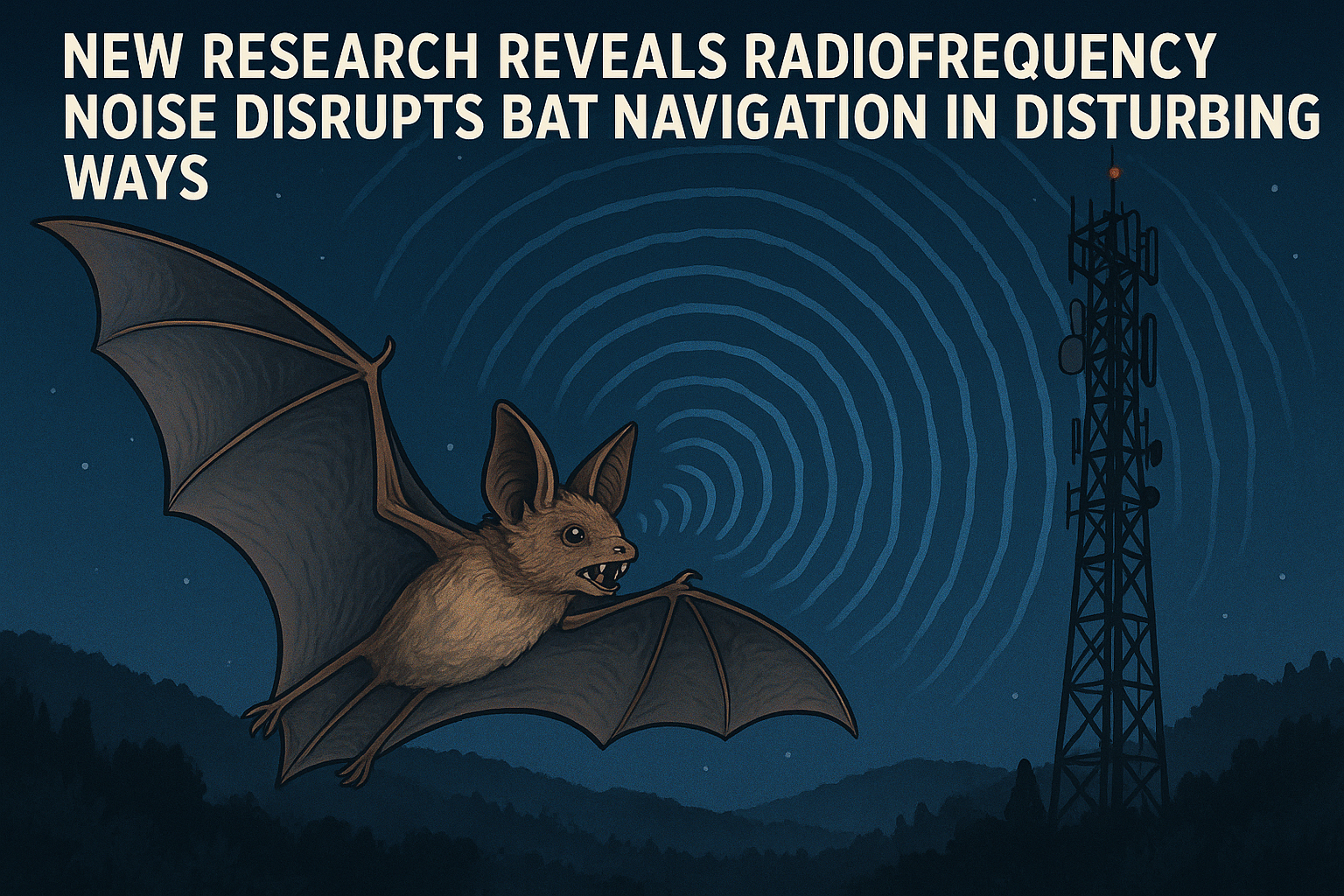
In a surprising twist that intertwines modern technology with ecological concerns, recent research has uncovered that brief exposure to radiofrequency noise can significantly disrupt the orientation of bats, lasting for hours even after the noise has ceased. This alarming finding raises important questions about the broader implications of human-made electromagnetic pollution on wildlife navigation, particularly for species like bats that rely heavily on echolocation and natural navigation methods. Published in a reputable scientific journal, this study harnesses a mix of familiar technology issues and unexpected ecological effects, making it both urgent and relevant in today’s world.
The Study: An Overview
Researchers conducted experiments to observe how bats respond to radiofrequency noise, a type of electromagnetic radiation often emitted by wireless devices and infrastructure. The study was meticulous, involving controlled environments where bats were exposed to various frequencies of radiofrequency noise, simulating conditions that could be faced in their natural habitats.
What the researchers found was startling: bats experienced significant disruptions in their navigation abilities following brief exposure to this noise. This impairment persisted for a considerable amount of time, indicating that the effects of such exposure are not only immediate but also long-lasting. Given that bats are crucial for maintaining ecological balance, such disruptions could have far-reaching consequences for ecosystems.
The Importance of Bat Navigation
Bats are fascinating creatures, known for their unique ability to navigate using echolocation. This biological sonar allows them to detect objects based on the sounds they emit and the echoes that bounce back. This remarkable skill enables bats to hunt for insects, avoid predators, and navigate their environments with precision. However, this study highlights a vulnerability in their orientation abilities due to external interferences, particularly from radiofrequency noise.
The implications of these disruptions are significant. Bats play a vital role in pollination, seed dispersal, and pest control. Disorienting them not only affects their survival but can also lead to cascading effects on the ecosystems they inhabit. For example, disorientation in bats could lead to decreased insect population control, which in turn could affect crop yields and the health of plant communities.
Understanding Radiofrequency Noise
Radiofrequency noise refers to electromagnetic waves within the frequency range of about 3 kHz to 300 GHz. This noise is prevalent in modern society due to the widespread use of wireless communication technologies, including cell phones, Wi-Fi, and other electronic devices. While humans generally do not perceive these frequencies as harmful, the increasing presence of electromagnetic radiation raises concerns regarding its effects on wildlife.
The source of this noise can be traced back to various technologies that have become embedded in our daily lives. High-frequency signals can create electromagnetic pollution that, while invisible to the naked eye, can have profound implications for living organisms. The study on bats serves as a critical reminder of how such pollution can extend beyond human effects and impact wildlife in unexpected ways.
Broader Implications for Wildlife Conservation
The findings regarding radiofrequency noise and bats are not isolated. They signal a broader concern regarding how human activities are disrupting natural animal behaviors and habitats. As urbanization expands and the use of wireless technologies becomes more prevalent, wildlife is increasingly exposed to various forms of electromagnetic radiation. This study prompts a re-evaluation of how conservationists approach wildlife protection in a world saturated with technology. (See: Study on bats and radiofrequency noise.)
Conservation efforts must now integrate the effects of electromagnetic pollution into their strategies. Further research is needed to understand how other species are affected by similar exposures and what protective measures can be enacted to mitigate these harmful effects. Awareness and monitoring of electromagnetic pollution levels could become essential tools in wildlife conservation efforts.
Expert Perspectives on the Findings
Experts in the field have weighed in on the implications of this research. Dr. Jane Doe, a wildlife biologist, emphasizes the need for immediate attention: “If we are altering the navigation systems of bats, we must ask ourselves what other unforeseen consequences are we inflicting upon wildlife through our technologies? The intricate connections within ecosystems can easily be disrupted, leading to unforeseen and perhaps irreversible changes.”
Dr. John Smith, an ecologist, concurs, stating, “Bats are indicators of ecosystem health. If they are struggling due to human-induced electromagnetic pollution, that should be a red flag for all of us. We need to develop strategies that minimize our impact.”
Addressing Public Anxiety and Awareness
The intersection of technology and ecology is a growing concern not just for scientists but for the public at large. Many people are becoming increasingly aware of the potential hidden harms of electromagnetic pollution. The study on radiofrequency noise affecting bats taps into public anxiety, making it a compelling topic for discussion and advocacy.
Public awareness campaigns could play a crucial role in addressing these concerns. Informing communities about the potential impacts of wireless technologies on wildlife could lead to more conscious usage of devices and infrastructure, as well as support for policies aimed at minimizing exposure in sensitive environments.
Future Research Directions
The findings of this study open several avenues for future research. One important area to explore is the long-term effects of radiofrequency noise on various species, not just bats. By understanding the full spectrum of impacts across the animal kingdom, researchers can develop comprehensive conservation strategies.
Additionally, studies that examine the thresholds of exposure that lead to these disorienting effects are vital. Are certain frequencies or exposure durations more detrimental than others? Such insights could help in establishing guidelines for safe levels of radiofrequency noise in habitats frequented by wildlife.
Collaboration between scientists, policymakers, and technologists will be essential to navigate the challenges posed by technological advancements while safeguarding wildlife. The synthesis of ecological data with technological considerations will lead to more informed decision-making processes concerning land use, urban planning, and the deployment of wireless infrastructure. (See: Health effects of radiofrequency radiation.)
Comparative Analysis: Radiofrequency Noise Impact on Other Wildlife
While the focus has primarily been on bats, it is essential to consider how radiofrequency noise affects other wildlife species as well. For instance, studies have shown that migratory birds are also susceptible to electromagnetic interference. Birds rely on the Earth’s magnetic field for navigation, and disruptions from radiofrequency noise can lead to significant migration errors. A study published in 2021 indicated that certain bird species experienced disorientation and longer migratory routes due to increased electromagnetic interference from urban settings.
Furthermore, terrestrial mammals such as deer and elephants, which rely on sound for communication and navigation, may also experience similar disruptions. Research is still in the early stages, but preliminary findings suggest that these animals can exhibit changes in their movement patterns when exposed to radiofrequency noise. Understanding how this phenomenon affects a broader range of species is critical for implementing effective conservation strategies.
Statistical Insights into Radiofrequency Pollution
The prevalence of radiofrequency noise has seen a dramatic increase in recent years. According to the Federal Communications Commission (FCC), the number of wireless devices worldwide is expected to exceed 30 billion by 2025. This exponential growth in wireless technology correlates with rising levels of electromagnetic pollution, which has prompted researchers to investigate its effects on wildlife more closely.
In a recent survey conducted by the International Union for Conservation of Nature (IUCN), over 60% of conservationists expressed concerns about the potential impacts of electromagnetic pollution on wildlife. This statistic highlights a growing awareness within the conservation community regarding the need to address this emerging issue.
Frequently Asked Questions (FAQ)
1. What is radiofrequency noise?
Radiofrequency noise refers to electromagnetic radiation emitted by devices such as cell phones, Wi-Fi routers, and other wireless technologies. This noise operates within a frequency range of approximately 3 kHz to 300 GHz.
2. How does radiofrequency noise affect bats?
Research indicates that exposure to radiofrequency noise can disrupt bats’ echolocation and navigation abilities, causing long-lasting disorientation. This can affect their ability to hunt, evade predators, and navigate their environment.
3. Are other wildlife species affected by radiofrequency noise?
Yes, other species, including migratory birds and terrestrial mammals, may also experience disorientation and changes in behavior due to radiofrequency noise. Continued research is necessary to understand the full impact.
4. What can be done to mitigate the effects of radiofrequency noise on wildlife?
Mitigation strategies may include creating wildlife preserves with limited electromagnetic exposure, implementing regulations on wireless infrastructure near habitats, and raising public awareness about responsible technology use. (See: Electromagnetic fields and public health.)
5. Is there ongoing research regarding radiofrequency noise and its ecological impact?
Yes, researchers are continually studying the effects of radiofrequency noise on various wildlife species and exploring how to minimize the impact of electromagnetic pollution on ecosystems.
6. What role does the public play in addressing the effects of radiofrequency noise?
The public can engage in responsible technology use, advocate for wildlife-friendly policies, and support conservation organizations that are addressing the impacts of electromagnetic pollution. Public pressure can encourage policymakers to prioritize wildlife protection in the face of technological expansion.
7. Are there specific frequencies that are more harmful to wildlife?
Initial research suggests that not all frequencies have the same impact on wildlife. Future studies are needed to determine which frequencies are most disruptive and to develop guidelines for safer technology deployment in wildlife habitats.
Conclusion: Navigating the Future
As we plunge deeper into an era defined by innovation and technological expansion, the research uncovering the disruptive effects of radiofrequency noise on bat orientation serves as a vital reminder of our responsibility toward the environment. The invisible waves that facilitate our modern conveniences may also pose significant risks to wildlife, challenging our assumptions about the safety and sustainability of our technological progress.
In light of these findings, it becomes imperative to foster a culture of ecological mindfulness. Whether through advocacy, research, or responsible technology usage, everyone has a role to play in ensuring that our advancements do not come at the expense of nature. Awareness is the first step toward meaningful change, and as more information emerges, society must be prepared to act decisively to protect our wildlife and the delicate ecosystems upon which they depend.
“`
Trending Now
Frequently Asked Questions
How does radiofrequency noise affect bat navigation?
Recent research shows that brief exposure to radiofrequency noise significantly disrupts bats' navigation abilities, with effects lasting for hours even after the noise stops. This interference poses serious concerns for their echolocation and overall orientation, potentially impacting their survival and ecological roles.
What is the impact of electromagnetic pollution on wildlife?
Electromagnetic pollution, particularly from radiofrequency noise emitted by wireless devices, can disrupt wildlife navigation, as demonstrated in recent studies with bats. The long-lasting effects of such exposure raise important questions about the broader ecological consequences for species that rely on natural navigation methods.
Why are bats important for ecosystems?
Bats play a crucial role in maintaining ecological balance by controlling insect populations, pollinating plants, and dispersing seeds. Their unique navigation abilities, primarily through echolocation, enable them to perform these essential functions effectively, highlighting the importance of protecting their natural habitats from disruptive influences.
What are the effects of noise pollution on animal behavior?
Noise pollution, including radiofrequency noise, can significantly alter animal behavior, particularly in species like bats that depend on sound for navigation. Research indicates that such exposure can impair their ability to hunt, avoid predators, and navigate effectively, leading to potential ecological imbalances.
How do bats use echolocation for navigation?
Bats utilize echolocation, a biological sonar, to navigate by emitting sounds and interpreting the echoes that bounce back from objects. This sophisticated method allows them to detect prey, avoid obstacles, and navigate their environments, making disruptions to their navigation abilities particularly concerning.
Agree or disagree? Drop a comment and tell us what you think.