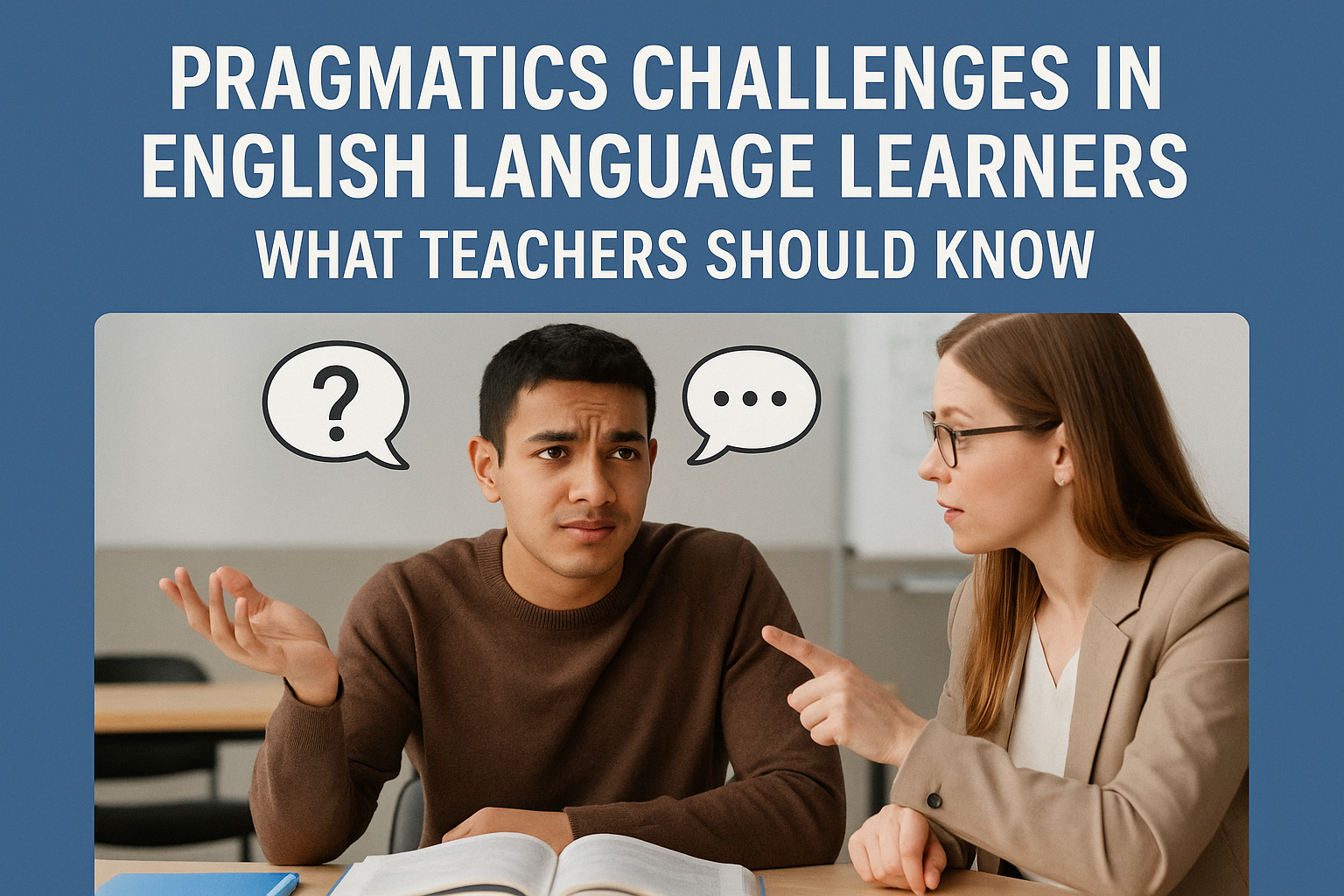

“`html
When it comes to mastering a new language, many learners focus primarily on grammar, vocabulary, and pronunciation. However, there’s a critical aspect often overlooked: pragmatics. Understanding the nuances of language use in context is essential, especially for English language learners (ELLs). The pragmatics challenges in English language learners can significantly impact their communication skills and social interactions, making it vital for educators to recognize and address these issues.
The Importance of Pragmatics in Language Learning
Pragmatics refers to the study of how context influences the interpretation of meaning in communication. It encompasses aspects like tone, social cues, and the implied meaning behind words. For ELLs, grasping pragmatics is crucial because language isn’t just a set of rules; it’s about how to use those rules effectively in social situations. This understanding can determine whether a conversation flows smoothly or leads to misunderstandings.
For instance, consider the difference between the phrases “Can you pass the salt?” and “I would like some salt, please.” While both sentences serve the same purpose, the first is more casual and indirect, whereas the latter is formal and polite. ELLs may struggle to navigate these subtleties, impacting their ability to engage meaningfully in conversations.
Common Pragmatics Challenges Faced by ELLs
ELLs face a range of challenges in pragmatics that can hinder their language acquisition and social integration. Here are some of the most common issues:
- Social Communication Norms: Different cultures have varying norms for interaction. ELLs often come from backgrounds where directness is valued or, conversely, where indirect communication is the norm. This discrepancy can cause confusion in English-speaking contexts.
- Non-verbal Communication: Body language, facial expressions, and gestures play a crucial role in communication. ELLs may misinterpret or overlook these non-verbal cues, leading to misunderstandings.
- Contextual Understanding: Language is often context-dependent. Phrases that are clear in one situation may not convey the same meaning in another. ELLs may struggle to adjust their language use based on context.
- Idiomatic Expressions: English is rich in idioms and colloquialisms that can be baffling for ELLs. Phrases like “kick the bucket” or “spill the beans” can lead to confusion if taken literally.
- Turn-taking in Conversation: In many cultures, conversational turn-taking has different rules. ELLs might interrupt or wait too long to respond, leading to awkward pauses or the impression that they aren’t engaged.
- Politeness Strategies: The use of polite language can vary widely across cultures. ELLs may either offend by being too blunt or seem insincere by overusing polite forms.
Strategies for Teachers: Fostering Pragmatic Awareness
Addressing the pragmatics challenges in English language learners requires a proactive approach from educators. Here are several strategies teachers can implement:
1. Incorporate Role-Playing Activities
Role-playing is an excellent way for students to practice different social situations. By simulating real-life scenarios, ELLs can experiment with various communication styles and learn appropriate responses. For example, a role-play could involve ordering food at a restaurant, where students must navigate politeness and context. This hands-on practice can help them become more comfortable in social settings.
2. Teach Cultural Context
Understanding the cultural context behind language use is pivotal. Teachers should dedicate time to discussing cultural differences in communication styles, including non-verbal cues. By explaining why certain phrases or gestures are used, ELLs can better interpret conversations and respond appropriately.
3. Use Authentic Materials
Exposure to authentic materials such as movies, podcasts, and literature can enhance pragmatic skills. These resources provide real-world examples of language use, showcasing how native speakers communicate. Teachers can analyze these materials in class, pointing out nuances in tone, context, and social cues.
4. Focus on Listening Skills
Listening comprehension is closely tied to pragmatics. Teachers should emphasize listening skills by using exercises that involve interpreting meaning from context. Asking students to summarize what they heard and discuss the inferred meanings can sharpen their pragmatic abilities. (See: Pragmatics in communication skills.)
5. Provide Constructive Feedback
Feedback on pragmatic use is essential for ELLs’ improvement. Teachers should provide constructive critiques focusing on how students communicate in various contexts. This could involve correcting misused idioms or suggesting more context-appropriate responses during conversations.
6. Encourage Peer Interaction
Encouraging students to interact with peers—both ELLs and native speakers—can enhance pragmatic learning. Group work, pair discussions, and social activities can create opportunities for ELLs to practice their social language skills in a supportive environment.
The Role of Assessment in Pragmatic Skills
Evaluating pragmatic skills can be challenging, yet it’s essential for identifying areas where ELLs struggle. Traditional assessments often fail to capture students’ pragmatic knowledge. Therefore, teachers should consider alternative assessment methods.
For instance, teachers might use observational assessments during class discussions or role-play activities to evaluate how students respond in real-time. Additionally, self-assessments can empower ELLs to reflect on their pragmatic skills and identify areas for improvement.
Moreover, incorporating peer feedback can enrich the assessment process. When students assess one another’s communication, they learn to recognize pragmatic cues and improve their understanding of context and social norms.
Pragmatic Challenges and Academic Success
The implications of pragmatics challenges extend beyond social interactions; they can significantly impact academic success. ELLs who struggle with pragmatics may find it difficult to comprehend instructions, participate in group projects, or engage in classroom discussions. This can lead to feelings of isolation and frustration, potentially hindering their overall learning experience.
For example, in a classroom discussion, an ELL might not grasp the implied meaning behind a teacher’s question, which could cause them to remain silent rather than contribute. This not only affects their learning but also limits their opportunities for building rapport with classmates and teachers.
Teachers should be mindful of the impact that pragmatic challenges can have on students’ academic performance. By fostering an inclusive classroom environment that encourages dialogue, collaboration, and mutual respect, educators can help ELLs thrive both socially and academically.
Current Relevance: Pragmatics in a Globalized World
As the world becomes increasingly globalized, the ability to navigate different cultural contexts is more critical than ever. English is a global lingua franca, and understanding pragmatics is essential for effective communication across diverse cultures. For ELLs, mastering pragmatics can lead to greater success in international settings, be it in education, the workplace, or personal relationships.
Moreover, technology has reshaped communication norms, introducing new challenges in pragmatics. With the rise of digital communication platforms, understanding how tone and context can change in written versus spoken language has become paramount. ELLs must adapt to new forms of communication—like emails, texts, and social media interactions—where pragmatics can significantly differ from traditional face-to-face dialogues. (See: Challenges in language learning.)
As educators, it’s crucial to prepare students for this evolving landscape. By equipping ELLs with strong pragmatic skills, teachers can empower them to communicate effectively, build relationships, and succeed in a multicultural world.
Pragmatic Challenges in Different Age Groups
Pragmatics challenges can manifest differently across various age groups of ELLs. Understanding these differences is important for tailoring teaching methods. For younger children, for instance, the focus might be on understanding basic social cues and taking turns in conversation. Activities that involve games and storytelling can help them learn these skills in a fun and engaging manner.
In contrast, older students, especially those preparing for higher education or the workforce, may face more complex pragmatic issues, such as understanding implicit meanings in academic texts or professional settings. They might struggle with networking, interviews, and formal communication, which requires a nuanced understanding of social dynamics.
For both age groups, educators should employ strategies that are age-appropriate and relevant to their specific social and academic needs. This targeted approach can enhance pragmatic skills effectively, promoting better communication in diverse contexts.
Examples and Case Studies of Pragmatics Challenges
Real-world examples can shed light on the specific pragmatics challenges faced by ELLs. Take the case of Maria, a high school student from Mexico who recently moved to the United States. Maria has a strong grasp of English grammar and vocabulary, yet she struggles with informal language used by her peers. During group discussions, her classmates often use slang or idiomatic expressions that confuse her, making her hesitant to participate.
In contrast, consider Ahmed, who came from a Middle Eastern country. He faces challenges in understanding the subtleties of humor and sarcasm, which are prevalent in many English conversations. When his classmates make jokes, he often misses the underlying meanings, leading to social isolation.
These examples highlight how pragmatics challenges can hinder ELLs’ social integration. By understanding these individual experiences, educators can develop targeted intervention strategies to help students overcome specific obstacles in their communication.
Frequently Asked Questions about Pragmatics Challenges in English Language Learners
What are pragmatics challenges in ELLs?
Pragmatics challenges in ELLs refer to difficulties in understanding and using language appropriately in social contexts. This includes issues with tone, context, cultural norms, and non-verbal communication.
How can teachers help ELLs with pragmatics?
Teachers can help by incorporating role-playing, teaching cultural contexts, using authentic materials, and providing constructive feedback. Creating a supportive environment for peer interactions is also crucial.
Why is pragmatics important for ELLs?
Pragmatics is important for ELLs because it affects their ability to communicate effectively in social and academic settings. Mastering pragmatics helps ELLs engage meaningfully with others and facilitates smoother interactions.
Are there specific resources for teaching pragmatics?
Yes, there are various resources available, including books focused on pragmatic language development, online courses, and materials that highlight cultural norms in communication. Authentic media like films and podcasts can also serve as valuable teaching tools.
Can technology assist in learning pragmatics?
Absolutely! Technology can provide interactive platforms for practice. Online simulations and language learning apps often include scenarios that require understanding of pragmatic language use, making learning engaging and relevant.
How can parents support ELLs in developing pragmatic skills?
Parents can play a crucial role by engaging their children in conversations that challenge them to think about context and social norms. Encouraging participation in diverse social activities, exposing them to different cultures, and discussing the nuances of communication at home can reinforce what they learn in school.
What are some effective games to teach pragmatics?
Games like “Role Play Scenarios” or “Charades” can be effective in teaching pragmatics. These activities require students to interpret social cues and respond accordingly, helping them practice their pragmatic skills in an enjoyable way.
Conclusion
In summary, the pragmatics challenges in English language learners are multifaceted and require a concerted effort from educators to address. By fostering an environment that prioritizes pragmatic understanding, teachers can enhance ELLs’ communication skills and social interactions. The benefits of mastering pragmatics extend beyond the classroom, aiding students in navigating an increasingly interconnected world. By recognizing and tackling these challenges head-on, educators play a vital role in shaping confident, effective communicators.
“`
Trending Now
- our breakdown of join nooro as an ios developer: a unique opportunity to shape senior wellness
- read the full story
- our breakdown of 7 essential emotional intelligence skills every high school student needs before college
- our breakdown of 7 essential strategies for boosting emotional intelligence in preschoolers
- our breakdown of 7 effective emotional intelligence activities for kindergarten kids that really work
Frequently Asked Questions
What is pragmatics in language learning?
Pragmatics refers to the study of how context influences the interpretation of meaning in communication. It includes understanding tone, social cues, and implied meanings, which are essential for effective communication, especially for English language learners (ELLs).
Why is pragmatics important for English language learners?
Pragmatics is crucial for English language learners because it helps them navigate social interactions and understand the nuances of language use in context. Mastering pragmatics can enhance their communication skills and prevent misunderstandings in conversations.
What challenges do English language learners face with pragmatics?
English language learners often struggle with social communication norms, as different cultures have varying expectations for interaction. They may also have difficulties with non-verbal communication, such as body language and facial expressions, which are vital for effective communication.
How can teachers help ELLs with pragmatics?
Teachers can help English language learners by providing explicit instruction on social norms, role-playing scenarios, and encouraging peer interactions. Incorporating real-life communication practices can enhance their understanding of pragmatics in various contexts.
What are examples of pragmatic differences in English?
Examples of pragmatic differences in English include variations in politeness levels, such as using indirect requests like 'Can you pass the salt?' versus more direct statements. Understanding these subtleties is essential for ELLs to communicate effectively.
Agree or disagree? Drop a comment and tell us what you think.