
“`html
As the field of education continues to evolve, one approach gaining significant traction is competency-based education (CBE). This model emphasizes the mastery of specific skills and knowledge rather than traditional time-based metrics like seat time or grades. A crucial element within this framework is scaffolding in competency-based education, which provides the necessary support to help students achieve their learning goals. In this guide, we’ll explore what scaffolding means in CBE, its importance, effective strategies for implementation, and its current relevance in educational settings.
Understanding Competency-Based Education
Competency-based education shifts the focus from traditional teaching methods to personalized learning. In CBE, students progress through a curriculum at their own pace, demonstrating mastery of competencies before moving on to more advanced levels. This approach allows for tailored learning experiences that meet the diverse needs of students, essentially preparing them for real-world challenges.
Competencies in this context refer to the skills, knowledge, and abilities students should acquire during their educational journey. These can range from academic knowledge to practical skills and even social-emotional competencies. With a clear framework in place, educators can better support students in mastering each competency.
The Role of Scaffolding in Competency-Based Education
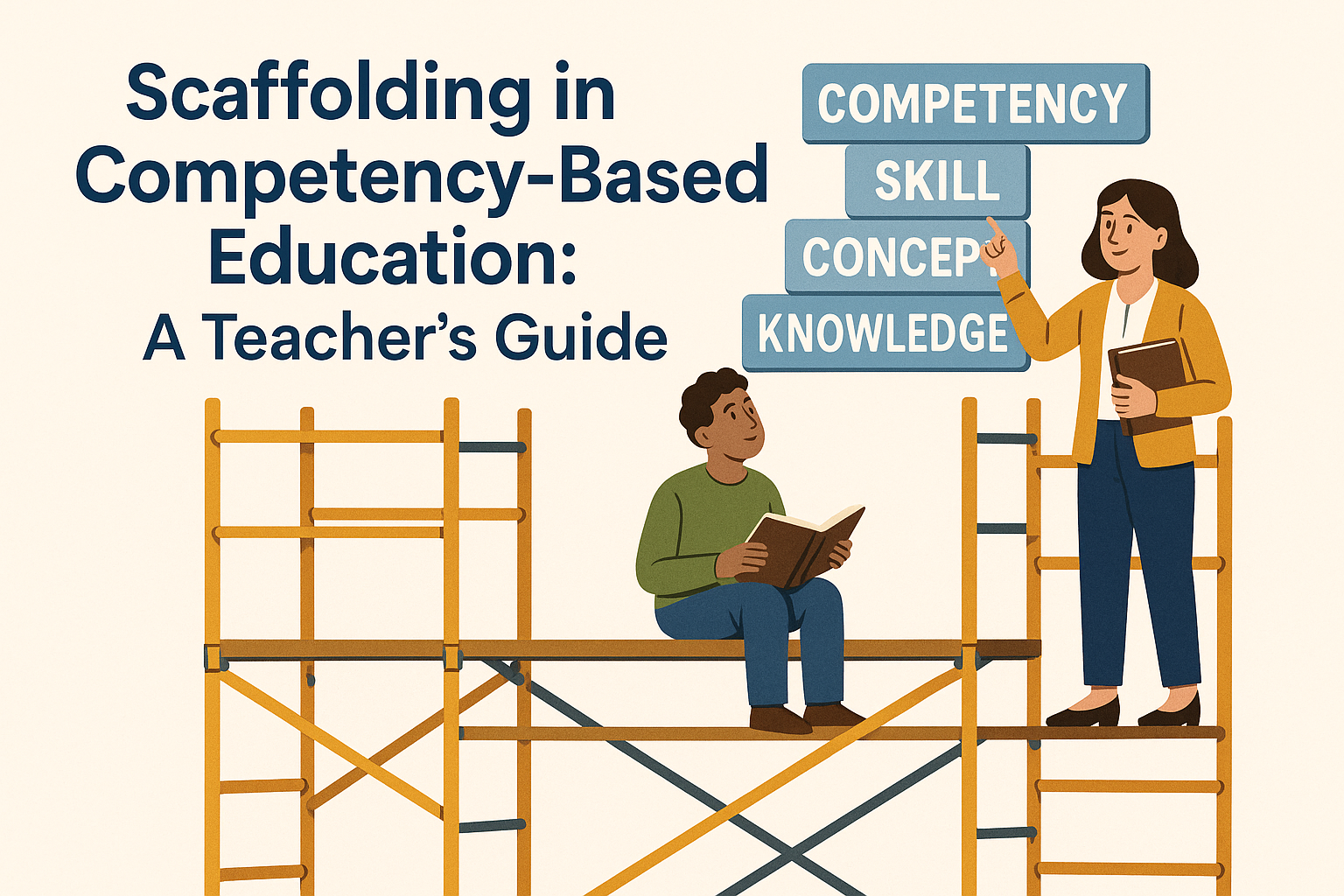
Scaffolding in competency-based education can be defined as the temporary support provided to students as they work to master skills or knowledge. Just like scaffolding in construction helps support a building while it’s being constructed, educational scaffolding provides students with the structure they need to achieve learning objectives.
Why is scaffolding vital in CBE? For starters, it enhances student understanding by breaking down complex tasks into manageable parts. This approach allows students to build their confidence and competence progressively. Furthermore, it ensures that educators can identify when students are struggling and provide timely interventions, which is essential in a competency-based framework where pacing is individualized.
Key Principles of Effective Scaffolding
To implement effective scaffolding in competency-based education, educators should adhere to several key principles:
- Tailored Support: Recognize that each student has unique learning needs and styles. Scaffolding should be customized to those needs, providing different levels of support as necessary.
- Gradual Release of Responsibility: Start with more support and gradually reduce it as students gain confidence and competence. This approach helps foster independence and critical thinking.
- Interactive Learning: Encourage collaboration among students. Peer interaction can often provide additional layers of understanding and support.
- Ongoing Assessment: Continuous assessment allows educators to monitor progress and adjust scaffolding strategies accordingly. Formative assessments can be particularly effective in this context.
- Clear Learning Objectives: Clearly defined competencies and learning outcomes help students understand what is expected of them and why they are learning specific skills.
Strategies for Implementing Scaffolding
Implementing scaffolding in a competency-based education framework involves a variety of practical strategies:
1. Chunking Information
Breaking down complex information into smaller, digestible chunks can help students better grasp difficult concepts. For example, in a mathematics class, rather than presenting an entire unit on algebraic equations, an educator might introduce one type of equation at a time, allowing students to master each before progressing.
2. Modeling and Demonstration
Show students how to approach a task or concept before expecting them to do it independently. For instance, if teaching a writing assignment, the teacher could model how to create an outline, demonstrating thought processes and decision-making that go into crafting an effective piece. (See: Competency-Based Education Overview.)
3. Use of Technology
Digital tools can enhance scaffolding efforts. For instance, online platforms can provide interactive activities and simulations tailored to individual learning paces, enabling ongoing assessment and feedback. Tools like educational apps or learning management systems can offer personalized learning paths and resources.
4. Collaborative Learning Environments
Fostering a collaborative learning environment where students can work together on projects or problem-solving tasks allows them to share insights and support one another. Group work can also help students tackle complex tasks that might be overwhelming when approached independently.
5. Feedback Loops
Providing timely and constructive feedback is essential in scaffolding. When students receive feedback on their work, they can identify areas for improvement and feel supported in their learning journey. This feedback can be verbal, written, or even peer-reviewed to ensure diverse perspectives.
Current Relevance of Scaffolding in Competency-Based Education
As we navigate an increasingly complex educational landscape, the relevance of scaffolding in competency-based education cannot be overstated. With the rise of personalized learning models, incorporating scaffolding allows educators to meet the needs of diverse learners more effectively. The COVID-19 pandemic highlighted the necessity for flexibility and adaptability in education, and CBE with scaffolding provides that framework.
Moreover, the current emphasis on skills-based hiring in many industries reinforces the importance of preparing students for real-world applications of their learning. By focusing on competencies and using scaffolding as a support mechanism, educators can better equip students to succeed in both further education and their future careers.
Challenges and Considerations
While scaffolding can greatly benefit competency-based education, there are challenges that educators may face during implementation. One major challenge is the need for professional development. Educators need training and resources to effectively implement scaffolding strategies and understand individual student needs.
Additionally, maintaining consistency in scaffolding practices across different classrooms and grade levels can be challenging, especially in larger educational institutions. This inconsistency can lead to gaps in student learning and mastery if not addressed.
Measuring the Effectiveness of Scaffolding in CBE
To truly understand the impact of scaffolding in competency-based education, it’s essential to measure its effectiveness. Educators can utilize various assessment strategies to gather data on student performance and engagement:
- Pre- and Post-Assessments: Conducting assessments before and after a learning unit can help gauge the progress students have made and the effectiveness of the scaffolding strategies implemented.
- Student Reflections: Encourage students to reflect on their learning experiences, specifically how the scaffolding has supported their understanding. This can help educators adjust their strategies based on firsthand feedback.
- Engagement Metrics: Tracking student participation in collaborative activities and their interactions during lessons can provide insights into the scaffolding’s effectiveness in fostering engagement.
Expert Perspectives on Scaffolding in CBE
Educational experts emphasize the importance of scaffolding in achieving successful outcomes in competency-based education. According to Dr. John Hattie, an education researcher known for his work on visible learning, “the right type of feedback at the right time can double the rate of learning.” This aligns perfectly with the principles of scaffolding, where timely feedback is crucial for student understanding and mastery. (See: Learning and Development Strategies.)
Additionally, educational consultant Linda Darling-Hammond highlights the need for professional development in implementing effective scaffolding strategies. She suggests that “teachers must engage in ongoing learning to refine their practices and adapt to the diverse needs of their students.” This perspective underscores the idea that successful scaffolding is not just about the methods used but also the ongoing commitment to improving teaching practices.
Comparative Analysis: Scaffolding vs. Traditional Education
When comparing scaffolding in competency-based education to traditional educational approaches, several key differences emerge:
- Learning Pace: In traditional education, students often move at the same pace through a curriculum regardless of their individual understanding, whereas CBE with scaffolding allows students to progress once they have mastered the material.
- Assessment Focus: Traditional education typically relies on standardized testing to measure learning outcomes, while scaffolding emphasizes continuous and formative assessments to inform instruction.
- Support Mechanisms: While traditional approaches may offer limited support, scaffolding provides layered, individualized assistance, promoting a deeper understanding of the content.
Frequently Asked Questions about Scaffolding in Competency-Based Education
What is scaffolding in education?
Scaffolding in education refers to the support provided by educators to help students achieve learning goals. It involves breaking down tasks into manageable parts and gradually removing support as students gain independence.
How does scaffolding support competency-based education?
Scaffolding supports competency-based education by ensuring that students receive the assistance they need while mastering specific competencies. This support helps personalize learning and addresses individual challenges effectively.
Can scaffolding be used in all subject areas?
Yes, scaffolding can be utilized across various subject areas. Whether in mathematics, science, language arts, or social studies, educators can apply scaffolding strategies to enhance student learning and mastery.
What are some common scaffolding techniques?
Common scaffolding techniques include chunking information, using graphic organizers, providing models and demonstrations, fostering collaborative learning, and offering timely feedback.
How can educators receive training for effective scaffolding?
Educators can pursue professional development opportunities through workshops, online courses, and collaborative learning communities focused on best practices for scaffolding strategies in competency-based education.
Real-World Examples of Scaffolding in CBE
Let’s take a closer look at some real-world examples of how scaffolding has been effectively integrated into competency-based education: (See: Scaffolding in Education Research.)
Example 1: A High School Math Class
In a high school math class focusing on geometry, the teacher introduces the concept of the Pythagorean theorem. Instead of diving straight into complex problems, the teacher first breaks down the theorem into smaller concepts, such as right triangles, the meaning of squares, and how to calculate the length of the sides. After students grasp these fundamentals through an interactive visual tool, they are then guided through simple examples before gradually being introduced to more challenging problems that require the application of the theorem.
Example 2: A University Writing Course
In a university writing course, instructors use scaffolding to help students develop their thesis statements. Initially, students are given structured templates to fill out, with specific prompts that guide their thinking. As the course progresses, the templates are gradually removed, and students begin creating their own thesis statements independently, having built the confidence and skills needed to do so.
Future Directions for Scaffolding in CBE
Looking ahead, the future of scaffolding in competency-based education appears promising. With the growing emphasis on technology in education, we can expect further integration of digital scaffolding tools, such as adaptive learning platforms that adjust content based on student performance. Furthermore, the development of artificial intelligence could provide personalized scaffolding in real-time, offering instant feedback and targeted resources.
Moreover, as educational policies increasingly support competency-based models, professional development for teachers will likely evolve to include more training on effective scaffolding techniques, ensuring that educators are well-equipped to meet diverse learner needs.
Conclusion: The Path Forward
Scaffolding in competency-based education is a vital strategy that enhances student learning experiences and fosters mastery of essential competencies. By understanding effective scaffolding principles and strategies, educators can create more engaging and supportive learning environments. As the demand for personalized learning experiences continues to grow, adopting scaffolding practices will be crucial for preparing students to thrive in their academic and professional lives.
Ultimately, the journey of implementing scaffolding in competency-based education is ongoing. Educators must remain adaptable, continually refining their approaches based on student feedback and evolving educational practices. By doing so, they will not only support their students’ learning but also contribute to a more effective and responsive educational system overall.
“`
Trending Now
- Join Nooro as an iOS Developer: A Unique Opportunity to Shape Senior Wellness
- read the full story
- 7 Essential Emotional Intelligence Skills Every High School Student Needs Before College
- our breakdown of 7 essential strategies for boosting emotional intelligence in preschoolers
- the complete explanation
Frequently Asked Questions
What is scaffolding in competency-based education?
Scaffolding in competency-based education refers to the temporary support provided to students as they work towards mastering specific skills or knowledge. This support helps students break down complex tasks into manageable parts, enhancing their understanding and building confidence in their learning journey.
Why is scaffolding important in education?
Scaffolding is crucial in education because it helps students navigate challenging concepts by providing structured support. In competency-based education, this approach allows for personalized learning, enabling students to progress at their own pace while ensuring they master the necessary competencies before advancing.
How does competency-based education differ from traditional education?
Competency-based education differs from traditional education by focusing on the mastery of specific skills and knowledge rather than time-based metrics like seat time or grades. Students progress through the curriculum at their own pace, allowing for tailored learning experiences that meet diverse needs.
What are effective strategies for scaffolding in education?
Effective strategies for scaffolding in education include breaking tasks into smaller, manageable steps, providing clear instructions, using visual aids, and offering ongoing feedback. These strategies help students grasp complex concepts and build the skills necessary for mastery in a competency-based framework.
How can teachers implement scaffolding in their classrooms?
Teachers can implement scaffolding by assessing students' current knowledge, providing targeted support through guided practice, and gradually removing assistance as students gain confidence. This approach ensures that students receive the necessary help to master competencies while fostering independent learning.
Agree or disagree? Drop a comment and tell us what you think.