technology

Virtual Laboratories – All Good?

It seems that there is nothing that cannot be done online anymore. On a personal level, we do everything from paying bills to scheduling entire vacations in a matter of minutes because of online access. Think about it for a moment: What daily online activities do you do today that were not an option 10 years ago? Five years ago? Last year?

Now consider classroom technology and how it is also evolving rapidly. Implementation of technology in the classroom goes beyond Google searches and reading apps. It stretches into every area of learning, including the sciences. Virtual laboratories are popping up in school districts and online learning curriculum across the country and making it easier and less expensive for students to do experiments remotely. Here are some of the benefits of virtual labs:

Flexible access. Perhaps the most often cited benefit of any online learning is that it can be done at the student’s convenience and when he or she learns best. The same is true of virtual laboratories if the experiments are on the student’s own time. In some cases, a virtual lab may be used during regular class time which narrows this benefit but still allows flexibility for the teacher who is not limited by using resources within a strict timeframe.

Instant feedback. Students can redo experiments on the spot while they are still in a critical thinking mode. All the results are recorded, making communication between teachers and students more efficient too. Experiments no longer have a “one chance” option and students can analyze what went wrong immediately and give it another shot.

Top-notch equipment. Schools and students that use virtual labs have access to cutting-edge technology when it comes to experimentation. Companies that build and maintain virtual labs must compete with each other to stay ahead of technology progression and that raises the quality of options for students. With a virtual lab, students do not have to settle on outdated, yet expensive, equipment because a school cannot afford to replace it consistently.

Lower costs. There is a fee associated with using virtual labs but the capital and maintenance costs are drastically reduced. Instead of one school footing the bill for resources, the cost is split among the clients of the particular virtual lab. This allows school to provide a better learning experience for students at a fraction of the cost.

Higher efficiency, lower costs, better equipment – is there a downside to virtual labs? I’d say it is too early to really see the effects, positive or negative, of science through virtual experimentation, but a few red flags pop into my own mind. I remember many of my in-class science experiments vividly. The sights, smells and sounds of biology and chemistry reactions at my own hand cemented the lessons into memory. It was real for me because it was right in front of my face and I was the one controlling the outcomes (or so I thought).

I wonder how much of that wonder is lost in a digital format? I can’t imagine the next generation of scientists will fall in love with their fields from watching experiments on a computer screen but I could be wrong. Even with the in-person science experimentation I did in school, I had no desire to enter those fields. So perhaps those with a predisposition for the true sciences will not be deterred by virtual experimentation. Perhaps even more students will find a love for those fields because digital lessons allow for more repetition and instant feedback.

Like all classroom technology, virtual labs need to be scrutinized to ensure that behind the flashy capabilities, their true purpose is being met. That will take some time and testing, of course, but I think it is possible with the right combination of in-person and remote lessons.

Do you use a virtual lab in your classroom? What do you think about its potential for learning?

Read all of our posts about EdTech and Innovation by clicking here. 

Without teacher guidance, all the tech in the world will be quite useless

**The Edvocate is pleased to publish guest posts as way to fuel important conversations surrounding P-20 education in America. The opinions contained within guest posts are those of the authors and do not necessarily reflect the official opinion of The Edvocate or Dr. Matthew Lynch.**

Kentaro Toyama, University of Michigan

A couple of years ago, I taught an afterschool class at a Seattle nonprofit, the Technology Access Foundation (TAF), which provides STEM education (science, technology, engineering, math) to children from less-privileged backgrounds. My students were 8-11 years old, and it was the first time that I had taught elementary school students.

The curriculum devised by TAF’s staff involves hands-on interaction with laptops to explore programming, robotics and audio editing. With a PhD in computer science and a range of experience teaching older students, I thought it would be easy.

It was anything but.

To allow students a lot of interaction with their devices, I avoided lectures and instead had the students work on their own while I went from table to table to help them individually. My hope was to give the children a chance to learn at their own pace.

The students, however, had other ideas. The minute I turned my attention to one, the others started playing video games. However nutritious the syllabus, they were drawn to the cognitive candy of flashy graphics and sound effects.

The problem I faced at TAF was a small version of the conundrum that confronts parents and schools everywhere: how do we prepare children for a technological world while avoiding the distractions of technology?

Diversions in India

I first encountered this problem about a decade ago in India. At the time, I was the head of a research team at Microsoft Research in Bangalore. My group explored ways in which computing technology could support poor communities. Education was one of our focuses.

Many Indian government schools boasted computer labs, but given limited funds, they often had no more than five or six PCs. With class sizes of 40 or more, this inevitably meant that crowds of children would huddle around each machine, with most of them unable to access the mouse or keyboard.

We tried an innovation in which a single PC was outfitted with multiple mice, each with an attendant cursor on screen. This customized educational software, called MultiPoint, allowed several students to interact simultaneously.

MultiPoint was a hit with students. A controlled trial showed that for some exercises, students could learn as much when they were sitting five to a PC as when they had a PC all to themselves.

A Technology Access Foundation student sneaking in a video game during an afterschool programming class.
Kentaro Toyama, CC BY

However, when we tried to take the idea to other schools, we were stymied.

One problem we often encountered was that teachers would be overwhelmed with the mechanics of the technology. Without a dedicated IT staff or significant training themselves, they’d spend the first 15-20 minutes of a 50-minute class fiddling with the PCs to set them up.

Whatever the technology’s potential, in actuality, time was diverted from learning.

Technology’s law of amplification

Similar things happened in dozens of other projects we ran in education, agriculture, healthcare and so on. Despite our best efforts at good design, computing technology did not, in and of itself, lower costs, improve pedagogy, or make organizations more efficient.

Teachers didn’t improve just by using digital content; administrators didn’t become better managers through clever gadgets; and budgets didn’t grow with the use of supposedly cost-saving machines.

Anurag Behar, CEO of a nonprofit we worked with, put it succinctly:

“At its best, the fascination with [digital technology] as a solution distracts from the real issues.”

Contrary to Silicon Valley hype, machines don’t add a fixed benefit wherever they’re used. Instead, technology amplifies underlying human forces – the unproductive ones as much as the beneficial ones. My book, Geek Heresy: Rescuing Social Change from the Cult of Technology, explains in detail why technology by itself doesn’t solve deep social problems.

Other researchers have found a similar pattern. University of California, Irvine, researcher, Mark Warschauer, along with colleagues Michele Knobel and Leeann Stone, sums up this challenge in his paper:

Placing computers and internet connections in [low-income] schools, in and of itself, does little to address the serious educational challenges faced by these schools. To the extent that an emphasis on provision of equipment draws attention away from other important resources and interventions, such an emphasis can in fact be counterproductive.

In other words, while digital tools can augment the efforts of a well-run learning environment, they harm dysfunctional schools by distracting them from their goals.

The amplification principle also applies at the individual level.

Children have both a drive to learn and an affinity for quick rewards – digital aids amplify both. Few people would imagine that children left in a room with an encyclopedia and enticing toys (even educational ones) could, on their own, summit the intellectual mountain that is a K-12 education.

Handing students a computing device and expecting them to teach themselves is the virtual equivalent of being left in such a room. Rigorous research by economists Robert Fairlie and Jonathan Robinson finds that laptops provided free to students result in no educational gains of any kind.

In other words, while technology can amplify good pedagogy, there is no way around quality adult guidance for real learning.

People first, technology second

At TAF, I was lucky to have a good manager and several terrific teachers as role models. They recommended that I set some rules. For example, I asked students to close their screens any time I was doing a demonstration. I prohibited free time with the laptops if they came early, so that they wouldn’t start off with games. And anyone caught playing video games during class was sent to my manager for a few words of discipline.

Implementing these rules was a challenge at first, but young children are mercifully responsive to firm adult direction. Within a couple of classes, the students got used to the new class culture, and they started focusing on the learning activities.

What I learned was that even in a class about computers, maximizing screen time wasn’t the goal. The first requirement is the proper mindset – focused motivation in students and capable adult supervision.

If technology amplifies human forces, then a good outcome with technology requires that the right human forces be in place first.

Read all of our posts about EdTech and Innovation by clicking here. 

The Conversation___________

Kentaro Toyama is Associate Professor, Technology and Global Development at University of Michigan.

This article was originally published on The Conversation.

Read the original article.

How to create a collaborative learning environment with technology

**The Edvocate is pleased to publish guest posts as way to fuel important conversations surrounding P-20 education in America. The opinions contained within guest posts are those of the authors and do not necessarily reflect the official opinion of The Edvocate or Dr. Matthew Lynch.**

A guest post by Meghan Zigmund

After two years of having iPads in our first grade classroom, I’ve found a few strategies that work to set up a successful and collaborative learning environment. We use our set of iPads to connect, create, share, and much more. However, without a few expectations and procedures our room would be chaos! So here are a few strategies for successful collaboration that can be applied to just about any technology in your classroom.

1 – Visual Expectations

We use Popplet to set up expectations for iPad procedures. Students generate the expectations, with some teacher guidance to make sure a few key issues are included. Students usually end up thinking of things that I haven’t even considered! Next, we take pictures to represent each expectation, and add them to a web in Popplet. This is usually done on one iPad, displayed through an Apple TV so everyone can see what we’re creating. Then, we print it out and post it around the room. The student’s love seeing themselves, and the visual reminders are really effective. Having these expectations makes creating and collaborating together much smoother.

2 – Time to Explore

Our students arrive with all different types of experiences and ability levels for all subjects, including technology. However, there is no need to “teach” students the ins and outs of every app you want them to use all year. Don’t be afraid to just let them discover and explore, especially together. Demonstrate and app or two, show them something you think they’ll be excited about, or better yet, let a student demonstrate what they know. Then give them some time on their own to just play. It doesn’t have to be a huge amount of time, but you’d be amazed at what they discover. You don’t even have to have a device for each student. Let them share and learn from each other.

Students are naturally going to take some time to explore anyway, why not give them some time upfront? They’ll end up being more productive and creative in the end. Time to explore is one of the most powerful strategies I use all year. Be sure you also include time to share their experiences after exploration. It’s well worth it!

3 – Community of Experts

Teachers can’t be the only expert anymore. We must foster a community of experts in our classrooms. Doing this helps students to feel empowered, and encourages ownership in learning. Who doesn’t want to feel like an expert at something? As students explore and discover we add their name and skill to our “Expert List”. If you’re looking for someone to help you record in ChatterPix, edit your photo, or find just the right image in Haiku Deck, then we have an expert for you! No need to ask the teacher, just check out who can help.

We do, however, enforce the rule above. Even though a student might be getting some help, I still want them experiencing the process and learning.

4 – Tweets

Oh, the amazing power of Twitter. If you don’t have a class account yet, get one A.S.A.P. Besides the amazing power to connect, learn and collaborate with others around the globe, Twitter encourages our class to work together. When we post class Tweets, everyone works together to decide what to post, helps edit, and feels ownership in what we’ve shared. There is almost always a discussion about what we want to share, and why.

To help my young learners become ready to Tweet their projects and thinking, we”ll start our year off having a “Tweeter of the Day” so that students gain experience and guide each other on what it means to Tweet and be a responsible, respectful citizen. We’ll collaborate on a set of visual rules to help, and learn to work together as a community in the process.


I’m so excited to begin building a new collaborative community of learners in just a few short weeks. What steps will you take to foster a collaborative learning environment this year?

This post originally appeared on Fractus Learning and zigzagstech, and was republished here with permission.

Read all of our posts about EdTech and Innovation by clicking here. 
______________

Meghan is a first grade teacher with a passion for inspiring student creativity and deepening their thinking through technology. She loves learning and creating with her students and hopes to inspire others to do the same.

It’s ok to date new technology, you don’t have to marry it!

**The Edvocate is pleased to publish guest posts as way to fuel important conversations surrounding P-20 education in America. The opinions contained within guest posts are those of the authors and do not necessarily reflect the official opinion of The Edvocate or Dr. Matthew Lynch.**
Education Trends-A-Go-Go 

It’s SO easy to get overwhelmed with all the new education tech and trends going on in the world.
1:1
Flipping
Makerspace
Genius Hour
Common Core
Mobile Learning
Design Thinking
Google Classroom
Brain Based Learning
Project Based Learning
Learning Management Systems
Transformative Brain Based Learning Spaces

Sheesh….I could go on! It’s EXHAUSTING!

Ed Tech Relationship Anxiety

Then….there’s all the new technology that you have to get, use, and master! Don’t have an unlimited budget or a super generous PTA? OK, now you have to get funding from a place like Donor’s Choose. (Which is totally, doable! But does take a wee bit of effort) Once it was Smart Boards now it’s Tablets and 3D printers.

Then what? What happens when you run out of money to buy the supplies? OMGosh, again. Exhausting!

Take a Deep Breath, It’s OK! 

But I’m here to tell you…It’s OK. You don’t have to try to be the expert at everything.  You don’t have to totally flip your classroom making videos yourself to take the place of daily instruction.  You can start by sourcing some great videos already created and add them to your lesson plan. From places like YouTubeSchooltube, & Flocabulary you can add that rich Remix Mash-Up without hours of video editing. I call it the partial flip – having augmented information available for tutorial or reinforcement and to spark student engagement. My Lesson Path (formerly Mentor Mob) on Big Rich Mt. Olympus is an example of this. Curated rather than created content.

Baby Stepping to Change OR Alternative Ideas to Transformation 

Instead of pitching out all of your furniture to create a brain based & friendly learning classroom why not just buy a few bean bag chairs for $39.99 on Amazon to create a comfy reading nook or discussion circle!

Instead of building a whole lego wall or a Makerspace center spending thousands of dollars with expensive equipment. Why not start small and create a Makerspace cart that can roll around the school with bins of Legos, patterned duck tape rolls for crafting, and a couple Makey Makey kits? See below for more ideas & resources.

And if it doesn’t catch on, you lose funding, replacement materials gets to be too much, or it just flops? You haven’t invested all that much! But most likely you will love it, your kiddos will go crazy over it, the parents and admin will be impressed and you will want to expand it. Either way – you win! But it’s OK to start small & grow!

Instead of stressing about not having tablets to utilize mobile media in the classroom, use your own iPad or smart phone and film Vine video stop action animation book trailers, science experiments, art talks, or social studies history snippets!

Or spark the engagement of Twitter and the ease of Google forms to have the kiddos write a #StoryIn140,  do Twitter style book reviews or QR Code Scavenger Hunts!

OR use QR Codes around the school with Loo Reviews & Pocket videos or 10 Things to do with QR Codes at Back to School Night! It’s not the tool it’s how you use it!

It’s OK to date new technology (or teaching inovation) you don’t have to marry it! 

That’s right, the coolest ed tech trends you’ve heard about at conferences, on Twitter, or during a webinar, you know, the ones that may have also been leaving you awake at night feeling stressed out or inadequate for not jumping in with both feet?  Yeah, those. They don’t have to be all done at once! You don’t have to overhaul your life, you can just adapt! You can simply “pilot” and “beta test” new technologies and new teaching ideas on a small scale. Then, when you find one you like – you can go steady. Date a while. See how it goes.
When you’re ready to commit, you’ll know it!

New Tool Trauma
You also don’t have to get each and every new tech tool that comes out. Remember the Laser Disc? Buy one for yourself maybe and get good at it. Bring it to school and try it with small groups. My school isn’t  a 1:1 or total BYOD school or iPad school. Some of the coolest things I did with QR codes and mobile media in the early days (5 years ago) was with 2 iPod Touch Gen 4’s, my own smart phone, & my first iPad. It’s NOT what you have, it’s the creativity of how you use it. It’s the innovation of teaching and not the tool. Tools come and go, the daring spirit to try new things keeps moving on!

Social Media Stress?

Twitter
Flickr
Vine
YouTube
Blogger
Edublogs
Instagram
LinkedIn
Facebook
SnapChat
There’s a LOT of Social Media outlets that are out there – which ones should you join? Which ones should you just be registered to and which should you be actively involved with? Sure, I’ve blogged about Transparency is the New Black and one of my missions is for all educators to model and create a positive web presence so that they become more visible (and less vulnerable) in their schools and in the communities. But gee whiz, there are only so many hours in the day, right?

If you’re a long time reader or follower then you may know that Twitter and Scoopit are my preferred social media tools, that I broke up with Facebook years ago, and that I’m committed to this blog that you’re reading now. So, what’s your outlet of choice?  Years ago (2008) I created a couple graphics to illustrate that life...err Social Media is less like a fancy Table d’hôte menu and more like a Dim Sum experience…or Tapas!

You can just just try small plate here and there – like it? Get another! Not to your taste?  Push it aside and move on.

Funny how the plates have changed over the yearsSecond Life and Nings are out and Instagram and Vine are in!

Here’s what social media outlets & tools I am active on, followed by those that I have a presence but not a penchant.

The first list means that I’m here at least once a week – if not more.  As a commitment to my profession, I have foregone a personal social media and just maintain a professional one.
That was my choice. I have a formula.
Listed in order of my preference, time, & devotion. Like, we’re in love and dating steady, OK?

Twitter
Wikispaces (Ex: 1, 234)
Flickr  
————–Just starting out? Stop here!————–
Ready for more? Consider Adding these!

Blogger – Professional blog
Edublog – School / Professional blog
Scoopit – Curation Tool
Vine  (Instant street cred w/ kiddos – Lesson Idea)
Instagram  (Why? Read more!)
Slideshare
YouTube 
Skype 

I’m sorta here, I filled out a profile, but I don’t visit very often. It’s more to point you to where I really am. Like, we’re friends, nothing too serious.

LinkedIn – (Whatever you do, fill out the profile & add a picture! Be where your parents are, because you’re a professional, too!)
Google+
Pinterest

I tried it, I don’t like it, You can’t make me do it! Don’t poke me!

Facebook
Snapchat

Now it’s YOUR turn! What social media outlets can’t you live without? What did I miss? Disagree? Bring it on! Agree? I’d LOVE to hear it! What new trends do you love, hate, & want to marry?

This post originally appeared on The Daring Librarian blog, and was republished with permission.

Read all of our posts about EdTech and Innovation by clicking here. 

____________________________

Gwyneth A. Jones, aka The Daring Librarian, is a blogger, a Tweeter, an international Ed Tech speaker, trope and meme archivist, creator of content, a citizen of advocacy, and a resident of social media. Gwyneth is a Google Certified Teacher (#GTAWA11), and the author of the award winning The Daring Librarian blog. In recognition of being a change agent in her field, Ms. Jones was named an Innovator and a Mover & Shaker by Library Journal Magazine in 2011, a Gale/Cengage New Leader 2010, and the Best of the Best and a Visionary Leader by Teacher Librarian Magazine in 2012. She was honored to have served on the 2011-2014 ISTE Board of Directors representing all PK-12 educators and school librarians.  Her work & writings have been featured in the New York Times, The Washington Post, and the Huffington Post.

Enriching history lessons with visualizations

**The Edvocate is pleased to publish guest posts as way to fuel important conversations surrounding P-20 education in America. The opinions contained within guest posts are those of the authors and do not necessarily reflect the official opinion of The Edvocate or Dr. Matthew Lynch.**

A guest post by Patrick R. Potyondy

Let’s face it: Harry Potter is awesome. But my major sticking point, the thing that just nettles me each and every time I revisit the books (and I revisit them more often than I’d like to admit), is when Hermione and the gang visit “History of Magic.” Their “teacher” (scare quotes intentional) is so boring, he’s actually dead. He didn’t even notice he died! And he just continues to drone on and on and on and, well, you get the idea.

He represents, for better or worse, the lecture method of instruction. The students are vessels; his job is to fill them up with “knowledge.” Perhaps J.K. Rowling had such a teacher in her primary school days. Perhaps she just thought he was a fun character to write. In any case, we must continue to move beyond the lecture method of teaching history. We must embrace not just digital tools but visualizations to make students engaged.

There is little doubt that writing still dominates academic history. Graduate students must write theses and dissertations primarily presented in text format. Pictures, maps, and other visualizations can certainly be part of the whole, but these are peripheral characters to the star of the play—an original amount of text. Text is great as far as it goes. And as far as it goes is too often a miniscule number of other academic specialists.

But the visual is a different medium from text. And it’s one we’re increasingly working with. David Staley points out as much in Computers, Visualization, and History. Digital visualization, he writes, can be a “main carrier of the meaningful information.”

Visualizations, like maps, communicate information differently—and often more effectively—than text, as seen in this classic example: Harry Beck’s 1933 London Underground map.]

The public—and here I include students in this group—seem to wish to find that meaning and information through historical visualizations as much as, even more so, than text alone. Twitter accounts featuring “history in pictures” amass millions of followers. Slate’s popular “Vault” blog features visuals of archival finds that are a mix of the visual and textual. While scholarly historians might decry such fads, is it useful to simply lambast them, or is it more constructive to meet the public halfway, to help provide meaning and context?

A skilled teacher can make her or his lecture on the cruelties of enslavement riveting, but what would a narrative look like that presented itself primarily through pictures, maps, and graphs look like? It is one thing to stoically describe a whipping or lynching, quite another to view photographs of these events. If one aim of studying history is to better understand humanity, we’re only providing a partial view without engaging visualizations to their fullest and expanding extent.

Luckily for teachers, public digital historians have produced (and continue to) a number of excellent visual tools that students can engage with. One of my all-time favorite projects is “Hollow: An Interactive Documentary” found at http://hollowdocumentary.com/. While the phrase can be used too often, this truly is a tour de force. It is interactive and utilizes not only visuals but audio, too. It is heartbreaking yet hopeful. Through it, we connect with the people and their stories. We empathize. We understand. It presents a large amount of factual information, but in an engaging and thoughtful way.

An image from the Hollow: An Interactive Documentary

Another project I love—a book in fact—that illustrates the power of visual history is Daniel Rosenberg and Anthony Grafton’s Cartographies of Time. Asking “What does history look like?” the authors trace graphic representations of history from the 15th century forward. They remind us that only recently have academics made history into a primarily textual discipline.

Visuals have long incorporated circles and tress (and text) to depict time and space as seen here in Girolamo’s Andrea Martignoni’s “Historical map of Italy” (Spiegazione della carta istorica dell’Italia), 1721. As seen in Cartographies of Time.

Students can get in on the act, too, as active participants and not only as more passive viewers. The research paper has long been a staple of high school and college history courses. It teaches skills worth knowing. But why not add in an assignment around presenting a narrative and argument principally through visual materials? Students could craft their own projects using primary and secondary sources, and thus develop visual, organizational, research, and argumentative skills all at once.

First, an example of the type of PowerPoint slide seen all too often in teaching. Can it capture the visual reality of enslavement—the effects of whipping or the gendered violence as seen in 12 Years a Slave?

The iMovie app is only one application of many that can be used by history classes to produce projects (WeVideo and Meograph are just two others). As part of a research project (not just a paper), students can utilize a number of online archival sources and libraries for primary source material as they craft historical narratives that utilize textual, audio, and visual elements. For an example of what iMovie can do, just check out some awesome projects which were produced by an undergraduate U.S. history course at Ohio State University as taught by Professor Lilia Fernandez.

Hopefully it’s been apparent that I’m not saying visuals should replace text. Books remain magical things in and of themselves, often without incorporating hardly any visuals at all. I only suggest that maybe it’s time we nudge text a little further to one side, to share the stage with pictures, graphs, maps, film, graphic novels, and any other number of visualizations.

And after all, there’s no reason that Rowling couldn’t have had her history professor spice things up a bit for those poor Hogwarts students. Just think of the visualizations one could do with magic!

Read all of our posts about EdTech and Innovation by clicking here. 

_______________________

Patrick R. Potyondy is a history PhD candidate and graduate associate at The Ohio State University with interests in Public and Digital Visual History, Modern US History, the History and Foundations of Education, Early American History, and the intersections of race, ethnicity, and nation. He has also published the book chapter “Reimagining Urban Education: Civil Rights, Educational Parks, and the Limits of Reform.”

How digital gives literacy a boost

By way of the United States Department of Education and the National Institute of Literacy, nearly 15 percent of the U.S. population cannot read.

That is an astonishing number.

Delving deeper into the metrics, just 29 percent of adults read at a basic level and nearly 20 percent of high school graduates cannot read.

It’s why we celebrate and encourage reading in schools and observe International Literacy Day in September. From the echos of hearing “reading is fundamental” to understanding the basic nature of being able to read street signs or contracts, reading is a basic need of life.

That’s why companies like myON are so important. A business unit of Capstone, myON “created a personalized digital literacy environment that transforms learning…and expands the classroom for teachers and students by providing unlimited access to the largest collection of more than 10,000 enhanced digital books…”

myON recently expanded its offerings by redesigning “its award-winning personalized literacy environment for PreK-12.”

The company’s new redesign also includes a new writing tool, the myON Literacy Toolkit, advancements in content recommendations based upon individual student interests, and much more.

In an effort to help improve the literacy rate, companies like myON are important to the future of education as they are on the cutting edge of technology and have their fingers on the pulse of what teachers and students need. By combining what is familiar to today’s students (digital learning options) with the fundamentals of reading, we can fight against illiteracy in ways that were not possible just a generation ago. I look forward to hearing the progress with these digital reading tools, and seeing a more literate public as a result.

Read all of our posts about EdTech and Innovation by clicking here. 

The power of the iPad in Kindergarten

**The Edvocate is pleased to publish guest posts as way to fuel important conversations surrounding P-20 education in America. The opinions contained within guest posts are those of the authors and do not necessarily reflect the official opinion of The Edvocate or Dr. Matthew Lynch.**

By Kristi Meeuwse, ADE

Technology won’t replace teachers, but teachers who don’t teach with technology will be replaced. -unknown

Last week, our school iPads were replaced.  We were very excited to exchange our iPad 2’s for the new iPad Air.  Our old iPads served us well but were suffering from frequent app crashes. The replacement took about a week…no small feat when you are talking about over 800 iPads. The excitement over the idea of new iPads was suddenly replaced with the knowledge that we would be without iPads for a few days. My kids quickly realized this and asked, “Um, how will we do our work with no iPads?”  I responded, “I’m not sure…maybe we will do some worksheets.” Puzzled, the kids responded with, “What are worksheets?” You see, they had never completed one before.

It was definitely like going back in time and I’m certain I don’t ever want to teach again without having those devices. My students were used to having choices about their day and about demonstrating their learning. I was used to personalizing their learning and serving as a facilitator while they directed themselves. Student-centered and student-directed learning is one of the keys to educational change.

So, now we have our beautiful new devices and the kids immediately went to work. Their work. We have been working on number stories in their math journals. Even though I’m providing the number stories, there is still choice. For example, Sam had 7 buttons.  Some were blue and some were yellow.  How many of each were there?

Here are a couple of samples from my kids:

IMG_0003

IMG_0004One was being a wise-guy, but still got the right number of buttons. By making these number stories open-ended, students have the ability to use multiple pathways to get to the answer. Another student and a partner, worked together to create what we call an “incredible equation”. One of the students was stronger in math (clearly, as he is able to multiply and divide at age 5) and the other was working on grade level. Together they made this:
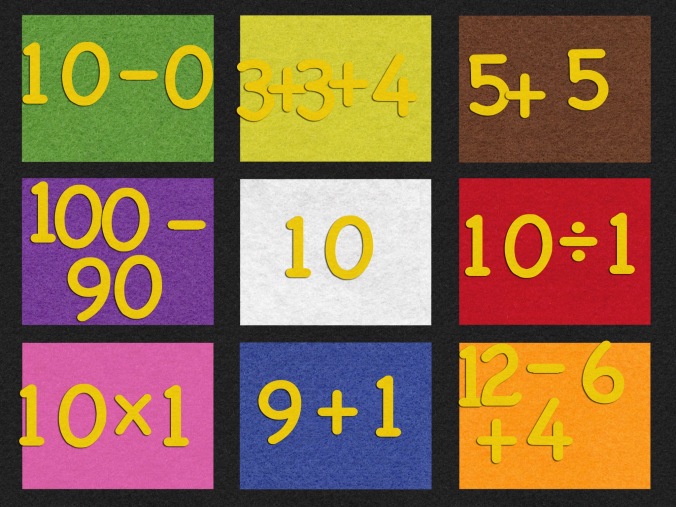

 

IMG_0005

By letting my students work where they are, and not where a worksheet forces them to be, the sky is the limit. The iPads give my students the freedom to move on, to move up, and to be in charge of their learning.

So, yes, I am thrilled to have our iPads back. We saw first hand the power of the iPad in our classroom. Even though we have only 22 school days remaining, we are going strong to the end!

Today we will do exciting new things. Let’s get to it!

Read all of our posts about EdTech and Innovation by clicking here. 


Kristi Meeuwse teaches kindergarten in Charleston, South Carolina. In January, 2011, her kindergarten class started a 1:1 iPad pilot for the school district and the results so far have been very successful. You can read more about it on her blog iteachwithipads.net.

A mother’s view on cell phones in the classroom

**The Edvocate is pleased to publish guest posts as way to fuel important conversations surrounding P-20 education in America. The opinions contained within guest posts are those of the authors and do not necessarily reflect the official opinion of The Edvocate or Dr. Matthew Lynch.**

A guest column by Karen Bresnahan

In recent years, there has been a lot of chatter on the internet about why cell phones shouldn’t be allowed in classrooms. Some teachers and parents are dead set against the idea, while others think it could work.

Schools everywhere are busy making new rules about cell phones. Some schools allow students to carry their phones, but only use them at lunch or in between classes, while others have banned the phones altogether from the learning environment.

The debate, it seems, has centered more on the negative side of the argument which views cell phones as a distraction, a temptation, and a detriment to learning because students can use them to avoid paying attention in class by texting on social media or playing video games, or to cheat on tests, by looking up the answers on Google.

As a parent, I always try to use my common sense when thinking about what I should teach my children. It seems to me that cell phones can be a difficulty or a benefit, depending entirely on the attitude of the teacher. After all, they get to decide what happens in their classroom.

I know, as a mom, how important it is for my kids to know what good behavior and bad behavior is at home. At school, it is no different for the teacher who must show the students what is expected of them and to enforce the rules the same way a parent does. If my child uses a cell phone in the classroom to text their friends or play video games, I expect the teacher to do something about it.

But, cell phones don’t have to always be tied to the expectation of bad behavior or misconduct. There can be a positive side. There are many ways cell phones can actually help children learn. Our kids already use the phones every day and they enjoy using them.

Do we want to take technology away from them and punish them for using it, or should we motivate them to use it in good ways?

With or without technology, it is always important to make sure our children know how to learn. It is up to parents and teachers to show them how. The best teachers know all the different ways to motivate students to learn, so the attitude of the teacher is the most important thing when it comes to deciding about cell phones. There are many ways that cell phones can add to learning.

Students can use their phones to do Google searches about any subject. The cameras on phones make it possible for them to take photos and videos for a school project or record an important school event. Phones can be used in emergencies to call for help, or to text a parent about a problem. Phones can be used on field trips to find locations, or on a daily basis, to make communication easier between students and teachers. Cell phones are a way for teachers to make learning applicable to real life and to let students have fun while learning.

Teachers are already finding helpful ways to use technology in the classroom and cell phones are just another way for students to use the internet to connect them to educational resources. Cell phones have become like tiny computers in their hands because the phones are so much better than they used to be.

Computer applications and software are making it easier for students and teachers to share information. Things like Dropbox, Evernote, Schooltown, Socrative, Wiffiti, and Polleverywhere are helpful online resources that many teachers are using now. Cell phone use supports the popular concepts of flipped classrooms and blended learning.

We live in a technology abundant world and cell phones have become a way of life for families. Most children already use cell phones long before they come to school. As adults, we rely upon technology every day, and it makes no sense to discourage our children from using it productively at school.

As a parent, I expect my children to behave at home and I support what the teacher does in the classroom. If a teacher wants to use cell phone technology as a tool for learning in the classroom, I am all for it. But if a teacher wants to take my child’s phone away when he uses it to misbehave, I am in favor of that too.

I want school to be a fun and active learning environment for my children, where technology allows them to quickly access information, and stimulates them to find exciting new ways to learn anything they want to learn. As long as what they are doing in the classroom peaks their individual interests, I am happy.

Cell phones are just another form of technology that can be used to help students become better and faster at learning. Phones can also be used for group sharing and hands on learning that has been shown to have a 90 percent retention rate.

To me, the argument is not about why we shouldn’t use phones in the classroom, but how can we best use technology as a tool to make learning more exciting and more fun, so that students can learn and grow to be self-motivated learners for the rest of their lives.

__________

Karen Bresnahan is a professional writer, photographer and artist from Boise, Idaho. She has a Bachelor’s degree in Communications from the University of Idaho and is the mother of three children. She is a small business owner of Romantic Idaho Weddings, KBLifelines Positive Quotes, and Idaho Naturals Desertscapes artwork. She enjoys writing about education, parenting, health and fitness and positive thinking. Her goal is to motivate, educate and inspire others through her writing and photography. You can connect with her through email at [email protected] or on Twitter @idaho1111

How LRM is transforming teaching and learning

Behind every successful adult is at least one person who pushed him or her to greatness. If you ask some of the world’s highest achievers what motivated them to keep going, they usually mention a specific person who inspired them along the way – a parent, a teacher, a mentor, a coach.

Think about the people in your own life who made a positive impact when you were young. If you are an educator, it was probably a teacher of your own who inspired you to take that next step and answer the call to teach. There were likely other less-direct influences on your career choice, and others who influenced other parts of the positive parts of your adult life.

Now imagine what it would look like if all of those mentors – those teachers, those coaches – had been able to combine their efforts for a singular purpose: guiding you on the road to successful adulthood. It’s a pretty amazing thought, right? But most of those people were probably from different circles of your life with you (a kid) being the only connection between them. Technology is changing that though, by better aligning the important relationships in a student’s life.

More specifically, Learning Relationship Management is delving deeper into how mentors like teachers and coaches help guide all students to success — both academically, and in other areas of life. The Learning Relationship Management Alliance is a leader in this student-friendly technology that can also be applied to other groups that benefit from mentor support, like senior citizens in assisted living.

The LRM Alliance created this infographic to summarize exactly what the vision is for this relationship technology, including a need to cultivate authentic relationships, personalize learning, streamline content, and connect networks in a student’s life. Take a look:


So how is the LRM Alliance progressing these ideas in a coherent way that any district can implement? By combining the strengths of several leading companies to raise awareness about the many benefits to this learning setup. This group of edtech innovators is changing the way students succeed through electronic means that extend beyond academic pursuits. The five companies that make up the LRM Alliance are:

Through community-enabled mentorship, the strengths of a variety of people associated with each student is tapped. This includes, and is not limited to, parents, teachers, sports coaches, and more. Even older siblings can be included in the community to help encourage, monitor and ultimately guide the student to positive learning outcomes.

When it comes to personalized and blended learning, LRM allows K-20 brick and mortar schools and online schools to move from small pilot programs to large, full-scale implementation. Teachers and administrators have more information on how students are progressing and can tailor lessons to better fit their needs and learning styles. Personalized learning paths are in turn supported through learning relationship management and strengthened by the mentors outside the classroom who are in the student’s network. Learning Relationship Management does not just setup personalized and blended learning lesson plans; it gives students the tools to execute those plans.

Learning Relationship Management is not just about prescriptive methods, though, or simply handing out assignments. The students themselves are an integral part of the process of goal-setting, intervention planning and the communication that takes place about them. Every student can benefit from LRM tools because it does not dictate what people must take part. If a student lives with grandparents, or has a drama teacher but no sports coaches, or even has a trusted teacher he wants to keep in the system even when class has ended, LRM technology makes all of that possible.

Learning Relationship Management has the potential to combine what schools are already doing right with a stronger support group outside the classroom. There can be numerous people (invited by the student and overseen by the lead adult administrator) who weigh in on the goals, benchmarks and activities of the student. There is a lot of power in the community-enabled coaching model and the more people who can contribute to the success of a student — in a streamlined, productive way — the better that student will fare in school, and in life.

You can learn more about the Learning Relationship Management Alliance and its member companies at the organization’s site.

Read all of our posts about EdTech and Innovation by clicking here. 

The positive connection between games and online learning

By Mitch Weisburgh, cofounder of Games4Ed

Game-based learning has the potential to drastically improve the way children are taught.

Games have peculiar qualities that let them engage hard-to-reach students in a way lessons cannot. Researchers have begun to explore the intrinsic qualities of games that make them promising learning tools, and anecdotal evidence is available everywhere.

I personally know a student who struggled in history until Assassin’s Creed sparked his interest in the French revolution; he is now an honors history student. I know many students who spend hours playing Minecraft and many hours more learning new skills and techniques on YouTube, which they then apply to Minecraft. Clearly, a good game is a powerful motivator for learning. It engages the mind and the passions simultaneously, with obvious results. But why, and how, does this work, and how can we harness it in schools?

Who uses games? 99% of boys, 94% of girls, and 62% of teachers play video games.

Games foster ideal conditions for learning

There is a sweet spot for learning that lies between what a person can do without help, and what they can only accomplish with help. Lev Vygotsky coined the term zone of proximal development to describe this spot. In the zone of proximal development, the lesson is neither so easy that the student is bored, nor so difficult that he gives up.

Teachers use their training and skill to create lessons that fall into their students’ zone of proximal development, but Plass, Homer, and Kinzer show in Playful Learning: An Integrated Design Framework that successful games tend to aim toward this same zone. The tantalizing opportunity provided by games is a lesson that measures player skill, and then delivers an appropriate response automatically.

Gamers beware, however. According to Tobias et al, when the game mechanics become complex, the zone of proximal development is overshot and learning can be inhibited. Game designers “need to be mindful of the cognitive load imposed on players” to learn to play.

Games encourage growth

Games relate to another key aspect of learning. Carol Dweck pioneered the idea is that individuals who see themselves as evolving through hard work and dedication will grow their abilities, while those who see their talents as fixed traits will not. She called this the growth mindset paradigm, laid out in her book Mindset: The New Psychology of Success. Games reinforce the growth mindset through their treatment of failure.

Games that support a growth mindset allow for “graceful failure” by embedding low-stakes failure into the game mechanics. These games encourage balanced risk-taking and exploration. A player who fails at a well-made game immediately tries again, and when the player eventually succeeds, the idea of growth through practice is reinforced. Kris Mueller, an eighth grade teacher writing for Edutopia, wrote: “A well-designed game leads players through carefully-leveled tasks that prepare them to succeed in bigger challenges.”

Games improve spatial skills

There are literally hundreds of research and pseudo-research papers on games. A meta-analysis of more than 100 studies, Effects of video-game play on information processing: a meta-analytic investigation, found that studies generally agreed: games improve visual processing, visual-spatial manipulation of images, and auditory processing. The analysis, undertaken by Powers, Brooks, Aldreich, Palladino, and Alfieri, attributed much of the improvement to video games demanding that players interpret, mentally transform, manipulate, and relate dynamic changing images.

Games have significant value for education because the skills cultivated by games are widely applicable outside of games. Tobias, Fletcher, and Chen showed this in a review of 95 studies, Digital Games as Educational Technology: Promise and Challenges in the Use of Games to Teach (to be published later in 2015). They found “evidence of near and far transfer in applying learning from games to external tasks.”

Specifically, action games, often called First Person Shooter (FPS) games, improve attention, mental rotation, task switching, speed of processing, sensitivity to inputs from the environment, resistance to distraction, and flexibility in allocating cognitive as well as perceptual resources. Not only did people learn these skills from video games, there was a significant ability to transfer that learning to other activities.

Games are linked to STEM achievement and greater creativity

Spatial skills “can be trained with video games (primarily action games) in a relatively brief period” and that these skills “last over an extended period of time.” More excitingly, the improvement in visual-spatial skills is related to other, more scholarly, improvements. The Benefits of Playing Video Games (Granic, Lobel, and Egels in American Psychologist, January, 2014) noted that those learning these skills from video games show increased efficiency of neural processing. Improvements in spatial skills predict achievement in science, technology, engineering, and mathematics.

There are also links between playing video games and enhanced creativity, although we do not yet know the exact nature of the connection. Perhaps games enhance players’ creativity, or creative people tend to play video games, or some combination is at work.

Games foster engagement

One of the most important factors related to learning is time on task. It is highly related to proficiency and can be used to predict math proficiency to the nearest tenth of a grade placement. Yet, students are found to be thinking about topics entirely unrelated to academics a full 40% of the time while in classrooms. In fact, on average, high school students are less engaged while in classrooms than anywhere else.

In the Handbook of Positive Psychology in Schools, Shernoff and Chikszentmihalyi make two points that relate directly to the need for increased engagement. They found that enjoyment and interest during high school classes are significant predictors of student success in college, and that this engagement is a rarity in US schools.

High engagement is observed when students focus on mastering a task according to self-set standards or a self-imposed desire for improvement. You’ll remember that those standards are linked to the growth mindset outlined by Dweck. Engagement (enjoyment and interest) is represented by heightened concentration and effort in skill-building activities along with spontaneous enjoyment from intrinsic interest and continued motivation.

This relationship between time spent and skill applies to video games as well. The more time spent playing educational games, the greater the gain in skills and knowledge. Unlike class time, however, video games are great at capturing and holding attention. The average gamer spends 13 hours a week playing games.

It is not clear whether the positive effects of game-based learning stem from greater time spent learning, or increased efficiency in learning, or both. It is clear, however, that more time is spent learning when educational games are used than when they are not. Tobias et al report that those who learn using games, “tend to spend more time on them than do comparison groups.”

What makes an optimal learning environment?

Shernoff and Chikszentmihalyi propose conditions for an optimal learning environment which match strikingly with the benefits of educational gaming. An optimal learning environment:

  1. presents challenging and relevant activities that allow students to feel confident and in control
  2. promotes both concentration and enjoyment
  3. is intrinsically satisfying in the short term while building a foundation of skills and interests
  4. involves both intellect and feeling
  5. requires effort and yet feels like play

Their research shows that video games may foster this environment. Students using a video game approach made considerably greater learning gains than those in a traditional classroom, and were linked to a higher level of engagement.

Shernoff provides an example: a full semester college course, Dynamic Systems and Control.

A college course was designed around a video game in which students race a virtual car around a track for homework and lab exercises. The students reported a higher level of interest, engagement, and flow, and the video game was able to maintain “the high level of rigor inherent to the challenging engineering course while adding the perception of feeling active, creative, and in control characteristic of flow activities. The students who interacted with the video game also demonstrated greater depth of knowledge and better performance in the course.”

SRI, in research on GlassLab STEM games for K12, found that, for the average students, learning achievement increases by 12 percent when game based learning augments traditional instruction, and if the “game” is a simulation, achievement increases by 25 percent.

The research so far points to the tremendous value of games in education, and marks signposts for differentiating “good” and “bad” games. Yet there is still little knowledge on the most effective ways to produce games “the reliably yield pre-specified instructional objectives.” Also, it’s hard to know in advance if students will master a specific standard through X hours playing any one game.

A combination of games and other instructional methods has been shown to be especially effective. “Integrating games into the curriculum improves transfer from games to school learning tasks.”

Games, combined with other instructional strategies, may be the solution to Bloom’s two-sigma problem.

References:

Effects of video-game play on information processing: A meta-analytic investigation Powers, Brooks, Aldreich, Palladino, Alfieri; Psychonomic Society, 22 March, 2013

Digital Games as Educational Technology: Promise and Challenges in the Use of Games to Teach Tobias, Fletcher, Chen; Educational Technology, due in September or October 2015

Playful Learning: An Integrated Design Framework Plass, Homer, Kinzer; Games for Learning Institute; December, 2014

Flow in Schools Revisited Shernoff, Chikszentmihalyi, Handbook of Positive Psychology in Schools, Second Edition, Routledge, Taylor & Francis Group

Engagement and Positive Youth Development: Creating Optimal Learning Environments David J Shernoff, APA Educational Psychology Handbook, Chapter 8

Independent Research and Evaluation on GlassLab Games and Assessments, SRI, 2012, http://ww2.kqed.org/mindshift/2014/06/27/games-in-the-classroom-what-the-research-says/

The Benefits of Playing Video Games, Granic, Lobel, Engels; American Psychologist, January, 2014

_____

Mitch Weisburgh is the cofounder of Games4Ed.

Read all of our posts about EdTech and Innovation by clicking here.