
“`html
Middle school can be a challenging time for many students as they navigate the complex world of social interactions. It is during this critical period of development that the concept of social pragmatics role play comes into play, offering a powerful tool for teaching essential social skills. But what exactly is social pragmatics, and how can role play facilitate learning in this area?
Understanding Social Pragmatics
Social pragmatics refers to the way individuals use language and nonverbal cues in social situations. It encompasses a range of skills, including understanding social cues, taking turns in conversation, maintaining eye contact, and using appropriate language in different contexts. These skills are crucial for effective communication and are particularly important for middle school students as they begin to form deeper relationships and navigate complex social hierarchies.
In essence, social pragmatics is about more than just the words we say; it’s how we say them and the context in which we communicate. For students who struggle with these skills—such as those with autism spectrum disorder (ASD) or social communication disorders—learning through role play can provide a safe and structured environment to practice and improve.
The Role of Role Play in Learning
Role play is a dynamic teaching method that allows students to act out scenarios and practice their social skills in a controlled setting. This approach is particularly effective for middle schoolers who are often driven by peer interactions and real-life situations. When students engage in social pragmatics role play, they can effectively experiment with different responses and observe the reactions of their peers, which provides instant feedback on their social performance.
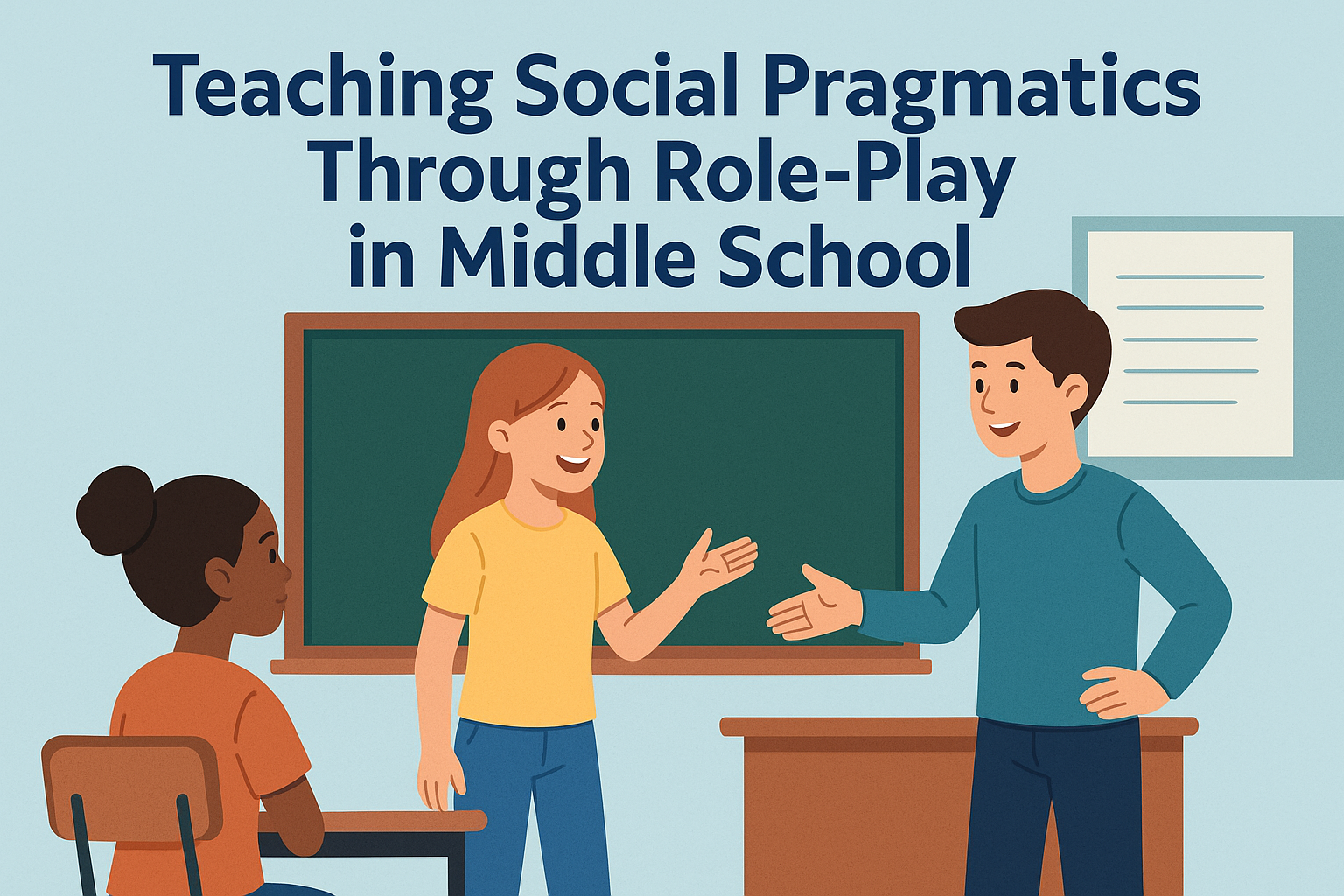
For instance, a teacher might set up a role-playing scenario in which two students practice a conversation about a group project. By stepping into these roles, students learn to navigate conflict, express their opinions, and collaborate effectively. This experiential learning approach not only enhances their social skills but also fosters empathy as they put themselves in someone else’s shoes.
Implementing Social Pragmatics Role Play in the Classroom
Integrating social pragmatics role play into the curriculum can be straightforward with the right framework. Here are some practical insights on how educators can implement this teaching strategy:
- Identify Key Social Skills: Start by pinpointing the specific social skills that students need to develop. This could range from conversation starters to handling disagreements.
- Create Realistic Scenarios: Design role-play scenarios that are relevant to students’ lives. This could involve common situations they might encounter, such as navigating friendships, dealing with peer pressure, or collaborating on school projects.
- Use Structured Frameworks: Consider using frameworks like the Social Stories or Comic Strip Conversations, which guide students through social interactions and help them visualize how to respond appropriately.
- Encourage Reflection: After role-play exercises, hold discussions where students can share their feelings about the experience. This reflection can reinforce learning and help them process any difficulties they encountered.
Benefits of Role Play in Developing Social Pragmatics
Implementing social pragmatics role play offers a multitude of benefits for middle school students. Here are some of the key advantages: (See: Autism Spectrum Disorders fact sheet.)
- Enhanced Communication Skills: Through role play, students practice their verbal and nonverbal communication skills, helping them convey their thoughts and emotions more effectively.
- Improved Social Awareness: Engaging in role play encourages students to become more aware of social cues and the feelings of others, fostering empathy and understanding.
- Increased Confidence: By repeatedly practicing social interactions in a supportive environment, students can build their confidence in navigating real-world situations.
- Safe Space for Mistakes: Role play provides a low-stakes environment where students can make mistakes and learn without the fear of real-world repercussions.
Challenges to Consider
While the benefits of social pragmatics role play are significant, educators should also be mindful of potential challenges. Different students may have varying levels of comfort with participating in role play, especially those who are introverted or anxious. Here are some challenges to keep in mind:
- Student Resistance: Some students may feel uncomfortable with the idea of acting out scenarios. It’s essential to create a supportive atmosphere where they feel safe to participate.
- Diverse Learning Needs: Not all students learn the same way. Educators must be prepared to adapt scenarios to cater to different learning styles and needs.
- Time Constraints: Role play activities can take time, which may be limited in a typical school day. Planning and integrating these exercises into existing curricula can be challenging.
Current Relevance and Future Directions
The significance of teaching social pragmatics through role play has only intensified in recent years. As students increasingly navigate a technology-driven world, the importance of face-to-face communication and social skills cannot be overstated. This shift has made it even more critical for educators to prioritize social pragmatics role play in their teaching methodologies.
Moreover, with the rise of remote learning and digital interactions, educators and parents alike are recognizing the need for students to develop these skills in real-world contexts. Schools are encouraged to integrate social skills training into their curricula, focusing on both in-person and online interactions.
Real-World Applications of Social Pragmatics Role Play
Social pragmatics role play goes beyond the classroom. It can have profound applications in various real-world settings. For instance, role-playing can be a useful tool in therapeutic environments where practitioners help clients develop social skills. Using role play in therapy can help individuals practice scenarios they find challenging, from job interviews to social gatherings.
In the workplace, organizations are increasingly acknowledging the importance of social skills. Companies often conduct training sessions that include role play to enhance team dynamics, improve communication, and resolve conflicts. Such training can lead to more cohesive teams and increased productivity.
Statistics on Social Skills Development
Recent studies emphasize the importance of social skills in academic and professional success. According to a survey by the World Economic Forum, over 80% of employers believe that soft skills like communication and teamwork are essential for success in the workplace. This highlights the necessity of integrating social skills training, including social pragmatics role play, in educational settings.
Moreover, research indicates that students who participate in role-playing activities show a significant improvement in their social skills. A study published in the Journal of Educational Psychology found that students who engaged in role play saw a 25% increase in their ability to read social cues correctly, compared to their peers who did not participate in such activities. These statistics underline the effectiveness of social pragmatics role play in promoting essential skills. (See: CDC autism resources for educators.)
Expert Perspectives
Educators and psychologists alike advocate for the inclusion of social pragmatics role play in academic curricula. Dr. Lisa Miller, a child psychologist, states, “Role play can be transformative for students, especially those who face difficulties in social interactions. It allows them to play out scenarios, make mistakes, learn, and grow in a safe environment.” Her insights reinforce the notion that role play is not just an educational tool but a bridge to improved social understanding.
Additionally, educational consultant Mark Thompson emphasizes the need for practical applications: “Students remember experiences more vividly than lectures. Role play creates lasting memories, and those memories form the basis for their future interactions.” His perspective highlights the critical role of experiential learning in fostering social skills.
Frequently Asked Questions
What grade levels benefit most from social pragmatics role play?
While middle school students are often the focus, role play can be beneficial for any age group, from early childhood to high school. Tailoring the complexity of scenarios to match developmental stages is key.
How can parents support social pragmatics role play at home?
Parents can create simple role-play scenarios at home to reinforce what children learn at school. Engaging in conversations about emotions and social situations can help students practice their skills in a more familiar and comfortable environment.
Are there specific resources or materials to help implement role play in the classroom?
There are numerous resources available, including books, worksheets, and online materials that provide structured scenarios and guidelines. Websites like Teachers Pay Teachers offer a variety of role play resources tailored for different age groups and needs.
What if a student struggles with role play due to anxiety?
Teachers can accommodate students by allowing them to participate in smaller, less intimidating groups or providing alternative methods of practicing social skills, such as written dialogues or one-on-one practice with an educator or aide.
Insights from Recent Research
Recent research has shown that integrating social pragmatics role play can significantly enhance students’ ability to engage in social reasoning. A study conducted by the American Psychological Association found that students who participated in structured role-play scenarios exhibited a 30% increase in their ability to interpret social situations accurately. These findings suggest that role play not only helps students practice skills but also allows them to internalize complex social rules that govern interactions.
Tips for Tailoring Role Play Activities
Educators can maximize the effectiveness of social pragmatics role play by customizing activities to suit the unique needs of their students. Here are some practical tips:
- Incorporate Student Interests: Align scenarios with students’ interests or current events to make the role play more engaging. For example, if students are interested in video games, create scenarios related to teamwork in gaming contexts.
- Utilize Visual Aids: For visual learners, using props or even simple drawings can help them better understand the social context of the role play. Visual aids can serve as cues during the interaction, making it easier to remember key social skills.
- Gradually Increase Complexity: Start with simpler scenarios and gradually introduce more complex ones as students become more comfortable. This helps build their confidence while ensuring they are not overwhelmed.
The Importance of Community Involvement
Community involvement can greatly enhance the process of learning through role play. Schools can foster relationships with local organizations that focus on youth development or mental health. For example, local theaters might collaborate with schools to provide workshops on acting and role-playing, which can enrich students’ understanding of social dynamics. Additionally, inviting community leaders to discuss relevant social issues can give students real-life context for their role-playing exercises, making them more impactful.
Conclusion: A Path Forward
Incorporating social pragmatics role play into middle school curricula not only helps students develop vital communication skills but also prepares them for the complexities of adult life. By fostering a learning environment that emphasizes empathy, understanding, and practical experience, educators can equip students with the tools they need to thrive socially and emotionally.
As schools continue to adapt to the ever-changing landscape of education, integrating social pragmatics role play will be essential. The benefits are clear, and the time to act is now. By embracing this innovative teaching strategy, educators can make a lasting impact on their students’ social development and future success.
“`
Trending Now
Frequently Asked Questions
What is social pragmatics in middle school?
Social pragmatics refers to how individuals use language and nonverbal cues in social interactions. It includes understanding social cues, taking turns in conversation, maintaining eye contact, and using appropriate language, which are essential skills for effective communication, especially during the middle school years.
How does role play help in teaching social skills?
Role play allows students to act out various social scenarios, enabling them to practice and refine their social skills in a safe environment. This method provides instant feedback from peers, helping students learn how to navigate complex social interactions effectively.
Why is social pragmatics important for students with ASD?
For students with autism spectrum disorder (ASD) or social communication disorders, social pragmatics is crucial as it helps them develop essential social skills. Role play offers a structured way for these students to practice and improve their communication abilities in a supportive setting.
What are some examples of social pragmatics skills?
Examples of social pragmatics skills include understanding and responding to social cues, maintaining appropriate eye contact, taking turns in conversations, and using contextually appropriate language. These skills are vital for forming relationships and navigating social hierarchies in middle school.
What age group benefits from learning social pragmatics through role play?
Middle school students, typically aged 11 to 14, greatly benefit from learning social pragmatics through role play. This age group is often navigating complex social dynamics, making role play an effective tool for practicing and enhancing their social skills.
What’s your take on this? Share your thoughts in the comments below — we read every one.