
“`html
Understanding ADHD and Its Implications
Attention Deficit Hyperactivity Disorder (ADHD) is a neurodevelopmental condition that affects millions of children around the globe. Characterized by symptoms such as inattention, hyperactivity, and impulsivity, ADHD can significantly impact a child’s daily functioning and overall quality of life. Statistics show that approximately 6.1 million children in the United States have been diagnosed with ADHD, with the numbers continuing to rise.
ADHD is not merely a childhood disorder; it often continues into adolescence and adulthood. Symptoms vary from child to child, leading to challenges in academic performance, social interactions, and emotional regulation. Therefore, understanding the multifaceted nature of ADHD—including its physical manifestations—is critical for parents, educators, and healthcare providers.
The Importance of Hand-Eye Coordination
Hand-eye coordination is our ability to synchronize the visual input we receive with our hand movements. It plays a crucial role in everyday activities, from playing sports and writing to performing tasks like buttoning a shirt. This skill involves a complex interplay between cognitive processes, motor control, and sensory feedback. Children with fine motor skills that develop well generally have better hand-eye coordination. In contrast, difficulties in this area can lead to frustration, lower self-esteem, and social challenges.
Research indicates that hand-eye coordination is essential not just for physical tasks but also for cognitive development. It can affect learning and academic performance, particularly in subjects like mathematics and sciences, where visual-spatial skills are vital.
ADHD and Hand-Eye Coordination: The Research
Numerous studies have established a link between ADHD and poor hand-eye coordination in children. One such study published in the journal Developmental Medicine & Child Neurology found that children diagnosed with ADHD often struggle with tasks requiring fine motor skills. The researchers noted that these children were more likely to exhibit decreased dexterity and slower reaction times in hand-eye coordination tests compared to their peers.
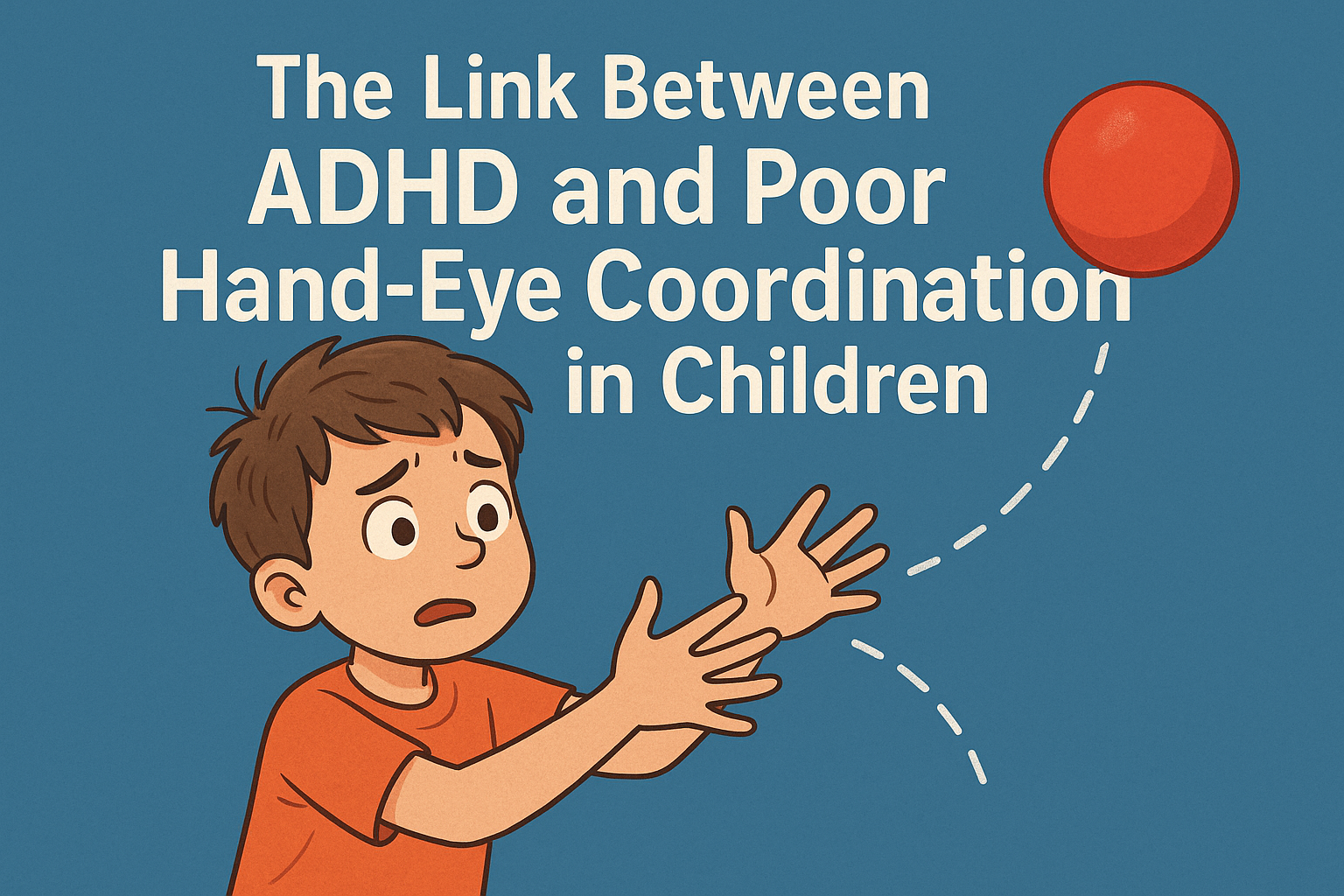
Another critical piece of research from the Journal of Attention Disorders reported that children with ADHD were less accurate in tasks requiring coordination, such as catching a ball or hitting a target. This study involved a comprehensive assessment of motor skills among children with and without ADHD, highlighting the significant differences in hand-eye coordination abilities.
Why Does This Link Exist?
Understanding the reasons behind the connection between ADHD and poor hand-eye coordination is complex. One contributing factor is the neurological differences seen in children with ADHD. Many studies have shown that ADHD is associated with abnormalities in brain regions responsible for motor function and coordination, such as the prefrontal cortex and basal ganglia.
These brain areas are crucial for planning, attention, and impulse control, all of which can indirectly affect motor skills. Additionally, children with ADHD often experience difficulties with executive function—the mental processes that help us plan, focus attention, remember instructions, and juggle multiple tasks. When executive function is compromised, a child’s ability to develop and refine hand-eye coordination may also be hindered. (See: CDC ADHD facts and statistics.)
Practical Insights for Parents and Educators
Recognizing the link between ADHD and hand-eye coordination can empower parents and educators to take proactive steps. Here are some practical insights:
- Encourage Movement: Regular physical activity is crucial. It not only improves overall health but also helps enhance coordination skills. Activities like swimming, martial arts, or team sports can provide engaging ways for children to practice hand-eye coordination.
- Incorporate Fun Learning Activities: Use games that require hand-eye coordination, such as video games, puzzles, or building blocks. These activities can enhance motor skills while keeping the child engaged.
- Seek Professional Help: If you suspect a child has poor hand-eye coordination related to ADHD, consult healthcare professionals. Occupational therapists specialize in identifying motor skill deficits and can provide tailored interventions.
- Focus on Routine: Establishing a consistent routine can help children with ADHD develop better organizational skills and improve their overall coordination.
Current Relevance and Future Directions
The connection between ADHD and poor hand-eye coordination remains a critical area of research. As awareness of ADHD grows, so too does the need for innovative approaches to support children affected by this condition. Current approaches focus heavily on medication and behavioral therapies; however, integrating physical activities and motor skill training could provide a more holistic treatment plan.
Emerging technologies such as virtual reality (VR) and augmented reality (AR) are beginning to show promise in enhancing motor skills. These technologies can provide engaging, immersive environments where children can practice hand-eye coordination in a stress-free setting. Moreover, as researchers uncover more about the neurological underpinnings of ADHD, targeted interventions that address specific motor deficits could become commonplace.
Understanding the Role of Diet and Nutrition
Another vital area to consider when discussing ADHD and hand-eye coordination is the role of diet and nutrition. Research suggests that certain dietary components might influence attention and cognitive function. For example, omega-3 fatty acids, commonly found in fish, are essential for brain health and have been linked to improved cognitive performance.
A study conducted by the American Journal of Clinical Nutrition found that children with ADHD who consumed diets rich in omega-3s showed improvement in attention and behavior. Incorporating foods like salmon, flaxseeds, and walnuts can be beneficial not just for overall health but also for improving the cognitive aspects associated with ADHD.
Case Studies: Real-Life Examples
To better illustrate the impact of ADHD on hand-eye coordination, consider the story of a 10-year-old named Alex. Despite being bright and enthusiastic, Alex struggled in physical education classes due to his inability to catch or throw a ball accurately. This led to embarrassment and negative feelings about his physical abilities, affecting his self-esteem.
After an evaluation, Alex’s parents decided to work with an occupational therapist who specialized in motor skills training. Through tailored activities that included ball games, building blocks, and even video games focused on coordination, Alex began to see improvements. Not only did his hand-eye coordination improve, but he also gained confidence, which reflected in his social interactions and overall happiness.
Another case involves Emily, a 12-year-old who had a hard time in math class due to her struggles with visual-spatial tasks. After recognizing the potential link between her ADHD and hand-eye coordination challenges, her teachers integrated hands-on learning activities that required manipulation of objects. This not only helped Emily grasp mathematical concepts better but also improved her hand-eye coordination over time.
Common Misconceptions About ADHD and Coordination
It’s essential to address some common misconceptions regarding ADHD and hand-eye coordination. One prevalent myth is that all children with ADHD will have poor coordination. While many do experience challenges, it’s important to remember that ADHD manifests differently in everyone. Some children may excel in sports or activities requiring coordination, while others may struggle. (See: NIMH ADHD statistics and information.)
Another misconception is that improving hand-eye coordination is solely reliant on practice. While practice is vital, it’s also about understanding the underlying issues that can affect coordination in children with ADHD. A multi-faceted approach, including therapy, structured activities, and nutritional support, works best.
FAQ About ADHD and Hand-Eye Coordination
What is the link between ADHD and hand-eye coordination?
Research suggests that children with ADHD often face challenges with hand-eye coordination due to neurological differences that affect motor control and executive function.
Can hand-eye coordination improve with practice?
Yes, with targeted practice and interventions such as occupational therapy, many children can significantly improve their hand-eye coordination over time.
Are there specific activities that can help improve hand-eye coordination in children with ADHD?
Engaging in activities like sports, video games that focus on coordination, and arts and crafts can help improve hand-eye coordination while keeping the child motivated.
How can parents support their children with ADHD and coordination issues?
Parents can encourage physical activity, create routines, and seek professional help to provide tailored support for their child’s specific needs.
Is nutrition important for children with ADHD?
Yes, a balanced diet rich in essential nutrients, including omega-3 fatty acids, can positively influence cognitive function and overall behavior in children with ADHD.
Additional Strategies for Enhancing Hand-Eye Coordination
In addition to the strategies mentioned previously, there are several other approaches that can effectively enhance hand-eye coordination in children with ADHD:
- Art and Craft Activities: Engaging in arts and crafts can significantly help develop fine motor skills. Activities like painting, cutting shapes, or building models require careful movement and control, which can translate into better hand-eye coordination.
- Music and Rhythm Exercises: Learning to play an instrument or participating in rhythm-based games can improve coordination and timing. Instruments like drums, guitars, or even simple clapping games can be beneficial.
- Interactive Technology: Educational apps that emphasize movement and coordination can be excellent tools for children with ADHD. Many apps focus on eye-tracking games or require physical movement, providing both fun and skill development.
- Obstacle Courses: Creating an obstacle course at home or in a safe outdoor space can provide a fun way to practice coordination. These courses can include climbing, jumping, and balancing tasks that enhance both physical and cognitive skills.
Statistics on ADHD and Coordination Skills
Understanding the prevalence of coordination challenges among children with ADHD can shed light on the necessity for targeted interventions. Studies suggest that up to 50% of children with ADHD experience some form of motor skill impairment, including hand-eye coordination. This statistic highlights the importance of not only recognizing the potential challenges kids with ADHD face but also taking active measures to support their development. (See: Research on hand-eye coordination.)
Furthermore, a meta-analysis of several studies indicated that children with ADHD are 3-4 times more likely to exhibit deficits in motor skills compared to their non-ADHD peers. This reinforces the need for early intervention strategies that cater specifically to these challenges.
Expert Perspectives on ADHD and Motor Skills
Experts in child development and psychology emphasize the significance of addressing hand-eye coordination in children with ADHD. Dr. Sarah Johnson, a child psychologist specializing in ADHD, states, “Developing motor skills is just as critical as academic achievements for children with ADHD. Without proper coordination, even simple tasks can become overwhelming, which can lead to increased frustration and anxiety.” Her insights underline the importance of a comprehensive approach that includes physical activities as part of ADHD treatment plans.
Furthermore, Dr. Mark Stevens, an occupational therapist, adds, “Focusing on motor skills can create pathways for children to gain confidence. When they see improvement in their hand-eye coordination, it can motivate them to tackle other challenges they face due to ADHD.” This perspective highlights the interconnectedness of physical skills and emotional well-being, making it clear that addressing hand-eye coordination can yield benefits beyond just physical tasks.
Conclusion: A Call to Action
Understanding the link between ADHD and hand-eye coordination is vital for developing comprehensive strategies to support affected children. By recognizing these challenges, parents and educators can foster environments that promote physical activity, enhance coordination skills, and nurture emotional well-being.
In a world where academic success often takes precedence, it’s essential not to overlook the foundational skills that contribute to a child’s overall development. Addressing hand-eye coordination can significantly impact a child with ADHD, leading to improvements in their motor skills, self-esteem, and social interactions. The journey towards recognizing and addressing these challenges is ongoing, and it requires a collective effort from families, educators, and healthcare professionals.
“`
Trending Now
- Join Nooro as an iOS Developer: A Unique Opportunity to Shape Senior Wellness
- this guide on 7 essential emotional intelligence skills every high school student needs before college
- this guide on 7 essential strategies for boosting emotional intelligence in preschoolers
- 7 Effective Emotional Intelligence Activities for…
Frequently Asked Questions
What is the link between ADHD and hand-eye coordination?
Research indicates that children with ADHD often experience poor hand-eye coordination. This impairment can affect their ability to perform daily tasks and impact their academic performance, particularly in areas requiring visual-spatial skills.
How does ADHD affect a child's daily life?
ADHD can significantly impact a child's daily functioning, leading to challenges in academic performance, social interactions, and emotional regulation. Symptoms like inattention and hyperactivity can hinder their ability to engage in various activities.
Why is hand-eye coordination important for children?
Hand-eye coordination is crucial for everyday activities such as writing, playing sports, and performing tasks like buttoning a shirt. It also plays a significant role in cognitive development and academic success, particularly in subjects that require visual-spatial skills.
Can poor hand-eye coordination affect academic performance?
Yes, poor hand-eye coordination can negatively impact academic performance, especially in subjects like mathematics and science where visual-spatial skills are essential. Difficulties in this area can lead to frustration and lower self-esteem in children.
What are the symptoms of ADHD in children?
Symptoms of ADHD in children include inattention, hyperactivity, and impulsivity. These symptoms can vary from child to child and often continue into adolescence and adulthood, affecting various aspects of their lives.
What did we miss? Let us know in the comments and join the conversation.