

“`html
Understanding child development milestones is crucial for parents, educators, and caregivers alike. One fascinating aspect of this journey is the concept of irreversibility, a cognitive stage identified by developmental psychologist Jean Piaget. This article will delve into when children typically overcome irreversibility, the significance of this milestone, and how it shapes their overall cognitive development. This builds on understanding cognitive milestones.
What is Irreversibility in Child Development?
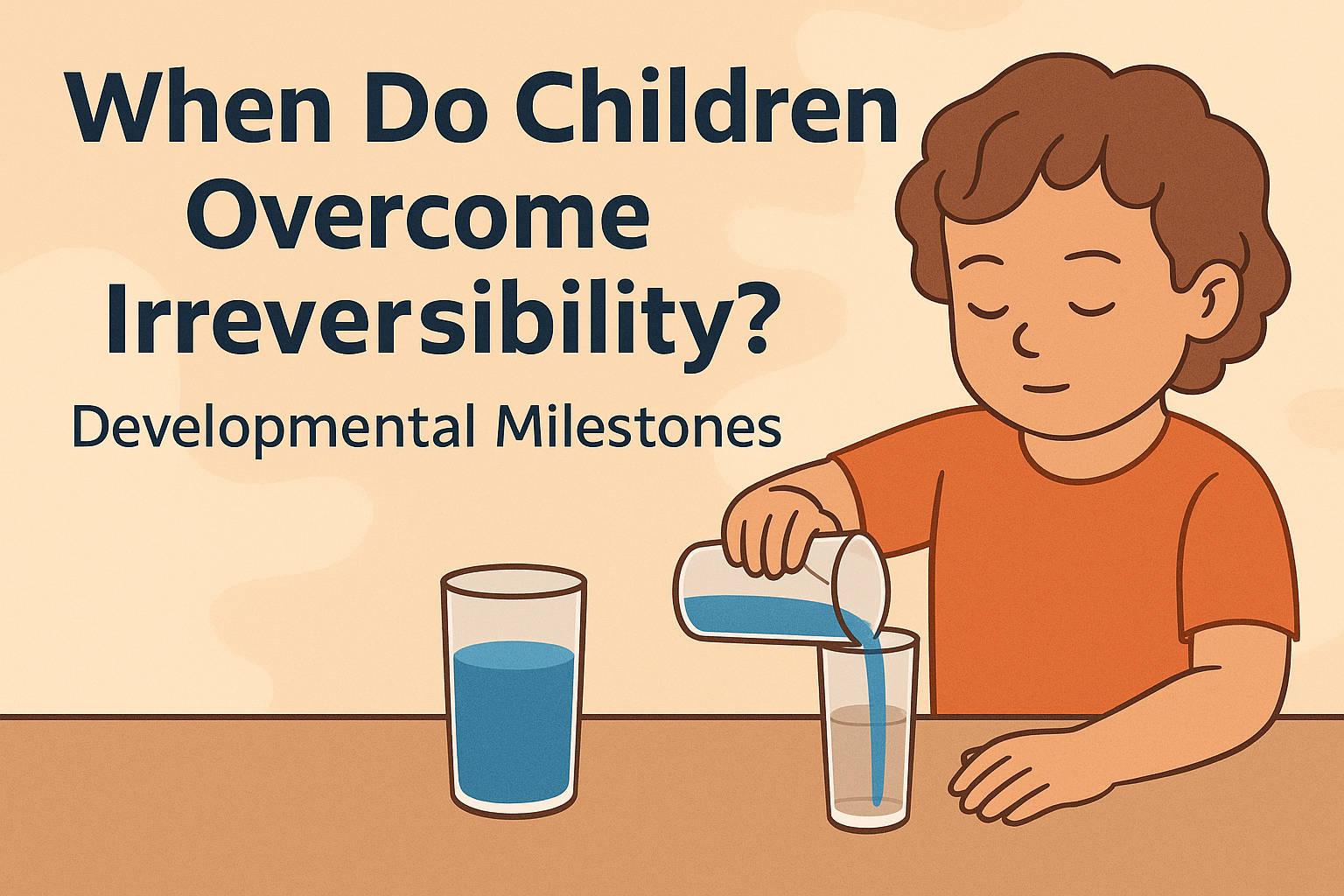
Irreversibility refers to a child’s inability to mentally reverse a sequence of events or operations. According to Piaget, this phenomenon is most prevalent during the preoperational stage of development, which spans ages 2 to 7. During this time, children struggle to understand that actions can be reversed. For instance, if you pour a certain amount of water from a short, wide glass into a tall, narrow one, a child may believe that the taller glass contains more water, despite it being the same quantity. This inability to reverse actions is a hallmark of their cognitive limitations.
The Role of Cognitive Development in Overcoming Irreversibility
Cognitive development is a complex process that unfolds in stages. Piaget theorized that children progress through four distinct developmental stages: sensorimotor, preoperational, concrete operational, and formal operational. The transition from the preoperational to the concrete operational stage, typically occurring between ages 7 and 11, marks a critical shift in a child’s ability to understand reversibility.
During the concrete operational stage, children begin to grasp the concept of conservation, which is closely linked to overcoming irreversibility. They learn that changing the form of a substance does not change its amount, volume, or mass. This newfound understanding enables them to perform mental operations that involve reversing actions. As they navigate this developmental period, children become more adept at logical thinking and problem-solving, gradually shedding the limitations of their earlier cognitive stage.
Key Child Development Milestones Related to Irreversibility
Recognizing the milestones associated with overcoming irreversibility can help parents and educators support children’s cognitive growth. Here are some key milestones to watch for:
- Age 2-3: Children begin to exhibit symbolic thinking, using symbols and words to represent objects and ideas, which is foundational for later understanding reversibility.
- Age 4-5: During this period, children often struggle with the idea of conservation. They may believe that a taller container holds more liquid than a shorter one, demonstrating their ongoing challenges with irreversibility.
- Age 6-7: As children approach the concrete operational stage, they start to exhibit a greater understanding of conservation and reversibility. They may begin to recognize that pouring liquid back into the original container illustrates the same volume.
- Age 7-11: By this stage, most children can understand and apply reversibility in various contexts, illustrating a significant cognitive leap. They can engage in logical reasoning and understand that actions can be undone.
Practical Insights for Parents and Educators
Supporting children as they navigate the complexities of irreversibility involves providing appropriate experiences and guidance. Here are some practical strategies for parents and educators: (See: Cognitive development overview.)
- Encourage Exploration: Provide opportunities for children to engage in hands-on activities, such as sorting objects, pouring liquids, or manipulating clay. These activities promote exploration and help them understand the concept of reversibility through direct experience.
- Use Everyday Examples: Incorporate real-life situations where children can practice understanding reversibility. For instance, while cooking, ask them to consider if adding or removing ingredients changes the overall amount.
- Ask Leading Questions: Encourage critical thinking by posing questions that stimulate reasoning. For example, after changing the shape of a playdough ball, ask, “Is it still the same amount of playdough?” This approach prompts reflection and reinforces their developing cognitive skills.
- Foster Language Development: Language is a powerful tool for cognitive development. Engaging children in discussions about their thought processes can help them articulate their understanding of reversibility and other concepts.
Current Relevance: The Impact of Irreversibility on Learning
In today’s educational landscape, understanding child development milestones, particularly related to irreversibility, holds significant relevance. With the rise of early childhood education programs, educators are increasingly aware of the need to tailor their teaching strategies to the developmental stages of their students.
Moreover, acknowledging the challenges posed by irreversibility can help educators design effective curricula that foster critical thinking and problem-solving skills. For instance, STEM education often emphasizes hands-on learning experiences, allowing children to make mistakes and learn from them. This approach encourages children to see that actions can be reversed, promoting a deeper understanding of concepts.
Comparative Analysis: Irreversibility and Other Cognitive Milestones
When discussing child development milestones, it’s helpful to compare irreversibility with other cognitive milestones. For example, the acquisition of language skills occurs alongside the understanding of reversibility. While children may begin to speak around 12 months, the ability to use language descriptively often develops as they approach the age of 3. This is similar to the way reversibility becomes evident later in their cognitive progression. Both milestones reflect growing sophistication in a child’s ability to interact with their environment and express their thoughts.
Additionally, the development of social skills is another critical area. During the same period when children start to understand reversibility, they are also learning important social cues, such as sharing and empathy. This interconnectedness illustrates how cognitive milestones influence other aspects of child development, creating a more rounded learning experience.
Statistics on Child Development Milestones
Understanding the timing of developmental milestones can help gauge a child’s growth. Research indicates that approximately 75% of children master the concept of conservation by the age of 7. However, there is a significant variation based on individual differences and environmental factors. For example, children who engage in more play-based learning environments tend to achieve these cognitive milestones earlier than their peers who are primarily in traditional educational settings.
Additionally, studies show that children with supportive caregivers who encourage exploration typically exhibit more advanced cognitive skills. Statistics indicate that children who are read to regularly are 50% more likely to understand concepts like reversibility and conservation by age 5 compared to those who have less exposure to language-rich environments.
Expert Perspectives on the Importance of Understanding Irreversibility
Experts in child psychology emphasize that understanding irreversibility is not only important for academic success but also for emotional and social development. Dr. Sarah Johnson, a child development specialist, notes, “Recognizing and supporting the shift from irreversibility to reversibility is crucial. It allows children to become more adaptable and better at solving everyday problems.” She emphasizes that helping children through this cognitive shift can lead to a more confident approach to learning and interpersonal relationships. (See: Child development milestones.)
Another expert, Dr. Mark Thompson, argues that the application of this knowledge in the classroom can lead to more effective teaching strategies. “When educators are aware of these milestones, they can tailor their teaching methods to better align with children’s cognitive abilities,” he states. This alignment can enhance engagement and retention of information, making learning more meaningful.
FAQ: Understanding Child Development Milestones
What are child development milestones?
Child development milestones are specific skills or behaviors that most children can perform within a certain age range. These milestones vary across different domains, including physical, cognitive, language, and social development.
Why is understanding irreversibility important?
Understanding irreversibility is important because it marks a crucial point in cognitive development. Recognizing when children can overcome this limitation helps parents and educators provide appropriate support to enhance logical thinking and problem-solving skills.
At what age do children typically overcome irreversibility?
Children typically begin to overcome irreversibility around ages 7 to 11, transitioning from the preoperational stage to the concrete operational stage, where they start to grasp concepts like conservation and can mentally reverse actions.
How can I support my child in overcoming irreversibility?
You can support your child by providing hands-on experiences, encouraging exploration, using everyday examples, and asking open-ended questions to promote critical thinking. Engaging in discussions about their thought processes can further enhance their understanding.
What role does play have in overcoming cognitive limitations like irreversibility?
Play is essential for cognitive development. It allows children to explore concepts like reversibility in a natural context, experiment with different outcomes, and develop problem-solving skills in a supportive environment. Play-based learning can enhance their cognitive flexibility and confidence.
How can I tell if my child is struggling with these milestones?
If a child consistently demonstrates difficulty in understanding that actions can be reversed or struggles with concepts like conservation, it might be a sign they are facing challenges. Look for persistent confusion in tasks involving quantity, volume, or mass. If you notice these issues, discussing them with a pediatrician or child psychologist can provide valuable insights. (how irreversibility affects kids)
Are there specific activities that can help children grasp reversibility?
Yes! Activities like playing with water, using blocks to build and then take apart structures, or engaging in cooking can all help children understand reversibility. Crafts that involve creating and then reversing actions, like folding or cutting paper, also illustrate these concepts effectively.
Conclusion: Embracing the Journey of Child Development
The journey through child development milestones is filled with fascinating twists and turns, especially when navigating the concept of irreversibility. Understanding when children overcome this cognitive hurdle is essential for parents and educators alike. By recognizing the key stages and providing appropriate support, we can foster an environment that encourages growth, curiosity, and a lifelong love of learning.
As children overcome irreversibility, they unlock new levels of thinking and problem-solving. This cognitive development not only shapes their academic success but also prepares them for the challenges they will face throughout their lives. So, whether you’re a parent, educator, or simply someone invested in the well-being of children, embracing this journey is key to nurturing their potential.
“`
Trending Now
- Unlock Your Potential: A Frontend Developer…
- Conscious Discipline vs. Traditional Classroom Management
- Difficult Temperament vs. ADHD: How to…
- this guide on how to parent according to your child’s temperament type
- our breakdown of object permanence and cognitive development: piaget’s theory explained
Frequently Asked Questions
What is irreversibility in child development?
Irreversibility in child development refers to a child's inability to mentally reverse a sequence of events or operations. This concept, identified by Jean Piaget, is most prominent during the preoperational stage (ages 2 to 7), where children struggle to understand that actions can be undone.
At what age do children overcome irreversibility?
Children typically begin to overcome irreversibility between the ages of 7 and 11, as they transition from the preoperational stage to the concrete operational stage. During this period, they develop a better understanding of concepts like conservation, which helps them grasp reversibility.
How does cognitive development relate to irreversibility?
Cognitive development plays a crucial role in overcoming irreversibility. Piaget's theory outlines four stages of development, with the transition from the preoperational stage to the concrete operational stage marking a significant shift in a child's ability to understand that actions can be reversed.
What are the signs of a child overcoming irreversibility?
Signs that a child is overcoming irreversibility include their ability to understand conservation, perform mental operations that involve reversing actions, and engage in more logical thinking and problem-solving. This typically occurs as they enter the concrete operational stage around ages 7 to 11.
Why is overcoming irreversibility important in child development?
Overcoming irreversibility is vital for cognitive development as it enhances a child's logical thinking and problem-solving skills. This milestone allows children to understand that changes in form do not affect quantity, leading to improved reasoning abilities during later stages of development.
Have you experienced this yourself? We’d love to hear your story in the comments.



