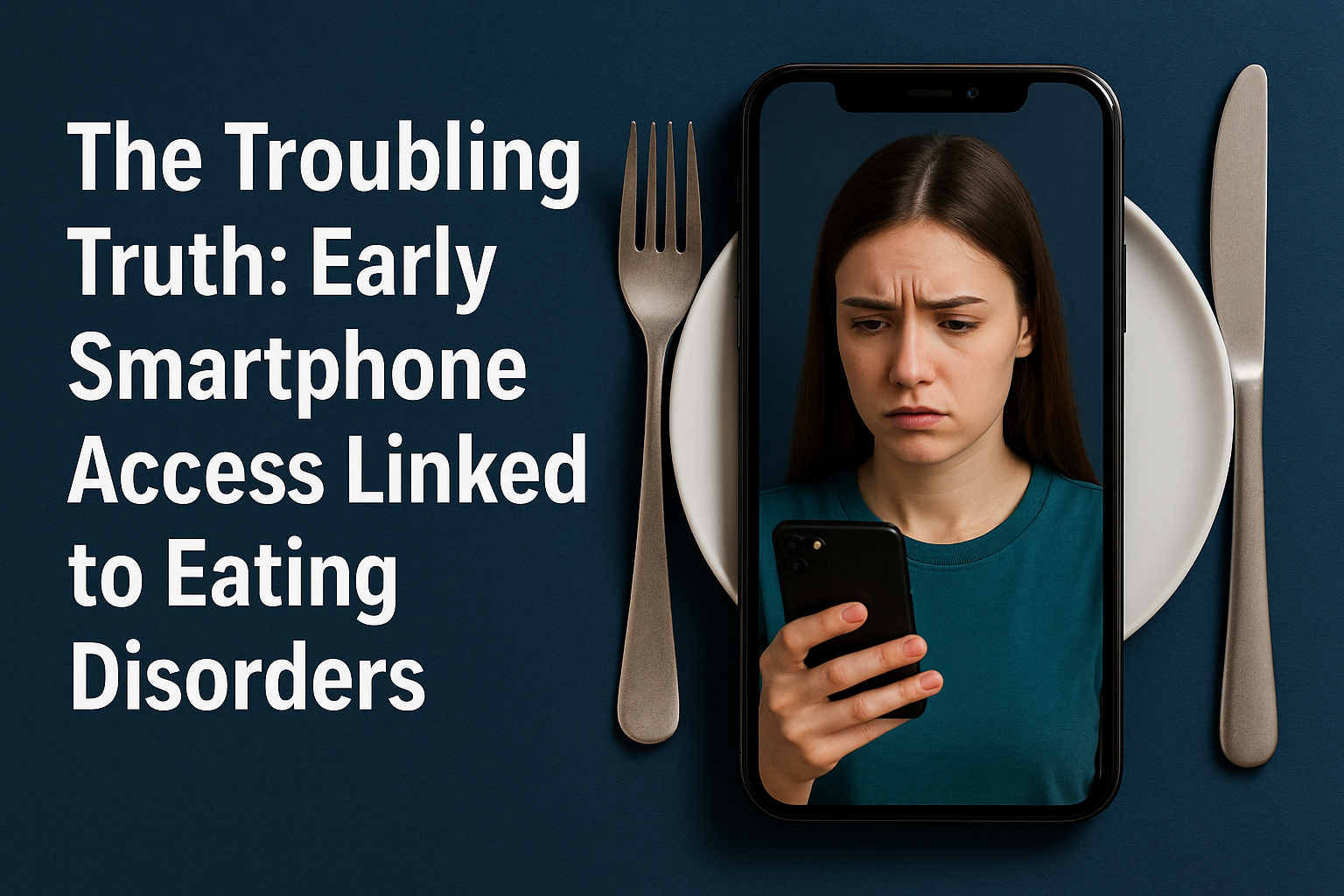

It’s a question almost every parent grapples with these days: When is the right time to hand over that first smartphone? For years, we’ve heard general warnings about screen time, its impact on sleep, and even the vague notion of its effect on mental health. But a new national study, involving nearly 9,000 adolescents, has just dropped a bombshell that might make you think twice about that shiny new device. This isn’t just about general screen time anymore; it’s about a direct, significant link between getting a smartphone by age 12 and a higher risk of developing eating disorders, binge-eating symptoms, and serious body image issues. And here’s the kicker: these problems aren’t just appearing at 12, but are still present two years down the line.
This isn’t some niche finding; it’s a piece of research that adds a crucial, data-backed layer to the widespread parental anxiety surrounding smartphones and eating disorders. We’re talking about a tangible, measurable risk that demands our attention. It builds on previous, broader studies that have already connected early smartphone ownership to issues like depression, obesity, and poor sleep. But this latest research zeroes in on a particularly insidious problem: how these devices, placed in the hands of developing minds, can warp self-perception and foster unhealthy relationships with food and body image. It’s a compelling reason, if ever there was one, to delay smartphone access for our kids as long as possible.
The Alarming Connection: Smartphones, Early Adolescence, and Vulnerability
Let’s get down to the brass tacks of what this study revealed. We’re talking about almost 9,000 young people, a significant sample size that lends serious weight to the findings. The researchers weren’t just looking for correlation; they were trying to understand if giving a child a smartphone before their 12th birthday created a measurable vulnerability. And the answer, it seems, is a resounding yes. Children who got their first smartphone by age 12 were significantly more likely to exhibit symptoms associated with eating disorders. This included not only diagnosed disorders but also troubling behaviors like binge-eating and a preoccupation with their body image. What’s particularly concerning is that these issues weren’t fleeting; they persisted and were still identifiable two years later, suggesting a more entrenched problem rather than a transient phase.
Think about what’s happening in an early adolescent’s brain. This isn’t just a child; it’s a person on the cusp of significant neurological and social development. Dr. Shannon Bennett, a clinical psychologist at NewYork-Presbyterian, puts it eloquently: younger smartphone use means more opportunity for unsupervised exposure. And what kind of exposure are we talking about? Idealized body images. Perfectly filtered selfies, unattainable physiques, and a constant stream of curated lives. For a brain whose social and emotional centers are rapidly developing, but whose decision-making and critical thinking areas are still lagging behind, this is a toxic stew. They’re not equipped to critically evaluate the endless parade of ‘perfection’ they see, leading to negative self-perception and a heightened risk of developing a negative relationship with their body and food. The link between smartphone and eating disorders here becomes painfully clear.
It’s not just about the content itself, but the sheer volume and constant availability of it. A child with a smartphone has a portal to this world in their pocket, accessible at any moment, without the mediating presence of an adult. This creates a fertile ground for comparison culture to flourish, where every scroll brings a new opportunity to feel inadequate. When you consider the developmental stage of these young minds – so eager for acceptance, so sensitive to peer perception, yet still so unequipped to process complex social cues and media messages – the potential for harm becomes stark. This isn’t to say smartphones are inherently evil, but their introduction at such a critical, vulnerable age appears to have profound and often detrimental consequences.
The Unseen Dangers: Beyond the Surface-Level Scroll
We often think of the dangers of smartphones in terms of online predators or cyberbullying. And while those are very real and serious concerns, this study highlights a more insidious threat that often flies under the radar: the subtle, pervasive influence on self-esteem and body image. It’s not always a direct attack; sometimes it’s the constant, unspoken pressure to conform to unrealistic ideals. Social media platforms, which are almost universally accessed via smartphones, are notorious for creating echo chambers of perfection. Algorithms prioritize content that garners engagement, and often, that means highly curated, aspirational, and frankly, often Photoshopped images of bodies, lifestyles, and food choices. (See: National Institutes of Health study on screen time.)
Consider the myriad ways this plays out. Young girls, for instance, are bombarded with images of impossibly thin models or influencers promoting restrictive diets and extreme workout routines. Boys might see equally unattainable ideals of muscularity or ‘alpha’ physiques. These aren’t just images; they become benchmarks against which these vulnerable adolescents measure themselves. When reality inevitably falls short, it can lead to feelings of shame, inadequacy, and a desperate desire to change their bodies. This can manifest as obsessive dieting, compulsive exercise, or, as the study points out, binge-eating in response to feelings of deprivation or emotional distress. The connection between a smartphone and eating disorders isn’t always about direct encouragement; it’s often about the constant, subtle erosion of self-acceptance.
Furthermore, the anonymity and distance of online interactions can embolden negative behaviors. While direct bullying about appearance is damaging, the simple act of seeing thousands of comments praising a particular body type can be just as impactful, subtly reinforcing harmful ideals. Even seemingly innocuous content, like ‘what I eat in a day’ videos, can inadvertently promote restrictive eating patterns or an unhealthy preoccupation with food tracking, especially for impressionable viewers. These aren’t just isolated incidents; they’re a daily, hourly deluge for a child with unsupervised smartphone access, shaping their perceptions of what is normal, desirable, and healthy.
The Developing Brain: A Perfect Storm of Vulnerability
To truly grasp why early smartphone access is so problematic, we need to talk about neuroscience for a moment. The adolescent brain isn’t just a smaller version of an adult brain; it’s a brain in flux, undergoing massive remodeling. Specifically, the limbic system, which governs emotions and social processing, is highly active and rapidly developing during early adolescence. This is why teenagers are often so attuned to social cues, so sensitive to peer opinions, and so driven by emotional responses. They’re wired to seek connection and belonging, and to interpret social signals.
At the same time, the prefrontal cortex, the part of the brain responsible for executive functions like decision-making, impulse control, and critical thinking, is still very much under construction. It’s the last part of the brain to fully mature, often not until the mid-20s. This creates a fascinating, and often challenging, imbalance. You have a highly emotionally reactive and socially driven brain, but one that lacks the fully developed brakes and judgment to navigate complex situations, especially those presented by the unfiltered digital world. Imagine driving a high-performance car with incredibly sensitive acceleration but no effective braking system – that’s somewhat analogous to the early adolescent brain online.
So, when a child with this neurological profile is given a smartphone, they’re essentially handed a powerful tool without the fully developed cognitive capacity to wield it responsibly. They’re more susceptible to social comparison, more easily swayed by trends, and less able to critically assess the unrealistic ideals presented to them. They might struggle to differentiate between genuine connection and superficial validation, or between healthy information and harmful misinformation. This developmental mismatch makes the link between smartphone and eating disorders particularly concerning, as the very mechanisms of social media exploit these innate vulnerabilities. It’s not just about what they see, but how their developing brain processes and internalizes it.
Beyond Eating Disorders: A Broader Web of Harm
It’s important to remember that the link between smartphone and eating disorders, while a significant finding, isn’t an isolated issue. This research builds upon a growing body of evidence that paints a broader picture of potential harm from early smartphone ownership. The study authors themselves pointed to previous findings associating smartphones with depression, obesity, and poor sleep. These issues are often interconnected and can create a compounding effect on a child’s overall well-being. (See: CDC Youth Risk Behavior Surveillance.)
For example, poor sleep, a common side effect of excessive screen time (especially before bed due to the blue light interfering with melatonin production), has well-documented links to mood disorders and difficulty regulating emotions. A child who is constantly sleep-deprived is more vulnerable to stress, anxiety, and depressive symptoms. Similarly, the sedentary nature of smartphone use can contribute to obesity, which in turn can exacerbate body image issues and fuel a negative cycle. These aren’t separate silos of harm; they’re often intertwined, creating a complex web where one problem can feed into another.
Consider the impact on real-world social development. While smartphones offer avenues for digital connection, they can also displace in-person interactions, which are crucial for developing empathy, reading non-verbal cues, and building robust social skills. If a significant portion of a child’s social life happens behind a screen, they might miss out on vital opportunities to learn how to navigate complex social dynamics in the real world. This can lead to feelings of isolation, social anxiety, and a reliance on the often superficial validation offered by online platforms, further contributing to mental health vulnerabilities. The problem isn’t just a smartphone and eating disorders; it’s a comprehensive impact on development.
Practical Strategies for Parents: Delaying, Monitoring, and Educating
So, what’s a parent to do with this troubling information? The clear takeaway from this study, and from the insights of experts like Dr. Bennett, is to delay smartphone access for our children for as long as possible. There’s no magical age, but pushing it beyond 12 seems to be a prudent, evidence-based strategy. This isn’t about being draconian or depriving your child; it’s about protecting their developing minds from pressures they aren’t yet equipped to handle.
When you do eventually decide it’s time for a smartphone, a phased approach is crucial. Don’t just hand over a fully unrestricted device. Start with a basic phone for communication only, perhaps a ‘dumb phone’ that lacks internet access and app capabilities. Gradually introduce features as your child demonstrates maturity and responsibility. This might mean starting with access to a limited number of pre-approved apps, with strict time limits and parental controls in place. Transparency is key here: explain to your child why these boundaries exist, linking it back to their well-being and brain development, rather than making it feel like punishment.
Establishing Healthy Digital Habits Early
Beyond delaying, active monitoring and open communication are non-negotiable. This means regularly checking their phone usage, understanding what apps they’re using, and engaging in conversations about the content they’re consuming. You wouldn’t let a young child wander unsupervised through a dangerous neighborhood, and the digital world can be just as perilous. Parental control apps can be incredibly helpful tools, allowing you to set time limits, filter content, and even see what your child is viewing. But these tools are most effective when coupled with ongoing dialogue, where your child feels comfortable coming to you with concerns or questions about what they encounter online.
Educating your child about media literacy is also vital. Teach them to be critical consumers of information and images. Discuss how photos can be edited, how social media often presents an idealized version of reality, and how to identify and dismiss harmful content. Help them understand that what they see online isn’t always real, and that their worth isn’t tied to likes, followers, or conforming to impossible beauty standards. Model healthy screen habits yourself – put your phone away during meals, engage in device-free family activities, and prioritize real-world interactions. Your example speaks volumes.
Prioritizing Real-World Connection and Self-Esteem
Ultimately, the best defense against the negative impacts of smartphones, including the risk of eating disorders, is to foster a strong sense of self-esteem and provide abundant opportunities for real-world connection. Encourage hobbies, sports, and creative pursuits that build confidence and provide a sense of accomplishment outside of the digital realm. Nurture strong family bonds and friendships that offer genuine support and belonging. When children feel secure in themselves and have fulfilling offline lives, they are far better equipped to withstand the pressures and unrealistic ideals that the digital world inevitably throws their way.
This study on smartphone and eating disorders isn’t just another piece of academic research; it’s a call to action for parents everywhere. It’s a reminder that while technology offers incredible benefits, its unchecked introduction into the lives of our youngest can have profound and lasting negative consequences. Let’s arm our children with resilience, critical thinking, and a strong sense of self before we hand them the keys to the digital kingdom.
Trending Now
Frequently Asked Questions
What are the effects of early smartphone access on children?
Early smartphone access, particularly before age 12, has been linked to a higher risk of developing eating disorders, binge-eating symptoms, and body image issues. A recent study involving nearly 9,000 adolescents found these problems can persist for years, highlighting the potential impact on mental health and self-perception.
How does smartphone use relate to eating disorders in adolescents?
Research indicates a direct connection between smartphone use before age 12 and an increased likelihood of eating disorders. The presence of smartphones can distort self-image and create unhealthy relationships with food, making early access a significant risk factor for developing such issues.
What age is appropriate for a child to get a smartphone?
While there is no definitive answer, experts suggest delaying smartphone access until after age 12. Studies show that early ownership can lead to vulnerabilities in mental health, particularly concerning body image and eating behaviors, making it advisable to wait as long as possible.
What are the long-term consequences of smartphone access for children?
The long-term consequences of early smartphone access can include ongoing issues with eating disorders, body image dissatisfaction, and mental health challenges. These effects can persist for years, underscoring the importance of careful consideration regarding when to provide children with smartphones.
How can parents mitigate the risks of smartphones on mental health?
Parents can mitigate risks by delaying smartphone access, setting limits on screen time, and promoting open discussions about body image and self-esteem. Encouraging healthy habits and monitoring online interactions can also help in reducing the negative impacts associated with early smartphone use.
Agree or disagree? Drop a comment and tell us what you think.