Education News

What to Expect When You’re Expecting a Strike

Introduction:

A strike is a labor protest in which workers refuse to perform their duties, seeking to negotiate better working conditions, increased wages, or other benefits. When a strike is imminent, it’s crucial for both employers and employees to know what to expect and how to prepare.

1. Negotiations and Collective Bargaining

Before a strike occurs, there is usually a period of negotiation between the workforce’s representatives and the employer. This process, called collective bargaining, seeks a compromise between the demands of both parties. During this time, be prepared for meetings, discussions, and potentially tense conversations. It’s crucial to keep communication channels open and maintain a respectful dialogue.

2. Union Involvement

Employee unions play an essential role in organizing and supporting strikes. Union members typically vote on whether or not to authorize a strike. If you’re not part of a union or have limited knowledge about them, familiarizing yourself with the role they play in strikes would help you understand the situation better.

3. Legalities Surrounding Strikes

Strikes are protected under various labor laws, such as the National Labor Relations Act in the US. However, there may be limitations or specific rules depending on your location. It’s critical that both employers and employees fully understand their rights and obligations during a strike.

4. Financial Implications

A strike can have financial consequences for both striking employees and employers. Strikers may lose wages during the protest period, while employers face loss of productivity and potential disruptions in supply chains or client relationships. It’s important to plan for these financial impacts by having contingency plans in place.

5. Disruptions to Personal and Professional Life

Strikes often lead to inconveniences that affect everyday routines, both personally and professionally. Employees may need to adjust childcare arrangements, daily schedules, or even deal with strained relationships among colleagues as opinions diverge about the strike. Employers, on the other hand, may need to rely on temporary workers, redistribute tasks, or readjust deadlines.

6. Public and Media Perceptions

During a strike, both employees and employers should be aware that their actions and words may be scrutinized by the public and media. This is important because public support can influence the outcome of a strike. Be mindful of your image and try to provide accurate information when speaking publicly or to the press.

7. Resolution and Post-Strike Considerations

Once a strike has concluded, it’s important for both parties to work on rebuilding relationships and addressing any lingering concerns. A successful resolution requires open communication, understanding, and a commitment to moving forward together.

Conclusion:

When you’re expecting a strike, preparation is essential for both employees and employers. Understanding the dynamics of negotiations, union involvement, legal rights, financial implications, personal disruptions, public relations, and post-strike considerations are vital aspects in navigating this challenging time. The ultimate goal should always be reaching a fair resolution that benefits everyone involved.


Amos Lee’s Generous Gift: Concert Tickets for Teachers

In a delightful turn of events, acclaimed singer-songwriter Amos Lee is showing his appreciation for educators by giving away concert tickets to teachers. This initiative demonstrates Lee’s commitment to supporting hardworking and dedicated individuals who play a crucial role in shaping the lives of future generations.

Ever since his rise to fame in the early 2000s, Amos Lee has been showered with appreciation for his soulful and heartfelt music. From bluesy undertones to folk melodies, his talents have earned him a dedicated fanbase that only continues to grow. Now, he is turning the tables and expressing gratitude by offering free concert tickets exclusively to teachers.

Admiration for these essential professionals is deeply rooted in Lee’s upbringing. As a former school teacher himself, he understands the daily challenges that educators face and the immense responsibility they carry on their shoulders. Throughout his career, Lee has always looked for ways to support teachers and give back to the education community. This generous offer of free concert tickets is just one of many ways he plans to do so.

To participate in this exciting offer, teachers will need to provide proof of their educator status. Once verified, they will receive two complimentary tickets for an Amos Lee concert held in their area. This opportunity allows educators a chance to unwind, relax, and enjoy live music—an experience that might otherwise be unattainable due to their demanding schedules and financial constraints.

Teachers who receive these tickets can expect an unforgettable evening filled with soulful tunes from Lee’s extensive discography. It will be an opportunity not only to connect with other teachers but also to feel seen and celebrated for their tireless work.

The response from the teaching community has been overwhelmingly positive—expressions of gratitude have poured in from across the country. Many educators have shared how meaningful it is to have their profession acknowledged by someone they admire.

While the free concert tickets are a lovely gesture, they also serve as a reminder of the necessary support required for the success of teachers and students alike. Acknowledgement and appreciation should go hand-in-hand with funding for resources, fair wages, and professional development opportunities.

In conclusion, Amos Lee’s generous initiative reveals his deep appreciation for teachers, recognizing their essential roles in society. By offering free concert tickets, he gives educators an opportunity to enjoy themselves and feel celebrated—a well-deserved break from their demanding day-to-day lives. This act not only symbolizes a beautiful connection between music and education but also serves as a call for continued support for teachers in every aspect of their profession.

Daylight Savings Memes That Nail What It’s Like to Teach When the Clock Changes

Introduction:

Daylight savings time brings the changing of the clocks, and with it, a whole new set of challenges for teachers everywhere. The mixture of joy, confusion, and frustration can create a perfect storm for hilarity. To help bring some lightheartedness into these chaotic times, we’ve compiled some of the best daylight savings memes that capture what it’s like to teach when the clocks change.

1. The Time Warp:

This meme perfectly captures how both teachers and students feel when they lose an hour of sleep due to daylight savings time. Featuring a confused dog reminiscent of Doc Brown from “Back to the Future”, this meme reflects how everyone feels thrown into a time warp during daylight savings season.

2. Naptime Now?:

The collective groan from students and teachers alike is captured in a meme where a tired sloth asks, “Is it naptime yet?” The struggle for everyone to stay awake (and focused) on educational tasks can be felt deep within our souls.

3. The Devious Clock:

A smirking clock sits front and center in this meme, mocking teachers as they scramble to adjust their lesson plans and daily schedules. With text reading “You thought you were prepared,” this meme hits home for those who have been caught off guard by the time change.

4. Running on Empty:

The experience for many educators during daylight savings time can be summed up with this meme featuring Spongebob Squarepants franticly running through his head, looking for some energy (or perhaps coffee). The sentiment is clear – who can spare even one precious hour of sleep?

5. Crucial Countdown:

This meme showcases an image of a countdown clock with the text “Minutes until meltdown” superimposed over it. Teachers know all too well that moment when students seem perfectly fine, but suddenly begin to doze off or lose all focus – and daylight savings time only amplifies that ticking time bomb.

6. Classroom Shuffle:

A GIF meme featuring Tom, the cat from “Tom and Jerry,” running around a room with the caption “Me adjusting lesson plans for daylight savings” perfectly encapsulates the chaos experienced by educators as they attempt to navigate their altered schedules.

7. The Balancing Act:

This meme highlights the delicate balance teachers must maintain between instructional time and their students’ need for rest. Featuring a sleepy Winnie the Pooh balancing a pillow and a chalkboard with a stick, this image will resonate with teachers who understand the struggle all too well.

Conclusion:

Daylight savings memes are not only hilarious but relatable for anyone who has experienced teaching during this tumultuous time of year. While we may lose an hour of sleep, these memes offer some light-hearted humor to help us navigate the challenges that come with the clock changes. Share them with your fellow teachers or students to add some levity to this biannual event!

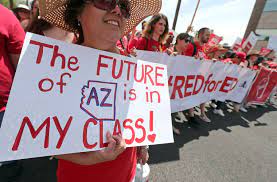
Our Favorite Signs From the Teacher Walkouts in AZ and CO

The teacher walkouts in Arizona and Colorado captured the attention of the nation as educators demanded better pay and increased funding for their schools. These protests not only highlighted the challenges faced by teachers across the United States, but they also demonstrated the creativity and passion of these dedicated professionals. One way teachers expressed their message was through colorful, witty, and heartfelt signs that they carried with them during the walkouts.

Here are some of our favorite signs from the teacher walkouts in AZ and CO:

1. “Can’t put students first if you put teachers last!” – This powerful sign encapsulates the message that educators should be valued and recognized for playing a critical role in shaping future generations. When teachers are provided with adequate compensation and resources, students can ultimately benefit.

2. “Education is a right, not just for the rich and white” – This call for educational equity emphasizes that all children, regardless of their background, deserve access to quality education. The teacher behind this sign reminded us that the fight for better schools is a fight for social justice.

3. “I’d rather be teaching” – Many signs expressed teachers’ love for their profession but emphasized their need to stand up for fair wages and educational funding. This simple statement reflects the sentiment that teachers would prefer to be in their classrooms than walking out but must take a stand to bring about much-needed change.

4. “We’re not just educators; we’re advocates” – This inspiring sign acknowledges that teachers are more than instructors; they serve as powerful advocates for their students every day inside and outside of the classroom.

5. “In a world where you can be anything, be kind (and fund our schools)” – With a twist on a popular quote, this clever sign called for both compassion and funding to support education.

6. “Our students are worth it!” – A straightforward message reminding everyone that investing in education means investing in the future of our society.

7. “We marched for all our students” – Demonstrating solidarity, this sign emphasizes that teachers from various states are united in their cause to improve education for children across the country.

These signs reflect just a fraction of the creativity and passion displayed by teachers during the walkouts in Arizona and Colorado. As educators continue to fight for fair wages and increased funding for schools, their tenacity and ingenuity prove that they are indispensable not only as educators but also as advocates for change.

The Students Teachers Will Never Forget: Unforgettable Moments in the Classroom

Every teacher has a story about that one student who stands out in their memory – the one who made a lasting impression, whether good or bad. These students leave their mark not only on the teachers who witnessed their triumphs or struggles but also on the classrooms and schools where they learned. This article highlights some unforgettable moments and students that teachers will never forget.

1. The Resilient Dreamer

A student by the name of Maria seemed to be struggling in all aspects of her life, both academically and personally. She came from a background of poverty and faced many challenges, including limited access to resources and minimal support. Maria’s future appeared uncertain, but she proved everyone wrong with her unwavering determination and resilience, pursuing her dreams regardless of any obstacles. Today, she has managed to attend university on a full scholarship and remains a shining example for other students like her.

2. The Inspirational Thespian

Alex was an aspiring actor who loved taking part in school plays, immersing himself fully into each character he portrayed. Despite struggling with anxiety and self-doubt, he never missed an opportunity to appear onstage. His talent and passion inspired not only his fellow students but also his teachers. One memorable performance helped both teachers and students understand the power of theater to boost self-esteem and foster personal growth.

3. The Reluctant Genius

Sometimes, a standout student might not embrace their abilities because they don’t realize how rare their talents are. Such was the case with Sarah, a seemingly average student who didn’t initially understand just how gifted she was in math. One day, her teacher noticed that Sarah was solving problems in an entirely unconventional manner – revealing her hidden talent for numbers. With encouragement from her teacher, Sarah began to recognize her gift and embraced her unique skills, eventually going on to excel in advanced math courses.

4. The Unlikely Friendship

In one notable classroom, a student named Jamil, who had been labeled “troublemaker” by his peers, found an unexpected bond with a quiet and introverted classmate, Emma. As they worked together on a project, Jamil discovered that Emma had experienced a challenging childhood similar to his own. This revelation prompted Jamil to reassess both his attitude and behavior – becoming an advocate for the underdog and helping Emma gain the confidence she had long lacked. Their transformation affected the entire class, prompting everyone to reconsider their prejudices and assumptions about each other.

5. The Soul-Stirring Speaker

When a group of students was asked to create a project about a social issue they were passionate about, one student named Keira chose to address mental health awareness. To conclude her presentation, she delivered a powerful speech that moved everyone in the room – including her teacher. Keira spoke honestly about her experiences with depression and anxiety, as well as the importance of seeking help. Her extraordinary courage led to open discussions throughout the school about mental health issues, creating a vital support network for those in need.

Each of these unforgettable stories demonstrates that remarkable moments can arise from even the most unassuming circumstances. They remind us that teachers’ influence extends far beyond sheer information transfer – helping shape students’ lives in profound ways that will endure long after their time in the classroom has ended. And that is why these are the students teachers will never forget.

5 Teachers Who’ve Had Classroom Materials Challenged Share What Happened

In the ever-evolving landscape of modern education, materials intended to promote discussion and critical thinking often come under scrutiny. Teachers strive to create engaging, relevant, and inclusive content for their students, but occasionally find their chosen material challenged by parents and community members.

Here are stories from five teachers whose classroom materials were challenged and the outcomes that followed.

1. Ms. Tina Dover: Huckleberry Finn Controversy

Ms. Dover used Mark Twain’s classic novel, Huckleberry Finn, as a staple in her high school literature class. However, it wasn’t long before the use of racial slurs throughout the book raised concerns among parents. The subsequent community-wide debate prompted a review by the district’s curriculum committee. Eventually, they decided to keep Huckleberry Finn in the curriculum but provided additional context and support materials to address sensitive language concerns.

2. Mr. Zachary Richards: Gender Equality Lesson

As part of his social studies class, Mr. Richards developed a lesson on gender equality that highlighted key moments in feminist history. Parents expressed concern that the content was too politically charged and felt the teacher was pushing an agenda. After multiple meetings with administration and parents, Mr. Richards agreed to rework the lesson, broadening its scope to include various perspectives on equality while still addressing crucial women’s rights milestones.

3. Ms. Lila Petersen: Climate Change Debate

When Ms. Petersen introduced her middle school science class to a unit on climate change, it sparked a debate amongst parents who questioned its scientific validity or believed it had a political bias. Despite having designed her lesson around thorough research and peer-reviewed sources, she faced an uphill battle in defending her approach. Ultimately, the school allowed Ms. Petersen to continue her unit but required her to submit additional resources for parental review.

4. Mr. Daniel Tanner: Classic Literature with Mature Themes

Tasked with introducing classic literature to his high school English class, Mr. Tanner at first encountered no problems with his selections. However, when he included Oscar Wilde’s The Picture of Dorian Gray, concerned parents deemed its themes of hedonism and moral decadence inappropriate for teenagers. Following a dialogue between the teacher, parents, and school administrators, an alternative book was provided for students whose families objected to Wilde’s novel.

5. Ms. Marjorie Owens: Graphic Novel in History Class

Ms. Owens thought Maus—a Pulitzer Prize-winning graphic novel by Art Spiegelman that depicts the Holocaust—would be an engaging alternative to traditional textbooks for her history students. Yet, outcry from some parents regarding its graphic nature quickly followed. After an extensive review process involving both school administrators and parents, they reached a compromise wherein the graphic novel was paired with more conventional resources for balance.

These stories demonstrate how educators navigate the delicate balance between providing enriching content and addressing concerns from various stakeholders within their community. Open dialogue and collaboration become essential in these situations to ensure that all perspectives are considered while maintaining an enriching learning environment for students.

It’s Been Two Years and There Is Still Zero Consistency on Covid-19 School Policies

Introduction:

As the world continues to navigate the ongoing Covid-19 pandemic, it’s been two years since the first outbreak surfaced and school systems across the globe are still grappling with inconsistent policies. Despite numerous recommendations from health experts and the surge in vaccination rates, there remains a distinct lack of coordination or agreement on how schools should operate during these trying times. This article aims to explore some of the critical inconsistencies that have become apparent within Covid-19 school policies and address the need for a more unified approach.

In-Person vs. Remote Learning:

One significant inconsistency in school policies is whether to offer in-person instruction, remote learning, or a hybrid model. Various districts have implemented different methods depending on local infection rates, infrastructure, and available resources. While some parents advocate for the benefits of direct, in-person learning experiences, others express concern over potential exposure to Covid-19. This lack of unanimity has left schools devising their own strategies in an attempt to cater to individual needs.

Mask Mandates:

The enforcement of mask mandates within schools is another source of disagreement. In some regions, masks are mandatory for students and staff alike. Conversely, other districts either enforce optional masking or do not mandate masks at all. The absence of a universal policy creates confusion among community members and contributes to debates surrounding personal freedom versus public safety.

Vaccination Requirements:

With vaccination rates climbing higher every day, there has been considerable discourse around whether educators and students should be required to receive a Covid-19 vaccine. Some institutions have enforced vaccine mandates for faculty members while others promote voluntary immunizations. Additionally, rules surrounding vaccination requirements for students are quite varied – some mandate vaccines only for eligible age groups or specific activities, whereas others do not enforce any form of vaccination prerequisite.

Response to Outbreaks:

Since Covid-19 continues to spread in communities around the world, schools must be prepared to manage potential outbreaks. However, policies regarding responses to infections lack consensus across school districts. Quarantine periods and remote learning protocols during outbreaks differ significantly, often leading to confusion and frustration for families trying to co-manage education and employment obligations.

Conclusion:

As we embark on the third year of the Covid-19 pandemic, the most pressing issue is achieving consistency within school policies to facilitate a safer and more dependable education system. The inconsistencies in in-person vs. remote learning preferences, mask mandates, vaccination requirements, and response procedures exacerbate ongoing challenges faced by students, educators, and parents. A more unified approach to school policy would enable communities to establish a sense of normalcy while safeguarding the health and well-being of all involved parties.

Dozens of Professional Sports Teams Bail This Teacher’s Students Out of Their Final: An Inspiring Lesson in Teamwork

In a remarkable display of support and teamwork, over two dozen professional sports teams came together to assist an unsuspecting teacher who was simply trying to find a fun, albeit improbable, way to engage his students during a difficult school year.

The teacher, known only as Mr. Smith, had offhandedly promised his 9th-grade students that they wouldn’t need to take their final exam if they managed to get shoutouts from 25 professional sports teams on Twitter. Little did he know, his light-hearted attempt at motivation would spark an incredible inter-league collaboration that united players from different backgrounds and sports.

It all began when one of his ambitious students decided to tweet several teams asking for support. The first team to respond was MLB’s Texas Rangers. After that initial response, other teams gradually started joining the bandwagon, with well-established franchises such as the NFL’s Kansas City Chiefs and NBA’s Golden State Warriors following suit.

As more teams retweeted the student’s original tweet and offered their own messages of encouragement, it became clear that this challenge could actually come to fruition. Sports stars from across various leagues extended well-wishes for the Class of 2021, adding a sense of camaraderie among these young fans.

As word spread about Mr. Smith’s challenge, exponentially more professional athletes jumped in to lend their support – from emerging MLS talents to Olympic champions. Fans also clamored for their local teams to participate and eventually succeeded in propelling the total team count past the initially stipulated mark of 25.

In the end, not only did those hard-to-reach 25 shoutouts miraculously materialize within days – they were ultimately dwarfed by a whopping grand total of 42 sports teams supporting Mr. Smith’s students! These exceptional results far exceeded the expectations laid out in the original challenge, and the students were obviously thrilled. True to his word, Mr. Smith canceled the final exam, much to his students’ delight.

This inspiring story reflects an important message: teamwork and mutual support make anything possible. By coming together, athletes from across different leagues and sports demonstrated that life’s challenges could be tackled with the help of others – a lesson Mr. Smith’s students won’t forget anytime soon.

In the spirit of friendly competition and camaraderie showcased in this event, one can only hope that educators and students alike find creative ways to navigate the unique obstacles presented throughout their school year – all while fostering a sense of belonging and teamwork that extends well beyond the field or court.

Empowering Future Leaders: Youth Service America’s One-Week Service-Learning Project Plan

Introduction

Youth Service America (YSA), a leading nonprofit organization focused on promoting youth engagement and service-learning, believes in the power of young people to create meaningful change in their communities. With this vision in mind, YSA designed an innovative One-Week Service-Learning Project Plan that equips educators, community leaders, and students to collaborate effectively and make a lasting impact. In this article, we will delve into the key components of this project plan and explore its benefits for the participants and their communities.

The One-Week Service-Learning Project Plan

The One-Week Service-Learning Project Plan is structured to foster teamwork and critical thinking among the participants while addressing real-world issues. The project comprises four fundamental stages:

1. Issue Exploration:

During the first stage, participants identify a pressing issue in their local community. They conduct research, interview community members, and engage with local experts to gain a deeper understanding of the problem and its root causes.

2. Developing Solutions:

With a solid grasp of the identified issue, participants brainstorm potential solutions in small working groups. They analyze the feasibility of each proposal, considering factors such as resources required, potential impact, and possible barriers.

3. Action Planning:

Participants then develop a comprehensive action plan detailing their chosen solution. This includes outlining steps for implementation, identifying necessary resources, setting realistic goals, and establishing timelines.

4. Implementation and Reflection:

Finally, students put their plans into action within one week’s time frame. Throughout the implementation process, they monitor progress and stay in close communication with their team members and project advisors to address challenges promptly. At the end of the week, participants reflect on their experiences, evaluate their project’s outcome and impact on the community.

Benefits of YSA’s One-Week Service-Learning Project Plan

By participating in YSA’s One-Week Service-Learning Project Plan, students and their communities benefit in multiple ways:

1. Skill Development:

Students enhance their research, planning, communication, teamwork, and leadership abilities while working on a real-world project. These skills are highly transferable to future academic, professional, and personal endeavors.

2. Civic Engagement and Empathy:

As participants actively engage with their community’s challenges and develop solutions, they deepen their understanding of civic responsibility and empathy for the people impacted by the issues they address.

3. Lasting Impact:

Tackling local problems enables students to witness firsthand the potential for their actions to create meaningful change. This experience reinforces the importance of service-learning and collaboration in driving social progress.

Conclusion

Youth Service America’s One-Week Service-Learning Project Plan lays a solid foundation for young people to become civic leaders and change agents within their communities. Providing a structure that supports skill development and lasting connections with community members, YSA’s project plan helps students translate passion into tangible action – a critical lesson for the leaders of tomorrow.

Why Teachers and Schools Should Be Encouraging Students to Vote

Introduction: The Importance of Political Awareness

In today’s challenging political climate, it is more important than ever to educate and instill the value of voting and civic engagement in the young generation. Teachers and schools play a crucial role in shaping the minds of future voters, making them responsible for encouraging students to vote.

1. Knowledge is Power

Teachers have the opportunity to integrate current events, political processes, and historical context into their curriculum. By discussing these topics, students can gain valuable knowledge about politics, the right to vote, and their influence as citizens. This information empowers them to make informed decisions when casting their ballots.

2. Promoting Civility and Discourse

Encouraging students to vote also allows for healthy debates and conversations within the classroom that foster critical thinking skills. Teachers can model civil discourse by having respectful discussions on controversial topics, showing students how to engage in meaningful debates.

3. Social Responsibility

Schools can create a sense of social responsibility among students by emphasizing the importance of voting. Voting is not just a right but a responsibility for every citizen. Teaching students about issues affecting their community helps them understand that their vote matters in shaping local and national policies.

4. Encouraging Active Citizenship

Educational institutions should provide extracurricular activities related to civic engagement like volunteering opportunities, mock elections, or debate clubs. Such activities encourage student participation in democratic processes while strengthening their sense of belonging in society.

5. Building Future Leaders

By encouraging students to vote, teachers help build future leaders who are aware of their rights and can make decisions that affect society positively. Voting habits developed early in life often continue into adulthood, increasing civic engagement overall.

6. Addressing Voter Apathy

Young people often feel disconnected from politics due to lack of representation or understanding of complex issues. By cultivating conversations about political issues in the classroom, teachers provide clarity and a sense of relevance. This engagement has the potential to counter voter apathy among younger generations.

Conclusion: A Stronger Democracy

Teachers and schools have a unique opportunity to shape the values and priorities of future voters. It is their duty to promote civic engagement, emphasize the importance of voting, and provide students with the tools they need to make informed decisions in a democracy. By actively encouraging students to vote, educators help create a stronger, more inclusive society for all citizens.