Education News

Tennessee is Banning Teaching Critical Race Theory—Here’s What They’re Getting Wrong

Introduction:

In May 2021, Tennessee joined several other states in the United States in passing legislation to ban the teaching of Critical Race Theory (CRT) in public schools. This controversial decision has sparked heated debates and discussions on the importance of CRT and what it brings to the educational system. In this article, we will explore what Critical Race Theory is, why it’s essential, and what Tennessee’s decision-makers are getting wrong.

What is Critical Race Theory?

Critical Race Theory (CRT) emerged in the 1970s as a framework to examine society and culture as it relates to race, law, and power. It is an interdisciplinary approach derived from critical legal studies that suggests racism is not an individual act of discrimination but rather a systemic issue embedded within societal structures. CRT seeks to dismantle these systems by exposing and challenging the racial biases inherent in them.

Why is Critical Race Theory Important?

1. Acknowledging historical context: CRT allows for a more comprehensive understanding of American history by addressing the legal, social, and political systems that have perpetuated racial inequality and segregation. By examining these historical contexts, learners can better grasp how these mechanisms continue to contribute to existing disparities.

2. Encouraging open discussion: CRT encourages open dialogue about race and racism in society among teachers, students, and communities by providing a space for marginalized voices to be heard.

3. Challenging systemic racism: By critiquing existing power structures, CRT allows individuals to recognize their agency in dismantling systemic racism and promoting equity across all aspects of life.

Tennessee’s Ban on Teaching Critical Race Theory: What They’re Getting Wrong

1. Suppressing history: Banning CRT in public schools effectively limits educators’ ability to teach about key aspects of American history accurately. This suppression denies students an accurate portrayal of historical events that shaped current racial relations and perpetuates ignorance.

2. Overgeneralization of CRT: Tennessee’s legislation demonstrates a misrepresentation of CRT by depicting it as divisive and anti-American. In reality, CRT seeks to highlight and address the systemic biases that exist within the educational system and society to promote equality and understanding.

3. Dismissing the lived experiences of People of Color: By banning CRT, Tennessee legislators are effectively discounting the experiences, narratives, and contributions of People of Color in American history. This runs counter to the principles of democratic education that value inclusion, diversity, and understanding among its students.

Conclusion:

Tennessee’s decision to ban Critical Race Theory in public educational institutions misses the mark on several key areas—suppressing historical truths around issues like racial inequality while disregarding certain narratives from marginalized groups within America’s makeup. As a result, this ban robs learners and teachers alike of the opportunity to engage in meaningful discussions around race relations today and truly understand the complex history that has led us here. One can only hope for a reversal of such decisions in the future, allowing for a more inclusive, accurate, and diverse portrayal of American history in our schools.


Teachers, What If Our Burnout Is Actually Grief?

Introduction:

The teaching profession is filled with challenges and rewards, highs and lows. However, recent times have seen a sharp increase in the number of teachers experiencing burnout- a state of emotional, mental, and physical exhaustion caused by prolonged stress. But what if this burnout we associate with the demands of our profession is not just exhaustion but actually grief? Let’s take a closer look at this possibility.

Understanding Grief:

Grief is an intense emotional and psychological response to loss. While it is often associated with the death of a loved one, grief can also be experienced due to other types of loss such as loss of a job, relationship, or health. It can manifest in various forms like anger, denial, depression, bargaining, and eventually acceptance.

Teaching Profession Losses:

Amidst the rapidly changing educational landscape, teachers face a unique set of losses that may contribute to grief emotions. Some of these losses include:

1. Loss of Traditional Teaching Practices – With the shift towards technology-based learning and new educational policies, many cherished teaching practices are slowly fading away. This change can be difficult for those who find fulfillment in their traditional teaching techniques.

2. Loss of Connection – Increased class sizes and heavy workloads leave teachers with little time to forge meaningful connections with students. This lack of connection can lead to feelings of isolation and sadness.

3. Loss of Autonomy – Teachers often feel increased pressure to adhere to strict guidelines and standardized testing requirements which can erode their sense of autonomy when it comes to creating lesson plans tailored for their students’ needs.

4. Loss of Stability – Job insecurity due to budget cuts, layoffs, or contract changes contributes to feelings of uncertainty about one’s professional future.

Recognizing Grief in Burnout:

To determine if your burnout might be grief-related, consider whether you experience any symptoms typically associated with grief such as:

– Intense sadness or sorrow

– Feeling detached or numb

– Irritability, anger, and frustration

– Persistent doubts about your abilities as an educator

– Fear of future losses in your professional life

Addressing Grief-Based Burnout:

If you suspect that your burnout might be linked to grief, it is important to acknowledge these feelings and seek support. Here are some steps you can take:

1. Talk to a professional counselor, therapist, or a mental health professional who specializes in grief counseling.

2. Reach out to colleagues who might be experiencing similar feelings for a shared understanding and support.

3. Engage in self-care activities like exercise, meditation, journaling, and hobbies that bring you joy.

4. Advocate for changes within the education system that uphold teacher autonomy, adequate funding, and manageable workloads.

5. Maintain open communication with your school’s administration to discuss any concerns or suggestions related to job security and workplace expectations.

Conclusion:

As educators, our passion is fueled by the desire to make a difference in our students’ lives. However, it’s important that we address the emotional challenges faced by teachers so we can continue providing quality education while prioritizing our well-being. By recognizing that teacher burnout might be connected to grief from various losses within the profession, we can begin the healing process and emerge as more resilient and vibrant educators.

So let’s take care of ourselves and each other – because every teacher matters.

Teachers Unions Share Their Recommendations for Next Year

Introduction:

The ever-evolving landscape of education has experienced significant changes, primarily due to the COVID-19 pandemic. As educators and administrators plan for the next academic year, teachers unions have come forward with a set of recommendations to ensure a safe and productive learning environment for students and faculty alike. These suggestions aim to tackle pressing concerns in schools ranging from safety measures, academic support, mental health, and more.

Safety Measures:

One of the primary concerns for teachers unions is ensuring the safety of students and staff during the ongoing pandemic. They recommend that schools adhere to guidelines provided by health organizations such as the World Health Organization (WHO) and Centers for Disease Control and Prevention (CDC). These guidelines include maintaining social distancing, implementing stringent sanitization protocols, adapting classroom layouts, and encouraging vaccination among eligible individuals.

Academic Support:

Teachers unions acknowledge the academic challenges faced by students during remote learning. Therefore, they suggest schools provide targeted support to help address knowledge gaps that may have arisen over time. This could include additional tutoring sessions, tailored learning plans, and close monitoring of students’ progress to adapt teaching strategies accordingly.

Mental Health:

Acknowledging the toll taken on mental health by the pandemic, teachers unions advocate for prioritizing mental well-being in educational spaces. Measures can include integrating mental health support in school-based programs or offering resources such as counseling services for both students and teachers. Fostering a supportive culture and reducing stressors will contribute positively to balancing workloads and mental well-being.

Professional Development:

Recognizing that teachers have been at the forefront during these trying times, teachers unions propose ongoing professional development opportunities. Workshops targeted at enhancing remote teaching skills or incorporating hybrid learning approaches will empower educators to better adapt to new methods of instruction. Furthermore, investing in training programs supporting socio-emotional development will benefit both educators and students alike.

Advocacy and Engagement:

Finally, teachers unions emphasize the need for increased advocacy for equitable education opportunities. Open communication between stakeholders—educators, parents, policymakers—can help drive the necessary actions to support learners and teachers alike in recovering from the pandemic’s impact.

Conclusion:

As we approach the next academic year, taking into account the recommendations shared by various teachers unions is essential for creating a safe and nurturing educational environment. With a focus on safety measures, academic support, mental health, professional development, and advocacy, all stakeholders can collaborate to adapt to new normal educational settings in the best possible manner.

Why Handing the Reins Over to Kids Earlier Makes Sense

In today’s fast-paced world, the process of nurturing and educating children has come under intense scrutiny. In particular, questions surrounding when to grant children more autonomy in making decisions are hotly debated. This article delves into the benefits of handing the reins over to kids earlier and explains why this approach makes sense in modern society.

1. Fostering Independence

One of the most apparent benefits of granting children greater control is fostering independence. By allowing kids to make decisions and take responsibility for their actions early on, parents encourage independence from an early age. This approach can prepare them for adult life by enabling them to feel more confident in making decisions and understanding the consequences of their choices.

2. Developing Critical Thinking Skills

By giving youngsters more control, parents offer an opportunity for them to develop their critical thinking skills. When faced with making a decision or solving a problem, kids must weigh their options and assess potential outcomes. This process helps develop critical thinking abilities essential for navigating life’s challenges.

3. Boosting Self-Esteem

Allowing kids to make choices and hold responsibility for their actions can lead to increased self-esteem. As they make decisions successfully, they build self-confidence in their abilities, which can result in a more stable self-image as they mature.

4. Enhancing Decision-Making Abilities

When handed the reins at an early age, children have the chance to hone their decision-making skills through practice and experience. These skills are vital for success in adulthood, so learning how to make good decisions early on sets kids up for a brighter future.

5. Teaching Accountability

Giving children authority means teaching them accountability, which is crucial for personal growth and development. When confronted with decision-making opportunities, they learn about consequences and repercussions, helping them understand that actions have outcomes that must be faced.

6. Encouraging Creativity and Problem Solving

By taking the reins, children are encouraged to think outside the box and find their solutions to problems. They learn to adapt and innovate, qualities crucial for success in a rapidly changing world.

7. Strengthening Parent-Child Relationships

Lastly, when parents entrust their children with more freedom and control, it can lead to stronger and more trusting relationships between family members. Children feel respected for their abilities and parents are seen as supportive allies.

In conclusion, handing the reins over to kids earlier can provide numerous benefits that help them become independent, critical thinkers with strong decision-making abilities. By fostering these essential life skills from a young age, parents can set their children up for success as they navigate the complexities of adulthood.

Here Are My Back-to-School Resolutions. What Are Yours?

As summer comes to an end, and students gear up for a new academic year, it’s the perfect time to reflect on goals and establish some back-to-school resolutions. These resolutions set the foundation for a successful and productive school year. Here are my back-to-school resolutions, and I’d love to hear about yours.

1. Establish a Consistent Routine

One of the keys to academic success is having a consistent daily routine. This year, I plan to wake up early, eat a healthy breakfast, and focus on getting daily exercise. I intend to create a study schedule that accounts for all my classes and allows time for relaxation and fun activities.

2. Set Realistic Academic Goals

Instead of setting overly ambitious goals that may be difficult to achieve, I will focus on realistic academic objectives that cater to my strengths and improve areas where I need assistance. For instance, if I struggle in math, I may set the goal of attending office hours or seeking tutoring services.

3. Prioritize Time Management

Inefficient time management can be detrimental to success. This school year, I vow to prioritize my time by breaking down large tasks into smaller parts and completing them one step at a time. Additionally, using tools such as calendars or digital apps can help me track deadlines more effectively.

4. Build Meaningful Connections

Networking is crucial for both personal growth and future professional opportunities. By actively engaging with classmates, instructors, and clubs related to my interests, I hope to build relationships that will not only enhance my educational experience but lay the groundwork for future career prospects.

5. Focus on Self-Care

Physical and mental well-being plays an essential role in academic performance. This semester, I plan to exercise regularly, maintain a balanced diet, get adequate sleep, and seek help from counselors or psychologists if needed.

6. Embrace New Experiences

I resolve to step out of my comfort zone and take advantage of opportunities that come my way, whether it’s joining new clubs, participating in competitions, studying abroad, or exploring new academic subjects.

7. Continuous Learning

I will strive to keep learning beyond the classroom—reading books, attending workshops, and engaging with other stimulus materials that spark my curiosity. Developing a growth mindset will bolster my ability to overcome challenges and adapt to new situations.

8. Give Back

The school environment has provided me with numerous support systems. This year, I aim to return the favor by engaging in volunteer programs, tutoring opportunities, or joining a mentoring program to help others succeed academically.

These eight resolutions set the stage for a fulfilling and successful school year. It is crucial to continuously evaluate our progress and adapt when necessary. Now it’s your turn—what are your back-to-school resolutions? We all have different goals and aspirations; let’s motivate each other to achieve them together!

Help! I Don’t Want to Job Share Anymore – Navigating the Transition

Introduction:

Job sharing has become a popular work arrangement for many employees seeking flexibility and improved work-life balance. However, circumstances may change, and some may find that job sharing no longer meets their needs. If you’ve reached this point and no longer want to job share, this article will guide you through the process of navigating this transition.

Step 1: Assess your reasons for ending the job share arrangement

Before taking any action, it’s important to assess why you no longer want to job share. Perhaps your financial needs have changed, or you feel your career objectives can be better met in a full-time role. Understanding your motivations for ending the arrangement is key in making a successful transition.

Step 2: Consult with your job share partner

Discuss your feelings and intentions with your job share partner. They may be experiencing similar concerns or may have entirely different views on the arrangement. Collaborate on finding potential solutions together before approaching management.

Step 3: Plan a clear course of action

Determine a practical course of action that considers both parties’ needs. This may involve moving into separate full-time roles within the company, or even seeking opportunities elsewhere. Be prepared to be flexible in your search for new opportunities, as this can minimize the impact on both individuals involved.

Step 4: Approach management with open communication

Once both parties are on board with the decision, approach your manager and request a meeting to discuss transitioning out of the job share arrangement. Be clear and confident in articulating your reasons for the change and present a well-thought-out plan moving forward.

Step 5: Coordinate with HR and management for a smooth transition

Work closely with HR and management to develop an exit strategy from the job share arrangement. This may involve updating resumes or portfolios, filling out relevant paperwork, or discussing notice periods. Be prepared to face challenges during this process, and maintain open communication.

Step 6: Be prepared for the possibility of having to search for a new job

In some cases, your employer may not have a suitable full-time role available when you seek to end the job share arrangement. If that’s the case, be prepared to embark on a job search. Update your resume and start networking to find opportunities that align with your career objectives.

Step 7: Reflect on the experience and learn from it

Recognize the skills you’ve acquired and experiences you’ve gathered during your job share arrangement. These experiences can help you become more flexible, adaptable, and team-oriented in future roles.

Conclusion:

Deciding to end a job share arrangement can be challenging, but by carefully navigating the transition, you can maintain professional relationships and ultimately make decisions that are best for your career growth. Approach the process thoughtfully, maintain open communication with all parties involved, and embrace the lessons learned from this unique work experience.

45 Phrases Students Say Way Too Often

In the world of academia, certain buzzwords and phrases are peppered throughout daily student life. These utterances become part of the fabric of college and university campuses. Here is a breakdown of 45 phrases you’ll hear students say way too often.

1. “What’s going to be on the test?”

2. “Is this going to be graded?”

3. “When is the assignment due?”

4. “Can I get an extension?”

5. “I’ll start studying tomorrow.”

6. “I just need to pass.”

7. “Do we need the textbook?”

8. “Can I borrow your notes?”

9. “Did you understand anything from that lecture?”

10. “I totally bombed that exam.”

11. “My major? Oh, I’m undeclared.”

12. “Sorry, I can’t; I have to study.”

13. “Do we have any group projects in this class?”

14. “I really should have gone to office hours.”

15. “Do we have a quiz today?”

16. “It’s not procrastination if it works.”

17. “When’s the drop deadline?”

18. “I pulled an all-nighter.”

19. “Who’s taking attendance?”

20. “Thank God for curved grades.”

21. “I can’t find available time slots for my advising appointment.”

22. “Let’s form a study group!”

23. “Oh no, I double-booked myself.”

24. “That was my last sick day.”

25. “Group projects are the worst.”

26. “Is submitting it late counted as partial credit?”

27. “Will there be extra credit opportunities?”

28. “Does anyone have a study guide?”

29. “What do you think will be the average for this class?”

30. “Wait, there’s a reading list?”

31. “So, what did I miss last class?”

32. “I wish I took an easier class.”

33. “I need coffee to survive.”

34. “Office hours were at the same time as my other class.”

35. “I spent more time on Netflix than studying.”

36. “Only one more week until break.”

37. “Did you hear about that TA? They’re so strict.”

38. “What’s our professor’s email address?”

39. “How many absences are we allowed?”

40. “Is this answer right?”

41. “You got 80%, and you thought it was bad?!”

42. “I should start working on the paper now.”

43. “What’s your major?” – The ultimate conversation starter.

44. “I’m not even trying to get an A anymore.”

45. “Is the final cumulative or only over new material?”

These phrases, while overused, identify a shared experience among students navigating their academic journeys. Keep your ears open for these expressions as you walk through campus and add them to your running list of student lingo!

Childhood Trauma: Expert Answers to Tough Questions From Real Teachers

Introduction:

Childhood trauma is an adverse emotional response to overwhelming events in a person’s life. It may result from various factors such as abuse, neglect, loss, or natural disasters that eventually affect a child’s mental, emotional, and social well-being. Teachers often encounter students experiencing childhood trauma; hence they need the right knowledge and support to navigate these challenges. In this article, experts answer pressing questions from real teachers regarding childhood trauma.

Question 1: How can I identify signs of childhood trauma in my students?

Answer: Identifying students with traumatic experiences can be challenging as the symptoms may vary among individuals. However, common signs include withdrawal from social situations or activities, sudden changes in academic performance, mood swings, aggression, difficulty focusing or paying attention, and recurrent physical complaints like headaches or stomachaches. It is essential to be observant and empathetic towards your students to detect these signs.

Question 2: How do I approach a student I suspect is experiencing childhood trauma?

Answer: When approaching a student experiencing childhood trauma, it’s crucial to establish trust first. Start by showing genuine concern for their well-being and provide a safe space where they can express their feelings without fear of judgment. Listen empathetically and validate their emotions. Avoid pressuring them into sharing and provide them with appropriate resources if necessary.

Question 3: What are some techniques that can help students cope with traumatic experiences?

Answer: Strategies to help students cope with traumatic experiences include creating a structured environment that promotes predictability and consistency, teaching relaxation techniques such as deep breathing exercises or mindfulness, encouraging peer support through group activities that foster collaboration and trust-building relationships with supportive adults.

Question 4: How can I create a safe and supportive classroom environment for traumatized students?

Answer: Fostering a safe and supportive classroom includes setting clear expectations for behavior and consequences but also being flexible and understanding towards each student’s needs. Cultivate a warm and friendly atmosphere that encourages open communication and acceptance. Build resilience by emphasizing students’ strengths, fostering a growth mindset, and promoting the culture of respect and kindness within the classroom.

Question 5: When should I refer a student to a specialist or counselor?

Answer: If you notice a student consistently struggling with managing their emotions, displaying self-destructive behavior, or showing an ongoing decline in academic performance, it’s time to involve specialists or school counselors. It is crucial to communicate your concerns to the student’s parents and the school administration while respecting their privacy and confidentiality.

Conclusion:

Understanding and addressing childhood trauma is vital in ensuring that students have the necessary support to deal with their past experiences and continue to grow emotionally, mentally, and socially. By being observant, compassionate, and proactive, teachers can help students navigate through challenging times, creating an environment that fosters healing and growth for all.

19 Job Interview Red Flags That Kept Teachers From Working at Toxic Schools

Teaching is a noble profession that shapes young minds and prepares them for the future. However, not all schools provide a healthy working environment for their educators. Recognizing the red flags during a job interview can save teachers from accepting positions at toxic schools. Here are 19 warning signs to look out for during the hiring process:

1. Vague or unrealistic expectations: Be cautious if the interviewer can’t clearly explain what they expect from you or has unattainable goals for your role.

2. High employee turnover: This could indicate job dissatisfaction among current or previous employees due to poor management, low morale, or inadequate support.

3. Negative comments about current staff: Pay attention if the interviewer speaks ill of their employees or openly complains about them.

4. Dismissal of concerns: If your questions or concerns during the interview are brushed aside, this may suggest that the school doesn’t value open communication or take your worries seriously.

5. Limited resources: Inquire about available technology, classroom materials, and professional development opportunities – a lack of resources could make your job more challenging.

6. Little focus on work-life balance: Watch out for schools that expect teachers to be available around-the-clock without considering personal lives or self-care needs.

7. Inflexible curriculum: If there’s no room for creativity or individuality in teaching methods, this could signal a restrictive environment.

8. High-pressure atmosphere: A school that emphasizes only high test scores and grades might create unnecessary stress among both staff and students.

9. Unclear discipline policies: Make sure to ask about the school’s discipline policy and how they handle misbehaving students – inconsistencies may lead to difficulties managing your classroom.

10. Ignoring parent input: Gauge how much the school values parental involvement by asking about communication practices and parents’ role in the school community.

11. Lack of diversity: A homogeneous staff or student body could indicate an unwelcoming environment for diverse perspectives.

12. Poor administrative support: If you sense an absence of collaboration or teamwork between teaching staff and administration, you may struggle to get the support you need.

13. Overemphasis on extracurricular activities: While valuable, extra-curricular activities shouldn’t overshadow the focus on academics.

14. Unclear contract details: Make sure you fully understand the terms of your contract, including work hours, salary, benefits, and expectations.

15. Financial instability: Research the school’s financial situation – frequent budget cuts or uncertainty in funding could affect your job security.

16. Missing or vague job description: If your role is unspecified, it may be a sign that the school hasn’t clearly defined your position.

17. Disorganization during the interview process: Inefficient scheduling, communication, or obvious unpreparedness by the interviewer may reflect a chaotic work environment.

18. Discomfort among current staff: Observe how current employees interact with each other – tension or unease could signal a toxic atmosphere.

19. Unprofessional behavior from administration: Red flags may include tardiness, inappropriate comments, or disrespectful demeanor during interviews.

By being vigilant for these warning signs during interviews, teachers can avoid accepting positions at toxic schools and set themselves up for success in a supportive and healthy environment.

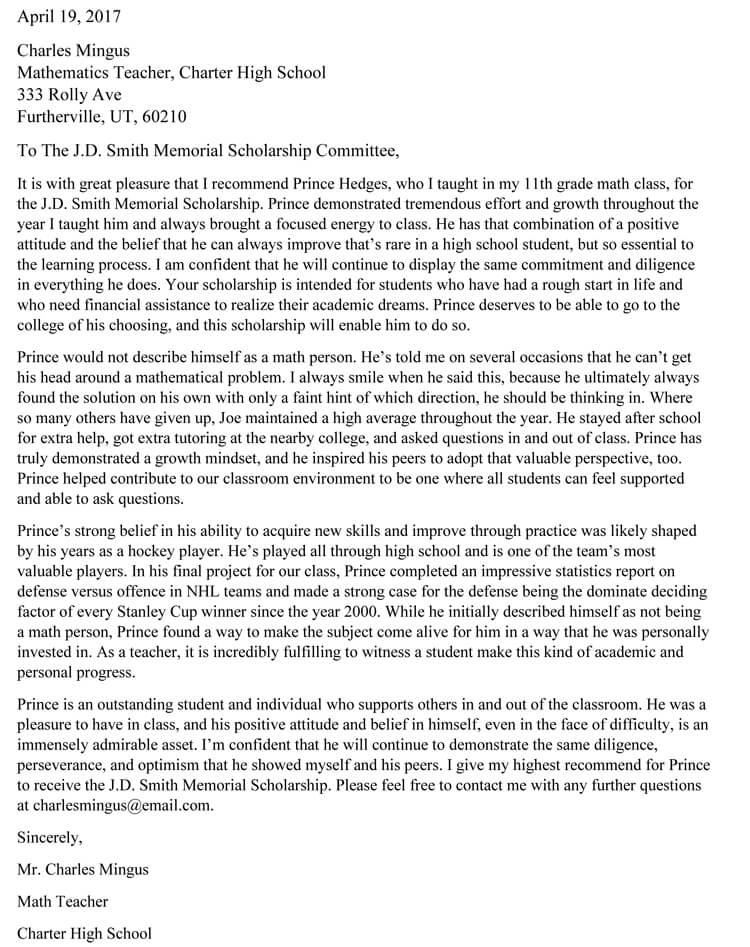
10 Strong Scholarship Recommendation Letter Examples

A well-crafted scholarship recommendation letter can make a significant difference in the application process, helping students win the awards they need to pursue their education. In this article, we’ll explore ten strong examples of scholarship recommendation letters that effectively highlight a student’s strengths and achievements.

1. Academic Excellence Letter: This letter praises the student’s exceptional academic accomplishments, such as a high GPA, competitive exam scores, or unique research projects. It may also mention the student’s dedication to their studies and their commitment to continually improving their knowledge and skills.

2. Leadership Letter: This type of letter focuses on the student’s leadership qualities such as initiative, effective communication, and ability to inspire others. It should provide specific examples of how the student has demonstrated these traits in various school or community activities, as well as their potential for continued growth in this area.

3. Character Letter: A character reference letter provides insight into a student’s personal qualities, values, and work ethic. This form of recommendation emphasizes the positive impact they’ve made on their peers, teachers, and community through acts of kindness, integrity, or responsibility.

4. Extracurricular Activities Letter: A strong extracurricular activities letter highlights the student’s involvement and dedication to clubs, sports teams, or other non-academic pursuits. The recommender should emphasize the depth of passion, skill level, and achievements within these activities.

5. Volunteer Experience Letter: A volunteer experience letter reflects upon a student’s commitment to giving back to their community or helping those in need. It should detail specific examples of volunteer work they’ve completed and how it has made a meaningful impact on others.

6. Research Skills Letter: This type of recommendation showcases the student’s research abilities by outlining their experience in conducting research projects or participating in scientific competitions. It should speak to the applicant’s problem-solving skills, creativity, attention to detail, and perseverance.

7. Unique Talent Letter: A unique talent letter focuses on a specific skill or ability that sets the student apart from others, such as artistic, musical, or linguistic talents. The recommender should describe the student’s achievements and dedication to cultivating this talent.

8. Internship or Work Experience Letter: This letter details the student’s experiences within internships or employment, highlighting their professionalism, time management skills, and adaptability to new environments. It should emphasize how these experiences have helped prepare the student for higher education.

9. Overcoming Adversity Letter: An overcoming adversity letter showcases a student’s resilience in dealing with personal challenges while maintaining a strong academic record. The recommender should discuss how the student has navigated through difficult circumstances and come out stronger.

10. Multi-faceted Letter: This comprehensive type of recommendation combines several of the above elements to create a well-rounded portrayal of the candidate. It touches on academics, leadership, character, and extracurricular activities to demonstrate the applicant’s diverse range of strengths.

A strong recommendation letter can help prospective scholars stand out from other applicants and secure much-needed scholarship funds. By following these ten examples as a guide, educators and mentors can craft powerful letters that showcase their students’ potential.