Math Education

4 Ways To Make Real-World Exploration Happen in Your Virtual Math Classroom

Introduction:

The rapid shift to online learning has added new challenges for educators, particularly for subjects like math that heavily rely on problem-solving and real-world applications. Nevertheless, teachers can still create engaging, hands-on experiences for their students by incorporating real-world exploration in their virtual math classrooms. Here are four ways to achieve this:

1. Leverage online platforms and tools:

Many educational platforms provide resources that help teachers bring real-world problems into the virtual math classroom. Websites like Illustrative Mathematics, Desmos, and PhET Interactive Simulations offer interactive activities designed to teach mathematical concepts in the context of authentic issues. By combining these resources with video-conference tools like Zoom or Google Meet, you can create an engaging experience that encourages teamwork and problem-solving.

2. Integrate multimedia elements:

Utilize multimedia elements, such as videos and images, in your online lessons to connect mathematical concepts with real-life examples. Websites like TED-Ed and PBS LearningMedia provide high-quality short videos that showcase different aspects of math concepts in real-world situations, which can foster students’ curiosity and understanding.

3. Assign meaningful projects:

Develop project-based assignments that require your students to apply what they have learned in class to solve real-life problems. For example, you could have your students apply geometry principles to design a city park or use statistical methods to analyze data from a social issue dear to them. Encourage students to collaborate on these projects through video calls or online group chats, which will not only improve their problem-solving abilities but also promote their teamwork skills.

4. Foster collaboration using digital escape room activities:

Create digital escape room activities focused on real-world scenarios that challenge your students’ mathematical skills, critical thinking, and cooperation abilities. There are various websites like BreakoutEDU and Escape The Classroom where you can find pre-made digital escape rooms; alternatively, you can design your own escape room experience using tools like Google Forms and Google Slides. Organizing collaborative problem-solving activities within small groups gives your students the chance to apply their math skills to navigate through challenges rooted in real-life situations.

Conclusion:

Integrating real-world exploration in your virtual math classroom may seem challenging, but by leveraging online platforms, multimedia elements, and collaborative projects, you can create an engaging and meaningful learning experience for your students. Encourage them to explore, inquire and work together—applying mathematical concepts to overcome real-life obstacles—to help them develop a deeper understanding of the subject.

22+ Books About Math for Kids to Share in the Classroom

Mathematics is an essential subject for children to learn and appreciate. It not only helps with problem-solving skills but also contributes to developing a deeper understanding of the world around us. One excellent way to introduce math to youngsters is through engaging and entertaining books. Here, we’ve compiled a list of 22+ fantastic books about math for kids, which can be shared in the classroom.

1. The Grapes Of Math by Greg Tang

2. Bedtime Math by Laura Overdeck

3. Sir Cumference and the Dragon of Pi by Cindy Neuschwander

4. One Grain Of Rice: A Mathematical Folktale by Demi

5. Zero the Hero by Joan Holub and Tom Lichtenheld

6. The King’s Chessboard by David Birch

7. Math Curse by Jon Scieszka and Lane Smith

8. Shape Up! Fun with Triangles and Other Polygons by David A. Adler

9. A Very Improbable Story: A Math Adventure by Edward Einhorn

10. The Doorbell Rang by Pat Hutchins

11. Tally O’Malley by Stuart J. Murphy

12. What’s Your Angle, Pythagoras? by Julie Ellis

13. Equal Shmequal: A Math Adventure By Virginia Kroll

14. How Big Is a Foot? by Rolf Myller

15. Amos Jellybean Counts from One to Ten by Maria Galati Godfrey

16. 12 Ways To Get To 11 by Eve Merriam

17. Spaghetti And Meatballs For All! A Mathematical Story By Marilyn Burns

18. Edith’s Arithmetic Day by Constance MC Hammer

19. The Lion’s Share: a Tale of Halving Cake and Eating It, Too By Matthew McElligott

20. Mystery Number Riddles: Place Value, Addition, and Subtraction by Heather Scott

21. Each Orange Had 8 Slices: A Counting Book by Paul Giganti Jr.

22. Array Art: Explore Multiplication by Shannon Maree Teaching

These books not only present mathematical concepts in a fun way but also help children establish a solid foundation in math. Teachers can choose from various topics, such as geometry, multiplication, division, and more, to cater to the learning needs of their students.

In conclusion, sharing these books in the classroom will empower children with essential math skills while also sparking their curiosity and desire to learn more. Encourage young minds to explore the wonders of mathematics with these engaging and educational books for kids!

9 Effective Activities to Evaluate Algebraic Expressions

Introduction:

Algebraic expressions are a crucial part of mathematics, and mastering their evaluation is essential for students. While understanding the basics of algebra can be challenging for some, practicing through engaging activities can enhance the learning experience. Here are nine effective activities to help you evaluate algebraic expressions.

1. Card Game:

Create a deck of cards containing numbers, variables, and operators. Students take turns drawing cards and forming valid algebraic expressions. They then evaluate the expression and record their answers. This encourages mental math skills while reinforcing algebraic concepts.

2. Algebra Tiles:

Using algebra tiles is an excellent hands-on method to visualize and solve algebraic expressions. Students can manipulate the tiles to determine the value of a given expression. This tactile approach helps deepen conceptual understanding of algebra.

3. Expression Bingo:

Similar to regular Bingo, Expression Bingo tests students’ abilities to solve a variety of expressions quickly. Prepare cards with simplified algebraic expressions in each square and distribute them among the students. As you call out unsimplified expressions or challenge problems, students solve them and mark off corresponding squares on their card.

4. Relay Races:

Organize students into teams and provide a set of algebraic expressions to each group. Have them race against the clock to solve one problem at a time before passing it on to the next teammate in line. This collaborative activity promotes teamwork while honing problem-solving skills.

5. Expression Matching:

Create pairs of equivalent algebraic expression cards—one simplified version and one more complex version—then mix them up and place them face down on a table. Students take turns flipping over two cards at a time to find matching pairs while also practicing simplification techniques.

6. Online Interactive Tools:

Several online platforms offer interactive tools that help students practice evaluating algebraic expressions with immediate feedback. For example, Khan Academy provides a step-by-step explanation for solving problems, allowing students to learn at their own pace.

7. Board Game:

Design a custom board game in which players must correctly evaluate algebraic expressions to advance spaces. This can be done by adapting an existing board game or creating a new one. Adding action cards that challenge students to demonstrate their understanding of different algebraic concepts can increase engagement.

8. Expression Puzzles:

Develop puzzles in which students solve algebraic expressions by unscrambling the steps or process. This activity helps students organize their thinking and understand the sequence of problem-solving steps required for evaluating expressions.

9. Create Your Own Expressions:

Encourage students to devise their own algebraic expressions based on specific criteria, constraints, or real-life applications. They can then swap problems with their peers for solving, promoting creativity and comprehension along with problem-solving skills.

Conclusion:

The key to mastering algebraic expression evaluation lies in practice, repetition, and diverse learning methods. Incorporating these nine activities into your study sessions will foster deep understanding of algebra while making the learning process enjoyable and engaging for students.

20 Engaging Middle School Pi Day Activities

Pi Day, celebrated annually on March 14, is the perfect day to combine math and fun in middle school. Here are 20 engaging middle school activities to help you celebrate Pi Day with your students!

1. Pi Day Scavenger Hunt: Hide pi-related clues around the classroom and have middle school students work in teams to solve problems and find the hidden prizes.

2. Create a Pi Day Chain: Each student cuts out a construction paper link representing a digit of pi and connects it to their classmates.

3. Calculate Circle Measurements: Students use measuring tapes, string, and calculators to explore how the circumference and diameter of various circles relate to pi.

4. Pi-Ku Poetry: Encourage students to write math-themed haikus using 3-1-4 syllables for each line.

5. Create Pi Art: Students create artwork using the digits or symbolism of pi, including collages, paintings, or sculptures.

6. Estimate the Value of Pi: Using everyday items, like toothpicks or straws, let students experiment with the “Buffon’s Needle” method to estimate pi.

7. Pi-nspired Fashion Show: Students design pi-themed outfits and accessories, such as t-shirts, hats, or jewelry, for a classroom fashion show.

8. Memorization Contest: Challenge students to memorize as many digits of pi as possible for a chance to win unique pi-themed prizes.

9. Pie Bake-off: Invite students to bring in homemade pies for a scrumptious sampling and vote for their favorites.

10. Math Debate: Divide students into two teams and let them argue about the importance of pi in mathematics and everyday applications.

11. Pi Skits: Encourage group skits or commercials promoting understanding of the importance of pi in various contexts.

12. Pi-Palooza Talent Show: Host a talent show during which students are encouraged to incorporate pi into their performances.

13. Watch a Pi-related Movie: Screen films like “Life of Pi” or “Pi,” and have meaningful discussions afterward about the themes and connections to mathematics.

14. Interactive Pi Jigsaw Puzzle: Have students color in the digits of pi on large grid paper and cut them into puzzle pieces. As a class, work to put the puzzle back together.

15. Calculate Personal Pi: Teach students how to calculate personal pi using their height and arm span measurements.

16. Write a Pi Day Song: Let students collaborate to write and perform a song about the significance of pi.

17. Pi Volleyball: Inflate several beach balls, label them with various circle measurements, and have students play volleyball while discussing how pi relates to each measurement.

18. Sidewalk Chalk Digits: Have students write as many digits of pi as possible with sidewalk chalk on the playground or outside their classroom.

19. Circle Relay Race: Set up a relay race where students must walk within designated “circle” paths using their knowledge of circumference and diameter.

20. Research Famous Mathematicians: Assign each student a famous mathematician who contributed to our understanding of pi, have them research their achievements, and present their findings to the class.

These 20 engaging middle school Pi Day activities are sure to transform your math classroom into an exciting place on March 14th!

20 Fun Fraction Games for Kids to Play To Learn About Math

Fractions are an essential component of mathematics, and they can be a fun and engaging topic for kids to explore. With the right games and resources, learning about fractions can be a breeze. Here are 20 fun fraction games that will help kids learn about math and have a great time!

1. Fraction Bingo

Fraction Bingo is a simple yet engaging game where kids match equivalent fractions on their bingo cards, making it an excellent way to practice simplifying and comparing.

2. Fraction Memory Game

Players match pairs of fraction cards in this memory-based game that focuses on recognizing and understanding equivalent fractions.

3. The Great Fractions Race

In this competitive race-themed board game, players roll dice to move their tokens across the board by adding or subtracting fractions.

4. Fraction War

Based on the classic card game War, players compare fractions and ‘win’ cards if their fraction is greater than their opponent’s.

5. Pizza Party

Pizza Party is an entertaining game in which players build pizza pies using various pie pieces representing different fractional amounts.

6. Fraction Dominoes

Match up dominoes displaying equivalent fractions in this hands-on, visual game that helps kids recognize connections between different representations of fractions.

7. Cookie Fractions Game

In this online game, players help a cookie-loving character by identifying the missing fraction from a cut-up cookie-guided by visual clues.

8. Equivalent Fractions Board Game

Players move around the board by drawing cards with equivalent fractions, encouraging them to simplify and recognize different fraction forms.

9. Fraction Splat!

This online game involves popping balloons with equivalent fractions – fast-paced, engaging, and motivating for math practice.

10. Cake Fractions

Another food-themed game where kids learn about fraction addition by decorating cakes with the correct icing colors representing given fractional amounts.

11. Fill in the Fraction Blank

A hangman-style game where kids fill in the blank for an equivalent fraction by guessing letter numerals until they complete the fraction.

12. Fraction-Based Treasure Hunt

Create a treasure hunt where the pieces of the map are fractions that need to be pieced together to find the hidden treasure.

13. Fruity Fractions Game

In this game, players match fruit cards with their corresponding fractional amounts, making it perfect for teaching both fractions and probability.

14. Fraction Pictionary

Kids draw and guess pictures representing different fractions as they practice recognizing and understanding fractional amounts.

15. Fractions in Disguise

Players disguise themselves as different fractions, aiming to trick other players into choosing them in this guessing game focused on comparing and simplifying.

16. Fraction Obstacle Course

In this physical activity, players complete obstacles involving fractions to move forward, combining math fundamentals with exercise for ultimate engagement.

17. Lego Fractions

Use colorful Lego bricks to help visualize and learn about adding, subtracting, multiplying, and simplifying fractions – hands-on and engaging.

18. Fraction Races

Players race to build fractions using 100 squares grids, dice, and counters – focusing on assembling and deconstructing fractional amounts.

19. Mixing Fractions

Kids use measuring cups with fractions labeled on them to mix different liquids together, learning about adding and comparing fractions through an interactive baking experience.

20. I Have…Who Has? Fractions Edition

Adapt the popular I Have…Who Has? game format to include fraction cards promoting discussion, understanding, and quick thinking in a group setting.

These twenty fun fraction games will not only entertain kids but will also equip them with valuable math skills needed for school success. Learning about mathematics has never been more enjoyable!

Downloadable Poster: Preparing for Math STAAR Testing

Introduction:

Math is a subject that many students dread, but with the right approach and preparation, it can be a breeze. With STAAR testing around the corner, it’s essential for students to gain confidence in their math skills and overcome their fear of the subject. This downloadable poster outlines tips and tricks to help students prepare for their Math STAAR Testing efficiently.

Section 1: Understand the Test Format

– The Math STAAR test consists of multiple-choice, griddable, and written response questions.

– Review the Test Blueprint to familiarize yourself with the question types and topics.

– Understanding the format will help you strategize your time management during the test.

Section 2: Plan Your Study Sessions

– Determine your areas of weakness and focus your preparation on those topics.

– Allocate enough time to practice, review concepts, and ask questions.

– Benefit from both independent study and group study sessions.

Section 3: Utilize Various Resources

– Utilize online platforms such as Khan Academy, IXL, or Study.com for guided lessons.

– Find interactive activities to reinforce math concepts.

– Seek assistance from your teacher or tutor if necessary.

Section 4: Practice Regularly

– Dedicate time each day to work on math assignments or practice problems.

– Test your knowledge through quizzes or mock exams.

– Target weak areas with additional practice until you are comfortable with them.

Section 5: Visual Learners

– Use colorful diagrams or flowcharts to illustrate math concepts.

– Create flashcards for important formulas or terminology.

– Draw concept maps to connect interrelated ideas.

Section 6: Stay Motivated and Positive

– Believe in your ability to learn and succeed in math.

– Encourage a growth mindset; setbacks are opportunities for growth.

– Reward yourself for reaching study goals.

Conclusion:

The key to acing the Math STAAR test is consistent and focused preparation. Make it enjoyable by incorporating creative strategies, seeking help when needed, and staying motivated. With the right mindset and tools, you are sure to become a confident mathematician ready to tackle the challenges of the Math STAAR test. Download this poster as a guide and visual reminder to keep you on track for success!

A New Twist on the Hand Turkey: Add Math and Dice

Introduction:

The timeless tradition of creating hand turkeys has long been a staple in classrooms and homes during Thanksgiving festivities. Bringing families and friends together, this simple yet charming activity evokes a sense of childhood nostalgia. Although the classic hand turkey will always hold a special place in our hearts, it’s time to introduce a fresh spin for those seeking an engaging and educational twist. Integrating math and dice elements into the mix, participants can now enjoy an entertaining and educational experience as they craft their very own mathematical hand turkey.

Incorporating Math and Dice:

In this new variation, you will need craft supplies, dice, and a basic understanding of mathematical operations. Here’s how to create a unique, math-infused hand turkey:

Materials:

– Colored paper or construction paper

– Pencil or pen

– Scissors

– Markers or crayons

– A pair of dice (preferably twelve-sided)

Instructions:

1. Begin by tracing your hand on a piece of colored paper using a pencil or pen.

2. Cut the hand trace carefully with the scissors.

3. Roll the pair of dice to determine the numbers to be used for your math equations.

4. Proceed with decorating your hand turkey using markers or crayons, making sure you have plenty of space for writing down math equations on its feathers. Feel free to personalize your turkey with fun patterns, colors or other designs.

5. Using the numbers that you rolled from the dice, write down simple addition, subtraction, multiplication or division problems. For younger participants, sticking to addition and subtraction is recommended while older kids can explore more challenging equations incorporating multiplication and division as well.

6. Place each written equation on separate feathers drawn across the traced fingers.

7. Solve each equation and write the answers near their respective problems.

8. As a finishing touch, craft your turkey’s face, adding eyes, beak, and wattle.

Conclusion:

By incorporating math skills and the element of chance through rolling dice, this updated twist on the hand turkey not only provides artistic expression but also encourages learning and critical thinking. It’s a perfect activity for families looking to create a meaningful and memorable craft during Thanksgiving celebrations. So, gather your loved ones, roll those dice, and become immersed in the satisfying challenge of crafting your very own mathematical hand turkey.

Teacher Helpline: How Can I Use Journals in Math Class?

Introduction:

As a teacher, you may often find yourself seeking new and engaging methods to help your students learn and retain mathematical concepts. One such technique, which may not be commonly associated with math classes, is the use of journals. You might be wondering how journaling could have an impact on a subject like mathematics. In this article, we explore the value of incorporating journaling into your math curriculum and provide practical tips to get you started.

The Benefits of Journaling in Math Class:

1. Encourages Reflection and Self-Assessment:

Journaling allows students to reflect on their learning process, identify any challenges they faced, and analyze their own thought processes while solving problems. This can lead to improvements in critical thinking and problem-solving skills.

2. Enhances Communication Skills:

Writing about math provides an opportunity for students to practice articulating their understanding of mathematical concepts and explaining their reasoning behind solutions. This helps them develop valuable communication skills that will benefit them in other subjects as well as future STEM careers.

3. Reinforces Conceptual Understanding:

When students write about the steps they followed in solving a problem or explain a concept in their own words, they are more likely to retain that knowledge for future use.

4. Boosts Engagement:

Using journals can make math class more engaging and relatable by encouraging students to see the real-world connections between mathematics and their everyday lives.

Tips for Using Journals in Math Class:

1. Start with Simple Prompts:

Begin by providing your students with simple prompts related to the day’s lesson, such as asking them to explain a concept in their own words, describe the steps they took to solve a particular problem, or identify what they found most challenging during class.

2. Encourage Creativity:

Allow students to express themselves creatively through drawings, diagrams or even poetry that help illustrate mathematical concepts.

3. Focus on Process, Not Just Answers:

Encourage students to focus on explaining their problem-solving process, rather than just writing down the final answer. This will help develop a deeper understanding of the concepts being taught.

4. Provide Feedback and Support:

Regularly review your students’ journal entries and provide constructive feedback on their work. This will help them improve their writing and mathematical reasoning skills while also fostering a supportive learning environment.

5. Use Journal Entries as Teaching Tools:

Share excerpts from student journals during class discussions or use them as a basis for class activities. This not only validates the student’s work but also helps in creating a sense of ownership and pride in their learning.

Conclusion:

Incorporating journaling into your math classroom can be a transformative experience that encourages students to engage with mathematical concepts on a deeper level while also honing valuable life skills like critical thinking, problem-solving, and communication. Start by experimenting with different prompts and activities, and soon you’ll see the impact it can have on your students’ learning and success in mathematics.

Ice-Cream-Themed Math Lesson Plan

Introduction:

It’s no secret that children love ice cream. But did you know that you can combine this sweet treat with a bit of math education? In this article, we’ll explore an ice-cream-themed math lesson plan designed to engage students while teaching them important math concepts. Let’s dive in!

Lesson Outline:

1. Introduction to Ice Cream Flavors and Toppings (5 minutes)

– Begin by discussing various ice cream flavors and toppings with your students.

– Have students share their favorites and any unique combinations they’ve tried.

2. Counting and Sorting with Ice Cream (10 minutes)

– Divide students into small groups and provide each group with a set of ice cream flavor cards and topping cards.

– Have the groups sort their cards into different categories based on flavor or topping type.

– Ask students to count how many cards are in each category.

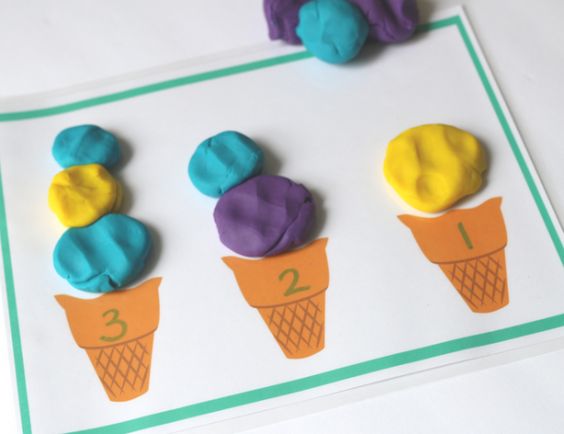
3. Simple Addition and Subtraction with Ice Cream Scoops (15 minutes)

– Provide each student with a worksheet featuring various ice cream cones with differing numbers of scoops.

– Teach students how to add and subtract the scoops to find the total number of scoops on each cone.

4. Group Activity: Creating Ice Cream Sundae Menus (20 minutes)

– Break up students into teams, providing each team with a list of prices for ice cream flavors, toppings, and containers (bowls or cones).

– Each team must create a menu for their ice cream shop, including at least five different sundaes.

– The goal is for each team to calculate the total costs of their sundaes using addition.

5. Graphing Ice Cream Preferences (15 minutes)

– Conduct a class survey on favorite ice cream flavors and toppings.

– Use the data collected to create bar graphs displaying preferences by flavor/topping.

– Discuss the results with students and encourage them to identify any trends or patterns.

Conclusion and Reflection (5 minutes)

As the lesson comes to an end, encourage each student to share their favorite part of the ice-cream-themed math lesson. This encourages self-reflection and connection between students. You can even conclude the class with a real ice cream treat to celebrate students’ progress!

Final Thoughts

This ice-cream-themed math lesson plan provides an engaging and fun way to teach students important math skills while sparking their creativity. The combination of hands-on activities, group work, and visual aids ensures that all learning styles are catered for, making this a successful lesson plan for any classroom.

20 Estimation Activities to Improve Kids’ Math Skills

Introduction:

Estimation is a crucial skill in mathematics that helps children develop their ability to make reasonable approximations and improve problem-solving abilities. This article explores 20 engaging and practical estimation activities to improve kids’ math skills and make learning fun.

1. Estimating Jellybeans: Fill a jar with jellybeans and have the kids guess the number of jellybeans inside. Later, count the actual number with them and compare their estimates.

2. Guess the Weight: Provide different objects and ask kids to estimate their weights. Use a scale to check their approximations.

3. Shopping Estimations: During grocery shopping, let your child estimate the cost of each item before looking at the price tag.

4. Measuring Distances: Encourage kids to estimate distances between two points, such as between home and school or while walking in a park.

5. Cooking Measurements: While cooking together, ask your child to estimate the amount of each ingredient needed before using measuring cups or spoons.

6. Estimating Time: Develop time estimation by asking them how long specific tasks will take (i.e., getting dressed, brushing teeth).

7. Number of Steps: Have your child guess the number of steps it takes to walk from one point to another, then count together for accuracy.

8. Round-off Numbers: Teach children to round numbers by providing them with various numbers and asking them what they would round them off to.

9. Animal Lineup: Create a sheet with pictures of animals and have your child estimate the animals’ lengths in inches or centimeters.

10. Outdoor Scavenger Hunt: While outdoors, ask kids to estimate how many acorns, leaves, or rocks they can find within a certain time frame.

11. Card Game Estimations: In card games like “Go Fish” or “Crazy Eights,” have children predict how many cards are needed to complete a matching set before drawing their cards.

12. Comparing Lengths: Give your child two items of different lengths and have them estimate the difference in size.

13. Estimating Volume: Have kids guess how much liquid is in various containers like bottles and cups before measuring them together for accuracy.

14. Coin Collections: Provide different coin denominations and have children estimate the total value of their collection.

15. Temperature Predictions: Each morning, let your child predict the day’s temperature before checking on weather apps or thermometers.

16. Estimating Sums: Challenge kids to estimate sums before actually adding numbers together, helping them develop mental math skills.

17. Playground Predictions: Ask kids to estimate how many seconds it takes them to climb up the playground equipment or cross monkey bars.

18. Grouping Objects: Encourage your child to guess the number of object groups divided into specific categories (e.g., toys, clothes, books).

19. Capacity Comparisons: Kids can estimate the volume that different containers can hold by comparing their sizes visually.

20. Angle Approximations: Let kids draw different shapes with angles and have them estimate those angles’ degree measurements.

Conclusion:

By incorporating these estimation activities into your child’s daily routine, you will help improve their math skills while making learning fun and engaging. Keep practicing these activities so your child becomes efficient at estimating in various day-to-day situations, fostering a strong foundation for problem-solving abilities.