Math Education

20 Awesome Coordinate Plane Activities for Middle School Math

Introduction:

The coordinate plane is a crucial concept in middle school mathematics, providing students with visual representations of numerical relationships and geometric shapes. Here are 20 amazing and engaging activities that will help your students master the coordinate plane in a fun and interactive way.

1.Battleship Coordinate Game: A classic naval strategy game adapted to teach students about coordinates.

2.Mystery Graph Art: Encourage creativity by having students connect points on the coordinate plane to reveal hidden pictures.

3.Coordinate Plane Scavenger Hunt: Promote teamwork as students search for clues in your classroom to solve coordinate plane problems.

4.Coordinate Plane Tic-Tac-Toe: Make tic-tac-toe more challenging by requiring students to plot coordinates accurately in order to win the game.

5.Geogebra: Use this free online app to explore transformations, reflections, and rotations on the coordinate plane interactively.

6.Comic Strip Coordinates: Enhance storytelling skills by having your students create comic strips that incorporate coordinate plane concepts.

7.Coordinate Plane Hopscotch: Combine physical movement with mathematical thinking by using a life-sized grid as a hopscotch board.

8.Transformations Dance: Teach the concept of transformations on the coordinate plane through an engaging dance routine.

9.Coding Coordinates: Use block-based programming such as Scratch or Blockly for an introduction to coding while learning about coordinates.

10.Create Your Own City!: Encourage creativity and critical thinking by allowing students to design a city using a coordinate grid map.

11.Treasure Map Coordinates: Develop problem-solving skills while sending students on a thrilling treasure hunt using coordinate clues!

12.Connect the Dots Classic Game: Create customizable worksheets with connect-the-dots activities featuring varying difficulty levels using coordinates.

13.Grid Paper Mosaics: Improve artistic skills by having students design artwork based on specific coordinates on grid paper.

14.Reflection Symmetry Art: Expand understanding of symmetry by having students observe and create their own reflection art on the coordinate plane.

15.Cartesian Coordinate System Board Game: Use popular board games, such as Monopoly or Chess, and modify the rules to involve coordinate plane concepts.

16.Origami and Folding Geometry: Explore the connection between origami and coordinate geometry through hands-on folding activities.

17.Sports Coordinate Graphing: Incorporate sports interest by analyzing real-world sports data with coordinates and plotting them on graphs.

18.Coordinate Plane Pixels: Teach digital design concepts through pixel art creation using a coordinate grid.

19.Coordinate Plane Pictionary: Foster collaboration and creativity by utilizing this classic party game to incorporate learning about coordinates.

20.Interactive Math Websites: Take advantage of websites dedicated to math learning, such as Khan Academy, Desmos or Mathigon, which feature interactive coordinate plane activities and tutorials.

Conclusion:

Middle school math doesn’t have to be tedious and routine; it can be enjoyable, creative, and active with these 20 incredible activities! Challenge your students to apply their knowledge of the coordinate plane while sparking their imagination and curiosity in learning mathematics.

20 Christmas Math Activities For High School

The holiday season is the perfect time to mix learning and festivity for high school students. Here are 20 engaging and enjoyable Christmas math activities that are suitable for high school learners.

Festive Coordinate Graphing: Plot holiday-themed images on a coordinate grid using given ordered pairs or equations.

1.Christmas Budget Project: Have students create a holiday gift budget, requiring them to work with percentages, decimals, and equations to stay within their spending range.

2.Santa’s Secret Path: Students find the shortest path for Santa to deliver all his presents using algorithms or distance calculation methods.

3.Snowflake Symmetry: Explore and identify lines of symmetry in various snowflake designs.

4.Christmas Tree Fractals: Learn about fractals through creating their unique patterns on a geometric Christmas tree.

5.Holiday Probability Games: Create probability-based games incorporating holiday-themed items like ornaments and candy canes.

6.Ugly Christmas Sweater Design Contest: Use geometry skills to design an ugly Christmas sweater, including calculating areas and perimeters of different shapes.

7.Elf Workshop Scheduling: Students create optimal schedules for Santa’s elves using various algorithm techniques or linear programming methods.

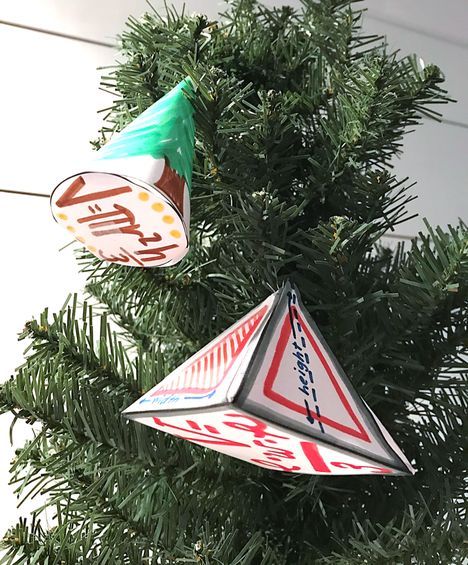
8.Present Packing Problem: Use volume calculations and spatial reasoning to pack various gifts into boxes of assorted sizes efficiently.

9.Candy Cane Pascal’s Triangle: Explore Pascal’s Triangle pattern using rows of candy canes in different colors for each row, while discussing mathematical patterns revealed by this unique triangular arrangement of numbers.

10.Solve-for-X-mas Activity Sheets: Incorporate algebraic expressions with holiday themes or topics for a fun challenge to solve equations.

11.Festive Data Collection: Analyze statistics like average snowfall rates, peak shopping days during December, or the all-time highest-grossing holiday movies.

12.Snowball Fight Trigonometry: Model practical problems for trigonometry on a snowball fight scenario, such as finding distances and angles between snowball throwers.

13.Christmas Card Geometry: Analyze the geometric shapes and principles used in various holiday cards.

14.Reindeer Race: Use probability, speed, and distance calculations to create racing scenarios among Santa’s reindeer team.

15.12 Days of Mathmas: Create a unique mathematical problem for each day leading up to Christmas, inspired by the song “The 12 Days of Christmas.”

16.Santa’s Accounting Spreadsheet: Combine math and accounting skills to organize Santa’s expenses and revenue during the holiday season.

17.Festive Function Transformations: Explore transformations like rotations or translations on holiday-themed graphs or functions.

18.Gingerbread House Design: Apply architectural geometry and mathematical measurement principles to design a gingerbread house.

19.Holiday Math Puzzles: Foster problem-solving skills through brainteasers, riddles, or Sudoku puzzles with a holiday twist.

These 20 Christmas math activities are perfect for keeping high school students engaged during the holiday season while also reinforcing critical mathematical concepts.

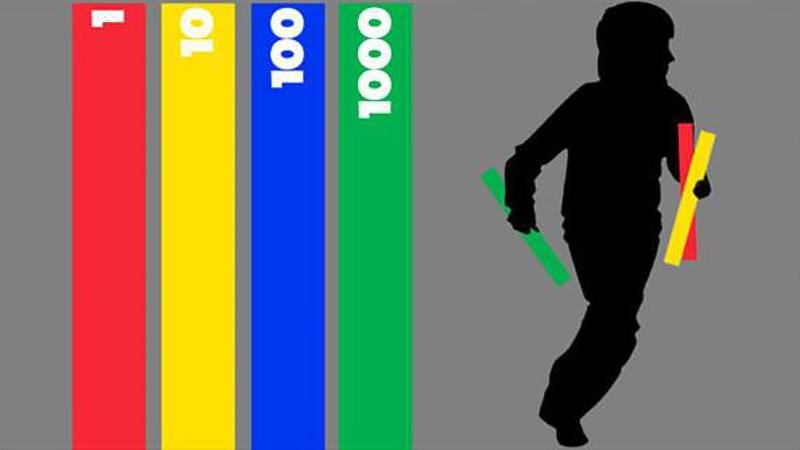
A Twist on Capture the Flag: Teaching Kids About Place Value

Introduction

Capture the Flag is a popular outdoor game that kids love to play. The classic game involves two teams trying to capture each other’s flags and bring them back to their base. It’s a great way for children to burn off energy, build teamwork skills, and have fun outdoors. Now, imagine adding an educational twist to this classic game by incorporating place value concepts. This innovative idea will not only engage kids with physical activity but also teach them essential math skills in an enjoyable and exciting way.

How the Game Works

In this twist on Capture the Flag, teams will learn about place value as they strategize their moves to capture each other’s flag. The revised gameplay is as follows:

1. Set up the game area with two bases and place a flag in each of them. Divide the participants into two teams.

2. Assign a specific place value position to each team member, such as ones, tens, hundreds, and so on.

3. When a player tries to steal the opponent’s flag, they must correctly answer a place value question asked by their opponent before proceeding.

4. If they answer correctly, they can continue moving towards their base with the stolen flag; if they answer incorrectly, they are out of the game or return to their base.

5. The difficulty of questions can be adjusted according to the age group or skill level of players.

6. Each team works together using communication and cooperation skills to create strategies for capturing their opponent’s flag while protecting their own.

Benefits of This Twist on Capture the Flag

Teaching kids about place value through this interactive and engaging outdoor game has multiple benefits:

1. It promotes physical exercise – Running around, making strategic moves, and attempting to capture the flag encourage children to participate in physical activities that contribute positively to their overall health.

2. It fosters teamwork – Kids learn to work together, plan strategies, and communicate effectively with their teammates to succeed in the game.

3. It teaches math skills – By incorporating place value questions, children improve their understanding of essential math concepts outside a traditional classroom setting.

4. It encourages problem-solving skills – As players collaborate and strategize, they strengthen their critical thinking abilities and develop essential problem-solving skills.

5. It combines learning and fun – Kids have a great time while learning essential math skills, turning an otherwise abstract concept into a tangible and engaging experience.

Conclusion

This twist on Capture the Flag adds an educational element that helps kids learn about place value while enjoying the outdoor fun of the classic game. By combining physical activity, teamwork, and mathematical concepts, kids develop various skills that are both educational and enjoyable. So why not take advantage of the beautiful weather and try this exciting twist on Capture the Flag? Your kids will have a blast while gaining valuable knowledge.

5 of Our Favorite Winter Math Crafts

Introduction:

As winter approaches, it’s time to bring out those cozy blankets, hot cocoa, and enjoy some indoor activities. One great way to engage kids during the colder months is through educational crafts that are both fun and developmental. In this article, we present five of our favorite winter math crafts that will not only keep children entertained but also help them strengthen their math skills.

1. Snowflake Symmetry:

Materials:

– White paper

– Scissors

– Ruler

– Pencil

Instructions:

Teach your child about symmetry by creating beautiful snowflakes! Start by folding a sheet of white paper into quarters and then use a ruler and pencil to draw lines showing equal portions. Have the child carefully cut out shapes along the lines while paying attention to the symmetry. Once finished, unfold the paper to reveal a perfectly symmetrical snowflake! Discuss different types of symmetry – vertical, horizontal, rotational, etc., and create more snowflakes with various symmetries.

2. Winter-Themed Pattern Blocks:

Materials:

– Colored construction paper

– Scissors

– Glue

– Optional: Pattern block printables or stencils

Instructions:

Introduce patterns and shapes using winter-themed pattern blocks! On colored construction paper, cut out various winter-inspired shapes like snowmen, ice skates, mittens, etc. Once you have a good assortment of shapes, have your child arrange them on a surface to create repeating patterns. This exercise encourages critical thinking and pattern recognition.

3. Snowman Measurement Activity:

Materials:

– White construction paper

– Black construction paper

– Scissors

– Tape measure or ruler

– Markers

Instructions:

A fun way to teach measurements is by building snowmen of different sizes! Using white construction paper, cut out different-sized circles for the snowmen’s body segments. Then use black construction paper to create hats, eyes, buttons, etc. Work with your child to measure each snowman segment and record their measurements. Assemble the snowmen and compare the sizes while discussing the concept of measurement.

4. Hot Chocolate Fraction Fun:

Materials:

– Brown construction paper

– White construction paper

– Scissors

– Glue

– Markers

Instructions:

Teach your child about fractions using hot chocolate! Cut out cup shapes from brown construction paper and marshmallow shapes from white construction paper. Arrange varying numbers of marshmallows on each hot chocolate cup (1 whole, 1/2, 1/3, etc.) and have your child identify fractions based on the total number of marshmallows in each cup.

5. Winter Word Problems:

Materials:

– Paper

– Pencil or markers

Instructions:

Write several winter-themed word problems involving addition, subtraction, multiplication, or division on small cards or a sheet of paper. Have your child solve these problems while fusing their math skills with holiday cheer.

Conclusion:

Our favorite winter math crafts offer an engaging way for children to practice essential math concepts during the colder months. By incorporating seasonal elements into math education, you can ensure that your child remains enthusiastic about learning. So grab those scissors, markers, and papers – it’s time for some winter math fun!

4 Reasons to Use More Manipulatives (and Not Just in Math!)

Introduction:

Manipulatives are physical objects that aid in the learning process, making abstract concepts more tangible for students. Although manipulatives are commonly associated with math lessons—think about counting blocks or geometric shapes—they can offer significant benefits across all kinds of learning subjects. In this article, we will explore four compelling reasons to incorporate more manipulatives into your teaching repertoire, beyond just math!

1. Improved Engagement and Active Learning:

Manipulatives require hands-on interaction, leading to greater student engagement in learning tasks. More engaged students are more attentive, interested, and committed to understanding the material at hand. Incorporating manipulatives can make lessons feel like a hands-on activity or even a game, which can help hold students’ interest and make learning more enjoyable.

2. Development of Problem-Solving Skills:

Manipulatives provide students with the opportunity to experiment with different solutions and strategies. When students manipulate objects, they begin to understand various ways to approach a problem and identify possible solutions. This process of discovery leads to the development of critical thinking skills essential for problem-solving throughout various aspects of life.

3. Multisensory Learning Experiences:

People learn most efficiently when multiple senses are employed, and manipulatives facilitate multisensory learning experiences by engaging touch, sight, and spatial awareness simultaneously. This unique combination allows for deeper understanding and long-term retention of material. Whether used in science experiments to test hypotheses or language arts classes for constructing sentences with word tiles, manipulatives add a tangible element that appeals to diverse learners.

4. Real-Life Connections:

Manipulatives often resemble everyday objects or depict real-life scenarios, allowing students to see the relevance of their learning in their own lives. For example, when using play money in a social studies lesson on economics, students gain first-hand insight into the importance of budgeting and saving. These structured encounters with real-world situations promote a deeper understanding of the material and help learners draw connections between schoolwork and their daily lives.

Conclusion:

Incorporating more manipulatives into various subjects—beyond just math—can have a positive impact on students’ understanding, engagement, and overall learning experience. By providing hands-on opportunities for experimentation and multisensory learning, you can help foster essential problem-solving skills and lifelong connections to the material. Consider incorporating manipulatives into your curriculum to reap these rewards and support a well-rounded educational experience for your students.

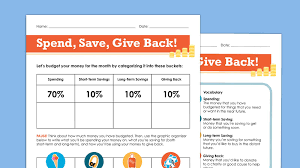
Teach Your Students Money Basics with This Easy Spend, Save, Give Back Lesson

Introduction

As educators, one of our most critical roles is to prepare our students for real-life situations and decision-making. While math classes often focus on equations and complex concepts, it’s essential to incorporate practical lessons that teach the basics of personal finance. This simple spend, save, and give back lesson plan will help you instill the importance of money management in your students.

Lesson Objectives

1. Understand the role of money in everyday life

2. Learn concepts of spending, saving, and giving

3. Develop smart habits for future financial success

Materials Needed

1. Monopoly money (or printable play money)

2. Three labeled jars or envelopes for each student (Spend, Save, Give Back)

3. Financial scenarios handout

Lesson Overview

Step 1: Introduce the Concepts

Begin by discussing with your students the importance of money management and how it plays a role in their lives. Explain the three basic concepts: spending (purchasing goods and services), saving (setting aside money for future use), and giving back (donating to others or charitable causes).

Step 2: Distribute the Materials

Give each student monopoly or play money along with three jars or envelopes labeled spend, save, and give back.

Step 3: Present Financial Scenarios

Provide the financial scenarios handout to each student or present them one-at-a-time through a projector or whiteboard. These scenarios should include situations where students have to make choices about spending, saving, or giving back – like receiving an allowance, wanting to buy a new toy or item, or deciding to donate to a cause.

Step 4: Decision-Making Process

As you present each scenario, allow students to think about their choices and then prompt them to allocate their play money into the spend, save, or give back jars/envelopes. Encourage discussion and explanation of their reasoning behind each decision.

Step 5: Reflect and Discuss

At the end of the lesson, allow students to compare and contrast their allocated funds in the spend, save, and give back jars/envelopes. Discuss any trends or patterns observed among their choices and how these habits might impact their future financial well-being.

Step 6: Guided Journaling (Optional)

As a follow-up activity, have students write a short reflection in their journals about what they learned during the lesson and how they will apply these money management concepts in real life.

Conclusion

By teaching students about spending, saving, and giving back early on, we are setting them up for a lifetime of financial success and responsible decision-making. Use this easy-to-apply lesson plan as a starting point for introducing essential money management skills in the classroom. With practice and guidance, your students will become confident in making smart financial choices that lead to a stable future.

My Students Save Kids’ Lives By Doing Math

It might sound unbelievable, but it’s true – my students are saving kids’ lives by doing math. As a dedicated math teacher, I always strive to show my students the real-world applications of the subject matter we discuss in class. However, I never expected that our studies would lead us into such an incredible journey of hope and resilience. Let me share with you how math class turned into a life-saving mission.

Our small town has been facing an unfortunate crisis: a surprisingly high number of child pedestrian accidents have occurred at busy crossings near schools. The community was in distress, and like many others, I desperately wanted to make a difference. That’s when I realized that math could be our key to solving this problem.

I introduced my students to statistics – a branch of mathematics dealing with the collection, analysis, interpretation, and presentation of data. As we delved deeper into this topic, my students began to view this crisis from a different perspective. We saw an opportunity to apply our newfound skills and help save lives.

Together, we developed research questions and collected data on pedestrian and vehicle traffic patterns around the school. We recorded the time, location, and circumstances of all accidents within a specific timeframe. Once we had sufficient information, we used statistical methods to analyze the trends within this data set.

One of our most striking findings was that certain intersections had significantly higher rates of accidents. It appeared that poor visibility due to various environmental factors combined with the rush hour chaos made these locations particularly dangerous.

Now armed with compelling evidence, we decided to take action. My students presented their findings to the local authorities and proposed some practical solutions:

1. Install better signage at dangerous intersections.

2. Create designated crossing areas where children could be more visible to drivers.

3. Implement stricter traffic rules near schools during peak hours.

To our delight, local officials not only appreciated our work but also acted upon the proposed measures. The streets around our school have since become safer, with a drastic reduction in accidents involving children.

Seeing the results of their work, my students gained a profound appreciation for mathematics and its potential for positively impacting the real world. They now proudly tell their friends and family that they save lives not by being superheroes, but by simply doing math.

In conclusion, my students’ journey has shown me that math is much more than just numbers and equations. It’s a powerful tool capable of making a tangible difference in people’s lives. Through this experience, I have come to believe that no matter how small our community may be, together we can change the world – one math problem at a time.

4 Strategies to Help Kids Understand Math Using Visualization

Introduction:

Mathematics can be a challenging subject for many children, but by incorporating visualization techniques, we can work to create better understanding and engagement. Visualization strategies make abstract concepts more concrete, allowing children to better grasp mathematical ideas and solve problems efficiently. Below, we explore four effective strategies for teaching math using visualization.

1. Number Lines and Arrays:

Number lines offer a visual representation of numbers and their relationships to one another, which helps kids understand concepts like addition and subtraction. Through activities like hopping along number lines or physically manipulating virtual markers, children learn how easy it is to picture numerical relationships. Similarly, arrays (organized arrangements of objects) can help kids visualize multiplication and division. By building an array with physical objects or drawing one on paper, students gain a clearer understanding of the concept.

2. Hands-on Manipulatives:

Manipulatives are physical objects like blocks, cubes, or counters that students can use to model mathematical concepts. By working with these tangible materials, kids develop a deeper sense of numbers’ values and sizes. When encountering scenarios involving fractions or decimals, for example, learners could manipulate fraction tiles or color-coded decimal blocks to visualize these concepts more naturally.

3. Geometric Shapes and Sketching:

Geometry is a prime area for using visualization tactics because it deals explicitly with shape, size, position, and other spatial properties. Children can engage with 2D and 3D geometric shapes in structured activities or by simply playing with objects like pattern blocks or tangrams. Encouraging children to sketch out problems involving measurement, symmetry, transformations, or angles allows them to visualize the situation more effectively and relate it back to real-life examples.

4. Story Problems with Visual Aids:

Too often, story problems showcase text without any accompanying visuals which makes it harder for children who struggle with reading comprehension or interpreting word-heavy scenarios. Integrating visual aids, like images, drawings, and graphs, to represent problem concepts can help learners identify patterns and relationships between numbers more easily. Instructors can assist children by annotating visual aids and explicitly drawing attention to important information contained within the images.

Conclusion:

Visualization in mathematics education is a powerful tool for fostering comprehension, engagement, and problem-solving skills. By incorporating number lines, manipulatives, geometric shapes, and visual aids in story problems to help children see math more tangibly, we nurture a generation of learners who feel confident and enthusiastic about their mathematical abilities.

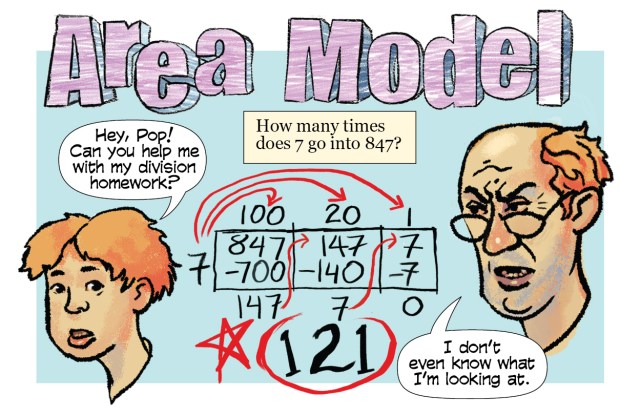
Dear Parents, “Common Core Math” Isn’t Out to Get You, and Here’s Why

Introduction:

For parents who grew up learning math in a very traditional way, the current “Common Core Math” teaching style might appear utterly baffling. It has lead to an assumption that this approach is out to destroy the fundamental ways of learning math. However, the reality is quite the opposite. In this article, we will share why Common Core Math benefits children’s education and is not a threat to their learning journey.

Understanding Common Core Math:

The Common Core Math initiative was implemented in classrooms across the United States with an aim to unify math education standards among various states. It revolves around one essential principle: promoting critical thinking and problem-solving skills. This approach provides students with better tools for their future mathematical endeavors rather than mere memorization of formulas.

Here are some reasons why Common Core Math is not out to get you or your children:

1. Deeper Understanding of Mathematical Concepts:

Common Core Math doesn’t focus solely on drills and memorization – it encourages a thorough understanding of mathematical concepts. This allows students to develop a strong foundation in math, enabling them to approach complex problems more efficiently.

2. Enhanced Problem-Solving Skills:

By presenting math problems in everyday life scenarios, Common Core Math exposes children to real-world situations on common issues they may encounter in the future. The emphasis on problem-solving will help develop kids’ analytical thinking abilities as they grow up.

3. Flexible Learning Methods:

The traditional method of teaching math often forced students to absorb rigid formulas which left many struggling with basic concepts. Common Core Math recognizes that not all students learn the same way, offering flexibility in how concepts can be taught and learned.

4. Adaptable To The Future Workforce:

We live in an increasingly technology-driven society where automation and advanced problem-solving are essential skills for the workforce. Common Core Math aims to prepare young minds to adapt to these changes and excel in their professional lives.

5. Collaboration and Group Work:

Common Core Math promotes a collaborative learning environment, teaching students the importance of teamwork as they solve problems together. In the process, children learn interpersonal as well as leadership skills that prepare them for real-life situations.

Conclusion:

So dear parents, fear not – Common Core Math is here to support and enhance your children’s academic lives, not hinder them. It is designed to develop problem-solving abilities, a deeper understanding of mathematical concepts, and versatile thinking skills that will benefit your children in the long run. By embracing this approach, you’re ensuring a stable and promising future for your children in today’s rapidly evolving world.

These Lessons Bring Math & Music Together in the Best Way

Introduction:

Math and music might initially seem like polar opposites. However, these two disciplines have much more in common than meets the eye. When brought together through creative lesson planning, both mathematics and music can enrich one another, resulting in a harmonious educational experience for students. Let’s explore some innovative ways to integrate math and music lessons that demonstrate how these lessons bring math and music together in the best way.

The Rhythm of Fractions:

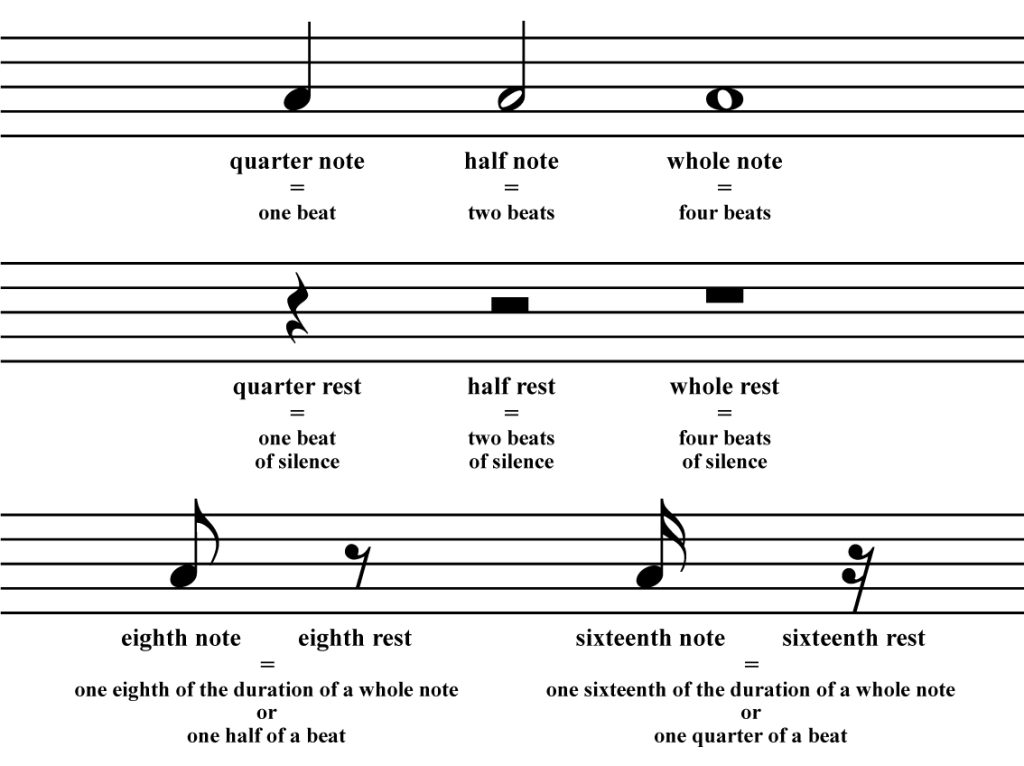
One natural connection between math and music is rhythm. Using rhythm to teach fractions can make this mathematical concept more relatable and engaging. For example, a whole note represents one, while a half note symbolizes 1/2. Students can clap or play percussion instruments along with music, identifying the value of each beat. This hands-on approach aids in bridging the gap between abstract mathematical concepts and their practical application.

Exploring Patterns:

Both mathematics and music are built on patterns. Activities that involve identifying, predicting, and creating patterns can be applied to both subjects. In a combined math-music class, students might analyze sequences of notes within sheet music or create their compositions using certain mathematical patterns (such as even/odd numbers or multiples). Recognizing patterns becomes an integral part of both mathematical problem-solving and understanding musical structures.

Geometry of Musical Instruments:

Another fascinating area in which math and music intersect is the design of musical instruments. The shapes, sizes, and proportions used in instrument construction all involve mathematical concepts—from the curves of violins to the spacing of piano keys. Students can measure various aspects of different instruments, calculate their ratios, and learn about how those relationships contribute to producing pitch and sound qualities.

Frequency & Pitch:

We perceive music primarily through sounds—and these sounds are waves with distinct frequencies associated with them. Teaching students about the relationship between frequency and pitch allows them to understand some basic scientific principles behind the formation of musical notes. It’s a great opportunity to introduce them to the mathematical formula for determining frequency, as well as to explore higher-level concepts such as intervals and octaves.

Applying Mathematical Processes:

Allowing students to apply various mathematical processes to music notation can also strengthen their understanding of both subjects. For example, students may be asked to “translate,” “reflect,” “rotate,” or “scale” short melodies or rhythmic patterns—helping them visualize and internalize these transformations. By making connections between math operations and music, students develop deeper skills in both areas.

Conclusion:

Bringing math and music together through innovative lesson planning results in educational experiences that are both engaging and meaningful. By helping students see the connections between these two seemingly disparate disciplines, we give them the opportunity to understand these subjects from unique perspectives, fostering a richer appreciation for both math and music. So, let’s continue exploring creative ways to combine math and music in the classroom and help our students thrive.