Middle School Education

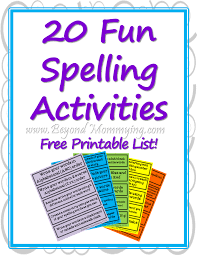
20 Amazing Spelling Activities for Middle School

As middle school students transition into more complex language patterns and vocabulary, it is essential to provide fun and engaging spelling activities. Here are 20 amazing spelling activities that can help students enjoy learning while sharpening their skills.

1. Spelling Bingo: Create custom bingo cards using the students’ spelling words. Give the students the definitions, and they must complete the card by writing the corresponding word in each square.

2. Word Scramble: Jumble up the letters in each spelling word and have students unscramble them on their own or in teams.

3. Spelling Relay Race: Divide the class into teams, give each team a word, and have them race to spell out each letter on a whiteboard or flip chart.

4. Memory Match: On a set of index cards, write a word on one card and its definition on another. Students must then correctly match up words with their definitions.

5. Hangman: Traditional hangman game can be played using the week’s spelling words as targets.

6. Spelling Battleship: Adapt the classic game to practice spelling words by filling a grid with hidden words, and have students guess coordinates to uncover them.

7. Crossword Puzzle: Create custom crossword puzzles using your students’ spelling words as clues.

8. Speed Speller: Set a timer for 1-2 minutes, and have students correctly write as many of their spelling words as they can within that time frame.

9. Word Pyramids: Have students write their words in pyramid shape, adding one letter at a time (e.g., d-dog-dogs).

10. Word Art: Encourage creativity by having students draw pictures or doodles using their spelling words as inspiration.

11. Code Breakers: Replace letters in spelling words with numbers or symbols (e.g., A=1), and have students decode the word.

12. Spelling Scrabble: Form spelling words using Scrabble tiles or color-coded letter cards for points.

13. Reverse Spelling Bee: The teacher spells a word aloud, and the student must guess which word it is based on its spelling.

14. Alpha Word Sort: Have students sort their spelling words alphabetically.

15. Beat the Clock: Set a timer for each round, challenge students to spell a given word within the time limit.

16. Pictionary: Like the classic game, students can draw pictures to represent their spelling words while classmates guess which word is being illustrated.

17. Leapfrog Spelling: Divide students into pairs and have them take turns writing one letter at a time to complete their spelling words.

18. Contraction Concentration: Teach compound words by having students match up two related words that form a new term with its spelling (e.g., microscope = micro + scope).

19. Antonym Match-Up: For each week’s spelling list, include antonyms. Have students match each spelling word with its opposite.

20. Rhyme Time Challenge: Call out a word from the spelling list and ask students to come up with as many rhyming words as they can within a minute.

These 20 engaging activities will not only help middle schoolers improve their spelling skills but will also foster creativity, collaboration, and critical thinking – essential ingredients for success in today’s world. Happy spell-casting!

This Middle School Teacher Asked His Students What Their Parents Do That Make Them Cringe

As parents, it’s undeniable that we were once awkward and embarrassing middle-schoolers who cringed at our own parents’ actions. Fast forward a few years, and now we find ourselves on the other side of the spectrum, causing the same reactions in our own children with our embarrassing habits.

A curious middle school teacher decided to have an open conversation with his students about what their parents do that makes them cringe. The responses were both amusing and insightful, providing a fascinating look into the parent-child dynamics in today’s world.

One common theme that emerged during the discussion was parents’ proclivity for oversharing information on social media. From announcing every achievement to posting unflattering pictures, many students found their continuous digital exposure stressful and embarrassing. In a world where privacy can often seem like a distant memory, it is crucial for parents to think twice before sharing content involving their children.

Another thing that made the students cringe was when parents tried to “keep up” with their offspring by using slang terms or mimicking popular dance moves. While the attempt at staying relevant might be genuine and well-intentioned, it more often than not came off as out of place and awkward. Instead of trying to fit in with their children’s peers, parents would benefit from embracing their unique quirks as part of what makes them special and lovable.

Curfews also seemed to be a significant source of contention between students and their parents. Many kids found it embarrassing when their parents imposed an early curfew without considering what other families were doing. Consistently being picked up hours earlier than everybody else resulted in feelings of isolation and frustration among the young ones.

Helicopter parenting – always hovering over children’s shoulders – struck another chord among these middle schoolers. Seeing their mom or dad constantly interfering in discussions or answering questions on their behalf was mortifying for many. Providing kids with space and autonomy would allow them to grow socially and emotionally while also preserving their dignity.

Lastly, pressuring kids to excel academically, athletically, or in any other field was another significant pain point. Children felt humiliated when they didn’t measure up to their parents’ expectations and found it difficult to embrace their strengths and passions.

In conclusion, while the middle school teacher’s informal study uncovered several cringe-worthy behaviors showcased by parents, it also highlighted an opportunity for growth. As parents, it’s essential to recognize the importance of maintaining a delicate balance between care and support for our children while allowing them the breathing room they need to develop and thrive independently. Becoming more attuned to our kids’ feelings can lead to stronger parent-child bonds and mutual respect, ensuring we grow as a unit rather than be distanced by each other’s actions.

5 Personal Narrative Topics I Banned in Middle School English in Order to Keep My Sanity

As a middle school English teacher, I am responsible for nurturing my students’ love of writing and creativity. However, over the years, I have discovered that there are certain personal narrative topics that have become repetitive and unproductive in the classroom. In order to maintain both my sanity and my enthusiasm for teaching, I decided to ban five topics from my middle schoolers’ writing assignments. These are the five personal narrative topics that made it onto my blacklist.

1. “The Time I Broke My Arm (or Any Other Bone)”

Not only is this a far too common experience for many people – especially young students prone to accidents – but it’s often recounted with a nearly identical structure: the narrator does something hasty or ill-advised, resulting in the physical injury, followed by a trip to the hospital, and then learning their lesson.

2. “The Best/Worst Day of My Life”

Although this topic might initially seem like it offers room for diversity of experiences, it all too often results in either melodramatic stories filled with clichés or an overemphasis on minor incidents that are ultimately unremarkable. This promotes superficial thinking and doesn’t encourage students to explore deeper emotions and thoughts.

3. “My Favorite Vacation”

This topic tends to result in little more than travelogues chronicling family vacations. Rather than encouraging meaningful reflection or developing engaging dialogue and characterizations, these narratives often devolve into lists of activities or tourist attractions without much emotional resonance.

4. “My First Day at X (School, Job, Club, etc.)”

Similar to broken bone stories, first day narratives are steeped in predictability and clichés: feeling nervous or excited about a new environment; experiencing awkward or comical situations; eventually settling into new routines or making friends. Beyond familiarity fatigue, these first day narratives usually don’t provide any new insights about the students or unique perspectives on the world.

5. “My Pet (Alive or Deceased)”

While pets may hold special importance in students’ lives, this topic repeatedly spurs shallow, sentimental narratives that lack complexity in emotion or plot. It’s challenging for middle schoolers to find the depth of experience required to pen a compelling pet-related story without resorting to common tropes.

By banning these five personal narrative topics in my middle school English classroom, I’ve seen a marked increase in my students’ enthusiasm and creativity in their writing. By pushing them to explore novel subjects and dig deeper into their own experiences, it not only keeps my sanity intact but also fosters their growth as thoughtful and imaginative young writers.

5 Middle School Fashion Trends That Leave Teachers Scratching Their Heads

1. Oversized Sweaters with Running Shorts

One perplexing middle school fashion trend is the combination of oversized sweaters with athletic running shorts. Students seem to love wearing these huge, cozy sweaters throughout the school day, regardless of the season or weather outside. Meanwhile, teachers find themselves constantly wondering about the choice of pairing this sweater with shorts, especially when the temperature drops, leaving these young fashionistas shivering in their oddly matched outfits.

2. Fanny Packs Worn as Crossbody Bags

Fanny packs have always been popular for their practicality and convenience in carrying essential items. However, middle schoolers have recently decided to put a twist on this classic accessory by wearing it as a crossbody bag instead. While this style choice may be visually appealing for some students, it often leaves teachers scratching their heads at the odd reimagining of a once purely functional object.

3. Mismatched Socks

Gone are the days of pairing identical socks – middle schoolers today embrace the chaos of mismatched footwear. While this trend can be seen as a fun way to express individuality and creativity, it can leave teachers wondering if their students dressed themselves in the dark or simply lost track of their laundry.

4. Layers upon Layers

Layering clothing is a fantastic way to deal with fluctuating temperatures and an excellent way to showcase personal style. However, middle schoolers seem to have taken layering to a whole new level by adding seemingly excessive layers such as long-sleeve shirts under short-sleeve shirts, topped with hoodies or jackets. Teachers are often left puzzled by such cumbersome styling choices and may wonder if students are moving from classroom to classroom or training for a polar expedition.

5. Hair Accessories Galore

From oversized scrunchies to extraneous hair clips and headbands upon headbands – middle schoolers have been embracing the over-the-top hair accessory trend. While these embellishments certainly add a touch of flair to their hairstyles, teachers may be left puzzled by the vast amount of unnecessary accessories. With so many bobby pins and headbands floating around, one can’t help but wonder if a classroom battle for hair accessory superiority is on the horizon.

In conclusion, middle school fashion trends can often be unexpected and baffling to onlookers, especially teachers who are familiar with more conventional dressing protocols. Nevertheless, these peculiar trends provide students with an opportunity to explore their creativity, embrace their individuality, and find a unique way to express themselves during their formative years. Embrace the puzzling aspects and remember – fashion is fluid!

22 Meaningful “Who Am I” Activities for Middle school

Introduction:

Middle school is a critical time in a child’s life when they begin to form their own identity and explore their interests. Helping students understand themselves better can pave the way for personal growth, increased self-awareness, and stronger connections with their peers. Here, we discuss 22 meaningful “Who Am I” activities designed specifically for middle school students.

1. Identity Collage: Students create a collage that represents who they are using images from magazines or printouts. They can also include drawings or personal photographs.

2. Personal Coat of Arms: Students design a coat of arms that symbolizes their values, goals, and interests.

3. “I Am” Poem: Each student writes an “I Am” poem, reflecting on their traits, dreams, fears, and aspirations to share with the class.

4. Autobiographical Timeline: Have students create a timeline showcasing significant moments in their life so far.

5. Strengths Inventory: A guided worksheet helps students identify their strengths, thus making them more aware of their potential.

6. Career Exploration Day: Host a career day where students can learn about different professions through presentations from local professionals or engaging videos.

7. Role Model Presentations: Have students research and present on an individual who inspires them personally or professionally.

8. Cultural Heritage Project: Encourage students to learn about and celebrate their cultural backgrounds through research and creative presentations.

9. Classroom Diversity Day: Create a day that celebrates the unique qualities of each student by having everyone bring something to share about their heritage or background.

10. Student Mentorship Program: Set up a mentorship program where older students serve as mentors to younger ones, fostering relationships and self-awareness in both groups.

11. Goal Setting Workshop: Teach students how to establish achievable goals and create action plans for success.

12. Conflict Resolution Exercises: Practice real-world scenarios where students learn to navigate and resolve conflicts effectively.

13. Personal Mantra Exercise: Each student develops a personal mantra or positive affirmation that they can use for motivation and self-reflection.

14. Emotional Intelligence Activities: Teach students about emotional intelligence through interactive exercises designed to improve self-awareness, empathy, and communication.

15. Group Therapy Sessions: Have structured group discussions where students can share experiences, feelings, and concerns openly with their peers.

16. Vision Board Workshop: Encourage students to create vision boards representing their aspirations for the future.

17. Journaling Exercises: Assign reflective journal prompts that allow students to explore and document their thoughts, experiences, and growth.

18. Personality Tests: Administer age-appropriate personality tests like the Myers-Briggs Type Indicator (MBTI) to help students better understand their strengths, weaknesses, and preferences.

19. Service Learning Projects: Design opportunities for students to participate in community service projects that promote compassion, empathy, and self-growth.

20. Peer Appreciation Day: Organize a day where everyone in the class writes a note expressing gratitude or admiration for each of their classmates.

21. Team-Building Activities: Plan group activities that foster cooperation, teamwork, and trust among classmates.

22. Growth Mindset Discussions: Teach the concept of a growth mindset and discuss how it differs from a fixed mindset, encouraging students to adopt a more open attitude towards challenges and personal development.

Conclusion:

Middle school is a period of significant growth but also presents unique challenges for young people as they begin to discover themselves. By incorporating meaningful “Who Am I” activities in the classroom, educators can foster self-awareness, confidence, and interpersonal skills in their students—and set them up for success throughout life.

20 Creative Writing Activities for Middle School

1. Freewriting: Have students write continuously for a short time (5-10 minutes) without worrying about grammar or punctuation, allowing ideas to flow onto the page and encouraging creativity.

2. Round-robin storytelling: Divide the class into small groups, and have each member contribute a sentence to create a collaborative story. Pass the stories around the group, with each person adding their own unique touch.

3. Story starters: Provide students with an opening line or scenario to jumpstart their imagination and encourage them to write a complete story from the prompt.

4. Journaling: Encourage students to keep a journal or diary, recording their daily thoughts, ideas, and events as an outlet for self-expression.

5. Picture prompts: Find interesting photographs or illustrations and have students create stories based on the images.

6. Character creation: Have students brainstorm character traits and develop a detailed profile of a fictional character to use in their writing.

7. Poetry writing: Explore different types of poetry, such as haiku, acrostic, or limerick, allowing students to experiment with rhythmic language and structure.

8. Rewrite a favorite story: Challenge students to rewrite a well-known story or fairy tale from a different perspective or in a new setting.

9. Comic strip stories: Have students create comic strips with dialogue and narration that tell an original story.

10. Dystopian/Utopian worlds: Invite students to develop their own futuristic societies with unique rules and customs, then write stories set in these worlds.

11. Personal narratives: Guide students in writing personal essays that reflect on memorable experiences or events from their lives.

12. Scavenger hunt writing: Create a list of random items or ideas for students to ‘find’ by incorporating them into their original stories.

13. Two-sentence stories: Teach students how to craft suspenseful two-sentence stories that leave readers wanting more.

14. Flash fiction: Develop short stories of only 100-500 words, emphasizing brevity and powerful storytelling.

15. Autobiography of an object: Ask students to write from the perspective of an inanimate object, providing insight into its experiences and interactions with the world.

16. Social issues: Encourage students to write persuasive essays on topics of social importance, addressing the arguments and counterarguments for their chosen stance.

17. News reports: Teach students how to write engaging news articles about recent events or fictional happenings in their communities or schools.

18. Dialogue practice: Have pairs of students create realistic dialogues between characters by writing conversations that demonstrate effective communication and character development.

19. Write a script: Guide students in writing their own one-act plays or screenplays, focusing on plot, dialogue, and stage directions.

20. Trading spaces: Have students trade pieces of writing with a partner, then expand upon or revise each other’s work, providing constructive feedback along the way.

24 Fun Classroom Activities for Middle School Students

Introduction:

Engaging middle school students can sometimes be challenging. To keep their attention and spark their interest in learning, teachers must come up with creative classroom activities. Here are 24 fun and educational activities that will make your middle school classroom an exciting and dynamic environment.

1. Silent Ball: In this activity, students pass a soft ball around the room without speaking. To add a challenge, set a timer to encourage faster reaction times and teamwork.

2. Four Corners: Designate each corner of the room for a different opinion or preference. Ask questions, and have students move to the corner that best represents their stance.

3. Speed Debates: Organize short, timed debates on various topics to challenge students’ critical thinking and encourage them to articulate their viewpoints quickly.

4. Blindfolded Drawing: Pair up students and blindfold one partner. The other partner must describe a subject or image that the blindfolded student must then attempt to draw.

5. Kahoot!: Utilize the online quiz platform Kahoot! to create engaging quizzes tailored to your current lesson plan.

6. Escape Room: Set up a classroom escape room experience that involves solving riddles, puzzles, and challenges related to your curriculum content.

7. Trivia Contest: Organize a trivia contest on various subjects to test general knowledge and foster friendly competition.

8. Scavenger Hunt: Arrange a scavenger hunt around the classroom or school campus using clues related to your lesson material.

9. Reader’s Theater: Assign or create short plays based on literary works you are studying as a class, having students perform them in groups.

10. Memory Chain: Test memory skills by having students take turns adding items to a list until someone repeats an item or cannot think of anything new.

11. Vocabulary Pictionary: Improve vocabulary by having students draw out vocabulary words while their classmates guess what they are drawing.

12. Photo Analysis: Display a series of images and have students analyze and discuss the pictures’ content or theme.

13. Current Events Discussion: Hold a classroom debate on current events, encouraging students to research and form their opinions on the topics at hand.

14. Brain Dump: Allow students to stand up and “dump” knowledge on a subject for 60 seconds straight without stopping.

15. Class Quiz Show: Set up a classroom quiz show, complete with buzzers, to bring excitement to trivia and review sessions.

16. Problem-Solving Challenges: Present students with real-world problems that encourage critical thinking, teamwork, and creativity in developing solutions.

17. DIY Board Games: Have students create their own educational board games based on the material they’re learning.

18. Group Poster Projects: Assign groups of students a topic to research and have them collaborate on creating informational posters about their assigned subject.

19. Skits & Role Plays: Create memorable lessons by having students act out scenarios related to the curriculum in skits or role plays.

20. Gallery Walks: Use wall space in your classroom to display student work or set up stations relating to different topics. Have students walk around the room and discuss what they see.

21. Mind Maps: Encourage brainstorming by having students create mind maps, focusing on connections between concepts and ideas.

22. Virtual Field Trips: Utilize technology to take your class on virtual field trips to museums, historic sites, or other relevant locations around the world.

23. Musical Chairs Writing: Similar to musical chairs, when the music stops, have students switch seats and add to the writing prompt left by the person who was sitting there before them.

24. STEM Challenges: Engage students with hands-on STEM activities that incorporate math, science, engineering, and technology concepts.

18 Essential Study Skills For Middle School Students

Introduction:

Middle school is an exciting and challenging time for students as they transition from their elementary years to more rigorous academic expectations. Developing strong study skills during this time is vital for academic success and personal growth. In this article, we will discuss 18 essential study skills that can benefit middle school students.

1. Time Management: Learning how to manage time efficiently is crucial. Students should create consistent study routines, break tasks into manageable chunks, and allocate specific time blocks for each subject.

2. Active Listening: Students must practice attentive and engaged listening in the classroom, jotting down key points from lectures and asking questions when necessary.

3. Note-taking: Effective note-taking helps students organize, summarize, and remember crucial information from their studies. Experiment with different methods such as the Cornell system or mind mapping to see what works best.

4. Reading Comprehension: Encourage students to read multiple sources on a topic and practice summarizing the main ideas in their own words to improve comprehension skills.

5. Asking Questions: Encourage students to ask questions during class or seek clarity on topics they find challenging.

6. Goal Setting: Students should set achievable goals for their academic performance and monitor progress regularly.

7. Study Breaks: Incorporate regular short breaks while studying to increase productivity and maintain focus.

8. Organization: Organize materials by class, keep a clean workspace, and use tools like planners or digital calendars to stay organized.

9. Test Preparation: Break test material into smaller sections and create a study guide outlining key concepts, vocabulary, and potential questions.

10. Mnemonic Devices: Utilize memory techniques like acronyms, visualization, or association to help remember complex information.

11. Collaboration: Join or create study groups where students can work together to clarify difficult concepts or quiz one another on material.

12. Flashcards: Create flashcards to review key concepts, terms, or formulas and use them for quick review.

13. Practice Tests: Take practice tests to familiarize yourself with the test format and identify areas that may need improvement.

14. Active Reading: Underline, highlight, or annotate important information in textbooks and reading materials to reinforce understanding.

15. Visual Aids: Utilize visual aids like charts, diagrams, and graphs to help clarify complex concepts.

16. Paraphrasing: Rewrite sentences or passages in your own words to ensure understanding and improve retention.

17. Teaching Others: Explain challenging concepts or teach a lesson to a peer, which helps solidify understanding and recall.

18. Self-Evaluation: Reflect on study habits, academic performance, and areas for improvement regularly to continually develop strong study skills.

Conclusion:

Middle school can be a demanding time for students as they navigate increased academic expectations while forming new study habits. Implementing these 18 essential study skills will not only help middle school students achieve academic success but also prepare them for future challenges in high school and beyond. Encourage students to find techniques that work best for them and continually refine their strategies for optimal results.

15 Fantastic 6th Grade Anchor Charts For Every Subject

As students transition from elementary to middle school, they face new challenges and responsibilities. In the 6th grade, there is a noticeable shift in the curriculum as subjects become more complex and connected. One effective way teachers can help students grasp new concepts is through anchor charts. These visual aids provide clear explanations, definitions, and examples to solidify understanding. Here are 15 fantastic 6th grade anchor charts that can be used across different subjects:

1. Math: Long Division Steps

This anchor chart breaks down the long division process step-by-step, offering a clear guide for students who find this skill challenging.

2. Math: Fraction-Decimal-Percent Conversion

This chart visually depicts how to convert fractions, decimals, and percentages, helping students see the connections between these representations.

3. Math: Order of Operations (PEMDAS)

The PEMDAS anchor chart covers the rules for solving arithmetic problems with multiple operations while reinforcing the proper order.

4. Language Arts: The Writing Process

Presenting an overview of the steps involved in writing a well-structured piece, from planning to revising, this anchor chart is perfect for young writers.

5. Language Arts: Types of Sentences

This chart looks at four types of sentences (declarative, interrogative, imperative, and exclamatory) and offers examples for better recognition and usage.

6. Language Arts: Identifying Theme

A useful aid to help students determine the central message or lesson in literary works by drawing connections between various story elements.

7. Social Studies: Continents and Oceans

This world map anchor chart helps familiarize students with geographical terminology and provides an easy reference for locating continents and oceans.

8. Social Studies: Ancient Civilization Characteristics

By highlighting common traits shared by ancient societies, this graphic organizer assists in comparing and contrasting these historical civilizations.

9. Science: Photosynthesis Process

This chart effectively illustrates the processes of photosynthesis, breaking down the stages and sub-stages while defining related terminology.

10. Science: The Scientific Method

The scientific method anchor chart lays out the steps for conducting an experiment or inquiry, giving students a clear framework to follow.

11. Science: Solar System Overview

With essential facts about each planet, this solar system chart aids in understanding how celestial bodies interact and are organized within our galaxy.

12. Reading Strategies: Asking Questions

This anchor chart offers question starters to encourage critical thinking before, during, and after reading, helping students engage more deeply with the text.

13. Vocabulary: Greek and Latin Roots

By exploring common Greek and Latin roots, prefixes, and suffixes, students can improve their vocabulary and decoding skills across multiple subjects.

14. Art: Elements of Art

As a visual guide to the fundamental building blocks of artistic expression (line, color, shape, etc.), this anchor chart fosters creativity and comprehension.

15. Health: Nutrition and Food Groups

Featuring the “MyPlate” model, this health-focused chart emphasizes the importance of balanced dietary choices for overall wellness.

Each of these anchor charts serves as a valuable aid for 6th-grade learners across subject areas. By incorporating these visual tools into your classroom, you can help students more effectively grasp new concepts and further develop their skills in various disciplines.

35 Meaningful 6th Grade Writing Prompts

Introduction:

Writing is an essential skill that helps students develop their creativity, improve cognitive abilities, and express their thoughts clearly. For middle school students, writing prompts serve as a useful tool to inspire engagement in writing activities. In this article, we share 35 meaningful writing prompts designed specifically for 6th-grade learners to help them unleash their imagination and build confidence in their writing abilities.

1. Write a letter to your future self. What advice and experiences would you want to share?

2. If you could visit any place in the world, where would you travel and why?

3. Imagine you are the protagonist in your favorite book or movie. How would you react differently to the events in the story?

4. Write a detective story involving a mysterious disappearance at your school.

5. If you could meet any historical figure, who would it be and what questions would you ask them?

6. Describe what life might look like in 100 years.

7. Create a new holiday celebrated by people all over the world. How is it observed and what is its purpose?

8. Write an alternate ending to your favorite book or movie.

9. If you were president for a day, what three things would you change or improve in your country?

10. Describe how technology has changed our lives over the past decade.

11. Imagine a new invention that could benefit society as a whole. Describe its features and uses.

12. Write about a memorable daydream you’ve had at school or home.

13. Create a fictional world where nature has unusual characteristics (e.g., trees with golden leaves).

14. Share a moral dilemma that you have encountered and explain how you dealt with it.

15. Describe the most courageous act performed by someone close to you.

16. Write about becoming best friends with someone from another planet or culture.

17. Choose a theme for your ideal 6th-grade dance party and explain your choice.

18. Write about a significant challenge you faced and how you overcame it.

19. Invent a new sport that blends two existing sports into one.

20. Describe your dream job and how you plan to achieve it.

21. Write about a time when you felt misunderstood by someone, and how that affected your relationship with them.

22. Create a new superhero with unique abilities, and describe their adventures in protecting the world.

23. Share your perspective on a current news item or global event.

24. How would your life change if money suddenly lost all value?

25. Write about an interaction with an animal that had unexpected consequences (real or imagined).

26. Describe the importance of community service, and discuss ways young people can contribute to society.

27. Imagine a world without music or art. How would it affect people’s everyday experiences?

28. Choose any fictional universe and explain why you’d want (or not want) to live there.

29. Write about how your favorite hobby or pastime has shaped your character and worldview.

30. Invent new characters that could reside in the Wizarding World of Harry Potter.

31. Describe an encounter with extraterrestrial life from their point of view.

32. Discuss the pros and cons of social media use among young people today.

33. Rewrite a fairy tale from the villain’s perspective, explaining their motives and actions.

34. Imagine you could swap bodies with anyone for one day—what would you do during that time?

35. Write about the importance of family traditions and share some of your own unique family rituals.