STEM

May the Fourth Be With You Teacher Giveaway

Introduction:

As the beloved galactic franchise celebrates its remarkable legacy on May 4th with the slogan, “May the Fourth Be With You”, we are excited to announce a special Teacher Giveaway in honor of this annual Star Wars Day.

Let’s commemorate this iconic day by honoring our incredible educators who inspire and encourage the next generation of jedis, warriors, and leaders. Presenting the May the Fourth Be With You Teacher Giveaway!

The Giveaway:

Our May the Fourth Teacher Giveaway offers three prize packages for three deserving teachers. The prizes are designed to bring some extra fun and creativity to your classroom while spreading Star Wars excitement among your students.

Prize Packages:

1. Stellar Classroom Supplies: This package will provide you with an assortment of Star Wars-themed school supplies, including notebooks, pencils, stickers, and posters to foster enthusiasm for learning in your classroom galaxy.

2. Galactic Reading Collection: The Force is strong with this collection of carefully selected Star Wars books. Watch as your students experience enthralling adventures within the vast universe while enriching their reading skills.

3. Intergalactic Movie Screening Kit: Create unforgettable learning experiences with a movie screening of a classic Star Wars film. This includes a projector and Blu-ray set to bring these timeless stories straight into your classroom.

Participation Guidelines:

To enter our May the Fourth Teacher Giveaway, kindly follow these simple steps:

1. Complete the entry form found on our website.

2. Tell us why you or a deserving teacher should win in 100 words or less.

3. Share a photo (optional but encouraged) of you or your nominee incorporating Star Wars into teaching.

4. Submit your entry form by April 30th.

Winners will be selected based on creativity, enthusiasm, and their commitment towards inspiring passion for learning among students. Winning entries will be announced on May the Fourth, Star Wars Day!

Note: The giveaway is open to legal residents of the United States who are active educators (K-12 teachers).

In Conclusion:

We invite you to join us in celebrating the magic of Star Wars and the enthusiasm of our extraordinary teachers by participating in our May the Fourth Be With You Teacher Giveaway. Our future jedis are counting on your guidance to lead them into a bright and promising galaxy, far, far away. Let the Force be with you!

Download This In-Demand STEM Career Poster!

Introduction:

STEM careers are growing at an unprecedented rate, and the demand for skilled professionals in Science, Technology, Engineering and Mathematics is higher than ever. To capitalize on this trend and inspire more young minds to explore STEM fields, we’ve created an eye-catching and informative poster – perfect for classrooms, schools, and career centers. The poster presents invaluable information about different types of in-demand STEM jobs, their respective salary projections, and the required education level for each role.

Why Download Our STEM Career Poster?

1. Visual appeal: The visually appealing design captures attention quickly, effectively raising students’ curiosity.

2. Inspire and educate: Showcasing the diverse range of lucrative careers available in STEM fields may inspire students to pursue a career path they hadn’t previously considered.

3. Real-world context: Providing relevant job data helps students understand the practical applications of what they’re learning in their classes.

4. Essential resource: The poster is an essential resource for career advisors and teachers looking to engage students in discussions about future education choices, job prospects, and potential growth in the industry.

What’s Included in Our In-Demand STEM Career Poster?

Here are some key features of this essential educational tool:

1. A visually engaging design with bright colors that demand attention.

2. Job titles in various STEM sectors such as healthcare, energy, artificial intelligence (AI), agriculture, robotics etc., with corresponding salary projections.

3. Visual representation of possible career paths from high school to specialized degrees and career progression.

4. Brief descriptions of each role to provide insight into the daily tasks that professionals engaged in the listed careers might encounter.

How to Use This Poster Effectively?

1. Print it out in a large format for maximum impact – ideal for display on classroom walls or school corridors where many students will pass by.

2. Share our digital version on school websites or social media platforms so that it can easily reach more potential science enthusiasts.

3. Incorporate the poster into high school and college career fairs, where STEM-focused students can explore in-demand job opportunities.

4. Utilize the poster as part of career counseling sessions or workshops, encouraging students to investigate the field further and consider their personal interests and skill sets when choosing a career.

Conclusion:

In the dynamically evolving world of STEM, it’s essential to have the right resources at hand to inspire and empower our future workforce. Download our captivating In-Demand STEM Career Poster today and help guide your students towards a brighter future!

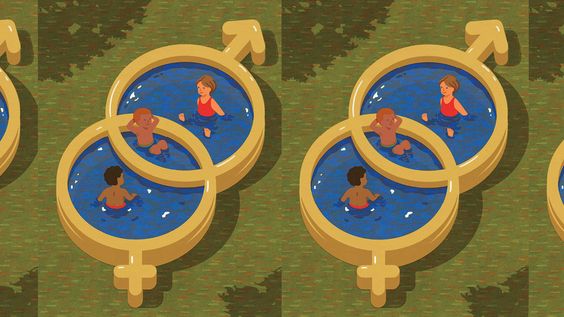
Talking to Kids About Science in a Gender-Inclusive Way

Introduction

Science is a fascinating field with endless possibilities and opportunities for learning and growth. Encouraging children to maintain an interest in science is vital for their intellectual development and future career prospects. However, it is also important to ensure that science education and discussions are accessible and gender-inclusive. This article aims to provide tips on how to approach talking about science with kids of all genders, ensuring equal opportunity for everyone.

1. Avoid Stereotypes and Encourage Curiosity

Avoid making gender-specific comments or assumptions when discussing scientific topics or activities with children. Instead, focus on the child’s interests and passions and encourage their curiosity, regardless of their gender. Providing opportunities for kids to explore beyond traditional gender roles will foster a sense of openness and acceptance in the world of science.

2. Use Examples from Diverse Role Models

Make an effort to highlight prominent scientists from diverse backgrounds who have made significant contributions to their fields. By showcasing role models that transcend gender, race, and other demographics, it will help children understand that science is open for everyone to explore, no matter their background or identity.

3. Choose Inclusive Science Experiments

Select science experiments that can be easily modified or adapted based on individual abilities, interests, or preferences. This ensures that all participants can engage in the activity while promoting a more inclusive environment around scientific learning.

4. Be Conscious of Language

Use inclusive language when discussing scientific topics or activities – avoid using gender-specific pronouns like “he” or “she” unless necessary. Instead, use neutral terms like “they” or “them” as these pronouns do not represent a specific gender.

5. Discuss the Importance of Diversity in Science

It’s essential to talk about the importance of diversity in scientific fields – not only from a social justice perspective but also because diverse viewpoints lead to more innovative discoveries and solutions to complex problems. Encourage children to consider the different ways that scientists from various backgrounds contribute to the world of science and the importance of breaking down barriers to access.

6. Encourage Collaboration

Promote teamwork and collaboration by designing scientific activities that require children to work together, regardless of their gender or other differences. By fostering a sense of community within the group, kids can learn to appreciate each other’s unique perspectives and come to understand that everyone has the potential to make a difference in the world of science.

Conclusion

Instilling a passion for science in children is important for their personal well-being, as well as for society as a whole. By ensuring that this love for science is built on principles of inclusivity, we can help shape a world where everyone has an equal opportunity to engage in scientific inquiry and enjoy the wonders this field offers. Be intentional with your language, actively seek diverse examples and make activities accessible for all as you talk about science with kids, and help build a more inclusive scientific community.

Fun Stuffed Animal STEM Exploration – Teaching Measurement and More

Introduction:

STEM learning plays a significant role in a child’s upbringing, allowing them to develop essential skills in fields like science, technology, engineering, and mathematics. One creative way to introduce STEM concepts to young learners is by incorporating their favorite stuffed animals into the learning process. In this article, we will explore various fun and engaging stuffed animal STEM activities that teach children about measurement and more.

1. Measuring Length with Stuffed Animals:

In this activity, children can practice measuring length using non-standard units. Have the child select their favorite stuffed animal and lay it flat on a table or the floor. Using small objects such as building blocks or paper clips, demonstrate how to line up the chosen items end-to-end as a makeshift ruler along the length of the stuffed animal. Encourage the child to try measuring their toy using different objects and comparing the results.

2. Stuffed Animal Weigh-In:

Introduce the concept of weight by hosting a stuffed animal weigh-in activity. Using a kitchen or bathroom scale, have your child place their different stuffed animals on it one at a time to determine their weight in grams or pounds. Encourage them to make predictions about which toy is the heaviest or lightest and discuss why they made those predictions.

3. Exploring Volume with Stuffed Animal Sleepover:

Host a pretend “sleepover” for your child’s stuffed animals, using pillows and blankets to create makeshift sleeping areas. Discuss with your child how much space each animal takes up based on their size and shape – this introduces volume concepts. Experiment with different arrangements for the animals to sleep efficiently while discussing concepts like area optimization.

4. Soft Landing Engineering Challenge:

Task your child with creating a soft landing pad using household materials (towels, pillows, sponges) for their stuffed animal friends. This activity can introduce basic principles of engineering design and problem-solving. Once they’ve built their landing pad, test it by gently dropping a stuffed animal from different heights to gauge the effectiveness of their creation.

5. Stuffed Animal Shadow Tracing:

Teach your child about the properties of light and shadows by tracing the shadows of their stuffed animals. Set up a lamp or flashlight and have them hold their preferred toy in front of the light, projecting a shadow on a piece of paper or a flat surface. Have them trace the outline of the shadow, allowing them to explore shape and size differences between the toy and its shadow.

Conclusion:

Incorporating stuffed animals into STEM activities can be a fun and engaging way for young learners to develop essential knowledge in scientific concepts like measurement, weight, volume, engineering design, and light properties. These entertaining activities provide an interactive method to familiarize children with STEM concepts while fostering creativity, curiosity, and problem-solving skills.

Teachers Pay Teachers Is Having a Sale This Week & Here’s Everything On Our Wishlist

Teachers Pay Teachers, the online marketplace where educators can buy and sell resources, is having a site-wide sale this week. With a vast plethora of items on our wishlist, we have curated a must-have selection for you to explore and take advantage of these fantastic deals.

1) Interactive Boom Cards

These digital, engaging, and self-correcting task cards are perfect for distance learning. They cover various subjects such as math, language arts, and science catering to different grade levels. The sale is an excellent opportunity to stock up on these time-saving and interactive resources.

2) Themed Classroom Decor Bundles

Revamp your classroom with eye-catching decor bundles that include posters, labels, and organizers. Themes range from watercolors, rustic woodland to superhero-inspired designs. Transform your learning environment without breaking the bank.

3) Exit Tickets

Exit tickets are essential assessment tools to gauge student understanding after a lesson or unit. Add variety to your exit ticket collection by choosing from the diverse options available on Teachers Pay Teachers during the sale.

4) Project-Based Learning Units

Engage students in real-world problem-solving activities using project-based learning units available for multiple subjects and grade levels. The sale allows you to try them out at discounted prices and diversify your instructional approach.

5) Escape Room Activities

Escape room activities are a fun and engaging way to reinforce concepts taught in class. With an array of options across different subjects such as math, science, and social studies, make sure to grab some during the sale before they return back to their individual prices.

6) Seasonal & Holiday Activities Bundle

Festive and seasonal activities help promote creativity while reinforcing academic content. Take this chance to enrich your holiday-themed resource collection at a discounted price.

7) Growth Mindset Resources

Invest in nurturing a growth mindset culture within your classroom with the selected materials that promote positive thinking, resilience, and perseverance. Add these books, posters, and activities to your wishlist during the sale.

8) STEM Challenges

Incorporate more STEM activities into your lesson plans with the wide selection available on Teachers Pay Teachers. Grab these hands-on learning resources at a reduced price during the sale.

Don’t miss out on the opportunity to stock up on valuable resources for your classroom as Teachers Pay Teachers conducts its sale this week. Update your educational toolbox while saving money, and provide your students with a diverse, engaging learning experience. Happy shopping!

5 Activities to Bring NASA’s Mission to Mars into the Classroom

Introduction:

As NASA’s Mars mission takes center stage in the world of space exploration, teachers can capitalize on students’ natural curiosity and fascination with the Red Planet. Here are five engaging activities that will bring NASA’s Mars mission into your classroom and inspire the next generation of explorers.

1. Design Your Own Martian Rover

Kick off this exciting activity by introducing students to NASA’s rovers, like Curiosity and Perseverance. Encourage them to research the various rovers’ missions and tools. Next, invite students to design their very own Martian rovers equipped with unique features capable of addressing specific scientific objectives on Mars.

2. Simulate a Mars Landing

Help your students better understand the challenges faced during landing on Mars by setting up a simulated landing activity. Provide materials such as balloons, string, and plastic cups to represent the rover and parachute system. Set specific rules for the height, weight limit, and landing targets while testing different techniques to ensure safe landings.

3. Explore Martian Geography

Using images and data from NASA, discuss the topography and geology of Mars with your students and compare it to Earth’s landscape. Provide them with elevation maps and enable them to analyze prominent features such as Olympus Mons (the largest volcano in our solar system) or Valles Marineris (an expansive canyon system). As a class exercise, ask students to design hypothetical colony locations based on these maps.

4. Investigate Martian Lifeforms

Introduce your students to the concept of astrobiology by guiding them through potential signs of past or present life on Mars. Study extremophiles – organisms on Earth that survive in extreme conditions – as models for what lifeforms could potentially exist on Mars. Ask students to brainstorm possible Martian habitats or plan lab experiments simulating Martian conditions.

5. Build a Mission Patch

Every mission requires a unique patch as the symbol of expedition. Ask your students to create their mission patches, combining symbols that signify teamwork, exploration goals, and scientific objectives. Discuss famous mission patches from NASA’s history, like those from Apollo and Gemini programs. Have students vote on their favorite design to use as your class mission patch.

Conclusion:

These stimulating activities can enhance students’ understanding of the Mars mission and develop an appreciation for space exploration. Beyond the mere excitement of space adventures, these collaborative activities can also boost their problem-solving and critical thinking skills – fostering a true passion for science.

The 411 on WeDo 2.0: LEGO® Education’s Newest STEM Product

In recent years, the importance of Science, Technology, Engineering, and Mathematics (STEM) education has continued to grow. Educators are constantly searching for new and creative ways to engage their students in these essential subject areas. Enter LEGO® Education’s WeDo 2.0, a new and innovative STEM product that takes a hands-on approach to learning.

What is WeDo 2.0?

WeDo 2.0 is a robotics kit designed by LEGO® Education to provide a comprehensive and exciting learning experience for students aged 7-11 years old. By combining the beloved LEGO® bricks with easy-to-use software, WeDo 2.0 enables students to design, build, and program their own robotic creations.

The Science Behind WeDo 2.0

The curriculum for WeDo 2.0 is based on three core scientific concepts: physical sciences, life sciences, and Earth & space sciences. The activities are structured to develop the students’ critical thinking, creativity, collaboration, and problem-solving skills.

The hands-on projects involve exploring topics such as forces and motion, simple machines, habitats, recycling, weather patterns, and more. With over 40 hours of customizable content in total, educators can easily tailor the program to match their curriculums.

The Hardware Components

WeDo 2.0 includes key elements crucial for all budding engineers:

1. LEGO® bricks – These familiar blocks provide the foundation for building models.

2. Smart Hub – This electronic module serves as the “brain” of each creation and features built-in Bluetooth capabilities.

3. Motor – This component allows mechanical movement in projects.

4. Motion Sensor – This sensor detects the distance and direction of objects in its vicinity.

5. Tilt Sensor – This component identifies when a model tilts or changes orientation.

The WeDo 2.0 Software

The accompanying WeDo 2.0 software is designed to be age-appropriate and user-friendly. Featuring a drag-and-drop interface, the software enables children to translate their physical models into digital code.

The software is compatible with iOS, Android, Windows, and Mac platforms and seamlessly integrates documentation and assessment tools for teachers.

Implementation in the Classroom

WeDo 2.0 allows for flexibility in learning environments, whether it’s a traditional classroom or distance learning. Teachers can utilize the curriculum content for a variety of educational purposes, ranging from introducing computational thinking concepts to reinforcing specific areas of STEM study.

Educators can also take advantage of the available online training resources, lesson plans, and global community support provided by LEGO® Education.

Conclusion

WeDo 2.0 offers an engaging and fun way to inspire young learners to explore the world of STEM. By combining LEGO® bricks with cutting-edge technology, this innovative product sparks curiosity and creativity while fostering important skills needed for future success. It’s time to take hands-on learning to a new level with LEGO® Education’s WeDo 2.0 STEM product!

Want STEM Success? Start Early

Introduction:

The importance of science, technology, engineering, and mathematics (STEM) education cannot be overstated in today’s rapidly evolving world. To ensure long-term success in these fields, it is crucial to introduce STEM concepts to children at an early age. This article will explore the benefits of early exposure to STEM education and share innovative ideas for parents and educators who wish to cultivate an early interest in these subjects.

The Benefits of Early STEM Education:

1. Encouraging Curiosity:

Incorporating STEM activities into a child’s educational experience from an early age fuels their natural curiosity and helps them develop critical thinking skills. Young learners become better equipped to explore the world around them and ask valuable questions about their environment.

2. Building Confidence:

Early exposure to STEM subjects empowers kids to believe that they can excel in these areas, which often leads to increased confidence as they progress through school. This boost in self-esteem can further enhance their motivation and engagement in class.

3. Cultivating a Strong Foundation:

Providing young learners with basic knowledge in subjects like math, science, and engineering sets them up for success later on. As they advance through school, students with strong foundational skills are typically more prepared to tackle complex problems and take on advanced courses.

4. Developing Problem-solving Skills:

Early introduction to STEM concepts nurtures problem-solving abilities by teaching children how to approach difficult tasks with patience, resilience, and creativity. These skills are not only valuable within STEM fields but also transferable to other areas of learning.

Tips for Incorporating STEM Into Early Education:

1. Incorporate everyday activities:

Parents can encourage a love for STEM by incorporating educational activities into daily routines, such as using baking materials for simple math lessons or growing plants as a hands-on biology experience.

2. Use age-appropriate toys and games:

Toys like building blocks, puzzles, or coding robotics teach children the fundamentals of engineering and programming. Combining learning with play allows STEM principles to become naturally embedded in a child’s daily life.

3. Take advantage of educational programs and resources:

Local libraries, museums, and online platforms often provide access to STEM-related events, classes, printable worksheets, or interactive games.

4. Encourage exploration and experimentation:

Help your child develop critical thinking skills by encouraging them to ask questions, investigate problems, or hypothesize potential solutions. Foster a safe environment where it’s okay to make mistakes and learn from them.

Conclusion:

Introducing STEM concepts early on is vital for encouraging children to embrace the challenges and rewards that come with these fields. By integrating hands-on exercises into daily routines and supporting natural problem-solving tendencies, parents and educators can ensure that today’s children are equipped to succeed in the fast-paced world of tomorrow.

Win a Science Teacher Distance Learning Survival Kit

Introductory Paragraph:

In these unprecedented times, distance learning has become the new norm, leaving educators seeking ways to adapt their teaching methods and maximize student engagement. Science education is at the forefront of innovation and improvement today. As a result, we’re thrilled to announce a fantastic opportunity for you to win a Science Teacher Distance Learning Survival Kit! This kit is designed explicitly for enhancing the online science teaching experience and ensuring students can learn their favorite subjects seamlessly, even beyond traditional classroom settings. We’ll guide you through everything you need to know about this amazing opportunity, including what’s inside the kit and how you can enter for a chance to win.

Paragraph 1: The Importance of Science Education in Distance Learning

The swift shift towards remote learning has left many science teachers looking for adequate tools and resources to maintain high-quality education. More now than ever, engaging students in science disciplines and fostering critical thinking skills are essential. It is crucial to create an interactive online environment that supports advanced practical experiences, making science enjoyable and purposeful during this digital era.

Paragraph 2: What’s Inside the Science Teacher Distance Learning Survival Kit?

The Science Teacher Distance Learning Survival Kit contains everything a dedicated science educator needs to excel during these challenging times. It includes:

1. Innovative digital tools designed specifically for online classes, such as virtual labs and simulations

2. Comprehensive lesson plans tailored for remote learning, including hands-on activities that students can complete at home

3. Access to a vast library of digital science resources—a treasure trove that guarantees engaging class sessions

4. Video tutorials by renowned science experts to enrich lectures with highly immersive content

5. Essential tips on maintaining open lines of communication with students and promoting peer interaction

This comprehensive survival kit equips educators with effective solutions to keep young minds engaged in science disciplines despite distance learning challenges.

Paragraph 3: How to Enter and Win the Science Teacher Distance Learning Survival Kit

Science enthusiasts are eager for this amazing opportunity, and participating is easy! You can enter the competition by following these simple steps:

1. Log in or create an account on [competition website]

2. Complete a quick registration form to confirm your eligibility

3. Respond to a series of questions that test your science knowledge or creativity

4. Finally, write a brief essay on why online science education is crucial during this era

One lucky winner will be selected based on their responses and dedication to enriching the future of online science education.

Conclusion:

Winning the Science Teacher Distance Learning Survival Kit could be life-changing for both you and your students. Don’t dwell on the challenges of remote learning; seize this opportunity to elevate your skills and help young minds explore the exciting world of science. Participate now and become a pioneer in distance science learning today!

20 Simple Machine Activities For Middle School

Engaging middle school students in science lessons can be challenging at times, but these 20 simple machine activities are designed to capture their interests and enthusiasm. By incorporating hands-on experiments, collaborative projects, and real-life applications, these activities encourage a deep understanding of the six simple machines and their significance in our daily lives.

1. Inclined Plane Races: Students design miniature cars to race down an inclined plane, testing different materials and angles to optimize speed.

2. Wheel-and-Axle Lift: Pupils work in teams to create a device that uses a wheel and axle system to lift objects.

3. Levers – Balancing Act: Students experiment with various lengths of levers to see how changing the position of the fulcrum affects the effort required to lift a weight.

4. Pulley Power: Participants create pulley systems and observe how different setups can decrease the force needed to lift objects.

5. Screw – Corkscrew Competition: In this activity, students test different screws like corkscrews or jar-openers to identify which one makes it easier to open containers.

6. Design a Rube Goldberg Machine: Challenge your students with this interdisciplinary project where they must use all six simple machines to design a creative device that performs a simple task in an overly complicated manner.

7. Wedge Investigation: Students compare different types of wedges (like knives or doorstops) and analyze how varying their shape impacts their effectiveness.

8. Simple Machines Scavenger Hunt: Organize a scavenger hunt around your school, asking students to find examples of simple machines in everyday equipment and machinery.

9. Cross-Curricular Simple Machines Art: Have students design art pieces incorporating simple machines reflecting on what they’ve learned about mechanical advantage, efficiency, and proper usage.

10. Simple Machines Mural: Collaborate with the art teacher to have your middle schoolers come up with and create a wall mural showcasing each simple machine in action.

11. Build a Catapult: Get students immersed in medieval history by having them design, build, and test mini-catapults, highlighting the use of multiple simple machines.

12. Bike Exploration: In this activity, students dissect bicycles and analyze how different simple machines ease efficiency and minimize effort.

13. Compound Machine Challenge: Have middle school students devise and construct low-cost, multi-purpose compound machines that utilize more than one simple machine.

14. Construct a Crane: Challenge your students to create functioning cranes with materials such as popsicle sticks, string, and paper clips to lift various objects.

15. Musical Simple Machines: Instruct learners to create musical instruments with at least one simple machine involved in the process of making music.

16. Marble Run Madness: Students experiment with inclined planes and levers by building marble runs using recyclable materials such as tubes, cardboard, and tape.

17. Simple Machines Math Connection: Demonstrate how geometry concepts like angles, triangles, and applied force equations can help engineers optimize simple machines for efficiency.

18. Learning from Ancient Civilizations: Investigate historical applications of simple machines in ancient civilizations such as Egypt or Greece through readings or video documentaries.

19. Adaptation Challenge: Encourage middle school pupils to evolve their recently built machines to accommodate different scenarios or situations that challenge their designs’ limits.

20. Museum Exhibit Design: Task your students with creating museum exhibit portions for each type of simple machine, incorporating visuals, prototypes, and hands-on activities that would educate visitors about their utility in real-world applications.

By implementing these 20 engaging activities in your middle school science curriculum, you’ll be nurturing a deeper understanding of simple machines while sparking curiosity in young minds about the marvels of engineering and physics.