
Teaching Strategies, Tactics, and Methods

What is Subordination?

Subordination is connecting two sentences or parts of a sentence to show that one part is more important than the other.

These two parts of a sentence, the main clause and the dependent clause, are merged using a subordinating conjunction.

The main clause can be read as a sentence on its own, while the dependent clause would not make sense without the main clause.

Process of Subordination

Main clause + Subordinating conjunction + Dependent clause

I ate the banana shake, + after + my mom told me I could.

Subordinating conjunction + Main clause + Subordinating Clause

Because + it was raining + I took an umbrella.

What do I need to make a subordinate sentence?

The first part of the sentence can either be the main clause or the subordinating clause, depending on how you want to write your sentence. This example follows using the main clause as the first part of the sentence.

  • My bike needs a new coat of paint

The next part will be the subordinating clause. This can be any conjunction that shows an imbalance or contrast, e.g., although, because, unless, after, if, etc.

  • because

The last part of the sentence is the dependent clause – this is the part that’s being compared. The bike needs a new coat of paint because it’s ancient.

  • It’s ancient.

So, the entire sentence would be:

  • My bike needs a new coat of paint because it’s ancient.

We could also swap the main clause and subordinate clause around to write the sentence in this way:

  • Because it’s ancient, my bike needs a new coat of paint.

They’re both correct – it’s up to you how you want to write the sentence.

What is the difference between subordination and coordination?

Coordination and subordination are contrasting ways to join a sentence or clause together.

Subordination is when two clauses are combined to compare/contrast/add a condition. One sentence or clause is of more value than the other.

Coordination is when two clauses of the same value are added together using a coordinating conjunction.

Coordinating conjunctions can be remembered by using the anagram FANBOYS.

  • F – For
  • A – And
  • N – Nor
  • B – But
  • O – Or
  • Y – Yet
  • S – So

Different types of subordinating clauses

Type Conjunction Examples Sentence Example
Concession although, while, though, whereas, even though I rode in the passenger seat while my little brother rode in the back.
Condition if, unless, until I won’t drink my tea unless it has sugar in it.
Manner as if, as, though I wrote a page, though they asked for two.
Place where, wherever I bought the bread from the bakery, where they made it from scratch.
Reason because, since, so that, in order that I bought the lilies because they are my favorite flower.
Time after, before, while, once, when I ate my dessert after my dinner.


How do I remember subordinating conjunctions?

You can use the anagram ‘I SAW A WABUB’ to remember just a few subordinating conjunctions!

  • I – If
  • S – Since
  • A – As
  • W – When
  • A – Although
  • W – While
  • A – After
  • B – Before
  • U – Until
  • B – Because

What is a Participle Clause?

Participle clauses are formed by using either the present participle (verbs using the suffix -ing), past participles (the past tense of a verb), or perfect participles (the perfect form of a verb).

We can use a participle clause when the participle and the verb in the main clause have the same subject. Here’s an example:

  • Feeling tired, I had a nap.

The subject of ‘feeling tired’ and ‘I had’ is the same, so we can use a participle clause.

These types of clauses don’t have a specific tense. Instead, the tense is decided by the tense of the verb of the main clause.

When do we use a Participle Clause?

Participle clauses are often used in written texts, such as fiction, rather than our everyday speech. It is because they add more detail and meaning to the sentence, which is helpful for written texts. However, they are also perceived as formal, which is why they aren’t used in spoken language as often as in written texts.

With the above example, we’re much more likely to say, ‘I was feeling tired, so I had a nap’ when speaking out loud. For instance, you can easily see the participle clause example in a story. Despite this, it’s still important to learn how to structure a participle clause and how we can use them in writing.

When writing fiction, using a participle clause can help to add variety to your sentences and make things more exciting for the reader. In addition, they can add emphasis to the sentence.

Examples of Participle Clauses

To help you understand participle clauses even further, here are examples of each type of participle clause in the present, past and perfect tenses.

Each type of participle clause explains something different about the rest of the sentence.

Present Participle Clauses

Present participle clauses have a similar meaning to active verbs.

Gives the reason for an action.

  • Realizing she’d forgotten her homework, she quickly ran back home.

Gives the result of an action.

  • The runner sprinted across the finish line, leaving his competition in the dust.

Explains an action that happened at the same time as another action.

  • Handing back the map, I admitted we were lost.

Adds the information about the subject of the main clause.

  • Twinkl makes lots of valuable resources, helping those who teach.

Past Participle Clauses

Past participle clauses usually have a passive meaning.

With a similar meaning to ‘if.’

  • Watered the right amount, plants can grow big and tall. (with past participle clause)
  • Plants can grow big and tall if you water them with the right amount. (used with ‘if’)

Gives the reason for an action.

  • Frightened by the noise, she turned on the light.

Gives information about the subject of the main clause.

  • Mentored by her father, she was a chess expert.

Perfect Participle Clauses

Using the perfect tense in a participle clause shows that the action described in the participle clause is finished before the action in the main clause.

  • Having settled her nerves, she walked onto the stage.
  • Having eaten already, he declined the food.
  • Having bought their tickets in advance, they headed straight into the cinema.

After Conjunctions and Prepositions

Participle clauses, especially ‘-ing,’ often come after conjunctions and prepositions. The most common ones we use are:

  • before;
  • after;
  • instead of;
  • on;
  • since;
  • while;
  • when;
  • despite.

Here are some examples of how to use these conjunctions and prepositions before a participle clause:

  • Before exercising, you should do a warm-up.
  • After searching for an hour, I found my glasses.
  • Instead of washing up by hand, use the dishwasher.
  • On arriving at the library, she went to return her books.
  • Since reading the novel, he had felt inspired to write for himself.
  • While learning a new language, it’s important to practice speaking, listening, reading, and writing.
  • It would help if you always remembered to wear suncream when going to the beach.
  • Despite hearing his warning, she went ahead with it anyway.

Participle Clauses with a Different Subject

In some exceptional cases, a participle clause can have a different subject from the one in the main clause. It is used when the verb has one of the following verbs plus an object:

  • Feel, find, hear, listen to, notice, see, smell, and hear

Here is an example:

  • Do you know of anyone learning Spanish at the moment?

‘You’ is the subject of the main clause; however, ‘anyone’ is the subject of the participle clause.

Participle Clauses Replacing a Relative Clause

A present participle clause can replace a relative clause used in the active voice.

  • The girl, who was in the library, was doing her homework. → The girl in the library was doing her homework.

A past participle clause can replace a relative clause used in the passive voice.

  • We’ve eaten all the cookies that we baked this morning. → We’ve eaten all the cookies we baked this morning.

What is a Petal?

A petal is a revised leaf that protects and encircles the reproductive parts of a flower.

They are brilliantly colored to attract pollinators, thereby allowing the process of plant reproduction.

Petals are made from organic matter, such as cellulose.

The collective group of petals on a flower is called a corolla – although the number of petals on any particular flower can differ.

What is the Function of a Petal?

Petals form a crucial role in a plant’s reproductive cycle. This is because they allow plants to pollinate.

They do this by using their scent, color, and other evolutionary features to attract the correct type of pollinator.

Different types of pollinators include insects, birds, and, less directly, the wind.

Parts of a Petal

Although petals differ from species to species, all have two main parts allowing them to encourage pollination.

These two parts include:

  • The upper, broad part – also called a leaf blade.
  • The lower part – is also called a claw.

What are Imperative Verbs?

You’re in the right place if you’re looking for an imperative verb definition. A verb is a ‘doing word,’ and an imperative verb tells someone to do something.

An imperative verb exists in a grammatical phrase without a subject noun or pronoun.

Using an imperative verb will turn a sentence into an order or command. For this reason, imperative verbs are sometimes called command verbs.

They are often found at the start of sentences and are commonly referred to as ‘bossy verbs’ due to their appearance in commands. Therefore, this term is an especially memorable way to teach primary students about this kind of verb.

Why do we use command verbs?

Imperative verbs are a direct way of requesting something from the person we are talking to. They are handy for relaying complex information in a short space of time. Our core point is immediately evident as the action typically comes at the top of the sentence.

These words are prevalent in instructions, guides, directions, and teaching because of this

Examples of imperative verbs

As imperative verbs appear in commands, these are usually concise and snappy sentences that are acted upon immediately. Again, this is because when we read instructions, we want them to be simple and straight to the point.

You might find imperative verbs in recipes, instruction manuals, and SATNAV systems.

Here are some standard command verb examples that children may encounter at school and home:

Home

  • Tidy your room!”
  • Bake at 200 degrees.”
  • Wash the dishes.”

School

  • Throw the ball to another person.”
  • Stop what you are doing.”
  • Colour within the lines!”

These command verb examples demonstrate how command verbs often appear within a sentence. They are used at the start of an instruction to clarify what is being asked of the person being spoken to. Whether it’s written down in an instruction manual or told directly in person, these verbs are a quick and helpful way to convey information.

A handy command verbs list:

Sometimes, the best way to learn about imperative verbs is through examples. Here are some handy command verbs that have been chosen because of the varied situations they represent:

  • Try again
  • Play nicely
  • Don’t worry
  • Turn left
  • Ask a friend
  • Look both ways
  • Finish your work
  • Speak up
  • Eat your dinner
  • Say thank you

Father’s Day

What is Father’s Day?

Father’s Day is a day of recognition for fathers (and father figures) everywhere in the United States. Originating as an alternative to Mother’s Day (held on the second Sunday in May since 1908), Father’s Day is a time to honor the extraordinary men in your life, be they fathers, uncles, grandpas, or even just an inspirational father figure.

When is Father’s Day 2023?

In the United States, Father’s Day always takes place on the third Sunday in June. However, in 2023, Father’s Day will occur on Sunday, June 19. It differs from many European countries, where Father’s Day has traditionally been celebrated on March 19 in honor of Saint Joseph’s Day.

What is the history of Father’s Day?

Father’s Day was founded in the United States by Sonora Smart Dodd, the daughter of American Civil War veteran William Jackson Smart. While hearing a church sermon celebrating the recently implemented holiday of Mother’s Day, Dodd felt that fathers needed recognition too. In addition, Dodd’s father was a single father of six children – something that Dodd felt was essential to recognize. In response, Dodd suggested a memorable holiday for fathers in Washington. As such, the Spokane YMCA was the site of the first Father’s Day in America, which took place on June 19, 1910.

Initially, Father’s Day struggled to catch on. However, in the 1930s, a revitalized Dodd returned to Washington with the assistance of trade groups that would benefit the most from the holiday existence – such as the manufacturers of pipe tobacco. In 1938, the Father’s Day Council was founded by the New York Associated Men’s Wear Retailers to commercialize the holiday and maximize profits. Initially, Americans were reluctant to accept another commercial holiday, but support soon came.

Despite several attempts to ratify Father’s Day, it wasn’t until 1966 that President Lyndon B. Johnson issued a presidential proclamation announcing the third Sunday in June as a day to honor fathers. President Richard Nixon signed this proclamation into law in 1972, making Father’s Day official.

What happens on Father’s Day?

On Father’s Day, the protocol is similar to Mother’s Day. Typically, children will purchase or make presents, gifts, and keepsakes for their fathers. They are also expected to use the day to honor and celebrate their fathers (or father figures) and make them feel special. It’s estimated that Americans collectively spend $1 billion on Father’s Day gifts every year!

A 2019 survey by OnePoll found that fathers preferred to receive meaningful gifts rather than commercial items – phone calls from their children ranked #1, with peace coming in at #3! Many fathers also noted their desire to watch sports on TV on Father’s Day. In response, the U.S. Open golf tournament is scheduled yearly so it can end on Father’s Day.

Subject

The subject of a sentence is the thing or person carrying out the main action. It is usually the noun, pronoun, or noun phrase of the sentence and is the thing that acts on the verb and object.

Most sentences follow the subject + verb + object structure, although this is not always the case.

While all of this may sound easy enough to follow, sentences can be complex, and naturally, so can their subjects! Below are examples of different subject types and where you might encounter them.

What are the three main types of Subjects?

There are three main types of subjects that we need to know about: simple subjects, compound subjects, and noun phrases.

1) Simple Subjects

Simple subjects in a sentence structure are usually the most easily recognizable since they only form one word or noun.

One example of a simple subject is the following phrase:

“The child threw the ball.”

The subject is the word ‘child,’ as this is the thing that is affecting, through the verb ‘threw,’ the object, which is, in this case, the ‘ball.’

While simple subjects usually feature just one word, they can encompass groups of people or things, such as ‘troops’ or a ‘herd.’

2) Compound Subjects

In a similar vein to simple subjects, compound subjects also feature a noun being acted upon by a verb and object.

However, in this case, pronouns and noun phrases may be added to the noun to facilitate more than one subject.

For example, we can see an example in this sentence:

“Tom and his mum went to the market.”

Here, the two subjects are ‘Tom and ‘his mum.’ It differs from a simple subject, as not only is there more than one subject, but there is also an inclusion of the pronoun ‘his.’ In addition, the conjunction ‘and’ connects the two subjects.

3) Noun phrases

So, what happens if we want to add more information to a subject in a sentence? It is where noun phrases come in.

With noun phrases, a selection of different words, such as pronouns, verbs, and modifiers, come together to form a singular noun.

Let’s look at an example:

“Everyone is loudly talking and will need to be quiet.”

While it may be tempting to label ‘everyone’ as the singular subject, it would not be suitable in this case. It is because more description is added, which changes the nature of the subject from simply ‘everyone’ to everyone talking loudly.

As a result, a noun phrase is formed.

Subject and object in a sentence

While we’re already familiar with a subject, the object in a sentence is very different. Rather than acting upon a verb, the object is the thing, person, or place involved in or receives the action. While all complete sentences must have a subject, not all require an object.

The subjects and objects in a sentence get talked about a lot about one another, so it’s essential to look at how they interact. So let’s read on to take a look at examples of how these sentence components interact with each other.

“The student ate a healthy salad lunch.”

From this example, we can see that The student is the subject because they act upon the verb, ‘ate’ in this case. Meanwhile, the salad lunch is the object.

When looking at the subject and object in a sentence, it’s important to note that the object that a subject acts upon can either be direct or indirect. But what does this mean?

To help us understand direct and indirect objects, let’s take a look at a couple of examples:

“The basketball player threw the ball into the hoop.”

This sentence features a direct object (the hoop), where the thing directly receives the action of a verb carried about by the subject (the basketball player). These objects are easy to spot because they typically answer the questions “who” or “what.”

“The football player passed the ball to Jack.”

From looking at the subject and object in a sentence like this, we can see that they’re slightly different. The object (Jack) is an indirect object which answers the questions “to whom” or “for whom.” They only appear in sentences with a direct object (the ball).

150 Summertime Trivia Questions

Animals

  1. Which ocean-dwelling creature are you most likely to see sunbathing? Answer: Sea lions.
  2. True or false: In the summer, squirrels use their big, bushy tails to protect themselves from the sun. Answer: True.
  3. What is the name of the United States’ beloved fire prevention mascot? Answer: Smokey Bear.
  4. What is the most common butterfly in the United States? Answer: The Cabbage is White.
  5. Some animals hibernate in summer to avoid the heat. Do you know the word for summer hibernation? Answer: Aestivation.
  6. Give some examples of animals that hibernate in summer. Answer: Tortoises, crocodiles, four-toed hedgehogs, and dwarf lemurs.
  7. Which animals are employed as beach lifeguards in some U.S. states? (a) Dogs (b) Chimpanzees (c) Raccoons. Answer: Dogs.
  8. Why do some animals pant when it’s hot? Answer: To keep themselves cool.
  9. What do elephants use instead of sunblock? Answer: Dust and mud.
  10. Which animal stars in the hit 1970s movie “Jaws”? Answer: A Great White Shark.

Countries

  1. Which country holds the world record for the hottest temperature ever? Answer: The United States (Death Valley, CA).
  2. Where are the 2021 Summer Olympics being held? Answer: Tokyo, Japan.
  3. In which country are you most likely to celebrate Christmas with a “barbie” on the beach? Answer: Australia.
  4. Which country gives students the most extended summer vacation? Answer: Italy (12 weeks).
  5. Where is the biggest water park in the world? (a) United States (b) Germany (c) Spain. Answer: Germany.
  6. True or false: Mexico is the largest consumer of watermelons in the world. Wrong: It’s China.
  7. In which country do people gather at Stonehenge to celebrate the summer solstice? Answer: England.
  8. Where was ice pop invented? Answer: San Francisco, USA.
  9. Name a country that features a sun on its national flag. Possible Answers: Uruguay, Antigua and Barbuda, Ecuador, Kazakhstan, Kurdistan, and North Macedonia.
  10. Where does the word “season” come from? Answer: Season is an Old French word meaning “sowing” or “planting.”

Food and Drink

  1. When is National Lemonade Day celebrated? Answer: August 20.
  2. What is America’s number one BBQ snack? Answer: Hamburgers.
  3. What is the world record for the giant glass of lemonade? Answer: 3,211 gallons.
  4. Which is the most popular ice pop flavor in the U.S.? Answer: Cherry.
  5. How much do Americans spend on alcoholic beverages on Independence Day? Answer: $1.6 billion.
  6. What is America’s most popular ice cream flavor? (a) Vanilla (b) Chocolate (c) Strawberry. Answer: Chocolate.
  7. What is the most popular cocktail in the U.S.? Answer: Margaritas.
  8. How much tequila went into making the world’s giant margarita? Answer: 2,135 gallons!
  9. Which two cities claim to have invented the ice cream sandwich? Answer: Pittsburgh and New York.
  10. Which Canadian city is known as the “Slurpee Capital of the World”? Answer: Winnipeg, Manitoba.

Holidays and Events

  1. Which of these is NOT a U.S. summer holiday? (a) National Watermelon Day (b) National Pool Noodle Day (c) National Hammock Day. Answer: National Pool Noodle Day.
  2. Which U.S. city hosts an annual UFO festival in July? Answer: Roswell.
  3. In which country do people celebrate the arrival of summer by jumping over fires? Answer: Spain.
  4. When is Mexican Independence Day celebrated? Answer: September 16.
  5. Where is the U.S. music festival Lollapalooza held? Answer: Chicago.
  6. What does Pride Month celebrate? Answer: The rights of LGBTQ+ people.
  7. Where is La Tomatina – an event widely regarded as the world’s most significant food fight – held every August? Answer: Bunol, Spain.
  8. Where is the world-famous Glastonbury festival staged? Answer: Somerset, England.
  9. Where does Nathan’s annual Fourth of July hot dog eating contest take place? Answer: Coney Island, New York.
  10. The Katmai National Park in Alaska holds a contest each summer to find the fattest (a) Bear, (b) Moose, and (c) Wolf. Answer: Bear.

Songs

  1. Who wrote and sang the 1980s hit “Boys of Summer”? Answer: Don Henley.
  2. Which artists had a massive hit with “Summer of ‘69”? (a) Bruce Springsteen (b) Bryan Adams (c) Billy Joel. Answer: Bryan Adams.
  3. Who wrote and recorded the hit song “Watermelon Sugar”? Answer: Harry Styles.
  4. Which singer, the Queen of Disco, sang “I Feel Love”? Answer: Donna Summer.
  5. Which New York band wrote and recorded “Summer in the City”? Answer: The Lovin’ Spoonful.
  6. The song “Summer Nights” is from which 1978 movie? Answer: Grease.
  7. Who sang the 1970s rock anthem “School’s Out”? Answer: Alice Cooper.
  8. Which band recorded the 1969 folk-pop classic “Here Comes the Sun”?: (a) The Rolling Stones (b) The Monkees (c) The Beatles. Answer: The Beatles.
  9. Complete the following lyric: “Summer’s here, and the time is right for _______ in the street.” Answer: Dancing.
  10. Who had hits with “Fun! Fun! Fun!,” “California Girls,” and “Surfin’ Safari”? Answer: The Beach Boys.

Summer Blockbusters

  1. What is the highest-grossing summer blockbuster of all time? (a) Jaws (b) Raiders of the Lost Ark (c) Star Wars (Episode IV: A New Hope). Answer: Star Wars.
  2. What kind of animals were Timone and Pumba in The Lion King? Answer: Meerkat and warthog.
  3. Which American actor appears in the Indiana Jones and Star Wars franchises? Answer: Harrison Ford.
  4. Complete the following movie quote: “Where we’re going, we don’t need ______.” Answer: Roads.
  5. In this indie classic starring Zooey Deschanel and Joseph Gordon-Levitt, how many “days of summer” are there? Answer: 500.
  6. Jurassic Park, E.T., and Saving Private Ryan are among the most successful summer movies ever made. But which director is responsible for all three? Answer: Steven Spielberg.
  7. Which summer blockbuster was the first to make $100 million at the U.S. box office? Answer: Jaws.
  8. What genre does the movie I Know What You Did Last Summer belong to? Answer: Horror.
  9. In the 1997 blockbuster Men in Black, who (or what) does Will Smith’s character Jay battle with? Answer: Aliens.
  10. Who directed the 1989 Batman movie? Answer: Tim Burton.

History

  1. When was the “Summer of Love”? Answer: 1967.
  2. The Fourth of July is the biggest event of the summer. But in which year did the United States gain independence from Britain? Answer: 1776.
  3. True or false: July is named after the Roman emperor Julius Caesar. Answer: True.
  4. What was the hottest U.S. summer on record? (a) 1976 (b) 2020 (c) 2019. Answer: 2020.
  5. When was the rainbow-themed Pride flag invented? Answer: June 25, 1978.
  6. When is the anniversary of D-Day? Answer: June 6.
  7. When was “The Year Without a Summer”? Answer: 1816
  8. What is the hottest temperature ever recorded in the United States? Answer: 134 °F (recorded in Death Valley, CA, in July 1913).
  9. In which year did the legendary music festival Woodstock take place? Answer: 1969.
  10. When and where were the first modern Olympics held? Answer: 1896 in Athens, Greece.

Science

  1. How hot is the sun’s core? (a) 2,700 °F (b) 27,000 °F (c) 27,000,000 °F. Answer: 27,000,000 °F.
  2. Plants use sunlight to make their food. What is this process called? Answer: Photosynthesis.
  3. Where do hurricanes form? Answer: Over warm ocean waters.
  4. In hot temperatures, liquid water turns into gas. What is the name of this process? Answer: Boiling (vaporization).
  5. Records show that summers are getting hotter and hotter. Why do some people believe this is happening? Answer: Global warming.
  6. What is hay fever caused by? Answer: Pollen.
  7. True or false: Sunflowers angle their heads toward the sun to maximize the amount of sunlight they absorb. Answer: True.
  8. In which month are you most likely to see the Perseid meteor shower? (a) June (b) July (c) August. Answer: August.
  9. Do the Northern and Southern Hemispheres share the same seasons? Answer: No. The Southern Hemisphere experiences summer in December, January, and February.
  10. What percentage of a watermelon’s overall mass is water? Answer: 92%.

Strange but True

  1. True or false: Americans consume five billion hot dogs between May and September. Answer: False – it’s seven billion!
  2. If you laid all those wieners end to end, how many times would they crisscross the country? Answer: 220 times.
  3. Which Moroccan mammal is known to climb trees during the summer? Answer: Goats.
  4. Which state hosts a mashed potato wrestling contest every August? (a) Arkansas (b) South Dakota (c) North Carolina. Answer: South Dakota.
  5. True or false: Watermelons are a member of the vegetable family. Answer: True – they’re closely related to cucumbers!
  6. Which classic summer game was inspired by an empty pie tin? Answer: Frisbee.
  7. In which state can you celebrate Christmas in July? Answer: North Carolina.
  8. How many bats congregate beneath the Congress Avenue Bridge in Austin every August? Answer: 1.5 million.
  9. True or false: The Eiffel Tower gets smaller in the summer. Answer: False – the heat causes the tower to expand, which adds an extra six inches to its overall height.
  10. In which state do people celebrate the story of Mike, the Headless Chicken? Answer: Colorado.

Pick and Mix

  1. Which former president welcomed his first daughter into the world on July 4, 1998? (a) Bill Clinton (b) George W. Bush (c) Barack Obama. Answer: Barack Obama.
  2. What are the three summer zodiac signs? Answer: Cancer, Leo, and Virgo.
  3. Which vitamin do you get from sunshine? Answer: Vitamin D.
  4. What is the longest beach in the United States? Answer: Long Beach, WA.
  5. True or false: There are 500 known varieties of watermelon. Answer: False – there are more than 1000!
  6. Which Shakespeare play is famously set in the middle of summer? Answer: A Midsummer Night’s Dream.
  7. How much do Americans spend on fireworks for the Fourth of July? Answer: $1 billion.
  8. What is the number one tourist attraction in the United States? Answer: The Grand Canyon.
  9. What is the world’s busiest beach? Answer: Dalian beach, China.
  10. What do the letters SPF mean? Answer: Sun protection factor.

Summer Olympics

  1. True or false: There is enough water in an Olympic-sized swimming pool to fill 5,000 bathtubs. Answer: False – you could fill 9,400!
  2. Which of these sports has NOT been featured at the Olympics? (a) Tug-of-War (b) Rope Climbing (c) Tag. Answer: Tag.
  3. How many times has the United States hosted the Summer Olympics? Answer: Four.
  4. When was the last time the United States staged a Summer Olympics? Answer: 1996.
  5. The United States will host the Summer Olympics in 2028, but in which city? (a) New York, (b) Chicago, (c) Los Angeles Answer: Los Angeles.
  6. Why were the 1940 and 1944 Summer Olympics canceled? Answer: Due to WWII.
  7. Which of the following is the only male athlete in history to win the 200 and 400 meters at the same Olympics? (a) Usain Bolt (b) Michael Johnson (c) Michael Jordan. Answer: Michael Johnson.
  8. Which athlete has the most Olympic medals? Answer: Michael Phelps (28).
  9. How many people tuned in to watch the 2016 Summer Olympics in Rio de Janeiro? Answer: 3.2 billion.
  10. What do the Olympic rings represent? Answer: The five competing continents – America (North and South), Europe, Asia, Australasia, and Africa.

Fourth of July

  1. How many hot dogs are consumed on the Fourth of July? Answer: 150 million.
  2. True or false: During the Civil War, George Washington gave soldiers a double ration of rum to celebrate the Fourth of July. Answer: True.
  3. Which former U.S. president was born on July 4, 1872? (a) Abraham Lincoln (b) Jimmy Carter (c) Calvin Coolidge. Answer: Calvin Coolidge.
  4. What was the population of America when the Declaration of Independence was signed? Answer: 2.5 million.
  5. In which city were both the Declaration of Independence and the Constitution signed? Answer: Philadelphia, PA.
  6. Which three U.S. presidents all passed away on July 4? Answer: John Adams, Thomas Jefferson, and John Monroe.
  7. True or false: Independence Day is the second-booziest holiday after New Year’s Eve. Answer: False – Americans drank more alcoholic beverages on July 4 than at any other time.
  8. What is the nation’s favorite hot dog topping? (a) Ketchup (b) Onions (c) Mustard. Answer: Mustard – of course!
  9. Where is the largest Fourth of July fireworks display in the United States? Answer: New York City.
  10. Which actor starred in the movie National Treasure? Answer: Nicholas Cage.

States

  1. Which U.S. state is known as the “Sunflower State”? Answer: Kansas.
  2. Where do the World Margarita Championships take place every August? Answer: Tucson, AZ.
  3. Which state is known as the “Sunshine State”? (a) California (b) Florida (c)  Texas. Answer: Florida.
  4. Where is the “Midnight Sun” baseball game held? Answer: Alaska.
  5. What is the main attraction at the Iowa State Fair? Answer: A 600-pound cow sculpted from butter.
  6. In which southern state can you attend a summer festival dedicated entirely to Elvis Presley? Answer: Tupelo, Mississippi – The King’s birthplace.
  7. Which U.S. state generates the most solar power? Answer: California.
  8. What are the United States’ three hottest states? Answer: Florida, Hawaii, and Louisiana.
  9. Which state is the coolest in summer? (a) Minnesota (b) Oregon (c) Alaska. Answer: Alaska.
  10. Which southwestern state features the “Zia sun” on its flag? Answer: New Mexico.

Summer World Records

  1. On June 5, 2019, Thomas van den Dungen (Germany) broke the world’s tallest sandcastle record. But just how tall was it? (a) 28 feet (b) 41 feet (c) 57 feet. Answer: 57 feet!
  2. How much did the world’s giant scoop of ice cream weigh? Answer: 3,000 pounds.
  3. The world’s giant inflatable pool toy was named “Sally the Swan” by its creators. How tall was she? Answer: 70 feet tall.
  4. True or false: The world’s giant strawberry weighed five ounces. Answer: False – it weighed more than eight ounces!
  5. Donald Dettloff is the proud owner of the world’s most extensive collection of surfboards. Can you guess how many he has? Answer: 647.
  6. What’s the world record for the longest-running BBQ? (a) 12 hours (b) 50 hours (c) 80 hours. Answer: 80 hours.
  7. Pro competitive eater Joey Chestnut holds the world record for the hottest dogs eaten in 10 minutes. How many hot dogs did he eat during his record-breaking attempt in 2021? Answer: 76.
  8. The world’s tallest sunflower was grown in Germany in August 2014. How tall was it? (a) 20.1 feet (b) 30.1 feet (c) 40.1 feet. Answer: 30.1 feet.
  9. True or false: The world’s longest inflatable slip-and-slide measured 1,975 feet. Answer: True!
  10. Kevin Strahle from New Jersey, USA, holds the world record for the most ice pops eaten in a minute. How much did he eat? Answer: Six.

Nature

  1. Which U.S. state experiences the most wildfires during summer? (a) Texas (b) Arizona (c) California. Answer: California.
  2. True or false: More thunderstorms occur during the summer than at any other time of the year. Answer: True.
  3. What are the odds of being struck by lightning? Answer: 1 in 500,000.
  4. What percentage of the world’s oxygen supply is produced by the ocean? Answer: 85%.
  5. How do arctic foxes cool down in the summer? (a) by eating ice pops, (b) by shedding their fur, and (c) by swimming in the ocean. Answer: By shedding their fur.
  6. What is the name of plants and trees that remain green and healthy for more than one season? Answer: Evergreen.
  7. True or false: Heat is the most dangerous weather condition for humans and animals. Answer: True.
  8. What species of fish do bears feed on in summer? Answer: Salmon.
  9. What is the longest streak of consecutive rain-less days in U.S. history? Answer: 150 days (Las Vegas, summer 2020).
  10. Which state is the wettest in summer? Answer: Florida.

What is an Instruction Text?

Instruction Text

An instruction text is a piece of non-fiction text that gives instructions on how to complete a task. Also called an instructional text or an informational text. In addition, the reader may include organizational devices.

Instructive Text Examples

Examples of instruction text include recipes to board game instructions or how to complete a video game. In any of those cases, it is essential to provide easy-to-follow instructions using simple language and information on what to do in chronological order.

It also requires the use of imperative verbs. These are a type of verb that instruct another person to do something. Here are some more examples of an instruction text:

“Put the cake mix in the oven.”

“Open the board and give each player a card.”

“Insert the disc, then press play.”

Imperative verbs are instructive: they should tell the reader, in no uncertain terms, what to do.

Where might I find informational texts?

Here are some examples of where you might find instruction texts:

  • A recipe that instructs you on how to cook or bake something.
  • A leaflet that gives you instructions to follow – for example, instructions for how to vote or to post something.
  • An instruction manual that will help you set up an appliance or build something, like a piece of furniture.

What is Associative Learning?

Associative learning is a style of learning that happens when two unrelated elements (for example, objects, sights, sounds, ideas, or behaviors) become connected in our brains through a process known as conditioning.

Examples of associative learning include:

  • If someone puts their hand on a hot stove and hurts themselves, they may learn to associate hot stoves with pain and have therefore been conditioned not to put their hands on them.
  • If someone eats a particular food, then develops a headache soon afterward, they may learn to associate that food with headaches (even if the food didn’t cause the headache) and not want to eat it again.
  • Every time a child cleans their room, their parent or carer gives them a treat. As a result, the child starts associating cleaning their room with treats, making them more inclined to clean their space more frequently.
  • When a kitten is misbehaving, its mother will flick its ears. The kitten eventually learns to associate misbehaving with ear flicking (which is painful to them), so it stops.

Associative learning is something that all humans and animals do naturally. By linking elements together and making a web of different connections, we build up our memories and deepen our understanding of the world around us. If we did not do this, we would be unable to recall even the most essential things, such as how to get to the local shops or that we do not like certain foods.

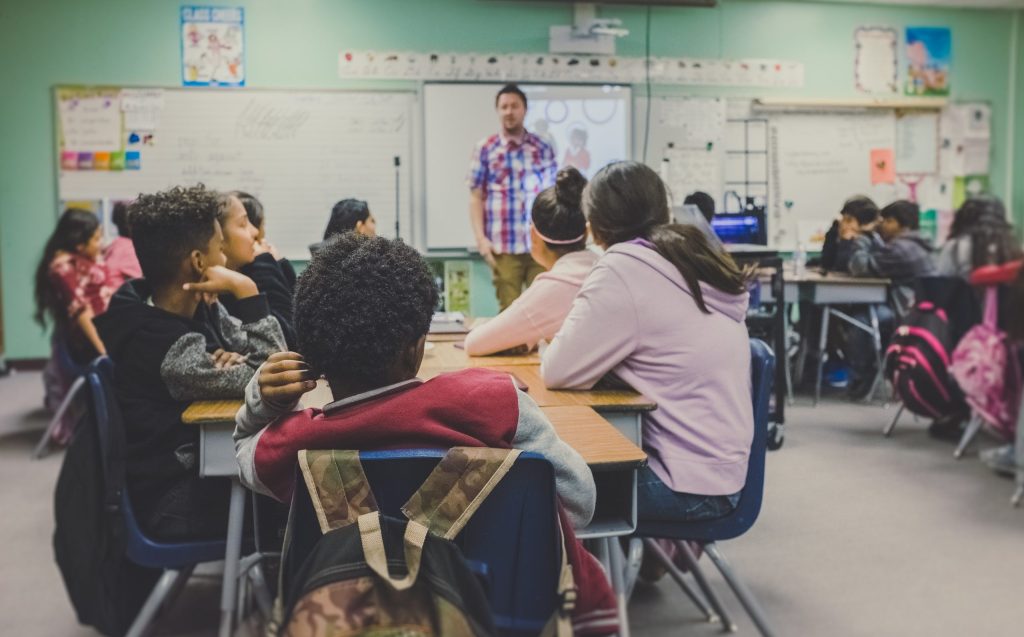
As well as being something that humans and animals do naturally, associative learning is utilized by those who teach. Teachers can better manage their classrooms through associative learning techniques, while parents and carers can encourage their children to behave well and responsibly.

Types of Associative Learning

There are two types of associative learning: classical conditioning and operant or instrumental conditioning.

Classical conditioning is when one neutral element (called the conditioned stimulus) becomes associated with a different element (the unconditioned stimulus) that already generates the desired response (the unconditioned response) until the neutral element stops being neutral and instead causes the same response (the conditioned response).

One famous example of classical conditioning was conducted by Russian scientist Ivan Pavlov, who conditioned dogs to salivate whenever they heard a bell.

To do this, he would ring a bell (the conditioned stimulus), then give the dogs food (the unconditioned stimulus) very soon afterward. The food caused the dogs to salivate (the unconditioned response). Still, after some time doing this bell-ringing/food-giving routine, Pavlov noticed that the dogs would salivate immediately after the bell was rung – even before they saw any food. Pavlov then tried ringing the bell without producing the food, and the dogs still salivated once the bell was rung (the conditioned response). At this point, Pavlov concluded the dogs had been conditioned to salivate at the sound of the bell.

Operant conditioning is quite similar to classical conditioning. Still, instead of conditioning an unconscious response, operant conditioning is about preparing an individual’s conscious behavior based on the consequences of that behavior.

One well-known example of operant conditioning comes from psychologist B.F. Skinner, conditioned rats to perform behaviors using positive and negative reinforcements.

In his first experiment, he put a hungry rat into a specially designed Skinner box equipped with a lever mechanism to dispel food when pressed. After exploring the box, the rat pressed the lever, and the food appeared. Skinner repeated this experiment with the same rat several times until the first thing the rat would do upon entering the box would be to press the lever. In this instance, a positive reinforcement (food reward) was used to condition the rat to push the lever.

In his second experiment, Skinner put a different rat in a Skinner box with an uncomfortable electric current running through it. Having experienced the discomfort, the rat moved around the box and accidentally knocked the lever, which immediately stopped the current. Again, Skinner repeated the experiment several times until the rat knew to press the lever immediately to avoid discomfort. Similarly, a negative reinforcement (the possibility of pain from the current) was used to condition the rat to pull the lever.

Associative learning in the classroom

Associative learning is regularly used in classrooms to encourage and discourage certain student behaviors.

Some examples of associative learning being utilized in the classroom include:

  • Awarding students high grades for doing good work.
  • Praising students for their effort and hard work.
  • Using star charts. (When a student does something well, a star is added. After earning a certain number of stars, the student gets a prize.)
  • Removing classroom privileges from students who have been misbehaving in class.
  • Not allowing a misbehaving student to sit with their friends.
  • Giving misbehaving students detention.

What is a Plural Noun?

Plural Noun

A plural noun is used to show that more than one of the nouns is being described. For example, the plural form of the word ‘foot’ is ‘feet.’ There are two different kinds of plural nouns; regular plurals, which follow plural spelling rules, and irregular plurals, which do not.

Plural nouns can sometimes be tricky for pupils to make sense of. Luckily, this guide provides a simple breakdown of important plural spelling rules to help you and your pupils understand the essential grammar rules for spelling plurals with -s or -es. Then, once your students are ready to put their new understanding of plural spelling rules to the test, we have lots of resources and activities to reinforce that all-important grammar knowledge.

What is a plural noun?

Several different plural spelling rules depend on what letter a noun ends in.

Children will learn about two types of plural nouns, regular plurals, and irregular plural nouns. But first, let’s examine the difference between regular and irregular plural words:

  • We all think about regular nouns when we think of plurals, which are the simplest to learn and spell. The general rule of regular plural nouns is that they are created by adding the letter ‘s’ to the end of a singular noun. For example, if you an S to the singular noun ‘apple,’ you will create the regular plural noun — apples. Alternatively, some regular plural words will add -es to turn one singular noun into a plural noun. For example, when you add an -es to the singular noun box, you get the plural noun boxes.
  • Irregular nouns: Next, we get to the plural nouns that love to cause everyone problems. Irregular plural nouns do not follow the plural spelling rules mentioned above. In irregular plural nouns, the word can change in a few different ways. Check out these examples of singular nouns turned into irregular plural nouns:

Wolf = Wolves: This is an example of the -f and -ef plural rule. We drop the final-for-fein in the singular noun for these irregular plural nouns and replace it with the ending-ves.

Woman = Women: This is a vowel change irregular plural noun. Some singular nouns become plural nouns by changing vowels in the middle of the word. No rule or pattern tells you when this happens; children will need to learn the terms that apply to this spelling rule.

Mice = Mouse: Some words change entirely to represent the plural noun. Again, there is no rule to recognize these, and children must learn which words change with the plural.

What are ten examples of plural nouns:

In the table below, we’ve included ten examples of plural nouns alongside their singular forms. As you read through them, pay attention to how the words change as they’re pluralized and try to determine which ones are the irregular plurals:

Singular Noun Plural noun
Car Cars
Wish Wishes
Wife Wives
Dog Dogs
Life Lives
Man Men
Woman Women
Loaf Loaves
Tooth Teeth
Sock Socks


What are the plural spelling rules?

Now that we know a bit more about plural nouns let’s take a closer look at plural spelling rules. Once pupils begin using plurals in their writing, they must understand these rules and implement them. Read our guide to familiarize yourself with these rules before teaching them to your learners:

1) Plural Spelling rules: Adding an -s and -es

In most cases, the rule for making regular nouns plural is pretty simple. You have to add the suffix -s to the end of the word:

  • Car – car
  • Bike – bikes

Regular nouns are predictable. You would talk about horses when we have more than one horse in a field.

However, not all singular nouns can be plural by adding an -s. For example, if a singular noun ends in ‑s, -ss, -sh, -ch, -x, or -z, then you’ll need to add ‑es to the end to turn it into a plural noun. Nouns where you need to add the suffix -es are still known as regular nouns; they are slightly more complicated to form. Here are some examples of how words with these endings can be made plural:

  • Atlas – atlases
  • Pass – passes
  • Bush – bushes
  • Trench – trenches
  • Box – boxes
  • Blitz – Blitzes

Getting children to understand regular nouns is an essential first step. Once learners have grasped this, they can start learning the spelling rules for more complex nouns.

2) Plural spelling rules: Turning -Y into a plural

How we pluralize a word with a ‘y’ ending changes depending on what letter comes before the ‘y’. If the letter preceding the ‘y’ in a singular noun is a vowel, then we generally add an -s at the end of the word like this:

  • Toy – toys
  • Alloy – alloys

But if the letter before the ‘y’ is a consonant, we make the word plural by sticking the suffix -ies to the end. Take a look at these examples:

  • Pony – ponies
  • City – cities

Yet this way of pluralizing nouns can be confusing. For example, if the rule for changing singular to plural ending with a y would be to change ‘puppy’ change to ‘puppies,’ then you might expect someone with the surname Crosby to become Crosbies. It is incorrect, however. If you are talking about Jess Crosby and Eliza Crosby, you are talking about more than one member of the Crosby family.

When you’re changing a proper noun, so the name of a place or person, you add an ‘s’ when you change the singular to plural ending with y.

I went to visit Jess Crosby and Eliza Crosby

Would become

I went to visit the Crosbys today.

3) Plural spelling rules: Words with other endings

There are also lots of specific rules for nouns with different word endings. In this next section, we’ll look at some of these and point out any outlying words that pupils should be aware of.

When we want to pluralize a singular noun that ends in the letter ‘o’, we often add an -es suffix. For example:

  • Mango – mangoes
  • Buffalo – buffaloes

Another odd grammar rule states that if the singular noun ends in ‑us, the new plural ending should be -i. For example:

  • Cactus – Cacti
  • Stimulus – Stimuli

Another important spelling rule is that when pluralizing a word ending in ‘f,’ we often use the suffix -ve and add an ‘s.’

  • wife – wives
  • wolf – wolves

4) Plural spelling rules: Words that never change

While the previous plural spelling rules have taught us which words need to be changed and how some words never change! Many of these examples of plurals refer to animals. Check out these examples in sentences to see them in action!

  • We caught one fish and then later lots of fish.
  • One sheep escaped, and the rest stayed in the field.
