How can you implement depth of knowledge in english/language arts? No worries. The chart below will get you started.



How can you implement depth of knowledge in english/language arts? No worries. The chart below will get you started.

I remember applying to colleges back in my Junior year of high school and thinking to myself, “I only have enough money to pay for three applications, so I better make this count.” Little did I know that I wasn’t necessarily constrained by my budget. Why? Because as I have come to know, there are plenty of colleges and universities that don’t charge an application fee. Below you will find the best of them.
Click here to learn more about the ranking methodology that we used to compile this list.
Congratulations! If you represent a college or university that is included in this list, please collect your seal below.
By Caroline Fahmy
State departments of education and testing vendors diligently work to ensure that assessment results for standardized state assessments are accurate. After all, the purpose of assessing students is to take action on the results, whether it be for accountability or student learning, and relying on data that is incomplete or invalid is pointless.
Assessment programs have strict standardized procedures in place to check data and to help district and school site testing coordinators manage the implementation of the assessment process. Over many years of processing large-scale student assessments, we have found three procedures that are especially helpful in ensuring that test results are more accurate.
One measure districts can take to make an assessment program successful is to make sure the correct people have the necessary training. Each assessment program will have specific procedures for administering tests, sharing required data files, and, if the test is paper-based, for moving those papers around. Knowing the details of testing procedures prior to starting the assessment process is crucial for success.
Before testing begins, districts can make sure that the test vendor has accurate contact information for the district assessment coordinator. This helps to ensure that the right person will be receiving procedural information and updates, and that there will be no time delays due to information getting lost or directed to the wrong person.
It’s also important for district and school assessment coordinators to take advantage of state- and vendor-provided training. Sometimes this will involve in-person training sessions, but online tutorials may offer another training option as well. Even ongoing assessment programs can have changes in procedure from year to year, so training remains important even for veterans of the process. For example, boxes of paper tests that are waiting to be scored could sit for a long time if no one at the district realizes that shipping procedures have changed.
Districts can improve the accuracy of their assessment results by providing valid and complete student-level data to the test vendor. There are many relevant examples. Duplicate, missing, or incorrect student ID numbers can create problems for accurate reporting. No one wants to find out after testing that scores have been matched incorrectly with students. Missing student demographic information (such as gender, ethnicity, or primary language) makes reporting and evaluating test results for subgroups difficult.
Assessment vendors run many checks to ensure that the student-level data is valid and complete. Often, vendors create software programs to flag possible errors (such as missing critical data or invalid student ID) that also give authorized district administrators the opportunity to use an online program to review and edit the data. This review step is especially important and helpful to improving the validity of student data.
District staff can help to prevent processing errors by preparing data files that exactly meet the published specifications or file record layout(s).
When computers process data files, details are very important. The computer is expecting data fields to be valid in the sense that the information will follow a set of rules specified in the file record layout. When the data does not follow the rules of the layout, the assessment reports can be inaccurate or delayed.
For example, a leading zero in a data field could get lost in file translation so that the computer misinterprets a county, district, or school code in that data field. As a result, the computer might assign those students to an incorrect school or district. Similarly, if the data columns are switched, the computer might be looking for gender information and actually find a student’s middle initial. The reports for the gender subgroup would be wildly inaccurate, and student-level reports would contain incorrect names.
Student information systems (SIS) have simplified many data-gathering and storage tasks, but they do not always export files in ways that meet state assessment specifications. Districts must take steps to ensure that the files they are transferring to the test vendor or the state meet the exact specifications of each assessment program. Although states and vendors often try to keep record layouts the same for ongoing programs, small changes are possible, and, therefore, districts may need to adjust their procedures.
Assessment coordinators should feel comfortable in contacting the test vendor for assistance with questions regarding data file formatting. Sometimes talking with an actual person is the quickest and most effective way to resolve questions that arise prior to, during, or after test administration. It is much better to act on correct information than to act on inaccurate assumptions.
Effective implementation of an assessment program comes down to accurate data. Any problems with student data may increase processing time and can compromise the validity of the results and, thus, interventions or decisions made about those results.
For the last 22 years, Caroline Fahmy has served as president and CEO of Educational Data Systems, responsible for the success, growth, and development of the company. For 11 years prior to that, she was vice president, responsible for the company’s finance and accounting departments and directing the statewide assessment division. She has managed many large-scale assessment and research projects, including multiple statewide assessments in Maine, Massachusetts, Oregon, and California, as well as the research and development of new software products and services.
The top ten schools from the US Matific Math Games Competition will receive prizes ranging from $1,000 in Matific licenses to $15,000 cash

(New York, NY) March 5, 2018 –– Matific, an award-winning education technology company, is proud to announce the winners of the US Matific Math Games, a free, online math competition aimed at improving American students’ confidence and math skills in the classroom.
“Matific offers our hearty congratulations to the winners of the Matific Math Games Challenge, and we’d like to thank all of the participating schools for joining in this exciting competition,” said Kevin Sherman, Matific CEO. “Matific is a company committed to offering immersive math games to children around the world. With this competition, we hope students had the chance to find a new appreciation for math, and learn how excellent math skills can help them to accomplish larger goals in life.”
The top ten winning schools are as follows:
Matific takes a unique approach to teaching K–6 math, using hands-on and interactive mini-games that enable a blended learning approach in which teachers can select relevant episodes to integrate with hands-on math explorations in their classrooms. This process of guided self-discovery deepens students’ cognitive understanding, as well as their sense of personal achievement, and has also been shown to improve test scores by 34%.
During the US Matific Math Games, students completed Matific activities to earn stars (or points). The more activities students they completed, and the better they scored on those activities, the more stars they earned. Every student won at least one star per episode completed, with the potential to earn a maximum of five stars per activity. Each student also had the opportunity to replay each activity up to five times during the course of the competition, in an effort to improve their score.
A full list of winning schools, classrooms, and individual students can be found here.
About Matific
Matific was developed by math professors and experts in early-age math education and games. Matific produces award-winning interactive online mini-games, or episodes, to reinforce the mathematical concepts taught by K–6 teachers. Matific’s mission is to proliferate high-quality math education worldwide, empower teachers and parents, make math intriguing, and open the gates to scientific thinking. Matific has hundreds of thousands of users worldwide, with 2.5 million episodes played each month. For more information, visit Matific.com.
Press Contact
Leah Rodgers
PR with Panache!
[email protected]
By Autumn Miller
Growing up, Chris Polly played a lot of sports, and he realizes now that this is where he learned some of the biggest life lessons. His coaches and teachers were important role models who taught him what it means to be an adult.
Now as the Dean of Students at Renaissance Charter School at Pines in Pembroke Pines, Florida, Dean Polly feels it’s his job to give back; it’s his turn to build strong, successful young adults. But to reach every child at a K-8 school with 1,450 students, he knew he would need some help. So for that, he turned to a technology partner, Hero.
Dean Polly had used Hero’s student behavior management platform at a previous school, and he knew how it could change a campus and its students. The software is designed to help educators manage negative behaviors – but also to reinforce good ones – making it ideal for implementing a positive behavior reinforcement framework on a huge, schoolwide scale.
Dean Polly’s plan was to use Hero to track the good choices students make, like acting kindly towards others or treating the school’s environment respectfully, and to reward those actions with points. This would shift the focus of student-adult interactions from negative to positive, laying foundations for more meaningful relationships. Respect is a two-way street, Dean Polly believes, and it’s important to give kids respect if you, as an adult, want to get it back in return. So far, he’s seen this pay off with his students through improved relationships and a noticeable drive to exhibit good behavior across the board.
Not everyone is perfect, however, so when students mess up, Renaissance Charter at Pines is using Hero to redirect rather than punish smaller infractions like tardiness, chewing gum, and uniform violations. Students don’t lose points when these occur, but if a student has multiple small infractions, a student can end up in Saturday detention (since accountability is an equally important lesson, after all).

Part of the school’s long-term plan is to let students cash in their positive points to get out of Saturday detention – assuming detention was the consequence of minor infractions like chewing gum. It’s all part of Dean Polly’s plan to foster the emotional growth of his students. It’s okay to make mistakes, he wants to teach his kids, as long as they learn from them. How a student bounces back from a problem can have profound impact on maturity and responsibility later in life.
One thing that’s helped make Hero successful for Renaissance Charter at Pines is the entire community’s support. All of the school’s teachers are using Hero in their classrooms, which is building equity in the school’s discipline policy. And since every student can earn positive points, it’s helping educators reach not just the best (or worst) behaving students. Each child in the school has equal opportunity to be successful.Families are more involved now, too, since the school is using automated notifications in Hero to share student progress. When Dean Polly has a parent conference, he relies on Hero’s data as evidence for any reprimands, which explicitly marks the specific behavior and when it occurred. There’s no room to argue over what may or may not have happened so the conversation with parents is no longer focused on evidence. Instead, they focus on the most important thing, resolution and moving forward. This is leading to greater trust and cooperation between families and the school faculty.
Dean Polly says he can not only feel the improved climate but he can actually see the progress on paper. Referrals are down 50% from last year and suspensions have dropped substantially. Just over the course of one year, the school is on track to log 50% fewer total suspensions.

For Dean Polly, seeing this proof is heartening and affirming, but there is something more important happening. Seeing these positive changes take place before his eyes – students transforming into responsible young adults – is what will continue to inspire him, day in and day out.
About the Author:
Autumn Miller is an educational writer who is deeply passionate about making society more equitable — and the educational brands that are leading the way. More of her words and ideas can be found at HeroK12.com and SchoolMint.com.
Disclosure: This preceding post was sponsored. We were compensated by the sponsoring company and consider this to be an advertisement. However, we only endorse or recommend services or products that we think would be a good fit for our readership. We are disclosing this in accordance with the Federal Trade Commission’s 16 CFR, Part 255: “Guides Concerning the Use of Endorsements and Testimonials in Advertising.”
Students must be taught explicitly about academic integrity and plagiarism. Here’s how
By Dennis Pierce
Mitchell Langbert had a student in his business administration course at Brooklyn College who was an exceptional writer—or so he thought.
A year later, Langbert’s former student was embroiled in a messy divorce. “His wife called me at home to tell me that his girlfriend—the reason for the divorce—had written the papers he submitted,” Langbert says. “It was, of course, too late to do anything.”
Most students can be counted on to do what they’re supposed to. But nearly every teacher has a story about the time he or she discovered that a student had copied a paper, or cheated on a test, or “borrowed” someone else’s work.
In some cases, these transgressions can be chalked up to simple mistakes, such as when a student fails to properly cite a source. But even these instances demonstrate that students must be taught the rules of academic integrity—and that teachers shouldn’t assume their students will know these automatically.
Elizabeth Kleinfeld, an English professor and director of the writing center at Metropolitan State University of Denver, has studied plagiarism and students’ use of sources at the college level. She has found that many students don’t understand the differences between paraphrasing, summarizing, and plagiarism.
Making matters more complicated is that proper citation is context-driven.
“In an academic setting, you might do something that is considered plagiarism—but it wouldn’t be considered plagiarism in another composing situation,” Kleinfeld explains. For instance, using boilerplate copy lifted from another source is common practice in the syllabi that instructors hand out to students at the beginning of a course.
“We expect students to understand the nuances of these different composing situations naturally, without giving them explicit instruction,” she says.
Kleinfeld says instructors should teach students how to use sources in the same way they would teach any other aspect of writing.
“Telling students ‘don’t plagiarize’ is not a teaching strategy. It is a warning,” she says. “To my mind, it’s like saying to students, ‘I’ll fail you if you don’t give a thesis statement,’ and then not giving any instruction on that.”
Teaching students about academic integrity should start in the early grades. Judith Wilhelmy taught in a small Massachusetts town for more than 30 years. Once, one of her fourth graders turned in a math homework assignment written in two different handwriting styles.
“When I asked her why the handwriting was different on the second half, she explained that her mother said she should go to bed—and the mother finished her homework,” Wilhelmy said. “I suggested that she start her homework earlier.”
Andrew Quagliata teaches a first-year business writing course at Cornell University. He has always taught his students how to cite and evaluate sources, as well as the difference between quoting and paraphrasing someone’s work. But an occurrence while teaching at another college led him to change how he gives written assignments.
“After I found one student guilty of plagiarism twice in a semester, the student admitted to me that he had never written an original paper in his academic career—and that he had never been caught before,” Quagliata says. “This experience has stayed with me, and it shaped how I develop prompts when assigning written work.”
At the start of each semester, Quagliata has his students write during class and submit work that he knows is original. “This helps me get a baseline understanding of their ability,” he explains. He also designs prompts that are less likely to lead to cheating, such as asking students to write about their personal experiences.
Quagliata finds that his students come to college with various levels of awareness about plagiarism. “Some high schools seem to cover the topic well,” he says, “while others do not seem to give much attention to the topic.”
Before students write a research paper, he gives explicit instruction about how to use sources correctly.
“As the start of the discussion, I get the sense that most students feel like this is an unnecessary review,” he says. “However, a brief ungraded quiz on the topic helps them realize they might have gaps in their understanding about how to cite sources, how to paraphrase, and when to use direct quotes.”
Students appreciate that Quagliata shows them mistakes others have made in the past. “I express that I am on their side and want to answer any questions they have before they submit their assignments for a grade,” he says. “This helps them feel comfortable asking questions.”
He says his best strategy for preventing plagiarism is asking students to bring drafts of their work to class for peer review. “The more work a student completes in advance of the deadline,” he says, “the more time they have to ask questions—and the less likely they are to plagiarize.”
Dennis Pierce is a freelance education writer living in Massachusetts.
Click here to learn more about the ranking methodology that we used to compile this Best Traditional and Online Journalism Programs in America list.
Congratulations! If you represent a college or university that is included in this list, please collect your seal below.
Journalists are more than people who show up on camera for the 5:00 news or splashed across the front page of a newspaper. This group of individuals seeks out true stories of interest and shares the details with us across multiple platforms. You might choose a journalism major simply because you love the idea of being in the center of the action. Others might prefer to specialize in more specific topics such as politics, sports, or the arts.
The choices available for those who hold a journalism degree are almost endless. You can consider searching for jobs in any of these fields:
A writer with a bachelor’s degree in journalism is estimated to earn $61,240 annually, according to the United States Bureau of Labor Statistics. Availability for these positions is currently slated to increase according to the same data.
Best Traditional Bachelor’s in Journalism Programs
Emerson College is at the forefront of a modern-day journalism degree. They have dismantled their previous curriculum that focused on outdated modes of communication in order to develop a new education that encompasses all of the leading journalism trends. Students have opportunities to start reporting right away with plenty of local media outlets, television shows, and the nearby Boston Globe. You must complete 44 journalism-specific credits to graduate.
Emerson is accredited by the New England Association of Schools and Colleges.
Join others at the prestigious Moody College of Communication found on campus at the University of Texas-Austin. Like many other top schools, a journalism degree here is earned throughout the course of your four-year stint in college. You begin taking courses your very first year so you have time to cover all important items such as print, broadcast, photography, and multimedia. Students will also be required to complete an internship to give them hands-on experience before graduation.
The University of Texas-Austin’s Moody College is accredited by the Council of Education in Journalism and Mass Communication.
Northwestern University offers a journalism program that shapes your future each year, starting with first-year students. The first year of your college experience will begin by covering the basics of reporting, writing, and applying critical thinking skills to your topics. Keep in mind that you will be required to form an outside concentration to create a well-rounded education that better prepares you for the future.
This school does accept the common application for undergraduate students, as well as those who specifically want to apply to the Medill School of Journalism, Media, and Integrated Marketing Communications. Northwestern University’s journalism program allowed their accreditation with the Accrediting Council on Education in Journalism and Mass Communications to drop.
Nestled along the sunny west coast, the University of Southern California offers a bachelor’s degree in journalism for students who are ready to move forward into a technologically savvy age. Required course content covers media and digital news, ethics, reporting skills, data journalism, and how to build your own digital footprint.
You must take 120 credit hours to graduate, including 72 non-journalism units and 40 units of upper journalism courses. The Annenberg School of Journalism at the University of Southern California is accredited by the Accrediting Council on Education in Journalism and Mass Communication.
Spend a few semesters in the Big Apple with one of the top traditional journalism programs in the country. Academics here will focus on practical writing skills, theoretical scenarios, ethics, cultural implications, and the social role of a journalist. All journalism students must accept a double major with a separate discipline to ensure a very well-rounded education upon graduation.
Admission to the Arthur L. Carter Journalism Institute at NYU isn’t available, so you will need to apply through the undergraduate program at the university. This program is accredited by the voluntary agency of Accrediting Council on Education in Journalism and Mass Communications.
Best Online Bachelor’s in Journalism Programs
The University of Massachusetts-Amherst has a specific program designed to help students receive their degree online through the University Without Walls program. Using this online portal, you can create your own program of study while still graduating with a bachelor’s degree in journalism. You may transfer up to 105 credit hours to this program and you must have a minimum of twelve credit hours to be considered.
The coursework at the UWW program covers hot topics like interviewing skills, reporting and interviewing, journalism ethics, magazine writing, social media management, and more. The school is accredited by the New England Association of Schools and Colleges (NEASC).
Journalism leaps into the twenty-first century with National University’s digital journalism program. Students will learn how to weave an interesting narrative and apply it to a variety of forms for presentation to the public. Educators here heavily emphasize a reporter’s responsibility to present the facts ethically with every story. At the end of the program, graduates are prepared to work in print, broadcast, or at online news outlets.
Students will need a minimum of 180 quarter units to graduate with their bachelor’s degree in Digital Journalism. National University receives its accreditation from the Western Association of Schools and Colleges.
Regent University also offers a detailed program that emphasizes print and broadcast media while touching slightly on digital media concepts. You receive a bachelor’s degree in communication studies with a journalism concentration. This gives students the ability to craft the perfect education for a future career as a reporter, editor, writer, or press secretary.
Graduation requires 120 credits that cover both journalism topics and general liberal arts classes. An internship and a final project are both requirements to receive your official bachelor’s degree. You must be able to submit your transcripts to apply for a spot in the online school at Regent University, accredited by the Southern Association of Colleges and Schools Commission on Colleges.
The Olivet School of Media and Communication is dedicated to offering a four-year program that allows students to work as professional journalists through Christian values. The study program includes courses in the Bible, general course requirements, and those specifically geared toward a future in journalism. Topics covered include professional conduct, style and research methods, and technology in journalism.
Admission requirements for the bachelor’s degree in journalism include a high school diploma or GED equivalent, a 2.5 GPA, and an SAT score of 1100 and ACT score of 22. Olivet University is accredited by the Higher Learning Commission.
Students can earn their bachelor’s degree in digital journalism and media through the PennState World Campus. The studies here focus on a broad understanding of the industry followed by a specialized unit on one of four topics. You may graduate with an emphasis in digital journalism, visual media, media management, or an individualized plan that suits your unique goals.
Graduating from this program requires 120 credit hours and 27.1 or more credit hours from the general undergraduate program. If this does not describe you, you will have to apply through the undergraduate program first before you can apply for the journalism major. PennState is accredited by the Middle States Commission on Higher Education.
How to Choose the Right Program
You can choose the perfect program based on your future career aspirations and the academic course load each school provides. Some will focus more specifically on digital media while others give you a greater opportunity to study outside of the journalism field. After this, you can rank schools by convenience, price, and accreditation.
Who accredits a bachelor’s degree in journalism program?
Understanding the accreditation schools possess is the key to ensuring that you receive a top-notch education that will prepare you for a future in journalism. Every school, including online programs, will have to maintain some type of accreditation with a state, regional or national accrediting agencies.
Beyond this accreditation, many will opt to maintain voluntary status with the Accrediting Council on Education in Journalism and Mass Communications. This helps to hold the schools accountable for offering a well-rounded curriculum that adequately prepares students for the future. Not all of the top schools hold this accreditation but it should be considered before you make a choice.
How long does it typically take to get a degree in journalism?
Most colleges and universities allow you obtain your degree in journalism in four years, just as with a standard bachelor’s degree from other programs. Some course loads will require five years depending on the timing of the courses offered and your enrollment date.
What does the curriculum include?
The modern curriculum should include a brief history of journalism, including a look at more outdated forms of communication like print. Classes should now start looking toward the future with coursework focused on digital platforms and literacy, social media management, ethics, and finding reliable sources of information.
Students should also learn how to communicate more effectively through writing, speaking, and photography. You should be required to take a variety of courses designed to enhance your communication skills.
A well-rounded journalism education should also include plenty of liberal arts core classes and potentially even a minor or double-major in another subject.
How can I finance my education?
Obtaining your bachelor’s degree can be an expensive endeavor. You can finance this dream by applying for financial aid and grants through the Free Application for Student Aid (FAFSA). Grants offered by the federal government do not need to be repaid upon graduation.
Some of these top universities will also have scholarships available to eligible students on a first-come-first-served basis. These scholarships will not need to be repaid but might be based on your grades, test scores, and other criteria. Similar to a scholarship, some colleges will offer work-study programs that allow you to work off your debt in various positions around campus.
For the remaining amount, you might consider taking out a student loan that can be paid back upon graduation. Look for loans that have a low interest rate and don’t impose a penalty for prepayment. The federal government tends to offer more advantageous loan programs compared to private lenders.
What are the employment prospects for a bachelor’s in journalism graduate?
Understanding the employment prospects for those who receive their bachelor’s degree in journalism can vary based on the unique career path you decide to take. In order to give you an idea of what is expected for this field in the coming years, we will take a look at the most popular careers that many people with this degree choose to pursue. All data is based on the figures available from the United State Department of Labor based on projects made from 2016 to 2026.
Writers and Authors: Writers and authors with a journalism degree should see an eight percent increase in the number of jobs available over the coming decade. It is growing roughly the same as the average employment rates in the country. There are currently 131,200 positions with this title.
Reporters, Correspondents, and Broadcast News Analysts: This form of media is slowly declining, representing an estimated nine percent drop in the number of available jobs. Only 50,400 jobs were available in 2016 with another 4,500 set to disappear by the year 2026. If you are lucky enough to find one of these coveted positions, the annual salary is around $38,870.
Public Relations Specialist: This position is expected to continue to grow by about nine percent over the coming years. There are currently 259,600 positions available in this field, giving you plenty of options. This title would apply to those who want to work in social media management as well. The expected annual salary for a public relations specialist is $58,020.
Who are the biggest edtech influencers in the world? The Edvocate editorial team has exhaustively researched the movers and shakers of edtech and selected 20 global influencers. To frame our methodology, we decided to define edtech influencer broadly. On this list, you will find administrators, bloggers, journalists, policymakers, researchers, innovators, businessmen, activists, etc. who are transforming the edtech space as we know it.
The influencers that we chose are all active in the area of edtech, doing something influential in 2018, well-known throughout the edtech landscape, and making an impact globally. We are excited to witness how these influencers continue to change the world this year, and we are anxious to see who will stand on the shoulders of these giants, and as a result, make our list next year. Without further ado, here is The Edvocate’s 2018 EdTech 20: A Ranking of 20 Global Edtech Influencers.
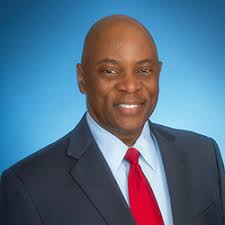
CEO and Chairman of the Board of Directors at K12
What His Current Focus Is: Mr. Davis is the CEO of K12, a technology-based education company and leading provider of online curriculum and school programs for students in pre-K through high school. As CEO and Chairman, he focuses on strengthening the K12 organization, its operations, and its academic programs. He is the person responsible for K12’s meteoric rise over the last decade.
How He’s Transforming the EdTech Space: Under his helm, K12 is driving innovation and advancing the quality of education by delivering state-of-the-art, digital learning platforms and technology to students and school districts across the globe. K12’s curriculum serves over 2,000 schools and school districts and has delivered millions of courses over the past decade. K12 is a company of educators providing online and blended education solutions to charter schools, public school districts, private schools, and directly to families. The K12 program is offered through more than 70 partner public schools and school districts and public and private schools serving students in all 50 states and more than 100 countries.
What His Background Is: Mr. Davis received an MBA from the Wharton School of the University of Pennsylvania, an MS in Engineering Computer Science at the Moore School of the University of Pennsylvania, and a BS in Engineering from Stevens Institute of Technology.
What May Surprise You About Him: With a personal passion for serving children and helping them achieve higher levels of success, Mr. Davis founded the JANDT Foundation to aid minority children in attending private and parochial schools in the Washington, DC area.
Twitter: @K12bloggED
Email: N/A
2. Sal Khan

Founder and Executive Director of Khan Academy
What His Current Focus Is: Sal Kahn is an American educator who has founded both an online education platform called the Khan Academy, as well as a physical school, the Khan Lab School. The Khan Academy is a free service that offers over 6500 video lessons on a range of topics and subjects, through primarily focused on math and science. The Khan Academy’s YouTube page has more than 2.9 million subscribers.
How He’s Transforming the EdTech Space: Khan’s goal is to reach as many students as possible, regardless of resources, and so his mission is to make his lessons accessible and free. Kahn’s videos, therefore, have become vital educational resources for rural African and Asian students.
What His Background Is: Kahn graduated from MIT with a Bachelor’s of Science in math, electrical engineering, and computer sciences; he then earned an MBA from Harvard. Kahn worked hedge fund analyst. As his online tutoring and education videos gained popularity, he quit his hedge fund position in 2009 to shift his focus to crafting and developing his online education endeavors.
What May Surprise You About Him: The Khan Academy began as a way for Kahn to tutor his cousin long-distance.
Twitter: @khanacademy
Email: [email protected]
 Principal Product Manager on the #MicrosoftEDU Team
What His Current Focus Is: Mike Tholfsen is the Principal Product Manager on the Microsoft Education team. He mainly focuses on OneNote Class and Staff Notebooks, Learning Tools and Microsoft Teams. He has spent over 20 years at Microsoft, helping to shape their education division. Mike works with educators and pupils from all over the world to create products that improve student outcomes. He works tirelessly to promote Microsoft Education and their products. This has resulted in an increased share of the edtech market for Microsoft.
How He’s Transforming the EdTech Space: Mike is transforming the edtech space by creating products that 1. Help teachers maximize their productivity; 2. Level the playing field for students from minority groups and those that have special needs; and lastly 3. Take advantage of the power and promise of personalized learning and artificial intelligence.
What His Background Is: Mike has a B.S. in Information Systems from the University of Washington. Although he does not have a background in education, he has worked hard to come up to speed. He has a firm grasp on the intersection of education and technology, as evidenced by the wonderful products that have been released under his watch.
What May Surprise You About Him: Mike’s favorite book is The Fourth Turning, by William Strauss and Neil Howe.
Twitter: @mtholfsen
Email: [email protected]

Founder and CEO of edX
What His Current Focus Is: Professor Anant Agarwal is currently a professor of Electrical Engineering and Computer Science at the Massachusetts Institute of Technology. He is also one of the founders and the CEO of edX, a MOOC (massive online open course forum) and non-profit organization. He created and taught the first edX course – one on circuits and electronics – which boasts an enrollment of over 155,000 students from over 160 countries across the world. In addition to his work at MIT and on edX, Anant hacks on an online circuit’s lab called WebSim in his free time.
How He’s Transforming the EdTech Space: Anant has long been an outspoken advocate of MOOCs, which strive to make education accessible to learners at low or no cost, worldwide. edX draws courses from the nation’s – and the world’s – leading educational institutions. They offer many free courses, and students can choose to pay a fee for a certificate. These fees help continue to fund free classes.
What His Background Is: Anant was born in Mangalore, India in 1959. He studied at St. Aloysius Mangalore, the Indian Institute of Technology Madras, and received his Ph.D. in Electrical Engineering from Stanford University. In addition to edX, Anant has worked on various engineering and computer technology endeavors including Sparcle, Alewife, Virtual Wires, LOUD, Oxygen, and Fugu.
What May Surprise You About Him: According to an interview on Life Hacker, Anant admits to having dabbled in standup comedy in college. He finds humor to be an essential quality of a strong leader.
Twitter: @agarwaledu
Email: [email protected]
 CEO of Renaissance
What His Current Focus Is: Daniel is focused on building an organization that delivers powerful student growth data and insights. He believes actionable data is key to personalized learning, and this data is at the heart of Renaissance solutions. Educators can use assessments to understand what each student has mastered, and then place students into the right level of instructional curriculum. Renaissance is also increasing equity and access through its recent acquisition of myON, a provider of digital literacy solutions. By adding myON, Renaissance provides students with unlimited access to more than 13,000 digital books.
How He’s Transforming the EdTech Space: Daniel and team have launched Renaissance Flow 360, a solution that drives personalized learning by bridging assessment to instruction. It improves learning outcomes for every student, and provides centralized data on student mastery across multiple educational resources, including the top educational vendors.
What His Background Is: Daniel has nearly 20 years of experience in education. Prior to joining Renaissance in 2017, he was CEO of Adtalem Global Education (formerly DeVry Education), a global provider of educational services. He led Adtalem from 2006 through 2016 and drove its transformation from a domestic, single university to an industry-leading institution serving students around the world and across multiple disciplines.
What May Surprise You About Him: Daniel was brought up in a family that highly valued education, especially varied educational experiences. In fact, their rule was, “You can go to any college you want, as long as it’s Michigan.”
LinkedIn: https://www.linkedin.com/in/dmhamburger18/
Email: [email protected]
6. Bill Latham
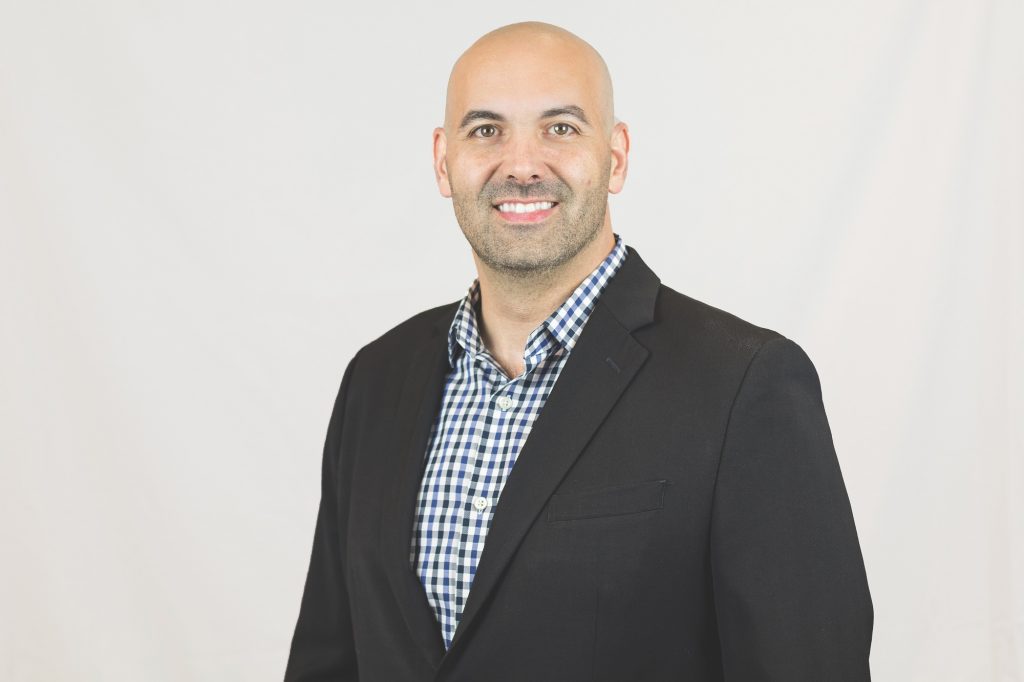 CEO, MeTEOR Education
What His Current Focus Is: Bill Latham is CEO and senior program designer at MeTEOR Education, a company that inspires and supports communities and their students in creating transformational learning experiences. Focused on the strong interplay between pedagogy and support spaces, Latham is a leading global advocate for the constant, consistent support of best-practice instruction through living classroom environments. He and his team’s designs have led to measurable increases in basic literacy, collaborative learning, and complexity of student tasks at all grade levels. Latham is connected with leading global researchers and academics in the field, employing the latest best practice findings as he leads design work for classrooms, school buildings, and broader school systems.
How He’s Transforming the EdTech Space: Bill is a leader in the design and implementation of holistic, high-impact learning experiences and environments, he has consulted with schools, districts, and governmental agencies across the Western Hemisphere on the design, outfitting and implementation of classroom and school environments aligned to critical learning priorities for more than 15 years. He and his team have directly served more than 1,000 schools in the United States alone. Latham is an architect of the human engagement by design methodology. He focuses on the integration of foundational engagement frameworks, technology, furnishings, and space to drive specific-learning 21st Century college and career-ready outcomes. He is the co-author of the book Humanizing the Education Machine: How to Create Schools That Turn Disengaged Kids Into Inspired Learners (Wiley; November 7, 2016).
What His Background Is: Bill holds a B.S. degree in Chemistry and an MBA from the University of Florida.
What May Surprise You About Him: He is active in martial arts and competes at a national level.
Twitter: @BillLatham3
Email: [email protected]
7. Arne Bergby
 CEO of itslearning
His Current Focus: Arne joined itslearning in 2004. Passionate about education and helping students and teachers succeed, he has led itslearning to be Europe’s largest provider of educational learning platforms. As CEO, his focus is on making the student-centered teaching and learning platform the ideal one stop shop for creating and delivering courses and assessments, managing standards-aligned content, enabling communication and collaboration for teachers, parents and students, and more.
Put another way, itslearning strives to remain at the heart of education. Under Arne’s leadership itslearning continues to gain market share in the United States as it partners with Houston (TX) Independent School District, Forsyth County (GA) Schools, Fort Worth (TX) Independent School District, Metropolitan School District of Wayne Township (IN) and San Bernardino (CA) City Unified School District – to name just a few. Designed for teachers and how they want to teach, itslearning is a cloud-based learning platform used by millions of teachers, students, administrators and parents around the world. It can be found at all levels of education, from primary schools to universities, helping teachers make education more inspiring and valuable for today’s students.
How He’s Transforming the EdTech Space: Arne is working to transform the education space by overseeing the continuous improvement and rise of itslearning as one of the world’s most robust and popular learning management systems. itslearning has over seven million active users worldwide, mainly in the United States, Norway, Sweden, Denmark, the Netherlands, the United Kingdom, France, and Germany. Made for today’s classroom, itslearning is one of the most innovative products in the global education sector.
His Background: Previously, Arne served as managing director of Tieto, one of the largest ICT companies in Europe. Arne received a Master of Management degree from the Norwegian Business School in 1987. He is a member of the Educational Consultants Network, K-12 Assistive Technology Professionals, and is on the Board of Directors of G.C. Rieber.
What May Surprise You About Him:
He’s fiercely competitive. Whatever your game — skiing, running, even cooking — he’s always up for good-natured competition.
Twitter: @ArneBergby
Email: [email protected]
8. Todd Brekhus

President of myON at Renaissance Learning
What His Current Focus Is: Todd believes that literacy, student choice, and personalized learning are the three keys to transforming learning for all students. myON’s expansive digital content library and literacy tools, paired with Renaissance’s complementary reading practice and assessment offerings, enables the company to deliver a comprehensive, innovative suite of reading solutions to educators and students worldwide. Todd and his team work to inspire the love of reading and learning by leveling the playing field with unlimited access to books. He is a lifelong advocate of reading and literacy.
How He’s Transforming the EdTech Space: Through myON’s literacy ecosystem, Todd and his team offer more than 4 million students instant and unlimited access to more than 13,000 enhanced digital books and daily news articles, real-time assessments, and close reading tools.
What His Background Is: As the President of myON at Renaissance Learning, Todd is focused on product development and providing educators tools to create a personalized learning environment. Before joining the edtech business community, he spent eight years in education as a teacher, department chair, and technology director. He has led successful edtech companies including Capstone Digital, PLATO Learning, Learning Elements, and MCI WorldCom, where he helped develop and implement the Marco Polo program.
What May Surprise You About Him: In high school, Todd was a competitive slalom ski racer.
Twitter: @ToddBrekhus
Email: [email protected]
9. Jay King
 COO of StudySync®
What His Current Focus Is: Jay is presently focused on serving as the COO of StudySync. Over the past year, Jay has traveled to several districts throughout California, Illinois, and Arizona to meet and learn from StudySync users, including districts in Geneva, Elgin, Huntley, St. Helena, Paradise Valley, and more. Recently, Jay has been instrumental in bringing StudySync’s new production studio to Petaluma, CA, his hometown. As a product of the Petaluma public school education, Jay believes that Petaluma encompasses a small-town culture, with strong community values, which are common throughout the U.S. and indicative of how K-12 education can have such a positive impact on society. The studio will be the site where several media productions are created, including StudySync® TV.
How He’s Transforming the EdTech Space: In 2009, Jay co-founded StudySync with StudySync’s CEO, Robert Romano. Their vision was to leverage technology and social learning to engage students in the great works of literature. As one of the nation’s most highly regarded literacy curriculums, StudySync provides these digitally-connected students with media-rich learning experiences, real-world topics, and a direct read-write connection, while giving teachers flexible digital tools and engaging print resources supporting teaching, differentiation, and standards-based assessment. In 2013 StudySync partnered with McGraw-Hill Education to exclusively distribute StudySync in the k – 12 market. The product has also received numerous prestigious awards including the coveted Innovation Award from the Association of Educational Publishers (AEP).
What His Background Is: Previously, Jay co-founded EdVantage Software, also with Robert Romano, and led the development of several award-winning products. After its acquisition of EdVantage, Jay led Riverdeep’s web development team, winning the prestigious CODiE award. With StudySync, Jay has led the development of StudySync’s ELA and SyncBlast products, which have gained wide acceptance and accolades. Jay has an M.S. in Accounting from Santa Clara University.
What May Surprise You About Him: Jay is a certified sports fanatic. He is probably watching ESPN right now.
Twitter: @johnjking
Email: [email protected]
10. Chris Twyman
 Co-Founder & CEO of BoomWriter Media
What His Current Focus Is: Chris’s passion is to make sure that edtech doesn’t widen the achievement gap. As an entrepreneur in the education industry, either you target your product at the schools that can afford to pay or you make sure everyone can use it and find a way to fund the business. The latter is a much bigger challenge than the former, but that is the mission of BoomWriter. If it is successful, it will narrow the achievement gap. Chris’s investors understand this mission, and everyone sleeps more soundly because of that.
How He’s Transforming the EdTech Space: Many kids don’t like writing, but they do like using their imaginations. BoomWriter allows students to inject imagination into their writing, making it super engaging. Engaged kids produce better work, and better writing impacts all other areas of education.
What His Background Is: Chris has always worked in the technology space. From his start in the UK through to living in Boston, he has worked at large software companies like Sybase, Computer Associates, and Tibco. Before founding BoomWriter, Chris was the founder and CEO of an HR technology start-up. Somewhere in there, he also squeezed in an MBA and is a partner in a small VC fund based in Miami.
What May Surprise You About Him: He has run the Boston Marathon twice and is a paid-up member of the Bigfoot Research Organization.
Twitter: @BoomWriter_
Email: [email protected]
11. Angela Maiers

Founder of Maiers Educational Services, Teacher, Writer
What Her Current Focus Is: With over 25 years of experience in education, Angela Maiers is a strong proponent of helping students feel passionate about learning and schools. She is the creator of the You Matter Movement and an advocate for the Genius Hour in schools. The You Matter Movement is centered on helping teachers help students feel seen, recognized, and valued which, in turn, helps them plug into their education. The Genius Hour is an idea she borrowed from Google’s 20% Time policy for their engineers. Under this theory, students are given (at least) one class period per week to pursue their passions under the tutelage of a teacher.
How She’s Transforming the EdTech Space: Maiers works to help teachers and students understand and employ the innovative power of technology. Through Twitter, Instagram, and other social media, Maiers encourages teachers and other adults to send Mattergrams, messages tagged #YouMatter that encourage students and children to recognize their power to impact the world in a positive way.
What Her Background Is: Maiers is an alumna of the University of Iowa. She received a Bachelor’s in Education. She also holds a Master’s degree in Education and Curriculum from Drake University. She has 28 years of teaching experience across a range of grade levels, and her work has impacted over 78,000 American classrooms.
What May Surprise You About Her: Maiers claims that the elementary school job of being the milk carrier is the most important, most coveted of responsibilities, and can be used as a microcosm of viewing your place in the world.
Twitter: @angelamaiers
Email: [email protected]
12. Nichole Pinkard
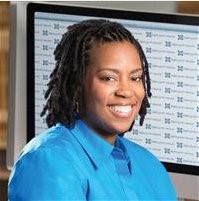 Associate Professor at DePaul University in the College of Computing and Digital Media
What Her Current Focus Is: Pinkard is an Associate Professor at DePaul University in the College of Computing and Digital Media. Her research is focused on the design and use of pedagogical-based social networks, new media literacy learning outcomes, ecological models of learning and developing pathways for urban youth. She is a strong advocate for digital literacy and believes that it will lead a revolution in the world of education. This is why she founded the Digital Youth Network in 2006. This Network seeks to help educators learn to teach with technology and digital media. It further seeks to ensure that technology is available to everyone, regardless of their socioeconomic background.
How She’s Transforming the EdTech Space: Pinkard founded the Digital Youth Network (DYN) in 2006, and she has been creating initiatives that transform the edtech space every since. The DYN model begins with sixth to eighth-grade education and focuses on mandatory in-school media arts classes and optional after-school programs. She was also a co-founder of YOUmedia, a public learning space for teens that immerses students in a context of traditional media to produce new media artifacts like games, videos, and virtual worlds. In April 2010, Pinkard co-founded RemixWorld along with Robert Chang. RemixWorld is a cloud-based social learning network for primary and secondary education, which seeks to safely and securely connect children and adolescents with curriculum, extended learning, and mentorship opportunities.
What Her Background Is: Pinkard holds a B.S. in Computer Science from Stanford University, an M.S. in Computer Science from Northwestern University, and a Ph.D. in Learning Sciences from Northwestern University.
What May Surprise You About Her: Nothing. We mean that in a good way.
Twitter: @npinkard
Email: Nichole can be contacted via her website: http://digitalyouthnetwork.org/#our-team
13. Steven Anderson

Co-founder of #EdChat on Twitter, Education Consultant
What His Current Focus Is: Steven Anderson is an educational expert who focuses on the fusion of technology and social media in pedagogy. Anderson is a blogger and a former classroom teacher and district technology director. He hosts the weekly #EdChat on Twitter, which boasts over 1500 participants each week. Anderson’s #EdChats have earned him the Twitterer of the Year distinction twice.
How He’s Transforming the EdTech Space: Anderson works to help teachers meet students in the places where they live: the digital universe. He travels the country, speaking at schools and conferences about how to safely and appropriately integrate social media in classrooms and how to leverage students’ knowledge of technology to help them learn and grow.
What His Background Is: Anderson is a native of North Carolina, where he still currently resides. He earned his bachelor’s degree in Middle-Grade Math and Science Education from Western Carolina University and then obtained a Master’s degree in Instructional Technology from East Carolina University. He was the director of technology at Winston-Salem/Forsyth County Schools in Winston-Salem, NC.
What May Surprise You About Him: Anderson is also the author of 3 books geared toward educators and administrators about efficacy in using technology.
Twitter: @web20classroom
Email: [email protected]
14. Rafranz Davis
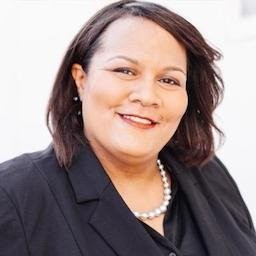 Executive Director of Professional and Digital Learning for Lufkin ISD
What Her Current Focus Is: As Executive Director of Professional and Digital Learning, Rafranz helps educators to effectively implement digital learning into their classrooms. She is a speaker, blogger, and an edtech advocate who is never afraid to speak truth to any situation. She is a voice for diverse perspectives in edtech, which have been missing since edtech’s inception. She is the author of The Missing Voices in EdTech: Bringing Diversity into EdTech, a book that puts a spotlight on the fact that the education community has failed to consider the viewpoints of people of color in discussions about edtech.
How She’s Transforming the EdTech Space: By advocating for diverse populations in edtech, she is giving a voice to a population that edtech influencers and policy makers have never acknowledged. Because of her, and people like her, discussions around the intersection of edtech and diversity have increased exponentially. Just visit your favorite edtech blog or read the keynote and presentation titles at your favorite conference. Not to mention, when it comes to the implementation of edtech in an educational environment, Rafranz is a trailblazer.
What Her Background Is: Rafranz obtained an associate’s degree from Navarro College and bachelor’s and master’s degrees from Texas A&M University–Commerce. Since her undergraduate days, she has devoted her life to helping educators implement technology in educational environments. She was a middle school math teacher before becoming a curricular strategist and technologist.
What May Surprise You About Her: Rafranz is never afraid to call a spade a spade.
Twitter: @rafranzdavis
Email: Rafranz can be contacted via her website: http://rafranzdavis.com/

Founder & CEO of Bloomz, Inc.
What His Current Focus Is: Chaks is focused on continuing the fast growth of the Bloomz app, an easy-to-use parent-teacher communication tool for today’s parents, who are used to communicating through their smartphones. Bloomz has a familiar social media interface that encourages parents to participate in their child’s learning and connect with their teacher through a secure platform. With the launch of their school-wide offering, Chaks has also created a powerful premium subscription for school administrators that includes useful data analytics, premium access for all their members, and unlimited membership and storage.
How He’s Transforming the EdTech Space: Chaks has helped bring Bloomz to more than 39,000 schools around the world by combining a social networking experience with a comprehensive set of tools—messaging and media sharing, calendar, signups, and student behavior tracking—in one friendly, easy-to-use app.
What His Background Is: Before creating Bloomz, Chaks applied his computer science and engineering education at companies such as Microsoft, AskMe, and most recently as the vice president of product and partnerships at GlobalScholar, where he focused on building an end-to-end learning platform to connect teachers, students, and administrators. He founded Bloomz, Inc. in January 2014 and serves as the Founder and CEO.
What May Surprise You About Him: Chaks created Bloomz after he and his wife both fell ill and had communication difficulties with his children’s teachers.
Twitter: @achaks
Email: [email protected]
 Co-founder and chief scientist at KinderLab Robotics, Inc., and a professor at the Eliot-Pearson Department of Child Study and Human Development and the Computer Science Department at Tufts University, where she directs the DevTech research group.
What Her Current Focus Is: Dr. Bers is focused on innovative learning technologies to promote positive youth development. Her research focuses on how technology, such as robotics and programming languages, promotes new ways of thinking and learning in early childhood. With Dr. Bers’ approach, introducing computational thinking in early childhood, students learn to be creators and collaborators with technology and with each other. Her most recent book explores coding as a “new language”, and how it can be presented in a playful context, merging STEM/STEAM and coding with social-emotional learning.
How She’s Transforming the EdTech Space: Dr. Bers developed the KIBO robot kit for children 4–7, which is programmed with wooden blocks without keyboards or screens, and is used in 52 countries. She also co-developed the free ScratchJr programming language with over 9.5M downloads.
What Her Background Is: Dr. Bers did her undergraduate at Buenos Aires University, and received a Master’s degree from Boston University and a Master of Science and PhD from the MIT Media Laboratory, where she studied under Dr. Seymour Papert, world-renowned pioneer in developing the first programming language for children, LOGO. She has received prestigious awards, has written four books, and in 2014 did a TEDx talk titled “Young programmers – think playgrounds, not playpens.”
What May Surprise You About Her: Dr. Bers is from Argentina, has three children, speaks four languages, dances tango, and has worked all over the world.
Twitter: @marinabers
Email: [email protected]
17. Vicki Davis

Creator of the Cool Cat Teacher Blog, IT Administrator and Teacher at Westwood Schools
What Her Current Focus Is: Vicki Davis is a current school teacher and blogger. She is also a freelance writer who focuses on professional development for teachers, inspiring them to use technology and build meaningful relationships with their students. Through her blog and her two books, she reaches hundreds of thousands of teachers, inspiring them to share their trials and triumphs and learn from one another, creating a holistic, wholesome environment to foster student achievement.
How She’s Transforming the EdTech Space: Davis’ blog, the Cool Cat Teacher Blog, has garnered much attention and numerous awards, including the Edublogger Award for Best Teacher Blog. Her current project, the global collaborative app project MAD About Mattering, encourages students to create “apps that matter” in collaborative environments, applying the skills and knowledge they learn in the classroom to better the world around them.
What Her Background Is: Davis has been a full-time teacher and IT director at a school in Camilla, Georgia since 2002. She was inspired to begin pursuing professional and teacher development when she began to feel stretched thin – ineffective in the classroom and not as present as she would have liked at home with her children. Two of her children have learning differences, and she began her educational ministry in hopes to better understand students who learn differently like her own children.
What May Surprise You About Her: Davis and her students have traveled all over the world, including to Qatar, India, China, Hawaii, and UAE to present to teachers worldwide about the impact of technology.
Twitter: @coolcatteacher
Email: Vicki can be contacted via her website: http://www.coolcatteacher.com/contact/

Co-founder of #EdChat, Creator of 30 Goals Challenge for Education
What Her Current Focus Is: Shelly Sanchez Terrell is an international speaker and e-learning and digital learning specialist. She has worked with teachers and taught English language learners in over 20 countries. She has also been recognized as one of Microsoft’s Heroes for Education for her work promoting teacher-driven professional development and the integration of technology in the classroom. Terrell offers webinars and online presentations each week to reach out to teachers across the United States and the world.
How She’s Transforming the EdTech Space: Terrell has inspired over 10,000 teachers to transform their classrooms through her 30 Goals Challenge, which guides the teacher to integrate new technology in his or her classroom, avoid the dreaded “teacher burnout,” and reconnect with students. The Goals Challenge helps teachers set both short- and long-term goals to reinvigorate his or her passion for education.
What Her Background Is: Terrell received her Bachelor’s degree in English from the University of Texas at San Antonio, and her Master’s degree in curriculum instruction ESL from the University of Phoenix. She worked as an ESOL teacher and social media community manager before shifting her focus to teacher training and outreach.
What May Surprise You About Her: Terrell has not only taught English to language learners in the United States but has taught abroad in Germany and to online learners in Spain as well.
Twitter: @shellterrell
Email: [email protected]
19. Eric Sheninger
 Award-Winning Former Principal and Author
What His Current Focus Is: Eric is an award-winning former principal who is changing the way that schools think about and also utilize technology. His primary focus is helping schools harness the power of edtech and use it not only to connect with students but also to help them achieve academically. He is an accomplished speaker and author who tweets about all things education.
How He’s Transforming the EdTech Space: Eric is an avid blogger, and his thought-provoking and practical posts shed light on the need for thoughtful technology implementation, more effective learning strategies, and stronger school branding, among other ideas. He is helping schools lead and learn in a digital age. He is responsible for Pillars of Digital Leadership, which is a framework that seeks to transform school cultures.
What His Background Is: Eric is a senior fellow and thought leader on digital leadership with the International Center for Leadership in Education. Before that, he was an award-winning Principal at New Milford High School. Under his helm, the school became a globally recognized model for innovative practices in edtech. Sheninger holds two bachelor’s degrees — a B.S. from Salisbury University and a B.S. from University of Maryland Eastern Shore — and a master’s in education from the East Stroudsburg University of Pennsylvania.
What May Surprise You About Him: Even with his busy schedule, he has found time to write 5 books.
Twitter: @e_sheninger
Email: [email protected]
20. Lucy Gray

Education Consultant, Co-founder of the Global Education Conference
What Her Current Focus Is: Lucy Gray is an educational consultant, Apple Distinguished Educator, and Google Certified Teacher. Gray’s consulting is focused on presenting to teachers and staffs about best practices in technology integration, information literacy, global education initiatives, and harnessing the power of social media. Currently, Gray is working as an innovation coach, mentoring elementary school teachers to explore and create mobile learning opportunities.
How She’s Transforming the EdTech Space: Gray creates hands-on experiences for teachers, coaching them through the process of creating cultures of creativity and innovation in their schools. Instead of simply presenting or lecturing, she dives into schools, meeting regularly with their employees to promote positive change. She also works as a liaison in transitioning schools toward 1:1 technology integration.
What Her Background Is: Gray received her degree in art history and elementary education from Beloit College in 1989, followed by a Master’s degree in technology in education from National-Louis University in 2002. She has taught in the Chicago Public School system, University of Chicago Laboratory Schools, and has worked in various capacities at the University of Chicago.
What May Surprise You About Her: Gray makes all of her consulting presentations available for free on her web page at http://www.lucygrayconsulting.com/presentations.php
Twitter: @elemenous
Email: [email protected]
Conclusion
As you can see, there is no shortage of global edtech influencers out there. Who did we forget? Do you have any edtech influencers who you know and follow? Let us know.
Click here to learn more about the ranking methodology that we used to compile this Best MD Programs in America List.
Congratulations! If you represent a college or university that is included in this list, please collect your seal below.
Doctors do more than prescribe medication and perform surgeries. This highly-trained group works to understand the human body and the conditions that affect it while providing compassion-based treatment. If you have a strong desire to help people, you might choose to pursue a general medical degree. Others might prefer to specialize in more specific areas of medicine such as forensics, anesthesiology, or medical research.
Career options available to those who hold a medical degree are plentiful. You can consider searching for jobs in any of these fields:
According to the United States Bureau of Labor Statistics, individuals who earn a medical degree are estimated to earn a median annual salary of $208,000. The need for highly-qualified physicians and surgeons is expected to increase according to the same data.
Best MD Programs in America
Harvard Medical School (HMS) has a specific program designed to help medical students earn a prestigious degree and gain valuable residency experience through a comprehensive, community-focused program. Available in two tracks, Pathways and Health Sciences Technology (HST), the latter of which focuses on students with a desire to pursue a medical career concentrated on biomedical research. The comprehensive Pathways track was launched in 2015 as a Harvard Medical School Initiative that places greater emphasis on the clinical experience. Harvard Medical School does not accept transfer students.
The curriculum at HMS covers a range of topics based on its two tracks including advanced clinical and basic/population science experiences in the Pathways track and quantitative understanding of modern biomedical sciences and pathophysiologic processes in the HST track. Harvard Medical School is accredited the American Association of Medical Colleges (AAMC), the Liaison Committee on Medical Education (LCME), the national accrediting body for MD degree programs.
Located in Palo Alto, California, Stanford Medical School is at the forefront of National MD programs with a philosophy that centers on improving health through leadership, collaboration, and innovations in education, healthcare, and all-inclusive research. Stanford Medical School employs world-class educators who focus on the intellectual substance of the medical profession.
The flexible curriculum emphasizes clinical practice and biomedical research that gives students the opportunity to customize their medical education experience based on their unique interests. In addition to its traditional medical program, Stanford Medical School also offers several advanced degrees in tandem with its MD program. Stanford Medical School holds accreditation from the American Association of Medical Colleges (AAMC), the Liaison Committee on Medical Education (LCME), as well as Accreditation with Commendation status from the Accreditation Council for Continuing Medical Education (ACCME®).
Founded in 1893, Johns Hopkins School of Medicine has a rich history of educating the best and brightest students in the medical field. Affiliated with top-ranked John Hopkins hospital, students who are admitted to Johns Hopkins Medicine have the unique opportunity to engage with world-class physicians through specialized instruction. The curriculum at Johns Hopkins School Medicine is rigorous and is designed to prepare medical students with the tools necessary to make a genuine impact in a rapidly changing medical landscape. The John Hopkins Medicine curriculum emphasizes core medical disciplines while ensuring that students understand the connection between medicine and research. In addition to its traditional medical degree program, Johns Hopkins School of Medicine offers a distinctive Medical Scientist Training program that reinforces its commitment to educating the world’s most skilled physician-scientists.
General admissions prerequisites and requirements for an MD include a Medical College Admissions Test (MCAT) taken in the four years before the student’s intended matriculation date and a bachelor’s degree from a US Department of Education accredited institution. Johns Hopkins School of Medicine holds its accreditation through the Liaison Committee on Medical Education (LCME).
UC San Francisco School of Medicine’s traditional MD programs focuses on engaging students in ways that enhance their breadth of knowledge, gives them real-world medical experience, all while providing direction on choosing a path in the medical profession. The curriculum centers on medical problem-solving, case-based courses delivered in both a classroom environment and a clinical skills center. All courses offered in the MD program are based on a pass/fail grading system.
Admissions requirements for the MD program at UC San Francisco include the successful completion of a bachelor’s degree, a qualifying MCAT score, as well as the ability of the applicant to meet health and technical criteria as outlined on the admissions website. The University of California – San Francisco School of Medicine holds LCME accreditation.
Students can earn their MD from the University of Pennsylvania Perelman School of Medicine located in Philadelphia. Providing students with a module-based curriculum, graduates of the program will have gained extensive medical knowledge preparing them for a rewarding medical career. The MD program at Perelman School of Medicine begins with core medical principles and goes through a series of in-depth modules that culminate in individualized medial electives chosen by the medical student and course that focus on professionalism in the field.
Throughout the MD program, students are assessed using a variety of methods such as traditional exams, clinical skills assessments, oral presentations, simulated exercises, individual and group projects, as well as academic papers. Graduates of the program are required to uphold the standards set forth by the Perelman School of Medicine as defined in the required and elective courses information.
How to Choose the Right Program
You can choose the perfect MD program based on your future career aspirations and each school’s academic course load. Some medical schools will focus more specifically on traditional medicine, while others give you a greater opportunity to explore opportunities outside of the medical field. After this, you can rank schools in order of convenience, price, and accrditation.
Who accredits medical degree programs?
Understanding the accreditation medical schools possess is the key to ensuring that you receive a top-notch education that will prepare you for a future medicine and related fields. Every medical school in the United States, even those with an online component, is required to maintain some type of accreditation with a state, regional, or national accrediting agency. The main accrediting body for U.S. medical schools is the American Association of Medical Colleges (AAMC).
Beyond AAMC accreditation, many medical schools opt to maintain accreditation status with Liaison Committee on Medical Education (LCME), a national accrediting body for MD degree programs. This optional accreditation serves to hold the schools accountable for offering a well-rounded curriculum that adequately prepares medical students for their future profession. Not all of the top schools hold this accreditation, but it is one more factor to consider before making a choice.
How long does it typically take to get a degree in medicine?
Most medical schools allow you obtain your MD in eight years, which includes the time it takes to earn a bachelor’s degree before admission. Also, medical students are required to complete a residency program which can range from an additional three to eight years. More extensive training may be required depending on the timing of the courses offered and your enrollment date.
What does the curriculum typically include?
The modern medical school curriculum should include a history of medicine, including a look at medical origins and how they evolved into what is now known as modern medicine. Today’s medical school courses focus on the future with curriculums dedicated to incorporating modern medical technology to advance the profession, working with diverse populations and a patient-centered approach to healthcare.
In addition to medical-specific competencies, students will also learn how to communicate more effectively both orally and in writing. You should be prepared to take a variety of courses designed to enhance your communication skills, which will be imperative in the medical profession.
A well-rounded medical education is based on undergraduate prerequisite courts that provide the student with a solid academic foundation to build upon. Common coursework required before medical school admission includes biology, chemistry, and several other science-related courses.
How can I finance my education?
Obtaining your medical degree can be quite expensive. You can finance this dream by applying for financial aid and grants through the Free Application for Student Aid (FAFSA). Grants offered by the federal government do not need to be repaid upon graduation.
Some of these top medical schools also have scholarships available to eligible students on a first-come-first-served basis. These scholarships do not need to be repaid but might be based on your grades, test scores, and other criteria. Similar to a scholarship, some colleges offer work-study programs that allow you to work off your debt in various positions both on and off campus.
For the remaining amount, it may be necessary to take out a student loan, which can be paid back following graduation. Look for loans that have low-interest rates and don’t impose a penalty for prepayment. The federal government tends to offer more advantageous loan programs compared to private lenders.
What are the employment prospects for a medical school graduate?
Understanding the employment prospects for those who receive their MD can vary based on the career path you decide to take. To give you an idea of what is expected for this field in the coming years, we will take a look at the most popular careers that many people with this degree choose to pursue. All data is based on the figures available from the United State Department of Labor based on projects made from 2016 to 2026.
Anesthesiologists: This medical specialty area is expected to see a 15 percent increase in the number of jobs available over the coming decade. The profession is growing slightly ahead of the average employment rates throughout the country. There are currently 33,000 positions with this title, and the annual salary is about $453,687.
Surgeons: This medical specialty represents an estimated 14 percent increase in the number of available jobs. Approximately 45,000 jobs were available in 2016 with another 6,500 set to become available by the year 2026. for those who secure a general surgery position, the annual salary is approximately $409,665.
Psychiatrists: This position is expected to continue to grow by about 11 percent in the coming years. There are currently 27,500 positions available in this field, making it somewhat difficult to break into. The expected annual salary for a psychiatrist is $255,543.
Best Traditional and Online Bachelor’s in Elementary Education Programs in America
Click here to learn more about the ranking methodology that we used to compile this Best Traditional and Online Bachelor’s in Elementary Education in America list.
Congratulations! If you represent a college or university included in this list, please collect your seal below.
Elementary teachers are more than just babysitters while parents are at work. These educators invest in the success of their students’ futures, starting at an early age. You might choose an elementary teacher major just because you love the idea of shaping younger generations, or maybe you like children or the subject you want to teach.
The choices available for those who hold a degree in elementary education are almost endless. You can consider searching for jobs in any of these fields:
A kindergarten and elementary school teacher with a bachelor’s degree in elementary education is estimated to earn $55,490 annually, according to the United States Bureau of Labor Statistics. Availability for these positions is currently slated to grow at an average rate in the next ten years, according to the same data.
Best Traditional Bachelor’s in Elementary Education Programs
Purdue University is at the forefront of a modern-day elementary education degree. With the frequent changes in education, Purdue’s curriculum teaches future educators how to ensure that students thrive in a positive environment while guaranteeing diverse cultures are treated fairly. With 43 interstate licensing agreements, graduates will be able to teach almost anywhere in the U.S.
Purdue is accredited by CAEP (Council for the Accreditation of Educator Preparation). Its degree focuses on two key themes: social justice and diversity, and STEM education as well as four key strands: innovation, collaboration, advancement and leadership and requires 128 credit hours to graduate. Admission requires a 2.8 GPA, and transfer students must be transferring at least 12 credit hours.
Join other students at the renowned College of Education and Human Development at Texas A&M University, located at College Station. Those students who wish to teach elementary education can pursue a Bachelor’s of Science degree with a major in interdisciplinary studies, which focuses on the diverse instructional roles that public school teachers face. There is also a separate program for students wanting to focus their degree on English elementary education.
To be accepted into the teaching program, a student must obtain proof of taking the SAT or ACT, 42 hours minimum of pre-professional degree program coursework, 32 hours of core curriculum with all grades being higher than a C, completion of certain prerequisite courses, and a GPA of 2.75 or higher. A minimum of 123 credit hours is required to graduate from Texas A&M University’s Education and Human Development program.
Marshall University has been shaping teachers through training and education for well over a century. With three traditional elementary education degrees – Early Childhood Education, Early Education PreK-K, and Elementary Education K-6 – this University allows students to choose their unique path towards their careers. Students will learn core academics as well as the art and science of teaching children.
To be considered for this Council for the Accreditation of Educator Preparation accredited college, students’ undergraduate GPA must exceed 2.8. At least 120 credit hours are needed to graduate.
Louisiana Tech University’s College of Education thrives on its commitment to “being a leader in education; a catalyst for learning, research, and action.” The three programs offered for a degree in elementary education in Louisiana Tech’s Teacher Education Program – Early Childhood PreK-3, Elementary Education 1-5, and Elementary Special Education – set students up for success in today’s classrooms.
If you want to be considered for this program, an applicant must have 46 hours of college credit and a minimum C average. You must take 126 credit hours to graduate, including general education coursework, as well as other coursework that is flexible depending on the students’ interests. This prestigious program is accredited by the CAEP (Council for the Accreditation of Educator Preparation).
Be a global leader of excellence in the education by earning a teaching degree at The College of Education at The University of Texas at Arlington. This program focuses on fostering critical, creative thinkers in professionalism, knowledge, and leadership.
The University of Texas at Arlington is well-known for its prestigious Elementary Education Bilingual and ESL program which arms teachers with strategies for providing instruction to students whose native language is not English. With the option of three different tracks – 4-8 English Language Arts and Reading and Social Studies, 4-8 Math and Science, and 4-8 Generalist, students can cater their education to the concentration of their choosing. Applicants must have a GPA of 2.75 or higher and must have a passing score or an exemption from the TSI Assessment.
Best Online Bachelor’s in Elementary Education Programs
Liberty University provides students with the necessary tools to help children be successful throughout their educational journeys by way of coursework and hands-on experience options. The curriculum at Liberty University emphasizes current trends and practices in both public and private education to provide you with the best age-appropriate classroom management skills. Students will receive training in critical learning theories, teaching best practices, and cutting-edge teaching technology while being prepared with practical, ethical, and legal understanding to meet the challenges of current-day teaching environments. Professionals with real-world experience will teach the coursework, and you will have access to online tutors, 24/7.
Up to 90 credit hours are transferable to this Council for the Accreditation of Educator Preparation (CAEP)accredited program, which requires 120 hours total to complete.
Want to make meaningful contributions to students’ lives? Personalize your journey along the way by earning your accredited Bachelor’s degree in Interdisciplinary Studies online at Western Governors University. This school offers a mixture of coursework, assessments, and a preclinical experience that includes observation hours to prepare you to meet licensure requirements in any of the 50 states. With a Demonstration Teaching component hosted by a veteran teacher, your hands-on experience will help build a career portfolio in the subject of your choice.
This program, accredited by the Council for the Accreditation of Educator Preparation (CAEP), focuses on per term costs instead of per credit costs, allowing you to choose your length of study (typically 2-4 years) and how much you spend. Transfer credits average around 28 but are determined on a case by case basis.
Regis University is the package deal! Not only does the school offer the online courses needed to graduate with a Bachelor’s degree in Education, but the course requirements also fulfill the state of Colorado’s standards for licensure/endorsement. This detailed program emphasizes Jesuit ideals – serving others, striving for excellence, and reflective practice, integrating a practical application with academic theory, and a curriculum geared towards data literate and critical thinking students.
Graduation requires 120 credits, 75 of which may be transferred in (final credit transfer decision depends upon Regis faculty’s acceptance). To obtain a teaching license, students must complete field and student teaching hours in the state of Colorado.
The Baptist College of Florida has a rich history dating back to 1943 with famous Indian descendants attending as students. The Christian university’s elementary education program emphasizes knowledge and skill development through Christian values and spiritual growth. Topics of study include classroom management, child psychology, literacy development, and curriculum planning, taught by interactive assignments and online discussion forums, encouraging the diversity of ideas.
Graduating with an elementary education degree requires 127 hours, 18 of which are Biblical/Theological Foundation classes. To be admitted, students must be a high school graduate or have obtained a GED and must have an official copy of test scores from either the ACT or SAT.
Earning a Bachelor’s Degree in Elementary Education from Appalachian State University is one of the best decisions you will ever make in your life. The flexible program options of either full or part-time allow students to cater classes around their schedule. Students will learn from teachers with professional classroom experience and have the opportunity to focus on several concentration areas.
Graduating students must earn a minimum of 73 credit hours from Appalachian State University with 128 total hours. Obtaining this degree can take anywhere from 2.5 to 3.5 years depending on which path a student chooses. Students are also required to practice teaching in the field through an internship their senior year.
How to Choose the Right Program
You can choose the perfect program based on your future career aspirations and the academic course load each school provides. Some will focus more specifically on elementary education while others give you a more significant opportunity to study outside of the teaching field. After this, you can rank schools by convenience, price, and accreditation.
Who accredits a bachelor’s degree in elementary education?
Understanding the accreditation schools possess is the key to ensuring that you receive a top-notch education that will prepare you for a future in elementary education. Every school, including online programs, will have to maintain some accreditation with a state, regional or national accrediting agencies.
Beyond this accreditation, many will opt to maintain accreditation with the Council for the Accreditation of Educator Preparation (CAEP). This accreditation helps to hold the schools accountable for offering a well-rounded curriculum that adequately prepares students for the future. Not all of the top schools maintain this accreditation, but this is something students should review to make a decision.
How long does it typically take to get a degree in elementary education?
Most colleges and universities allow you obtain your degree in elementary education in four years, just as with a standard bachelor’s degree from other programs. Some course loads will require five years depending on the timing of the courses offered and your enrollment date.
What does the curriculum include?
The modern curriculum should include an emphasis on current trends and practices in both a public and private educational setting to provide you with the best age-appropriate pedagogical and classroom management skills. The curriculum should include critical learning theories, teaching best practices, cutting-edge teaching technology while being prepared with practical, ethical, and legal understanding to meet the challenges of current-day teaching environments.
Students should also gain a practical understanding of child psychology and development along with how to handle diversity issues in today’s classroom settings.
How can I finance my education?
Obtaining your bachelor’s degree can be an expensive endeavor. You can finance this dream by applying for financial aid and grants through the Free Application for Student Aid (FAFSA). Students are not required to repay grants offered by the federal government upon graduation.
Some of these top universities will also have scholarships available to eligible students on a first-come-first-served basis. Grades, test scores, and other criteria determine if a student is eligible for these grants. Similar to a scholarship, some colleges will offer work-study programs that allow you to work off your debt in various positions around campus.
For the remaining amount, you might consider taking out a student loan that can be paid back upon graduation. Look for investments that have a low-interest rate and don’t impose a penalty for prepayment. The federal government tends to offer more advantageous loan programs compared to private lenders.
What are the employment prospects for a bachelor’s in elementary education graduate?
The employment prospects for those who receive their bachelor’s degree in elementary education can vary based on the career path you decide to take. Let’s take a look at the most popular careers that many people with this degree choose to pursue to give you an idea of expectations. All data reflects the figures available from the United State Department of Labor found on projects made from 2016 to 2026.
Kindergarten and Elementary School Teachers: Kindergarten and elementary school teachers with a primary teaching degree should see a seven percent increase in the number of jobs available over the coming decade. It is growing roughly the same as the average employment rates in the country. There are currently 1,565,300 positions with this title.
School and Career Counselors: This career path has a faster than average growth rate that is expected to grow 13 percent in the coming decade. In 2016, 291,700 jobs were available in this field with an additional 36,700 expected in the next ten years. The annual salary is around $54,560.
Training and Development Managers: With a faster than average job growth rate, training and development manager position availability is expected to increase ten percent over the next 10 years. There are currently 34,500 positions available in this field. This position could be based in a human resource department or considered corporate management. The expected annual salary for a public relations specialist is $105,830.

Pedagogue is a social media network where educators can learn and grow. It's a safe space where they can share advice, strategies, tools, hacks, resources, etc., and work together to improve their teaching skills and the academic performance of the students in their charge.
If you want to collaborate with educators from around the globe, facilitate remote learning, etc., sign up for a free account today and start making connections.
Pedagogue is Free Now, and Free Forever!