
“`html
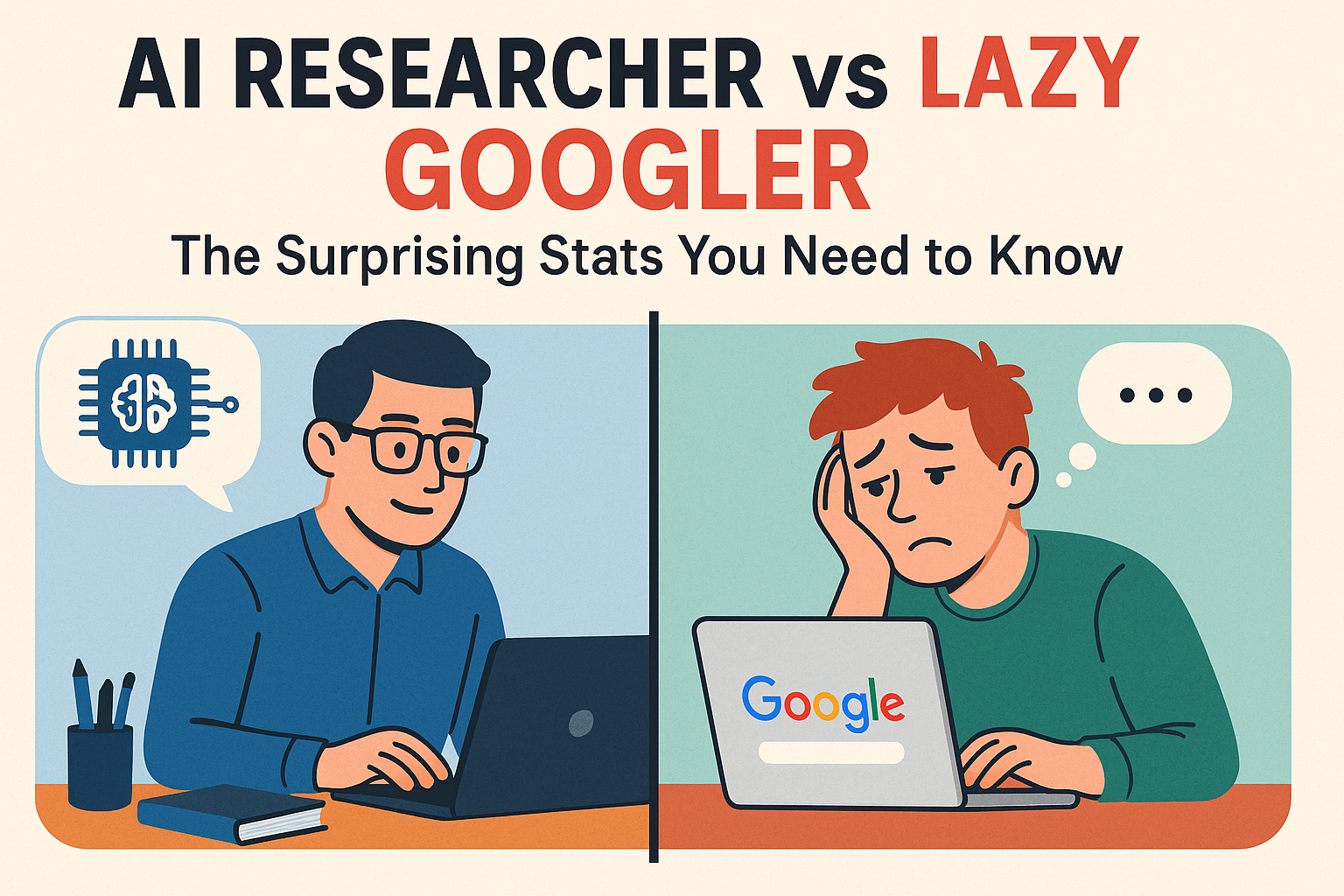
The way we search for information online is evolving, and the rise of artificial intelligence (AI) is at the forefront of this transformation. Traditional Google searches are fast becoming a relic of the past as more users turn to AI researchers for in-depth and insightful data. But what’s the real difference in behavior between these two groups? As it turns out, the data paints a compelling picture that suggests AI users are not only more engaged but also convert at an astonishing rate compared to their Googling counterparts.
1. The Conversion Rate Gap: Why AI Users Outperform Google Searchers
The statistics are eye-opening: AI users convert at a rate approximately five times higher than those relying solely on Google searches. But what does this mean? When we talk about conversion, we’re referring to actions that indicate a deeper level of engagement—whether that’s signing up for a newsletter, making a purchase, or taking any significant step that shows commitment. This stark contrast raises questions about the underlying factors driving engagement.
One of the main reasons for this impressive conversion rate can be traced back to user intent. When someone turns to an AI researcher, they usually have a specific question or problem they’re trying to solve. They invest time in formulating detailed queries, which leads to more relevant responses. In contrast, Google searchers often conduct quick, surface-level searches that can result in a plethora of information—much of which might not even be relevant to their immediate needs.
2. User Intent: The Driving Force Behind Effective Research
Understanding user intent is crucial in deciphering the behavior of AI researchers versus lazy Googlers. AI users tend to approach their queries with a sense of purpose. They’re not just looking for a quick answer; they want a comprehensive understanding. This is reflected in the nature of their questions. For example, an AI user might ask, “What are the key differences between supervised and unsupervised learning in AI?” This kind of inquiry invites a nuanced response that goes beyond basic definitions.
On the flip side, a typical Google search might yield something like “AI learning types.” This kind of vague query results in a wide array of information that may or may not relate to the user’s true interests. The intent behind AI inquiries drives deeper engagement, allowing researchers to gather more relevant insights, ultimately leading to higher conversion rates.
3. The Trust Paradox: Trusting AI Over Traditional Search
Another fascinating aspect of the AI researcher vs lazy googler debate is what’s being termed the ‘trust paradox.’ As users grow increasingly skeptical of traditional search engines—often plagued by misinformation, ads, and irrelevant results—they’re turning to AI for its perceived accuracy and reliability. AI systems, especially those powered by sophisticated machine learning algorithms, offer tailored responses that seem more trustworthy.
This phenomenon can be attributed to a combination of factors. First, AI systems can provide answers that are synthesized from vast datasets, making them appear more precise. Second, as users interact with AI tools, they often find that the responses they receive are tailored to their specific context. This personalization builds a level of trust that is difficult for traditional search engines to match.
4. Query Behavior: How Users Approach Research with AI
The behavior of users when conducting research plays a significant role in the differences between AI researchers and lazy Googlers. AI users tend to engage in iterative questioning, where they follow up on responses with additional queries, diving deeper into topics. This back-and-forth nature of interaction allows them to refine their understanding and gather more comprehensive insights. (See: AI researchers vs Google searchers.)
In contrast, a typical Google user might enter a few keywords, scan the results, and choose the first link that seems relevant. This approach not only limits the depth of understanding but can also lead to a superficial grasp of complex topics. AI researchers are more likely to explore various angles of their inquiries, which can yield richer, more informative results.
5. Changing Information Consumption: The Shift from Search to Inquiry
As AI technology continues to advance, the way we consume information is shifting dramatically. Users are moving from a search-centric approach to one that emphasizes inquiry and dialogue. The rise of conversational agents and AI-driven platforms allows for a more interactive experience. Instead of passively receiving information, users are actively engaging with AI, asking questions, and seeking clarification.
This shift is especially notable in fields that require in-depth knowledge, such as technology, medicine, and finance. Professionals in these areas often find that AI can provide insights that are not only relevant but also actionable. This interactive format contrasts sharply with the more traditional, linear experience of searching for information on Google, leading to the conclusion that AI researchers are becoming the go-to resource for serious inquiries.
6. The Role of AI in Decision Making: More than Just Research
But the impact of AI goes beyond just improving research efficacy. It’s increasingly shaping how decisions are made. Users who rely on AI are not merely looking for information; they’re using the insights gained to make informed decisions. In contrast, those who stick to traditional search methods may find themselves overwhelmed by information and unable to sift through the noise to reach a conclusion.
This trend is particularly evident in industries like marketing and sales, where data-driven decisions are paramount. AI researchers can analyze trends, draw insights, and identify patterns that inform strategic choices. Lazy Googlers, on the other hand, might struggle to make sense of scattered information, leading to suboptimal decisions.
7. Future Implications: The Evolution of Online Research
The implications of the differences between AI researchers and lazy Googlers are vast. As AI becomes more integrated into our daily lives, we may see a significant shift in how information is presented and consumed online. Traditional search engines may need to adapt to compete, potentially evolving to incorporate more AI-driven features that facilitate user inquiry and interaction.
Furthermore, as educational institutions and businesses recognize the importance of critical thinking and in-depth research, they may begin to encourage AI usage as a tool for learning and decision-making. This shift could foster a generation of learners who are more adept at using technology to enhance their understanding of complex subjects.
8. Comparative Analysis: AI Researchers vs. Lazy Googlers
When you stack AI researchers against lazy Googlers, the differences go beyond just search behavior. AI researchers tend to display a more analytical mindset, often evaluating not just the information they receive but the source of that information as well. They may cross-reference data from multiple AI sources to ensure accuracy. In contrast, lazy Googlers might accept the first piece of information they encounter, regardless of credibility.
Additionally, AI researchers often exhibit a greater willingness to explore new technologies and methodologies. They understand that the digital landscape is constantly evolving and that keeping up-to-date with the latest developments can give them an edge in their respective fields. Lazy Googlers, however, may resist change, sticking to traditional search engines out of habit or comfort. (See: AI user engagement statistics.)
For example, consider the process of gathering insights for a marketing strategy. An AI researcher might leverage AI tools to analyze consumer sentiment, website metrics, and social media engagement, creating a comprehensive view that informs their approach. A lazy Googler, however, might quickly search for articles on “marketing trends” and make decisions based on a superficial survey of the results.
9. Expert Perspectives: Insights from the Field
To further understand the distinctions between these two groups, we reached out to industry experts. Dr. Emily Chen, a data scientist, highlights the importance of critical thinking: “AI tools are game-changers. They enable researchers to access and analyze data in ways that traditional searches simply can’t match. The depth of analysis possible with AI is leading to better business decisions.”
On the other hand, marketing specialist Tom Rivers emphasizes the risks associated with superficial searches: “Relying on Google for everything can lead to information overload. It’s easy to become lost in a sea of results. AI tools help filter that noise, allowing users to focus on what matters.”
10. Frequently Asked Questions (FAQ)
What is the primary difference between an AI researcher and a lazy Googler?
The primary difference lies in user intent and engagement level. AI researchers seek comprehensive, tailored answers to specific queries, while lazy Googlers often perform quick searches with little depth, leading to surface-level understanding.
How do AI researchers utilize technology differently than lazy Googlers?
AI researchers engage with technology by asking iterative questions, analyzing responses, and employing advanced analytical tools, whereas lazy Googlers typically settle for the first relevant link they find without further exploration.
What are some examples of effective AI research tools?
Effective AI research tools include natural language processing platforms like OpenAI’s ChatGPT, data analysis software such as Tableau, and AI-driven search engines like Elicit, which allow for deeper insights and more nuanced inquiries.
Can AI tools completely replace traditional search engines?
While AI tools bring a new level of efficiency and depth to research, they are unlikely to completely replace traditional search engines. Instead, they will likely coexist, with users choosing the tool that best fits their specific needs.
What should I consider when deciding between using AI tools or a traditional search engine?
Consider the complexity of your inquiry. If you need nuanced, in-depth information, AI tools may be more beneficial. For quick facts or general knowledge, traditional search engines can still be effective. (See: Impact of AI on information search.)
11. The Learning Curve: Adapting to AI Research
One significant aspect to consider when discussing AI researchers versus lazy Googlers is the learning curve associated with using AI tools. AI researchers often invest time upfront to familiarize themselves with the functionalities of these advanced systems. This can include understanding how to frame queries effectively, leveraging specific features of the AI, and interpreting the results accurately.
In contrast, lazy Googlers typically prefer the simplicity of traditional search engines, which often yield immediate but shallow results. However, as users become more accustomed to AI-driven platforms, they may find that dedicating time to learn these tools pays off in the long run. For instance, mastering an AI tool can lead to quicker access to precise information, ultimately saving time in the research process.
12. Practical Recommendations: Making the Most of AI Tools
If you’re considering transitioning from traditional search engines to AI tools, here are a few practical recommendations:
- Start Small: Begin with simple queries to get a feel for how the AI responds. Gradually increase the complexity of your questions as you become more comfortable.
- Utilize Follow-Up Questions: Don’t hesitate to ask for clarification or additional information on a topic. This iterative process can lead to richer insights.
- Explore Different Platforms: Different AI tools may have unique strengths. Experimenting with various platforms can help you find the one that best suits your needs.
- Stay Updated: AI technology is rapidly evolving. Keep an eye on new features or tools that emerge, as they can enhance your research capabilities.
13. Conclusion: Embracing the New Era of Research
As we navigate this transition from Googling to AI research, it’s clear that the landscape of information consumption is changing. The data suggests that AI researchers are more engaged, more informed, and ultimately more successful in their endeavors. For users, this means rethinking how they approach research tasks. Adapting to this new paradigm may not only lead to better information acquisition but also enhance decision-making capabilities.
So, the next time you find yourself stuck in a rabbit hole of Google search results, consider turning to AI for a more focused and fruitful research experience. The future of information consumption is here, and it’s both exciting and transformative.
“`
Trending Now
Frequently Asked Questions
What is the difference between AI researchers and Google searchers?
AI researchers typically engage in more purposeful and detailed inquiries, seeking comprehensive answers to specific problems. In contrast, Google searchers often conduct quick, surface-level searches which may yield irrelevant information. This fundamental difference in approach affects the depth of engagement and the quality of information retrieved.
Why do AI users convert at a higher rate than Google searchers?
AI users convert at rates approximately five times higher than Google searchers due to their focused intent. They are more likely to take meaningful actions, such as signing up for newsletters or making purchases, as they approach their queries with specific goals, leading to more relevant and actionable responses.
How does user intent affect online research?
User intent significantly influences the effectiveness of online research. AI users tend to ask detailed questions with clear objectives, resulting in more relevant and comprehensive answers. Meanwhile, Google searchers often perform quick searches that may not directly address their needs, leading to less effective research outcomes.
What are the benefits of using AI for information retrieval?
Using AI for information retrieval offers several benefits, including more relevant responses tailored to specific queries, deeper engagement, and higher conversion rates. AI can analyze user intent more effectively, providing comprehensive insights that enhance understanding and decision-making compared to traditional Google searches.
How has AI changed the way we search for information?
AI has transformed information searching by promoting more in-depth and purposeful inquiries. Users now seek detailed answers to specific issues rather than quick fixes. This shift is reflected in increased engagement and higher conversion rates, as AI tools provide more relevant and tailored information compared to conventional search engines.
Have you experienced this yourself? We’d love to hear your story in the comments.