Math Education

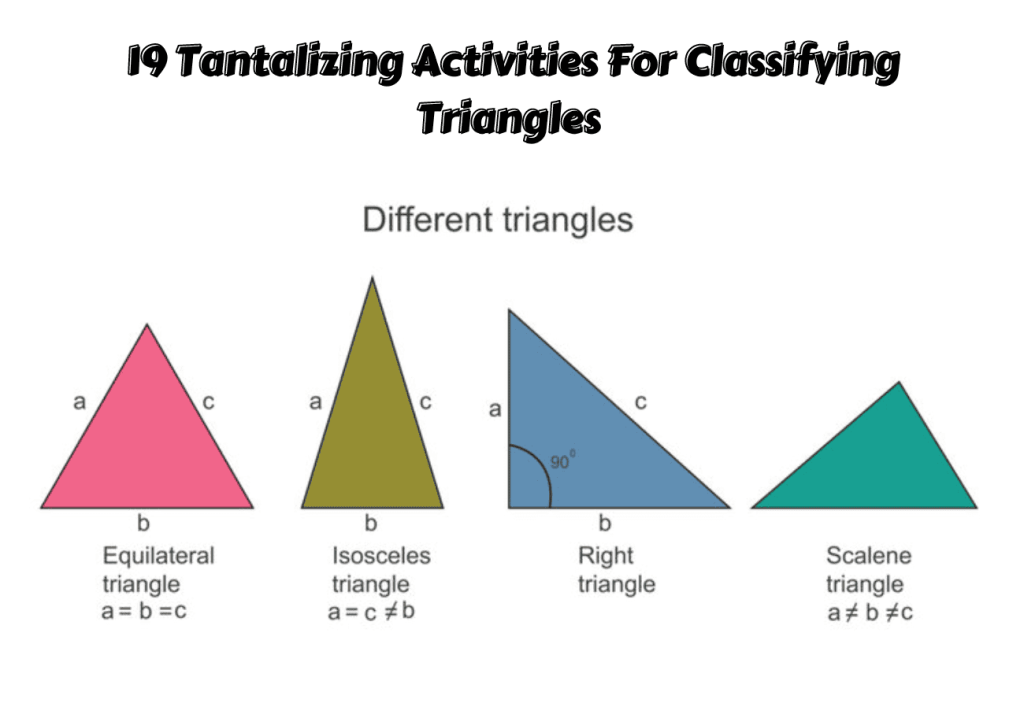
19 Tantalizing Activities For Classifying Triangles

Triangles have long been a cornerstone of geometry, and students often find themselves tasked with learning how to classify them. If you’re a teacher looking for creative and engaging ways to teach triangle classification, look no further than these 19 tantalizing activities.

1. Triangle Sort: Have students sort triangles by side length or angle type, using an assortment of cut-out shapes or images.

2. Triangle Art: Encourage students to create unique artwork using only triangles, and then classify the triangles used in their creations.

3. Interactive Whiteboard Challenges: Use interactive whiteboard software like SMART Board to create challenges that require students to classify triangles.

4. Online Triangle Games: Introduce sites such as Kahoot or Quizizz with interactive triangle classification quizzes for whole-class participation.

5. Everyday Triangles: Have students search for triangles in their everyday lives (like street signs) and classify them by type.

6. Triangle Charades: Get students moving by acting out different types of triangles for classmates to guess.

7. Popsicle Stick Triangles: Task the class with building 3D geometric figures using popsicle sticks and glue, and discuss the triangle classifications used in their models.

8. Traveling Triangles: Assign triangle-focused homework that requires students to locate examples of different types of triangles in their community or online.

9. Peer Teaching Activity: Pair up students and instruct them to take turns teaching each other about triangle classification types.

10. Speed Classification: Set up a timed activity where students must quickly classify triangles correctly, racing against a clock or each other.

11. Pop-up Quiz: Spring impromptu quiz questions on students relating to triangle classification during downtime or transitions between subjects.

12. Geogebra: Use Geogebra tools and activities to explore triangle properties and classifications interactively.

13. Teach-Recite-Review: Implement a structured routine wherein students teach or reteach critical triangle concepts to peers, recite key points, and review practice problems.

14. Compare and Contrast: Facilitate group discussions with students comparing and contrasting different triangle types, while making thoughtful observations on their classifications.

15. Sticky Note Classification: Write triangle scenarios on sticky notes, have students classify them correctly, and then discuss the results as a class.

16. Triangle Math Songs: Tap into students’ musical talents by composing classification jingles or singing memorable tunes that reinforce key concepts.

17. Flashcard Drills: Use flashcards to practice identifying and classifying triangles based on given side lengths or angles.

18. Classifying Shapes Outside: Take the learning outdoors with activities that encourage students to discover and classify triangles in nature.

19. Family Triangle Hunt: Instruct your class to engage their family members in a friendly competition to find and classify triangles within their home environment.

By utilizing these 19 tantalizing activities for classifying triangles, you will foster a classroom environment where active learning engages students in meaningful exploration of geometry. Moreover, your commitment to creative teaching methods will instill a deeper understanding of triangle classification concepts that will extend beyond the classroom walls.

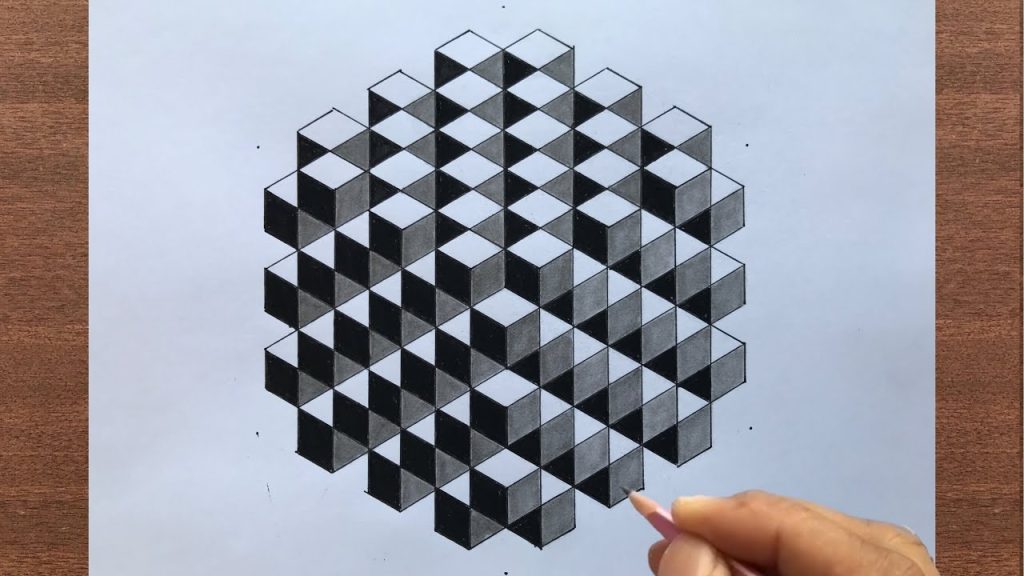
19 Engaging Isometric Math Activities

Mathematics is an essential skill that helps us navigate through various aspects of our lives. To sharpen this ability, Isometric math activities provide a unique and practical approach to learning. Engage students with these 19 exciting Isometric math activities guaranteed to make them fall in love with numbers.

1. Isometric Graph Paper Drawings: Equip students with Isometric graph paper, rulers, and colored pencils/crayons. Challenge them to draw three-dimensional shapes while understanding the angles and dimensions involved.

2. Building 3D Shapes: Provide students with building materials such as toothpicks, marshmallows, and clay to construct different 3D shapes and comprehend their structure better.

3. Online Shape Games: Utilize online resources like Coolmath Games or Math Playground for shape-based games in an isometric perspective, which help students understand angles and distances more comprehensively.

4. Isometric Dot Artwork: Encourage students to use isometric dot paper to create abstract art while playing around with mathematical geometry concepts.

5. Geometry Scavenger Hunt: Organize a scavenger hunt where students need to find items that represent different geometric shapes—spheres, cones, cubes, etc.—before discussing each shape’s characteristics.

6. Tangram Puzzles: Introduce tangram puzzles that require spatial reasoning skills to complete various patterns based on geometric shapes.

7. Classroom Architect Challenge: Have students design a floor plan of their dream classroom using isometric grid paper while incorporating concepts like area and perimeter calculations.

8. Origami Creations: Teach students the art of origami and stimulate their creativity in geometrical foldings and transformations.

9. Isometric Battleship: Play a 3D version of Battleship on isometric grid paper where students strategically place and seek ships in three dimensions.

10. Minecraft Exploration: Host a Minecraft session where student teams compete to create geometric constructions and solve math problems in a block-based environment.

11. Create 3D Geometric Ornament: Decorate ornaments using isometric concepts, granting students the opportunity to apply their skills to real-world objects.

12. Coordinate Graphing Art: Allow students to design their artworks by connecting coordinates on isometric graph paper, further incorporating math skills into aesthetics.

13. Coding Challenge: Encourage students to engage with computational thinking by applying geometric shapes in code with platforms like Scratch or Tynker.

14. Build an Isometric City: As a group project, have the students create an isometric city by drawing buildings, roads, and parks on grid paper while applying geometry concepts.

15. Isometric Symmetry Exercises: Hand out complete geometric designs and ask students to identify lines of symmetry or recreate the entire image by completing its reflection.

16. Geometric Collage: Gather a variety of geometric objects (boxes, balls, pyramids) and ask students to create a collage representing these shapes and discussing their properties.

17. 3D Maze Design: Challenge your kids to plan and create a three-dimensional maze based on isometric principles, developing problem-solving skills along the way.

18. Escher-Inspired Tessellations: Inspire your class with M.C. Escher’s artwork and prompt them to explore tessellations through hands-on activities or computer programs like Tessellation Creator.

19. Roller Coaster Project: Task students with designing a roller coaster in an isometric perspective using both creative thinking and math skills such as distance, angles, and dimensions while ensuring stability.

These fun-filled activities strategically merge creativity with mathematics, opening up an exciting opportunity for learning while enjoying the process. Implement these strategies in your teaching repertoire today!

20 Engaging Activities To Help Students Excel In Multiplying Decimals

Introduction: Multiplying decimals can be a challenging concept for many students. However, with engaging activities and hands-on learning opportunities, students can not only understand the process but also enjoy it. Here are 20 creative activities to help your students excel in multiplying decimals.

1. Decimal War: Divide students into pairs and give each pair a deck of Decimal War Cards. Each card contains a decimal value. Students take turns flipping a card each, multiplying the numbers and writing the product on a whiteboard. The player with the highest product wins the round.

2. Decimal Bingo: Create bingo cards using products of decimals and play ‘Decimal Bingo’ with your class, fostering a fun atmosphere to learn multiplication of decimals.

3. Manipulatives: Use base-ten blocks or fraction tiles to model decimal multiplication visually and reinforce understanding.

4. Roll-A-Decimal: Students roll dice to create decimal numbers, then multiply them together. Challenge them to find the product quickly and accurately.

5. Matching Game: Provide students with sets of cards containing decimal products and corresponding multiplication expressions. Students must match each product with its correct expression.

6. Kahoot!: Design a Kahoot! quiz with various decimal multiplication problems, allowing students to compete against one another as they answer questions.

7. Decimal Multiplication Relay Race: Organize students into teams, create stations where they must solve decimal multiplication problems, and have them race towards completion.

8. Personalized Word Problems: Create word problems tailored to your students’ interests or current events that involve multiplying decimals.

9. Comic Strip Creation: Direct students to create comic strips illustrating real-life scenarios where they have to multiply decimals to solve problems.

10. Jeopardy!: Develop a Jeopardy! game focusing on multiplying decimals for an engaging classroom competition.

11. Decimal Scavenger Hunt: Hide problems around the classroom, and have students search and solve them within a given time.

12. Decimal Multiplication Art: Incorporate art by having students create and solve decimal multiplication problems, then design a creative artwork based on their answer.

13. Jigsaw Activity: Split a complex decimal multiplication problem into smaller parts. Assign different parts to individual or groups to solve before reassembling the pieces as a class.

14. Math Centers: Develop various math centers focusing on different decimal multiplication strategies for students to explore.

15. Peer Teaching: Encourage students confident in decimal multiplication to teach and support other students who are struggling with the concept.

16. Flashcard Drills: Create flashcards consisting of decimal multiplication problems for a quick warm-up or practice activity.

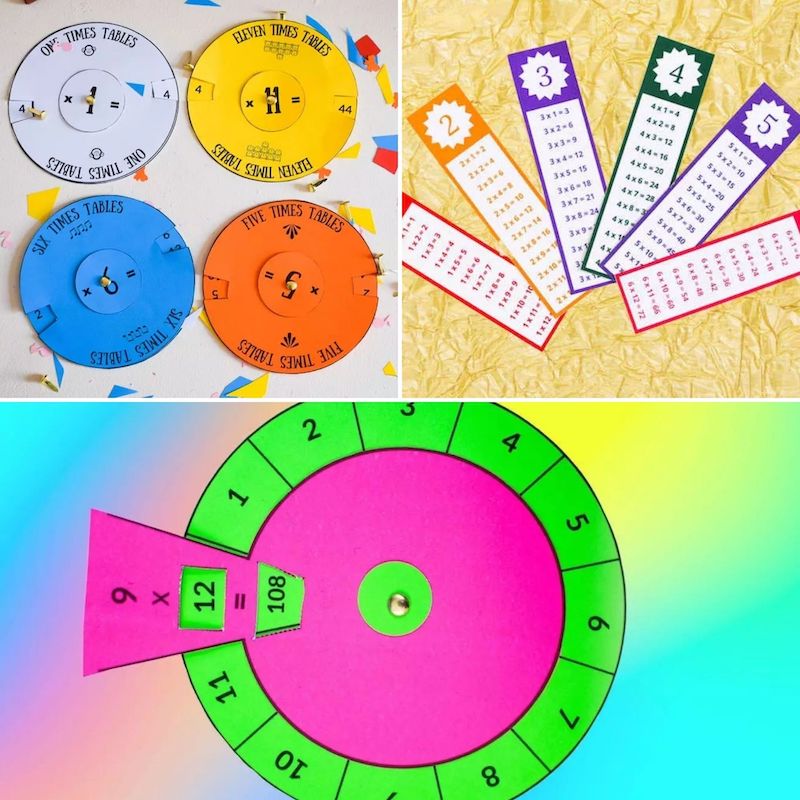
17. Multiplication Chart Challenge: Have students use a multiplication chart with decimals to assist them in solving problems.

18. “I Have… Who Has…?”: Game using cards containing decimal products and corresponding expressions. One student reads their card’s expression, while others must find if their product matches the expression mentioned.

19. Math Journals: Direct students to maintain math journals where they can reflect upon their learning process and track progress in decimal multiplication skills.

20. Error Analysis: Give students incorrect examples of decimal multiplication problems and ask them to analyze, find errors, and correct them.

Conclusion: With these 20 engaging activities, your students will thrive as they learn and master multiplying decimals. By providing a variety of learning opportunities tailored to different interests and strengths, you will foster enthusiasm and confidence in mathematics among your students.

Using ICT to enhance learning and teaching for able pupils in mathematics

Introduction

Information and Communication Technology (ICT) has revolutionized the way we teach and learn, opening up new possibilities for engaging and educating learners. In particular, the use of ICT in teaching mathematics to able pupils can lead to significant improvements in their learning experience and outcomes. This article explores the potential benefits of integrating ICT in mathematics education and discusses strategies for employing these tools effectively.

Advantages of using ICT in teaching mathematics

1. Interactive learning environment: ICT allows teachers to create dynamic, interactive learning environments that cater to various learning styles. This can be particularly beneficial for able students who may require additional challenges or alternative approaches to learning.

2. Motivation and engagement: Digital tools like games, simulations, and videos can help increase motivation and engagement among able pupils. This not only leads to greater enjoyment of learning but also better absorption of complex mathematical concepts.

3. Wider accessibility to resources: Through platforms such as online quizzes or tutorials, students can access a broad range of educational resources beyond the traditional textbook or classroom setting. This enables them to deepen their knowledge while working independently.

4. Real-world context for problem-solving: Technology can be used to link mathematical concepts with real-life scenarios, making them more relatable, memorable, and applicable for students.

Strategies for using ICT effectively in teaching mathematics to able pupils

1. Differentiation through technology: Teachers can use various digital tools like adaptive modules to tailor instruction according to the unique needs of every student. This ensures that each learner receives optimal support in mastering content.

2. Data-driven instruction: By leveraging technology’s ability to collect and analyze student data, teachers can make informed decisions on how best to adjust their instruction based on individual progress and performance.

3. Collaborative learning opportunities: Introducing collaborative digital platforms foster teamwork among students, allowing them to collectively tackle complex problems or explore new mathematical concepts.

4. Integration of offline and online elements: Successful implementation of ICT involves the seamless integration of digital tools with traditional teaching methods and materials. By ensuring there is a balance between online and offline approaches, teachers can maximize the benefits of each method.

5. Provide ongoing training and support: For both teachers and students, ongoing training and support regarding the effective use of ICT are crucial. Teachers should invest in their ongoing professional development, while students should be encouraged to explore these tools independently to build familiarity and confidence.

Conclusion

The integration of ICT in mathematics education has the potential to significantly enhance learning experiences for able pupils. By carefully selecting the appropriate tools and strategies, teachers can create motivating, personalized, and engaging lessons that empower students to excel in their mathematical pursuits. With continued investment in technology infrastructure, professional development, and support, ICT can become an essential component of mathematics education for able pupils.

18 Super Subtraction Activities

Introduction:

Subtraction is an essential mathematical skill that children need to learn, practice, and master. To make it more engaging and fun for students, try incorporating these 18 super subtraction activities into your lesson plans.

1. Number Line Subtraction:

Place a number line prominently in the classroom and have students physically move along the line as they solve subtraction problems.

2. Subtraction Bingo:

Create bingo cards with subtraction problems and call out answers for students to match with the corresponding problems on their cards.

3. Subtraction Race:

Set up a race where students compete to solve a set of subtraction problems as quickly as possible.

4. Take Away Towers:

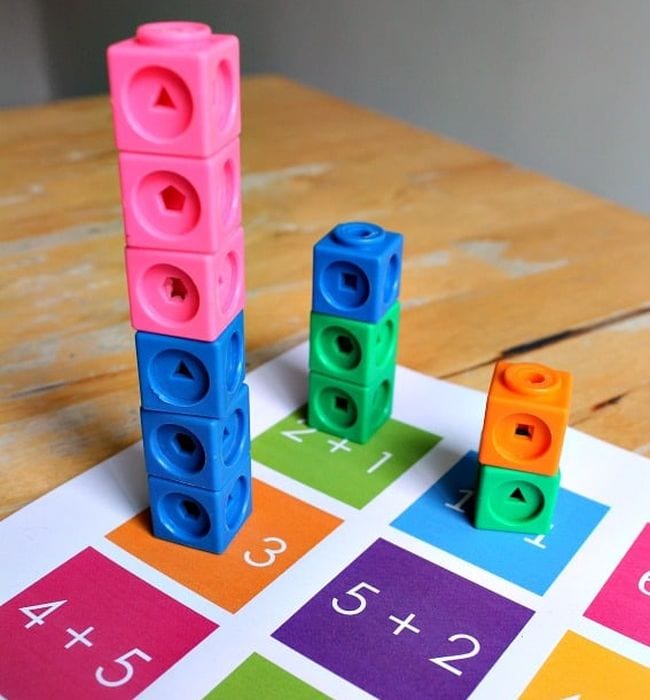
Using building blocks, have students build towers representing two numbers before subtracting by removing the appropriate blocks from one tower.

5. Candy Bar Math:

Use candy bars with different section counts to teach and visualize subtraction problems.

6. Flashcard Drills:

Have students practice their subtraction with regular drill sessions using flashcards or smartphone apps.

7. Subtraction Board Game:

Create a board game where players must correctly answer subtraction questions to advance around the board.

8. Dice Subtraction Game:

Students roll dice to build subtraction problems and then solve them, advancing in the game based on their answers.

9. Interactive Online Games:

Utilize various interactive online games designed to reinforce subtraction skills in a fun and engaging way.

10. Grocery Store Subtraction:

Bring in grocery store flyers or catalogs and ask students to calculate the real-life price differences between items by subtracting their costs.

11. “I Have… Who Has?” Card Game:

Distribute cards with both subtraction problems and their answers, then have students read their problem aloud while waiting for another student with the correct answer card to speak up.

12. Subtraction Memory Match:

Create pairs of cards matching subtraction problems with their answers, and have students play a memory match game.

13. Subtraction Story Problems:

Compose storytelling math problems that require subtraction as the operation to find the answer.

14. Subtraction Word Search:

Design a word search with subtraction terms and problem solutions for students to find.

15. Two-Step Puzzles:

Create puzzles that require students to solve two subtraction problems before unveiling a hiddenphrase or image.

16. Subtraction Songs and Rhymes:

Teach catchy tunes and rhymes to help students remember subtraction rules and methods moreeasily.

17. Subtraction Art:

Combine art projects with math by having students create artwork based on patterns, shapes, ornumbers from subtraction problems.

18. Journal Writing Prompts:

Encourage students to write about their feelings or experiences related to learning subtraction,helping them reflect on their progress and any obstacles they may encounter.

Conclusion:

With these 18 super subtraction activities, you can make learning and practicing subtraction moreenjoyable for your students. Mix up your lesson plans and watch their math skills grow!

15 Awesome Activities to Teach Addition

Teaching addition is a significant milestone in children’s mathematical development. Engaging and interactive activities are the key to helping them grasp this essential arithmetic skill. Below are 15 awesome activities to teach addition, which teachers and parents can employ to help their students or kids learn and love math.

1. Number Line Race: Create a simple number line on the floor with masking tape and have kids race by jumping from number to number while shouting out the addition problems that they are solving.

2. Math Bingo: Create bingo cards with addition problems, having kids solve them and cover the answers on their bingo board.

3. Domino Doubles: Teach the concept of doubling numbers using dominoes, which helps children understand the basic concept of adding two similar numbers together.

4. Button Counting: Use simple everyday items like buttons for grouping-based addition practice. Provide different amounts of buttons, and have kids count them up.

5. Dice Addition: Roll two dice and have children add the numbers showing on each die to find the total.

6. Hopscotch Math: Turn hopscotch into an addition game by incorporating simple math problems into each square.

7. Building Block Addition: Kids can use building blocks (e.g., LEGO) to stack, add, and build structures while practicing simple arithmetic.

8. Grouping Penguins: Use penguin toys or printed cutouts for an Antarctic-themed activity where kids can group penguins to practice adding small numbers together.

9. Board Game Sum It Up!: In this version of a classic board game, customize its focus on teaching addition. Roll detective-themed spinning wheels or draw cards featuring addition problems as children move through the board solving cases.

10. Interactive Worksheets: Incorporate technology and interactive online worksheets to practice solving various addition problems at different difficulty levels.

11. Match It Memory Game: Create a memory-style game where players must match pairs of cards with addition problems and their correct answers.

12. Outdoor Chalk Addition: Inspire kids to interact in nature by writing addition problems on outdoor surfaces with chalk and hunting for the solutions.

13. Clothespin Math: Attach number cards to clothespins, and have kids clip them together in combinations that make a specific sum.

14. Grocery Store Math: While shopping, have children add prices together to determine how much their items will cost.

15. Treasure Hunt Addition: Hide “treasure” tokens with numbers throughout a playground or indoor play area, then assign teams an addition problem they must solve by finding the corresponding tokens.

These 15 fun and engaging activities are sure to instill a love for math in young learners while teaching them the important concept of addition. With creativity and enjoyable teaching techniques, the foundation of mathematical understanding becomes an exciting journey for both teachers and students alike.

20 Fun Times Table Games for Kids

Introduction

Times tables are an essential part of early math education, but teaching them doesn’t have to be tedious. Introducing fun and interactive times table games can help kids learn their multiplication facts with ease. Here are 20 exciting times table games that your children will love to play.

1. Multiplication Bingo

Create bingo cards with multiples of the numbers you’re teaching. Have the child match their cards to the caller’s multiplication problems for a winning combination.

2. Flip-Flop Hopscotch

Draw a hopscotch board and fill it with multiplication problems. Have kids solve the problem and then skip, leap, or hop on one foot as they jump from square to square.

3. Memory Match

Make pairs of matching multiplication cards and lay them face down to create a classic memory game.

4. Skip Counting Race

Kids race against one another while skip counting by a chosen multiplier.

5. Roll and Multiply

Provide two or more dice, have children roll them, and then multiply the numbers together to practice their multiplication skills.

6. Musical Multiplication

Combine musical chairs and multiplication by having kids solve problems before sitting down when the music stops.

7. Array Building Challenge

Using objects such as Legos or other building materials, have children build arrays illustrating different multiplication problems.

8. Clothespin Drop

Attach a multiple to each clothespin, and have kids drop the pin into containers labeled with their corresponding factors.

9. Multiplication Jenga

Write multiplication problems on Jenga blocks, and when kids pull out a block, they must solve the problem before continuing.

10. Times Table Board Game

Create your own board game featuring different multiplication challenges that players complete as they advance through the game.

11. Math Masterpiece

Have children paint or draw pictures illustrating various multiplication equations using characters or objects from their favorite stories or movies.

12. Guesstimation Station

Place a large miscellaneous collection of objects in a clear container, and have kids guess the total count by using multiplication as an estimation tool.

13. Multiplication Bowling

Set up bowling pins labeled with multiples, and have kids knock them down by choosing the correct multiplication problem from a set of available options.

14. Times Table Treasure Hunt

Hide times table flashcards around the house or garden, and have children seek them out to solve the multiplication problems on each card.

15. Math Twister

Modify the classic Twister game by adding times table problems to the colored dots.

16. Jump Rope Multiplication

Have kids recite their times tables while skipping rope, boosting both physical and mental agility simultaneously.

17. Fact Family Charades

Act out different multiplication facts while other players guess which equation is being portrayed.

18. Freeze Dance Multiplication

Children dance to music, freeze on command, and solve a multiplication problem before starting to dance again.

19. Relay Race Calculator

Set up a relay race where children must use calculators to solve multiplication problems at different stations along the way.

20. Multiplication Scavenger Hunt

Create clues that involve solving multiplication problems, and have kids follow them to discover hidden treasures or treats throughout your home.

Conclusion

These 20 fun times table games for kids deliver engaging and interactive experiences that will make learning multiplication enjoyable for everyone involved. Encourage your children to develop strong math skills by introducing these exciting games into their daily routines.

22 Engaging Surface Area Activities for Middle Schoolers

Introduction:

Middle school is an excellent time to explore the world of geometry, and surface area is a key concept students need to understand. To help make this process fun and engaging, here are 22 surface area activities for middle schoolers that can be easily incorporated into your lesson plans.

1.Cube Collaboration

Have students create different-sized cubes from construction paper and calculate their surface areas individually before comparing their results in groups.

2.Cylinder Stacking

Allow students to stack different-sized cylindrical objects and measure their combined surface area.

3.Dodecahedron Design

Have students cut out and assemble a dodecahedron using template printouts, then calculate its surface area.

4.Origami Adventures

Teach students to fold different origami shapes and compute their surface areas afterward.

5.Gift Box Challenge

Invite students to design gift boxes with unique dimensions and determine the amount of wrapping paper needed to cover them entirely.

6.Surface Area Scavenger Hunt

Organize a classroom scavenger hunt where learners find objects and calculate their surface areas.

7.Combining Shapes

Instruct students to combine multiple shapes to create new three-dimensional figures and compute their total surface area.

8.Classroom Objects Competition

Hold a competition for measuring the most surface areas from classroom items within a specified time frame.

9.Comfortable Camping

Seek ways of designing tents with varying dimensions that maximize both interior space and minimize material used.

10.Paint the Prism

Encourage students to create net drawings of prisms then calculate the amount of paint required for each face.

11.4D Movies Exploration

Show clips from 4D movies that visually teach geometry concepts relating to surface area, stimulating class discussions afterward.

12.Custom Calculators Creation

Help students create a spreadsheet or use an online tool for inputting measurements and automatically calculating surface area easily whenever needed.

13.Inside Scoop

Estimate the surface area of different ice cream scoops using spheres and cones as models.

14.Treasure Chest Exploration

Design and build three-dimensional treasure chests, incorporating surface area calculations in the process.

15.Sports Ball Wrap Up

Calculate the surface area of various sports balls to determine the amount of material needed for their production.

16.Chocolate Bar Breakdown

Measure chocolate bars’ surface areas and relate these measurements to fractions for a tasty math practice session.

17.Solar Panel Placement

Engage students in designing solar panels with a specific surface area for placement on rooftops, considering efficiency and aesthetics.

18.Geometry Pictionary

Play a version of pictionary where students draw figures with known surface area formulas, encouraging them to practice visualization skills.

19.Surface Area Artwork

Integrate art into your lesson by having students paint or draw figures while focusing on their surface area measurements.

20.Packaging Design Project

Assign a design project where learners create packaging material prototypes and calculate the required material based on their surface area calculations.

21.3D Printing Adventure

Introduce students to 3D printing technology and let them design items while considering material usage through surface area computation.

22.Triangulation Tower Tests

Practice triangulation techniques by constructing tower models from straws or toothpicks, then measuring their surface areas as part of a class competition.

Conclusion:

These 22 surface area activities for middle schoolers provide engaging ways to teach this essential geometric concept, instilling an interest in geometry that will benefit your students throughout their academic careers.

18 Fun Ways to Teach Telling Time

1. Homemade Clocks: Encourage creativity by having children create their own analog clock with paper plates, a brad, and cardboard for the hands.

2. Clock Play-Doh: Create functional clocks using Play-Doh as the base, and pipe cleaners for the clock hands.

3. Human Clock Game: Have students stand in a circle and use their bodies as the clock hands to act out different times.

4. Matching Pairs: Using printables, create matching pairs of analog and digital clocks displaying the same time and get kids to pair them up.

5. Time Relay: Divide students into teams. Each team member must race to set a clock to the correct time provided and then pass it on to the next teammate.

6. Telling Time Bingo: Create bingo cards with various times on them and call out times in both analog and digital formats.

7. Clock Races: Create a giant floor clock using chalk or tape, and have children race to move the hands to match a given time.

8. Sing Along: Teach children songs that help them remember hours, minutes, and how to tell time on an analog clock.

9. I Spy Time: Call out random times as “I spy…” statements and challenge children to show the correct time on their personal clocks.

10. Clothespin Clocks: Use a paper plate as the base of a clock and attach clothespins labeled with different times around the edge.

11. Hopscotch Clocks: Set up a hopscotch grid with numbers along the edges representing minutes or hours to make learning more interactive.

12. Interactive Whiteboard Tools: Utilize interactive whiteboard tools or apps that teach telling time through games, quizzes, or explorable digital clocks.

13. Books About Telling Time: Read stories that incorporate scenarios where telling time is essential to develop children’s understanding of its importance.

14. Time Scavenger Hunt: Create a scavenger hunt with clues that require children to tell the time and solve the puzzles.

15. Telling Time Videos: Introduce entertaining and educational videos about telling time from well-known educational channels or resources.

16. Time Worksheet Challenges: Create worksheets with different levels of difficulty, challenging children to master their time-telling skills.

17. “What’s The Time, Mr. Wolf?”: Adapt this classic game for telling time practice by having the “wolf” shout out different times while the other players try to set their clocks correctly.

18. Time Capsule Project: Guide children in making a personal time capsule, discussing concepts of past, present, and future while encouraging creativity.

These fun and engaging activities will not only spark an interest in telling time but also provide hands-on learning experiences that develop important lifelong skills.

K-5 Math Teaching Resources That Will Help Your Students Learn

Introduction:

As an educator, it is crucial to choose the right resources for teaching math to your K-5 students. These resources should engage your students and help them develop a strong foundation in mathematical concepts. In this article, we will discuss various K-5 math teaching resources that will help your students learn effectively.

1. Khan Academy:

Khan Academy offers a vast library of free instructional videos, practice problems, and quizzes covering all K-5 math competencies. The user-friendly interface allows both teachers and students to track their progress as they complete exercises and develop a deeper understanding of mathematical concepts.

2. IXL:

IXL is an online learning platform that offers interactive math problems for students in kindergarten through fifth grade. The platform provides adaptive questions that adjust to the student’s skill level, making it an excellent resource for both practice and skill-building.

3. Math Playground:

Math Playground is a fun and interactive website with hundreds of engaging games designed to help K-5 students learn math concepts while enjoying their playtime. Games are arranged by grade level and topic, making it easy for teachers to find suitable activities for their class.

4. Prodigy:

Prodigy is an adaptive math game that adjusts difficulty levels based on individual student needs. It combines practice problems with engaging gameplay, encouraging students to develop problem-solving skills while mastering math standards.

5. BrainPOP Jr.:

BrainPOP Jr. offers K-3 animated movies, quizzes, activities, and printable materials related to a variety of math concepts. Teachers can use this platform for whole-class instruction or as a supplement to individual student learning.

6. DreamBox Learning Math:

DreamBox Learning Math is an online adaptive learning program that adapts to each student’s learning needs in real-time. This platform offers over 1,800 digital lessons designed to help students become better problem solvers and critical thinkers in mathematics.

7. Illuminations:

Illuminations is a collection of K-5 lesson plans, activities, and online interactive games from the National Council of Teachers of Mathematics. This resource offers a range of content for each grade level and mathematical concept, making it an excellent addition to any math curriculum.

Conclusion:

Incorporating high-quality math teaching resources into your K-5 classroom can significantly improve students’ learning experiences and outcomes. By using these resources, you can create engaging and effective lessons that will build your students’ confidence and foster a love for learning mathematics.