Math Education

20 Engaging Earth Day Math Activities For Kids

Introduction:

Earth Day is a fantastic opportunity for kids to learn more about the environment and the importance of preserving our planet. Besides focusing on topics like recycling and pollution, you can also incorporate math to further engage children in celebrating Earth Day. Here are 20 engaging Earth Day math activities for kids to help them strengthen their math skills while having fun and learning about the environment.

1. Tree Counting: Teach children to count trees in a park or your backyard while explaining the role of trees in our environment.

2. Sorting Recyclables: Set up recycling bins for paper, plastic, glass, and cans. Let kids sort items by category and count how many items they have sorted into each bin.

3. Leapfrog Measurements: Measure and record leaps or jumps while discussing the positive impact frogs have on the ecosystem.

4. Math Garden: Create a math garden by planting seedlings in rows and columns then asking children to practice their addition, subtraction, multiplication, or division with the number of plants.

5. Earth Day Tally Chart: Use a tally chart to track how many times kids turn off lights, recycle paper, or conserve water throughout the day.

6. Nature Scavenger Hunt: Create a scavenger hunt list with various plants, flowers, animals, or insects with points assigned based on rarity. Add up the points for each child once they find all items.

7. Recycling Fraction Fun: Teach fractions using recycled materials such as bottle caps or cardboard pieces as visual representations.

8. Math Story Problems: Write Earth Day-themed word problems that challenge kids to use their critical thinking and math skills.

9. DIY Rain Gauge: Measure rainfall throughout April and have kids compare this month’s precipitation with other months’ data to identify patterns.

10. Composting Math: Teach children about decomposition rates of different materials in compost bins while encouraging mathematical comparisons of the time taken for each material.

11. Plant Growth Bar Graph: Track plant growth rates over time and create a bar graph to visualize the data.

12. Carbon Footprint Calculator: Calculate each family member’s carbon footprint and work together on strategies to reduce it.

13. Park Cleanup Estimation: Estimate the number of trash items collected during a park cleanup, and then compare predictions with actual findings.

14. Wildlife Graphing: Draw or find pictures of various animals in their natural habitats, and use them to create graphs or charts comparing population sizes, habitats, or even animal sizes.

15. Weather Patterns: Analyze local weather data and have kids make predictions about future temperatures, rainfall, or other aspects of the Earth’s climate.

16. Solar Cooking Math: Use solar ovens to cook food and have children calculate cooking times and temperature variations compared to conventional cooking methods.

17. Recycled Art Geometry: Encourage kids to create geometric shapes from recycled materials while learning about angles, vertices and sides.

18. Symmetry in Nature: Identify symmetry in leaves, flowers or butterflies and discuss its importance in nature’s designs.

19. Earth Day Sudoku: Create or find Earth Day-themed Sudoku puzzles for young learners that involve math skills such as pattern recognition and sequencing.

20. Eco-Inventory Math Project: Create an inventory of all eco-friendly products used at home, calculating their total cost as well as how much money is saved compared to non-eco-friendly alternatives.

Conclusion:

These 20 activities can encourage children to develop a love for math while engaging with environmental topics during Earth Day. Encourage your child’s problem-solving abilities while also fostering environmental awareness and nurturing sustainable habits!

20 Creative Activities For Combining Like Terms

1. Math Puzzles: Create algebraic puzzles that challenge students to combine like terms to reveal a hidden message or image.

2. Algebra Bingo: Make bingo cards with simplified algebraic expressions as the spaces, then provide students with problems that require combining like terms to fill in their boards.

3. Interactive Notebook Foldables: Design creative foldable templates for students to practice combining like terms by creating mini-books, flip-flaps, or accordion-style activities.

4. Math Journals: Have students reflect and explain their understanding of combining like terms by writing journal entries on different examples and techniques.

5. Balancing Scale Activity: Use a physical or virtual balancing scale as a visual representation to help students understand the concept of combining like terms.

6. The Great Term Race: Divide students into teams and give them a series of algebraic expressions that require combining like terms. The team that correctly simplifies the most expressions wins.

7. Cooperative Learning Activity: Organize students in pairs or small groups to work together on combining like term problems, encouraging collaboration and peer teaching.

8. Stations Rotation: Set up multiple problem-solving stations around the classroom where students practice different aspects of combining like terms through hands-on activities and games.

9. Expression Matching Game: Create sets of cards with equivalent algebraic expressions for students to match using their understanding of combining like terms.

10. Escape Room Challenge: Design an escape room-style activity where solving problems involving combining like terms is key to unlocking clues and completing the challenge.

11. Task Cards: Create sets of task cards with problems requiring students to combine like terms, allowing for independent practice during class time or as an at-home activity.

12. Jeopardy-Style Review Game: Host a game show-style review session where categories focus on different types and complexities of problems involving combining like terms.

13. Clothesline Activity: Set up a “clothesline” in the classroom and provide students with cards featuring algebraic terms. Have them hang the cards, organizing them by like terms, and then simplify the expressions.

14. Interactive Whiteboard Lesson: Use technology to create an interactive lesson where students practice combining like terms by dragging and dropping terms into appropriate categories on a virtual whiteboard.

15. Algebra Art: Encourage students to create artistic representations of algebraic expressions that involve combining like terms, such as mosaics or collage artworks.

16. Skits and Role Playing: Have students write and perform skits that demonstrate real-life scenarios in which combining like terms is necessary or helpful.

17. Algebra Mad Libs: Create fill-in-the-blank stories that incorporate algebraic expressions for students to solve by combining like terms, adding a fun twist to traditional practice problems.

18. Code Breaker Activity: Design a code-breaking activity where students must combine like terms to discover encrypted words or phrases.

19. Math Cookbook: Instruct students to create a math “cookbook” with recipes for simplifying expressions that involve combining like terms, complete with sample problems and step-by-step instructions.

20. Combining Like Terms Song: Foster creativity and memorization by challenging students to write and perform a song demonstrating how to combine like terms in algebraic expressions.

These 20 creative activities allow for an engaging learning experience while mastering the art of combining like terms in algebraic expressions. Encourage your students to have fun while learning, building their confidence and understanding of this essential math skill.

Able Mathematicians: Shaping the Future Through Numbers

Introduction

Throughout history, able mathematicians have played a crucial role in shaping the world around us. From developing groundbreaking theories to solving complex problems, their work has influenced a wide range of fields, including science, engineering, and technology. In this article, we will explore the lives and contributions of some of these exceptional individuals and how their ideas continue to impact our lives today.

Famous Mathematicians and Their Contributions

1. Euclid (c. 300 BCE)

Often referred to as the “Father of Geometry,” Euclid was a Greek mathematician whose book, “Elements”, remains a foundational work in the field of mathematics. The book covers the essential axioms and postulates of geometry, many of which are still in use today.

2. Isaac Newton (1642-1727)

One of history’s most famous scientists and mathematicians, Sir Isaac Newton’s discoveries spanned several fields. His work on calculus laid the groundwork for modern mathematical analysis and optimization, while his law of universal gravitation revolutionized our understanding of the cosmos.

3. Leonhard Euler (1707-1783)

Euler was a Swiss mathematician who made significant advancements in numerous branches of mathematics, including graph theory, topology, number theory, and analysis. He was also instrumental in introducing key notations like ‘e’ for Euler’s number (the base of natural logarithms) and ‘i’ for imaginary units.

4. Ada Lovelace (1815-1852)

A pioneer in computer science and programming, Ada Lovelace is often credited as being the world’s first computer programmer after her collaboration with Charles Babbage on his Analytical Engine—an early mechanical general-purpose computer. She published the first algorithm intended for use on a computer, demonstrating her deep understanding of both mathematics and computing concepts.

5. Albert Einstein (1879-1955)

Best known for his groundbreaking theory of relativity, Einstein was a mathematician and theoretical physicist who forever changed our perception of space and time. His work not only laid the foundation for modern physics but also had significant implications for the development of atomic energy and space exploration.

The Legacy of Able Mathematicians

Able mathematicians’ contributions have undeniably had a profound impact on both their respective fields and society as a whole. By pushing the boundaries of mathematical knowledge and its real-world applications, these individuals have revolutionized our understanding of the universe and paved the way for future generations to build on their accomplishments.

As we take inspiration from these remarkable individuals, it’s essential to encourage young aspiring mathematicians to explore their passion for mathematics and support them in their journey to becoming future innovators. In doing so, we can ensure continued progress in mathematics and its endless potential to shape our world for the better.

Unraveling the Excitement of the UK Junior Mathematical Challenge

Introduction

The UK Junior Mathematical Challenge (UK JMC) is a captivating event designed for young math enthusiasts across the United Kingdom. Organized by the UK Mathematics Trust (UKMT), this annual competition aims to foster a love of mathematics in students aged 11 to 13 and promote their ability to think critically, reason logically, and solve complex problems. With an engaging range of questions, intriguing puzzles, and a stimulating environment, the UK JMC has become an essential platform for nurturing future mathematicians.

History and Background

The UK Mathematics Trust was founded in 1996, with an aim to advance mathematical education in the UK. As part of its initiatives, the UK JMC is a well-established competition that has been held every year since its inception. The contest invites participation from thousands of students across the country from various educational backgrounds, making mathematics accessible and enjoyable for one and all.

Competition Format

The UK JMC is a multiple-choice examination consisting of 25 questions, which are categorized into three levels of difficulty. The first part comprises of relatively easier questions, followed by moderately difficult queries in order to build confidence among participants. As students progress through the exam, they encounter increasingly complex questions that challenge their problem-solving skills and sharpen their mathematical acumen.

Preparing for the Challenge

To excel in the UK JMC, students need to be well-versed with core mathematical concepts covered in their school curriculum. They are encouraged to explore beyond textbooks and indulge in creative problem-solving techniques through exercises like puzzles, brainteasers, and enigmas. There are also a plethora of resources available online as well as specialized books dedicated to honing mathematical abilities for competitive exams.

Awards and Recognition

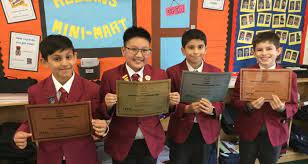
Students participating in the UK JMC receive certificates based on their performance – gold, silver, and bronze – along with additional prizes for achieving top scores. These accolades not only boost their self-esteem and encourage a sense of achievement but also enhance their academic profile for future prospects. Moreover, high-performing students get an opportunity to participate in further competitions like the Junior Mathematical Olympiad (JMO) and Cayley, Hamilton, and Maclaurin Olympiads, paving the way for exceptional mathematical exposure.

Conclusion

The UK Junior Mathematical Challenge is more than just a contest; it is a celebration of mathematical skills that brings together young minds from all over the UK. It encourages students to step out of their comfort zones, explore their potential, and foster a lifelong passion for mathematics. By nurturing talent and providing the right platforms for growth, competitions like the UK JMC serve as stepping stones towards fostering the next generation of brilliant mathematicians.

The Inspiring Journey of an All Boys EBD Maths Coordinator

The world of mathematics can be a challenging one, especially for students with emotional and behavioral disorders (EBD). However, there are inspiring individuals like the All Boys EBD Maths Coordinator who dedicate their lives to understanding and nurturing the unique potentials of these students to excel in mathematics. This article delves into the life and achievements of this amazing coordinator and the impact they’ve made on young lives.

The Beginnings

From an early point in their career, the All Boys EDB Maths Coordinator recognized the importance of providing a safe, supportive environment for students with emotional and behavioral disorders. Fueled by their passion for mathematics and education, they embarked on a journey to become an expert in addressing the needs of such students.

Their educational background is one of dedication and persistence, pursuing advanced degrees and certifications that would help them understand and work with students dealing with EBD. Moreover, this relentless pursuit of knowledge prepared them to ultimately take on the role as an All Boys EDB Maths Coordinator within their institution.

Creating an Inclusive Environment

Students dealing with emotional and behavioral disorders face unique challenges that often create barriers to learning and engagement. The All Boys EBD Maths Coordinator has implemented a range of strategizes grounded in evidence-based practices to foster inclusivity within the classroom. A few examples include designing individualized learning plans that cater to each student’s specific requirements or setting clear expectations regarding behavior management.

Additionally, by employing multisensory teaching methods that incorporate visual, auditory, kinesthetic approaches, the coordinator ensures that each student can grasp critical mathematical concepts efficiently based on their preferred learning style.

Building Mathematical Confidence

Another key aspect of the coordinator’s approach is building up mathematical confidence amongst students who may have previously struggled or even resisted learning mathematics due to past negative experiences. Through consistent encouragement, positive reinforcement, and adaptive teaching strategies tailored explicitly for these young learners’ needs, the coordinator has successfully instilled a love and newfound appreciation for mathematics in countless students.

Inspiring Future Mathematicians

Ultimately, the work of the All Boys EBD Maths Coordinator goes far beyond just teaching numbers and equations. It is about empowering students with emotional and behavioral disorders to recognize their potential, develop their problem-solving skills, and cultivate a passion for lifelong learning. With their unwavering dedication and commitment, this inspiring individual continues to create a lasting impact on the lives of many young individuals who are destined to become future mathematicians in their own right.

Supporting Children with Dyscalculia

Introduction

Dyscalculia is a learning disorder that affects the ability to understand and manipulate numbers. It is often referred to as “math dyslexia” and can cause significant difficulties in learning and performing mathematical tasks. This article aims to help parents and educators support children with dyscalculia, enabling them to achieve their full potential in school and daily life.

1.Early identification and diagnosis

Early diagnosis is crucial for children with dyscalculia, as early intervention can lead to better outcomes. Parents who notice difficulty in age-appropriate numerical activities, such as counting or simple calculations, should consult with teachers or educational psychologists. It’s essential to distinguish dyscalculia from general math anxiety or lack of motivation.

2.Individualized support

Each child with dyscalculia has unique needs and abilities. Tailoring teaching methods to the child’s strengths and weaknesses will greatly enhance their understanding and retention of mathematical concepts. A personalized education plan (IEP) can be beneficial, specifying goals, accommodations, interventions, and tools tailored to the individual child.

3.Hands-on learning activities

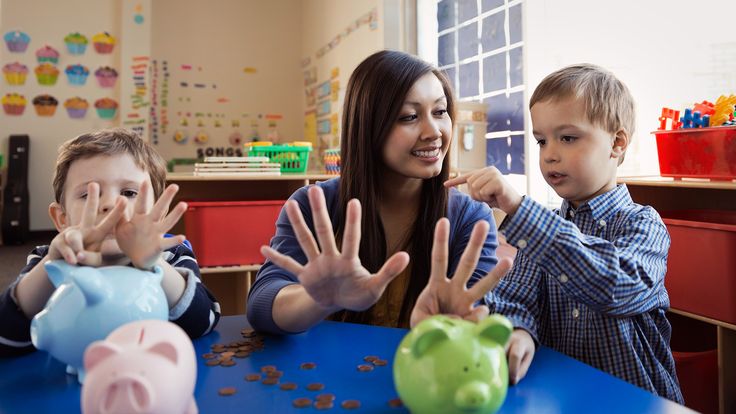
Children with dyscalculia benefit significantly from hands-on activities that develop mathematical skills through concrete experiences rather than abstract concepts. Using physical objects such as blocks, counters, or coins can help children visualize number relationships and perform operations more easily.

4.Visual aids

Presenting information visually can help children with dyscalculia make connections between mathematical concepts. Equal importance should be given to visuals such as colored diagrams, charts, graphs, pictures, flashcards, number lines, and manipulatives that represent mathematical ideas.

5.Real-world applications

Connecting math lessons to real-life situations makes learning more meaningful for children with dyscalculia. Encourage them to apply their mathematical skills in everyday activities such as cooking, shopping, budgeting, or measuring distances on maps.

6.Assistive technology

Various tools and technologies can support learning in children with dyscalculia. These include talking calculators, specialized computer programs, apps, and games that reinforce mathematical concepts through fun and engaging experiences.

7.Encourage a growth mindset

Developing a positive attitude and perseverance in children with dyscalculia is essential for their success. Encourage a growth mindset by praising effort rather than the result, emphasizing that everyone can improve through practice and perseverance.

8.Collaborate with educators

Maintaining open communication between parents, teachers, and specialists is vital when supporting a child with dyscalculia. Share insights about the child’s struggles and strengths, as well as effective strategies and resources that worked for them.

Conclusion

Supporting children with dyscalculia requires patience, understanding, and collaboration between parents, educators, and the child themselves. By implementing tailored teaching strategies, hands-on learning activities, visual aids, real-world applications, assistive technology, fostering a growth mindset, and maintaining open communication among caregivers; children with dyscalculia can overcome their challenges and succeed academically.

15 Exciting Rounding Decimals Activities for Elementary Math

Introduction:

Rounding decimals is an essential math skill that elementary students need to master. To help young learners grasp this concept and make it more engaging, here are 15 exciting rounding decimals activities tailored for elementary math classes.

1.Rounding Relay Race:

Divide students into teams and have them round decimals to the nearest whole number. The first team to complete the task with the correct answers wins!

2.Rounding Decimal Bingo:

Create a Bingo game where the students round decimals and mark off the numbers on their Bingo cards to score a win.

3.Decimal Treasure Hunt:

Hide decimal numbers throughout your classroom and challenge students to find them, rounding each decimal they discover.

4.Round Up, Round Down Game:

In this game, students decide if they should round up or down to the nearest whole number based on different scenarios.

5.Rounding Decimal Puzzles:

Create puzzles with decimal numbers for your students to solve by rounding up or down.

6.Rounding Decimals Word Problems:

Help children practice their real-life application of rounding decimals by giving them word problems to solve.

7.Race to the Nearest Number Line:

Cnstruct a number line on the floor where students race against each other in a quest to round decimals and step across accordingly.

8.Memory Match Game:

Create pairs of matching cards with decimal numbers on one card and the rounded numbers on another. Students then try to match them in this memory-enhancing activity.

9.Leap over Decimals:

Design a hopscotch grid incorporating decimal numbers where students jump through the course while rounding each decimal number they land on.

10.Decimal Flashcards Competition:

Compete against each other using flashcards containing decimal numbers and their rounded equivalents, with players striving to answer correctly as fast as possible.

11.Musical Rounding Chairs:

Adapt the classic musical chairs game by attaching decimal numbers to each chair, requiring students to round the decimals when the music stops.

12.Rounding Decimals Coloring Activity:

Give students decimal numbers to round up or down and instruct them to color a drawing grid using specific colors for each rounded number.

13.Rounding Decimal Storytelling:

Students create short stories that incorporate rounding decimals, showcasing their creativity and understanding of the concept.

14.Estimate and Round:

Provide students with real-world items and their prices in decimals. Have the learners estimate the total cost after rounding before using a calculator to check their answers.

15.Rounding Decimal Quiz Show:

Host a quiz show where students answer rounding decimal questions for points, encouraging a healthy ambiance of competition while learning.

Conclusion:

Make learning about rounding decimals in elementary math classes fun and engaging by incorporating these 15 activities into your lessons. Each activity will provide a different approach to challenge their skills and encourage practice in an enjoyable way.

Fun With Skittles: 10 Math Activity Ideas For Various Ages

When it comes to teaching kids math, engaging their interest can be a challenge. Enter Skittles, those colorful candies with the power to turn math lessons into a sweet and engaging experience for students of all ages! Here are 10 Skittles-based math activities that will have your students learning while having fun.

1. Counting and sorting

Age group: Preschool

Have the kids sort the Skittles by color and count them. This helps build their early counting and organizing skills. You can also introduce the concept of more or less by asking them which group has more or fewer Skittles.

2. Creating patterns

Age group: Kindergarten

Teach children about patterns and sequences by having them create simple or complex color patterns with their Skittles.

3. Basic operations (addition, subtraction, multiplication)

Age group: Elementary school, grades 1-3

Use the candies to teach basic math operations. For instance, you could use two groups of Skittles to illustrate addition: 5 red Skittles + 2 green ones = 7 total Skittles.

4. Fractions

Age group: Elementary school, grades 4-6

Teach children about fractions by dividing their stash of Skittles into equal parts. For example, show them that if they have 8 Skittles and want to share with a friend, each would get 4 Skittles (1/2 of the total).

5. Probability

Age group: Middle school

Discuss the probability of pulling a specific color out of a bag of Skittles without looking. This teaches kids how to calculate probability based on the number of possible outcomes.

6. Percentages

Age group: Middle school

Calculate what percentage each color represents out of the entire collection of Skittles they have by dividing the number of Skittles of a specific color by the total number of candies.

7. Graphing

Age group: Middle school and high school

Create a bar graph or pie chart with the data collected from sorting and counting Skittles by color. This helps build skill in presenting data visually.

8. Algebra

Age group: High school

Create simple algebraic equations using Skittles as variables. For example, if 2x + y = 10, and x represents red Skittles while y equals green ones, students can solve for x and y using their candy assortment.

9. Geometry

Age group: High school

Explore geometric concepts like area and perimeter or create tessellations with Skittles arranged on graph paper.

10. Calculus

Age group: College and beyond

Challenge advanced students to create or solve calculus problems using Skittles as a fun tool for illustrating complex concepts like limits, derivatives, or integrals.

In conclusion, incorporating Skittles into your math lessons not only adds an element of fun but also aids in holding students’ attention. These 10 math activities are just the starting point – the possibilities are limited only by your creativity!

20 Interactive Math Activities for Elementary Learners

Introduction:

Mathematics can be a challenging subject for elementary learners, but it can also be fun and engaging with the right activities. In this article, we will explore 20 interactive math activities that can help elementary learners develop a love for math and improve their understanding of concepts.

1. Math Bingo: Create a bingo card with various math problems in each square. As students solve the problems, they mark off the corresponding squares on their cards, aiming to get five in a row.

2. Fraction Pizza: Use paper plates or cardboard circles as “pizzas” and have students divide them into equal parts to represent fractions.

3. Number Line Hopscotch: Create a number line on the floor or outside using chalk or tape, and have children hop from one number to another while practicing addition and subtraction.

4. Shape Hunt: Encourage students to explore their environment and identify different shapes they find.

5. Multiplication War: Turn traditional card games like War into math practice by having players multiply the values of their cards before determining a winner.

6. Estimation Jar: Fill a jar with small, countable items (such as marbles or beads) and have students estimate how many are inside, then count them together.

7. Egg Carton Math: Use empty egg cartons for various counting and sorting activities, such as organizing items by color or practicing skip counting.

8. Grocery Store Math: Shop together in a simulated grocery store, where students practice adding prices and making change.

9. Geometric Tangrams: Use pre-made or homemade tangram puzzles to challenge students’ spatial reasoning skills.

10. Pattern Block Creations: Provide students with pattern blocks and encourage them to create designs while discussing the names and properties of each shape.

11. Interactive Math Websites: Explore online resources like Coolmath4kids.com or IXL.com that offer various interactive games and activities for math practice.

12. Telling Time: Use clocks or clock faces to practice telling time, discussing concepts like quarter past, half past, and quarter to the hour.

13. Money Math: Set up a pretend store with play money and have students practice buying items while counting out the correct change.

14. Math Relay Races: Create relay races that involve solving math problems at each “checkpoint,” fostering team collaboration and active learning.

15. Toothpick Problem Solving: Provide students with toothpicks and pose geometric challenges they must solve using their creativity and critical thinking skills.

16. Measurement Scavenger Hunt: Task students with finding objects of various lengths or heights, then measure those items with standard or non-standard units.

17. Secret Code Math: Create math problems that form secret codes when solved, promoting engagement in problem-solving while also reinforcing addition, subtraction, multiplication, or division skills.

18. Fact Family Houses: Use index cards or pieces of paper as “roof” pieces for fact family houses, with the numbers forming facts in a specific family written on separate “walls.”

19. Math Sentence Builders: Have students build their own math sentences using number cards and symbols (such as +, -, ×, ÷), then challenge each other to solve them.

20. Dice Games: Incorporate dice into various math games like Yahtzee or Farkle for an engaging way to practice number recognition and calculations.

Conclusion:

These 20 interactive math activities are just a few examples of how elementary learners can engage with mathematics in a creative and enjoyable way. By incorporating these ideas into your curriculum, you can help students build a strong foundation in math skills while fostering an appreciation for learning that lasts a lifetime.

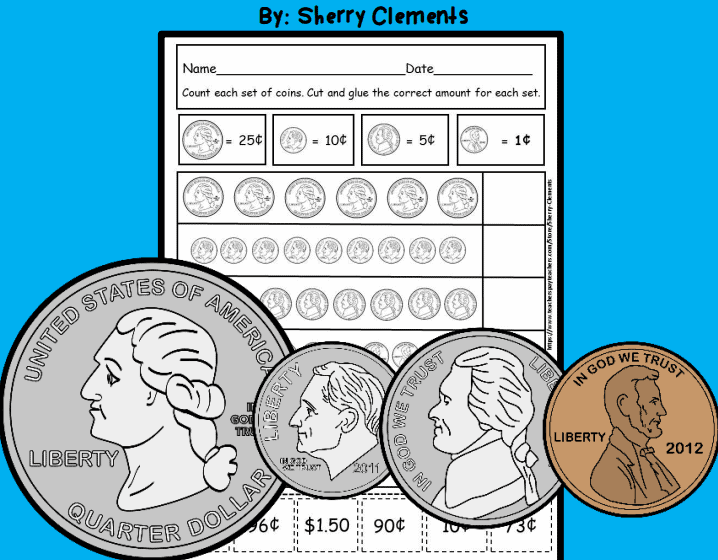
20 Counting Coins Activities That Will Make Money Fun For Your Students

Teaching kids about money can be challenging, but incorporating fun and engaging activities will help make the process easier. Here are 20 counting coins activities that will make learning about money enjoyable for your students:

1. Coin Matching Game: Create pairs of cards with pictures of coins on one side and their corresponding values on the other. Have students match the coin cards to their values to build their recognition skills.

2. Money Bingo: Create bingo cards featuring various coin sums, and call out the amounts to see who can complete a row or column first.

3. Coin Sort: Give students a variety of mixed coins to sort by type or value.

4. Coin Rubbings: Have students place coins under a piece of paper and use crayons to make rubbings, helping them learn the different shapes, sizes, and features of each coin.

5. Piggy Bank Challenge: Set a goal amount for students to reach using a combination of coins, and let them experiment with different combinations until they achieve it.

6. Coin Stamping Art: Allow students to use ink pads and coins to create unique artwork while learning about each coin’s attributes.

7. Money Memory Game: Encourage students to play a memory game with cards showing different coin values and combinations.

8. Coin Toss: Teach probability with coins by having students toss one or more coins and record the outcomes.

9. Make Your Own Money: Let students design their own currency using art supplies, including creating their own coins with different values.

10. Coin Graphs: Ask students to collect and graph data about the numbers of different coins in a small sample.

11. Shopping Spree: Set up pretend shops where students use play money to buy items and practice making change.

12. Decimal Diner: Teach decimals using restaurant menus where meals cost fractions of a dollar, requiring students to add coin values appropriately.

13. Coin Puzzles: Create jigsaw puzzles with images of coins on each piece, requiring students to match coin values correctly to solve the puzzle.

14. Coin Races: Organize relay races where students must correctly count and add up to a target amount using only certain coins before passing on the baton.

15. Create a Budget: Teach budgeting using fictional scenarios where students must allocate money towards various expenses like food, entertainment, and savings.

16. Money Rock-Paper-Scissors: Adapt rock-paper-scissors by assigning each coin a value and having them compete like the classic game.

17. Coin Scavenger Hunt: Hide coins around the classroom and have students work together to find them while practicing their counting skills.

18. Make Your Own Bank: Encourage students to create their own bank with designated areas for saving, spending, and donating money. Discuss the importance of financial responsibility.

19. Coin Magic Tricks: Teach simple magic tricks using coins to add an element of excitement and wonder to learning about money.

20. Money Storytime: Read books that teach valuable lessons about money and discuss the concepts learned with your students.

By incorporating these methods into your lesson plans, you can make counting coins fun for your students while instructing them on essential money skills that will benefit them throughout their lives.