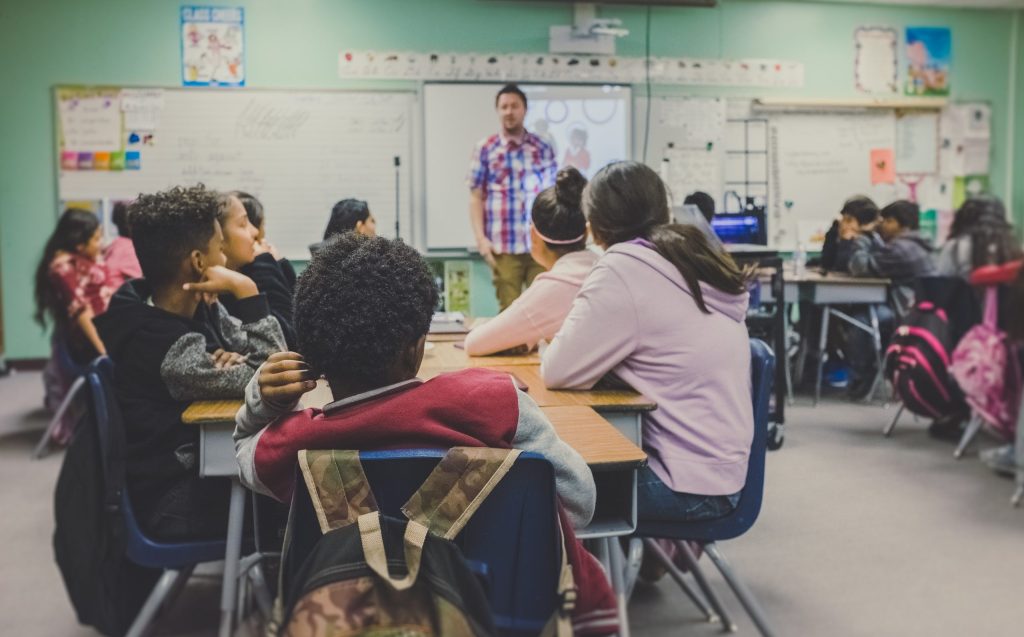
Teaching Strategies, Tactics, and Methods

What is a Cell Organelle?

An organelle is a name for the small organ-like structures you can find inside cells. These structures carry out functions that help cells to do their jobs.

What are the different types of cells?

There are two main types of cells, eukaryotic and prokaryotic.

Prokaryotic cells are much simpler than eukaryotic with no membrane-bound organelles like mitochondria and a nucleus. Prokaryotic cells are found in prokaryotes or bacteria. These cells are only made up of the plasma membrane, cytoplasm, ribosomes, and DNA/RNA.

Eukaryotic cells are split into two groups; plant and animal cells.

There are a few differences between these two types of cells. Plant cells are rectangular, while animal cells are circular. Plant cells also contain chloroplasts and one large vacuole that takes up 90% of the cell, whereas animal cells do not contain chloroplasts and have many small vacuoles scattered throughout the cell.

Do all cells have the same organelles?

Different types of cells have specialized organelles for their specific purposes.

For example, Plant cells contain chloroplasts and chlorophyll. These are cells that give plants their green color. It helps them absorb sunlight and photosynthesize. Plant cells also have a cell wall rather than a plasma membrane.

Cell organelles and their functions:

Nucleus It is the brain of the cell. It directs all the cell activities and contains the DNA
Mitochondria Makes energy for the cell
Ribosomes Makes Proteins
Golgi Apparatus Makes, processes, and packages proteins
Lysosome Breaks down food
Endoplasmic Reticulum Used for transporting items around the cell
Vacuole Stores food and water

Organelles that are found only in plant cells.

Chloroplasts Contain the green pigment chlorophyll, which aids in photosynthesis.q
Cell wall It is essentially the same as the plasma membrane found in an animal cell, but rather than being made of lipids and proteins, the cell wall is made of cellulose fibers.
Permanent Vacuole This large vacuole is filled with liquid and helps push the cell contents toward the edge of the cell and keep the cell firm.

What is the Muslim religion?

When we use the term Muslims, we talk about people who follow or practice Islam. Islam is the Arabic word for submission and obedience to God; it comes from a word meaning peace. Across the entire world, Islam is the second most popular religion in the world (after Christianity), with over a thousand million followers.

So, what is the Muslim religion for its followers? For most, it’s a way of life. How it came about, however, is an interesting story.

Our story begins many, many years ago in Arabia. Born in A.D 570, the prophet Muhammad is thought to be the founder of Islam as the last prophet sent by Allah. Although there were many prophets before Muhammad (or PBUH, meaning peace to be upon him). These were:

  • Adam.
  • Noah.
  • Abraham (Ibrahim).
  • Ishmael.
  • Isaac.
  • Jacob.
  • Joseph.
  • Job.
  • Moses (Musa).
  • Aaron.
  • David.
  • Solomon.
  • Elias.
  • Jonah.
  • John the Baptist.
  • Jesus (Isa).

But what is the Muslim religion’s belief in God? Similar to Christianity and Judaism, followers of Islam are monotheistic. Essentially, they only believe in one God: Allah (the Arabic name for God).

At 40 (in 610 CE), Muhammad is said to have received his first verbal revelation while meditating in a cave on Mount Hira. The traditional story states the angel Jibreel visited him with instructions for Muhammad to recite. From here, the beginning of the descent of the Qur’an began. Throughout his life, the Prophet Muhammed preached oneness as instructed by Allah. These descents continued up to the end of his life.

Followers of the Muslim religion focus on living a life dedicated to Allah. They believe that without the permission of Allah, nothing is allowed. They believe that humans have free will and that it is their choice to choose the way of Allah.

The six main beliefs of the Muslim religion are:

  • The belief that Muslims must worship only one omniscient God – Muslims believe that all the Prophets gave identical messages to humans, which all spoke of monotheism.
  • Belief in the holy books – Muslims believe that Allah revealed the sacred books to a certain number of his messengers.
  • Belief in angels (or Malaikah) – that they were made before humans, designed with the intent that they would communicate with the humans while following orders from Allah.
  • Belief in the Prophets – There are 25 prophets in the Muslim religion, such as Moses, Jesus, and Abraham.
  • Belief in Predestination – Allah has already chosen paths and pre-planned everything that will happen environmentally and in people’s lives.
  • Belief in the Day of Judgement – when Allah chooses how people will spend their afterlives.

What is the holy book of Islam?

Widely known as The Qur’an, the words of Muhammad over his life were remembered and recorded. These teachings formed the text of the Holy Quran, the Muslim scripture. In total, there are five key books of revelation in Islam. Allah gave each of these to a different prophet.

Many people believe the Qur’an is the only reliable religious text when discussing what is Muslim religion. In this way, Allah gave Muhammad these teachings because he felt all earlier religious texts were unreliable by comparison.

What is the Muslim religion today? In many ways, the Qur’an is still (and will be) relevant for all people at all times in their life. But, as it only came from Allah, it is the most important book for Muslims.

Within the Qur’an, the Five Pillars of Islam state five duties for the Muslim religion:

  • The Shahadah: A declaration of faith; Muslims must repeat this phrase numerous times daily. In short, this states: “There is no God but Allah, and Muhammad is His messenger.”
  • Salah: A statement in all five daily prayers, spoken in Arabic, at dawn, just after midday, mid-afternoon, sunset, and after dark.
  • Zakah: A duty for Muslims to give money to help the poor (around 2.5% of their savings and valuables yearly).
  • Sawn: During Ramadan, Muslims must fast. They will not eat or drink anything during daylight hours for the entire month of Ramadan.
  • Hajj: At least once in their lifetime, Muslims must make a religious pilgrimage to Makkah (providing they’re able to).

Where do Muslims worship?

When we think of what is Muslim religion daily, we’d mostly look at their prayers and where these take place.

Muslims pray five times a day, every day. However, the most important prayer of the week is Jumah (also known as the day of gathering) on Friday. These holy prayers can occur in a mosque – an Islamic place of worship.

In terms of importance for Muslim religious practice, the mosque symbolizes a place of worship for followers of the Islamic faith. In Arabic, the word masjid (mosque) means place of prostration to God. The first-ever mosque was the Prophet Muhammad’s home. It was a 7th-century house with a large courtyard and long rooms in Medina, Saudi Arabia.

Across the UK alone, there are over 1,500 mosques.

On Friday, at noon, the most important religious service of the week takes place. A holy day for Muslims, the local prayer will be led by a spiritual teacher called imam (a man of knowledge). He also takes care of the mosque.

Unlike churches, you won’t find pews or seats. Instead, rugs or mats cover the floor for prayer. Often large buildings with beautiful towers and domes, mosques must also provide running water. So it is because Muslims must wash their face, hands, and feet before they pray (or ablution). They’ll also take off their shoes when they enter the mosque.

Typically speaking, women and men don’t worship together in mosques. Nor will you find music, singing, or pictures of people or animals either. It is because the Qur’an forbids the worship of images. But Muslims also believe that art could never reflect the magnificence of Allah’s creation well enough.

50 Exciting Story Starter Sentences

Good sentences are the building blocks of stories, and the first one can be the hardest to write. So to help get you thinking like a creative writer, here is our bumper list of 50 story sentence starters.

Story Starter Sentences

  • Jack hadn’t meant for it to happen.
  • The wind swirled around me, and the world went black.
  • At first, I couldn’t understand why I had woken up – then I felt the icy fingers close around my wrist.
  • Walking through the graveyard, Chloe couldn’t shake the feeling that she was being watched.
  • “Surprise!” They cried, leaping out from behind the door.
  • It had been the happiest day of his life.
  • With a sudden rush of panic, I realized I had no idea where I was.
  • She was here, standing in front of my house again.
  • Jenny could feel her heart racing as she stared at herself in the mirror.
  • My hair stood on end, a shiver raced down my spine, and a lump came to my throat. It was him.
  • As he walked down the street, Adam felt the spider in his pocket stir.
  • Not again, Jess thought.
  • It’s a strange and scary sensation to forget your name suddenly.
  • Oliver couldn’t believe he was finally here.
  • Charlotte dreaded this time of year – today was the day she would have to.
  • It was a sunny summer afternoon when I discovered I could fly.
  • With a sense of unease, Amelia realized she had been here before.
  • Matt slammed the car into reverse, but it was already too late.
  • I have always hated chocolate, so I was more surprised than anybody to find myself standing outside of the quaint chocolate shop on the outskirts of town.
  • Frantically, I pounded on the door.
  • Whatever that object in the sky was, it was becoming increasingly clear that only I could see it.
  • As the plane touched down, I breathed a huge sigh of relief.
  • Have you ever had a feeling that something wasn’t right? That’s how I felt the day.
  • As our eyes met across the busy cafe tables, I was struck with the feeling that I already knew her.
  • People say that dragons aren’t real, but I know better.
  • The last time he had seen the man, Harrison had been asleep.
  • She held out her arms to hug me, but I knew this wasn’t my house – and she wasn’t my Mum.
  • It’s funny how you can be in the middle of something, and a random memory will strike.
  • As much as Tim had tried to ignore it, he couldn’t deny it any longer – someone was knocking on his bedroom door.
  • “Oh, what lovely music!” Harper cried. Her friend looked puzzled. “What music.
  • Whoever looked back at me in the mirror certainly wasn’t me.
  • None of this would have happened if I’d never learned to time travel.
  • The house on the hill stood lonely and derelict.
  • The day I got my pet cat was also when the trouble began.
  • Frowning, I held my hand towards the remote, willing it to move towards me. Then, almost imperceptibly – it twitched.
  • It was sometime in August when I completely disappeared.
  • Liam had been my best friend for years – that’s how I knew something was wrong.
  • It was 2 am, and the phone was ringing.
  • The teacher looked across at my Mum and me. “What do you think I’m going to say?” She asked.
  • I woke with a jolt and glanced at the clock. Then, with a groan, I realized I’d overslept again.
  • It always happened at dusk, just as the sun began to set.
  • Before the disaster, George had been a pharmacist.
  • As the bus pulled away, Lauren realized her bag was still under the seat.
  •  Unafraid, Sophie ran and leaped off the diving board.
  • “What happened?” Dad asked, his mouth hanging open as he took in the kitchen’s state.
  • It was supposed to be a fun hike through the woods, but nobody could have imagined what it would become.
  • It was the best present he had ever received.
  • As he sank further into the water, he began to panic.
  • It had been the worst day.
  • With tears in his eyes, he turned around and began to walk away.

What are the Five Pillars of Reading?

The five pillars of reading are what make up the fundamentals of reading. They are core skills that, consciously or unconsciously, we all master when we learn to read. These five pillars have been developed based on a wealth of research and evidence from the science of reading. We’re here to break them down for you and explain how they came into being and why they are important. We also suggest some handy teaching ideas to make things easier for you and the children you teach.

What is the science of reading?

The science of reading is a vast body of scientific research demonstrating the best methods of teaching children to read. It draws on numerous scientific disciplines, including developmental psychology, educational psychology, neuroscience, linguistics, and more. The research that makes up the science of reading has taken place over many years worldwide, with hundreds of millions of dollars poured into these studies.

As a result, the science of reading can show us exactly how humans learn to read and which parts of the brain we use when learning to read. It can also show us the most effective methods of helping children transition from saying words to reading them.

The five pillars of reading came out of this research. They have been identified by the science of reading as the essential skills we need to develop to become confident readers.

The five pillars of reading are:

  • Phonemic awareness
  • Phonics
  • Vocabulary
  • Comprehension
  • Fluency

Phonemic awareness

The first of the five pillars of reading is phonemic awareness. Phonemes are the smallest units of sound that come together to form letters, sounds, and words. Phonemic awareness is hearing these phonemes and knowing how to use them.

It doesn’t mean that you have to understand the phonemic chart, which tracks all these different phonemes, each given another Greek designation and organized by how they’re said. It just means that you can identify and manipulate individual sounds in speech.

It’s important, as it helps clarity in speech and helps teach that words can be broken down into parts. In addition, it’s a good indicator of later success in reading.

Ways to help develop phonemic awareness

You can help children to display and develop their phonemic awareness by challenging them to break down individual words into their component sounds. For example, you could put a selection of word cards in front of them and ask them to locate the ones that begin with the same sound. If they manage this correctly, you could extend them further by asking them to isolate and say the last sound in the word.

Phonics

Phonics is the pillar that makes a real shift toward reading. It is where children learn the relationship between these phonemes and graphemes we’ve been talking about. Graphemes are the letters that represent those individual sounds – it might be a single letter, a duo of letters, or even three letters.

These help children to sound out words. It is a really important skill, as it can help children read words they don’t automatically recognize.

Ways to build phonics skills

You can introduce many fun activities in the classroom to help children develop their phonics skills. For example, you could hand out lyrics sheets to popular songs or nursery rhymes they know by heart to provide a model of how the sounds appear on paper as graphemes. You could also organize a treasure hunt to look for letters – when children find them, they can see if they can say the sound!

Vocabulary

Vocabulary is the body of words that you have at your disposal. Otherwise known as a lexicon, the more words you know, the larger your vocabulary. Aiming to grow your vocabulary can make you a better communicator and give you access to a broader range of texts. For example, this is particularly important in young children, whose vocabulary grows at a much quicker rate than an adult’s.

Ways to help children build their vocabulary

Children grow their vocabulary naturally as they are repeatedly exposed to new words. It might be through reading, but it is often just through hearing people talk. It might be in person, on the radio, or television, contributing to vocabulary growth. When children are reading, you might want to equip them with a dictionary so that they can look up words that they don’t understand as they go. You could even encourage them to write out their glossary of new words, which they can keep adding, to build up a great bank of interesting vocabulary.

A mix of natural vocabulary growth – listening and reading – and artificial vocabulary growth is key to helping children develop their best lexicon.

Comprehension

Comprehension is closely linked to vocabulary but goes a step further. While vocabulary refers to a child’s ability to understand individual words, comprehension is their ability to understand them when they come together in a text. Individual words might take on slightly different meanings depending on the context, and subtle nuances in a text might go undetected. The higher a child’s reading comprehension level is, the better their ability to infer meaning that isn’t made explicit, make connections, and analyze a text.

Ways to help develop reading comprehension

A great way to help develop comprehension skills is to discuss texts before and after reading them. Before reading a text, consult with children about what they might expect. They could base this on the title, the front cover, and any existing knowledge to form predictions of what they might find inside. Next, read the text together and then discuss these afterward. How accurate were the predictions? What happened? Who was the main character? How did it end? Questions like these and more can help children to sit and absorb what they read rather than just rushing onto the next activity. It, in turn, can help improve comprehension skills.

Fluency

Fluency is the ability to read as we speak, with the correct pace and intonation. Unfortunately, many children struggle with fluency and get stuck on individual words, slowing them down and disrupting the flow. It can affect comprehension, as children will be so focused on singular words or phrases that they won’t absorb the broader context. It can also negatively affect their enjoyment of reading, as they begin to see it as an arduous task and will be so frustrated over individual words that they won’t have time to enjoy the story. On the other hand, building fluency helps children become more able and confident readers, so it’s important to get it right.

Ways to help children build reading fluency

Guided reading tasks are great for building fluency, as children can hear you model how a text should sound before giving it a go themselves. Reading one-to-one or in smaller groups is also important, as children who struggle with fluency might feel embarrassed reading out loud in front of the whole class. A small group allows them to practice their reading skills without the added pressure of public speaking.

What is Magma?

Magma is molten rock that is found below the earth’s surface. The temperature at which rock melts is affected by its composition, pressure, and water. As a result, magma forms and either feeds volcanoes or cools and crystallizes into igneous rock.

Magma is an extremely hot liquid and semi-liquid rock under Earth’s surface. Earth has a layered structure that consists of the inner core, outer core, mantle, and crust. As a result, much of the planet’s cover consists of magma. This magma can push through holes or cracks in the crust, causing a volcanic eruption. It is called lava when magma flows or erupts onto Earth’s surface.

Like solid rock, magma is a mixture of minerals. It also contains small amounts of dissolved gases such as water vapor, carbon dioxide, and sulfur. The high temperatures and pressure under Earth’s crust keep magma in its fluid state.

There are three basic types of magma:

  • Basaltic
  • Andesitic
  • Rhyolitic

Each type of magma has a different mineral composition. However, all kinds of magma have a significant percentage of silicon dioxide.

Basaltic magma is high in iron, magnesium, and calcium but low in potassium and sodium. It ranges in temperature from about 1000oC to 1200oC (1832oF to 2192oF).

Andesitic magma has moderate amounts of these minerals, with temperatures ranging from about 800oC to 1000oC (1472oF to 1832oF).

Rhyolitic magma is high in potassium and sodium but low in iron, magnesium, and calcium. It occurs in the temperature range of about 650oC to 800oC (1202oF to 1472oF).

What part does magma play in volcanoes?

Both the temperature and mineral content of magma affect how easily it flows. In addition, the viscosity (thickness) of the magma that erupts from a volcano affects the shape of the volcano.

Volcanoes with steep slopes tend to form from very viscous magma, while flatter volcanoes form from magma that flows easily.

The movement of magma causes most earthquakes directly beneath a volcano. It is because the magma exerts pressure on the rocks until it cracks their rock.

Where does the name magma come from?

Magma comes from an Italian word that means a thick, pasty substance, which is how molten rock behaves within the Earth.

Lava, another Italian word, means to slide, which is what molten rock does once it reaches the surface.

What is the difference between magma and lava?

The distinction between magma and lava is all about location. When geologists refer to magma, they talk about underground molten rock. If this molten rock makes it to the surface and keeps flowing like a liquid, it’s called lava.

What is Internet safety?

Internet safety involves protecting oneself from potential risks online. Understanding the harms of the internet means we’re less likely to jeopardize our personal information or well-being. Adopting internet safety measures means we can enjoy the internet without putting ourselves at risk.

Any device capable of connecting to the internet requires that we take internet safety measures.

Why is Internet Safety important?

Our internet usage is ever-increasing, and more and more of our information is stored and exchanged online. Unfortunately, this opens us up to more potential risks, so internet safety is more important now than ever.

Children use the internet to study and socialize, so keeping them safe online is our duty. Any child using smart devices must understand the risks involved.

Potential risks and how to avoid them

Device addiction

Device addiction involves the overuse of smartphones and the internet. Its symptoms include anger, irritability, lack of concentration, and sleeping problems.

We often use smartphones and other devices without paying any attention to the detrimental effects they can have. However, by limiting our usage of devices, turning off notifications, and monitoring our screen times, we can have a healthier relationship with the internet.

Cyberbullying

With so many different social media and messaging applications, cyberbullying is one of the most serious internet safety issues. Children must report any instances of cyberbullying, whether they’re the victim or a witness. To help prevent it from happening, it’s necessary to maintain a dialogue with children about being kind online. Both important is monitoring online activity and creating an environment where talking is easy.

Fake news

The internet is a space where anyone can post and share information, so it cannot be easy to know who to trust. Lots of information is false and aims to manipulate and distort the truth. Only trust information from reliable sources and be careful of what you share.

Gambling

Online gambling is a serious risk, so children mustn’t have access to bank details. Parents can set up security measures to block gambling websites and be sure to talk children through the dangers of online gambling. Any children who use or are aware of others using online gambling sites should report it.

Jeopardizing personal information

Sharing personal information can leave you vulnerable. Whether you accidentally share bank details with a stranger or your child posts family holiday plans on social media, both instances can have damaging consequences. It’s essential to remain cautious and never post anything that could leave you open to harm. Monitoring children’s usage and talking openly about what not to share on the internet will help too.

Speaking to strangers

Strangers on the internet can try to take advantage of children’s vulnerability, which can lead to harmful situations both online and in real life. Parents and teachers should regularly talk to children about who they speak to on the internet. Similarly, children who are contacted by a stranger or come across anything that makes them feel uncomfortable or seems untoward should immediately report it to an adult.

Poor mental health

Overuse of the internet and devices can be detrimental to mental health. On the other hand, limiting screen time, socializing in person, and nurturing habits that don’t require the internet can all benefit children.

Scams/Phishing

Cybercriminals can send emails or messages that appear genuine but contain harmful content. Be wary of any email or letter that claims to be from an organization or a friend that seems slightly off or doesn’t include a personal message. Encourage children to ask an adult before they open emails and messages.

Posts that can be damaging

One social media post can have lifelong consequences, regardless of its intentions. Schools, universities, and employers monitor social media, so an ill-thought-out position carries massive potential risk. Encourage children to be kind and caring on the internet and stress that what they post can have serious implications. If they’re unsure whether to post something, they probably shouldn’t.

Downloading malware

Malware refers to harmful software that is often downloaded unknowingly. Malware can allow someone to access personal information or damage your device. It often masquerades as something else, a game, for example. Children need to ask for permission before downloading anything to avoid downloading malware. Good cyber-security software and only downloading from reliable websites will also ensure internet safety.

Facts to help you teach – What is Internet Safety

  • Be careful who you meet online – People you meet online are not always who they say they are or appear to be. Alarmingly, they may not even be real! Fake social media profiles are a popular way for hackers to befriend unwary Web users and pick their cyber pockets. So be as cautious and sensible in your online social life as you are in your in-person social life.
  • Make online purchases from secure sites – When you make a purchase online, you need to provide credit card or bank account information; this is just what cybercriminals are most eager to get their hands on. So only supply this information to sites that offer secure, encrypted connections. You can identify certain areas by looking for an address that starts with HTTPS: (the S stands for secure) rather than simply HTTP: They may also be marked by a padlock icon next to the address bar.
  • Practice safe browsing – Cybercriminals use lurid content as bait. They know people are sometimes tempted by dubious content and may let their guard down when searching for it. Unfortunately, the Internet is filled with hard-to-see pitfalls, where one careless click could expose your data or infect your device with malware. So, just as you would.’
  • Be careful what you post – The Internet has no such thing as a delete key, as many unfortunate web users have found out. Any comment, image, or content you post online can stay forever because removing the original does not draw any copies others may have made. You cannot “take back” a remark you wish you hadn’t made or get rid of that embarrassing selfie you took at a party. Don’t put anything online that you wouldn’t want your parents or a prospective employer to see.
  • Keep your anti-virus protection up to date – Internet security software cannot protect against every threat, but it will detect and remove most malware, though you should make sure it’s up-to-date. Be sure to stay current with your operating system’s updates and updates to the applications you use.

What is E-Safety?

E-Safety, in its simplest form, means being safe on the internet, as well as the safe use of technology like computers and tablets. However, because technology is evolving at such a rapid rate, it can sometimes be difficult to know what to include when teaching about internet safety.

As a teacher, you will be important in inspiring your children and helping them shape their futures. Still, since computers and the internet have become part of everyday life, you’ll also be responsible for safeguarding your class online and in school.

Unfortunately, the online world can be an awful, dangerous place, so you’ll need to know what to look out for; some forms of online abuse can take shape in many different forms; here are just a few examples:

  • Cyberbullying.
  • Online Grooming.
  • Sexual Exploitation.
  • Emotional Abuse.

Traditionally e-safety might’ve been the job of the school’s IT team; however, now that the world is so much more digitally dependent, teachers need to be savvy in understanding internet safety and know how to teach e-safety to their students.

Teachers can easily answer the question of What e-safety is by thoroughly educating themselves on the dangers of the internet and how to act responsibly online.

Why is E-Safety Important?

New statistics have shown that 7 out of 10 young people experience some form of cyberbullying by the time they reach the age of 18. These numbers have increased dramatically in recent years due to how much more access children have to the internet and social media; it is now more important than ever that we protect our children from cyberbullies; not addressing the problem leads to children not being able to get away from hurtful comments, as these are said online not just in the playground.

We also need to protect children from being groomed online as not only could this lead to children being coaxed into sending suggestive pictures to the individual, but more alarmingly, the child could be convinced to meet the person that is grooming them; this is one of the many reasons that your children need to understand the importance of E-safety so that they stay safe online.

More recently, parents, teachers, and childcare professionals have spoken up and said that technology and social media companies must improve their platforms. This pressure has seen some success, with Facebook announcing that they plan to appoint an independent oversight committee to decide how its network is managed and what violates its standards.

How to teach smart internet safety

Internet safety rules can be tiresome to hear sometimes, but they are super important to help keep you safe online. The internet is forever changing, so we need to ensure we’re keeping our children safe while they’re online!

5 Smart Internet Safety rules are great for remembering while your students are online.

Safe – Stay safe by never giving out personal information to strangers you meet online. That includes your real name, address, phone number, home address, or school name.

Meeting – Meeting someone you have only met online can be very dangerous, so ensure your parents or a responsible adult is always with you. Even if they are nice the first time you meet them, it is important to know that your parents should be around every time you meet them.

Accepting – Never accept friend requests or open emails from people you do not know or trust. When in doubt, ask a parent if it’s safe.

Reliable – Rely on information from websites and people you know well and trust. It’s very easy to lie online, and people do it more often than you think,

Tell a parent, teacher, or a trusted adult if you find something online that makes you uncomfortable. It is always better to talk to fix an online issue together. That way, you can make sure it will not happen again.

What is the Holi Festival?

Holi is an ancient Hindu festival that occurs at the beginning of spring. It celebrates new life and the triumph of good over evil.

The Holi festival is also known as “the festival of spring,” “the festival of colors,” and the “festival of love.”

When is the Holi Festival Celebrated?

Holi is celebrated annually in March. It lasts for two days and marks the end of winter and the beginning of spring. In 2021, it will take place on the 29th of March.

Holi Festival Celebrations

Holi is a colorful festival. During the Holi festival celebrations, people take to the streets and playfully chase each other, covering each other in bright dried paint and colored water.

People celebrating Holi will have water fights using water balloons and water guns. They’ll also sing, dance, and have fun together. Everyone joins in with the celebrations, regardless of age, gender, or wealth.

On the night before the Holi festival, people light bonfires and perform religious rituals.

Being all about love and new life, Holi is a time for repairing relationships and laughing with family and friends.

Family and friends gather and enjoy Holi food and drink. This includes:

  • Gujiya – small dumplings;
  • Dahi Vada – a deep-fried ball made from flour and topped with herbs and yogurt;
  • Pakora – a vegetable fritter;
  • Barfi – treats made with condensed milk and sugar.

The Story of Holi

Similar to Diwali, Holi celebrates a Hindu god. However, there are different stories of Holi, its history, and how it began. One revolves around Holika and Prince Prahlad, and the other around Krishna.

Holi gets its name from Holika, the sister of the demon king Hiranyakashyap. The ancient story of Holi states that Lord Vishnu, a Hindu god, killed the demon king’s younger brother. So, Hiranyakashyap wanted to avenge his brother’s death and take Vishnu’s power over heaven and the underworld. And, believing he’d become invincible, he convinced the people to abandon their gods and pray to him. But, Hiranyakashyap’s son, Prahlad, stayed true to Vishnu. Furious, Hiranyakashyap planned to kill Prahlad with Holika’s help, who was immune to fire. So, Holika started a fire and held Prahlad while sitting on the fire. However, Prahlad survived, Holika burned and died, and Vishnu defeated the demon king.

So, Holi originates in being a celebration of good triumphing over evil. People still re-enact this story on Holi, lighting bonfires the night before the Holi festival begins to keep away evil spirits.

Another story of Holi is about Krishna and his love for Radha. As a young boy, Krishna’s skin became dark blue after being poisoned by the demoness, Putana. He was worried that because of this, Radha wouldn’t love him. Krishna’s mother suggested he playfully smear brightly colored powder on Radha’s face. Radha fell in love with Krishna, and the two were married. Krishna was playful and mischievous, continuing to throw colored water at people. And this is why the Holi festival is known as the Festival of Colours.

Where is Holi Celebrated?

The Holi festival originated in India, where most Hindus live.

Holi is also a major festival in Nepal, other parts of South Asia, and worldwide. Here’s a list of other places around the world where Holi is celebrated:

  • Suriname
  • United Kingdom
  • Trinidad and Tobago
  • South Africa
  • Mauritius
  • Guyana
  • Fiji
  • Jamaica
  • Malaysia
  • New Zealand
  • United States
  • Australia
  • Canada
  • The Netherlands

10 Holi Festival Facts for Children

  • Traditionally, people used plant-based colors sourced from turmeric and dhak during Holi festival celebrations.
  • The bonfires lit the night before the Holi celebrations begin, known as Holika Dahan – this is also what the first day of Holi is known as.
  • The Holi festival is held on a different date every year. It’s celebrated after the full moon in the month of ‘Phalguna,’ which falls between February and March.
  • Krishna was born in the Brag region of India, and here the festivities last for 16 days.
  • To minimize any risk of danger from synthetic paints and materials, people celebrating Holi often make naturally dried powders from sunflower, indigo, and marigold flowers.
  • The second day of Holi is known as Rangwali Holi, Dhulandi, Dhulivandan, or Dhuleti.
  • Holi has become popular amongst non-Hindu communities across South Asia and worldwide.
  • Jains and Newar Buddhists in Nepal also celebrate the Holi festival.
  • The Holi festival is celebrated in every region of India.
  • The Holi festival has different names in different regions of India. Other words for Holi include Lathmar Holi, Dulhandi, Rangpanchami, and Phaguwa.

Summary of Macbeth

Shakespeare’s Macbeth: A Summary

Macbeth is one of Shakespeare’s most famous works, and the plot is full of gruesome murders, betrayal, and paranoia. However, the story of Macbeth focuses on loyalty, guilt, innocence, and fate.

The complete Macbeth summary for kids will introduce you to Shakespeare’s “Scottish Play,” as it follows the rise and fall of the unfortunate Scottish nobleman with all its twists and turns!

Act One

It begins with the main character, Macbeth, and his friend Banquo encountering three witches on a lonely Scottish moor. They are known as the Weird Sisters who tell Macbeth of three prophecies that will happen:

  1. Macbeth will be promoted to Thane of Cawdor.
  2. He will then become King of Scotland.
  3. Banquo’s descendants will be kings, but he won’t gain any kingdom.

After stating these prophecies, the Weird Sisters disappear. Soon after this strange encounter, King Duncan of Scotland grants Macbeth the title of Thane of Cawdor after his success in recent battles. It causes Macbeth to start to believe in the rest of the prophecies.

Act Two

King Duncan plans to stay at Macbeth’s castle that night. Macbeth tells his wife, Lady Macbeth, of the other prophecies and his new title. Lady Macbeth then promises to help Macbeth become king and won’t stop until he does.

Macbeth and Lady Macbeth come up with a plan to kill the king. Lady Macbeth gives the guard drugged wine, so they fall asleep. With them out of the way, Macbeth can enter the king’s chamber to kill him.

As soon as the deed is done, Macbeth starts to regret it. However, Lady Macbeth thinks quickly and leaves the bloody daggers by the dead king. The daggers and dead king are discovered by another nobleman called Macduff.

Macbeth kills the drunk guards in a rage to cover up his crimes. The dead king’s sons, Donalbain and Malcolm, flee the castle in fear for their lives. Macbeth blames them for the murder.

Act Three

The second prophecy comes true as Macbeth is crowned the new King of Scotland. But unfortunately, this is when Macbeth starts to spiral into madness as things go wrong.

As the first two prophecies come true, Macbeth is convinced that the final one will also occur. To stop Banquo’s descendants from inheriting the throne, Macbeth arranges for Banquo and his son, Fleance, to be killed. Fleance manages to escape the killers, but Banquo is killed.

Later that night, Macbeth sees the ghost of Banquo at a banquet and alarms the guests by madly talking to him. Lady Macbeth tries to calm Macbeth down but is unsuccessful.

Act Four

Macbeth visits the Weird Sisters again. They tell him three more prophecies:

  1. Macbeth will be safe until Birnam Wood (a local wood) marches into battle against him.
  2. He doesn’t need to fear anyone born of a woman (sounds pretty safe).
  3. The Scottish throne will still go to Banquo’s descendants.

While the first two prophecies make Macbeth feel pretty secure, the last one causes him to become a tyrant king. He kills many people, including Macduff’s family.

Meanwhile, Macduff has gone to find King Duncan’s exiled son Malcolm. He is staying at the English King’s court. Macduff persuades the young Malcolm to return with an army to defeat Macbeth.

Act Five

Macbeth has moved to a remote castle where he feels safer. This changes when he is told that Birnam Wood is moving toward him. Malcolm’s army has arrived and uses branches from the forest as camouflage! Uh oh!

Meanwhile, the guilt and stress of killing King Duncan weigh heavily on Lady Macbeth, who eventually kills herself. But unfortunately, Macbeth is told of his wife’s death just before the final battle takes place.

During the battle, Macduff challenges Macbeth to single combat. Macbeth learns that Macduff was born by cesarean (not in natural birth, meaning he is not “born of woman” as the Weird Sisters predicted), and he realizes it’s all over.

He is killed by Macduff, who delivers his head to Malcolm. Malcolm declares peace and is crowned the new King of Scotland.

So the curtain falls as the play comes to an end. The story of Macbeth is one of ambition and fate, as Macbeth’s gruesome actions led him to the final battle and his demise.

There you have it – a complete summary of Shakespeare’s Macbeth! We hope you enjoyed this journey into Macbeth’s mysterious Scotland. If you were in his shoes, what would you have done differently to avoid his fate?

What is the Weather like in Brazil?

To understand what the weather is like in Brazil, we must look at Brazil’s climate. Climate is the pattern of weather over a longer period. Brazil has five distinct environments in different regions: equatorial, tropical, semi-arid, highland tropical, and subtropical. It is because Brazil is a big country with over 3 million square miles! It is the fifth most populated country in the world. The climate of Brazil varies from north to south, although it is largely tropical as most of Brazil lies in the tropics.

The world’s largest rainforest, the Amazon Rainforest, is located in the north of Brazil. Here, the climate is humid and sticky. The interior of Brazil is hot and dry. Brazil is located in the Southern Hemisphere, which means seasons here are the opposite of those in the Northern Hemisphere. Summer is from December to March, and it is colder in the winter from May to September. Read on to learn more about the weather in different parts of Brazil.

Brazil’s cities

Brasilia

Brasilia is the capital of Brazil. There are two seasons in Brasilia: rainy and dry. The climate is that of a tropical savannah. Winters here are very dry, with only about 10mm of rain during the winter months of June, July and August. The summer, however, sees a lot of rain! In November, December and January, there is about 250 mm of rain per month. Average temperatures are about 20 degrees Celsius.

Belém

Located in the north of Brazil, Belém is the closest big city to the mouth of the Amazon River. Belém has a tropical rainforest climate, with average temperatures of 26 degrees Celsius throughout the year. It rains a lot in the city during the year.

Rio de Janeiro

Rio de Janeiro, famous for its Carnival, has very hot and wet weather. With a tropical savannah climate, temperatures in this city reach 40 degrees Celsius in summer, and there is a lot of rainfall. These heavy showers in summer can cause floods and landslides. Winter here is still quite warm, with temperatures around 21 degrees Celsius. Inland areas in Rio de Janeiro are hotter than the coastal areas due to the sea breeze moderating the temperature. As Rio de Janeiro is located on the coast of the Atlantic Ocean, cold weather from Antarctica causes many changes in the weather, especially during autumn and winter.

Curitiba

Curitiba has the largest population and economy in the south of Brazil. This city has a maritime temperate or subtropical highland climate, meaning that Curitiba is humid with mild, wet weather. Curitiba is the coldest of Brazil’s cities due to its high altitude. The average minimum temperature is 7 degrees Celsius during winter; sometimes, the temperature can reach below freezing during the cold months. Summer here brings tropical storms.

Manaus

The northern city of Manaus is the capital of Amazonas, Brazil’s largest state. Manaus is located in the middle of the Amazon Rainforest. The climate here is tropical monsoon with consistent temperatures throughout the year, averaging 27 degrees Celsius. Temperatures only change about 1.6 degrees Celsius from month to month. August is the driest month, and the wettest is March.

What is the Theme of a Story?

The theme of a story is not entirely obvious to the reader. It’s a concept that can be deduced from the story as a whole. It is essentially what the story is about and sometimes allows us to understand why the author may have written the story and what they were trying to achieve with it. A theme is a lesson to be learned, a perspective to explore, and an emotion to feel, and it is because of this abstract nature many struggles to understand exactly what a theme is. Stories with moral lessons are known as parables. However, an honest story that contains animals, plants, and objects to tell the tale is known as a fable. So, while the concepts are the same, the name changes depending on how this concept is executed.

A theme will stretch over the entirety of a story, and it’s common for an account to have more than one theme. These themes will be interwoven and help bring in different aspects of a story to make it more well-rounded. Using more than one theme in a story allows for deeper exploration and can add other dimensions to the narrative.

Common examples of themes in children’s stories

  • Love: The theme of love is one of the most popularly used themes in literature. To some, love is the very meaning of life, so its appearance in art, from children’s stories to adult literature, is prolific. The theme of love is especially abundant in a lot of fairy tales. ‘The Little Mermaid,’ ‘Cinderella,’ and other similar stories all have a theme of true love in the form of a charming prince character. This theme is also apparent in classic works such as Shakespeare’s ‘Romeo and Juliet’ where the characters die to be together. However, there are also familial and platonic love themes within many children’s stories that are just as important, such as C.S Lewis ‘The Chronicles of Narnia books, where the four protagonists are siblings, and their relationship is integral to the story.
  • Good versus Evil: Good versus evil is another theme that appears throughout different art forms across the ages. This theme tends to be interwoven with other pieces, such as morality, heroism, and even judgment or justice in some cases. Popular examples of the music of good versus evil include stories like Snow White and the Seven Dwarves, with Snow White being good and the Queen being the evil that is threatening her safety. ‘Hansel and Gretel is another example, with the Old Woman being the evil the children must escape from. For novels, J.K Rowling’s Harry Potter series is a well-known children’s book series centered on the theme of good versus evil, as Harry and his friends must defeat the dark wizards that threaten the world.
  • Self-Belief: As stated previously, a theme can sometimes manifest as a concept, but there are times when it manifests as a lesson. While a conceptual piece such as love can still be a lesson, such as the power of passion or the perseverance of love, some themes, such as believing in yourself, are a bit more obvious. A popular example of this is the story of Dorothy in The Wizard of Oz. After going through the journey to the Emerald City so that she may return home, it is revealed that she held power all along with her ruby slippers.

What is the importance of theme in storytelling?

The theme of a story has multiple purposes, and its importance may not be the same for the creator as it is for the audience. However, it’s this very subjectivity that gives themes their importance. Having a theme can open the floor for discussion of important topics. For example, the theme of morality and justice within a particular story can be a great approach to discussing what is moral and what is just in a larger sense and how we can relate to it in our lives. This way, themes are provocative and a fantastic method to get people to discuss complicated topics.

Relating a theme to a person’s experience is another important storytelling factor. Many people indulge in stories, movies, music, and art because they see a fragment of themselves. In this sense, themes are important for how they impact people and how people relate to them. Even if a story is an epic journey or battle, such as in J.R.R. Tolkien’s ‘The Lord of the Rings’ trilogy, people relate to the themes that emerge from it, such as good versus evil, friendship, and loyalty.

Another benefit of using themes within a story is that it allows the author to tie together different narratives. Some books and stories contain multiple points of view, and using a central theme within this story is a fantastic way to bring these perspectives together. The characters could all be from different walks of life and never interact, but they are linked by a common theme: love, longing, wealth, or deceit. It works especially well with short story collections, as the entire collection can be summarised and connected by a central theme.

How to use themes in your own stories

Themes can be incorporated into your story in a multitude of ways. You may go into your story with a particular theme, or it may blossom throughout the writing process. However, if you are the former, there are some useful techniques you can use to ensure your theme is present. Here are a few:

  • Symbolism: Symbols and motifs are efficient ways to ensure that your theme is present within a story. For example, the recurrence of a particular object signifies its importance in understanding the story more deeply. For example, if you want to explore the theme of time and the passage of time within your story, you may include a lot of different clocks and watches throughout the piece.
  • Characters: Characters make a story much more active through action and dialogue, which can be utilized to portray certain themes. If you want to explore the theme of good versus evil, characters are a fantastic way to embody these archetypes and reflect your theme through their behavior. Utilizing characters allows for various possibilities and enables you to present themes effectively. It is especially useful if you want the added sense of relatability, as a reader may connect more with another human character than an animal or a fantastical creature.
  • Setting: Utilising the setting of your stories can be an interesting method of presenting a certain theme. The setting creates an atmosphere for the story, whether in the geographical landscape or a specific period. The setting can also change throughout the story to mirror the theme. For example, in ‘Snow White and the Seven Dwarves,’ a story that explores the theme of good versus evil, when confronted with the threat of the Queen, the setting becomes darker and scarier, such as when she is running through the haunted wood. However, the setting is bright and welcoming when she is safe and surrounded by her companions.