
“`html
When it comes to the realm of education, fostering conflict resolution skills is more crucial than ever. As students navigate a world filled with diverse opinions and backgrounds, the ability to engage in meaningful dialogue becomes essential. This is where Socratic seminar conflict resolution enters the conversation. By using Socratic seminars as a pedagogical tool, educators can teach students not just to engage with different viewpoints but to do so in a way that promotes understanding and resolution.
The Historical Context of Socratic Seminars
The concept of the Socratic seminar is rooted in the methods of Socrates, a classical Greek philosopher known for his contributions to ethics and epistemology. Socrates believed that asking questions was key to achieving deeper understanding. By engaging in dialogue and questioning assumptions, individuals could arrive at truth through reasoned discussion.
Fast forward to modern education, and the Socratic seminar has evolved into a structured format where students engage in collaborative dialogue around a text or topic. This method not only encourages critical thinking but also provides a platform for students to practice conflict resolution skills. In an era where discussions can quickly turn into arguments, the Socratic seminar stands out as a method that promotes respectful discourse.
The Essence of Conflict Resolution
Before exploring how Socratic seminars facilitate conflict resolution, it’s essential to define what conflict resolution entails. At its core, conflict resolution is a way of addressing disagreements or disputes through constructive dialogue. It involves several key components:
- Active Listening: Understanding the other person’s perspective is fundamental.
- Empathy: Being aware of the emotions and feelings involved in the conflict.
- Open-mindedness: Willingness to consider different viewpoints.
- Problem-solving: Working collaboratively towards a mutually beneficial solution.
These components are not merely theoretical; they can be cultivated through practice. This is where the Socratic seminar framework shines. By engaging in this method, students actively participate in resolving conflicts, which is a skill that extends beyond the classroom.
The Structure of a Socratic Seminar
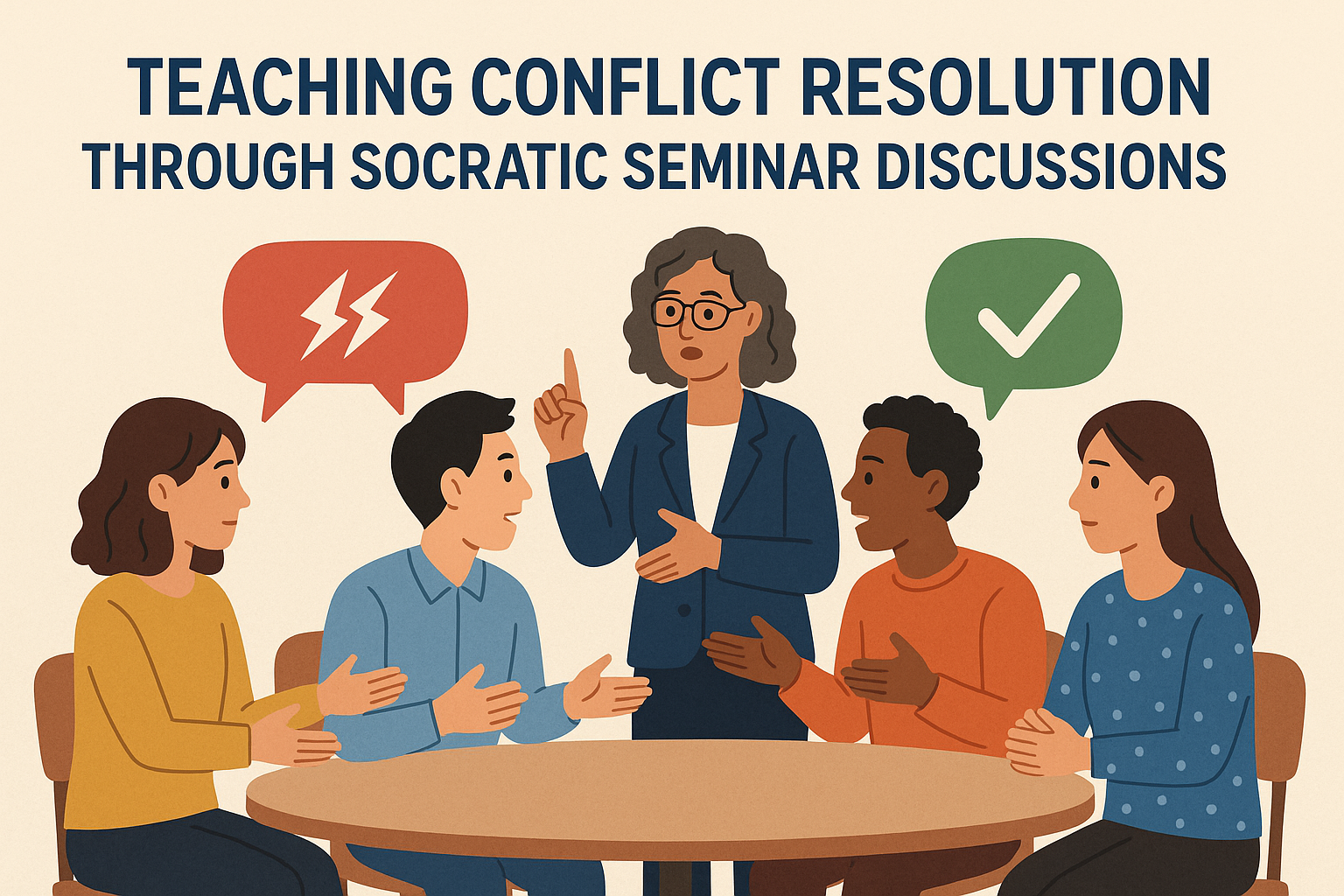
A typical Socratic seminar involves a small group of students discussing a specific text or topic. The structure is designed to promote dialogue rather than debate, which is critical in developing conflict resolution skills. Here’s how it generally works:
- Text Selection: Educators choose a thought-provoking text related to a relevant issue. This could range from literature to current events.
- Ground Rules: Establishing ground rules is vital to create a safe space for discussion. Students learn to respect differing opinions and speak without interruption.
- Facilitated Discussion: Unlike a lecture, the educator acts as a facilitator, guiding the conversation and encouraging students to engage with each other.
- Reflection: After the discussion, students reflect on the insights gained and how their views may have evolved.
This structure not only encourages engagement with the content but also fosters an environment where students can practice conflict resolution in real-time. The emphasis on dialogue allows for the exploration of different perspectives, which is a powerful tool in resolving conflicts.
Building Skills for Effective Conflict Resolution
Incorporating Socratic seminar conflict resolution into the classroom is more than about discussing texts; it’s about building essential life skills. Here are several key skills that students can develop through this method: (See: Socratic method overview.)
1. Critical Thinking
Critical thinking is a cornerstone of conflict resolution. By analyzing different viewpoints presented during a seminar, students enhance their ability to assess arguments critically. They learn to identify biases, question assumptions, and construct well-reasoned arguments. This skill is invaluable not just in academic settings but in everyday life as well.
2. Emotional Intelligence
Conflict resolution requires a high degree of emotional intelligence. Students who participate in Socratic seminars learn to recognize their own emotions and those of their peers. This awareness allows them to navigate conflicts more effectively, as they can respond with empathy rather than defensiveness.
3. Communication Skills
Effective communication is key to resolving conflicts. Through Socratic seminars, students practice articulating their thoughts clearly and respectfully. They learn to listen actively and respond thoughtfully, skills that enhance their ability to engage in constructive dialogue.
4. Collaboration
Socratic seminars emphasize collaboration over competition. Students learn that working together toward a common understanding is far more productive than arguing to win. This collaborative spirit fosters a sense of community and mutual respect, which are vital components of conflict resolution.
Real-World Applications of Socratic Seminars
While Socratic seminars are often used in academic settings, their applications extend well beyond the classroom. Here are examples of how this method is being applied in various contexts:
1. Community Dialogues
Many communities are adopting Socratic seminar formats for public discussions on contentious issues such as immigration, climate change, and social justice. By facilitating structured dialogue, communities can engage citizens in resolving conflicts and building consensus on important matters.
2. Workplace Training
Organizations are incorporating Socratic seminars into their training programs to enhance conflict resolution skills among employees. By encouraging open dialogue, they create a culture of collaboration and respect, which can lead to more effective teamwork and problem-solving.
3. Family Discussions
Families can benefit from the principles of Socratic seminars as well. By applying this approach to discussions about values, beliefs, and differences, family members can learn to communicate more effectively. This can help resolve conflicts that arise from misunderstandings and differing perspectives.
Challenges and Considerations
Despite the many benefits of using Socratic seminars for conflict resolution, there are challenges that educators and facilitators must consider:
- Preparation: Effective seminars require thorough preparation. Educators must ensure that students are equipped with the necessary skills and knowledge to engage meaningfully.
- Managing Dynamics: Group dynamics can influence the effectiveness of a seminar. Some students may dominate the conversation, while others may shy away from participation. Facilitators must be prepared to manage these dynamics to ensure an equitable discussion.
- Assessment: Measuring the outcomes of Socratic seminars can be tricky. Educators need to develop assessment methods that capture the nuances of dialogue and learning that occurs.
Addressing these challenges requires commitment and adaptability, but the rewards in terms of enhanced conflict resolution skills can be substantial. (See: importance of conflict resolution skills.)
The Current Relevance of Socratic Seminars in Education
As we navigate a world increasingly defined by polarization and division, the relevance of Socratic seminar conflict resolution cannot be overstated. In educational settings, students are often confronted with diverse opinions and conflicting beliefs. By integrating Socratic seminars into the curriculum, educators prepare students not only for academic success but for meaningful participation in society.
Moreover, as conversations surrounding social justice, equity, and inclusion gain momentum, the skills developed through Socratic seminars become essential. They provide a framework for individuals to engage respectfully with differing viewpoints while striving to find common ground.
Conclusion: A Path Forward
In a time when conflict seems pervasive, the need for effective resolution strategies is more important than ever. Teaching conflict resolution through Socratic seminars equips students with the skills to engage in productive dialogue, fostering not only understanding but also respect for differing perspectives. As educators, community leaders, and parents, we have the opportunity to harness the power of Socratic seminars to create a more harmonious society.
By prioritizing these discussions in various settings, we can cultivate a generation that values dialogue and seeks to resolve conflicts through understanding, empathy, and collaboration. The future is in our hands, and it starts with how we teach our young people to engage with one another.
Expanding the Scope: Why Socratic Seminars Matter Today
The principles of Socratic seminars resonate deeply in today’s educational climate, where divisive rhetoric can often dominate interactions. This method is not just about resolving conflicts; it’s about creating a culture where dialogue is valued over discord. In an age where social media often fuels misunderstandings, the emphasis on respectful communication in Socratic seminars can counteract these trends. Educators can promote this method as a way to foster a generation of critical thinkers and empathetic communicators, essential skills for future leaders.
Statistics on Classroom Conflict Resolution
Research shows that students who learn conflict resolution skills are better prepared to engage positively in society. A study from the National Institute for Dispute Resolution found that schools incorporating structured conflict resolution programs experienced a 34% decrease in disciplinary incidents. Furthermore, 89% of educators reported improvements in student engagement levels when interactive methods like Socratic seminars were employed. These statistics underscore the effectiveness of using dialogue as a means of conflict resolution.
Expert Perspectives on Socratic Seminars
Educational experts advocate for incorporating Socratic seminars into curricula to enhance not only academic comprehension but also social-emotional learning. Dr. Maria Johnson, a renowned educator and author, notes, “The beauty of the Socratic method lies in its ability to promote critical thinking and empathy simultaneously. It’s not merely about getting the right answer; it’s about understanding the perspectives that shape those answers.” Her insights highlight the dual impact of Socratic seminars on cognitive and emotional development. (See: current educational trends.)
Frequently Asked Questions About Socratic Seminars and Conflict Resolution
1. What age groups can benefit from Socratic seminars?
Socratic seminars can be adapted for various age groups, from middle school students to adults. The key is to adjust the complexity of the texts and the expectations of student participation accordingly.
2. How can educators effectively prepare students for a Socratic seminar?
Preparation involves not only selecting challenging texts but also teaching students how to formulate questions and engage in respectful dialogue. Role-playing scenarios can also help students practice their skills before the actual seminar.
3. Can Socratic seminars be used in online learning environments?
Absolutely! Socratic seminars can be effectively conducted in online formats through video conferencing tools. Educators can utilize breakout rooms for smaller discussions or use chat features to encourage participation from all students.
4. How can conflict resolution skills learned in Socratic seminars be applied to real life?
The skills developed through participation in Socratic seminars—like active listening, empathetic response, and collaboration—are directly applicable in everyday situations, from managing disagreements with friends to addressing workplace conflicts.
5. What are some challenges in implementing Socratic seminars?
Common challenges include managing diverse students’ engagement levels and ensuring all voices are heard. Educators may need training in facilitation techniques to navigate these dynamics effectively.
Final Thoughts
Socratic seminars are more than an academic exercise; they serve as a vital tool in developing the next generation’s ability to engage with complexity and resolve conflicts. By embracing this pedagogical approach, educators create spaces where students can thrive not only as learners but as empathetic individuals capable of fostering understanding in a diverse world.
“`
Trending Now
Frequently Asked Questions
What is a Socratic seminar?
A Socratic seminar is a structured discussion format where students engage collaboratively around a text or topic. Rooted in the methods of Socrates, this approach encourages critical thinking and allows students to explore diverse viewpoints through dialogue and questioning.
How can Socratic seminars help with conflict resolution?
Socratic seminars foster conflict resolution by promoting active listening, empathy, and open-mindedness. Students learn to engage in respectful dialogue, which helps them navigate disagreements constructively and work collaboratively towards mutual understanding.
What are the key components of conflict resolution?
Key components of conflict resolution include active listening, empathy, open-mindedness, and problem-solving. These elements help individuals understand differing perspectives and work towards resolving disputes through constructive dialogue.
Why is conflict resolution important in education?
Conflict resolution is crucial in education as it equips students with skills to handle disagreements and diverse opinions. In a multicultural world, these skills promote respectful discourse, understanding, and collaboration among students.
What skills do students develop through Socratic seminars?
Through Socratic seminars, students develop critical thinking, active listening, empathy, and the ability to engage in constructive dialogue. These skills are essential for effective conflict resolution and navigating complex discussions in diverse environments.
Have you experienced this yourself? We’d love to hear your story in the comments.