
“`html
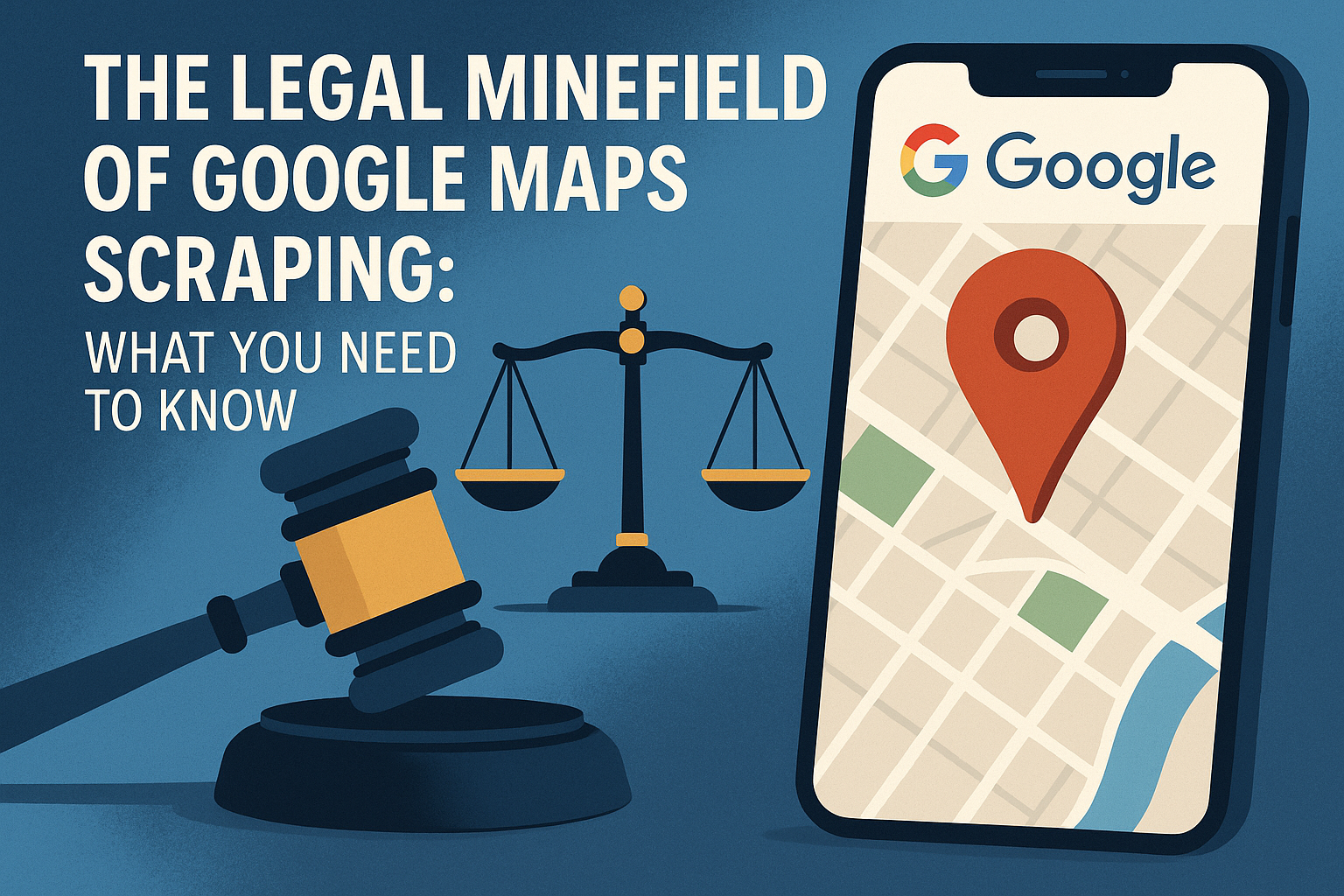
In the digital age, data is as valuable as gold. For businesses, marketers, and lead generators, Google Maps is a treasure trove filled with insights that can drive sales, enhance marketing strategies, and streamline operations. However, the question that looms large is: is Google Maps scraping legal? Understanding the legal landscape around this practice in the United States is crucial, especially as compliance requirements evolve and legal ramifications become more pronounced.
The Importance of Google Maps Data for Businesses
Google Maps offers extensive data, including business listings, customer reviews, and geographical information. This data is essential for various industries, including real estate, hospitality, and retail. Marketers can leverage this information to identify local competition, assess consumer trends, and target advertising effectively. In short, Google Maps scraping has become a common practice among businesses seeking to gain a competitive edge.
However, while the benefits of scraping Google Maps data may seem enticing, the legality of such actions invites scrutiny. Businesses must tread carefully to avoid legal repercussions.
Understanding the Computer Fraud and Abuse Act (CFAA)
At the heart of the legal debate surrounding Google Maps scraping is the Computer Fraud and Abuse Act (CFAA). Enacted in 1986, this legislation was designed to combat hacking and unauthorized access to computer systems. The CFAA makes it illegal to access a computer system without authorization, and this includes web scraping activities.
The ambiguity lies in how courts interpret “unauthorized access”. Scraping Google Maps data can be seen as a violation of the CFAA if it bypasses security measures or goes against the website’s terms of service. In several high-profile cases, courts have ruled that web scraping can indeed violate the CFAA, particularly when the data is accessed in a manner explicitly prohibited by the site’s terms.
Google’s Terms of Service and Its Implications
Google’s terms of service explicitly prohibit unauthorized scraping of their content. When users access Google Maps, they agree to these terms, which include clauses against data extraction, automated scraping, and similar activities. Violating these terms can lead to legal action from Google, including cease-and-desist letters or even lawsuits.
If you’re considering scraping Google Maps, it’s essential to read and understand these terms. The risk of legal consequences increases significantly if your scraping activities are detected and deemed a violation. As a result, understanding the nuances of Google’s policies is critical to navigating this complex landscape.
Legal Precedents: What the Courts Say
The legal landscape surrounding Google Maps scraping is continually evolving, shaped by various court rulings. One landmark case is hiQ Labs, Inc. v. LinkedIn Corp., where the court ruled that scraping publicly available data from LinkedIn did not violate the CFAA. However, this case primarily focused on whether the scraped data was publicly accessible, and the ruling does not universally apply to all web scraping scenarios.
In contrast, the case of American Dental Association v. Delta Dental of Rhode Island highlights the risks associated with scraping data from a website that has explicitly forbidden such actions in its terms of service. The court found that Delta Dental’s terms were enforceable and considered the scraping a violation of the CFAA. (See: Computer Fraud and Abuse Act of 1986.)
These cases illustrate the unpredictable nature of the legal framework surrounding data scraping. While there may be instances where scraping is allowed, the broader implications remain fraught with potential penalties.
Potential Risks of Google Maps Scraping
Engaging in Google Maps scraping can expose businesses to several risks, including:
- Legal Action: As previously mentioned, violating the CFAA or Google’s terms of service can lead to lawsuits, fines, and other legal consequences.
- Account Bans: Google may detect scraping activities and take punitive measures such as banning user accounts or blacklisting IP addresses.
- Reputational Damage: Legal disputes can tarnish a company’s reputation, leading to a loss of trust among customers and business partners.
- Resource Drain: Defending against legal challenges can be costly and time-consuming, diverting resources from core business activities.
Understanding these risks is essential for businesses that rely on Google Maps data for their operations.
Alternatives to Scraping Google Maps
Given the legal complexities and potential risks of scraping Google Maps, many businesses are seeking safer alternatives to gather valuable location data. Here are some options that can help you acquire the information you need without crossing legal boundaries:
- Google Maps API: Google offers a robust API that businesses can use to access Google Maps data legally. The API allows developers to integrate maps into applications and retrieve data while adhering to Google’s terms of service.
- Third-Party Data Providers: Several companies specialize in aggregating and providing location-based data. By utilizing these services, businesses can access valuable information without the legal risks associated with scraping.
- Partnerships: Forming partnerships with local businesses or organizations can provide access to valuable data without the need for scraping. Collaborating with others can lead to mutually beneficial arrangements.
- Surveys and User-Generated Content: Collecting data through surveys or encouraging users to provide reviews can be a legal and effective way to gather information without scraping.
Exploring these alternatives can help businesses stay compliant while still harnessing the power of location data.
Future Legal Landscape: The 2026 Compliance Question
With evolving technology and the increasing importance of data privacy, the legal landscape surrounding data scraping is likely to change. As businesses have grown more reliant on digital platforms, lawmakers are scrutinizing the practices surrounding data use and technology. The deadline for implementing stricter compliance measures is 2026, and businesses must prepare for potential shifts in legal standards.
This impending change raises several questions. Will stricter regulations make scraping more challenging, or will there be clearer guidelines for data access? How will businesses adapt to these changes while still effectively leveraging location data? Preparing for these shifts could be the key to staying ahead in a competitive landscape.
Conclusion: The Need for Caution
As you navigate the murky waters of Google Maps scraping legal issues, it’s vital to proceed with caution. While the lure of easy access to valuable data can be tempting, the risks associated with scraping can outweigh the benefits. Understanding the implications of the CFAA, Google’s terms of service, and recent court rulings can provide essential context in making informed decisions.
Consider leveraging safer alternatives to access the data you need legally. As the legal landscape shifts and compliance becomes a priority, staying informed and adapting to changes will be crucial for your business’s success and sustainability. In the end, ensuring that you operate within legal boundaries not only protects you from potential penalties but also fosters a reputation of integrity in a data-driven world. (See: computer security and legal compliance.)
Common Questions About Google Maps Scraping
Is Google Maps scraping illegal?
Google Maps scraping can be considered illegal if it violates the Computer Fraud and Abuse Act (CFAA) or Google’s terms of service. If you access data that is not publicly available or bypass security measures, you may be subject to legal action.
Are there any legal ways to access Google Maps data?
Yes, using the Google Maps API is a legal way to access Google Maps data. This allows businesses to incorporate maps and related data into their applications while adhering to Google’s guidelines.
What are the consequences of being caught scraping Google Maps?
The consequences can range from legal action, including lawsuits and fines, to account bans and reputational damage. In some cases, companies may also face significant resource drains as they defend against legal claims.
Are there any specific industries that benefit more from Google Maps data?
Industries such as real estate, hospitality, retail, and transportation benefit significantly from Google Maps data. These sectors rely on location information to make informed business decisions and enhance customer experiences.
Can I scrape Google Maps if I only take publicly available information?
Even if the information is publicly available, scraping can still violate Google’s terms of service. Legal precedents suggest that scraping activities may still be treated as unauthorized access, so it’s important to tread carefully.
How can I ensure compliance while using data from Google Maps?
To ensure compliance, consider using the Google Maps API, partnering with data providers, or obtaining permissions for data usage. Staying informed about legal developments and Google’s terms of service is also crucial for avoiding potential pitfalls.
Expert Perspectives on Google Maps Scraping
To give a more rounded view on this topic, we reached out to legal experts and business analysts. Many emphasized the importance of understanding the legal context in which your business operates. Legal analyst, Dr. Samantha Green, stated, “Businesses often underestimate the risks associated with data scraping. A thorough understanding of applicable laws and regulations is essential.”
Similarly, business strategist Mark Daniels highlighted that “investing in legitimate data acquisition practices, such as APIs and partnerships, can yield better long-term benefits than riskier scraping methods.” This perspective underscores a growing sentiment within the business community about the value of ethical data practices. (See: Google Maps scraping legal issues.)
Statistics on Data Scraping Trends
Recent surveys indicate that nearly 50% of businesses utilize web scraping in some form to enhance their market intelligence. Yet, 60% of those businesses expressed concerns about the legal implications of their scraping activities. Interestingly, companies that use proper channels, like APIs, report a 30% increase in compliance satisfaction compared to those engaging in scraping.
This data points to a significant trend: as businesses increasingly recognize the value of data, they also become more aware of the legal frameworks that govern data usage. Making informed decisions about data acquisition will be imperative as the landscape continues to evolve.
Additional Considerations for Businesses
Beyond the immediate legal and ethical concerns that come with Google Maps scraping, businesses should also think about the long-term implications of their data strategies. Adopting a data-driven approach that respects legal boundaries can enhance your company’s credibility and foster customer trust.
For instance, companies that prioritize transparency in their data usage report higher levels of customer loyalty. This is particularly significant in industries where trust is paramount, such as finance and healthcare. As more customers become aware of privacy issues, being open about data practices could set you apart from competitors.
Case Studies of Successful Legal Data Usage
To better understand how to navigate the complexities of data usage, consider companies that have successfully integrated Google Maps data using legal methods. One example is a real estate platform that uses the Google Maps API to display property listings alongside user-generated reviews. By doing so, they enhance user experience while fully complying with legal requirements.
Another case is a travel app that partners with local businesses to gather reviews and ratings about their services. They combine the data sourced through partnerships with publicly available Google Maps information, creating a rich database that benefits users without risking legal repercussions. These examples illustrate that with creativity and compliance, businesses can leverage location data effectively.
“`
Trending Now
Frequently Asked Questions
Is scraping Google Maps data legal?
The legality of scraping Google Maps data is complex and can vary. Generally, it may violate the Computer Fraud and Abuse Act (CFAA) if it bypasses security measures or goes against Google's terms of service. Businesses should be cautious and consult legal advice to avoid potential repercussions.
What is the Computer Fraud and Abuse Act (CFAA)?
The Computer Fraud and Abuse Act (CFAA) is a U.S. law enacted in 1986 that prohibits unauthorized access to computer systems. It plays a significant role in determining the legality of web scraping, including activities related to Google Maps, particularly when access violates terms of service.
What are the risks of scraping Google Maps?
Scraping Google Maps poses several risks, including potential legal repercussions under the CFAA if deemed unauthorized. Additionally, businesses may face penalties, lawsuits, or being banned from the platform. It's vital to understand the legal landscape before engaging in scraping activities.
How can businesses use Google Maps data legally?
Businesses can use Google Maps data legally by adhering to Google's terms of service and utilizing APIs provided by Google. This allows for access to data without violating the CFAA, ensuring compliance while still gaining valuable insights for marketing and operations.
What should I know before scraping data from Google Maps?
Before scraping data from Google Maps, it's essential to understand the legal implications, including the potential violation of the CFAA. Familiarize yourself with Google's terms of service and consider using approved methods such as APIs to avoid legal issues while accessing necessary data.
What’s your take on this? Share your thoughts in the comments below — we read every one.