
“`html
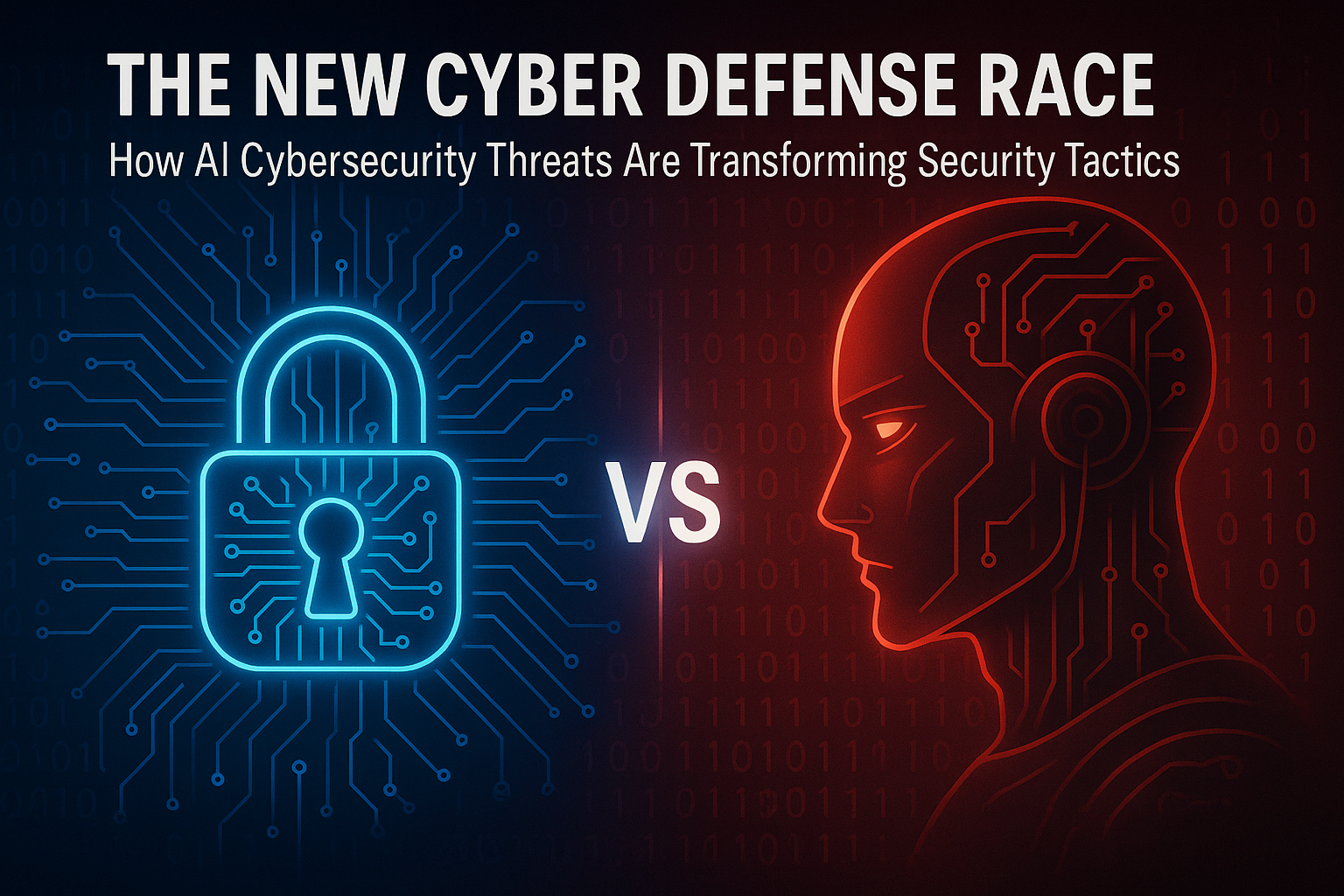
The cybersecurity landscape is changing at an unprecedented pace, primarily due to the rise of AI cybersecurity threats. Recent reports highlight that malicious actors are leveraging artificial intelligence to bolster their attacks, leading to more sophisticated phishing schemes, swifter exploitation of vulnerabilities, and an overwhelming volume of alerts that can paralyze even the most vigilant security teams. As organizations scramble to adapt, a fierce competition is emerging between cybercriminals and defenders, each racing to outsmart the other in this new digital battlefield.
1. The Rise of AI-Powered Attacks
The evolution of cyber threats is not a new narrative, but the introduction of AI into this arena elevates the stakes significantly. Cybercriminals can now automate and enhance their attacks, making them more compelling and effective. For instance, AI models can generate personalized phishing emails that mimic familiar language and context, thereby increasing the likelihood of success. According to a recent study, phishing schemes utilizing AI can achieve a success rate twice that of traditional methods.
Moreover, the speed at which vulnerabilities are exploited has increased dramatically. Tools powered by AI can now scan for weaknesses in systems and applications at an astounding rate, identifying and targeting them before organizations even have a chance to react. This rapid exploitation makes it critical for security teams to maintain vigilance, as traditional defenses may no longer suffice against automated attacks that can adapt and evolve in real-time.
2. The Security Arms Race
As AI technologies become more accessible, a competitive arms race is developing between attackers and defenders. Cybercriminals are not just leveraging AI to improve their tactics; security teams are also being pushed towards adopting AI-based detection and response tools. This dual development creates a climate of urgency in which organizations that fail to adapt may find themselves at a severe disadvantage.
The fear of falling behind is palpable. Companies that lag in implementing AI-driven cybersecurity measures risk not only compromising their data but also their reputation in the industry. As more organizations integrate AI into their security protocols, those slower to adapt may be seen as ill-prepared for the evolving threat landscape, leading to potential loss of customers and market share.
3. Overwhelming Alert Noise
One of the more troubling aspects of AI-powered cyberattacks is the sheer volume of alerts generated by automated processes. With AI tools scanning networks and systems continuously, the amount of noise can become overwhelming. Security analysts may find themselves inundated with alerts, many of which could be false positives or low-priority threats. This can lead to critical issues being overlooked.
To address this challenge, organizations must adopt more advanced analytics techniques that prioritize alerts based on contextual relevance and potential impact. By utilizing machine learning algorithms to help sift through and categorize alerts, teams can focus their efforts more effectively, ensuring that high-priority threats receive the attention they deserve. (See: AI cybersecurity threats in the news.)
4. The Importance of AI in Defense
In the race against AI cybersecurity threats, investing in AI-driven defense mechanisms is essential. Organizations that adopt AI tools for threat detection and response can benefit from enhanced capabilities that traditional methods simply can’t match. For example, machine learning algorithms can analyze user behaviors, identifying anomalies that may indicate a breach.
Additionally, AI can assist in automating response mechanisms, allowing for quicker remediation of threats. This not only reduces the window of exposure but also frees up security personnel to focus on more strategic tasks. As attackers become increasingly sophisticated, the need for dynamic and responsive defense systems that can learn and adapt is more critical than ever.
5. Building a Robust Cybersecurity Framework
As organizations grapple with AI-powered threats, establishing a robust cybersecurity framework becomes paramount. This framework should encompass not only advanced technologies but also comprehensive policies and procedures that promote a culture of security awareness among employees. Training staff to recognize phishing attempts and understand basic security protocols can significantly reduce the risk of successful attacks.
Regularly assessing and updating security measures is crucial, as well. Cyber threats are not static; they evolve constantly, and defenses must keep pace. Engaging in regular penetration testing and vulnerability assessments can help organizations identify weaknesses before they are exploited. Moreover, integrating AI-based tools in these assessments can provide deeper insights and more proactive defenses.
6. The Future of Cybersecurity: Embracing AI
Looking ahead, the integration of AI into cybersecurity is likely to deepen as both attackers and defenders refine their tactics. The ongoing development of AI technologies will continue to shape the nature of cyber threats, making it imperative for organizations to stay ahead of the curve. The proactive adoption of AI tools will not only help in mitigating threats but also in predicting them.
Collaboration between industries and sharing threat intelligence will play a significant role in this future landscape. By pooling resources and knowledge, organizations can better prepare for the types of attacks that AI is capable of unleashing. Open dialogue and partnerships will be essential in developing effective strategies to counteract AI-driven threats.
7. Actionable Steps for Organizations
Organizations seeking to defend themselves against AI cybersecurity threats should consider implementing the following actionable steps:
- Invest in AI-Powered Tools: Allocate resources for advanced security solutions that utilize AI for threat detection and response.
- Provide Employee Training: Conduct regular training sessions for employees to recognize phishing attacks and understand security protocols.
- Regularly Update Security Measures: Continuously assess and enhance cybersecurity policies and technologies to keep pace with evolving threats.
- Conduct Vulnerability Assessments: Engage in frequent testing and assessments to identify potential vulnerabilities within the organization.
- Foster a Culture of Security: Encourage open discussions about security threats and best practices within the organization.
8. Understanding the Types of AI Cybersecurity Threats
AI cybersecurity threats can be categorized into several types, and recognizing these is key for organizations aiming to defend against them: (See: CDC on cybersecurity measures.)
- Automated Phishing Attacks: Using AI, attackers can craft messages that are not only personalized but also contextually relevant, making them harder to detect.
- Deepfake Technology: Cybercriminals can leverage deepfake technology to manipulate video or audio, which can lead to identity theft or fraud.
- AI-Powered Malware: Malware that utilizes AI capabilities can adapt its strategy based on the defensive measures of the target, making it more resilient.
- Data Exfiltration: AI can streamline the process of stealing sensitive data, allowing attackers to identify and target high-value information quickly.
9. Statistics Highlighting AI Cybersecurity Threats
To emphasize the urgency of addressing AI cybersecurity threats, consider these alarming statistics:
- According to a report by Cybersecurity Ventures, cybercrime is expected to cost the world $10.5 trillion annually by 2025.
- A study from the Ponemon Institute found that 57% of organizations experienced a breach involving AI in 2022, up from 34% in 2021.
- AI-driven attacks are predicted to be involved in 90% of all cybersecurity incidents by 2025, according to a report by the World Economic Forum.
- Organizations that incorporate AI in their cybersecurity protocols are 50% more likely to detect breaches compared to those that do not.
10. Expert Perspectives on AI Cybersecurity
Industry experts highlight the growing concerns and necessary responses to AI-related threats. For instance, cybersecurity thought leader Bruce Schneier emphasizes that as AI becomes more prevalent, the potential for malicious use increases. He notes, “We need to think about how we can use AI to improve security while also defending against its misuse.”
Similarly, Dr. Sadie St. Clair, a data scientist specializing in AI applications in cybersecurity, states, “The key lies in our ability to harness AI not just for defense but to predict and preempt attacks. This proactive stance can turn the tide in our favor.”
11. Frequently Asked Questions (FAQ)
What are AI cybersecurity threats?
AI cybersecurity threats refer to malicious activities that leverage artificial intelligence to automate and enhance cyberattacks, making them more effective and difficult to detect.
How can organizations protect themselves from AI cybersecurity threats?
Organizations can protect themselves by investing in AI-driven security tools, conducting regular training for employees, and continuously updating their security measures to adapt to evolving threats.
What role does machine learning play in AI cybersecurity?
Machine learning is crucial in AI cybersecurity as it helps analyze patterns, detect anomalies, and respond to threats in real-time, improving the overall security posture of an organization. (See: Research on AI in cybersecurity.)
Is AI cybersecurity more effective than traditional methods?
Yes, AI cybersecurity methods can enhance detection and response times compared to traditional methods, especially against evolving and sophisticated threats.
What are some common types of AI-driven attacks?
Common types of AI-driven attacks include automated phishing, deepfake technology exploitation, AI-powered malware, and streamlined data exfiltration.
12. Real-Life Examples of AI Cybersecurity Threats
Understanding the impact of AI cybersecurity threats is essential. Here are a few real-life examples that underscore the urgency:
- The SolarWinds Attack: In 2020, attackers used AI techniques to breach SolarWinds’ software supply chain, affecting thousands of organizations, including U.S. government agencies. The sophistication of the attack was made possible by AI-driven methods that enabled stealthy movement within networks.
- Emotet Malware: Once a banking Trojan, Emotet evolved into a malware delivery service that utilized AI to optimize its phishing campaigns. It learned from previous attacks and adjusted its strategies, significantly increasing its success rates.
- Zendesk Breach: In 2021, attackers exploited AI tools to automate the theft of customer support data from Zendesk, impacting thousands of organizations globally. The attackers were able to adapt their methods in real-time to bypass security measures.
13. The Bottom Line
The emergence of AI in cyberattacks is not just a fleeting trend; it’s a paradigm shift that demands urgent attention from organizations across all sectors. As attackers harness AI capabilities to enhance their efforts, defenders must also pivot swiftly to adopt AI-driven tools and strategies. The race to secure digital assets is on, and those who fail to keep up may find themselves in dire straits.
Understanding the dynamics of this new threat landscape is critical for any organization aiming to protect its assets and reputation. By embracing AI technologies and fostering a culture of cybersecurity awareness, businesses can fortify their defenses against the rising tide of AI-powered cyber threats.
“`
Trending Now
- this guide on unlock your creative potential with exciting copywriting courses at coalition technologies
- Unlocking Potential: Essential ADHD Accommodations for High School Students Beyond Extended Time
- Unlocking Potential: 7 Scaffolding Techniques for…
- read the full story
- our breakdown of understanding the link between adhd and hand-eye coordination in children
Frequently Asked Questions
What are AI cybersecurity threats?
AI cybersecurity threats refer to malicious activities that leverage artificial intelligence to enhance the effectiveness of attacks. These include sophisticated phishing schemes and automated vulnerability exploitation, making them more challenging to detect and mitigate.
How are AI attacks changing cybersecurity tactics?
AI attacks are transforming cybersecurity tactics by automating and personalizing attacks, increasing their success rates. Security teams must adapt by implementing AI-based detection and response tools to combat these evolving threats.
What is the impact of AI on phishing schemes?
The introduction of AI into phishing schemes has significantly increased their effectiveness. AI can generate personalized emails that mimic familiar language, resulting in phishing success rates that can be twice as high as traditional methods.
Why is there a cybersecurity arms race?
The cybersecurity arms race is driven by the rapid advancement of AI technologies, which cybercriminals use to enhance their attacks. In response, security teams are compelled to adopt AI-based solutions to defend against these increasingly sophisticated threats.
How can organizations defend against AI-driven cyber threats?
Organizations can defend against AI-driven cyber threats by adopting advanced AI-based detection and response tools, maintaining constant vigilance, and training security teams to recognize and counteract automated attacks effectively.
What’s your take on this? Share your thoughts in the comments below — we read every one.