EdTech & Innovation

11 of the Biggest Classroom Management Mistakes (Plus How to Fix Them)

As a teacher, managing a classroom can be one of the most challenging aspects of the profession. While every teacher has their own unique set of circumstances and difficulties, there are some common classroom management mistakes that can be easily avoided. Here, we will identify 11 of the biggest classroom management mistakes and provide solutions on how to fix them.

1. Inconsistency in enforcing rules: One of the most significant problems teachers face is inconsistency in enforcing classroom rules. To improve this situation, establish clear rules and consequences from day one and consistently enforce them in a timely and fair manner.

2. Lack of clear expectations: Communication is crucial when it comes to managing a classroom. Clearly outline your expectations for behavior and academic performance to minimize confusion and ensure students know what is expected of them.

3. Disrespectful behavior: Allowing disrespectful behavior towards either the teacher or other students is detrimental to a positive classroom environment. Address disrespectful behavior immediately, and establish an atmosphere that promotes mutual respect.

4. Over-reliance on punitive measures: Relying solely on punishment as a means of discipline can undermine learning opportunities and damage student-teacher relationships. Focus on positive reinforcement and intervention strategies that offer support while also addressing misbehaviors.

5. Ignoring minor disturbances: Although it may seem easier to let some minor disruptions slide, they can snowball into larger issues if not addressed. Remain vigilant by addressing disturbances when they occur to maintain an orderly classroom environment.

6. Neglecting student engagement: Student engagement is critical for effective learning. Utilize interactive teaching methods, group work, and discussions to keep students engaged in their learning experience.

7. Failing to establish rapport with students: Developing strong connections with your students not only fosters a positive classroom atmosphere but also encourages better behavior. Take time to get to know your students on both an individual and group level and use that knowledge to form better connections.

8. Overemphasis on punishment: Avoid focusing on what students should not do rather than what they should do. Encourage desirable behaviors by setting attainable and meaningful goals, praising achievement, and acknowledging good behavior.

9. Inadequate organization: A disorganized classroom can lead to wasted time, frustration, and misbehavior. Take time to develop an organizational system that works for your particular classroom environment, ensuring smooth transitions and effective use of instructional time.

10. Failure to adapt to different learning styles: Understand that each student learns differently and tailor your instruction accordingly. Differentiate your lessons with a range of materials, activities, and assessment strategies to accommodate various learning styles.

11. Not keeping up with professional development: Lastly, continue evolving as an educator. Attend workshops, conferences, and engage with professional learning communities to stay current on best practices and refine your teaching strategies.

In conclusion, by avoiding these common classroom management mistakes and implementing the suggested solutions, you will create a more engaging learning environment where students feel supported and motivated to achieve their fullest potential.

15 TikTok Science Experiments To Show Your Students

Introduction:

TikTok has become a popular platform for sharing fun and educational content. As a teacher, you can use this platform to showcase quick and exciting science experiments for your students. Here are 15 of the best TikTok science experiments that you can demonstrate in class or even assign as homework.

1. Rainbow Skittles:

Line up Skittles on a plate in a circular pattern, pour warm water over them, and watch as the colors move inward and form a rainbow-like pattern.

2. Instant Ice:

Supercool purified water in the freezer but don’t allow it to freeze completely. Then, pour it over ice cubes or a popsicle stick and watch it instantly freeze.

3. Baking Soda Rockets:

Fill an empty film canister with baking soda, add a bit of vinegar, quickly put the lid on, flip it upside-down, and watch the chemical reaction launch it into the air.

4. Elephant Toothpaste:

Combine hydrogen peroxide, dish soap, food coloring, and yeast mixed with warm water in a bottle to create a rapidly growing foam.

5. Lava Lamp Experiment:

Fill a plastic bottle with water, add some liquid food coloring to color the water, and layer vegetable oil on top. Drop an effervescent tablet into the mixture to see bubbles float up and down like in a lava lamp.

6. Magic Milk:

Place drops of different colored food coloring in whole milk and dip a cotton swab in dish soap before touching the milk’s surface – observe the burst of swirling colors.

7. Walking Water:

Place three cups filled with water (colored with food coloring) next to each other, leaving one empty cup in between each full cup. Place paper towel strips connecting the cups and watch as the colored water “walks” through the towels into the empty cups.

8. Egg Drop Challenge:

Encourage your students to create a protective structure or container that prevents an egg from breaking when dropped from a significant height.

9. Gummy Bear Osmosis:

Have students soak gummy bears in various solutions (water, salt water, and sugar water) to see how osmosis affects their size and shape.

10. Stacking Liquids:

Teach your students about density by layering different liquids (honey, corn syrup, colored water, and vegetable oil) in a clear cup.

11. Disappearing Colors:

Mix equal parts of lemon juice and water in a spray bottle. Spray onto paper with invisible ink (writing made with lemon juice). Watch the invisible ink writing appear as the lemon juice mixture is sprayed over it.

12. Dry Erase Marker Float:

Draw a simple picture on a glass surface using a dry erase marker. Pour a small amount of water onto the drawing and watch as it lifts off the surface and floats on the water.

13. Homemade Tornadoes:

Fill a plastic bottle with water and add some glitter or food coloring. With the cap on, swirl the bottle vigorously to create miniature tornadoes inside.

14. Magnet Magic:

Show your students how magnetic forces work with various objects, including paper clips or even cereal containing iron particles.

15. Exploding Baggies:

Combine vinegar and baking soda inside sealed plastic bags to demonstrate chemical reactions and the resulting pressure build-up.

Conclusion:

TikTok has made it easier than ever to share engaging and educational science experiments with your students. These 15 experiments are both fun and informative, providing valuable learning opportunities outside of traditional classroom settings.

14 Context Clues Anchor Charts For the Classroom

Introduction:

As educators, we always strive to promote students’ reading comprehension skills. One of the keys to developing these skills is familiarizing them with context clues — the hints within a text that help them decipher unfamiliar words. To facilitate this, we have compiled a list of 14 context clues anchor charts to integrate into your classroom. These visual aids are designed to engage learners in understanding and applying context clues effectively.

1. Vocabulary Strategies Chart

Introduce your students to the various strategies for using context clues to figure out the meaning of unknown words. This chart could include examples such as inferring meaning from surrounding words or deciphering meaning using word parts.

2. Types of Context Clues Chart

Educate your students on the different types of context content clues: definition/explanation, synonym, antonym, example, and inference. A chart displaying these categories along with examples will help solidify their understanding.

3. Context Clues Sentence Frames

Provide students with sentence frames demonstrating how each type of context clue can be extracted from a sentence. This anchor chart helps students internalize and practice using context clues in their everyday reading activities.

4. Context Clues Flowchart

A flowchart-style anchor chart can serve as a guideline for your students when they encounter unknown vocabulary. This step-by-step guide prompts them to identify and apply suitable strategies for each type of context clue.

5. Word Detectives

Encourage your students to become word detectives by highlighting different strategies they can use when determining the meaning of unfamiliar words, such as evaluating synonyms or analyzing root words.

6. Text Evidence Poster

A poster displaying various textual clues will assist learners in locating and applying relevant contextual information while reading passages.

7. Prefix/Suffix Anchor Chart

Introduce common prefixes and suffixes to enable students to decipher word meanings by studying word parts.

8. Root Words Anchor Chart

Teach your students the meaning of common root words, empowering them to break down and determine the meaning of complex vocabulary.

9. Context Clues Bookmarks

Provide each student with a handy bookmark that lists context clue strategies, types, and examples. These bookmarks not only act as a learning tool but also encourage students to practice using their newly acquired skills while reading independently.

10. Color-Coded Strategies Chart

Use a color-coded chart to visually reinforce the distinction between various context clue strategies, helping students remember and apply them effectively during reading assignments.

11. Context Clues Task Cards

Create sets of task cards containing examples and practice exercises for each type of context clue. This effective teaching aid promotes active engagement in honing students’ context clue skills.

12. Context Clues Detective Agency

Turn your classroom into a detective agency where students are tasked with solving vocabulary mysteries by utilizing their understanding of context clues.

13. Context Clues Bingo Game

Make learning fun by hosting a context clues bingo game wherein students have to figure out word meanings using different context clues before shouting “Bingo!”

14. Context Clues Assessment Rubric

Develop an assessment rubric that evaluates students’ ability to apply context clues effectively throughout their reading comprehension tasks.

Conclusion:

Using these 14 context clues anchor charts will not only motivate your students to become efficient readers but will significantly improve their overall comprehension skills. Incorporate these visual aids into your classroom to create an environment fostering literacy excellence!

Best Document Cameras for Teachers In Every Price Range

As remote learning and mixed-format classrooms become increasingly common, document cameras have emerged as essential tools for teachers. High-quality document cameras can make it easier for educators to communicate with their students, display materials, and teach lessons effectively. With various price ranges available, teachers from all financial backgrounds can find a document camera that suits their needs. Let’s explore the best document cameras for every price range.

Budget-friendly: Under $100

1. IPEVO VZ-R HDMI/USB Dual Mode 8MP Document Camera: This lightweight and compact document camera boasts an 8-megapixel camera and full USB/HDMI capabilities. The IPEVO VZ-R is an excellent budget option that provides quality visuals without breaking the bank.

2. ELP DC80 5MP USB Document Camera: Featuring a flexible neck design, the ELP DC80 5MP USB Document Camera allows for easy positioning during lessons. Its 5-megapixel camera produces clear images, making it a great option for those on a tight budget.

Mid-range: $100-$300

1. ELP DC160 13MP HDMI Document Camera: The ELP DC160 is a versatile mid-range option that offers a 13-megapixel camera and HDMI connection capabilities. Its gooseneck design provides flexibility and ease of use while its crisp image quality is perfect for teachers looking to enhance their distance learning experience.

2. AVer U50 USB FlexArm Document Camera: The AVer U50 is an excellent choice in the mid-range category, featuring full HD resolution, built-in LED lights, and auto-focus capabilities. This user-friendly model also incorporates a microphone input for easy annotation during lessons.

High-end: Above $300

1. Lumens DC125 Ladibug 30fps HD Lightweight Document Camera: The Lumens DC125 Ladibug offers exceptional image quality, with full 1080p HD resolution at 30 frames per second. With a user-friendly interface and one-touch auto-tune, this high-end document camera is perfect for teachers who want the best possible performance.

2. Elmo MO-1 Visual Presenter: The Elmo MO-1 Visual Presenter is a sleek and compact option, boasting full 1080p HD resolution, and an extensive range of features. With Wi-Fi capabilities, in addition to USB and HDMI connections, the MO-1 offers excellent versatility for teachers in need of a high-quality document camera.

Ultimately, the best document camera for teachers will vary depending on individual needs, classroom requirements, and budget constraints. However, with options available at every price range – from budget-friendly to high-end models – it’s easier than ever to find a document camera that will enhance your teaching experience.

Create Compliment Cards to Encourage Staff and Students

Introduction

In a world where people often focus on criticism and negative feedback, it’s essential to highlight the importance of compliments and encouragement. Compliment cards can be a simple yet powerful way to foster a positive environment for staff and students alike. Read on to learn how creating compliment cards can uplift spirits, foster a nurturing culture, and boost confidence in your school or workplace.

The Power of Compliments

Compliments can have a profound impact on an individual’s emotional well-being. They reinforce positive behavior, boost morale, facilitate cooperation and teamwork, and contribute to overall mental health. Studies have shown that just one compliment could improve someone’s self-esteem, resulting in higher motivation and performance.

Benefits For Staff

1. Recognition: Compliment cards provide staff members with recognition for their hard work, dedication, and achievements.

2. Job Satisfaction: When staff feel appreciated for their contributions, their job satisfaction increases and burnout decreases.

3. Team Building: A culture of encouragement helps build trust among team members as they begin to support and respect one another.

4. Professional Development: Compliment cards can highlight specific skills or traits that the staff member has contributed, which can be beneficial during performance reviews or promotional considerations.

Benefits For Students

1. Emotional Support: Compliments nurture a sense of self-worth in students, particularly when they face academic challenges.

2. Confidence Boost: Positive reinforcement helps students become more confident in their ability to perform well academically.

3. Motivation: By acknowledging a student’s strengths, others encourage them to work harder and achieve more.

4. Social Skills Development: Learning how to give and receive compliments is an essential skill for engaging in healthy relationships later in life.

How To Create Compliment Cards:

1. Design: Select a visually appealing design for the cards that aligns with your school or workplace culture. Consider incorporating specific colors, themes, or graphics that represent your organization.

2. Card Size: Make sure to choose a durable cardstock that is easy to carry and handle – typically, a 3×5-inch card works well.

3. Categories: Organize compliment cards into different categories for easier tracking and personalization. For example, categories like “Teamwork,” “Leadership,” “Creativity,” “Dedication,” and “Kindness” can accommodate various compliments.

4. Personalization: Leave space on the card for personalized messages. A thoughtful, handwritten comment makes the compliment even more meaningful.

5. Distribution: Develop a system for distribution, such as placing a designated box in a common area or assigning someone to hand out the cards regularly.

Encourage Participation

For compliment cards to be effective, it’s crucial to ensure that everyone in the school or workplace understands their purpose and participates in the process. Conduct workshops or training sessions on giving constructive compliments, and provide guidelines on how to use the cards.

Conclusion

Compliment cards are a terrific tool for fostering encouragement and positivity among staff and students in an educational or professional environment. By incorporating this practice in your organization, you can cultivate healthier relationships, improve morale and job satisfaction, promote success, and create a nurturing atmosphere where everyone feels appreciated.

7 Things Principals Want to Hear From Their Teachers

Introduction:

As a teacher, it can be beneficial to understand what your principal wants to hear from you. Knowing their expectations helps foster a positive relationship and can lead to growth opportunities within the school. Here are seven things that principals want to hear from their teachers.

1. An Openness to Collaboration

Principals appreciate teachers who are open to working together with colleagues on projects and initiatives. Emphasize your willingness to collaborate with others and share best practices in order to enhance the overall education experience for your students.

2. Initiative in Professional Development

Demonstrate that you are dedicated to growing as an educator by seeking out professional development opportunities. Principals want teachers who continuously strive for improvement and actively engage in sharpening their skills and knowledge.

3. Positive Student Impact

Share stories of student success and how your teaching has positively impacted their lives. Principals love hearing about teacher-student connections that inspire, motivate, and empower students in their journey towards personal growth and academic achievement.

4. Social-Emotional Well-being Focus

Express your commitment to fostering a supportive classroom environment. Principals want teachers who prioritize students’ social-emotional well-being, ensuring they feel valued, empowered, and connected not just academically, but emotionally as well.

5. Data-Driven Instruction Approaches

Utilize data gathered from assessments, feedback, and observations to inform your teaching strategies. Principals appreciate teachers who rely on evidence-based practices, continually refining their methods in response to what works best for each student’s unique needs.

6. Effective Classroom Management

Effectively handling classroom management demonstrates your ability to create an orderly learning environment where all students can thrive. Share instances of how you successfully maintain structure while still enabling learning opportunities for each individual student.

7. Long-term Vision and School Improvement Ideas

You should articulate ideas about enhancing the school’s long-term vision and suggest opportunities for improvement. Principals value proactive teachers who contribute innovative thoughts and positively impact the culture and direction of the school community.

Conclusion:

By emphasizing these seven areas, you can better align your communication with what principals want to hear, fostering a strong partnership and enabling continued growth in your teaching career. Strive to exceed expectations, leading to a more successful educational experience for both you and your students.

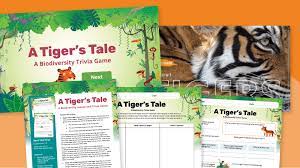
Your Students Will Love This Free Wild Tiger Lesson and Trivia Game

Introduction:

Educators are always on the lookout for creative and engaging ways to teach their students about various subjects, especially when it comes to wildlife conservation. The plight of wild tigers is one such subject that can spark your students’ interest, and now, a free wild tiger lesson and trivia game is here to make learning about these magnificent creatures more enjoyable than ever!

Get Ready for a Roaring Good Time:

Introducing the Free Wild Tiger Lesson and Trivia Game – an interactive and exciting experience specially designed for teachers who want to introduce their students to the world of wild tigers. Combining essential facts with entertaining trivia questions, this game not only educates but also captivates young minds.

Why Teach Students About Wild Tigers:

Wild tigers are an endangered species with their numbers drastically declining due to factors such as habitat loss, poaching, and human-tiger conflict. By educating students about these beautiful creatures, we can raise awareness and encourage the next generation to take action in the preservation and conservation of tigers.

A Sneak Peek into the Lesson:

The Wild Tiger Lesson covers a variety of topics that provide a comprehensive understanding of both the species and their current situation. Students will learn:

1. The biology of tigers: Dive into the world of tiger physiology, including their size, fur patterns, sensory abilities, and more.

2. Their habitat: Explore where tigers live in the wild – from tropical forests to grasslands.

3. Subspecies variations: Discover what differentiates the various subspecies of tigers found across Asia.

4. Threats facing tigers: Analyze why there has been a decline in tiger populations over recent years.

5. Conservation efforts: Understand how organizations worldwide are working towards preserving the remaining wild tiger populations.

The Trivia Challenge:

It’s time to put those newfound facts to the test with the Tiger Trivia Challenge. Consisting of multiple-choice questions, true or false statements, and picture identification rounds – the game is both entertaining and challenging. Your students will be thrilled to show off their knowledge while also discovering new and exciting facts.

Adaptable for Different Age Groups:

The best part about this free wild tiger lesson and trivia game is its flexibility. Teachers can easily adapt its content to suit the needs of children in various grade levels – from kindergarten to high school. This ensures that every student has an opportunity to appreciate and learn about the mighty wild tiger.

Conclusion:

Don’t miss out on this unique opportunity to bring excitement and fun into your classroom while simultaneously teaching your students an essential lesson in wildlife conservation. The Free Wild Tiger Lesson and Trivia Game will soon have your students roaring with enthusiasm as they learn about these awe-inspiring creatures and the crucial role they play in our world’s ecosystems. So, get ready to embark on a ferocious educational adventure that your students will cherish for a lifetime!

16 Fun Alphabet Books to Share with Students

Teaching the alphabet to young learners doesn’t have to be a dull and monotonous process. Sharing fun, engaging, and informative alphabet books with students can make learning the ABCs exciting and enjoyable. In this article, we’ve compiled a list of 16 delightful alphabet books that are perfect for introducing the alphabet to young minds.

1. “Chicka Chicka Boom Boom” by Bill Martin Jr. and John Archambault

This classic children’s book offers a rhythmic tale of letters racing up a coconut tree, resulting in chaos when they all come tumbling down.

2. “Dr. Seuss’s ABC” by Dr. Seuss

Featuring an array of quirky characters and tongue-twisting rhymes, this imaginative book teaches the alphabet through Dr. Seuss’s signature style.

3. “A Is for Apple” by Georgie Birkett

Using interactive elements such as textures and flaps, this visually engaging book allows children to explore each letter through familiar objects that start with them.

4. “Alphabet City” by Stephen T. Johnson

This award-winning picture book encourages children to search for letters hidden in captivating urban landscapes crafted by the author-illustrator.

5. “LMNO Peas” by Keith Baker

Follow the adventures of little peas discovering various occupations, each represented by a different letter from the alphabet.

6. “The Alphabet Tree” by Leo Lionni

This beautifully illustrated tale tells the story of letters growing on an Alphabet Tree and how they are rearranged to create meaningful words when they join forces.

7. “Alphablock” by Christopher Franceschelli

With bold graphics and interactive die-cut pages, this board book offers an engaging learning experience where kids can physically uncover letters through liftable flaps.

8. “Eating the Alphabet” by Lois Ehlert

Introduce children to fruits, vegetables, and the alphabet all at once with this vibrantly illustrated book showcasing a medley of colorful produce.

9. “The Construction Alphabet Book” by Jerry Pallotta

For young learners who are fascinated by construction sites and vehicles, this book pairs each letter of the alphabet with a corresponding tool or machinery.

10. “A Was Once an Apple Pie” by Edward Lear

A whimsical take on the alphabet, this classic poem features letter-inspired verses accompanied by charming illustrations.

11. “Z Is for Moose” by Kelly Bingham

In this hilarious and endearing story, Moose impatiently tries to jump ahead in the alphabetical line-up, eager to see his turn in the spotlight.

12. “Animalia” by Graeme Base

This intricately detailed book presents the alphabet through beautifully illustrated pages teeming with unique animals and hidden treasures.

13. “Creature ABC” by Andrew Zuckerman

Photographic images of intriguing animals take center stage in this visual journey through the alphabet that will captivate readers of all ages.

14. “Alphabet Under Construction” by Denise Fleming

An industrious mouse takes on various construction projects that correspond to each letter of the alphabet in this colorful and engaging story.

15. “The Z Was Zapped” by Chris Van Allsburg

This mysterious picture book offers an alphabetical parade where each letter falls victim to an unexpected predicament.

16. “ABC3D” by Marion Bataille

Offering a pop-up experience for each letter, this book delights readers with ingenious three-dimensional surprises as they journey through the alphabet.

These 16 fun and inventive alphabet books provide educators and caregivers with a diverse array of storytelling approaches to engage young learners as they begin their journey towards literacy. Happy reading!

TikTok Teacher Explores the Hilarious Levels of Teacher Friendships

Introduction:

TikTok has become a platform for people not only to showcase their dancing and lip-syncing talents but also to share relatable and educational content. One of the latest TikTok trends features a teacher who humorously explains the various levels of friendships among teachers. This article delves into these hilarious friendship dynamics, showing how these relationships can make educators’ lives more enjoyable and relatable.

The TikTok Teacher:

Known as “@teacher_tiktok,” this educator quickly rose to fame by delivering insightful and funny content about the teaching profession, capturing the attention of millions of viewers. With her entertaining commentary and relatable humor, she has managed to shed light on topics that fellow teachers can identify with, including the unique connections they form with their colleagues.

Levels of Teacher Friendships:

In one of her viral videos, @teacher_tiktok discussed the following levels of teacher friendships:

1. Acquaintances – These friends are primarily identified by pleasantries exchanged in passing or during occasional staff meetings. They may chat about superficial topics like weekend plans or upcoming school events but rarely delve into more intimate discussions.

2. Break Time Buddies – The next level up is Break Time Buddies, who interact more frequently during lunch breaks or other free periods in the teachers’ lounge. They might share snacks, chat about student antics, and occasionally vent about work frustrations. However, these friendships typically stay within school grounds.

3. Grade Level Friends – Teachers generally bond more closely with others who teach similar grade levels due to shared experiences and daily encounters. They discuss strategies for improving classroom management or lesson plans while offering mutual encouragement during tough days.

4. Teammates – Colleagues who belong to the same department often develop stronger camaraderie as they collaborate on curriculums, share resources, and support each other in professional growth. These friendships might expand beyond school, progressing into social outings and group activities.

5. Best Teacher Friends (BTFs) – At the highest level are the Best Teacher Friends. These connections go beyond work relationships and involve a deeper bond rooted in shared interests, hobbies, and personal life experiences. BTFs become confidants who one can rely on inside and outside the classroom, offering support, encouragement, and genuine friendship.

Conclusion:

This light-hearted TikTok video by @teacher_tiktok highlights an important aspect of teaching: the significance of friendships among colleagues. As educators spend countless hours together working tirelessly to shape young minds, it’s natural that they forge strong connections and lasting friendships with their fellow teachers. These relationships not only strengthen professional partnerships but also make the day-to-day challenges of teaching more enjoyable and rewarding.

The Free App That Allows You to Add Automatic Sound Effects to Your Favorite Read Alouds

Introduction:

Reading aloud has always been a cherished pastime for families, friends, and avid readers. Whether it’s enriching bedtime stories or an engaging book club discussion, the experience is undoubtedly enthralling. But have you ever wondered how much more immersive and exciting it could be with the added touch of appropriate sound effects? Well, look no further! Introducing an innovative free app designed to amplify your favorite read-aloud sessions by automatically adding sound effects.

Features and Benefits:

This revolutionary app is designed for users of all age groups, ensuring that story time becomes even more special and memorable. Not only will it keep your audience entertained, but it will also elevate the storytelling experience to a whole new level. Below are some of the most intriguing features this app offers:

1. Automatic Sound Effects: This intuitive app detects keywords in the text being read aloud and instantly plays matching sound effects, providing a realistic backdrop to your narrative.

2. Customizable Experience: Users can fine-tune their experience by adjusting the volume of sound effects, choosing from a vast library of sounds, or even uploading their own recordings for a truly unique touch.

3. Compatibility: The app is compatible with most audiobook platforms, e-readers, and text-to-speech services, making it a seamless addition to your reading routine.

4. Shareability: Enriching your reading experience doesn’t have to be a solitary endeavor – the app comes with in-built sharing options so you can spread the joy with family and friends.

5. User-Friendly Interface: Featuring an intuitive design and easy navigation, users are not required to possess any technical expertise.

6. Offline Usage: Don’t worry if you’re planning on enjoying read-aloud sessions during trips or in areas with unstable internet connections – this app supports offline usage as well.

7. Free to Use: The icing on the cake is that this fantastic app is available for free! Say goodbye to in-app purchases and unnecessary subscriptions.

Conclusion:

The introduction of this free app has undeniably revolutionized the age-old joy of reading aloud, making it a far more interactive and engaging experience. Don’t miss out on enhancing your storytelling sessions with the immersive sound effects this app offers. Download it today and elevate your read-aloud moments to a whole new level!